
Learning in the Era of Digital Transformation Professor
- Slides: 63
Learning in the Era of Digital Transformation Professor Asha Kanwar President & CEO Public Lecture - Wawasan Open University, Malaysia May 8, 2018 V Balaji, Director of Technology and Knowledge Management
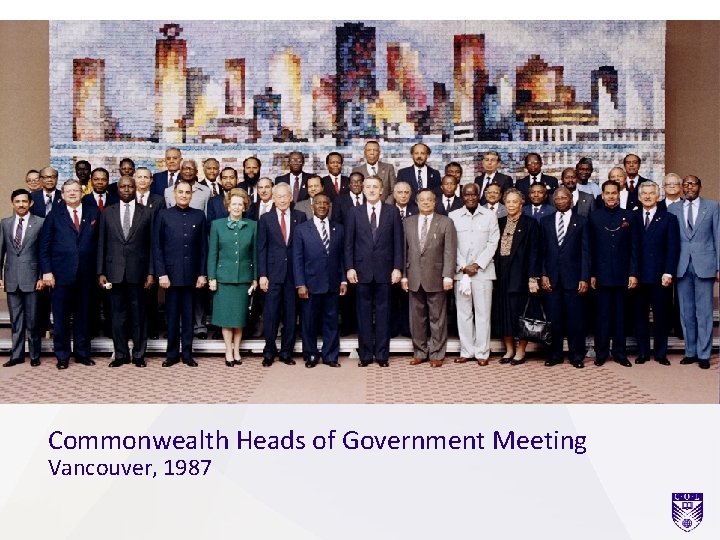
Commonwealth Heads of Government Meeting Vancouver, 1987
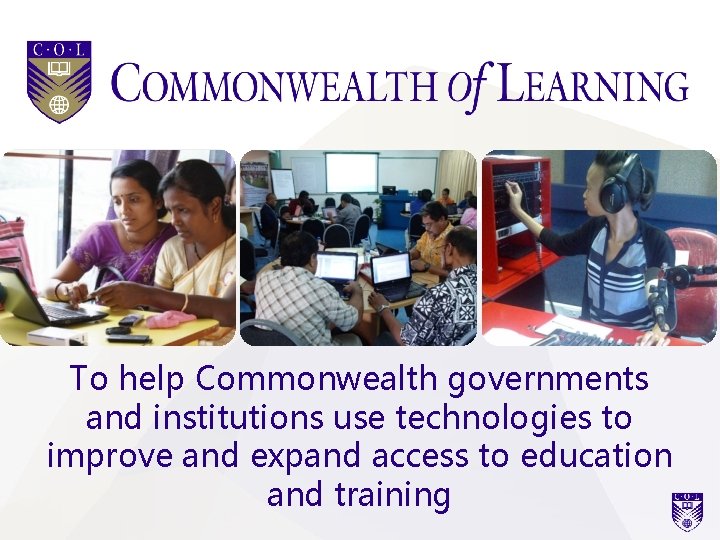
To help Commonwealth governments and institutions use technologies to improve and expand access to education and training
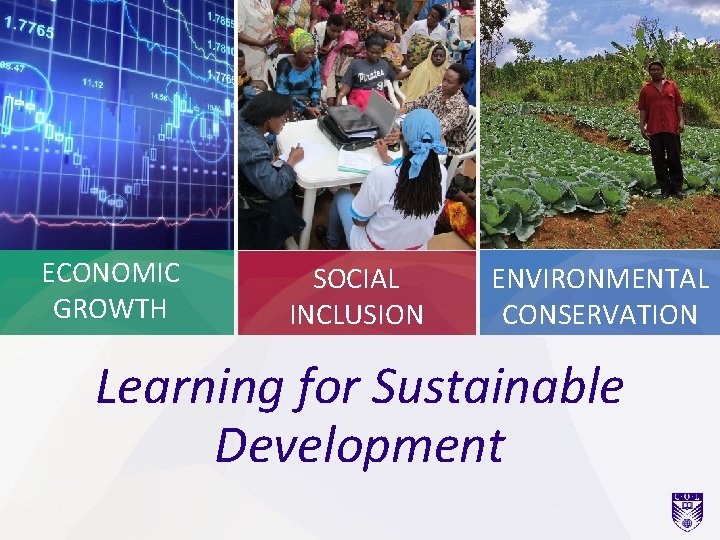
ECONOMIC GROWTH SOCIAL INCLUSION ENVIRONMENTAL CONSERVATION Learning for Sustainable Development
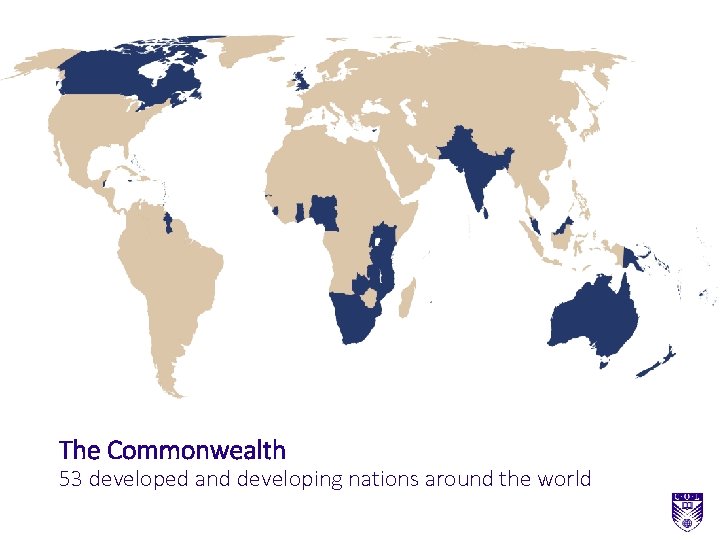
The Commonwealth 53 developed and developing nations around the world
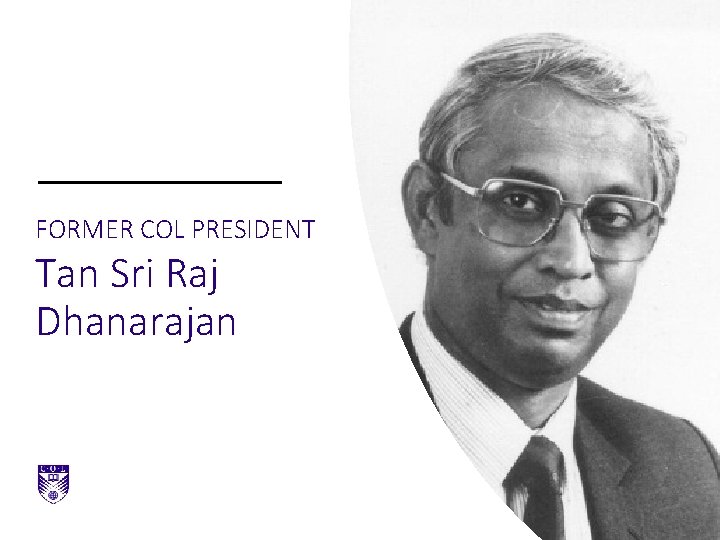
FORMER COL PRESIDENT Tan Sri Raj Dhanarajan
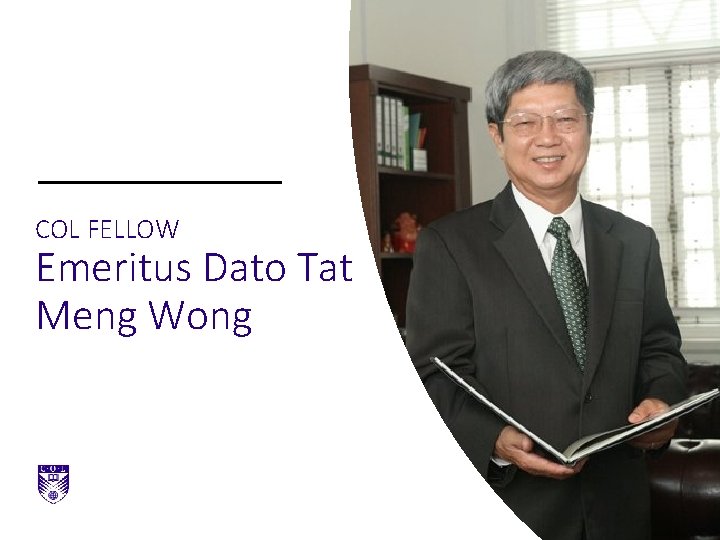
COL FELLOW Emeritus Dato Tat Meng Wong
Plan • Context • Technology in tertiary education • Decade of digital transformation • Emerging trends • Reimagining Learning
Context
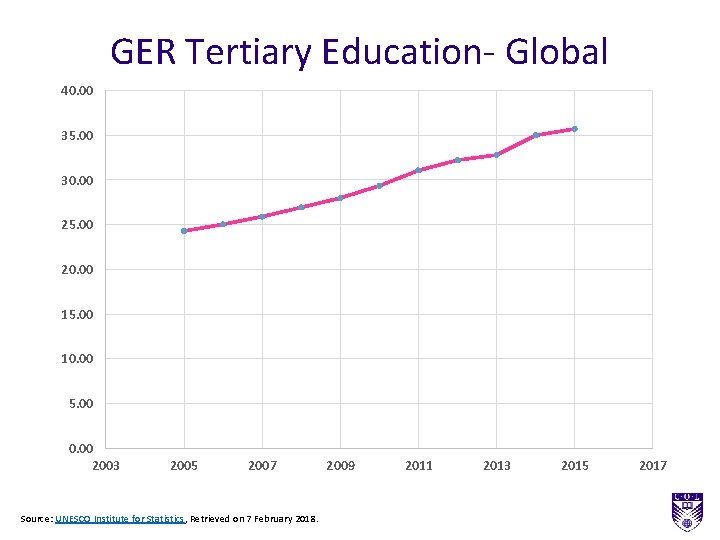
GER Tertiary Education- Global 40. 00 35. 00 30. 00 25. 00 20. 00 15. 00 10. 00 5. 00 0. 00 2003 2005 2007 Source: UNESCO Institute for Statistics, Retrieved on 7 February 2018. 2009 2011 2013 2015 2017
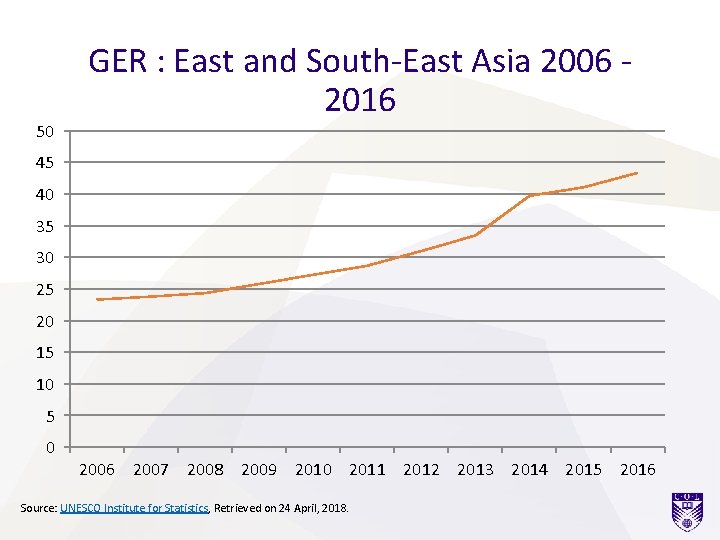
50 GER : East and South-East Asia 2006 2016 45 40 35 30 25 20 15 10 5 0 2006 2007 2008 2009 2010 2011 2012 2013 2014 2015 2016 Source: UNESCO Institute for Statistics, Retrieved on 24 April, 2018.
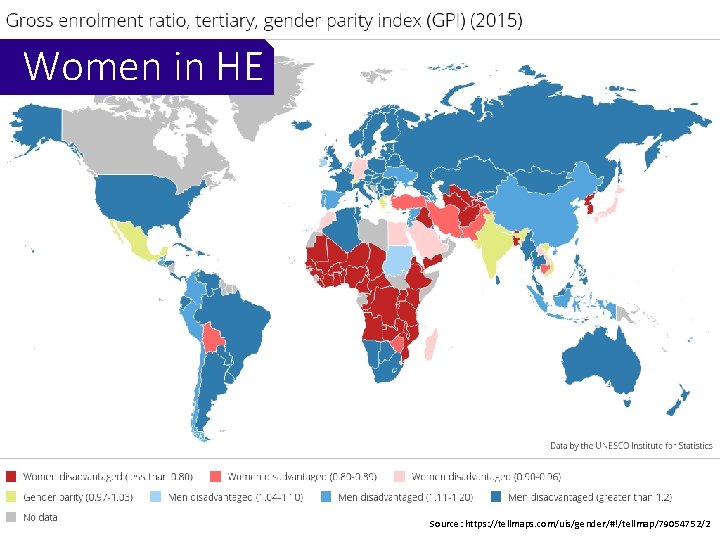
Women in HE Source: https: //tellmaps. com/uis/gender/#!/tellmap/79054752/2
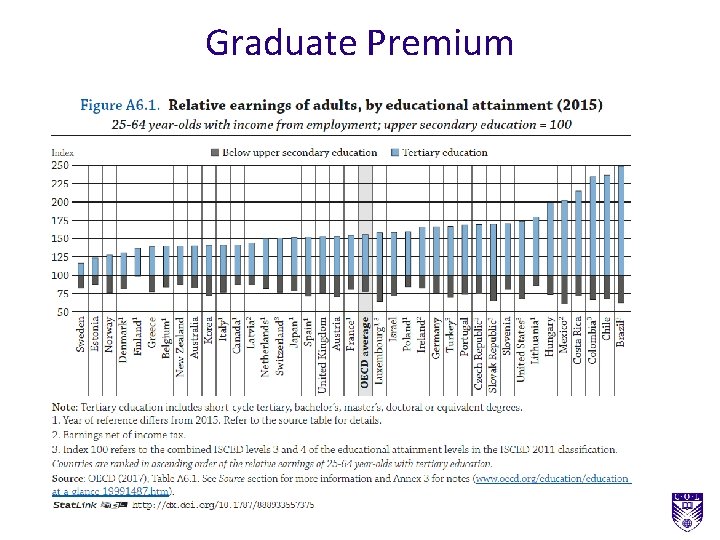
Graduate Premium
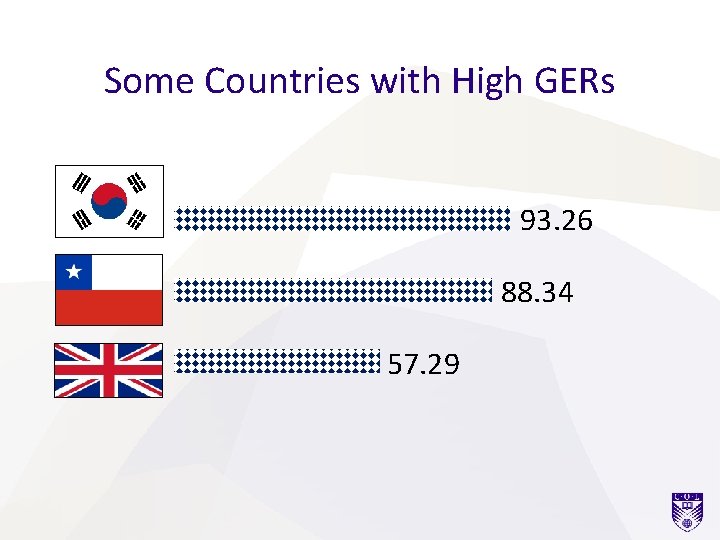
Some Countries with High GERs 93. 26 88. 34 57. 29
Skills Shortage ‘Countries have skills shortages, not degree shortages’ Andreas Schleicher
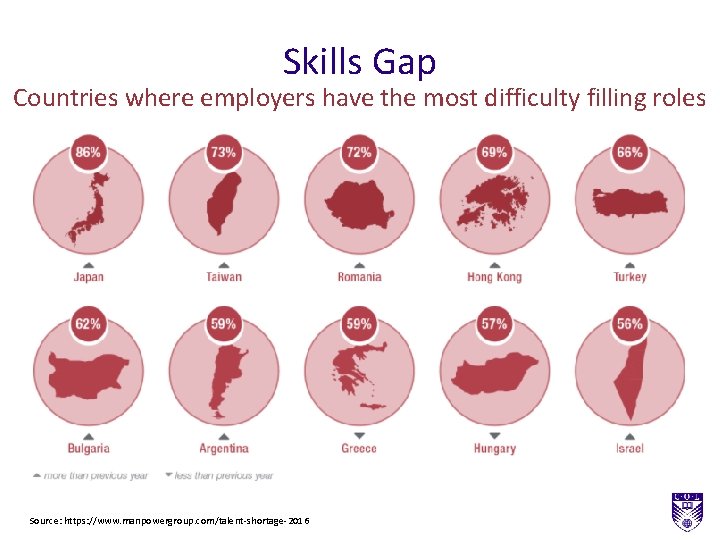
Skills Gap Countries where employers have the most difficulty filling roles Source: https: //www. manpowergroup. com/talent-shortage-2016
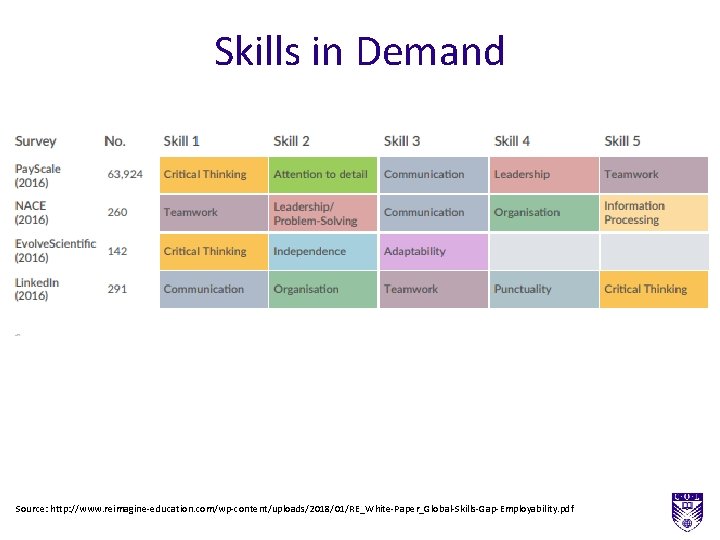
Skills in Demand Source: http: //www. reimagine-education. com/wp-content/uploads/2018/01/RE_White-Paper_Global-Skills-Gap-Employability. pdf
Technology Trends in Education
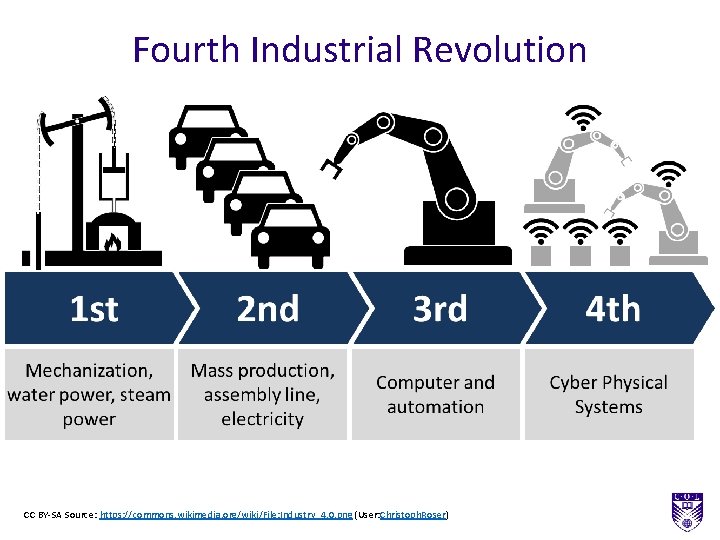
Fourth Industrial Revolution CC BY-SA Source: https: //commons. wikimedia. org/wiki/File: Industry_4. 0. png (User: Christoph. Roser)
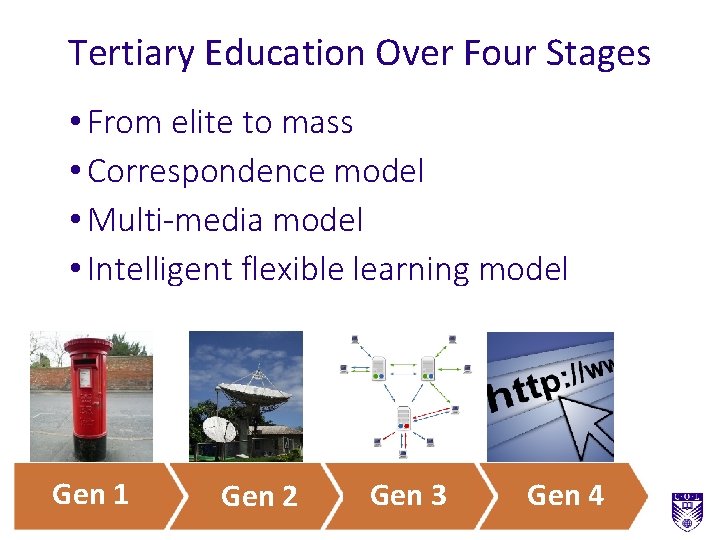
Tertiary Education Over Four Stages • From elite to mass • Correspondence model • Multi-media model • Intelligent flexible learning model Gen 1 Gen 2 Gen 3 Gen 4
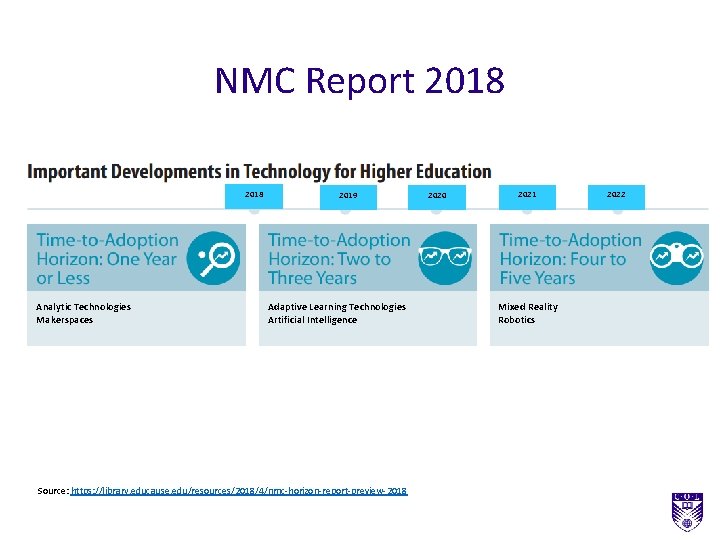
NMC Report 2018 Analytic Technologies Makerspaces 2019 Adaptive Learning Technologies Artificial Intelligence Source: https: //library. educause. edu/resources/2018/4/nmc-horizon-report-preview-2018 2020 2021 Mixed Reality Robotics 2022
Rise of Messaging
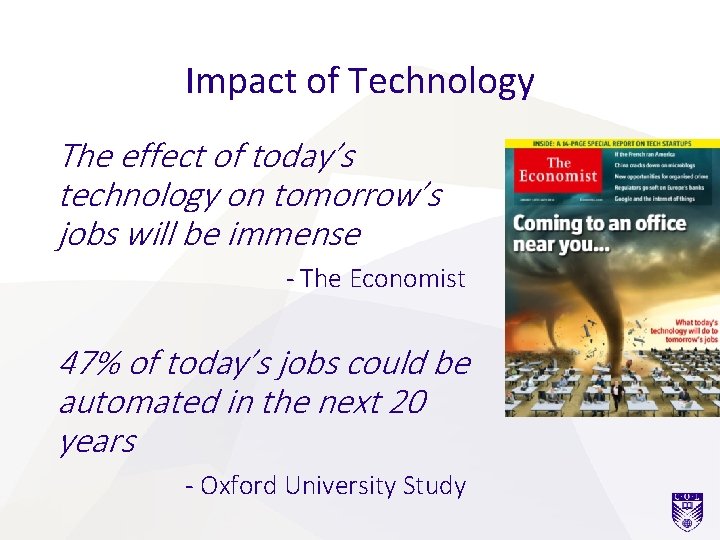
Impact of Technology The effect of today’s technology on tomorrow’s jobs will be immense - The Economist 47% of today’s jobs could be automated in the next 20 years - Oxford University Study
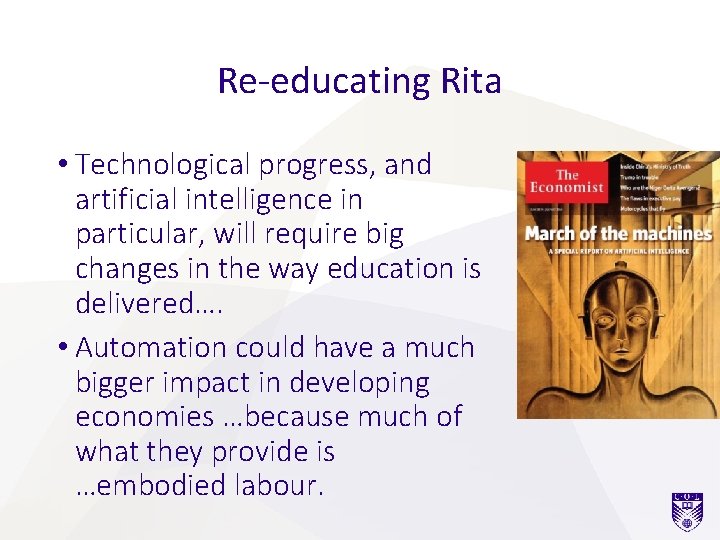
Re-educating Rita • Technological progress, and artificial intelligence in particular, will require big changes in the way education is delivered…. • Automation could have a much bigger impact in developing economies …because much of what they provide is …embodied labour.
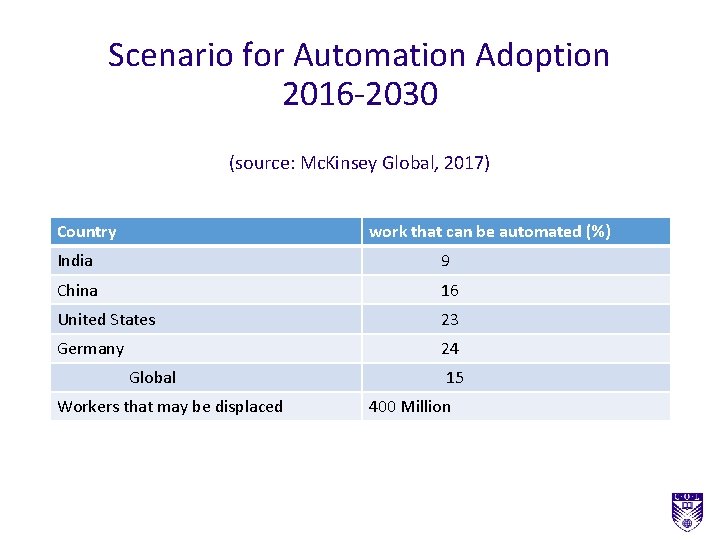
Scenario for Automation Adoption 2016 -2030 (source: Mc. Kinsey Global, 2017) Country work that can be automated (%) India 9 China 16 United States 23 Germany 24 Global Workers that may be displaced 15 400 Million
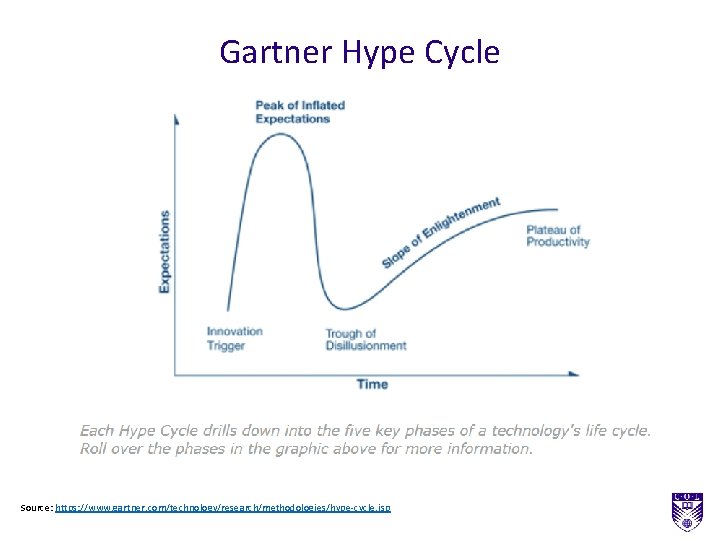
Gartner Hype Cycle Source: https: //www. gartner. com/technology/research/methodologies/hype-cycle. jsp
Decade of digital transformation
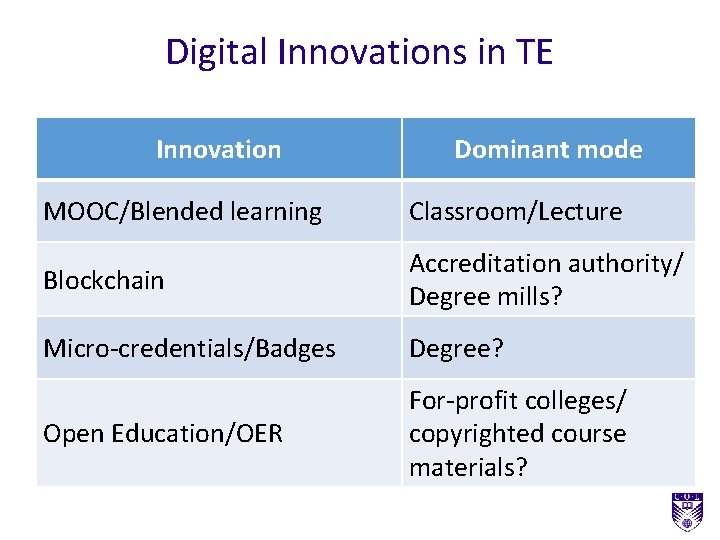
Digital Innovations in TE Innovation Dominant mode MOOC/Blended learning Classroom/Lecture Blockchain Accreditation authority/ Degree mills? Micro-credentials/Badges Degree? Open Education/OER For-profit colleges/ copyrighted course materials?
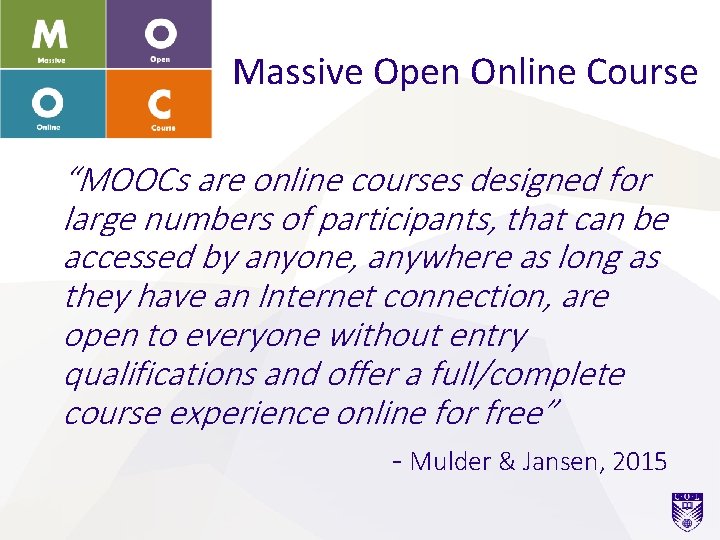
Massive Open Online Course “MOOCs are online courses designed for large numbers of participants, that can be accessed by anyone, anywhere as long as they have an Internet connection, are open to everyone without entry qualifications and offer a full/complete course experience online for free” - Mulder & Jansen, 2015
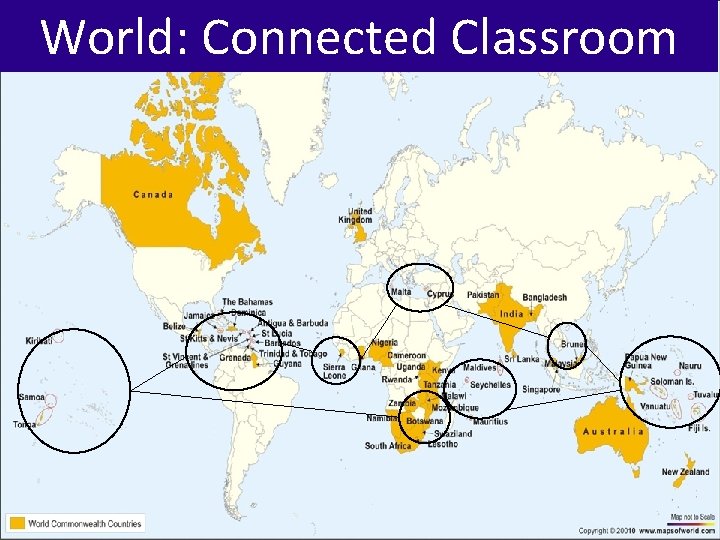
World: Connected Classroom
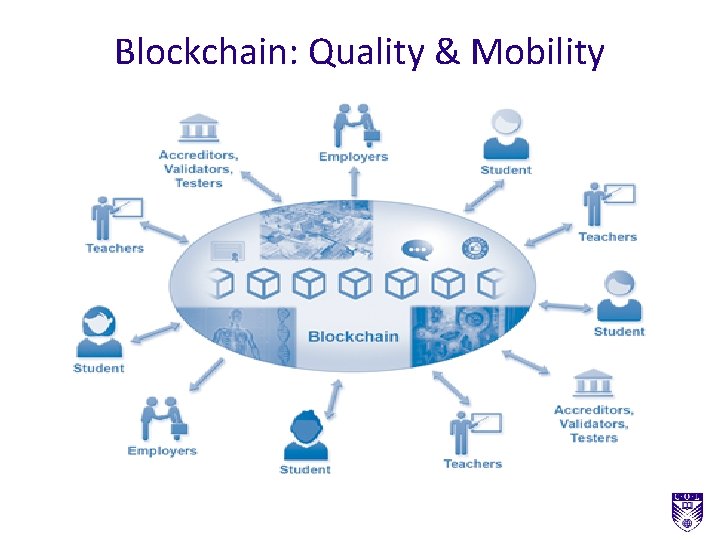
Blockchain: Quality & Mobility
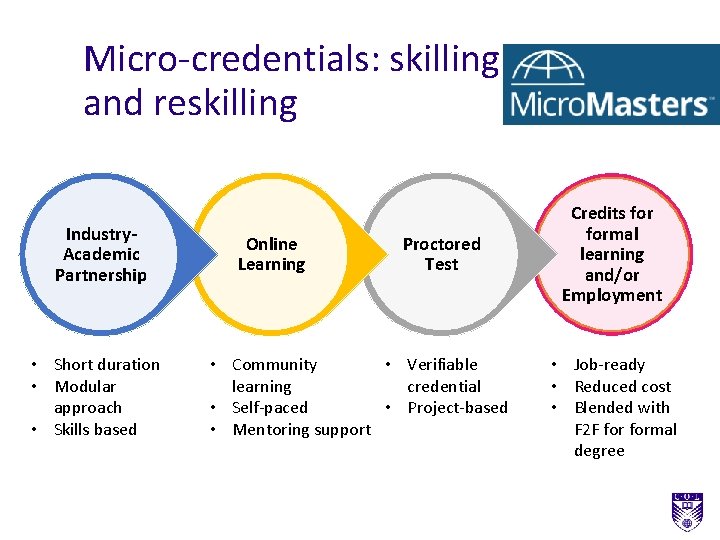
Micro-credentials: skilling and reskilling Industry. Academic Partnership • Short duration • Modular approach • Skills based Online Learning Proctored Test • Community • Verifiable learning credential • Self-paced • Project-based • Mentoring support Credits formal learning and/or Employment • Job-ready • Reduced cost • Blended with F 2 F formal degree
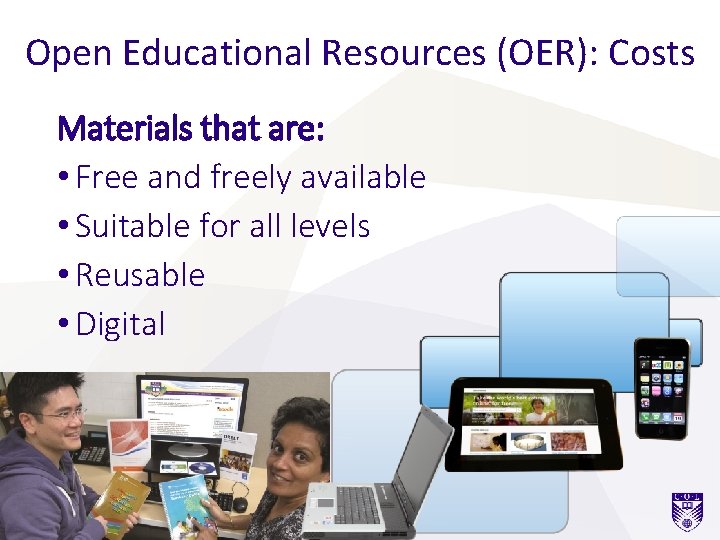
Open Educational Resources (OER): Costs Materials that are: • Free and freely available • Suitable for all levels • Reusable • Digital
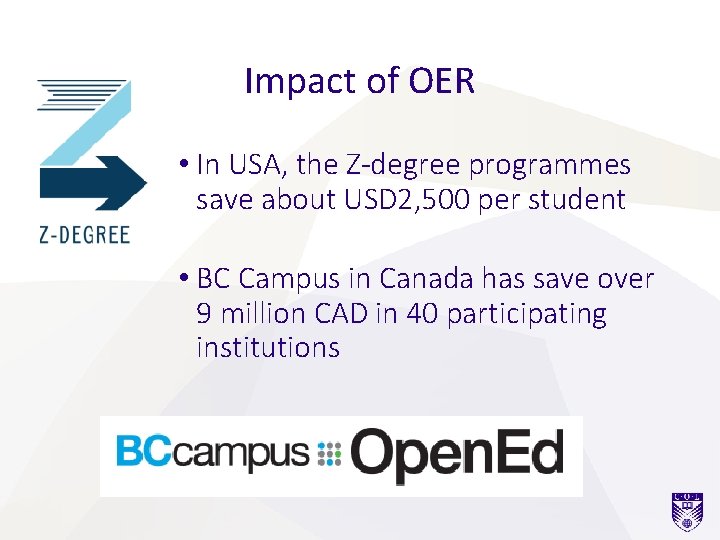
Impact of OER • In USA, the Z-degree programmes save about USD 2, 500 per student • BC Campus in Canada has save over 9 million CAD in 40 participating institutions
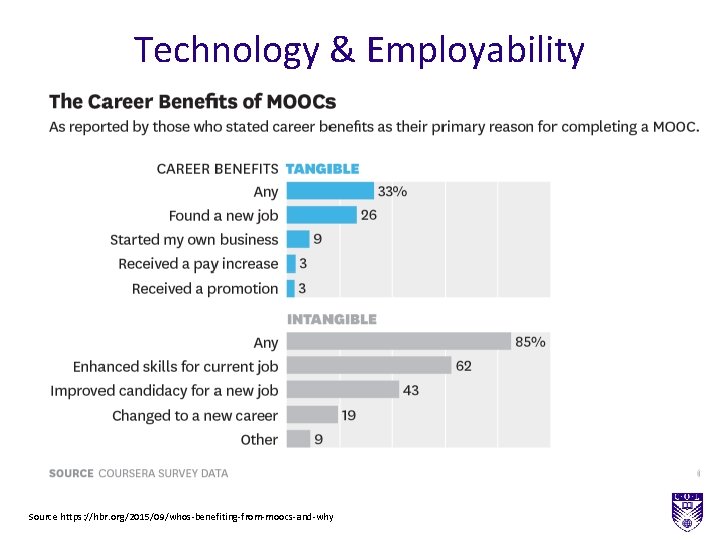
Technology & Employability Source https: //hbr. org/2015/09/whos-benefiting-from-moocs-and-why
Emerging Trends
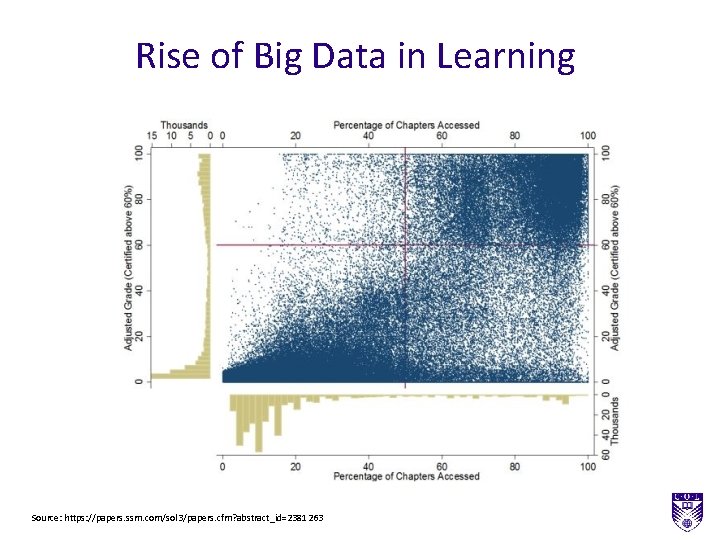
Rise of Big Data in Learning Source: https: //papers. ssrn. com/sol 3/papers. cfm? abstract_id=2381263
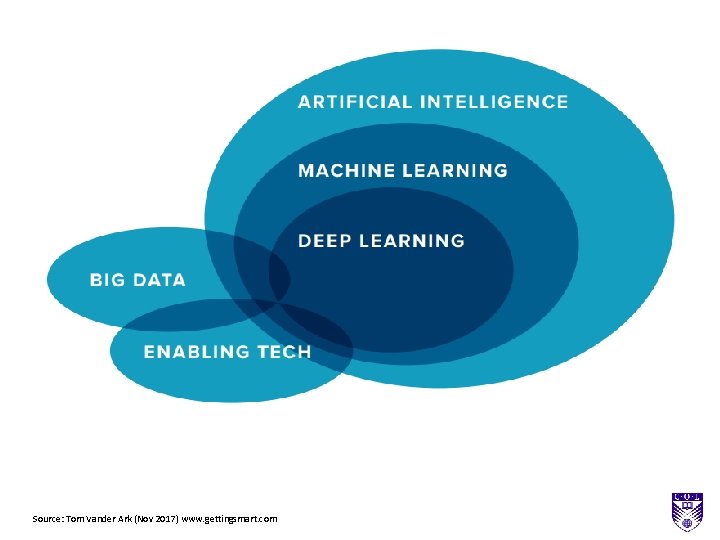
Source: Tom Vander Ark (Nov 2017) www. gettingsmart. com
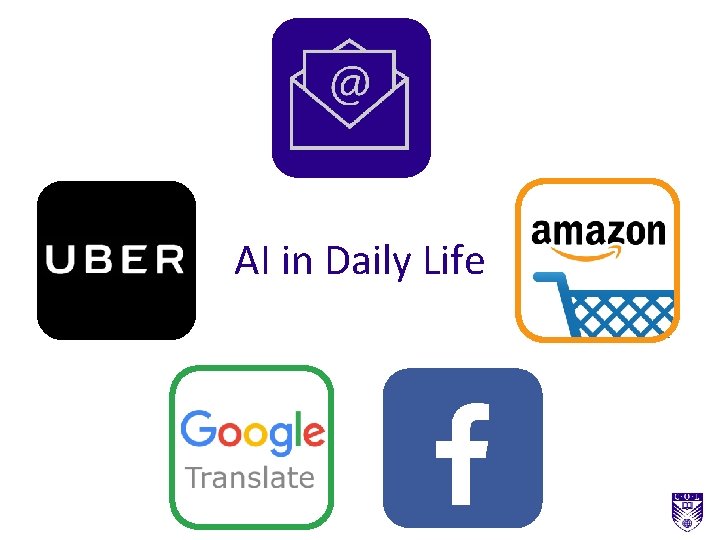
AI in Daily Life
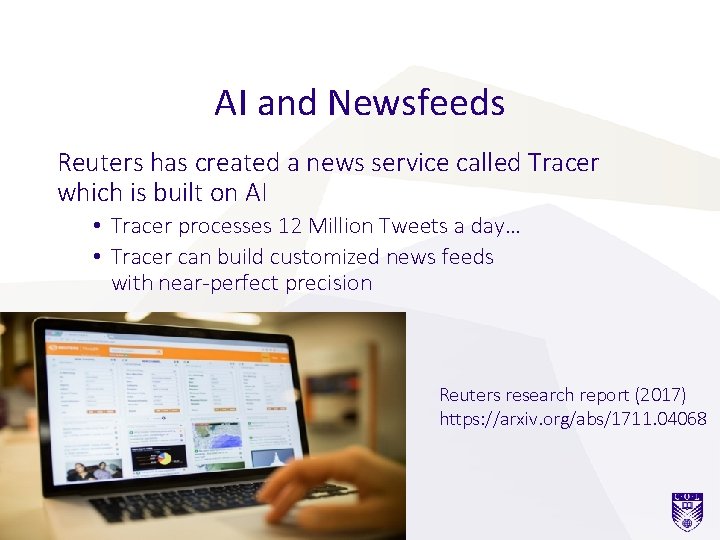
AI and Newsfeeds Reuters has created a news service called Tracer which is built on AI • Tracer processes 12 Million Tweets a day… • Tracer can build customized news feeds with near-perfect precision Reuters research report (2017) https: //arxiv. org/abs/1711. 04068
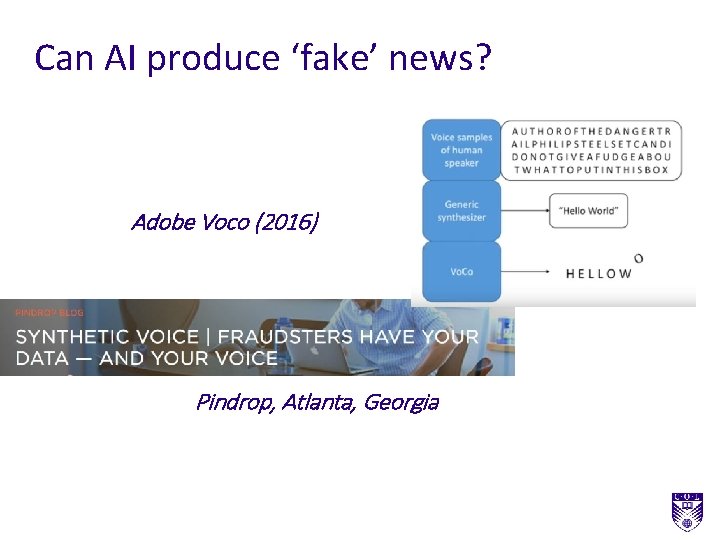
Can AI produce ‘fake’ news? Adobe Voco (2016) Pindrop, Atlanta, Georgia
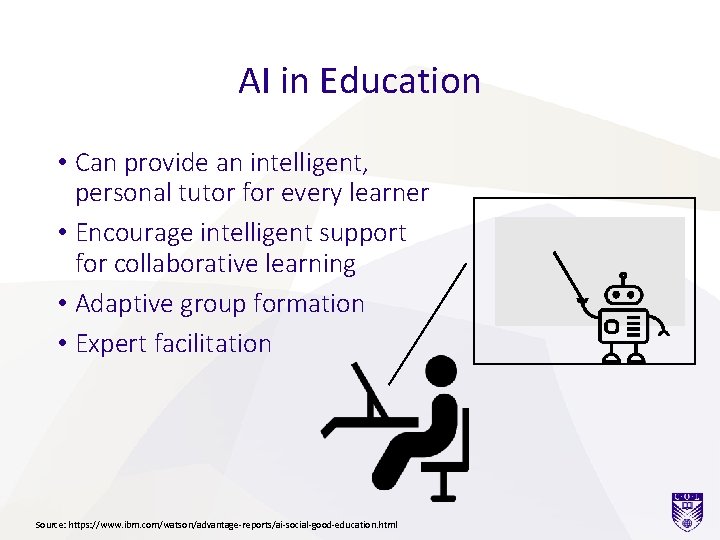
AI in Education • Can provide an intelligent, personal tutor for every learner • Encourage intelligent support for collaborative learning • Adaptive group formation • Expert facilitation Source: https: //www. ibm. com/watson/advantage-reports/ai-social-good-education. html
Jill Watson: World Famous Teaching Assistant • Deployed in four offerings of an online course in Computer Science in Georgia Tech (Instructor: Ashok Goyal) • A conversational chatbot built on AI • Three versions built and deployed: • Jill Watson • Stacy Sisko • Liz Duncan Source: http: //hdl. handle. net/1853/59104
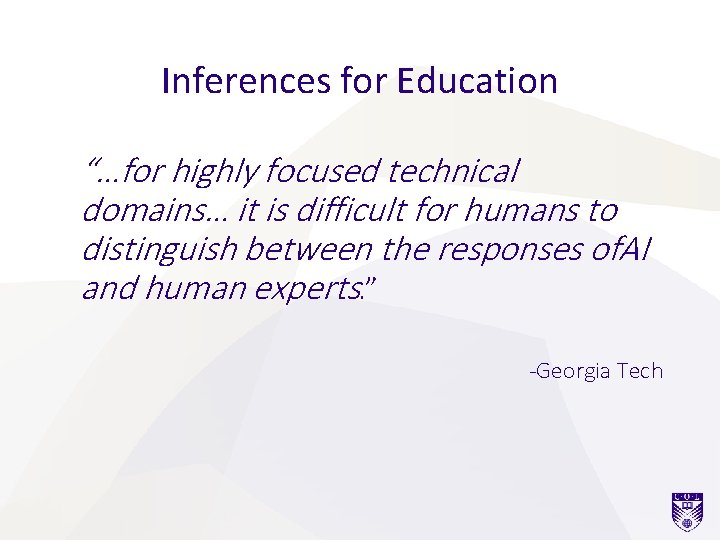
Inferences for Education “…for highly focused technical domains… it is difficult for humans to distinguish between the responses of. AI and human experts. ” -Georgia Tech
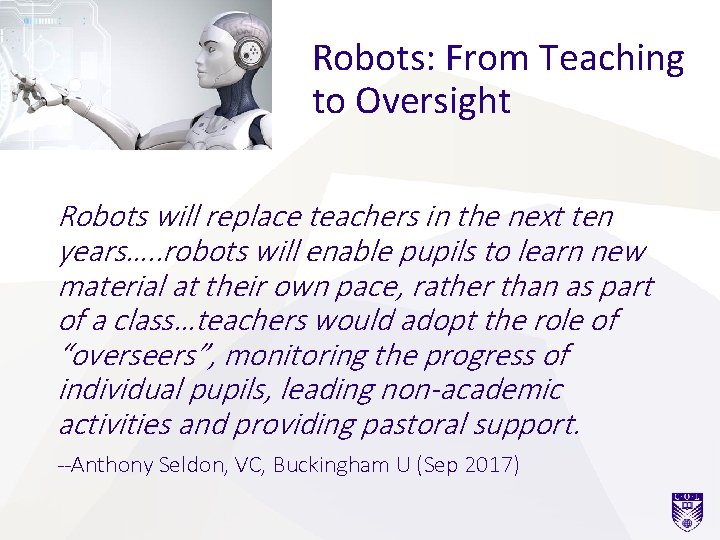
Robots: From Teaching to Oversight Robots will replace teachers in the next ten years…. . robots will enable pupils to learn new material at their own pace, rather than as part of a class…teachers would adopt the role of “overseers”, monitoring the progress of individual pupils, leading non-academic activities and providing pastoral support. --Anthony Seldon, VC, Buckingham U (Sep 2017)
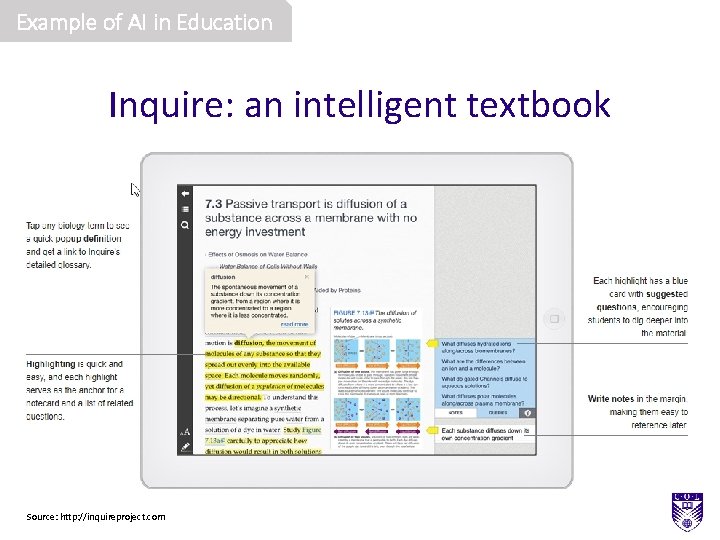
Example of AI in Education Inquire: an intelligent textbook Source: http: //inquireproject. com
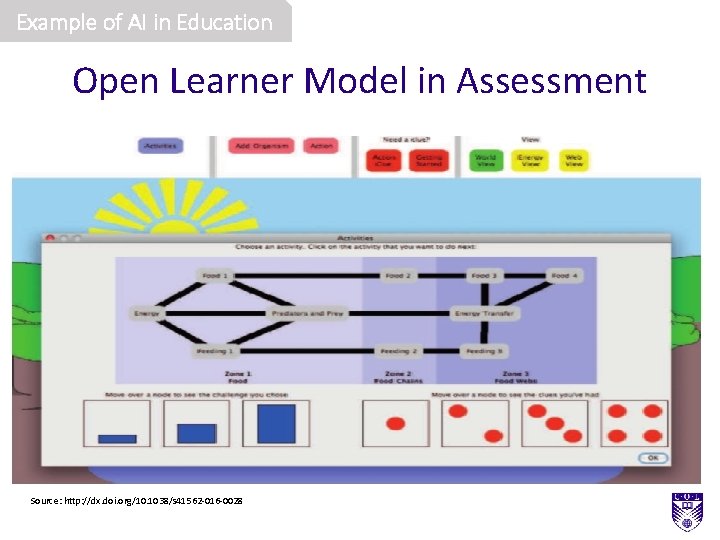
Example of AI in Education Open Learner Model in Assessment Source: http: //dx. doi. org/10. 1038/s 41562 -016 -0028
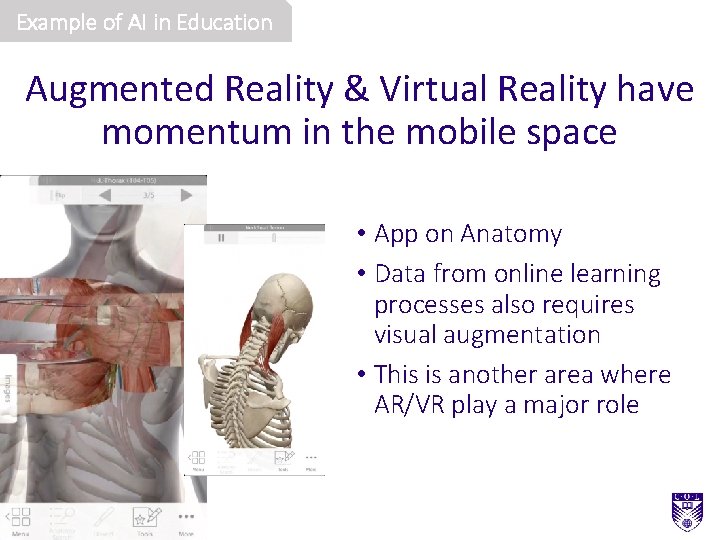
Example of AI in Education Augmented Reality & Virtual Reality have momentum in the mobile space • App on Anatomy • Data from online learning processes also requires visual augmentation • This is another area where AR/VR play a major role
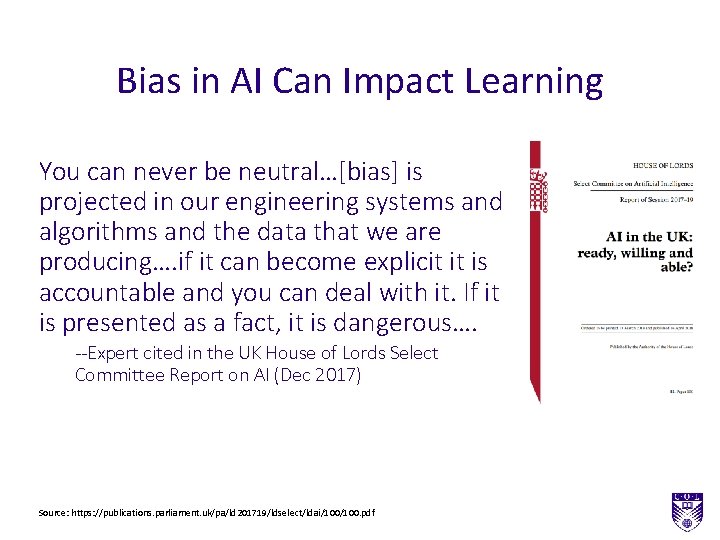
Bias in AI Can Impact Learning You can never be neutral…[bias] is projected in our engineering systems and algorithms and the data that we are producing…. if it can become explicit it is accountable and you can deal with it. If it is presented as a fact, it is dangerous…. --Expert cited in the UK House of Lords Select Committee Report on AI (Dec 2017) Source: https: //publications. parliament. uk/pa/ld 201719/ldselect/ldai/100. pdf
The Future of Work • Digitalisation can make professions disappear • Rise of AI can lead to elimination of many high-skilled jobs leaving just the highest skilled ones for operations by humans
Implications for Tertiary Education • Rise of the Multi-Versity network …learners can move from education to society and back • Micro-qualifications: rapid acquisition of highly specific knowledge and skills rather than a degree • The Faculty to become Lifelong Learners -- focus on new modes of delivery and pedagogy Multi-versity: term introduced by Clark Kerr (1963) http: //openvault. wgbh. org/catalog/A_0 DF 915 F 352 B 044 EFB 1 A 31 CCC 71 E 8 F 9 BF
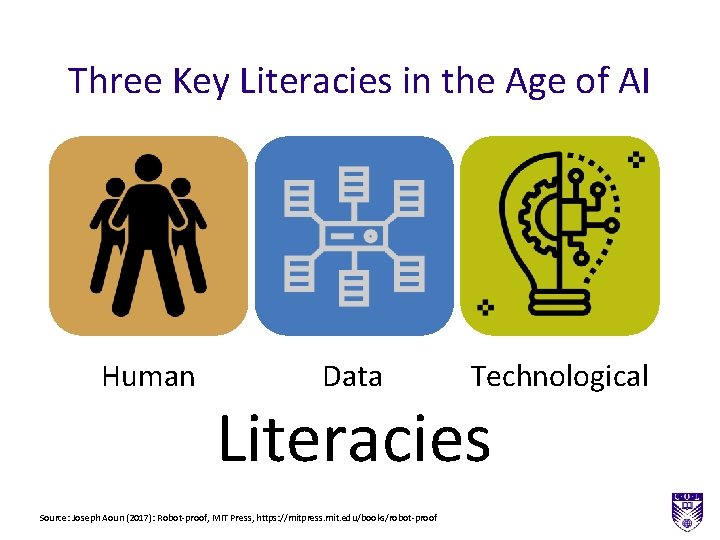
Three Key Literacies in the Age of AI Human Data Technological Literacies Source: Joseph Aoun (2017): Robot-proof, MIT Press, https: //mitpress. mit. edu/books/robot-proof
Re-imagining Learning
The New Learner: 1980’s • adult learner who looked for new education, training and/or skills for personal development, promotion, change in career, and/or enhanced job requirements
Digital Native: C 21 Technology-savvy learners, usually young school-leavers The Emerging Ultimate Learner
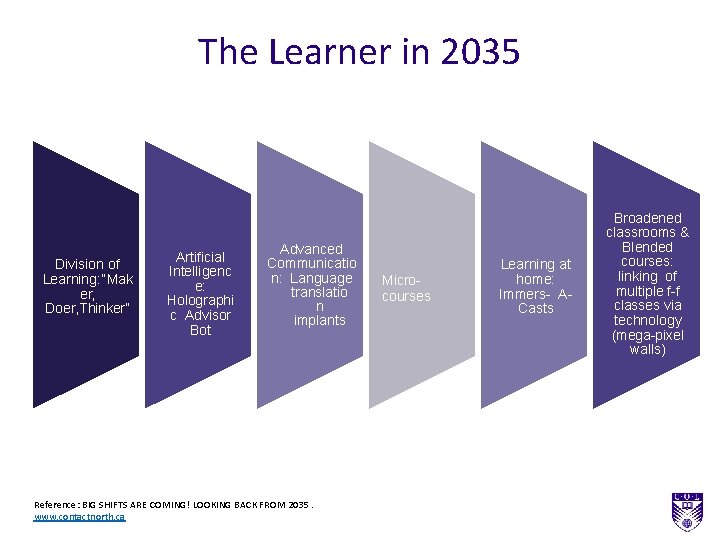
The Learner in 2035 Division of Learning: “Mak er, Doer, Thinker” Artificial Intelligenc e: Holographi c Advisor Bot Advanced Communicatio n: Language translatio n implants Reference: BIG SHIFTS ARE COMING! LOOKING BACK FROM 2035. www. contactnorth. ca Microcourses Learning at home: Immers- ACasts Broadened classrooms & Blended courses: linking of multiple f-f classes via technology (mega-pixel walls)
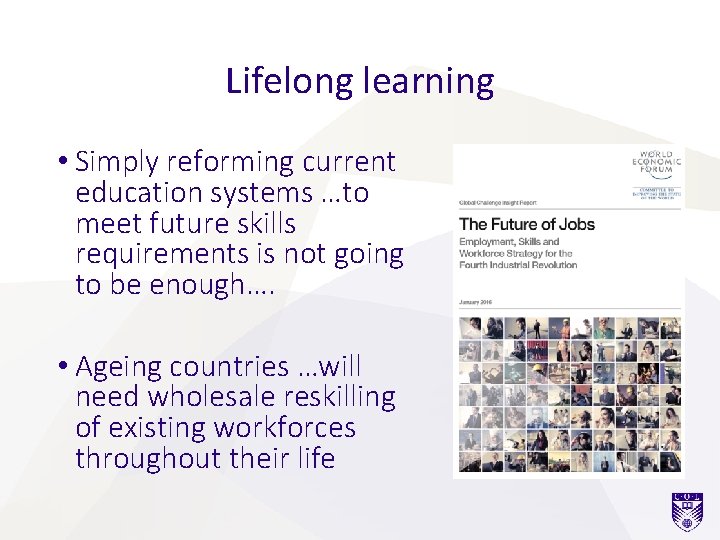
Lifelong learning • Simply reforming current education systems …to meet future skills requirements is not going to be enough…. • Ageing countries …will need wholesale reskilling of existing workforces throughout their life
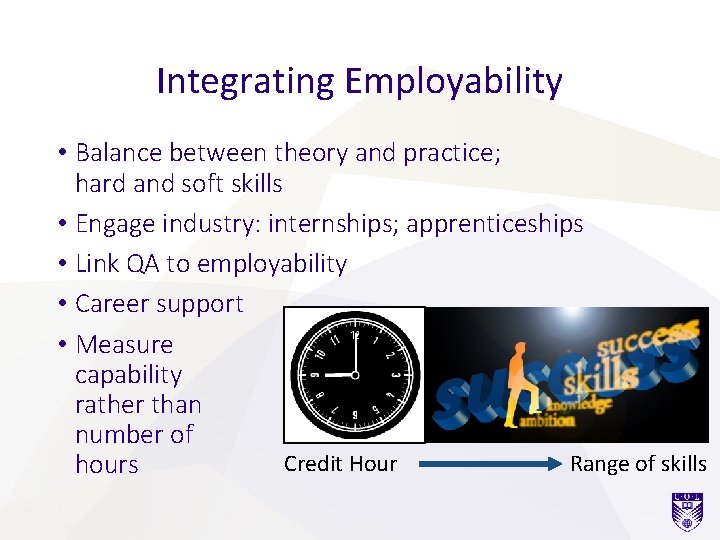
Integrating Employability • Balance between theory and practice; hard and soft skills • Engage industry: internships; apprenticeships • Link QA to employability • Career support • Measure capability rather than number of Range of skills Credit Hour hours
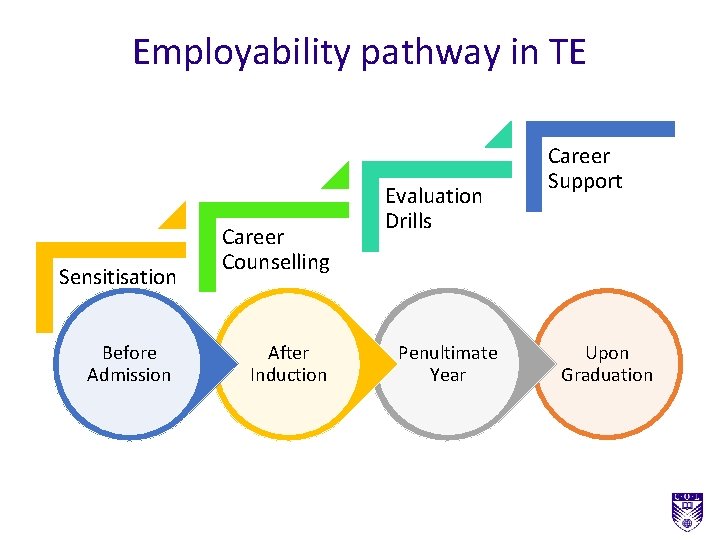
Employability pathway in TE Sensitisation Before Admission Career Counselling After Induction Evaluation Drills Penultimate Year Career Support Upon Graduation
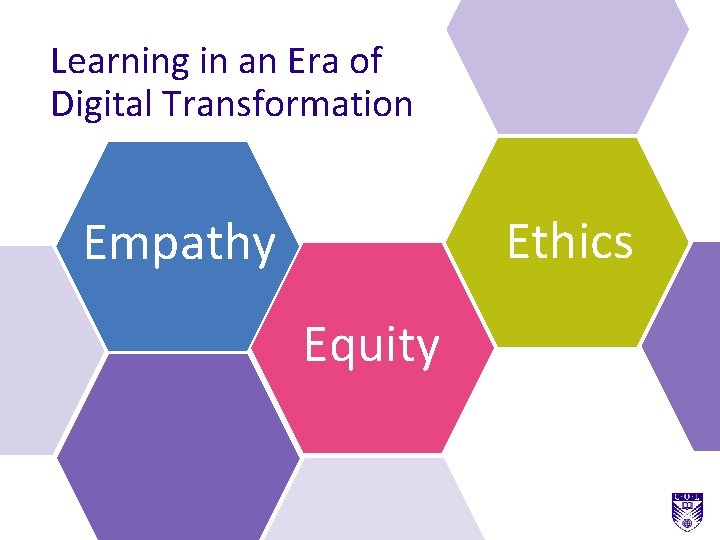
Learning in an Era of Digital Transformation Ethics Empathy Equity
Thank you www. col. org