
Learning in a digital age A case study


- Slides: 56
Learning in a digital age: A case study on the effective use of e. Fundi in the North West University DR MMAKI JANTJIES DEPARTMENT OF INFORMATION SYSTEM FACULTY OF ECONOMIC AND MANAGEMENT SCIENCE UNIVERSITY OF WESTERN CAPE- BELVILLE/ CAPE TOWN SOUTH AFRICA
Session Part 1 –Case Study Part 2 –How do you “blend the learning”
ØUniversity of Warwick ØUniversity of North West ØUniversity of Cape Town ØUniversity of Western Cape ØConsultancy ØNGO ICT 4 Dev ØWomen in ICT Forum ØAssociation of M/learn
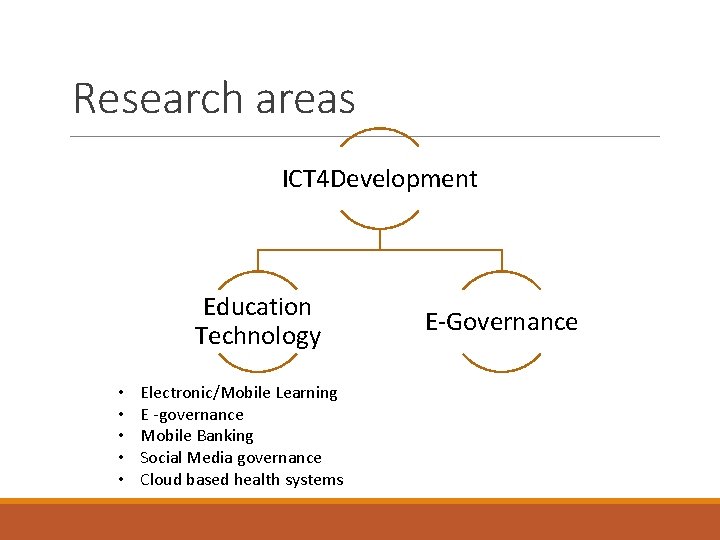
Research areas ICT 4 Development Education Technology • • • Electronic/Mobile Learning E -governance Mobile Banking Social Media governance Cloud based health systems E-Governance
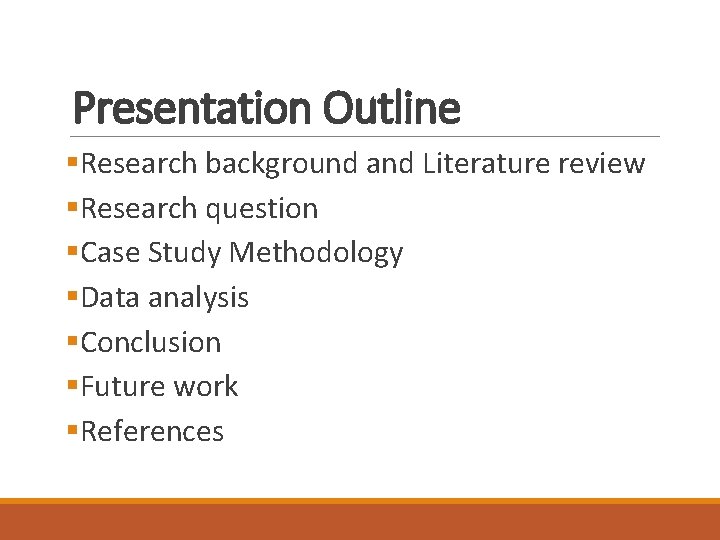
Presentation Outline §Research background and Literature review §Research question §Case Study Methodology §Data analysis §Conclusion §Future work §References
Introduction Students have different methods in which they create and acquire knowledge. The process of learning can be enhanced by first understanding how learning occurs.
Learning theories In literature there are many different paradigms and models that enable us to understand the process of knowledge acquisition. The fundamental existing paradigms highlighted in this research are: Constructivism – experiential and reflective learning (Shih & Mills, 2007). Behaviourism – a reinforcement approach to learning where a learner is incentivised for their attempt (Boghossian, 2006).
Learning preferences and styles When using technology to support learning the preferences and approaches to learning influence the manner in which technology is used. Ally (2004) highlights that an understanding of a learners learning style or preference in a technology environment is important as it is allows the conception of a personalized learning context for the learner.
Learning styles While other factors also affect the process of learning for students such as gender, age etc (Evans and Vermunt, 2013) we consider using technology to support the basic learning styles of students.
Models that consider learning styles
VARK model originally developed by David Klob and has now developed to influence other learning style models. Visual, Aural, Reading or Writing, Kinaesthetic model (Fleming & Mills, 1992; Fleming & Baume’s , 2006).
VARK The VARK model focuses on learners methods of receiving and reflecting on learning content. These methods are based on an individual’s sensory use of visualising, listening, reading/ writing and lastly experiencing learning content during the learning process (Hawk &Shah, 2007).
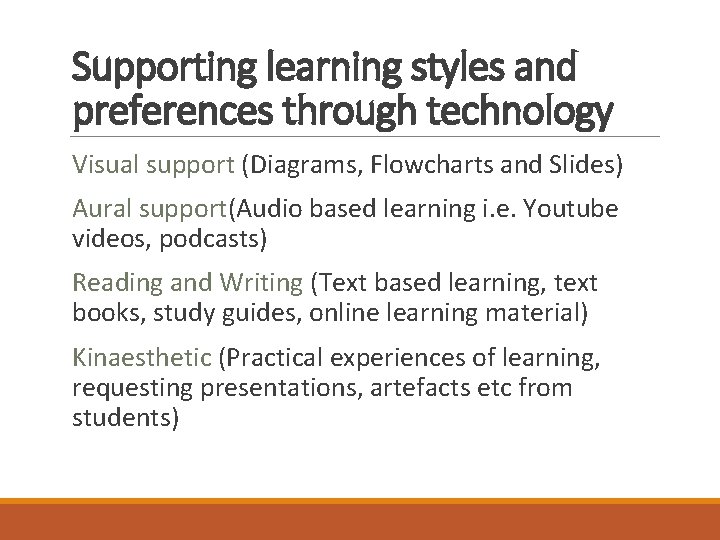
Supporting learning styles and preferences through technology Visual support (Diagrams, Flowcharts and Slides) Aural support(Audio based learning i. e. Youtube videos, podcasts) Reading and Writing (Text based learning, text books, study guides, online learning material) Kinaesthetic (Practical experiences of learning, requesting presentations, artefacts etc from students)
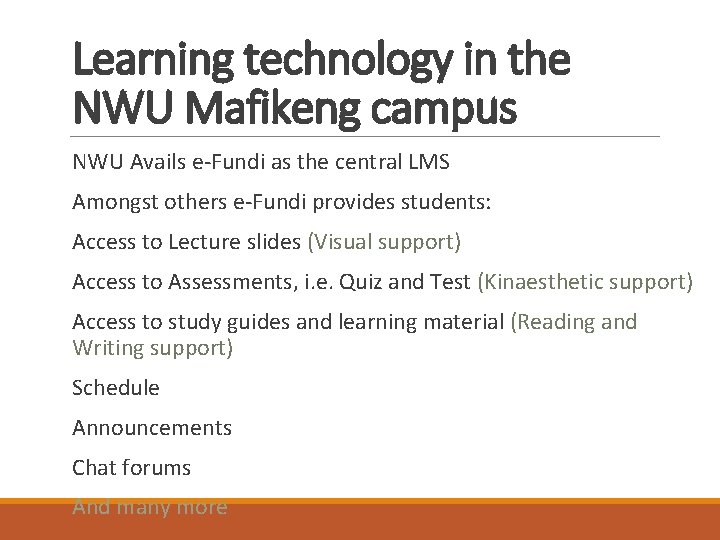
Learning technology in the NWU Mafikeng campus NWU Avails e-Fundi as the central LMS Amongst others e-Fundi provides students: Access to Lecture slides (Visual support) Access to Assessments, i. e. Quiz and Test (Kinaesthetic support) Access to study guides and learning material (Reading and Writing support) Schedule Announcements Chat forums And many more
Research question How can technology be used to support learning in Mafikeng campus?
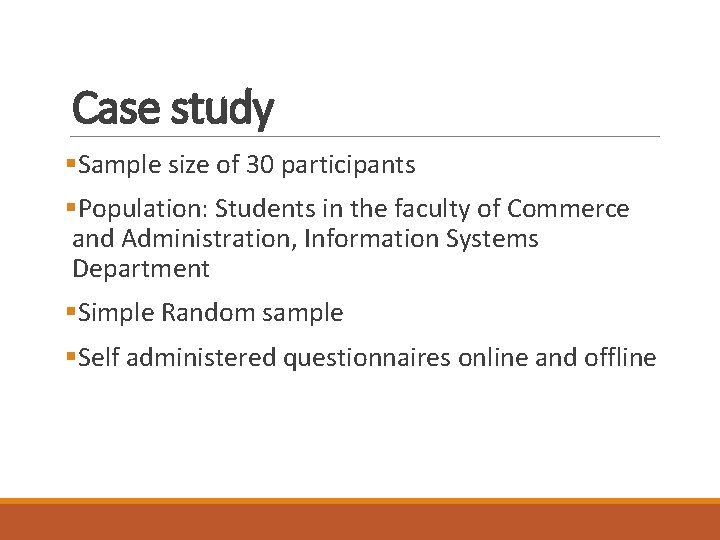
Case study §Sample size of 30 participants §Population: Students in the faculty of Commerce and Administration, Information Systems Department §Simple Random sample §Self administered questionnaires online and offline
Data Analysis Thematic Analysis Descriptive Statistics
The student’s- background of technology
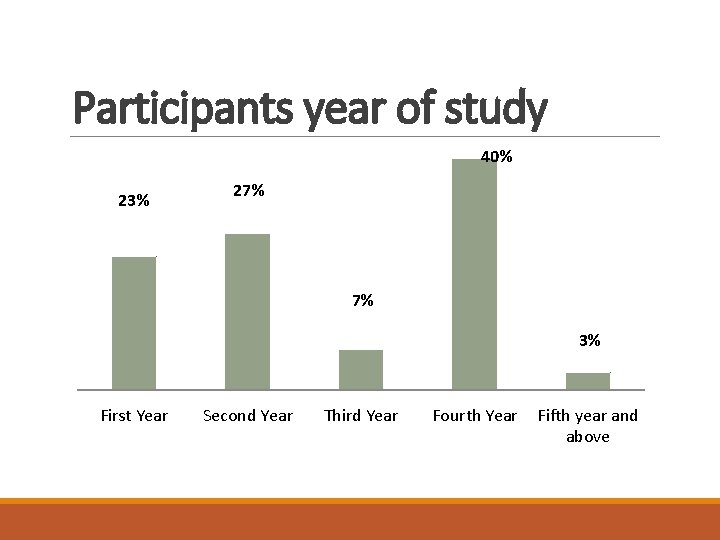
Participants year of study 40% 23% 27% 7% 3% First Year Second Year Third Year Fourth Year Fifth year and above
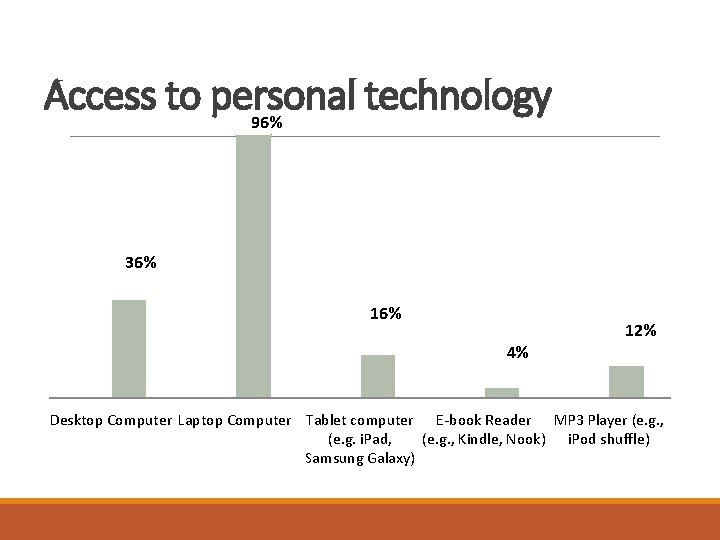
Access to personal technology 96% 36% 12% 4% Desktop Computer Laptop Computer Tablet computer E-book Reader MP 3 Player (e. g. , (e. g. i. Pad, (e. g. , Kindle, Nook) i. Pod shuffle) Samsung Galaxy)
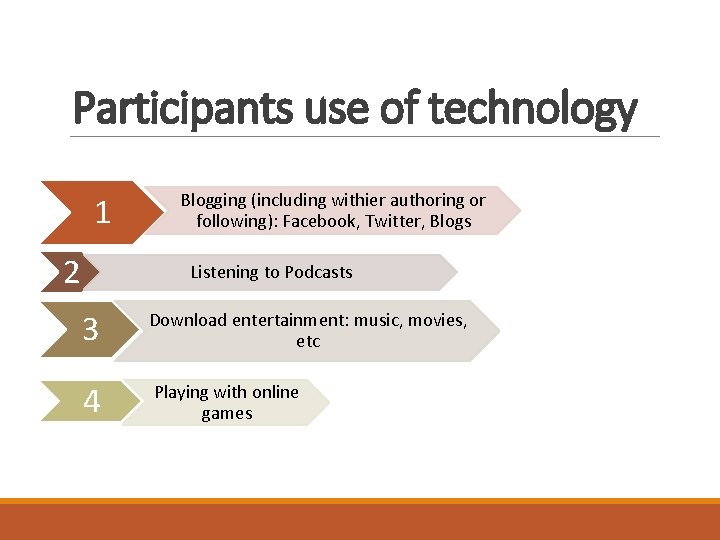
Participants use of technology 1 2 Blogging (including withier authoring or following): Facebook, Twitter, Blogs Listening to Podcasts 3 Download entertainment: music, movies, etc 4 Playing with online games
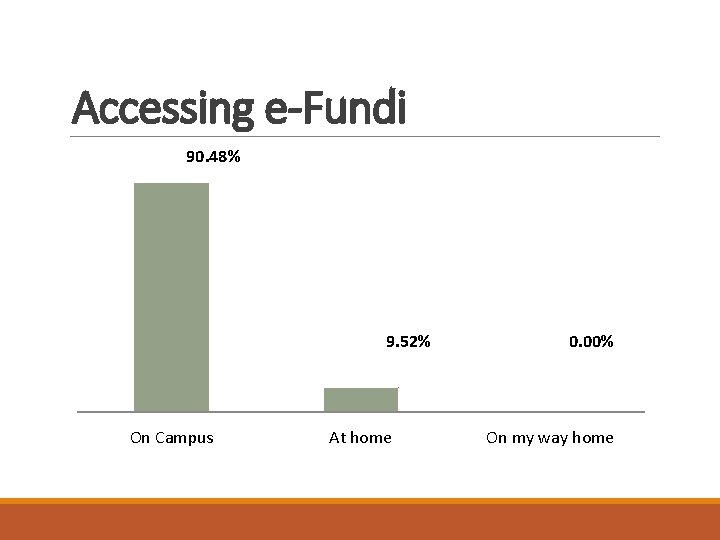
Accessing e-Fundi 90. 48% 9. 52% On Campus At home 0. 00% On my way home
their experience of learning through e-Fundi
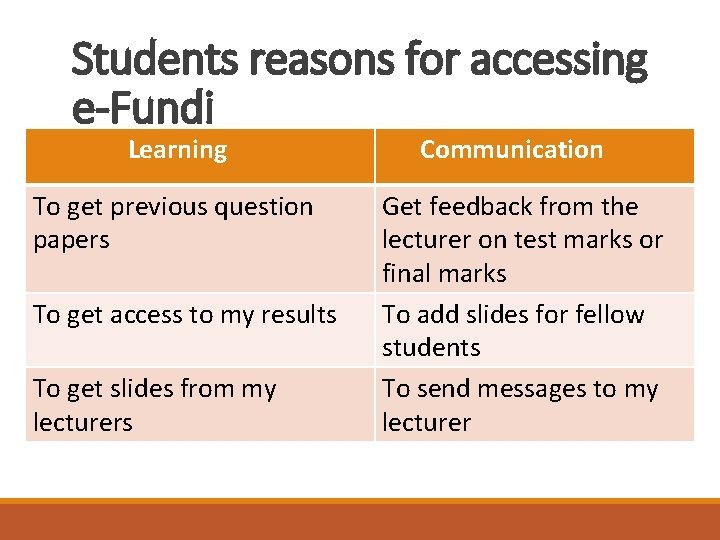
Students reasons for accessing e-Fundi Learning To get previous question papers To get access to my results To get slides from my lecturers Communication Get feedback from the lecturer on test marks or final marks To add slides for fellow students To send messages to my lecturer
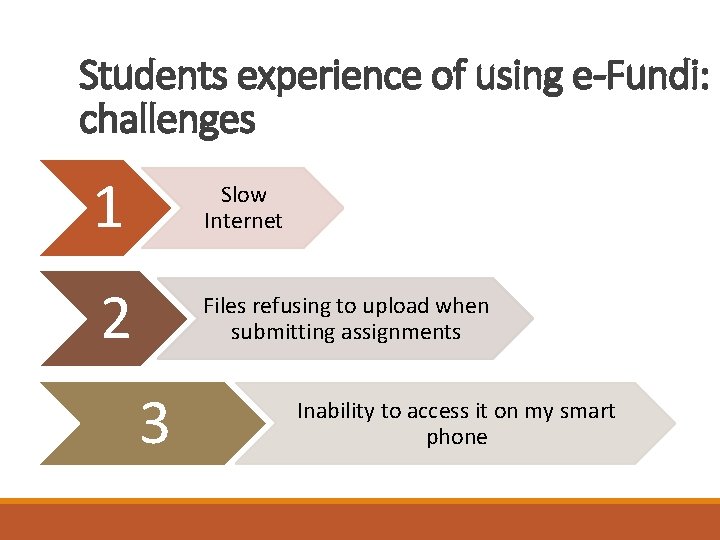
Students experience of using e-Fundi: challenges 1 Slow Internet 2 Files refusing to upload when submitting assignments 3 Inability to access it on my smart phone
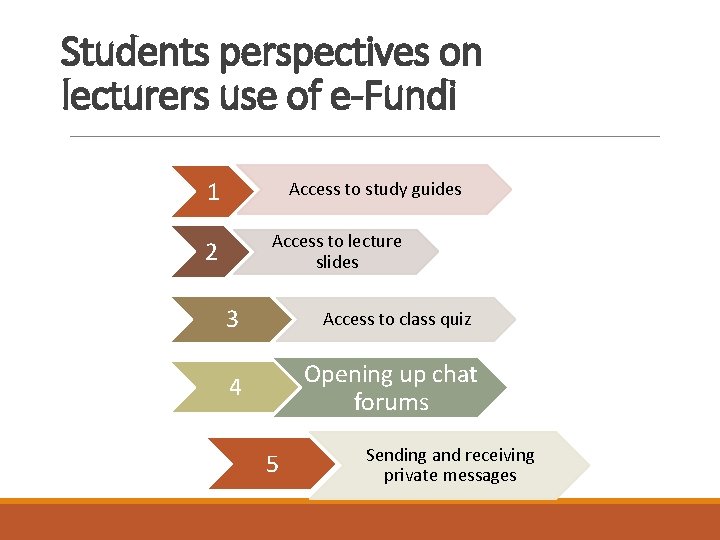
Students perspectives on lecturers use of e-Fundi 1 Access to study guides Access to lecture slides 2 3 Access to class quiz 4 Opening up chat forums 5 Sending and receiving private messages
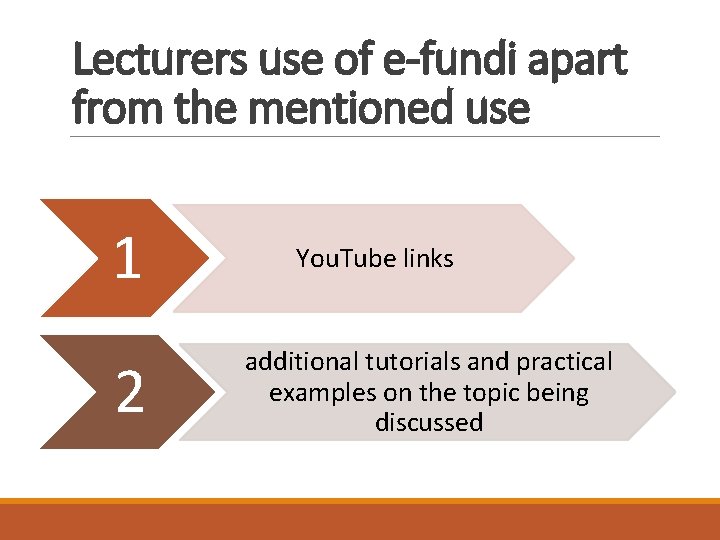
Lecturers use of e-fundi apart from the mentioned use 1 2 You. Tube links additional tutorials and practical examples on the topic being discussed
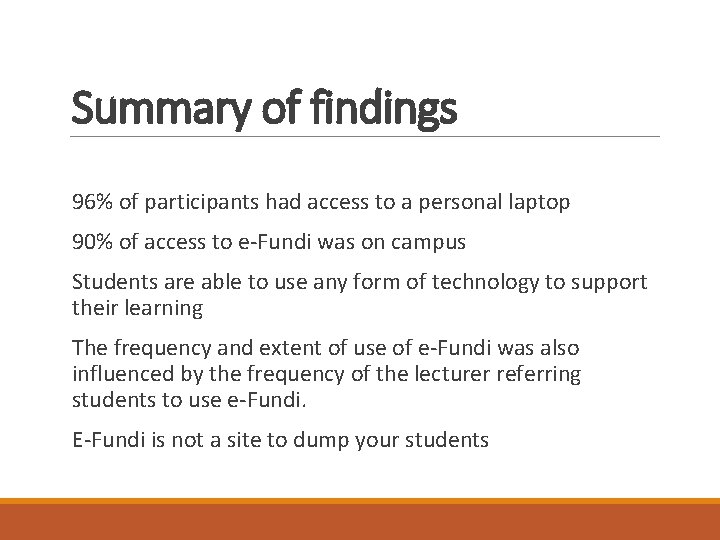
Summary of findings 96% of participants had access to a personal laptop 90% of access to e-Fundi was on campus Students are able to use any form of technology to support their learning The frequency and extent of use of e-Fundi was also influenced by the frequency of the lecturer referring students to use e-Fundi. E-Fundi is not a site to dump your students
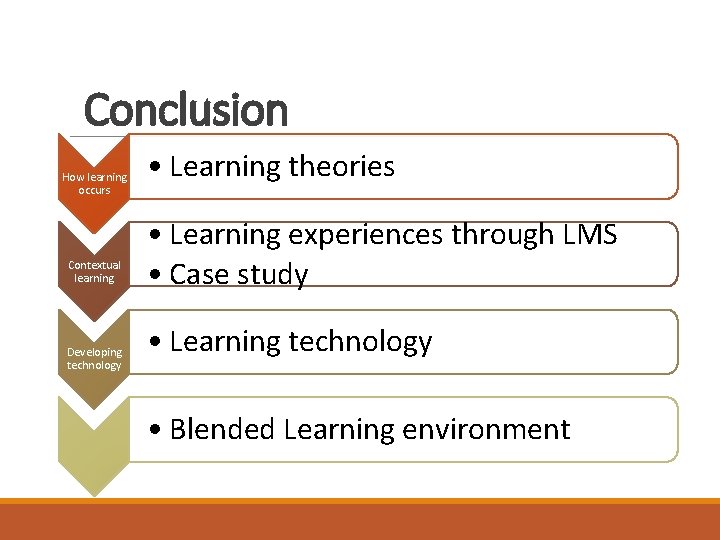
Conclusion How learning occurs Contextual learning Developing technology • Learning theories • Learning experiences through LMS • Case study • Learning technology • Blended Learning environment
References Ally, M. (2004) Using learning theories to design instruction for mobile learning devices. MLearn 2004. Bracciano, Rome. Boghossian, P. (2006). Behaviourism, Constructivism, and Socratic Pedagogy. Educational Philosophy and Theory 38 (6), 713 -721. Bradford, P. , Porciello, M. , Balkon, N. , & Backus, D. (2007). The blackboard learning system: the be all and end all in educational instruction? . Journal of Educational Technology Systems, 35(3), 301 -314. Evans, C. (2013). British Journal of Educational Psychology, 83, 185– 195. Fleming, N. , and Baume, D. (2006) Learning Styles Again: VARKing up the right tree!, Educational Developments, SEDA Ltd, Issue 7. 4, Nov. 2006, p 4 -7. Mc. Crow, J. , et al. (2013). A prospective cohort study examining the preferred learning styles of acute care registered nurses, Nurse Education in Practice. http: //dx. doi. org/10. 1016/j. nepr. 2013. 08. 019 Sharples, M. , Taylor, J. & Vavoula, G. (2005). Towards a theory of Mobile learning. In: m. Learn 2005. Cape Town, South Africa. Shih, Y. & Mills, D. (2007). Setting the New Standard with Mobile Computing in Online Learning. International Review of Research in Open and Distance Learning 8 (2).
“Blending the learning DR MMAKI JANTJIES BOTHO UNIVERSITY
Presentation Outline What is blended learning ? How can blended be used considering styles? What does literature say?
Introduction One of the greatest challenges that lecturers face is teaching in technology led environments. Are we trained to be educators or are we trained to be technologist?
Activity 1
Activity 1 5 minutes : discuss the use of technology in your personal life asking the following similar questions: How do I relate to technology? Do I receive email from my mobile device? Do I use Skype to communicate with students who are far from me? Do I use an integrated calendar which will send me reminders on my phone? Do I attend courses on technology use?
Reflect: me and technology
How does learning occur?
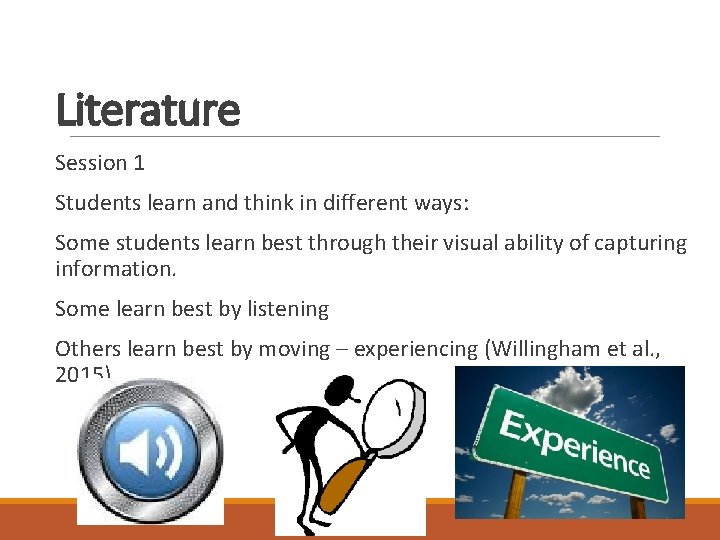
Literature Session 1 Students learn and think in different ways: Some students learn best through their visual ability of capturing information. Some learn best by listening Others learn best by moving – experiencing (Willingham et al. , 2015)
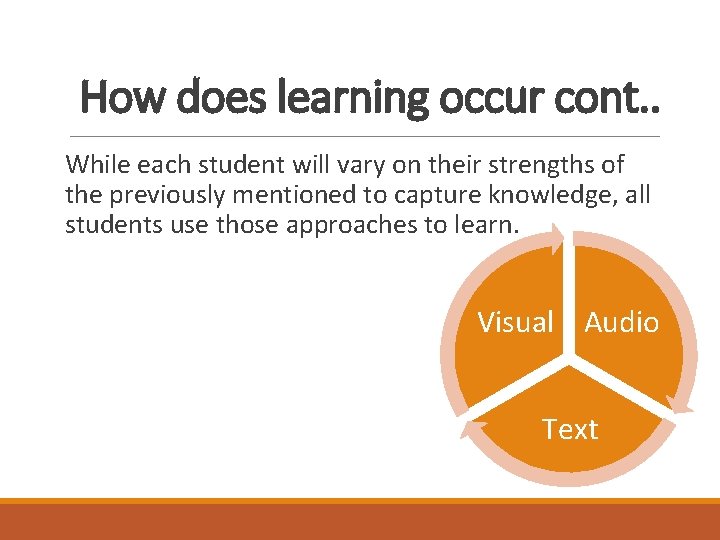
How does learning occur cont. . While each student will vary on their strengths of the previously mentioned to capture knowledge, all students use those approaches to learn. Visual Audio Text
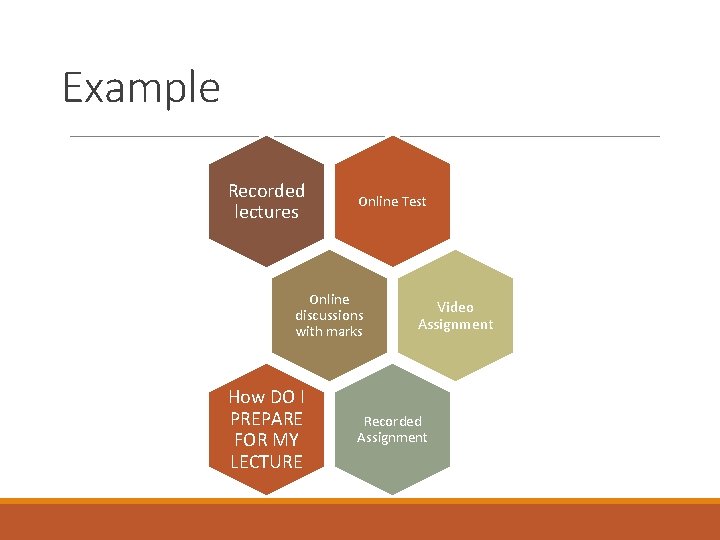
Example Recorded lectures Online Test Online discussions with marks How DO I PREPARE FOR MY LECTURE Video Assignment Recorded Assignment
The buzz word, Blended learning
What is blended learning? Nikolić et al (2015: 2) simply define blended learning as: a teaching and learning approach that combines face-to-face classroom methods with online activities.
Blended learning contin. . Widely used in higher education Offers an opportunity to use varied platforms to access learning and different innovative learning activities. rethinking of the instructional design the investment of additional time and effort in the design trigger a shift toward a more active and learnercentered approach
Blended learning affordances give you the possibility to adapt the learning materials to the students individual needs or preferences (Chandra &Watters, 2012). blended learning might also be better able to meet the needs of the current generation of students, who are surrounded by computers in their daily life
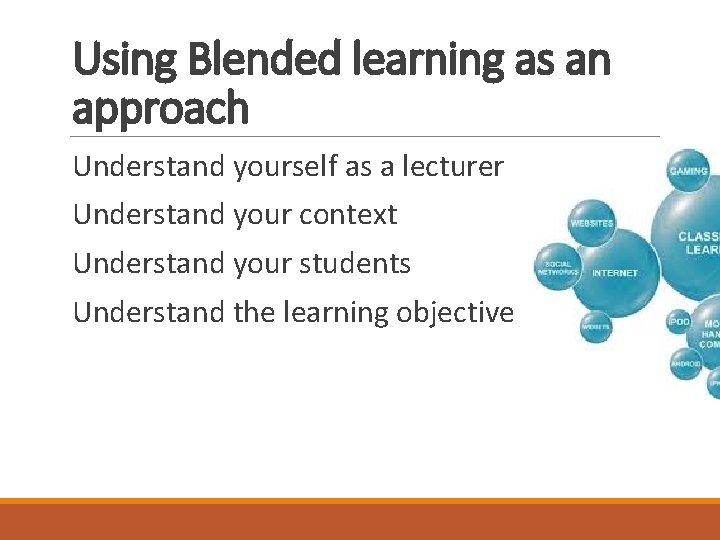
Using Blended learning as an approach Understand yourself as a lecturer Understand your context Understand your students Understand the learning objective
Understanding yourself as a lecturer Fear of the unknown Technology is for private use and does not spill into work life Dedicating time to redefine how you conduct lecturers Acknowledging the need for training Networking and keeping contact with people who have the same objectives
Understand your context §What technology support does your institution have : LMS §What skills and interests do you have which you can use in the blended learning environment? (do you like blogging, listening to podcasts etc) §Does your institution have Wi-Fi? §Will the context enable you to create a Blended learning environment?
Understanding your student Do your students have mobile phones/laptops/tablets Are they able to access Wi-Fi on their devices? Do they have technology skills? How can you support them?
Understanding the learning objectives Every learning activity you prepare as an educator has an objective Technology enables you to achieve these objectives through multiple ways. PLAN =PREPARE = ENJOY
Preparing for my lecture examples?
Blended Learning Technology does not drive innovation the lecturer drives the innovation!
Summary Understand your self- your fear, your likes and dislikes and training you need Understand your student Understand the context Know your objective of the activity
Activity 2 Socrative challenge Student Login: Room: TI 7 WK 12 On your mobile devices login to : https: //www. socrative. com
References Chandra, V. , &Watters, J. J. (2012). Re-thinking physics teaching with web-based learning. Computers & Education, 58(1), 631– 640. Spanjers, I. A. , Könings, K. D. , Leppink, J. , Verstegen, D. M. , de Jong, N. , Czabanowska, K. , & Van Merriënboer, J. J. (2015). The promised land of blended learning: Quizzes as a moderator. Educational Research Review. Willingham, D. T. , Hughes, E. M. , & Dobolyi, D. G. (2015). The Scientific Status of Learning Styles Theories. Teaching of Psychology, 42(3), 266 -271.
The end…. . Ke a leboga Enkosi Thank you Dankie Niyabonga Ro livhuwa
Questions