
Learning How to Apply Compassion both Inside and

Learning How to Apply Compassion both Inside and Outside the Classroom Dr Clodagh Dowling Senior Clinical Psychologist St Patrick’s Mental Health Services
Compassion Focused Therapy Developed by Prof Paul Gilbert to address shame and self-criticism in people with mental health difficulties. Focus: building capacities for compassion and balancing the affect regulation systems Basic philosophy: We all just find ourselves here with a brain, emotions and sense of (socially made) self we did not choose but have to figure out
Definition of Compassion "a sensitivity to suffering in self and others with a deep commitment to try to alleviate and prevent it”. Dalai Lama Competencies of Compassion Engagement with suffering Alleviation of suffering
Compassion as Flow Different practices for each Other Self Evidence that intentionally practicing each of these can have impacts on mental states and social behaviour
It’s not our fault! Tricky Brain Our brains are the result of millions of years of evolutionary history. They are set up to be ‘better safe than sorry’ – so they tend to be very threat sensitive and we find it easier to learn to be fearful, angry or upset, than happy and content.
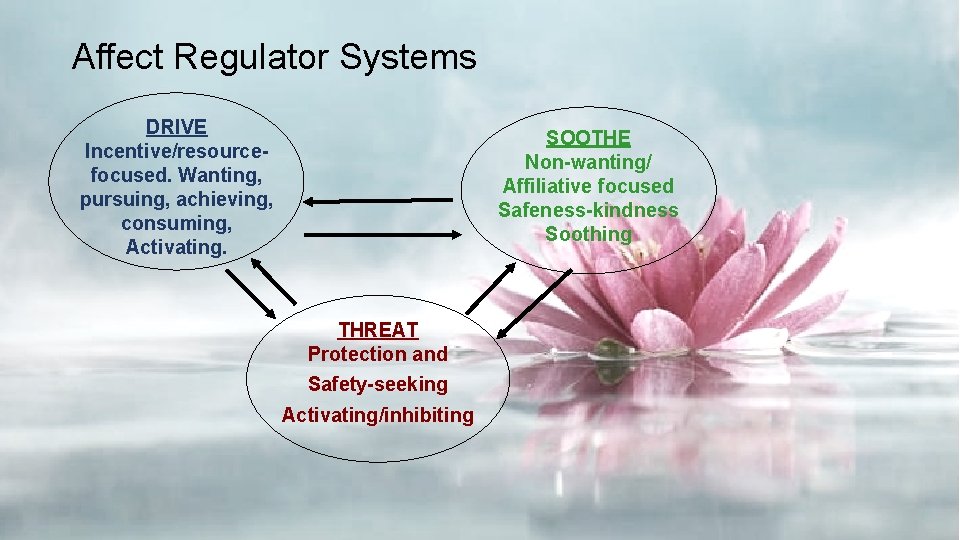
Affect Regulator Systems DRIVE Incentive/resourcefocused. Wanting, pursuing, achieving, consuming, Activating. SOOTHE Non-wanting/ Affiliative focused Safeness-kindness Soothing THREAT Protection and Safety-seeking Activating/inhibiting
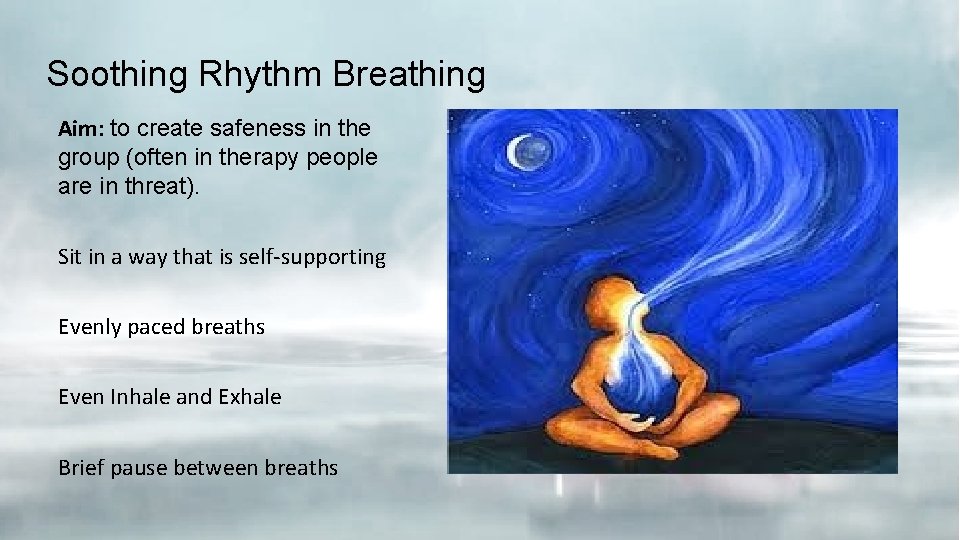
Soothing Rhythm Breathing Aim: to create safeness in the group (often in therapy people are in threat). Sit in a way that is self-supporting Evenly paced breaths Even Inhale and Exhale Brief pause between breaths
Developing Compassion Images • Ideal caring and compassionate self and/or image --- define ideal as you at your compassionate best • Caring as a genuine desire for one’s well-being –Commitment and motivation • Wisdom a sentient mind who understands the struggles of humanity and self. Empathic stance, self-transcendent • Strength as ‘calm authority’ fortitude, endurance • Warmth affiliation, genuine care, gentle smile, voice • Non-Judgement no criticism, curiosity – but motivation to be encouraging, supportive helpful Exercises: • Creating the Compassionate Self: You at Your Compassionate Best • Compassionate Companion
Imagining the Compassionate Other Act of creating one (what one would like for oneself) is a step on compassion focusing Find the type of image and form of relationship that fits for you – images usually change over time or for different situations This can be an Inner: Nurturer, Guide, Friend, Mentor, Fellow Traveller; Bodhisattva, Ideal Compassionate Other, Compassionate Companion How: Activate your soothing system. Visualize your compassionate compassion Image them offering you their compassion and you accepting it Notice what feelings arise and any blocks to letting compassion in
Many Thanks Further Reading: The Compassionate Mind, Professor Paul Gilbert https: //compassionatemind. co. uk Contact Details: cdowling@stpatsmail. com
- Slides: 10