
Learning from our European Partners Peter Lane TMI

- Slides: 35
Learning from our European Partners Peter Lane TMI Bristol 9 th October 2008
Content § General opportunities § Specific projects - VOCMAT
European Commission Initiatives § DG Enterprise § Others
DG Enterprise Specialist reports and studies
DG Enterprise Events
DG Enterprise Tourism Sustainability Group
DG Enterprise
DG Enterprise § Member State reporting § Networking
Other funding streams § European Regional Development Fund § LIFE Programme § Research programme § Leonardo da Vinci
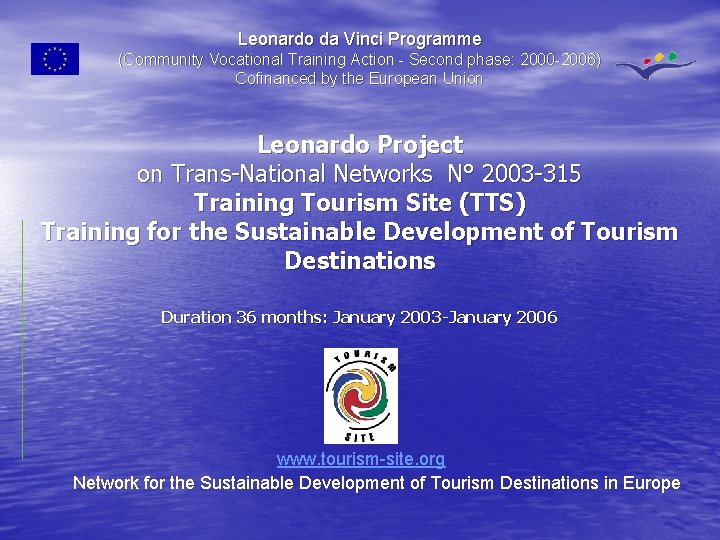
Leonardo da Vinci Programme (Community Vocational Training Action - Second phase: 2000 -2006) Cofinanced by the European Union Leonardo Project on Trans-National Networks N° 2003 -315 Training Tourism Site (TTS) Training for the Sustainable Development of Tourism Destinations Duration 36 months: January 2003 -January 2006 www. tourism-site. org Network for the Sustainable Development of Tourism Destinations in Europe
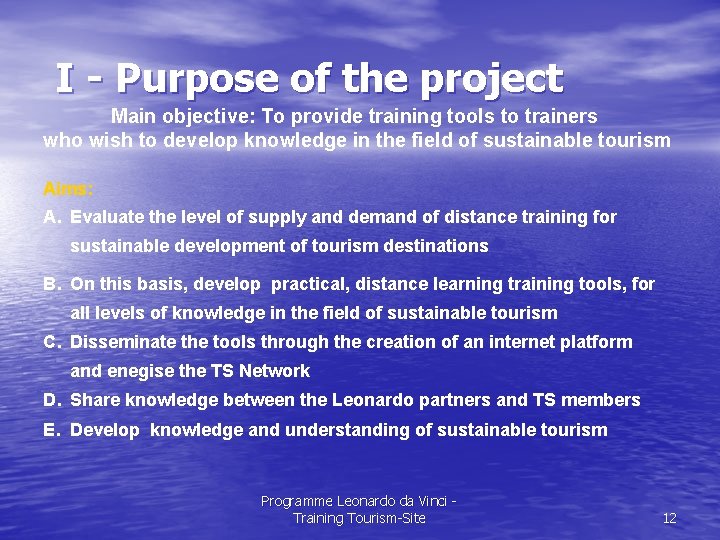
I - Purpose of the project Main objective: To provide training tools to trainers who wish to develop knowledge in the field of sustainable tourism Aims: A. Evaluate the level of supply and demand of distance training for sustainable development of tourism destinations B. On this basis, develop practical, distance learning training tools, for all levels of knowledge in the field of sustainable tourism C. Disseminate the tools through the creation of an internet platform and enegise the TS Network D. Share knowledge between the Leonardo partners and TS members E. Develop knowledge and understanding of sustainable tourism Programme Leonardo da Vinci Training Tourism-Site 12
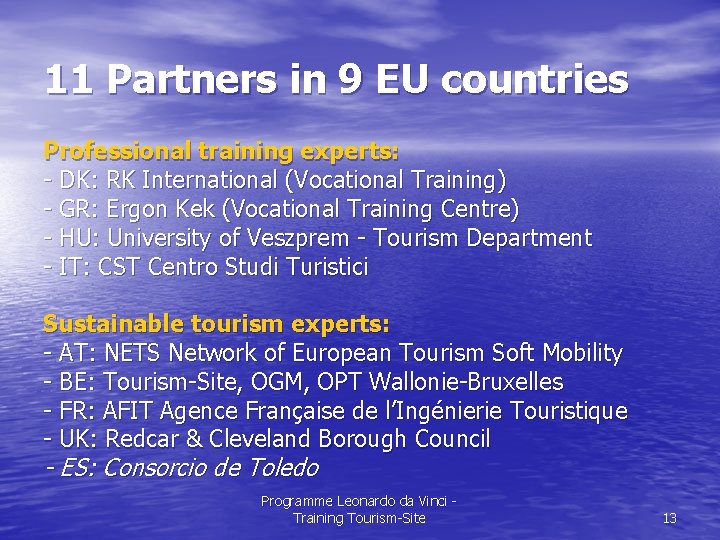
11 Partners in 9 EU countries Professional training experts: - DK: RK International (Vocational Training) - GR: Ergon Kek (Vocational Training Centre) - HU: University of Veszprem - Tourism Department - IT: CST Centro Studi Turistici Sustainable tourism experts: - AT: NETS Network of European Tourism Soft Mobility - BE: Tourism-Site, OGM, OPT Wallonie-Bruxelles - FR: AFIT Agence Française de l’Ingénierie Touristique - UK: Redcar & Cleveland Borough Council - ES: Consorcio de Toledo Programme Leonardo da Vinci Training Tourism-Site 13
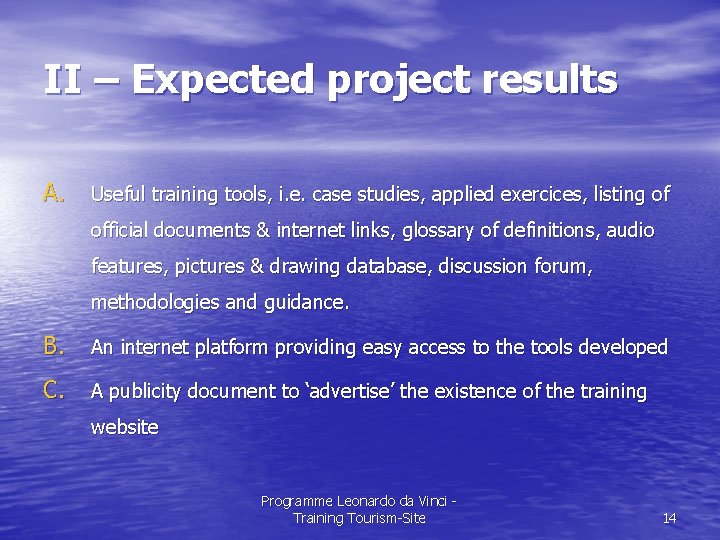
II – Expected project results A. Useful training tools, i. e. case studies, applied exercices, listing of official documents & internet links, glossary of definitions, audio features, pictures & drawing database, discussion forum, methodologies and guidance. B. An internet platform providing easy access to the tools developed C. A publicity document to ‘advertise’ the existence of the training website Programme Leonardo da Vinci Training Tourism-Site 14
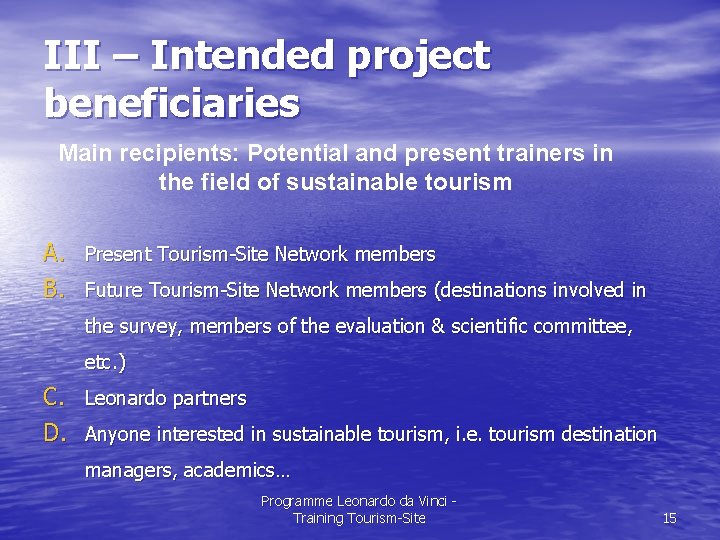
III – Intended project beneficiaries Main recipients: Potential and present trainers in the field of sustainable tourism A. Present Tourism-Site Network members B. Future Tourism-Site Network members (destinations involved in the survey, members of the evaluation & scientific committee, etc. ) C. Leonardo partners D. Anyone interested in sustainable tourism, i. e. tourism destination managers, academics… Programme Leonardo da Vinci Training Tourism-Site 15
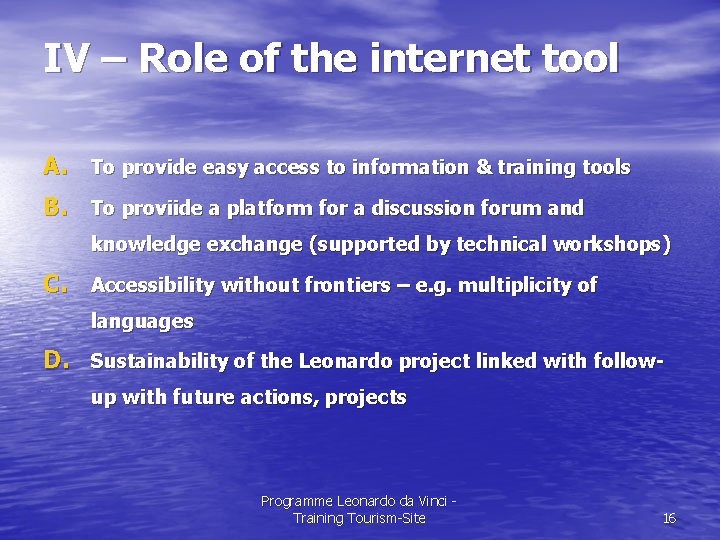
IV – Role of the internet tool A. To provide easy access to information & training tools B. To proviide a platform for a discussion forum and knowledge exchange (supported by technical workshops) C. Accessibility without frontiers – e. g. multiplicity of languages D. Sustainability of the Leonardo project linked with followup with future actions, projects Programme Leonardo da Vinci Training Tourism-Site 16
Overview § Project organisation § Budget § Expected Outputs Programme Leonardo da Vinci Training Tourism-Site 17
Results § § § The good ones The not so good ones The problems - Organisational /project understanding - Partner Issues - Work programming - Relationship with the funding Agency
Vocational Management Training for the European Tourism Industry (Voc. Mat)
Background - Europe needs to raise its game Ø World tourism arrivals growing: +6. 1% Ø Europe recording lowest results: +4. 2% v Asia & Pacific: +10. 2%; Middle East: +13. 4% Ø Europe = mature market customer expectations are growing Ø Need for higher quality/value for money Ø Europe’s managers need training support Ø Management skills vital Source: UNWTO Jan 2008 21
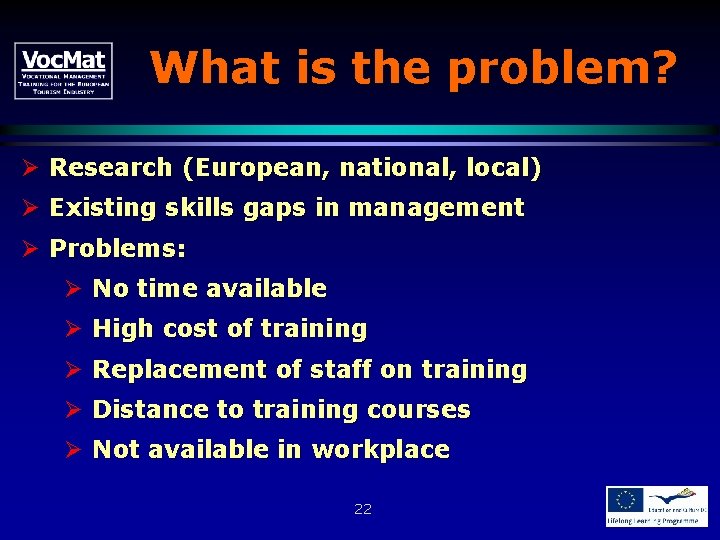
What is the problem? Ø Research (European, national, local) Ø Existing skills gaps in management Ø Problems: Ø No time available Ø High cost of training Ø Replacement of staff on training Ø Distance to training courses Ø Not available in workplace 22
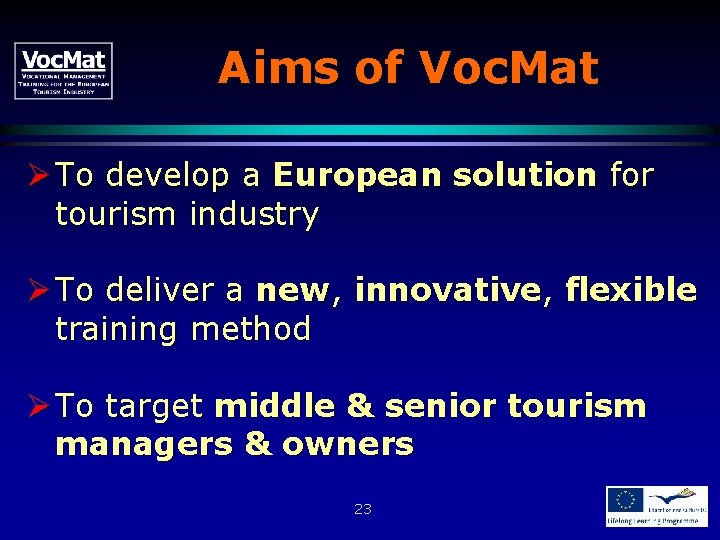
Aims of Voc. Mat Ø To develop a European solution for tourism industry Ø To deliver a new, innovative, flexible training method Ø To target middle & senior tourism managers & owners 23
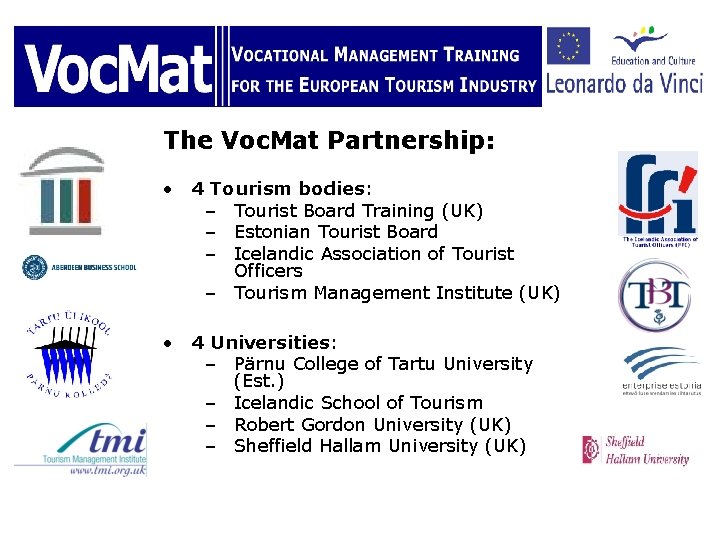
The Voc. Mat Partnership: • 4 Tourism bodies: – Tourist Board Training (UK) – Estonian Tourist Board – Icelandic Association of Tourist Officers – Tourism Management Institute (UK) • 4 Universities: – Pärnu College of Tartu University (Est. ) – Icelandic School of Tourism – Robert Gordon University (UK) – Sheffield Hallam University (UK)
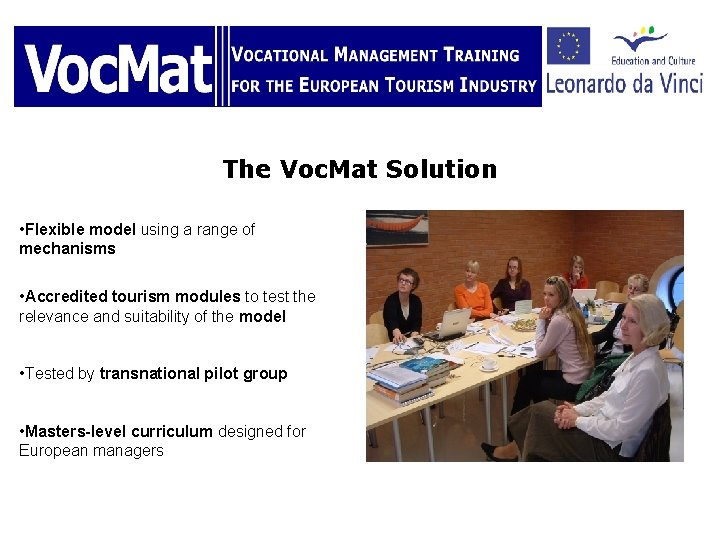
The Voc. Mat Solution • Flexible model using a range of mechanisms • Accredited tourism modules to test the relevance and suitability of the model • Tested by transnational pilot group • Masters-level curriculum designed for European managers
Project Management • Meet as soon & as often as possible • Project Management Plan • Milestones Chart • Formal & Informal Contact • Delegate • Funding Agency contact
Role of Manager & Partners • Roles & Responsibilities • Working Groups: Project Management; Research & Development; Valorisation • Partnership: Quarterly Reports
Sub-contracting • • • Confirm Costs Detailed Contracts Clear Responsibilities Disputes Collective partner responsibility
Budget Control • • • Establish quarterly procedures Revise/confirm overall budget Revise/confirm partner budget Signed agreements per partner Review budget at each meeting Watch out for ‘curved balls’
Valorisation • Establish Corporate Identity, Website etc early • Identify & Record all activities • Quarterly Reports from each Partner • Review activities/targets at each meeting
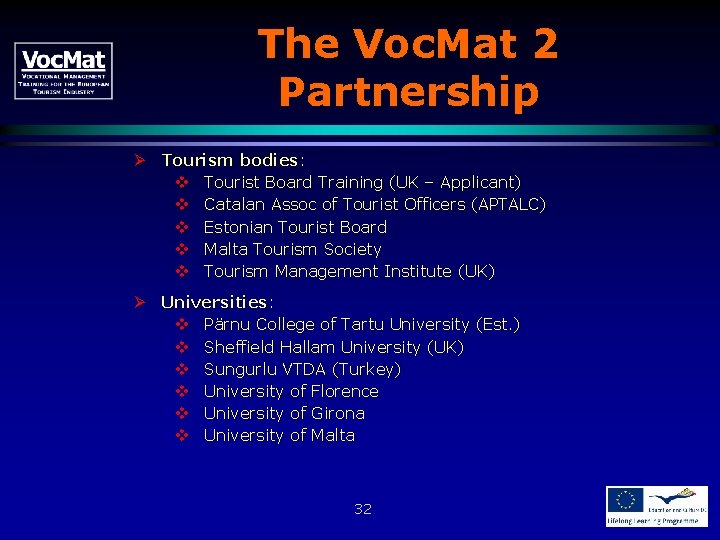
The Voc. Mat 2 Partnership Ø Tourism bodies: v Tourist Board Training (UK – Applicant) v Catalan Assoc of Tourist Officers (APTALC) v Estonian Tourist Board v Malta Tourism Society v Tourism Management Institute (UK) Ø Universities: v Pärnu College of Tartu University (Est. ) v Sheffield Hallam University (UK) v Sungurlu VTDA (Turkey) v University of Florence v University of Girona v University of Malta 32
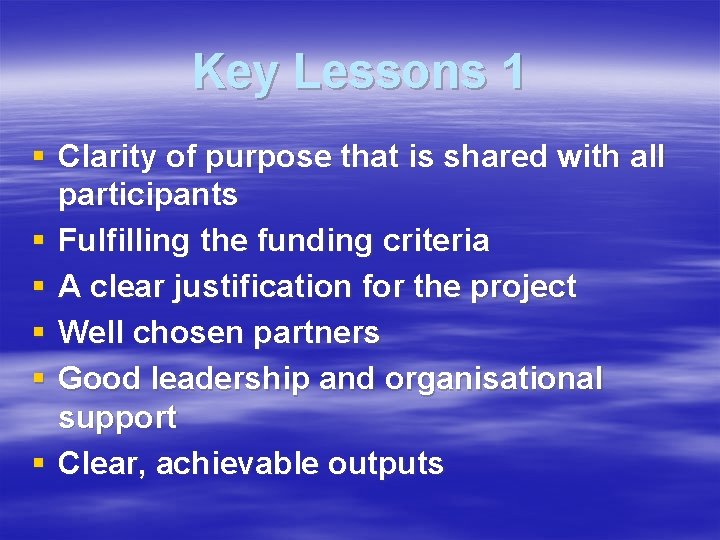
Key Lessons 1 § Clarity of purpose that is shared with all participants § Fulfilling the funding criteria § A clear justification for the project § Well chosen partners § Good leadership and organisational support § Clear, achievable outputs
Key Lessons 2 § § § Realistic work programme Regular and effective communication Good financial control Good internal and external evaluation A good working relationship with the funding agency