
LEARNING ENVIRONMENT Teaching Intravenous Saline Flush Principles When
- Slides: 2
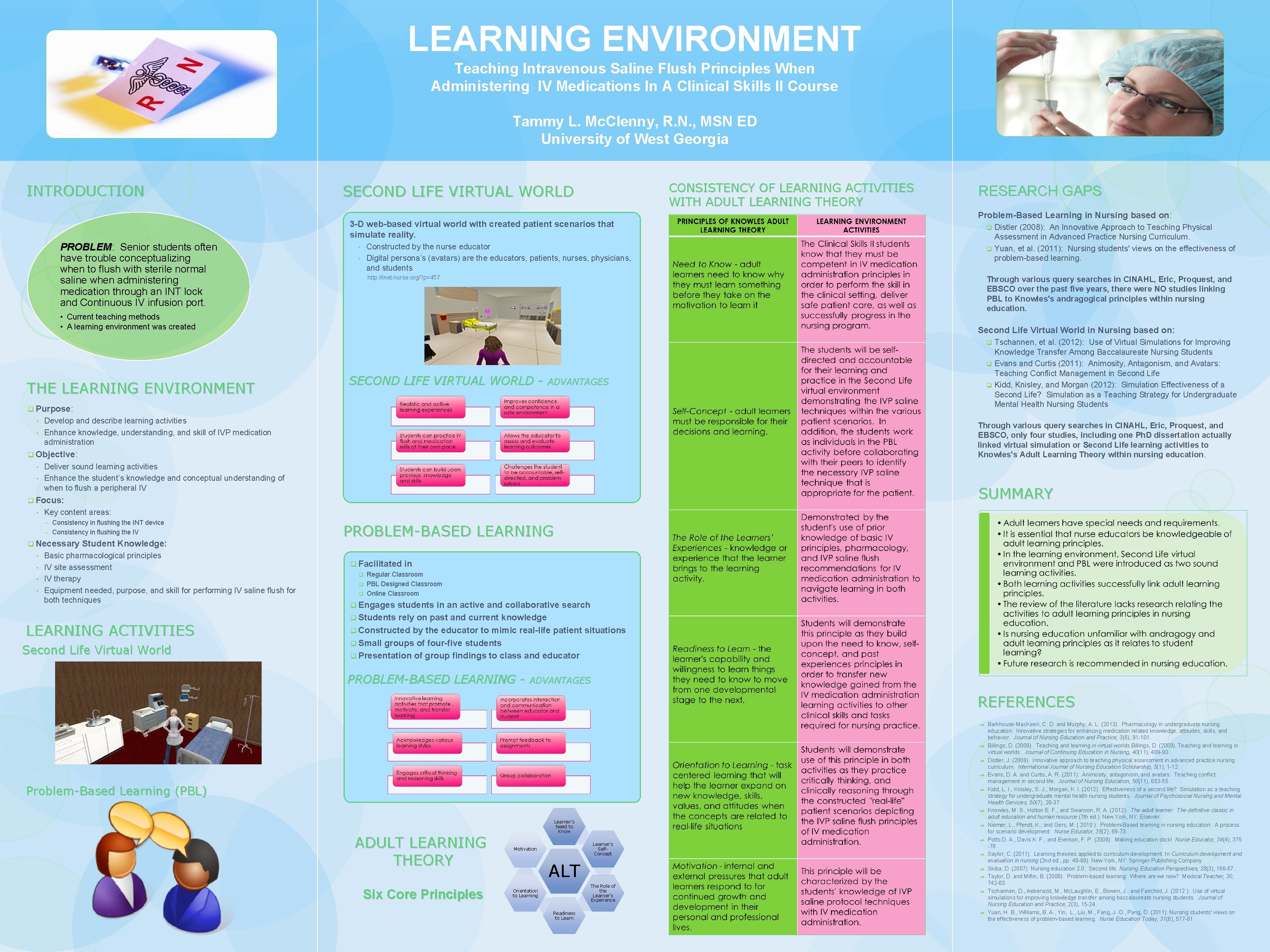
LEARNING ENVIRONMENT Teaching Intravenous Saline Flush Principles When Administering IV Medications In A Clinical Skills II Course Tammy L. Mc. Clenny, R. N. , MSN ED University of West Georgia INTRODUCTION CONSISTENCY OF LEARNING ACTIVITIES WITH ADULT LEARNING THEORY SECOND LIFE VIRTUAL WORLD 3 -D web-based virtual world with created patient scenarios that simulate reality. PROBLEM: Senior students often have trouble conceptualizing when to flush with sterile normal saline when administering medication through an INT lock and Continuous IV infusion port. • • RESEARCH GAPS Problem-Based Learning in Nursing based on: Distler (2008): An Innovative Approach to Teaching Physical Assessment in Advanced Practice Nursing Curriculum. q Yuan, et al. (2011): Nursing students' views on the effectiveness of problem-based learning. q Constructed by the nurse educator Digital persona’s (avatars) are the educators, patients, nurses, physicians, and students http: //inet-nurse. org/? p=457 Through various query searches in CINAHL, Eric, Proquest, and EBSCO over the past five years, there were NO studies linking PBL to Knowles's andragogical principles within nursing education. • Current teaching methods • A learning environment was created Second Life Virtual World in Nursing based on: Tschannen, et al. (2012): Use of Virtual Simulations for Improving Knowledge Transfer Among Baccalaureate Nursing Students q Evans and Curtis (2011): Animosity, Antagonism, and Avatars: Teaching Conflict Management in Second Life q Kidd, Knisley, and Morgan (2012): Simulation Effectiveness of a Second Life? Simulation as a Teaching Strategy for Undergraduate Mental Health Nursing Students q THE LEARNING ENVIRONMENT SECOND LIFE VIRTUAL WORLD - ADVANTAGES q Purpose: • • Develop and describe learning activities Enhance knowledge, understanding, and skill of IVP medication administration Through various query searches in CINAHL, Eric, Proquest, and EBSCO, only four studies, including one Ph. D dissertation actually linked virtual simulation or Second Life learning activities to Knowles's Adult Learning Theory within nursing education. q Objective: • • Deliver sound learning activities Enhance the student’s knowledge and conceptual understanding of when to flush a peripheral IV SUMMARY q Focus: • Key content areas: • • Consistency in flushing the INT device Consistency in flushing the IV q Necessary • • Student Knowledge: Basic pharmacological principles IV site assessment IV therapy Equipment needed, purpose, and skill for performing IV saline flush for both techniques LEARNING ACTIVITIES Second Life Virtual World PROBLEM-BASED LEARNING q Facilitated in q Regular Classroom q PBL Designed Classroom q Online Classroom q Engages students in an active and collaborative search q Students rely on past and current knowledge q Constructed by the educator to mimic real-life patient situations q Small groups of four-five students q Presentation of group findings to class and educator PROBLEM-BASED LEARNING - ADVANTAGES REFERENCES Problem-Based Learning (PBL) ADULT LEARNING THEORY Six Core Principles Learner’s Need to Know Learner’s Self. Concept Motivation ALT Readiness to Learn The Role of the Learner’s Experience Orientation to Learning Barkhouse-Mac. Keen, C. D. and Murphy, A. L. (2013). Pharmacology in undergraduate nursing education: Innovative strategies for enhancing medication related knowledge, attitudes, skills, and behavior. Journal of Nursing Education and Practice, 3(6), 91 -101. Billings, D. (2009). Teaching and learning in virtual worlds. Journal of Continuing Education in Nursing, 40(11), 489 -90. Distler, J. (2008). Innovative approach to teaching physical assessment in advanced practice nursing curriculum. International Journal of Nursing Education Scholarship, 5(1), 1 -12. Evans, D. A. and Curtis, A. R. (2011). Animosity, antagonism, and avatars: Teaching conflict management in second life. Journal of Nursing Education, 50(11), 653 -55. Kidd, L. I. , Knisley, S. J. , Morgan, K. I. (2012). Effectiveness of a second life? Simulation as a teaching strategy for undergraduate mental health nursing students. Journal of Psychosocial Nursing and Mental Health Services, 50(7), 28 -37. Knowles, M. S. , Holton E. F. , and Swanson, R. A. (2012). The adult learner: The definitive classic in adult education and human resource (7 th ed. ). New York, NY: Elsevier. Niemer, L. , Pfendt, K. , and Gers, M. ( 2010 ). Problem-Based learning in nursing education: A process for scenario development. Nurse Educator, 35(2), 69 -73. Potts D. A. , Davis K. F. , and Everson, F. P. (2009). Making education stick! Nurse Educator, 34(4), 375 -78. Saylor, C. (2011). Learning theories applied to curriculum development. In Curriculum development and evaluation in nursing (2 nd ed. , pp. 49 -68). New York, NY: Springer Publishing Company. Skiba, D. (2007). Nursing education 2. 0: Second life. Nursing Education Perspectives, 28(3), 156 -57. Taylor, D. and Miflin, B. (2008). Problem-based learning: Where are we now? Medical Teacher, 30, 742 -63. Tschannen, D. , Aebersold, M. , Mc. Laughlin, E. , Bowen, J. . and Fairchild, J. (2012 ). Use of virtual simulations for improving knowledge transfer among baccalaureate nursing students. Journal of Nursing Education and Practice, 2(3), 15 -24. Yuan, H. B. , Williams, B. A. , Yin, L. , Liu, M. , Fang, J. O. , Pang, D. (2011). Nursing students' views on the effectiveness of problem-based learning. Nurse Education Today, 31(6), 577 -81.
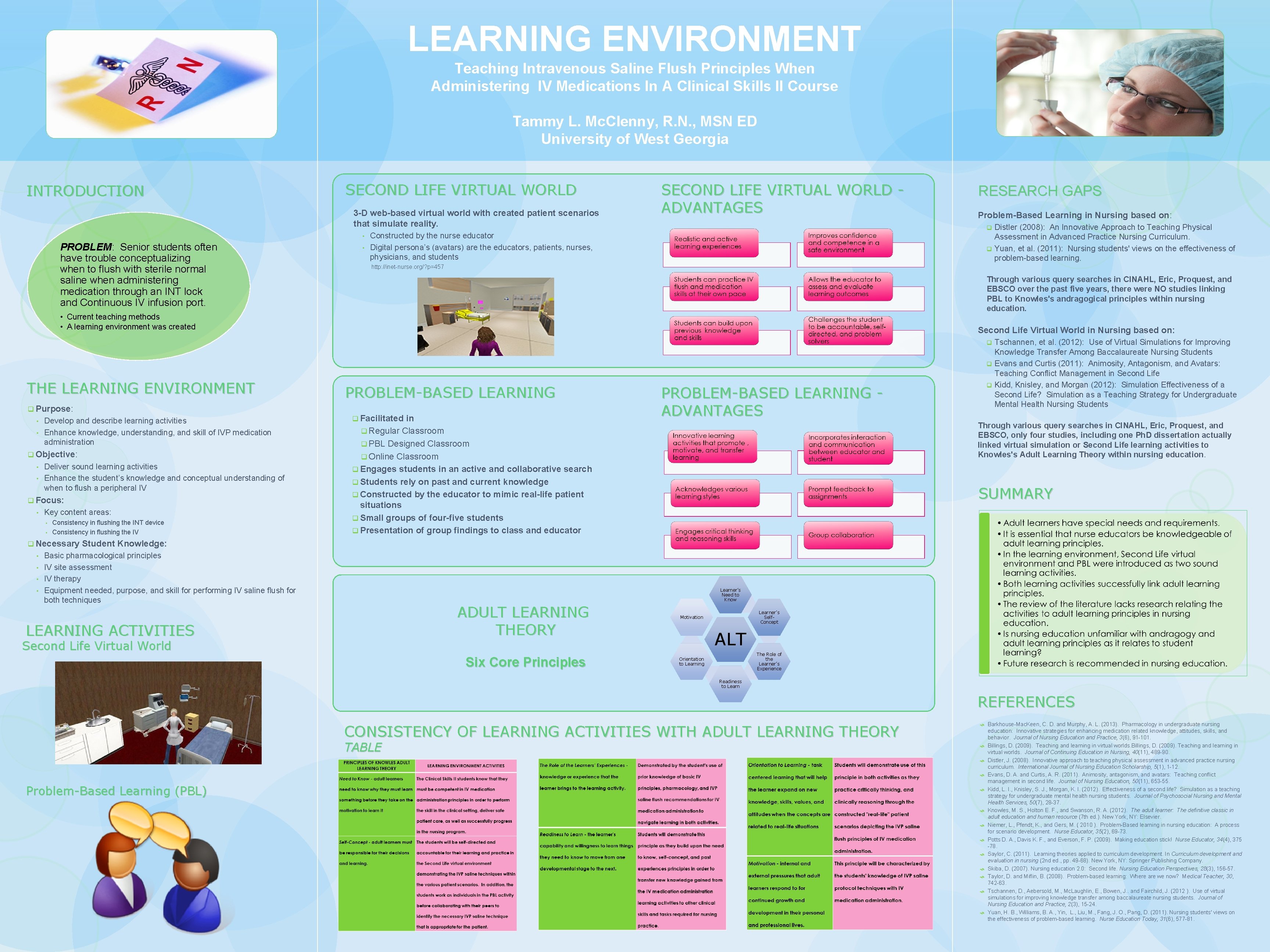
LEARNING ENVIRONMENT Teaching Intravenous Saline Flush Principles When Administering IV Medications In A Clinical Skills II Course Tammy L. Mc. Clenny, R. N. , MSN ED University of West Georgia INTRODUCTION SECOND LIFE VIRTUAL WORLD 3 -D web-based virtual world with created patient scenarios that simulate reality. • PROBLEM: Senior students often have trouble conceptualizing when to flush with sterile normal saline when administering medication through an INT lock and Continuous IV infusion port. • SECOND LIFE VIRTUAL WORLD ADVANTAGES RESEARCH GAPS Problem-Based Learning in Nursing based on: Distler (2008): An Innovative Approach to Teaching Physical Assessment in Advanced Practice Nursing Curriculum. q Yuan, et al. (2011): Nursing students' views on the effectiveness of problem-based learning. q Constructed by the nurse educator Digital persona’s (avatars) are the educators, patients, nurses, physicians, and students http: //inet-nurse. org/? p=457 Through various query searches in CINAHL, Eric, Proquest, and EBSCO over the past five years, there were NO studies linking PBL to Knowles's andragogical principles within nursing education. • Current teaching methods • A learning environment was created Second Life Virtual World in Nursing based on: Tschannen, et al. (2012): Use of Virtual Simulations for Improving Knowledge Transfer Among Baccalaureate Nursing Students q Evans and Curtis (2011): Animosity, Antagonism, and Avatars: Teaching Conflict Management in Second Life q Kidd, Knisley, and Morgan (2012): Simulation Effectiveness of a Second Life? Simulation as a Teaching Strategy for Undergraduate Mental Health Nursing Students q THE LEARNING ENVIRONMENT q Purpose: • • Develop and describe learning activities Enhance knowledge, understanding, and skill of IVP medication administration q Objective: • • Deliver sound learning activities Enhance the student’s knowledge and conceptual understanding of when to flush a peripheral IV q Focus: • Key content areas: • • Consistency in flushing the INT device Consistency in flushing the IV q Necessary • • PROBLEM-BASED LEARNING q Facilitated in q Regular Classroom q PBL Designed Classroom q Online Classroom q Engages students in an active and collaborative search q Students rely on past and current knowledge q Constructed by the educator to mimic real-life patient situations q Small groups of four-five students q Presentation of group findings to class and educator PROBLEM-BASED LEARNING ADVANTAGES Through various query searches in CINAHL, Eric, Proquest, and EBSCO, only four studies, including one Ph. D dissertation actually linked virtual simulation or Second Life learning activities to Knowles's Adult Learning Theory within nursing education. SUMMARY Student Knowledge: Basic pharmacological principles IV site assessment IV therapy Equipment needed, purpose, and skill for performing IV saline flush for both techniques Learner’s Need to Know ADULT LEARNING THEORY LEARNING ACTIVITIES Second Life Virtual World Six Core Principles Learner’s Self. Concept Motivation ALT The Role of the Learner’s Experience Orientation to Learning Readiness to Learn REFERENCES CONSISTENCY OF LEARNING ACTIVITIES WITH ADULT LEARNING THEORY TABLE Problem-Based Learning (PBL) Barkhouse-Mac. Keen, C. D. and Murphy, A. L. (2013). Pharmacology in undergraduate nursing education: Innovative strategies for enhancing medication related knowledge, attitudes, skills, and behavior. Journal of Nursing Education and Practice, 3(6), 91 -101. Billings, D. (2009). Teaching and learning in virtual worlds. Journal of Continuing Education in Nursing, 40(11), 489 -90. Distler, J. (2008). Innovative approach to teaching physical assessment in advanced practice nursing curriculum. International Journal of Nursing Education Scholarship, 5(1), 1 -12. Evans, D. A. and Curtis, A. R. (2011). Animosity, antagonism, and avatars: Teaching conflict management in second life. Journal of Nursing Education, 50(11), 653 -55. Kidd, L. I. , Knisley, S. J. , Morgan, K. I. (2012). Effectiveness of a second life? Simulation as a teaching strategy for undergraduate mental health nursing students. Journal of Psychosocial Nursing and Mental Health Services, 50(7), 28 -37. Knowles, M. S. , Holton E. F. , and Swanson, R. A. (2012). The adult learner: The definitive classic in adult education and human resource (7 th ed. ). New York, NY: Elsevier. Niemer, L. , Pfendt, K. , and Gers, M. ( 2010 ). Problem-Based learning in nursing education: A process for scenario development. Nurse Educator, 35(2), 69 -73. Potts D. A. , Davis K. F. , and Everson, F. P. (2009). Making education stick! Nurse Educator, 34(4), 375 -78. Saylor, C. (2011). Learning theories applied to curriculum development. In Curriculum development and evaluation in nursing (2 nd ed. , pp. 49 -68). New York, NY: Springer Publishing Company. Skiba, D. (2007). Nursing education 2. 0: Second life. Nursing Education Perspectives, 28(3), 156 -57. Taylor, D. and Miflin, B. (2008). Problem-based learning: Where are we now? Medical Teacher, 30, 742 -63. Tschannen, D. , Aebersold, M. , Mc. Laughlin, E. , Bowen, J. . and Fairchild, J. (2012 ). Use of virtual simulations for improving knowledge transfer among baccalaureate nursing students. Journal of Nursing Education and Practice, 2(3), 15 -24. Yuan, H. B. , Williams, B. A. , Yin, L. , Liu, M. , Fang, J. O. , Pang, D. (2011). Nursing students' views on the effectiveness of problem-based learning. Nurse Education Today, 31(6), 577 -81.