
Learning Environment Learning Environments v Include both indoor
Learning Environment
Learning Environments v Include both indoor and outdoor areas v Provide opportunities for developmentally appropriate activities v Require structure and thoughtful planning
Learning Environments v Stimulate development of physical, cognitive , emotional, and social learning. v Indoor and outdoor environments help connect children to the world.
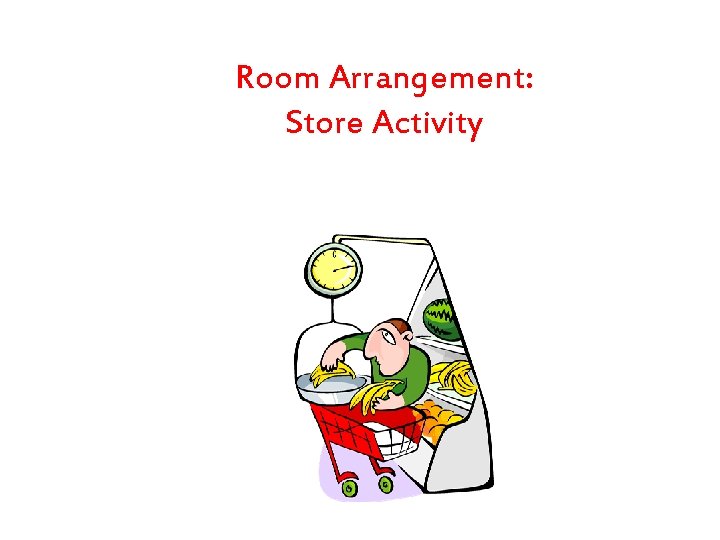
Room Arrangement: Store Activity
Learning Environments Children need to feel safe in order to: v trust and cooperate with others v become independent learners v stay involved in work v acquire new skills and concepts
Video: Room Arrangement as a Teaching Strategy
Building trust and cooperation v Environment is safe and well organized v Environment is not busy or chaotic
Encouraging independence v Children are allowed to explore v Children clean up by themselves
Children are involved v Reduce v Create distractions ownership
Learning concepts and skills v Organize materials to encourage concept building v Process teaches classifying, matching, and questioning
Create functional environments v Both children and providers need purpose v Environment layout options require focus v Environment arrangements need to be flexible to fit needs
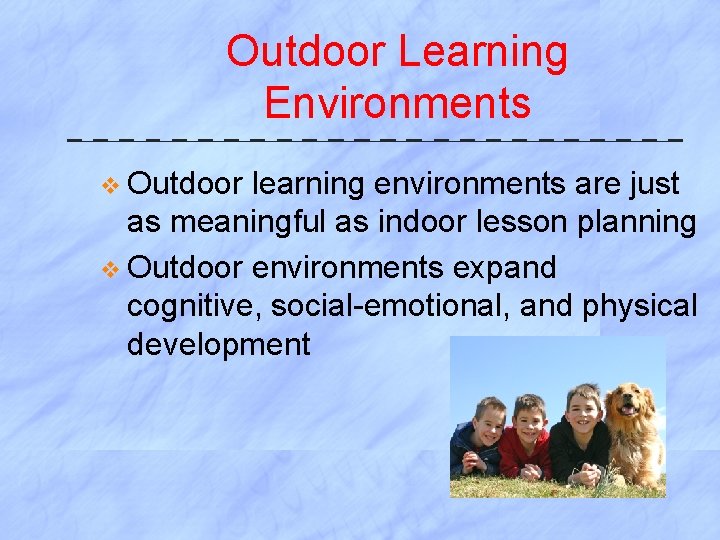
Outdoor Learning Environments v Outdoor learning environments are just as meaningful as indoor lesson planning v Outdoor environments expand cognitive, social-emotional, and physical development
Activity Discussion about outdoor learning environment
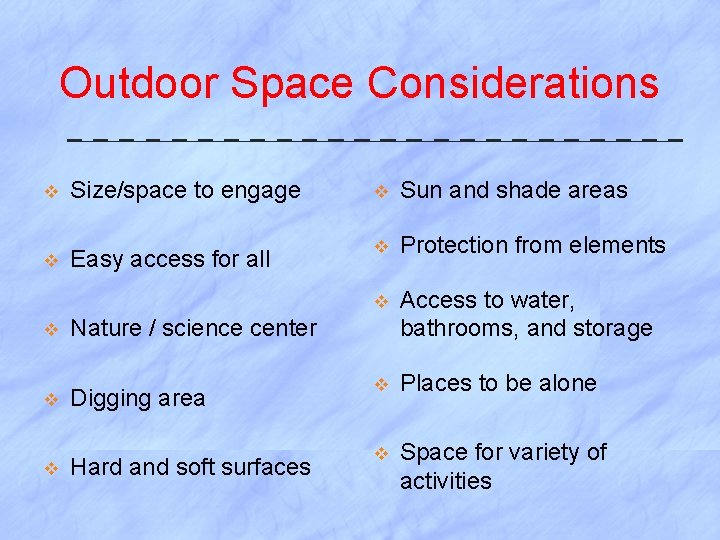
Outdoor Space Considerations v Size/space to engage v Easy access for all v v Sun and shade areas v Protection from elements v Access to water, bathrooms, and storage v Places to be alone v Space for variety of activities Nature / science center v Digging area v Hard and soft surfaces
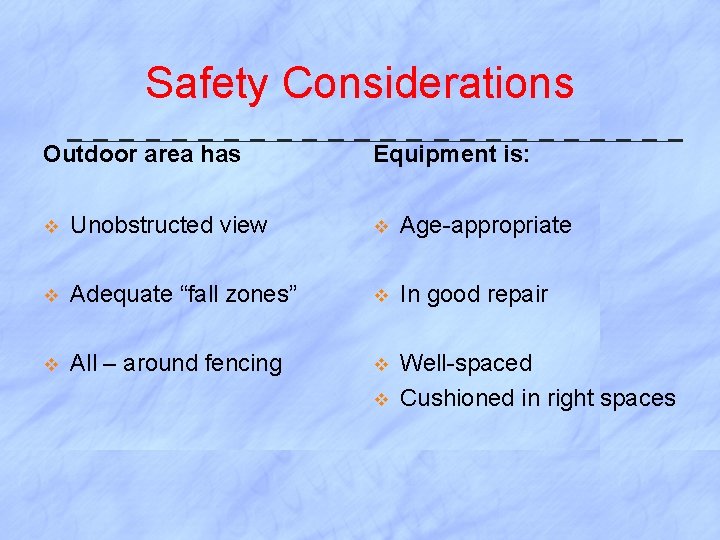
Safety Considerations Outdoor area has Equipment is: v Unobstructed view v Age-appropriate v Adequate “fall zones” v In good repair v All – around fencing v Well-spaced Cushioned in right spaces v
Outdoor Play Equipment v Climbing v Swinging v Balancing v Pedaling/riding v Building and pretend play
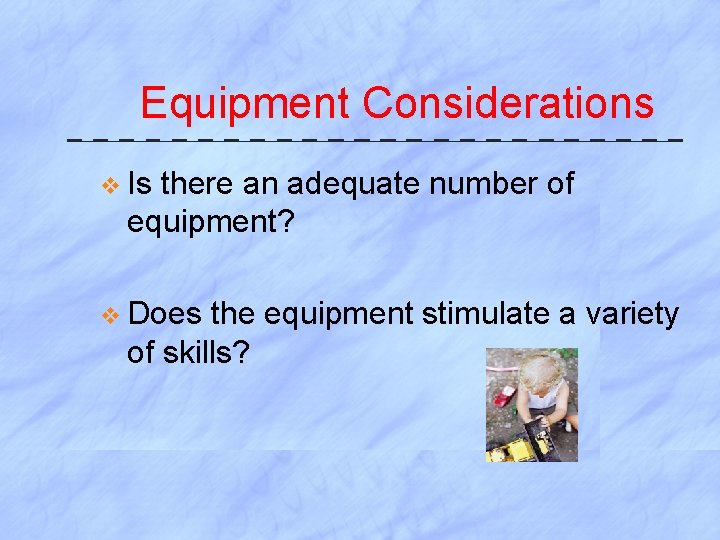
Equipment Considerations v Is there an adequate number of equipment? v Does the equipment stimulate a variety of skills?
Equipment Considerations v Does the equipment stimulate skills at different levels? v Is there stationary and portable equipment available? v Are there accommodations made for children with disabilities?
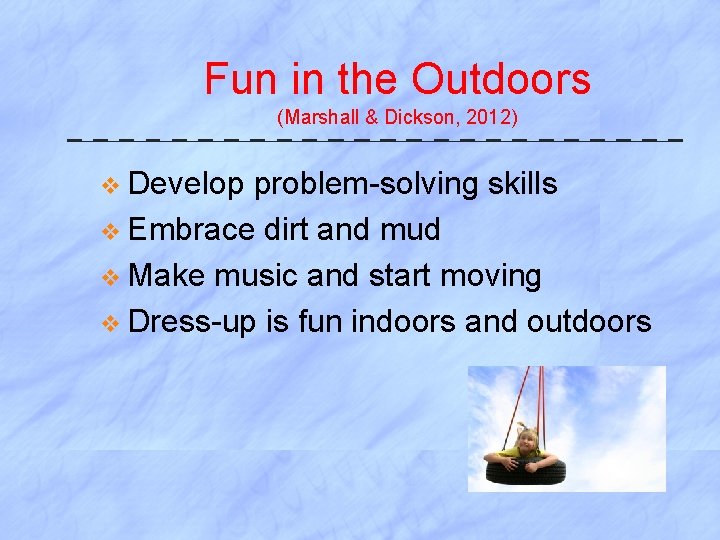
Fun in the Outdoors (Marshall & Dickson, 2012) v Develop problem-solving skills v Embrace dirt and mud v Make music and start moving v Dress-up is fun indoors and outdoors
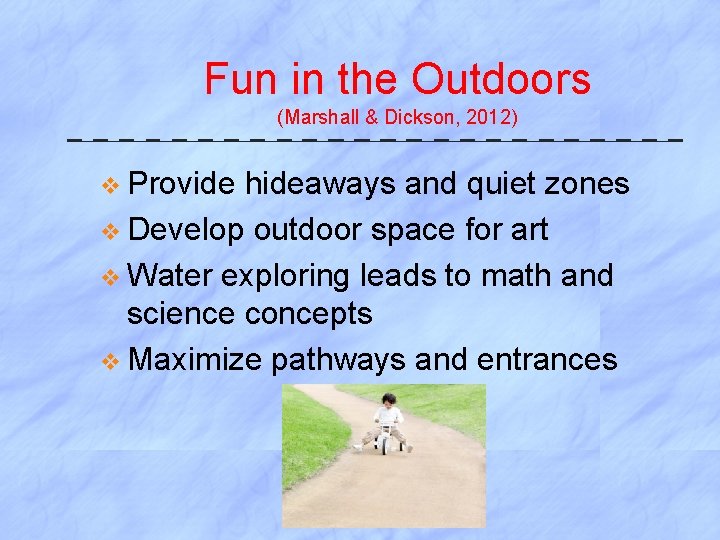
Fun in the Outdoors (Marshall & Dickson, 2012) v Provide hideaways and quiet zones v Develop outdoor space for art v Water exploring leads to math and science concepts v Maximize pathways and entrances
Activity Evaluate Learning Environments
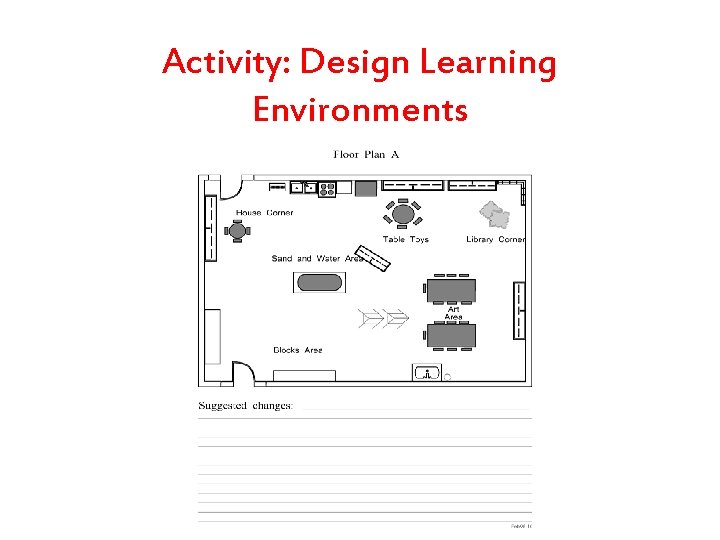
Activity: Design Learning Environments
Well-designed Learning Environments result in: v Children behaving appropriately v Children participating independently v Children staying involved v Children learning concepts
Well-designed Learning Environments result in: v Learning-focused classrooms v Concept-building environments v Less distractive behaviors

Questions?
- Slides: 25