
Learning Culture Chapter 8 Section 4 Medieval Universities
- Slides: 6
Learning & Culture Chapter 8 Section 4
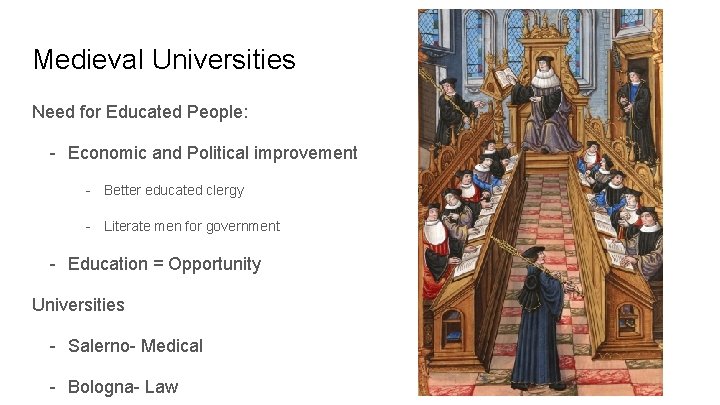
Medieval Universities Need for Educated People: - Economic and Political improvement - Better educated clergy - Literate men for government - Education = Opportunity Universities - Salerno- Medical - Bologna- Law
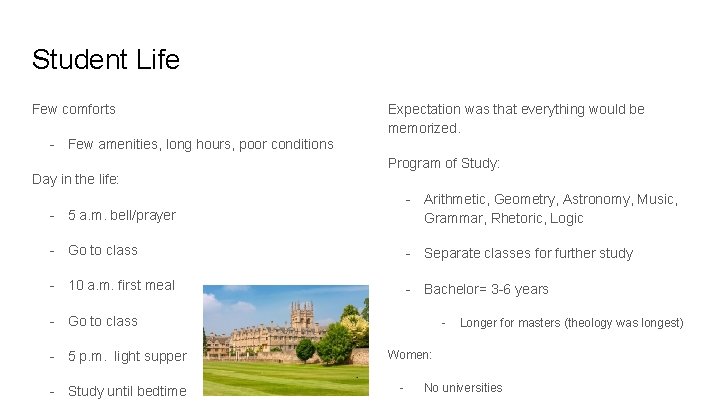
Student Life Few comforts - Few amenities, long hours, poor conditions Expectation was that everything would be memorized. Program of Study: Day in the life: - 5 a. m. bell/prayer - Arithmetic, Geometry, Astronomy, Music, Grammar, Rhetoric, Logic - Go to class - Separate classes for further study - 10 a. m. first meal - Bachelor= 3 -6 years - Go to class - 5 p. m. light supper - Study until bedtime - Longer for masters (theology was longest) Women: - No universities
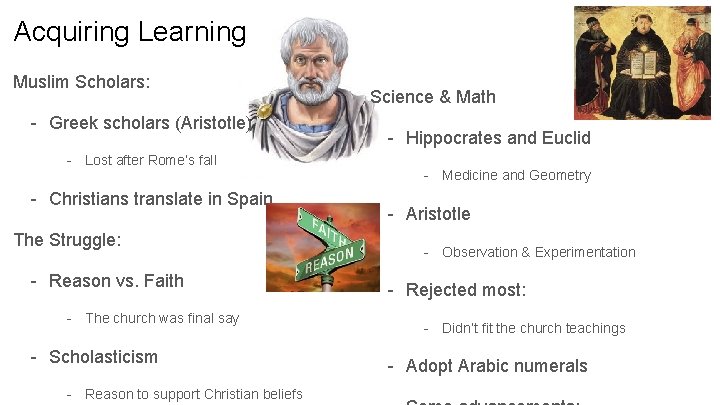
Acquiring Learning Muslim Scholars: - Greek scholars (Aristotle) - Lost after Rome’s fall - Christians translate in Spain The Struggle: - Reason vs. Faith - The church was final say - Scholasticism - Reason to support Christian beliefs Science & Math - Hippocrates and Euclid - Medicine and Geometry - Aristotle - Observation & Experimentation - Rejected most: - Didn’t fit the church teachings - Adopt Arabic numerals
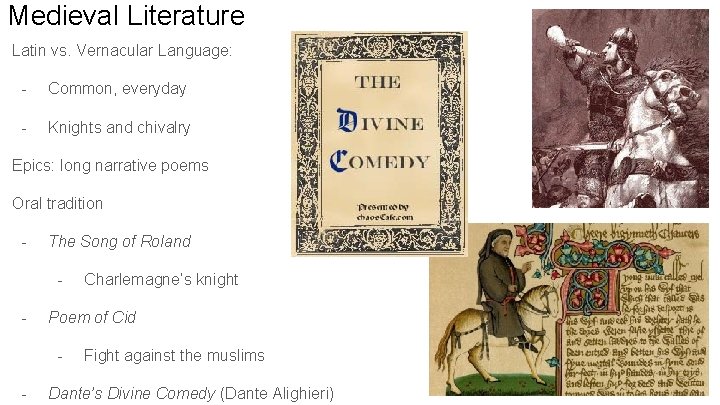
Medieval Literature Latin vs. Vernacular Language: - Common, everyday - Knights and chivalry Epics: long narrative poems Oral tradition - The Song of Roland - Poem of Cid - Charlemagne’s knight Fight against the muslims Dante’s Divine Comedy (Dante Alighieri)
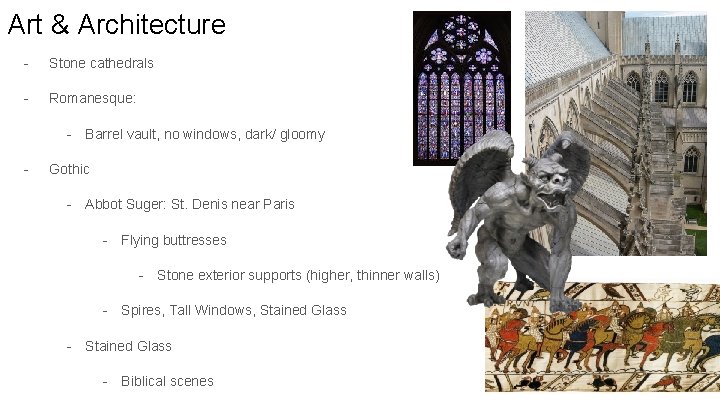
Art & Architecture - Stone cathedrals - Romanesque: - Barrel vault, no windows, dark/ gloomy - Gothic - Abbot Suger: St. Denis near Paris - Flying buttresses - Stone exterior supports (higher, thinner walls) - Spires, Tall Windows, Stained Glass - Biblical scenes