
LEARNING Classical Conditioning PAVLOVS DOG EXPERIMENT GOAL Train

- Slides: 16
LEARNING Classical Conditioning
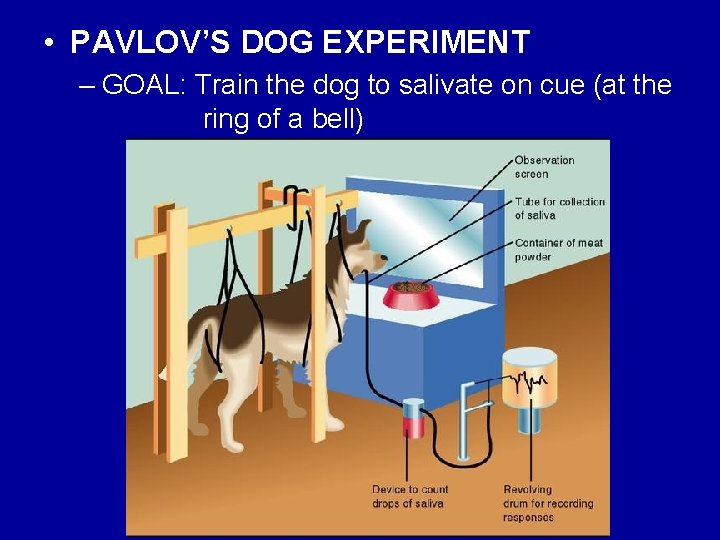
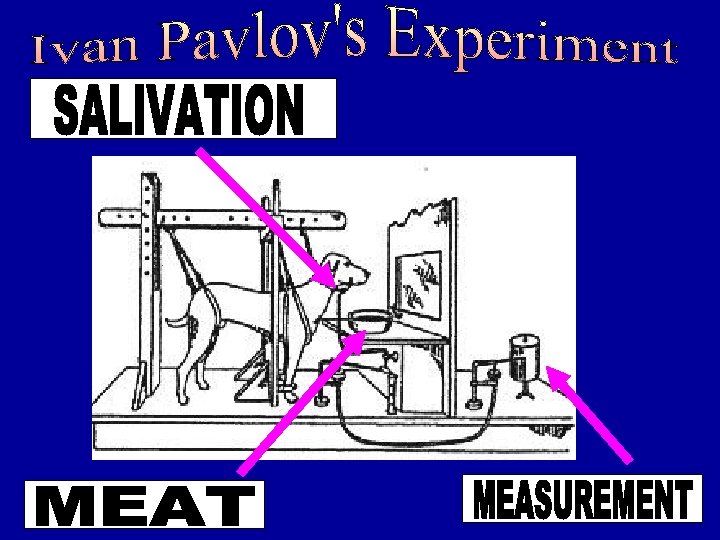
• PAVLOV’S DOG EXPERIMENT – GOAL: Train the dog to salivate on cue (at the ring of a bell)
Classical Conditioning • EACH instance of classical conditioning consists of these parts! • Another word for Condition is ________
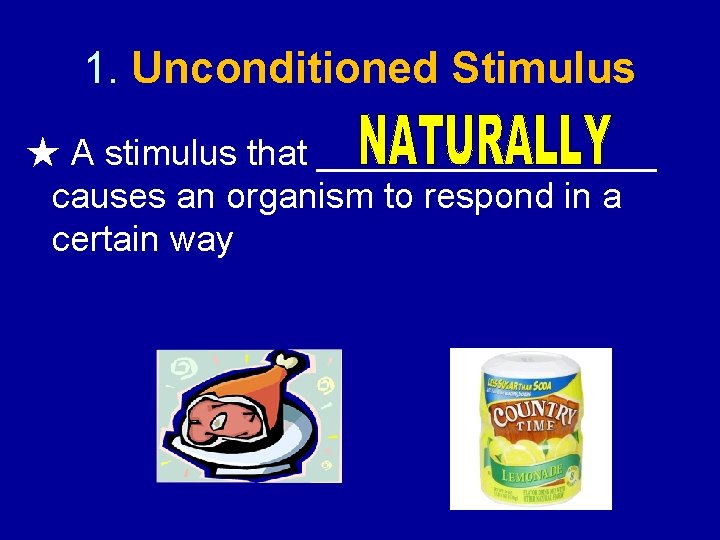
1. Unconditioned Stimulus ★ A stimulus that _________ causes an organism to respond in a certain way
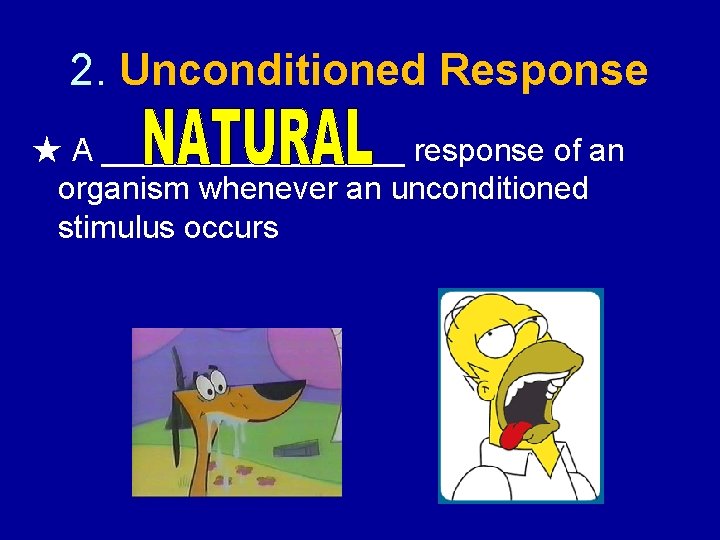
2. Unconditioned Response ★ A _________ response of an organism whenever an unconditioned stimulus occurs
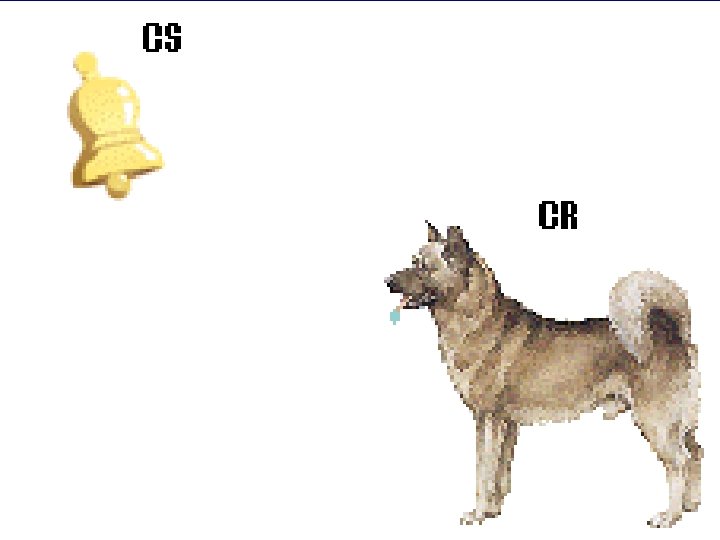
3. Conditioned Stimulus ★ A stimulus (that was previously neutral) that is paired with an unconditioned stimulus ★ GOAL: Conditioned Stimulus should produce a _____________ in an organism
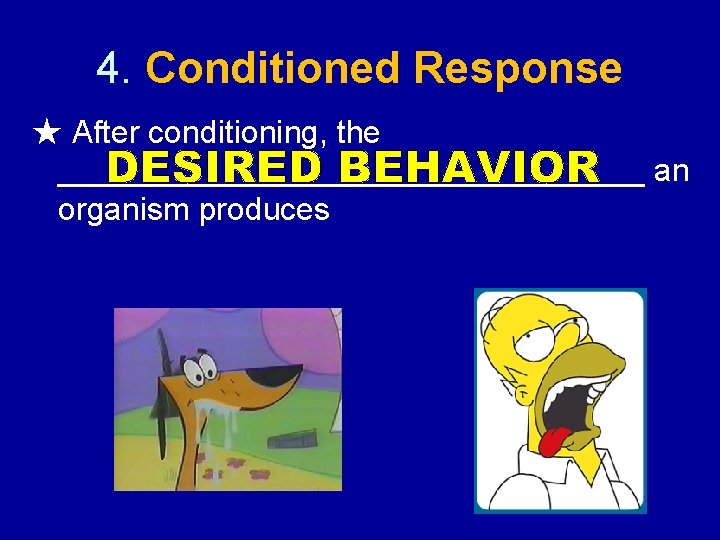
4. Conditioned Response ★ After conditioning, the _________________ an organism produces
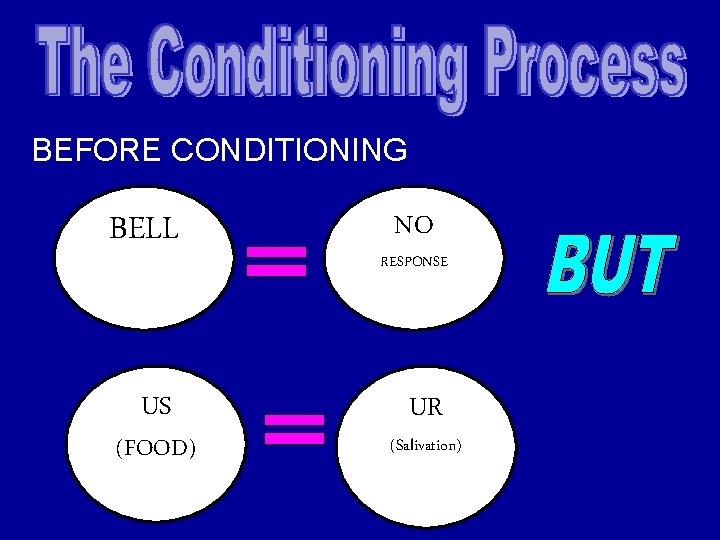
BEFORE CONDITIONING BELL US (FOOD) NO RESPONSE UR (Salivation)
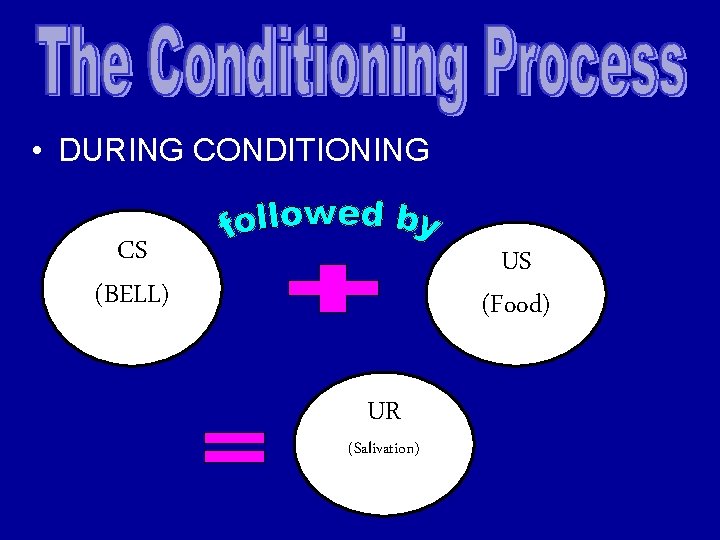
• DURING CONDITIONING CS (BELL) US (Food) UR (Salivation)
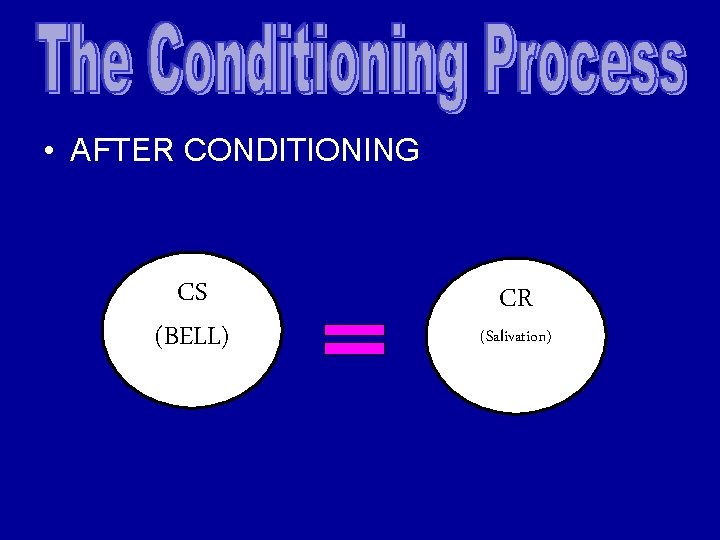
• AFTER CONDITIONING CS (BELL) CR (Salivation)
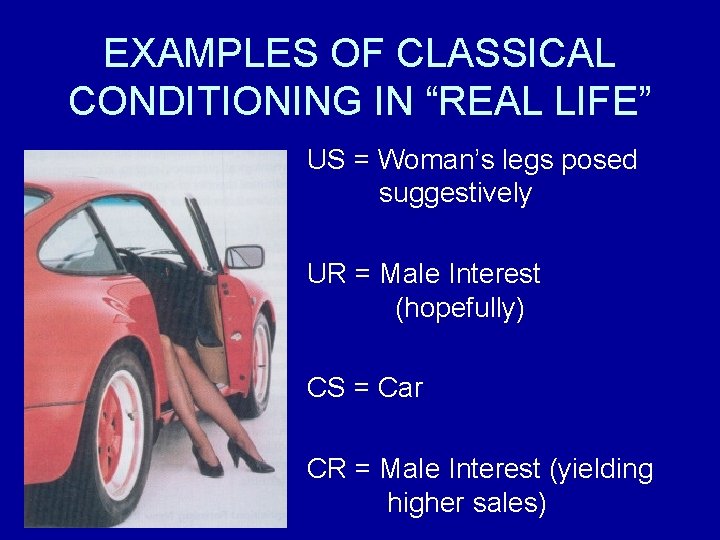
EXAMPLES OF CLASSICAL CONDITIONING IN “REAL LIFE” US = Woman’s legs posed suggestively UR = Male Interest (hopefully) CS = Car CR = Male Interest (yielding higher sales)
Can you think of other examples of classical conditioning in advertising?
ASSIGNMENT • Find a magazine or newspaper ad that you believe displays classical conditioning. • Cut out and paste your ad to a sheet of construction paper. On the back of the construction paper, identify the US, UR, CS, and CR • Place your ad on the chalk board for everyone to see