
Learning Chapter Module 20 Operant Conditioning Module 20

- Slides: 60
Learning Chapter
Module 20 Operant Conditioning
Module 20: Operant Conditioning What is Operant Conditioning?
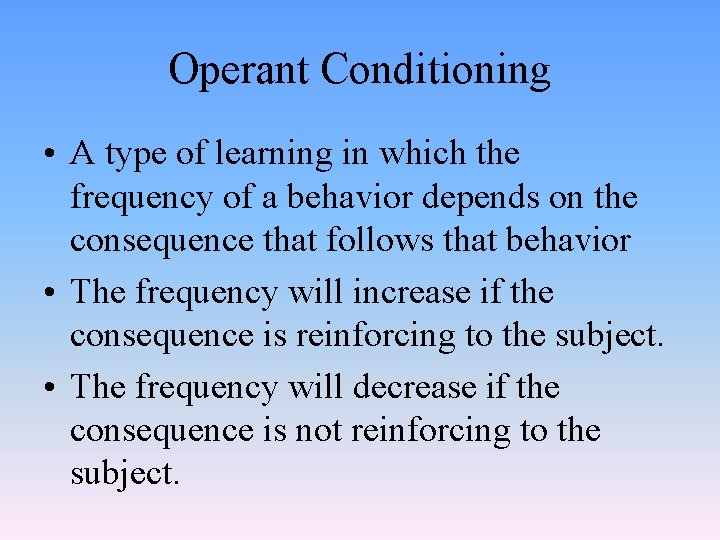
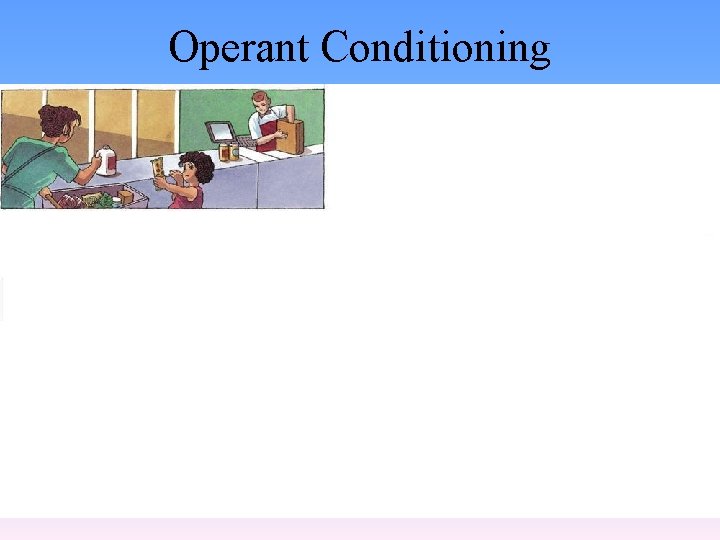
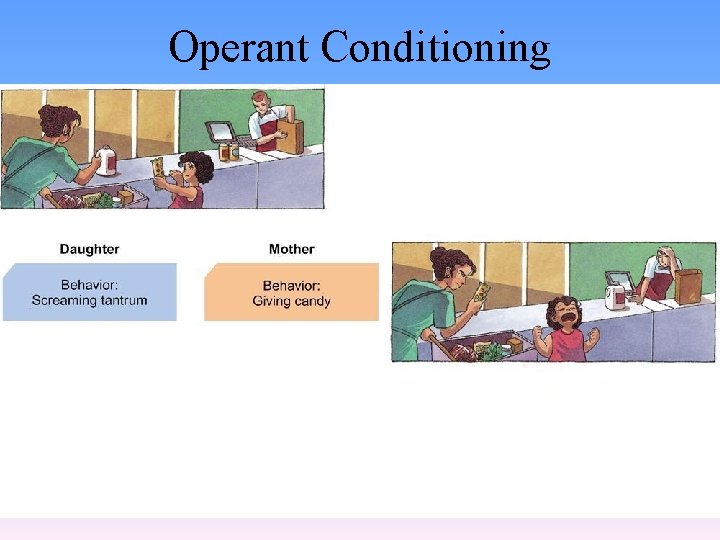
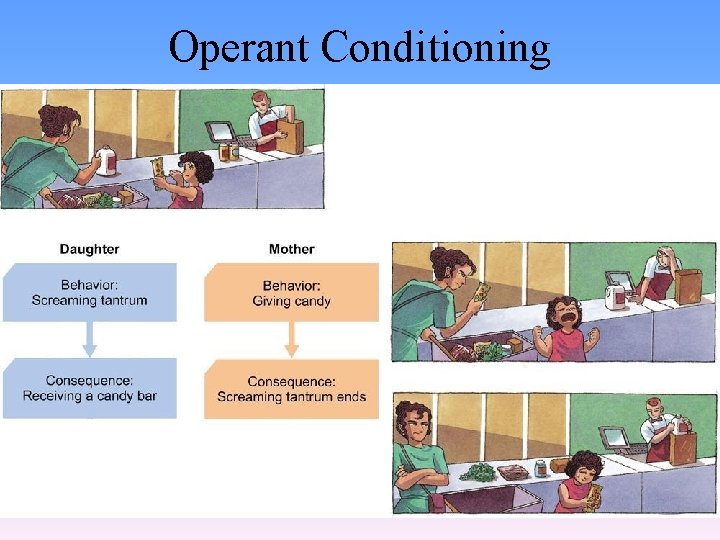
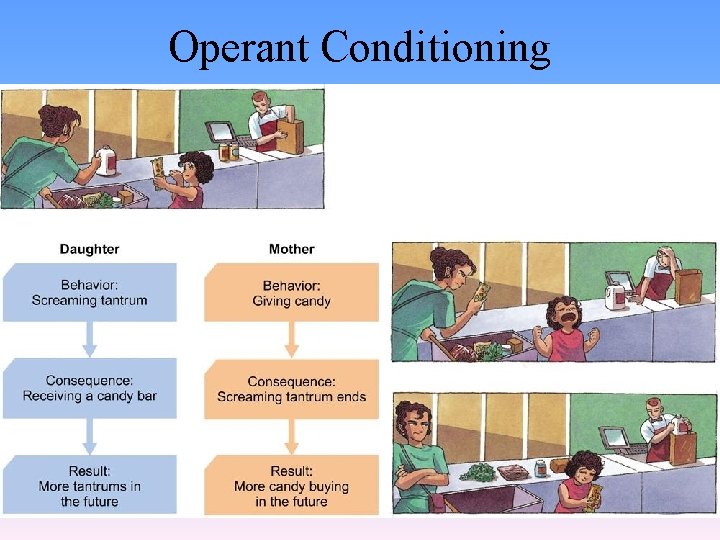
Operant Conditioning • A type of learning in which the frequency of a behavior depends on the consequence that follows that behavior • The frequency will increase if the consequence is reinforcing to the subject. • The frequency will decrease if the consequence is not reinforcing to the subject.
Operant Conditioning
Operant Conditioning
Operant Conditioning
Operant Conditioning
Module 20: Operant Conditioning The Law of Effect
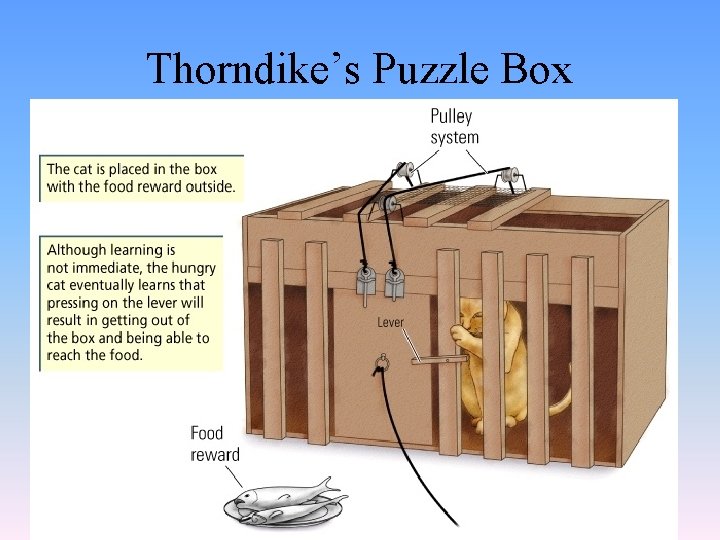
Edward Thorndike (1874 -1949) • Author of the law of effect, the principle that forms the basis of operant conditioning • Behaviors with favorable consequences will occur more frequently. • Behaviors with unfavorable consequences will occur less frequently. • Created puzzle boxes for research on cats
Thorndike’s Puzzle Box
Thorndike’s Puzzle Box • Insert “Thorndike’s Puzzle Box” Video #8 from Worth’s Digital Media Archive for Psychology. • Instructions for importing the video file can be found in the ‘Readme’ file on the CD-ROM.
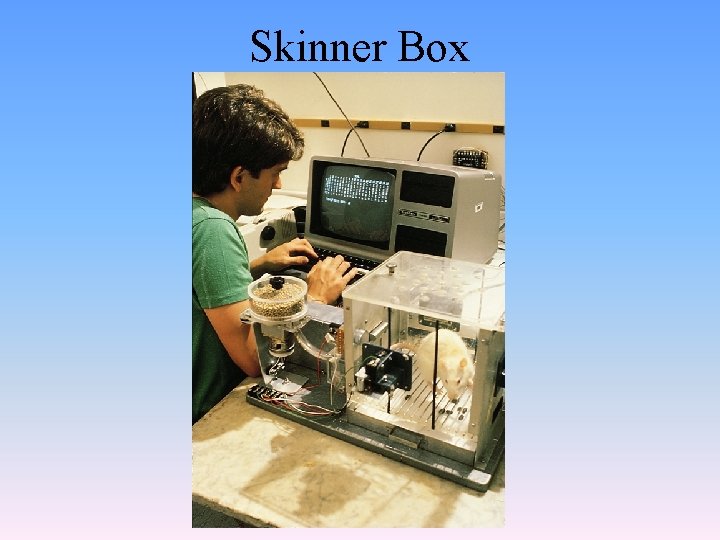
B. F. Skinner (1904 -1990) • Developed the fundamental principles and techniques of operant conditioning and devised ways to apply them in the real world • Designed the Skinner Box, or operant chamber
Skinner Box
B. F. Skinner Interview • Insert “B. F. Skinner Interview” Video #9 from Worth’s Digital Media Archive for Psychology. • Instructions for importing the video file can be found in the ‘Readme’ file on the CD-ROM.
Reinforcement/Punishment • Reinforcement - Any consequence that increases the future likelihood of a behavior • Punishment - Any consequence that decreases the future likelihood of a behavior • The subject determines if a consequence is reinforcing or punishing
Module 20: Operant Conditioning Reinforcement
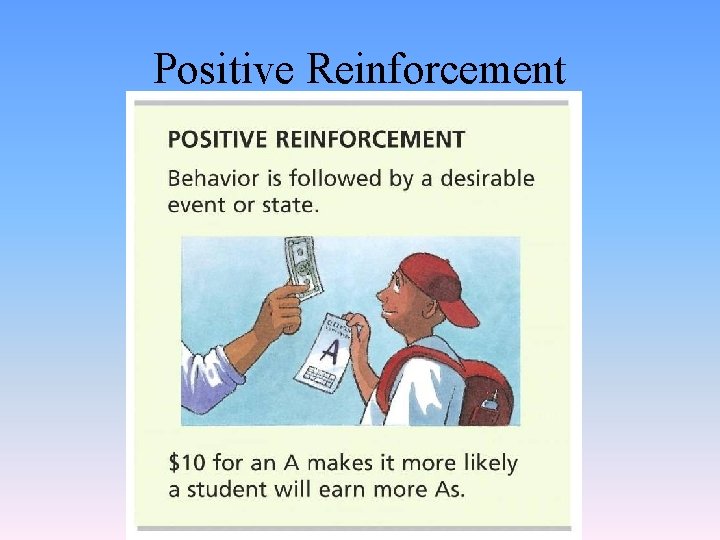
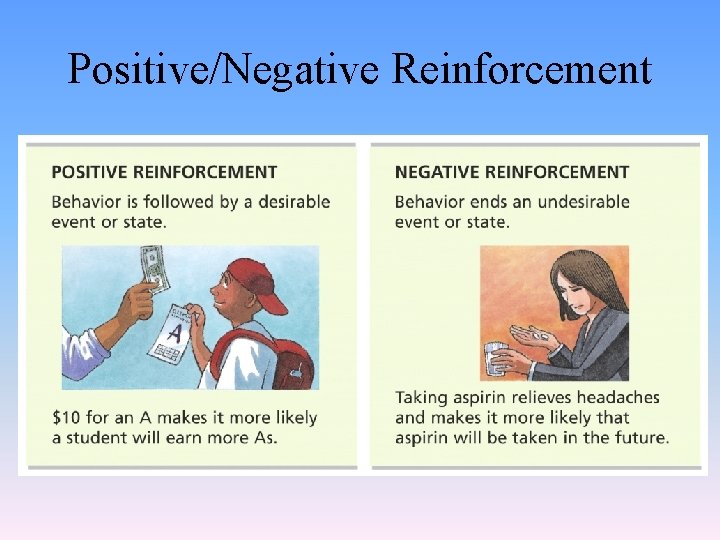
Positive Reinforcement • In operant conditioning, anything that increases the likelihood of a behavior by following it with a desirable event or state • The subject receives something they want • Will strengthen the behavior
Positive Reinforcement
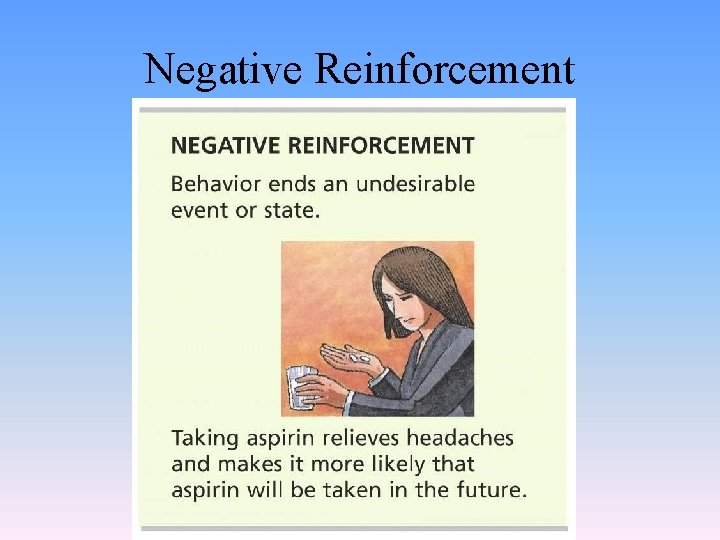
Negative Reinforcement • In operant conditioning, anything that increases the likelihood of a behavior by following it with the removal of an undesirable event or state • Something the subject doesn’t like is removed • Will strengthen the behavior
Negative Reinforcement
Positive/Negative Reinforcement
Operant Conditioning • Play “Operant Conditioning” (3: 13) Segment #11 from Psychology: The Human Experience.
Module 20: Operant Conditioning Reinforcement: Immediate Versus Delayed Reinforcement
Immediate/Delayed Reinforcement • Immediate reinforcement is more effective than delayed reinforcement • Ability to delay gratification predicts higher achievement
Module 20: Operant Conditioning Reinforcement: Primary Versus Secondary Reinforcement
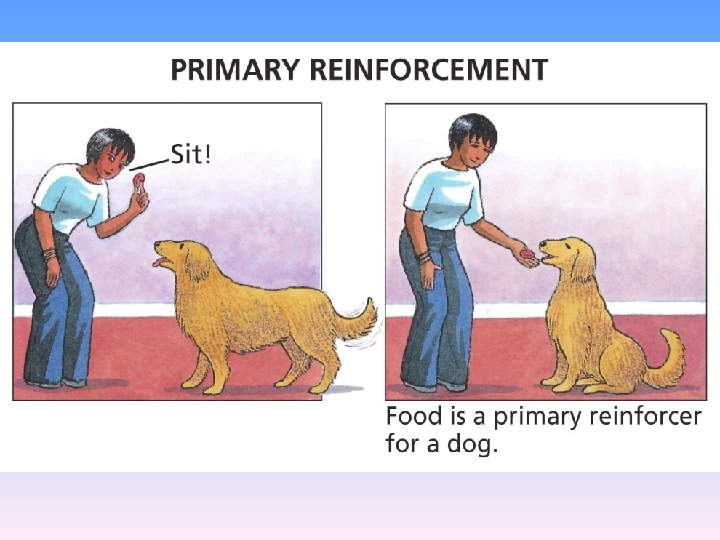
Primary Reinforcement • Something that is naturally reinforcing • Examples: food, warmth, water, etc. • The item is reinforcing in and of itself
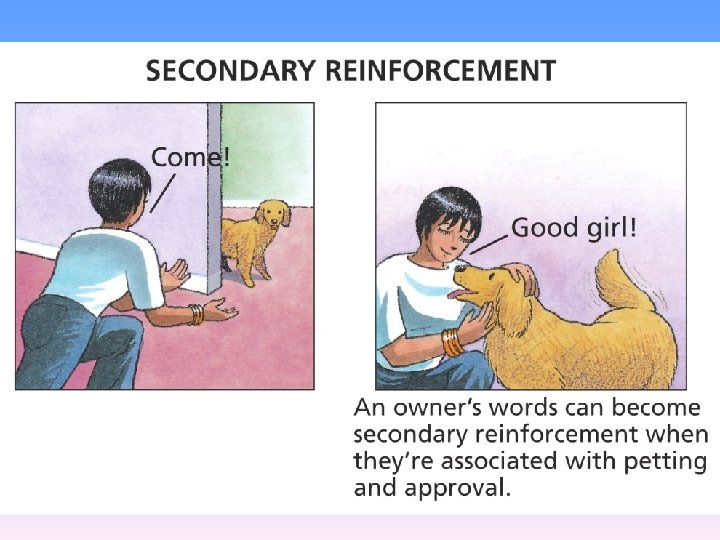
Secondary Reinforcement • Something that you have learned to value • Money is a good example
Module 20: Operant Conditioning Punishment: The Process of Punishment
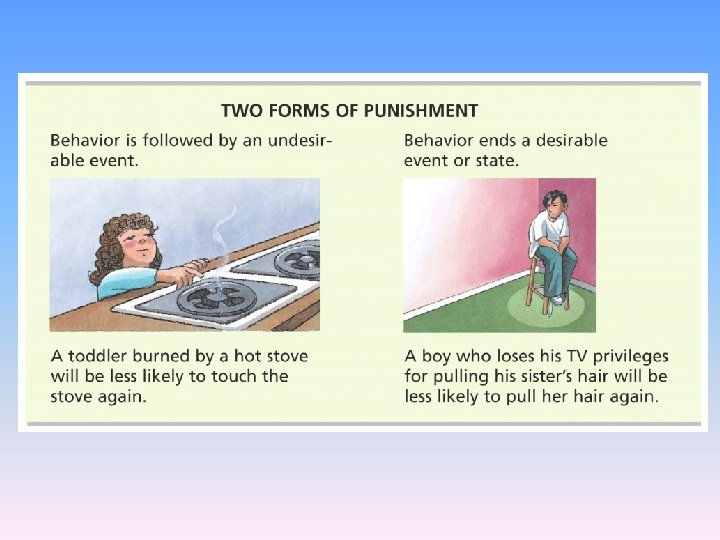
Types of Punishment • An undesirable event following a behavior • A desirable state or event ends following a behavior
Module 20: Operant Conditioning Punishment: Problems With Punishment
Negative Effects of Punishment • Doesn’t prevent the undesirable behavior when away from the punisher • Can lead to fear, anxiety, and lower selfesteem • Children who are punished physically may learn to use aggression as a means to solve problems.
Positive Effects of Punishment • Punishment can effectively control certain behaviors. • Especially useful if teaching a child not to do a dangerous behavior • Most still suggest reinforcing an incompatible behavior rather than using punishment
Module 20: Operant Conditioning Reinforcement Procedures: Shaping
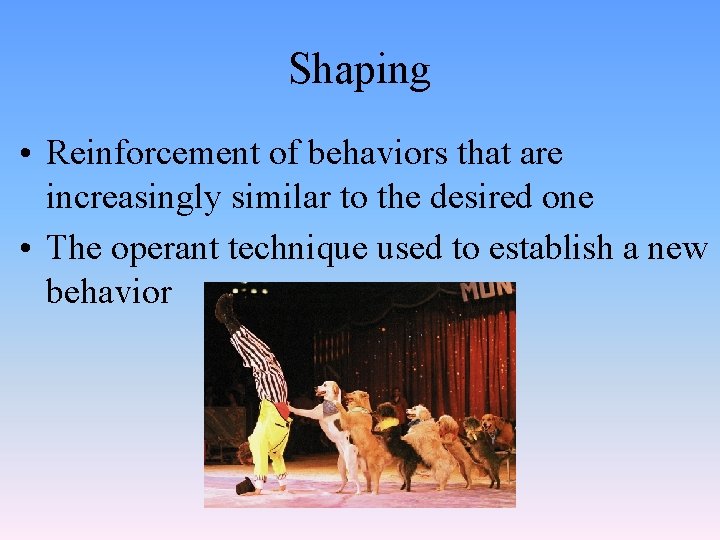
Shaping • Reinforcement of behaviors that are increasingly similar to the desired one • The operant technique used to establish a new behavior
Module 20: Operant Conditioning Reinforcement Procedures: Discrimination and Extinction
Discrimination • Ability to distinguish between two similar signals or stimuli • Learning to respond to one stimuli but not to a similar stimuli
Extinction • In operant conditioning, the loss of a behavior when consequence follows it. • The subject no longer responds since the reinforcement or punishment has stopped.
Module 20: Operant Conditioning Schedules of Reinforcement
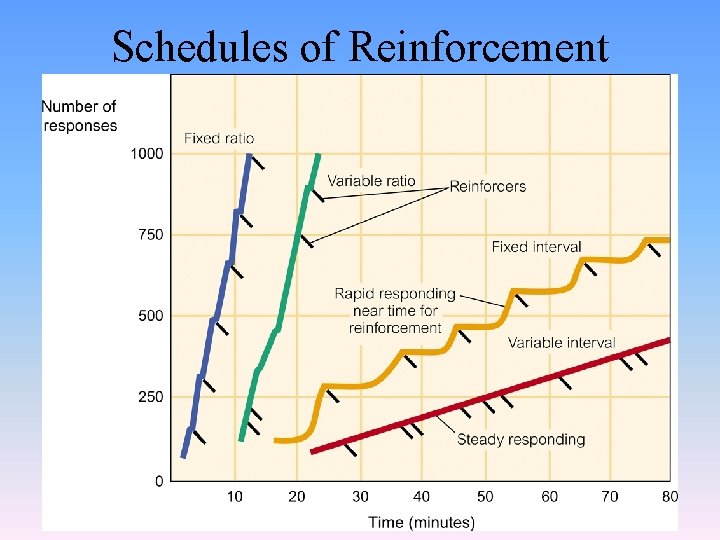
Continuous reinforcement • In operant conditioning, a schedule of reinforcement in which a reward follows every correct response • Most useful way to establish a behavior • The behavior will extinguish quickly once the reinforcement stops.
Partial Reinforcement • In operant conditioning, a schedule of reinforcement in which a reward follows only some correct responses • Includes the following types: – Fixed-interval and variable interval – Fixed-ratio and variable-ratio
Fixed-Interval Schedule • In operant conditioning, a partial reinforcement schedule that rewards only the first correct response after some defined period of time • i. e. weekly quiz in a class
Variable-Interval Schedule • In operant conditioning, a partial reinforcement schedule that rewards the first correct response after an unpredictable amount of time • i. e. “pop” quiz in a class
Fixed-Ratio Schedule • In operant conditioning, a partial reinforcement schedule that rewards a response only after some defined number of correct responses • The faster the subject responds, the more reinforcements they will receive.
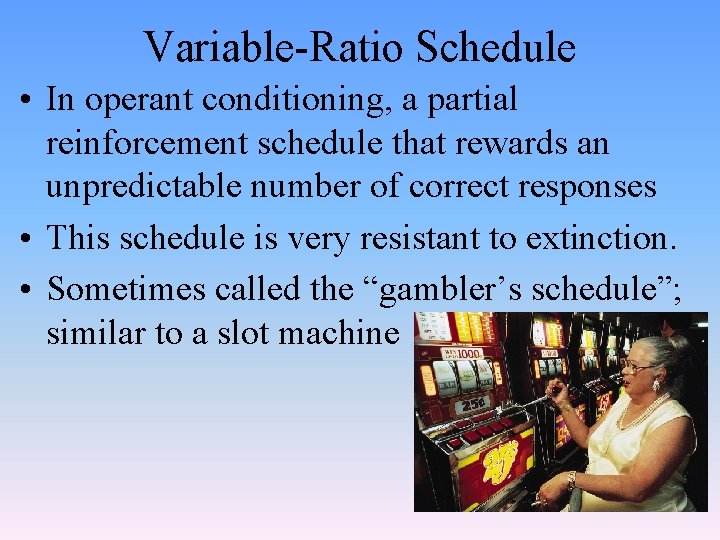
Variable-Ratio Schedule • In operant conditioning, a partial reinforcement schedule that rewards an unpredictable number of correct responses • This schedule is very resistant to extinction. • Sometimes called the “gambler’s schedule”; similar to a slot machine
Schedules of Reinforcement
Module 20: Operant Conditioning New Understandings of Operant Conditioning: The Role of Cognition
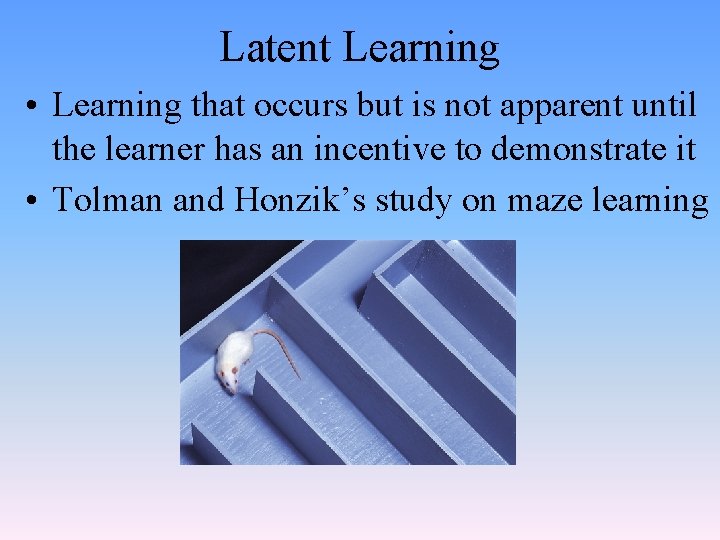
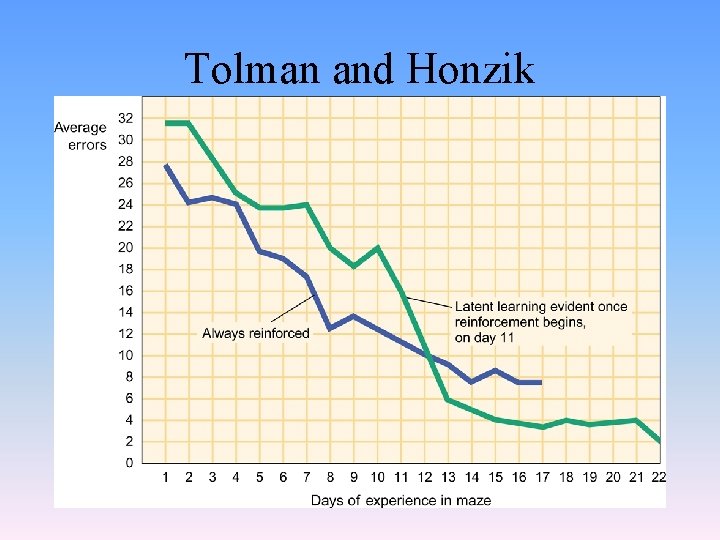
Latent Learning • Learning that occurs but is not apparent until the learner has an incentive to demonstrate it • Tolman and Honzik’s study on maze learning
Tolman and Honzik
Cognitive Map • A mental representation of a place • Experiments showed rats could learn a maze without any reinforcements
Latent Learning & Cognitive Maps • Play “Cognitive Processes in Learning” (6: 25) Segment #12 from Psychology: The Human Experience.
Overjustification Effect • Effect of promising a reward for doing what one already likes to do • The reward may lessen and replace the person’s original, natural motivation, so that the behavior stops if the reward is eliminated
Module 20: Operant Conditioning New Understandings of Operant Conditioning: The Role of Biology
Biological Predisposition • Research suggests some species are biologically predisposed to learn specific behaviors
The End
Name of Concept • Use this slide to add a concept to the presentation
Name of Concept Use this slide to add a table, chart, clip art, picture, diagram, or video clip. Delete this box when finished