
Learning Chapter 5 What is Learning Learning any
- Slides: 49
Learning Chapter 5
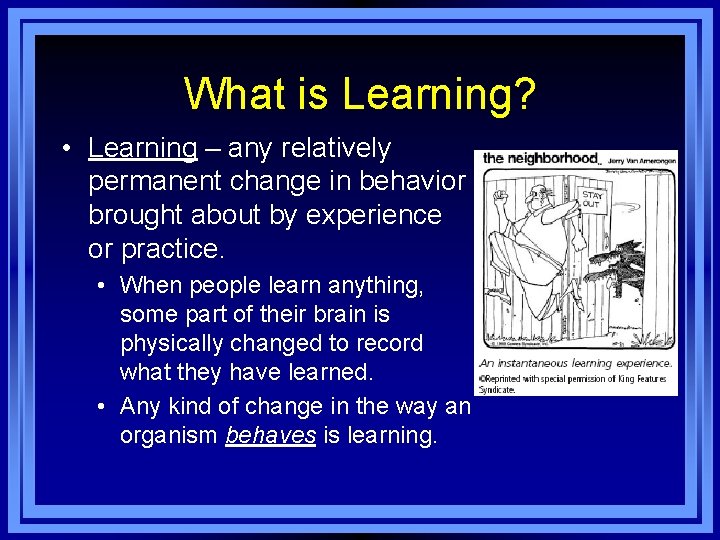
What is Learning? • Learning – any relatively permanent change in behavior brought about by experience or practice. • When people learn anything, some part of their brain is physically changed to record what they have learned. • Any kind of change in the way an organism behaves is learning.
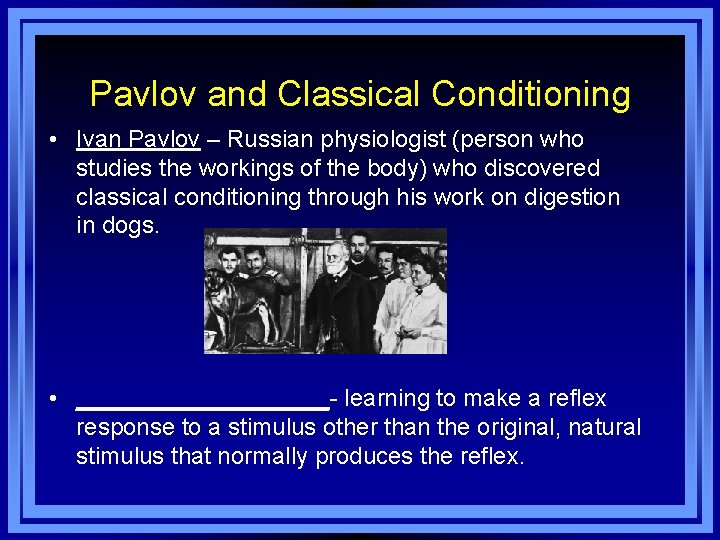
Pavlov and Classical Conditioning • Ivan Pavlov – Russian physiologist (person who studies the workings of the body) who discovered classical conditioning through his work on digestion in dogs. • __________- learning to make a reflex response to a stimulus other than the original, natural stimulus that normally produces the reflex.
Classical Conditioning Concepts • _____________- a naturally occurring stimulus that leads to an involuntary response. • _____________- an involuntary response to a naturally occurring or unconditioned stimulus.
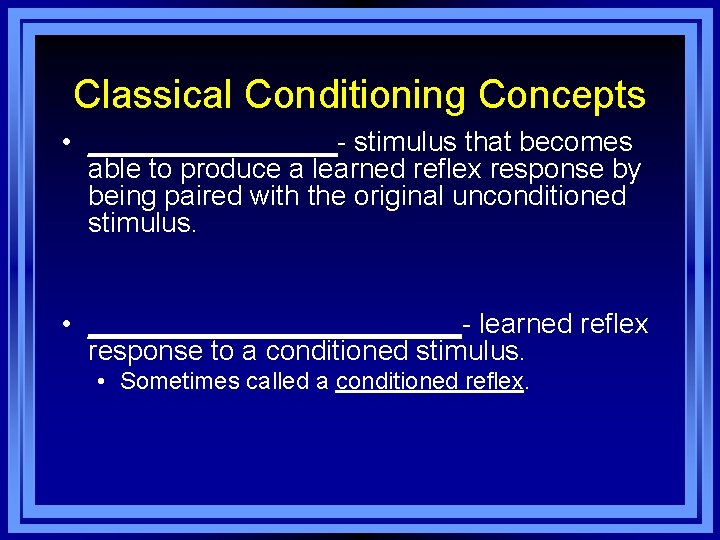
Classical Conditioning Concepts • ________- stimulus that becomes able to produce a learned reflex response by being paired with the original unconditioned stimulus. • ____________- learned reflex response to a conditioned stimulus. • Sometimes called a conditioned reflex.
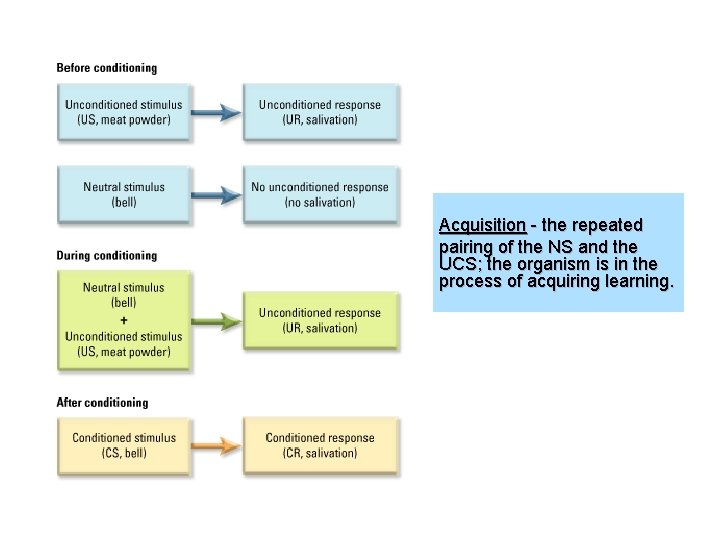
Acquisition - the repeated pairing of the NS and the UCS; the organism is in the process of acquiring learning.
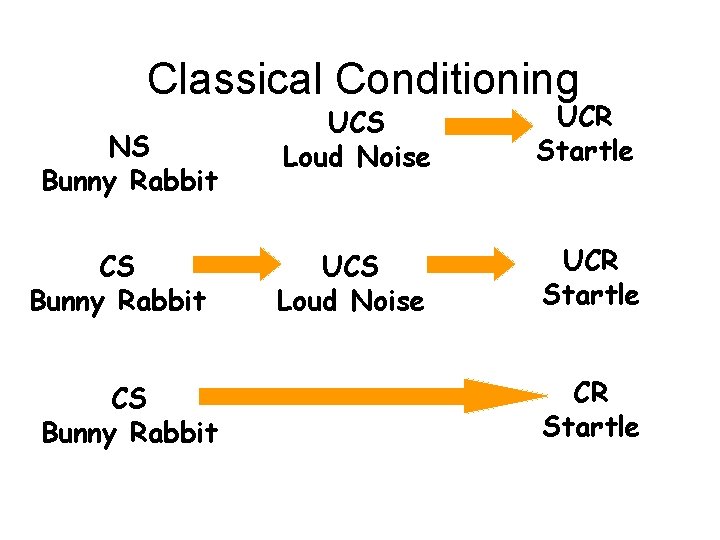
Classical Conditioning NS Bunny Rabbit CS Bunny Rabbit UCS Loud Noise UCR Startle
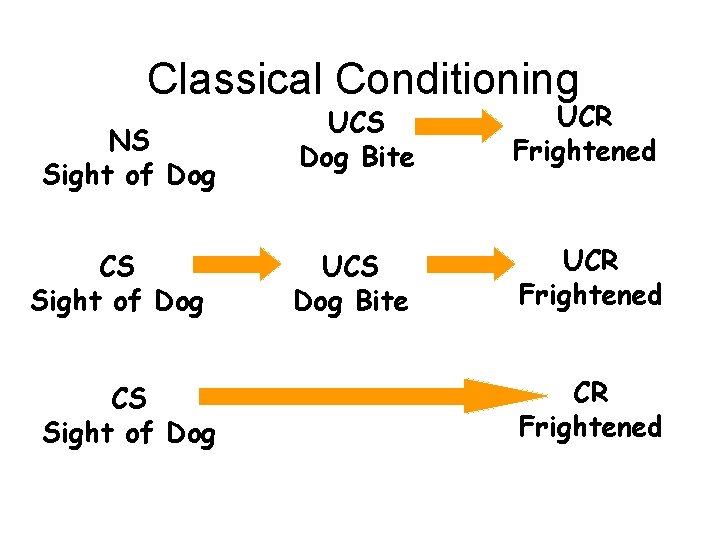
Classical Conditioning NS Sight of Dog CS Sight of Dog UCS Dog Bite UCR Frightened
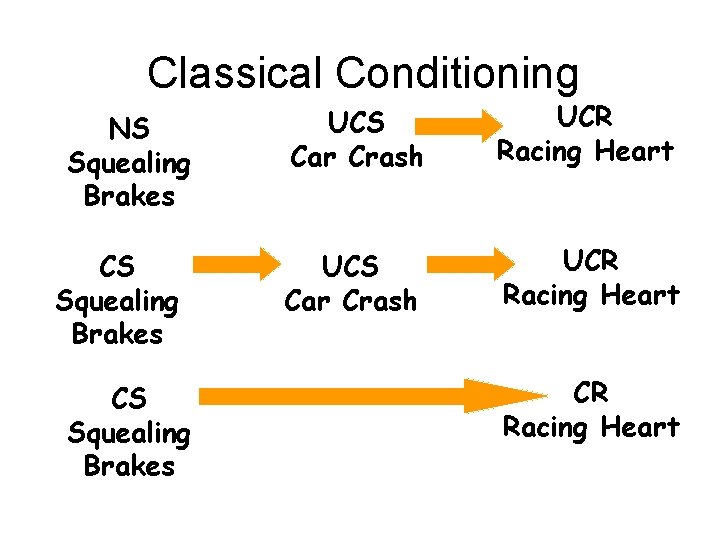
Classical Conditioning NS Squealing Brakes CS Squealing Brakes UCS Car Crash UCR Racing Heart
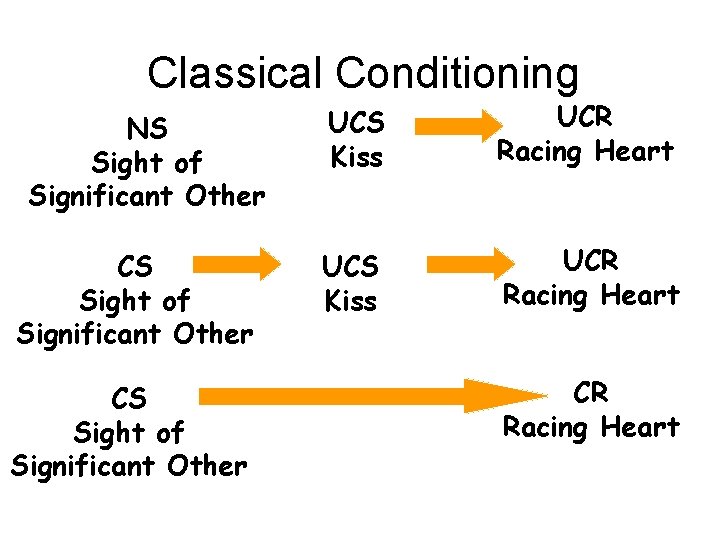
Classical Conditioning NS Sight of Significant Other CS Sight of Significant Other UCS Kiss UCR Racing Heart
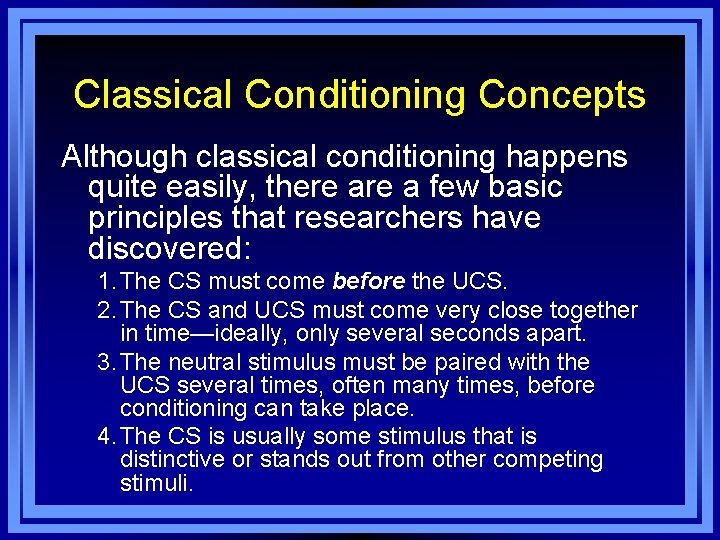
Classical Conditioning Concepts Although classical conditioning happens quite easily, there a few basic principles that researchers have discovered: 1. The CS must come before the UCS. 2. The CS and UCS must come very close together in time—ideally, only several seconds apart. 3. The neutral stimulus must be paired with the UCS several times, often many times, before conditioning can take place. 4. The CS is usually some stimulus that is distinctive or stands out from other competing stimuli.
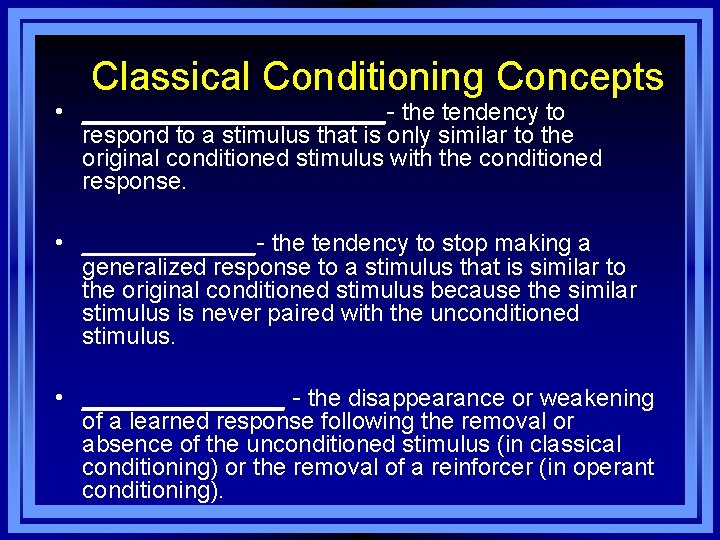
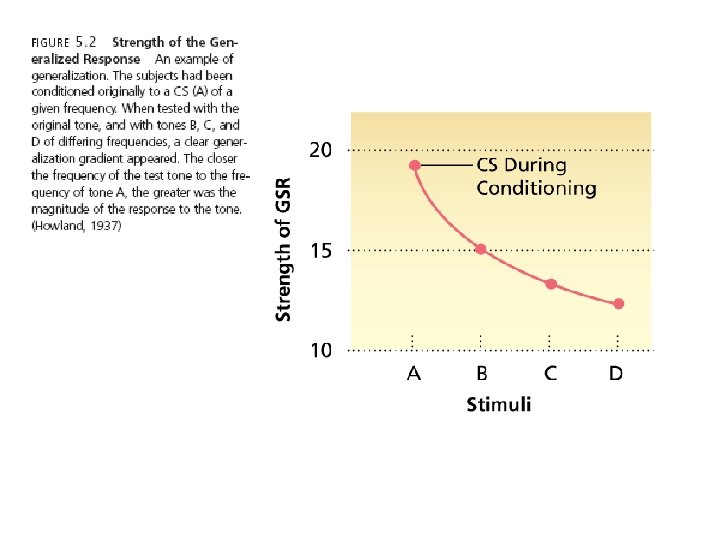
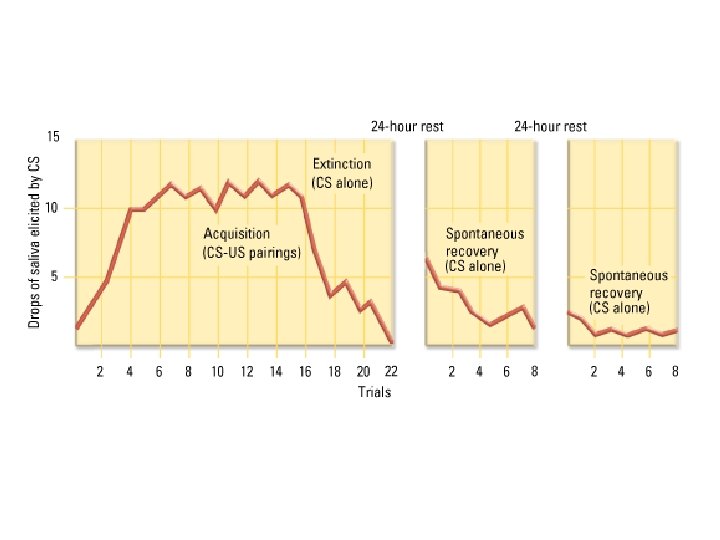
Classical Conditioning Concepts • ___________- the tendency to respond to a stimulus that is only similar to the original conditioned stimulus with the conditioned response. • ______- the tendency to stop making a generalized response to a stimulus that is similar to the original conditioned stimulus because the similar stimulus is never paired with the unconditioned stimulus. • _______ - the disappearance or weakening of a learned response following the removal or absence of the unconditioned stimulus (in classical conditioning) or the removal of a reinforcer (in operant conditioning).
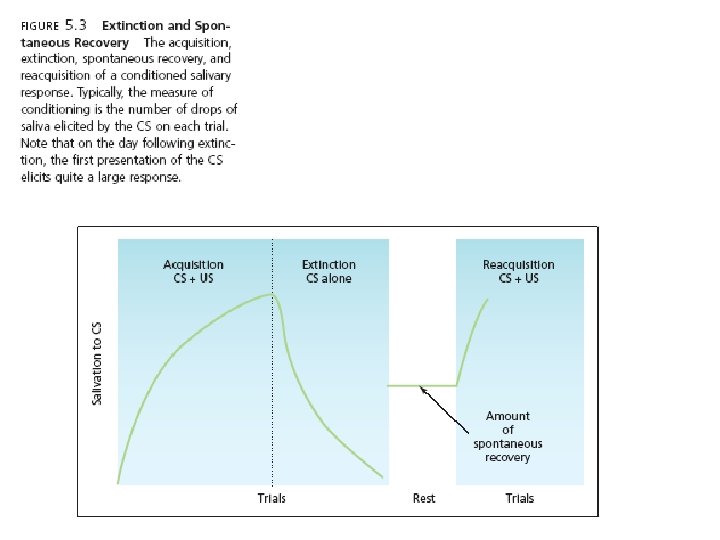
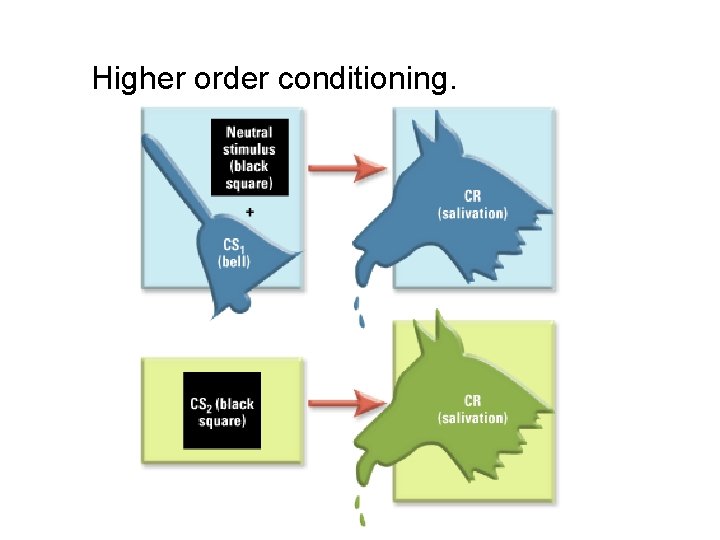
Classical Conditioning Concepts • ________– the reappearance of a learned response after extinction has occurred. • Learning is a relatively permanent change in behavior. • ___________- occurs when a strong conditioned stimulus is paired with a neutral stimulus, causing the neutral stimulus to become a seconditioned stimulus.
Higher order conditioning.
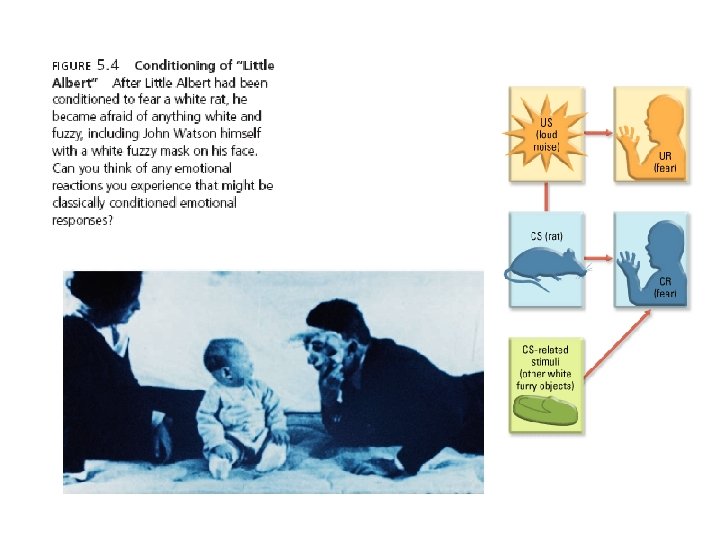
Conditioned Emotional Response • Conditioned emotional response (CER) emotional response that has become classically conditioned to occur to learned stimuli, such as a fear of dogs or the emotional reaction that occurs when seeing an attractive person. • CERs may lead to phobias – irrational fear responses.
_______ Aversion • Conditioned ____ aversion - development of a nausea or aversive response to a particular ____ because that _____ was followed by a nausea reaction, occurring after only one association. • Biological preparedness - the tendency of animals to learn certain associations, such as ________, with only one or few pairings due to the survival value of the learning.
Learning By Watching • Vicarious conditioning - classical conditioning of a reflex response or emotion by watching the reaction of another person.
Why Classical Conditioning Works • Stimulus substitution - original theory in which Pavlov stated that classical conditioning occurred because the conditioned stimulus became a substitute for the unconditioned stimulus by being paired closely together. • Cognitive perspective - modern theory in which classical conditioning is seen to occur because the conditioned stimulus provides information or an expectancy about the coming of the unconditioned stimulus.
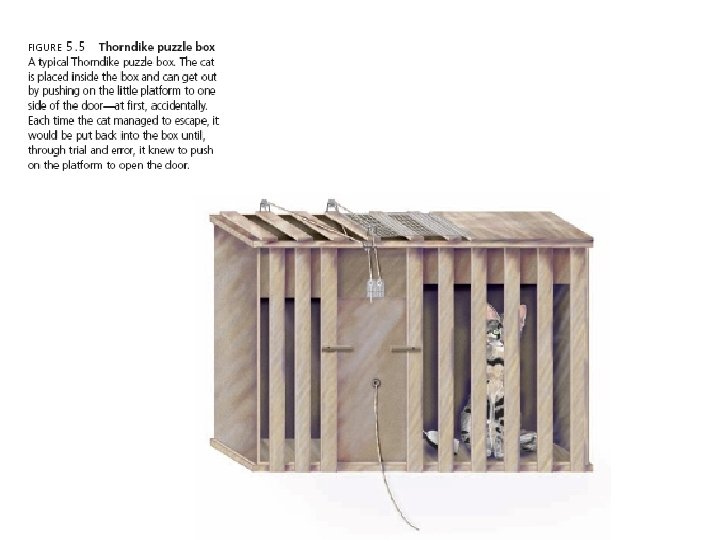
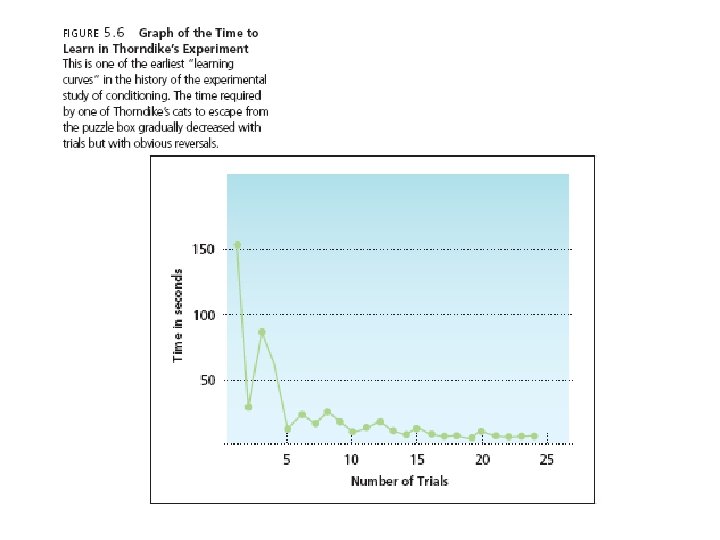
Operant Conditioning • Operant conditioning - the learning of _______behavior through the effects of pleasant and unpleasant consequences to responses. • Thorndike’s Law of Effect -
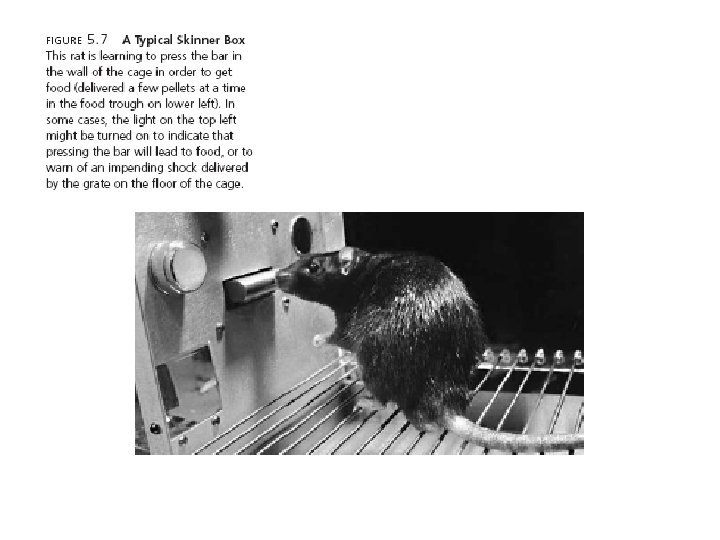
Skinner’s Contribution • Behaviorist; wanted to study only observable, measurable behavior. • Gave “operant conditioning” its name. • Operant - any behavior that is voluntary. • Learning depends on what happens ______ the response — _________
Reinforcement • Reinforcement - any event or stimulus, that when _____ a response, ____ the probability that the response will occur again. • Primary reinforcer - any reinforcer that is naturally reinforcing by meeting a basic biological need, such as hunger, thirst, or touch. • Secondary reinforcer - any reinforcer that becomes reinforcing after being paired with a primary reinforcer, such as praise, tokens, or gold stars.
Positive and Negative Reinforcement • ________- the reinforcement of a response by the addition or experiencing of a pleasurable stimulus. • ________- the reinforcement of a response by the removal, escape from, or avoidance of an unpleasant stimulus.
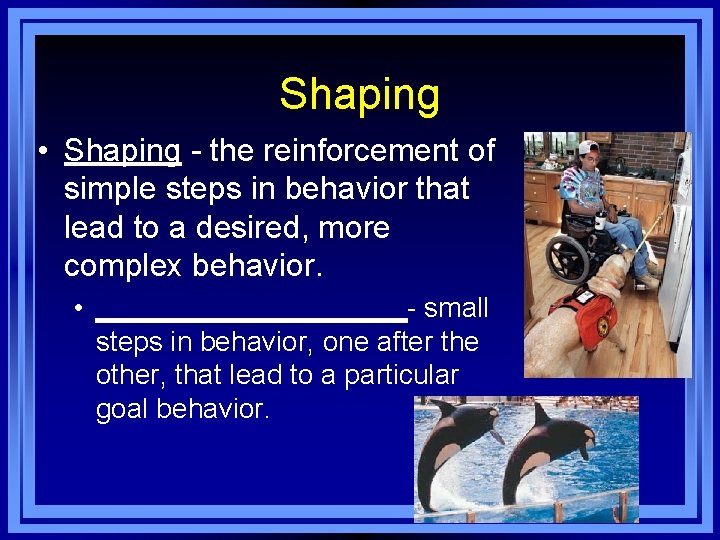
Shaping • Shaping - the reinforcement of simple steps in behavior that lead to a desired, more complex behavior. • __________- small steps in behavior, one after the other, that lead to a particular goal behavior.
Other Operant Conditioning Concepts • _______ – occurs if the behavior (response) is not reinforced. • Operantly conditioned responses also can be ______ to stimuli that are only similar to the original stimulus. • ____________(reoccurrence of a once extinguished response) also happens in operant conditioning.
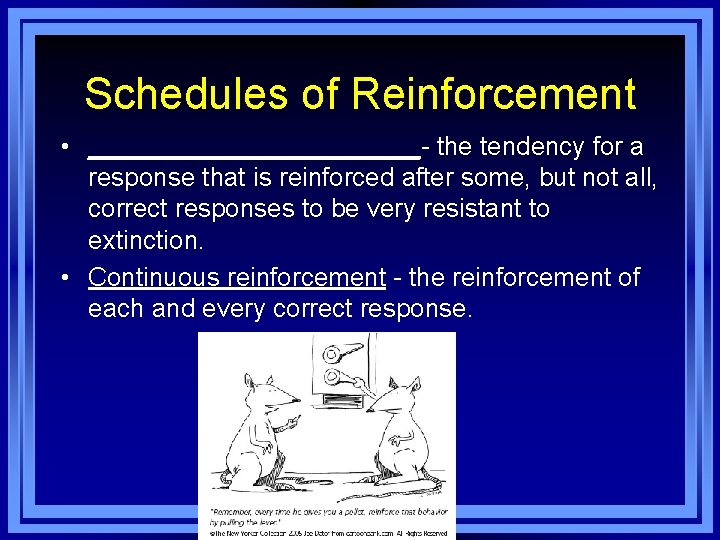
Schedules of Reinforcement • ____________- the tendency for a response that is reinforced after some, but not all, correct responses to be very resistant to extinction. • Continuous reinforcement - the reinforcement of each and every correct response.
Schedules of Reinforcement • Fixed ratio schedule of reinforcement - schedule of reinforcement in which the number of responses required for reinforcement is always the same. • Variable ratio schedule of reinforcement - schedule of reinforcement in which the number of responses required for reinforcement is different for each trial or event.
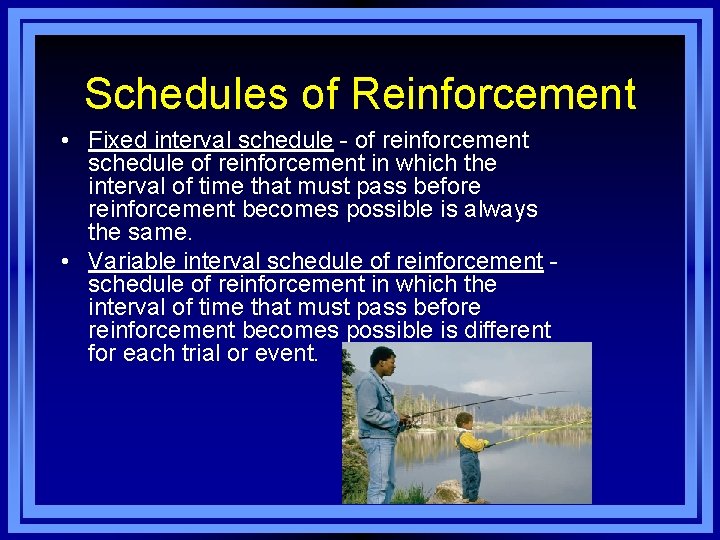
Schedules of Reinforcement • Fixed interval schedule - of reinforcement schedule of reinforcement in which the interval of time that must pass before reinforcement becomes possible is always the same. • Variable interval schedule of reinforcement in which the interval of time that must pass before reinforcement becomes possible is different for each trial or event.
Punishment • Punishment - any event or object that, when ____ a response, makes that response ____ likely to happen again. • Punishment by ____ - the punishment of a response by the addition or experiencing of an unpleasant stimulus. • Punishment by _______ - the punishment of a response by the removal of a pleasurable stimulus.
How to Make Punishment More Effective 1. Punishment should immediately follow the behavior it is meant to punish. 2. Punishment should be consistent. 3. Punishment of the wrong behavior should be paired, whenever possible, with reinforcement of the right behavior. Punishment does NOT teach correct behavior it reduces incorrect behavior.
Operant Stimuli and Stimulus Control • ______- any stimulus, such as a stop sign or a doorknob, that provides the organism with a cue for making a certain response in order to obtain reinforcement.
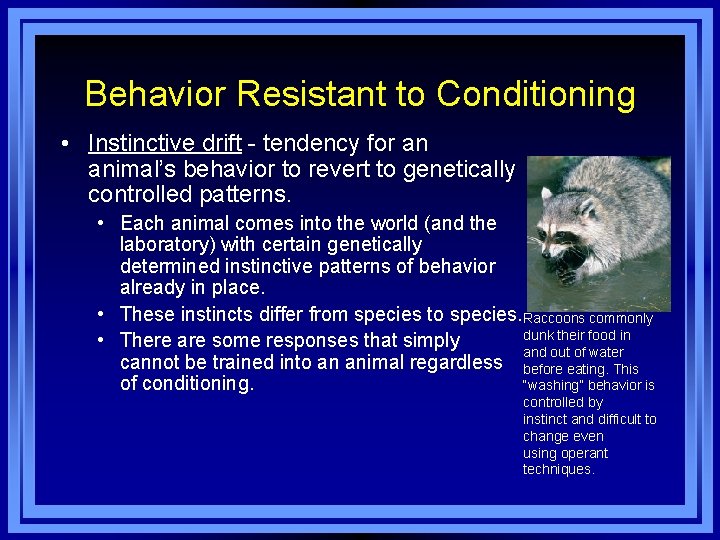
Behavior Resistant to Conditioning • Instinctive drift - tendency for an animal’s behavior to revert to genetically controlled patterns. • Each animal comes into the world (and the laboratory) with certain genetically determined instinctive patterns of behavior already in place. • These instincts differ from species to species. Raccoons commonly dunk their food in • There are some responses that simply and out of water cannot be trained into an animal regardless before eating. This “washing” behavior is of conditioning. controlled by instinct and difficult to change even using operant techniques.
Behavior Modification • Behavior modification - the use of operant conditioning techniques to bring about desired changes in behavior. • Token economy - type of behavior modification in which desired behavior is rewarded with tokens. • Time-out - a form of mild punishment by removal in which a misbehaving animal, child, or adult is placed in a special area away from the attention of others. • Essentially, the organism is being “removed” from any possibility of positive reinforcement in the form of attention. • Applied behavior analysis (ABA) – modern term for a form of behavior modification that uses shaping techniques to mold a desired behavior or response.
Biofeedback and Neurofeedback • Biofeedback- the use of feedback about biological conditions to bring involuntary responses such as blood pressure and relaxation under voluntary control. • Neurofeedback - form of biofeedback using brainscanning devices to provide feedback about brain activity in an effort to modify behavior.
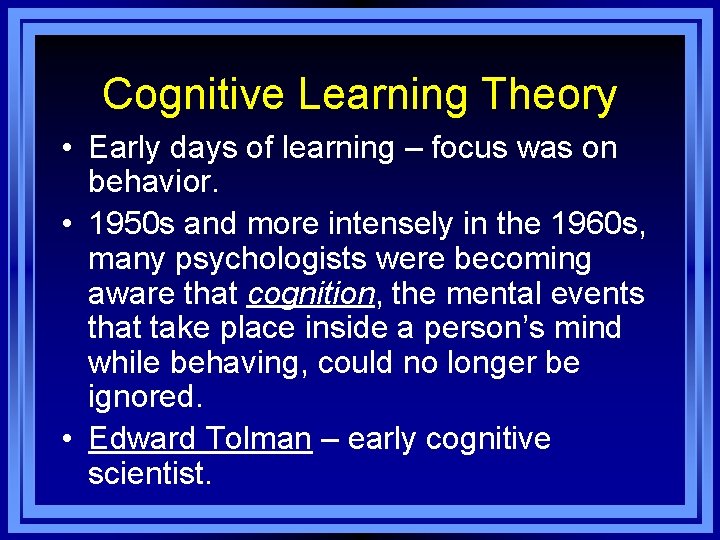
Cognitive Learning Theory • Early days of learning – focus was on behavior. • 1950 s and more intensely in the 1960 s, many psychologists were becoming aware that cognition, the mental events that take place inside a person’s mind while behaving, could no longer be ignored. • Edward Tolman – early cognitive scientist.
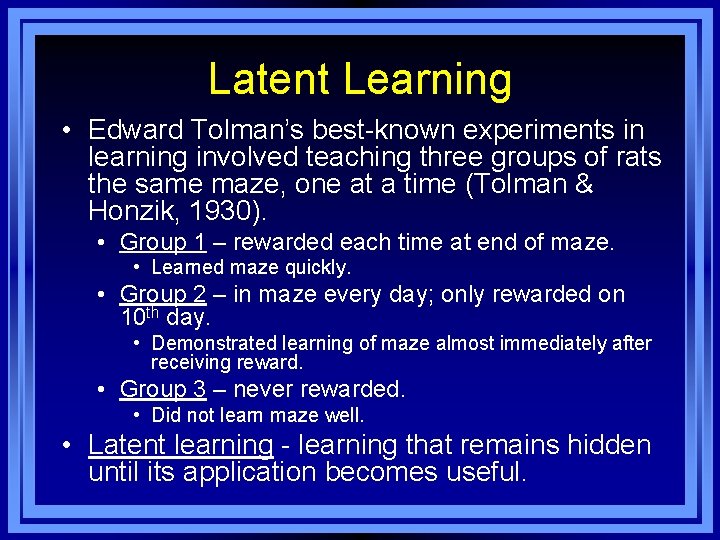
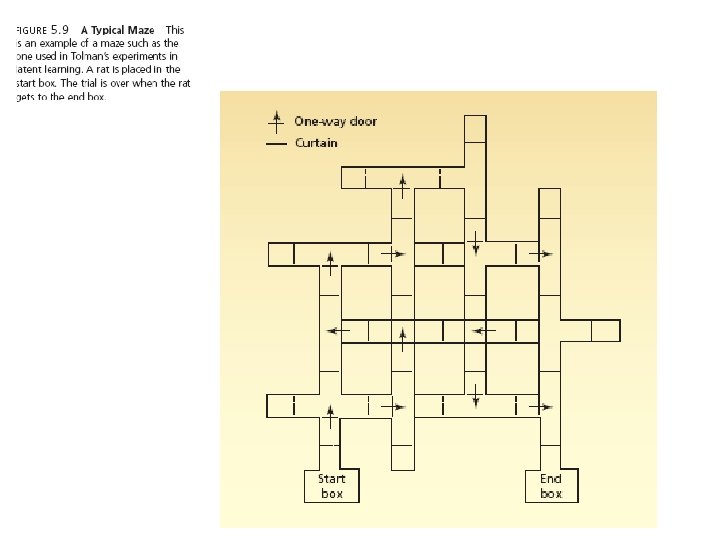
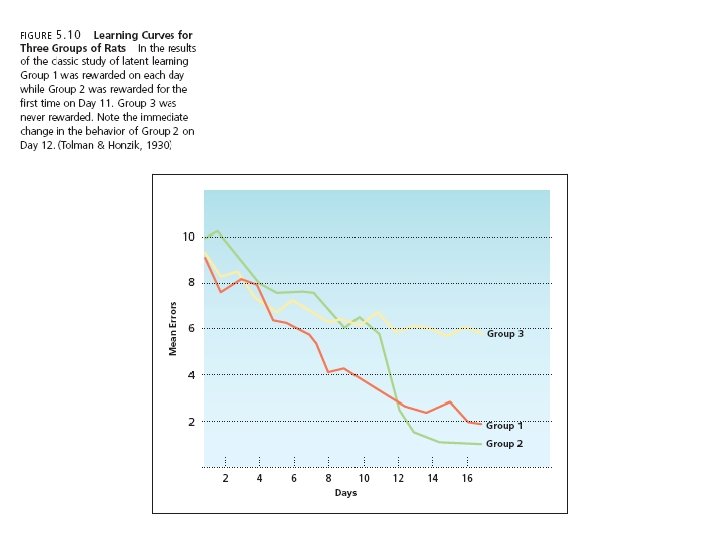
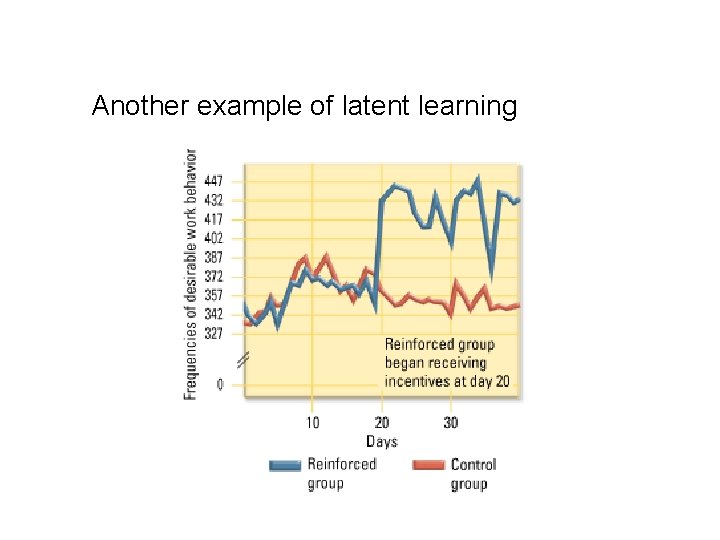
Latent Learning • Edward Tolman’s best-known experiments in learning involved teaching three groups of rats the same maze, one at a time (Tolman & Honzik, 1930). • Group 1 – rewarded each time at end of maze. • Learned maze quickly. • Group 2 – in maze every day; only rewarded on 10 th day. • Demonstrated learning of maze almost immediately after receiving reward. • Group 3 – never rewarded. • Did not learn maze well. • Latent learning - learning that remains hidden until its application becomes useful.
Another example of latent learning
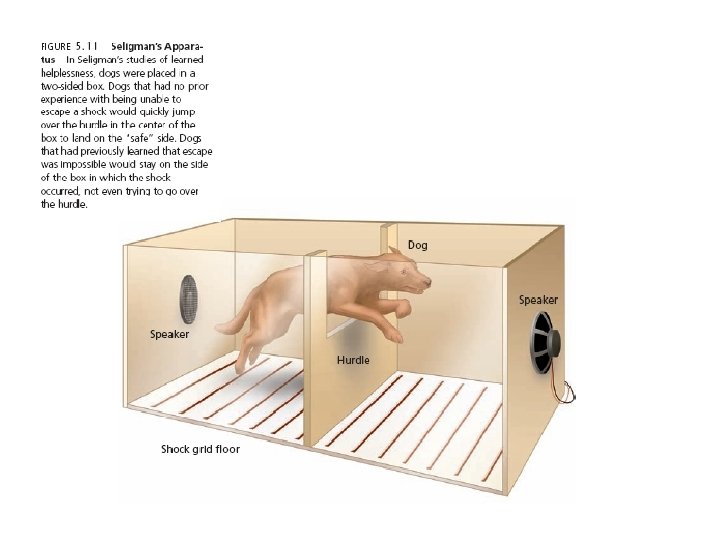
Learned Helplessness • Learned helplessness - the tendency to fail to act to escape from a situation because of a history of ______________in the past.
Observational Learning • _________- learning new behavior by watching a model perform that behavior. • Learning/performance distinction referring to the observation that learning can take place without actual performance of the learned behavior. • http: //www. youtube. com/watch? v=j. Wsxf o. JEw. QQ
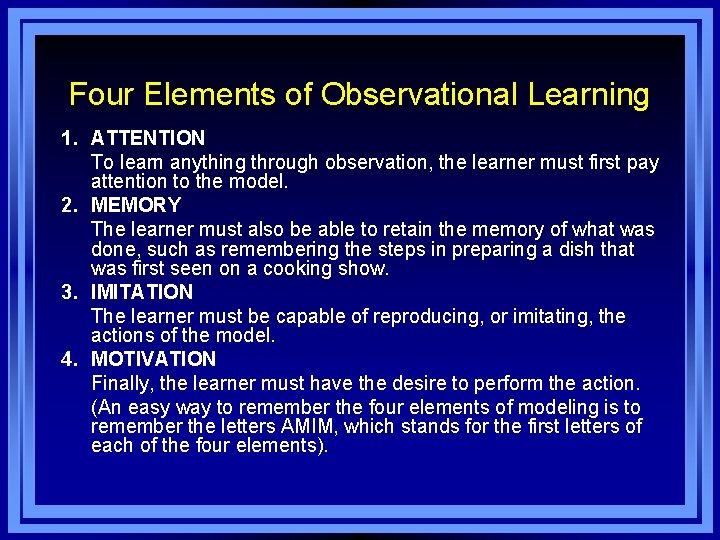
Four Elements of Observational Learning 1. ATTENTION To learn anything through observation, the learner must first pay attention to the model. 2. MEMORY The learner must also be able to retain the memory of what was done, such as remembering the steps in preparing a dish that was first seen on a cooking show. 3. IMITATION The learner must be capable of reproducing, or imitating, the actions of the model. 4. MOTIVATION Finally, the learner must have the desire to perform the action. (An easy way to remember the four elements of modeling is to remember the letters AMIM, which stands for the first letters of each of the four elements).