
Learning by Doing 6 practices for innovation Terri
Learning by Doing 6 practices for innovation Terri Martinson Elton
Change by Design “What we need is an approach to innovation that is powerful, and broadly accessible, that can be integrated into all aspects of business and society, and that individuals and teams can use to generate breakthrough ideas that are implemented and that therefore have an impact. ” Change by Design, 3.
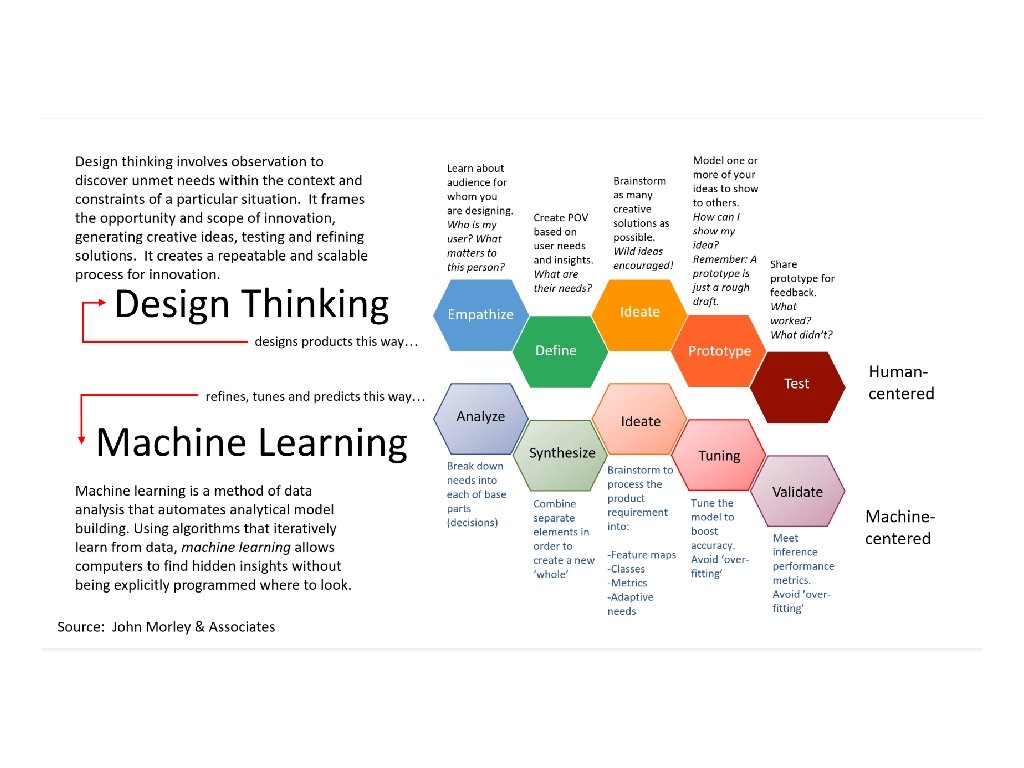
Change by Design thinking utilizes the skills designers have used to match human needs with available technology and practical constraints to create a process that all people can learn to address a wide array of complex problems. Change by Design, 4.
Change by Design “Design thinking taps into capacities we all have but are often overlooked by more conventional problem-solving practices. It is not only human-centered, but deeply human in and of itself. Design thinking relies on our ability to be intuitive, recognize patterns, to construct ideas that have emotional meaning as well as functionality, to express ourselves in media other than words or symbols. ” Change by Design, 4.
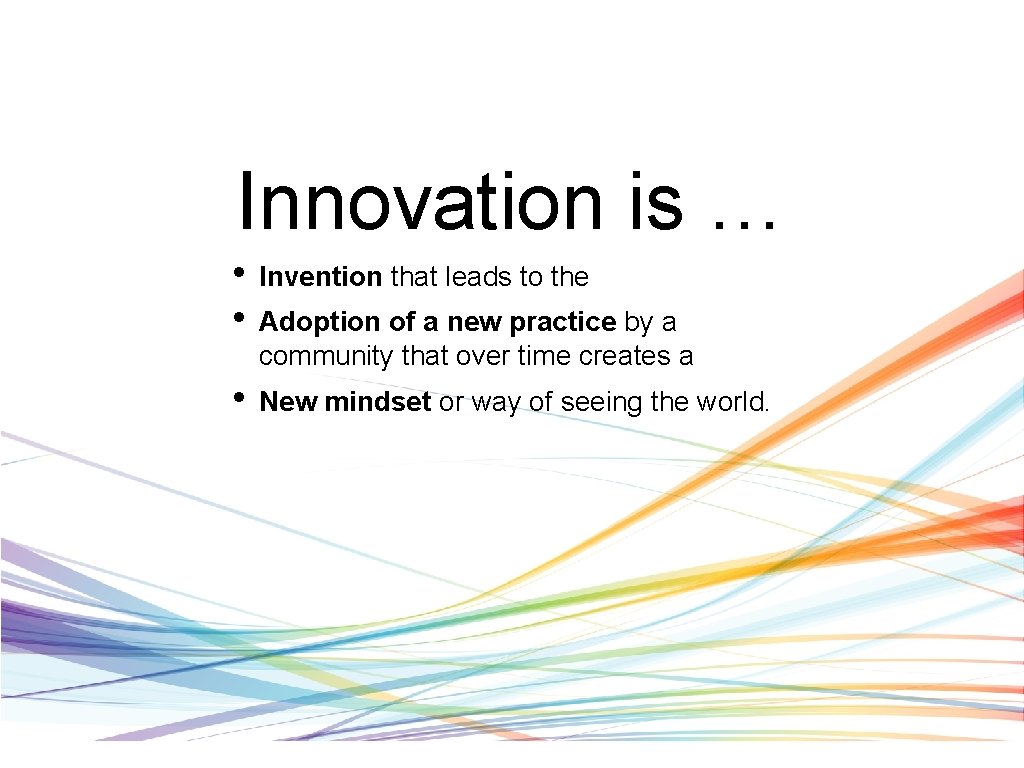
Innovation is … • • Invention that leads to the • New mindset or way of seeing the world. Adoption of a new practice by a community that over time creates a
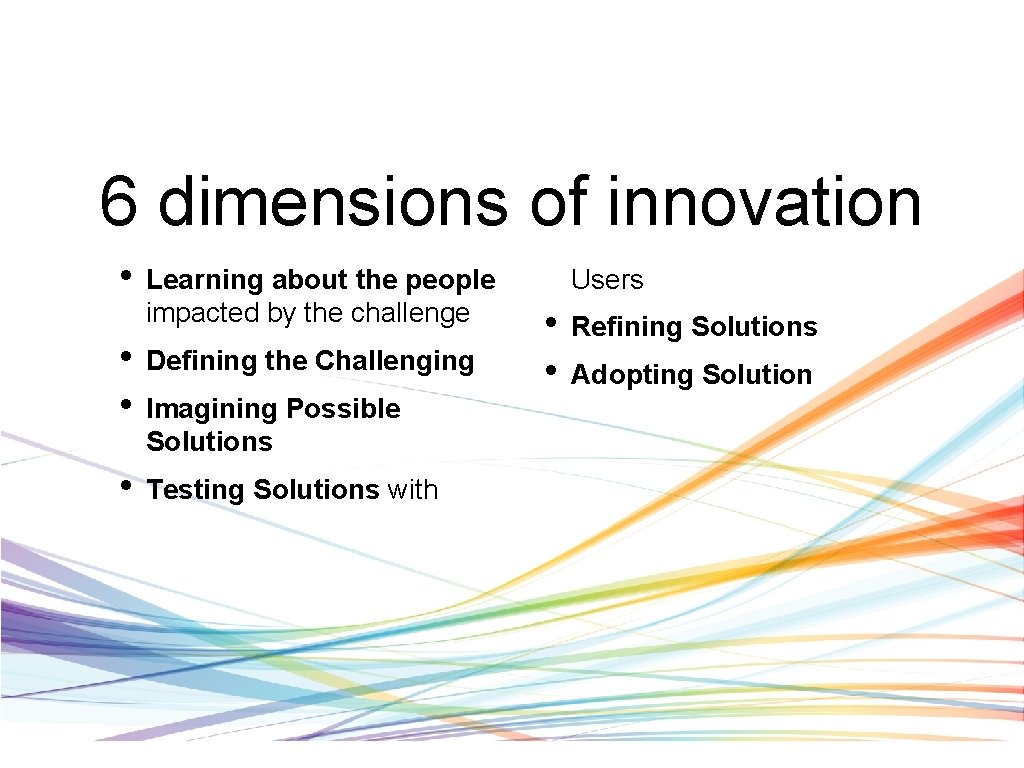
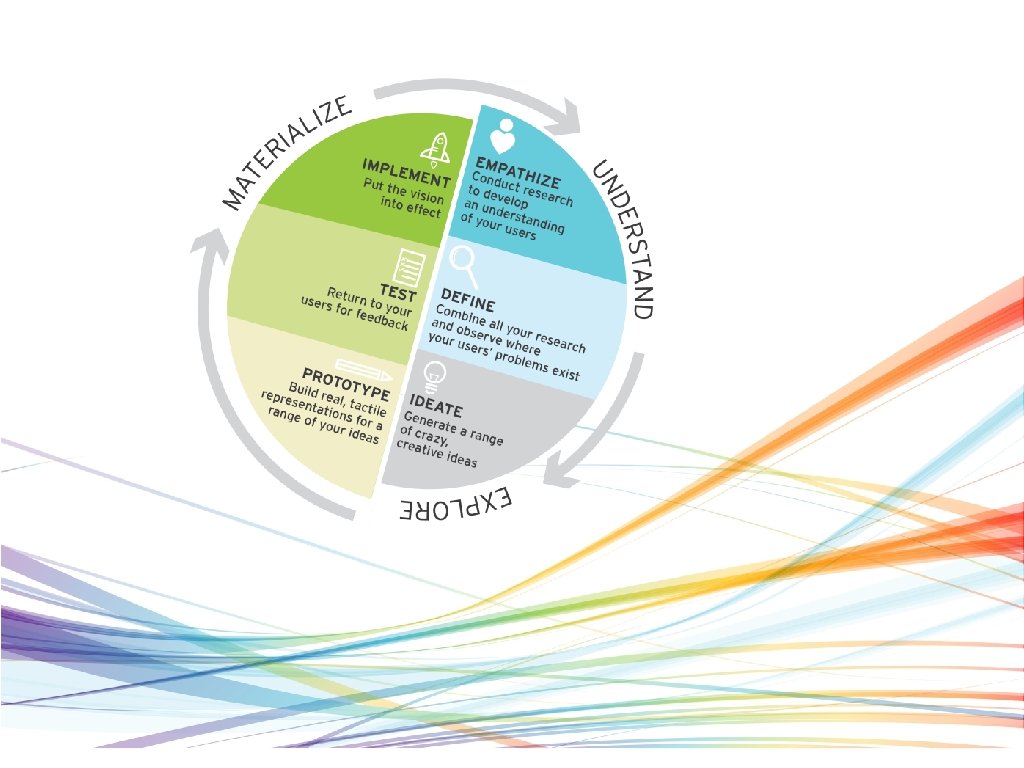
6 dimensions of innovation • Learning about the people impacted by the challenge • • Defining the Challenging • Testing Solutions with Imagining Possible Solutions Users • • Refining Solutions Adopting Solution
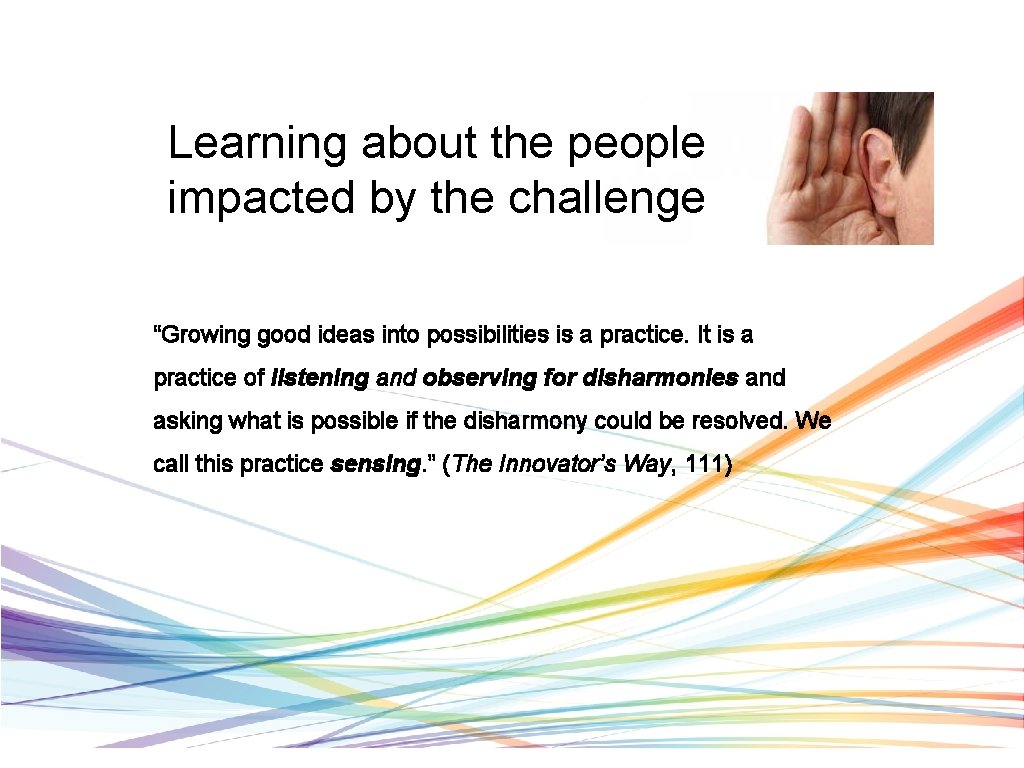
Learning about the people impacted by the challenge “Growing good ideas into possibilities is a practice. It is a practice of listening and observing for disharmonies and asking what is possible if the disharmony could be resolved. We call this practice sensing. ” (The Innovator’s Way, 111)
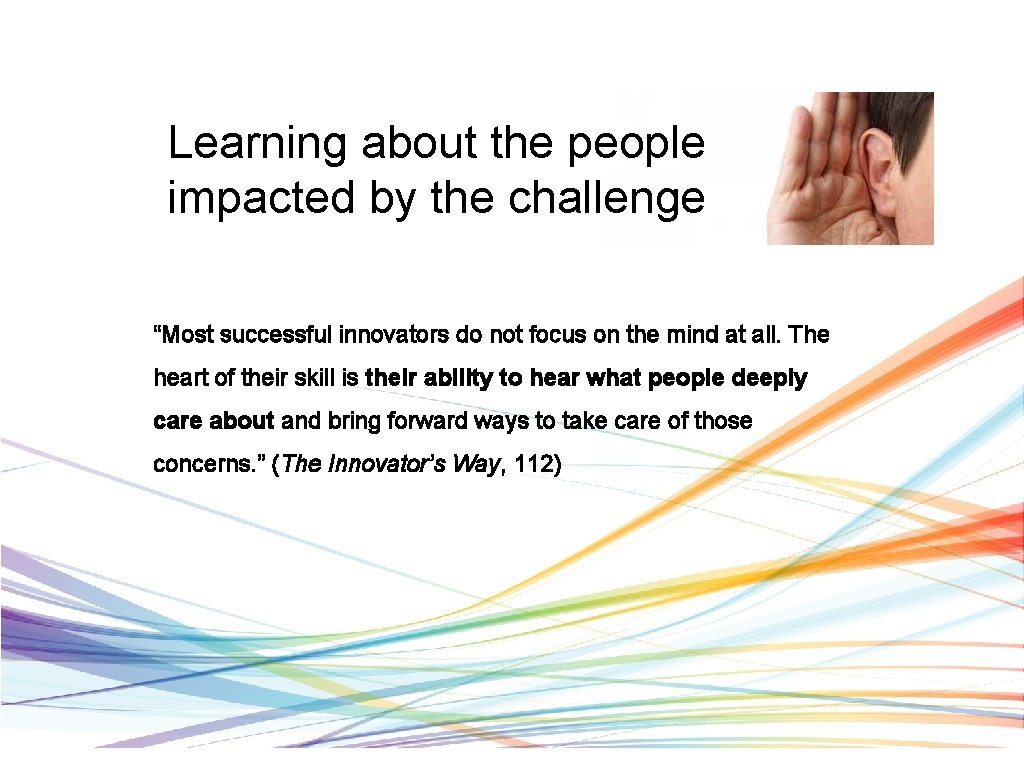
Learning about the people impacted by the challenge “Most successful innovators do not focus on the mind at all. The heart of their skill is their ability to hear what people deeply care about and bring forward ways to take care of those concerns. ” (The Innovator’s Way, 112)
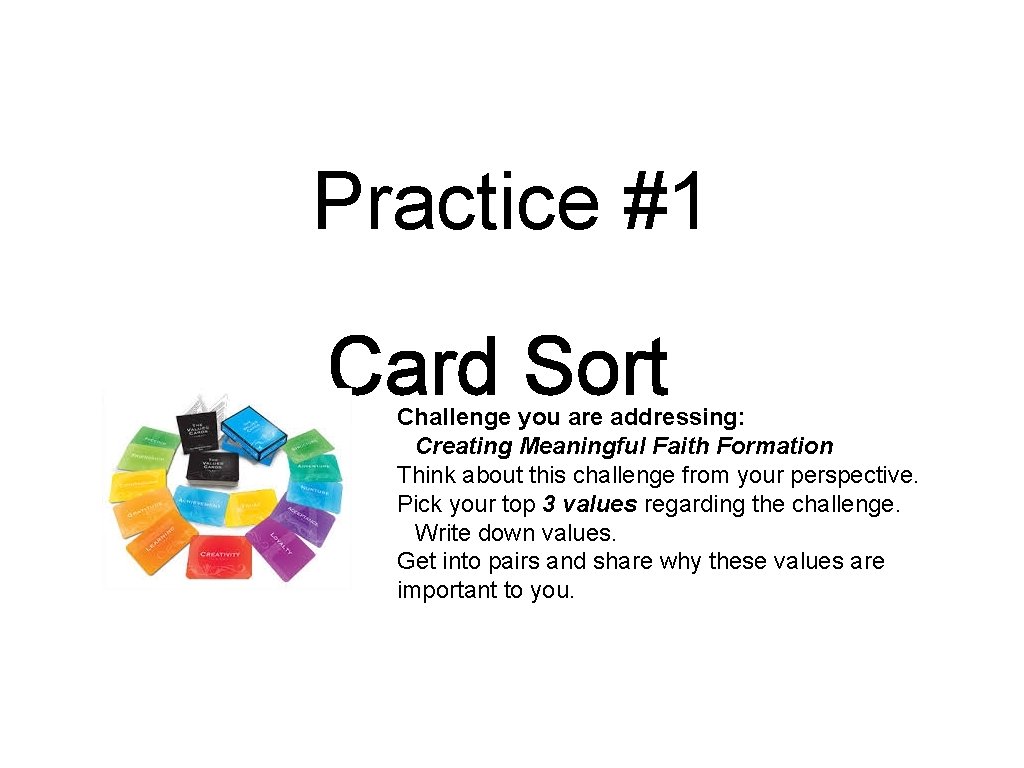
Practice #1 Card Sort Challenge you are addressing: Creating Meaningful Faith Formation Think about this challenge from your perspective. Pick your top 3 values regarding the challenge. Write down values. Get into pairs and share why these values are important to you.
Defining the Challenge Coasting Bike Story Change By Design, Chapter 1
Practice #2 5 Whys Challenge: Creating Meaningful Faith Formation (in your context) Describe your challenge to a partner in 2 sentences. The partner asks, Why? You share your answer. The partner asks, Why? 4 more times. Now write down your core challenge and why it matters.
Imagining Possible Solutions “…creative confidence is about believing in your ability to create change in the world around you. It is the conviction that you can achieve what you set out to do. We think this self-assurance, this belief in your creative capacity, its at the heart of innovation. Creative confidence is like a muscle - it can be strengthened and nurture through effort and experience. ” (Creative Confidence, 2 -3)
Practice #3 Yes… and Challenge: Meaningful Faith Formation Constraints: congregation with solo pastor and 1/2 program staff, $1, 000 budget, and worships 200 people. Get four people into a circle. As a group you are going to come up an idea for creating meaningful faith formation in this congregation. Using the improv technique of yes and, the first person will a sentence or phrase response…(say, offer a class), the next person adds (and it meets online), then the next person adds (and the instructor is from another congregation), then the next person adds (and people join from all across the country)…until you have taken that idea as far as you can. Then have another person start a thread and repeat the exercise.
Prototypes Three objectives: building to think earning faster by failing early giving permission to explore new behaviors. Prototypes are learning tools. Because human behavior is tied to contexts, and setting ideas in contexts which they may be played out early in development advances the design process.
Prototypes • • start rough speed up learning reduce the cost of failure avoid emotional attachment Seek to answer 1 or 2 questions at a time.
Practice #4 Role Playing Challenge: Meaningful Faith Formation From the Yes…and exercise pick one of your ideas and have the group act of the scenario. Decide your roles and then “act out” the scenario fo 5 minutes. http: //www. designkit. org/methods/36
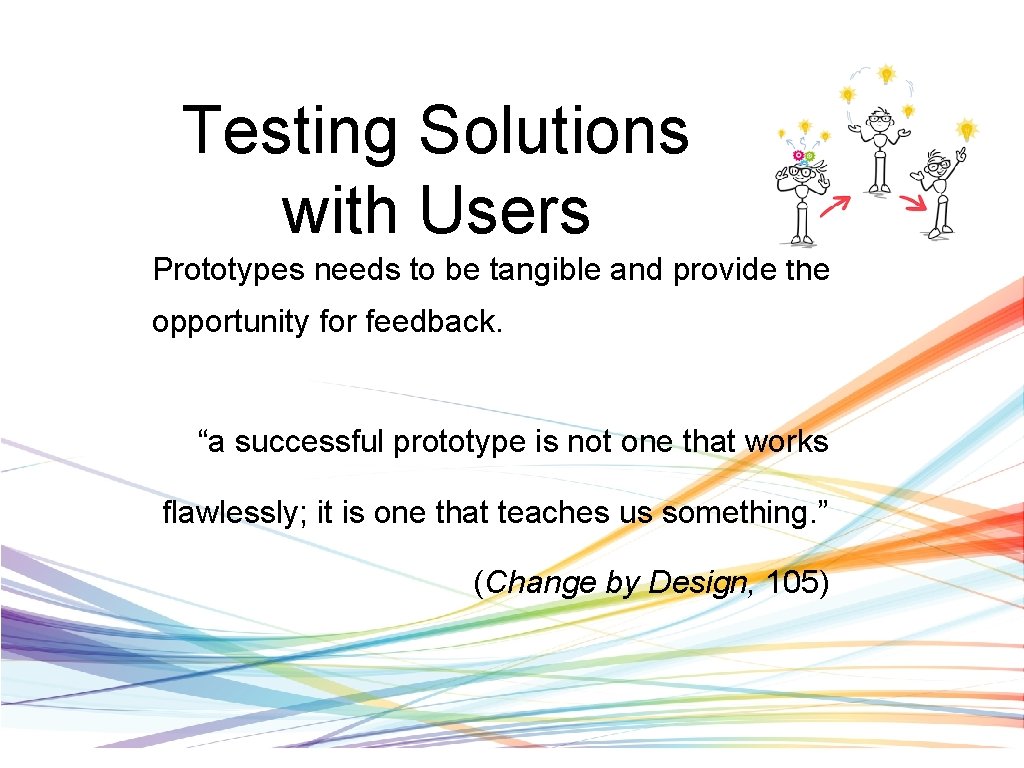
Testing Solutions with Users Prototypes needs to be tangible and provide the opportunity for feedback. “a successful prototype is not one that works flawlessly; it is one that teaches us something. ” (Change by Design, 105)
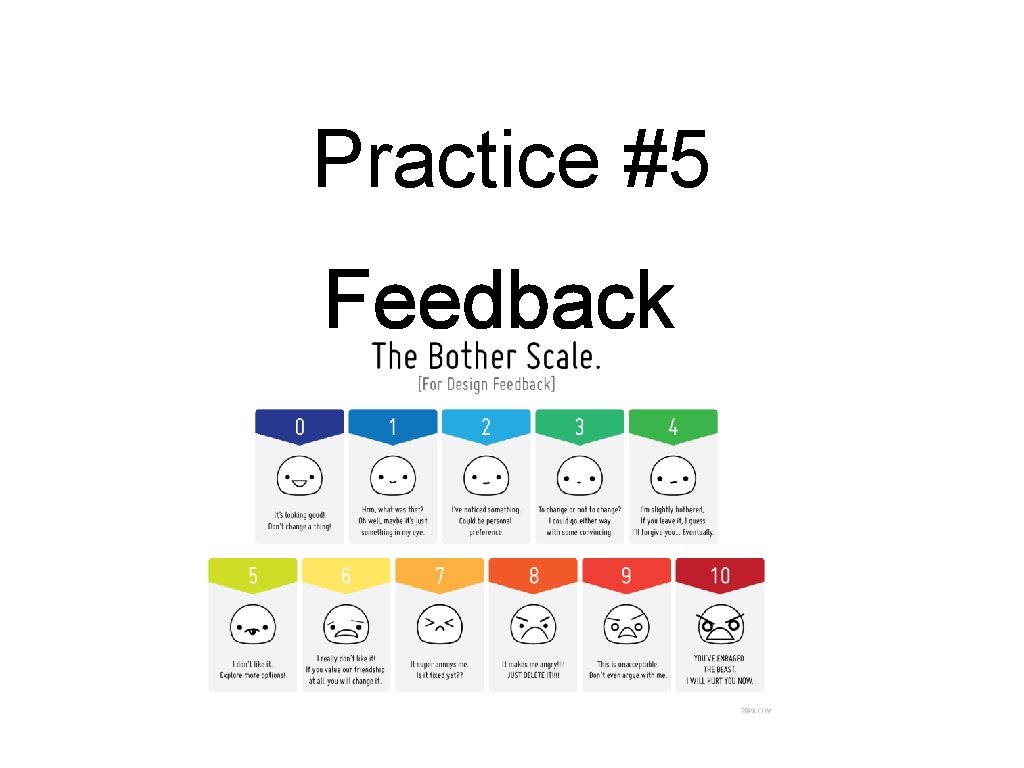
Practice #5 Feedback
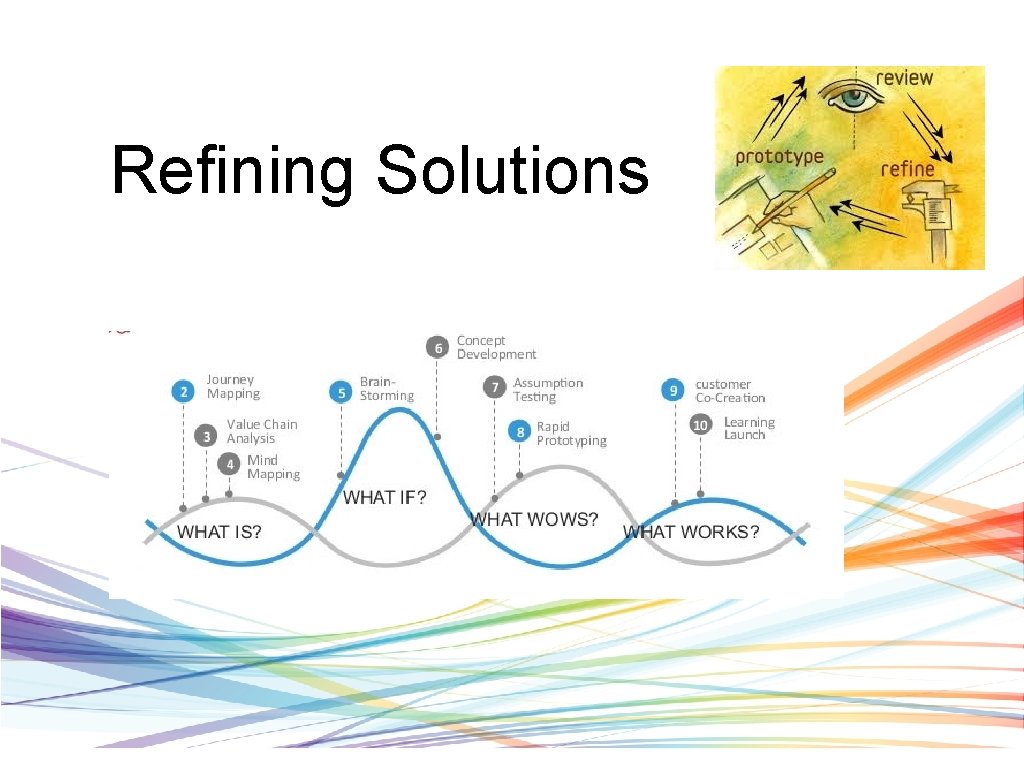
Refining Solutions
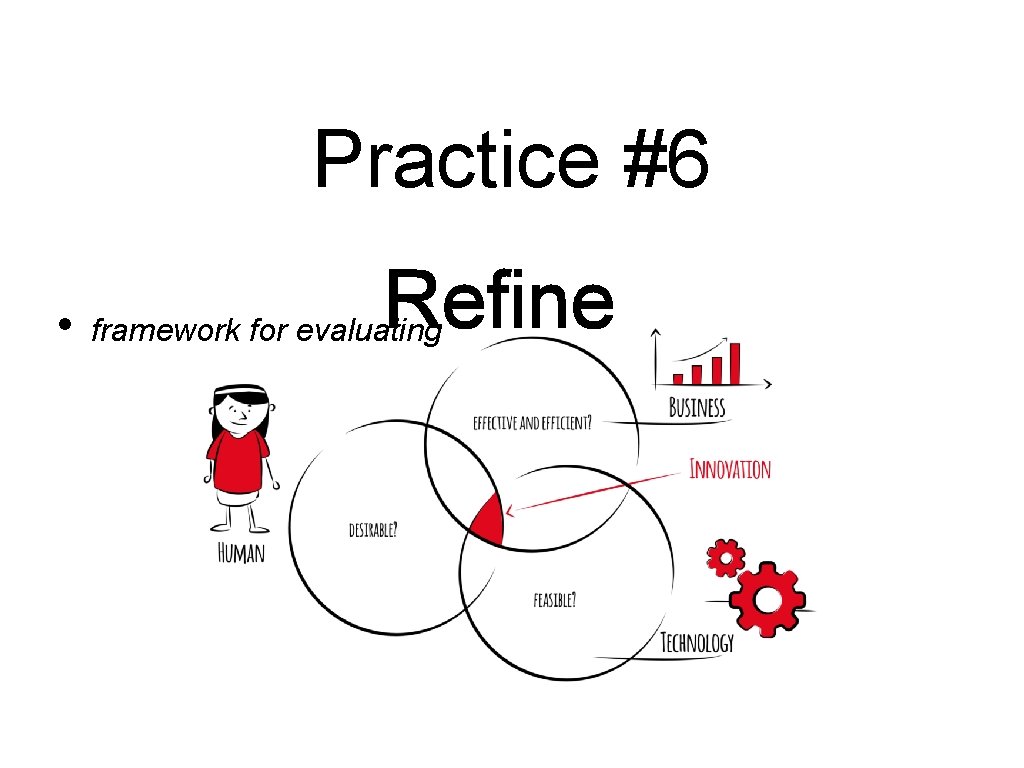
Practice #6 • Refine framework for evaluating
Adopting Solution “If a man is offered a fact that goes against his instincts he will scrutinize it closely, and unless the evidence is overwhelming, he will refuse to believe it. If, on the other hand, he is offered something that affords a reason for acting in accordance with his instincts, he will accept it even on the slightest evidence. ” Quote by Bertrand Russell (Dunning and Dunham, The Innovator’s Way, 174)
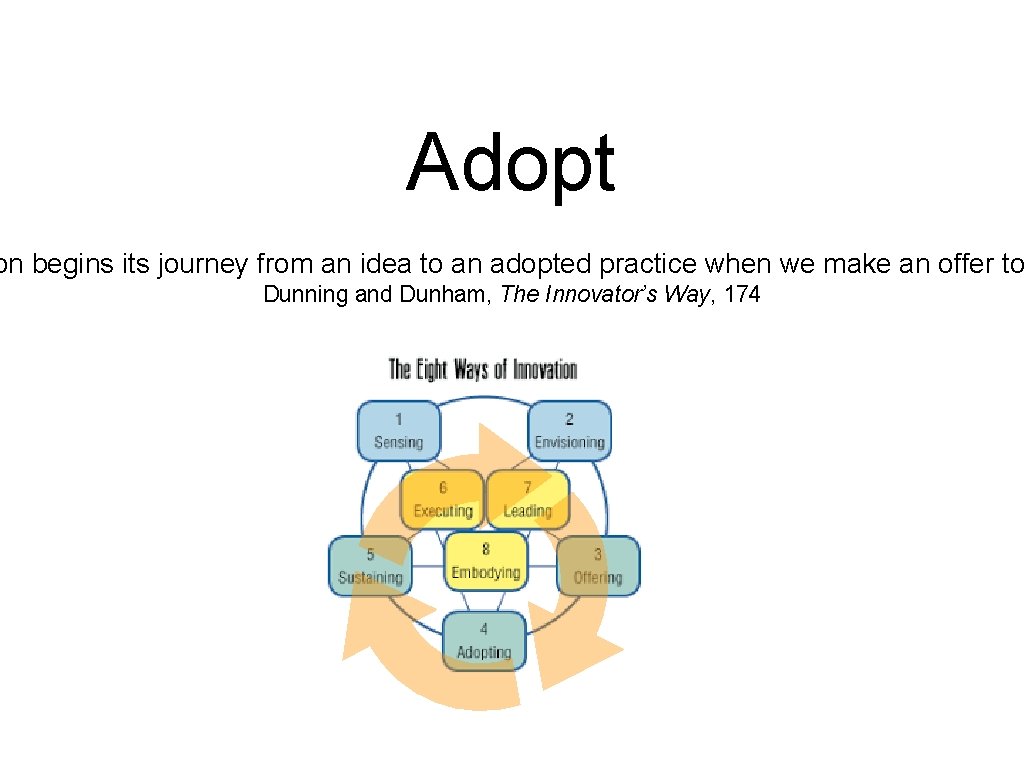
Adopt on begins its journey from an idea to an adopted practice when we make an offer to Dunning and Dunham, The Innovator’s Way, 174
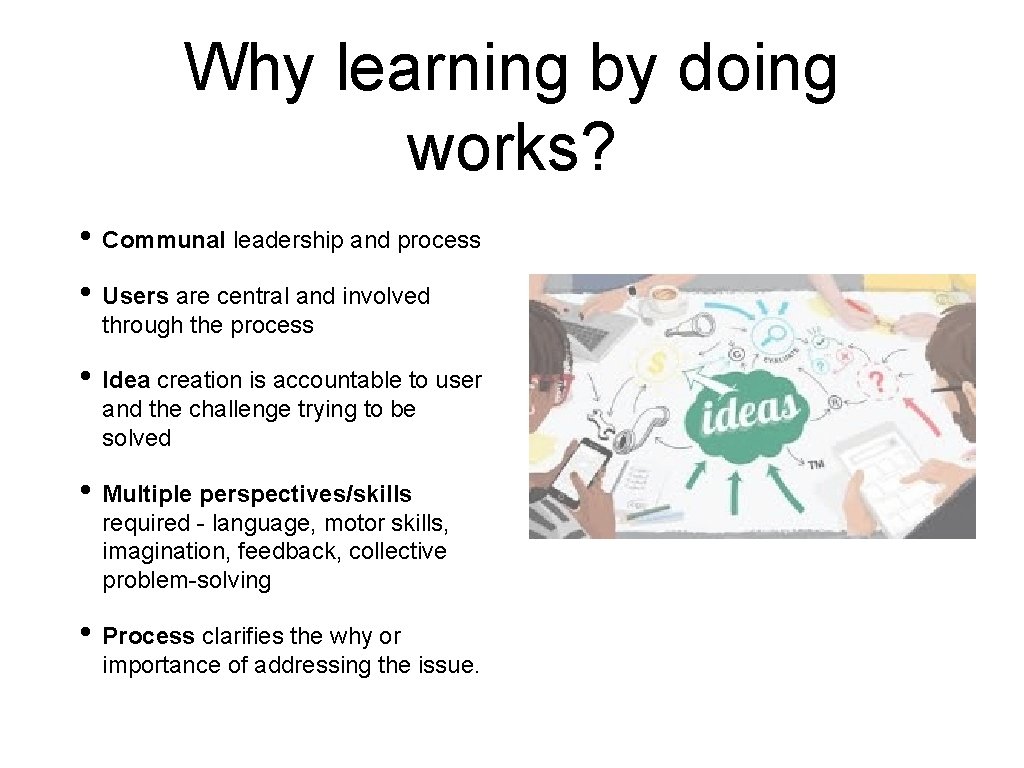
Why learning by doing works? • Communal leadership and process • Users are central and involved through the process • Idea creation is accountable to user and the challenge trying to be solved • Multiple perspectives/skills required - language, motor skills, imagination, feedback, collective problem-solving • Process clarifies the why or importance of addressing the issue.
Resources • Change by Design, Tim Brown • The Innovator’s Way, Dunning and Dunham • The Field Guide to Human-Centered Design by IDEO (book of ideas) • Method Cards - https: //www. ideo. com/post/methodcards • Activities - https: //www. ideo. org/approach
- Slides: 26