
Learning at the synapse Bertil Hille Ph D
Learning at the synapse Bertil Hille, Ph. D Physiology and Biophysics University of Washington School of Medicine Seattle Washington, USA ? (i) challenge learning cycle (ii) signaling mechanisms (iii) strengthening synapses How do I learn Project © Bertil Hille 2013
Greek WORD: Metacognition "knowing about knowing" (Anglo-Saxon)
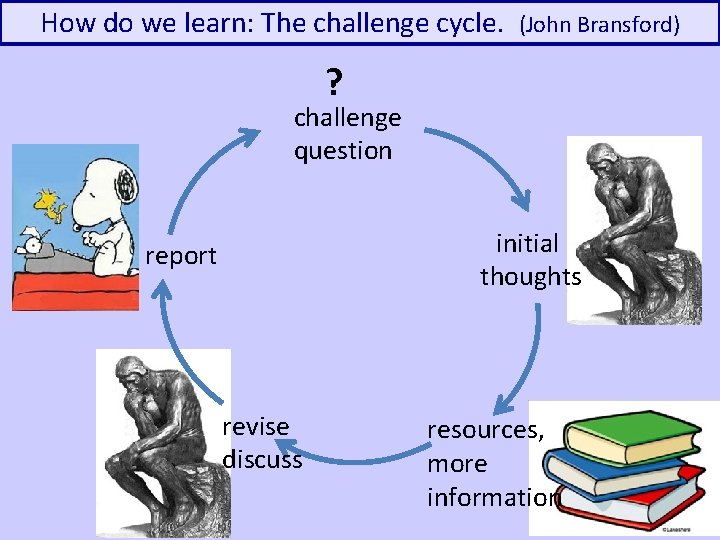
How do we learn: The challenge cycle. (John Bransford) ? challenge question initial thoughts report revise discuss resources, more information
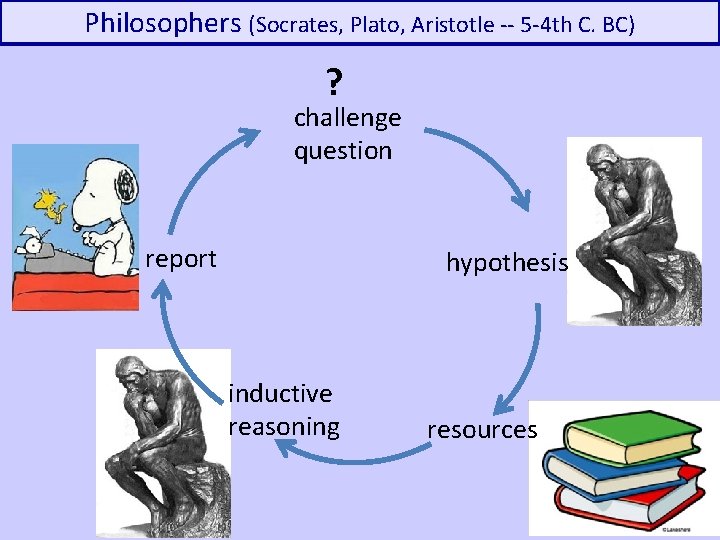
Philosophers (Socrates, Plato, Aristotle -- 5 -4 th C. BC) ? challenge question report hypothesis inductive reasoning resources
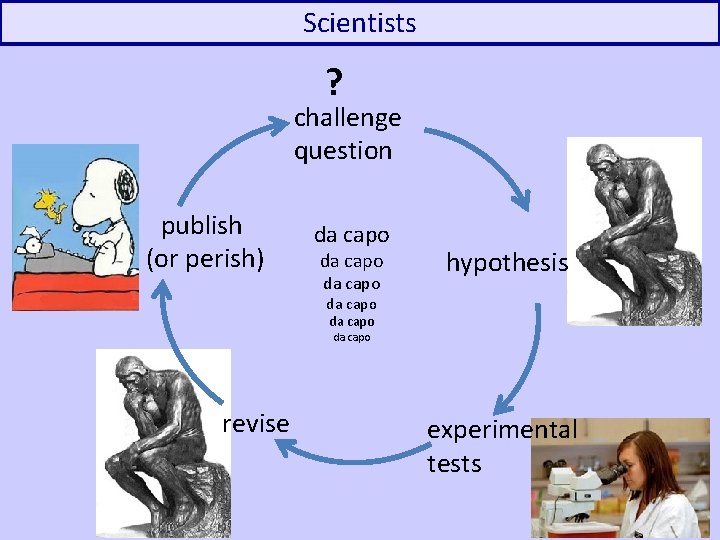
Scientists ? challenge question publish (or perish) da capo hypothesis da capo revise experimental tests
"Scientific Thinking in Young Children" (Alison Gopnik) The carpet
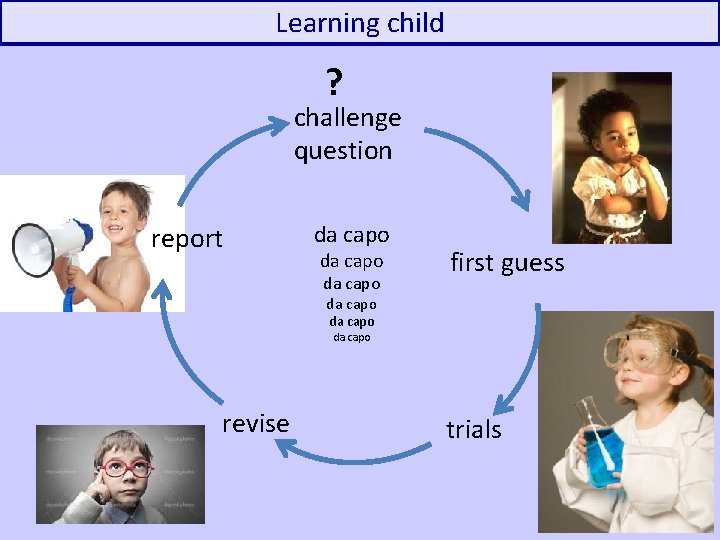
Learning child ? challenge question report da capo first guess da capo revise trials
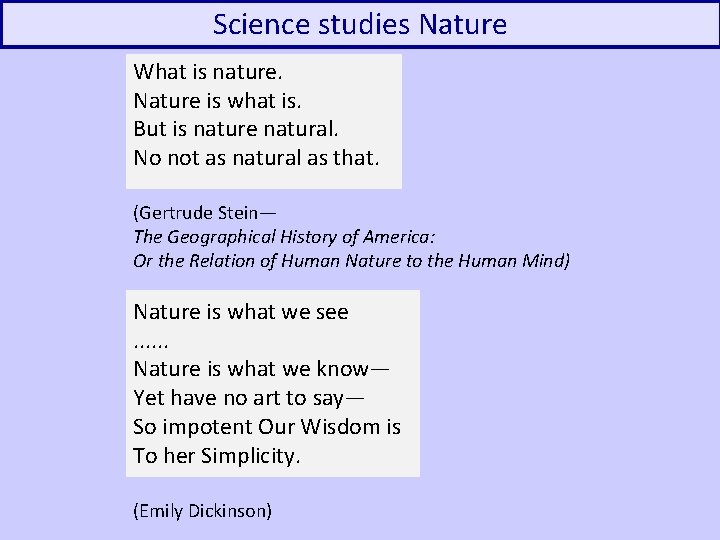
Science studies Nature What is nature. Nature is what is. But is nature natural. No not as natural as that. (Gertrude Stein— The Geographical History of America: Or the Relation of Human Nature to the Human Mind) Nature is what we see. . . Nature is what we know— Yet have no art to say— So impotent Our Wisdom is To her Simplicity. (Emily Dickinson)
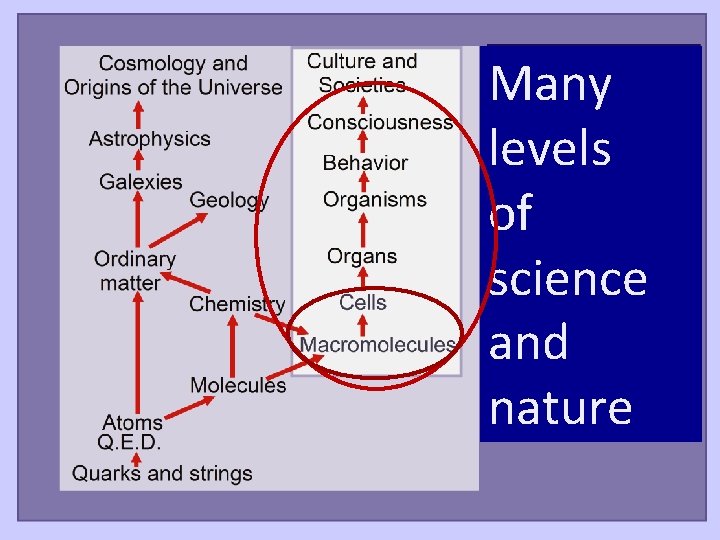
Many levels of science and nature
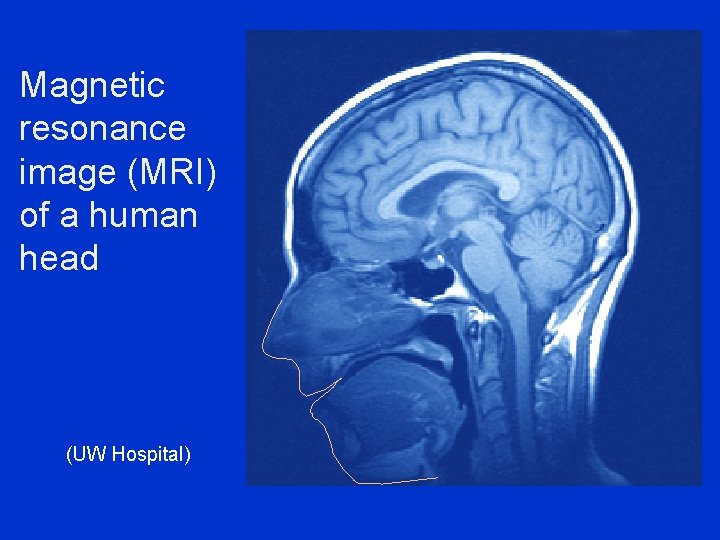
Magnetic resonance image (MRI) of a human head (UW Hospital)
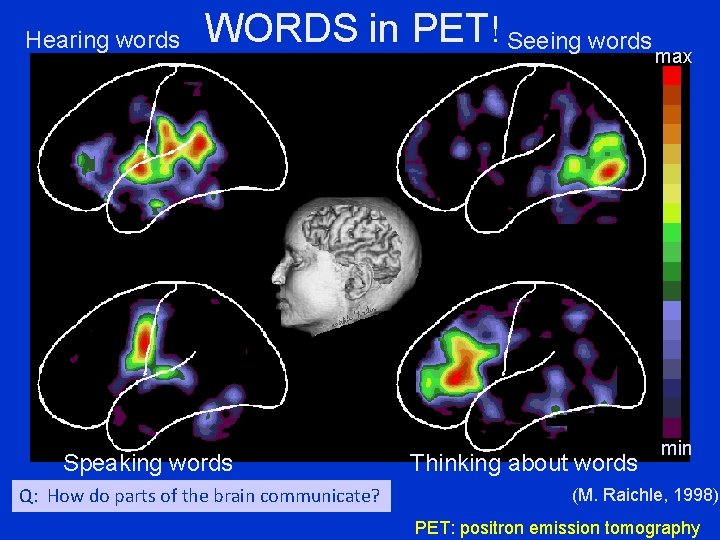
Hearing words WORDS in PET! Seeing words Speaking words Q: How do parts of the brain communicate? Thinking about words max min (M. Raichle, 1998) PET: positron emission tomography
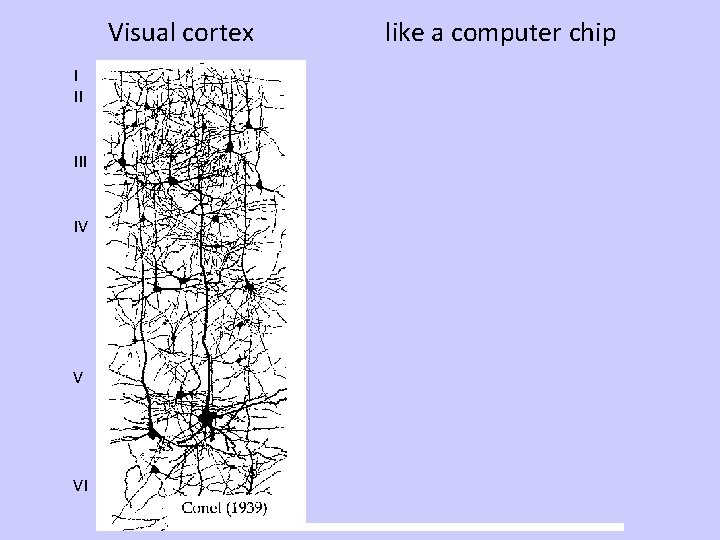
Visual cortex like a computer chip I II IV A B C V D VI
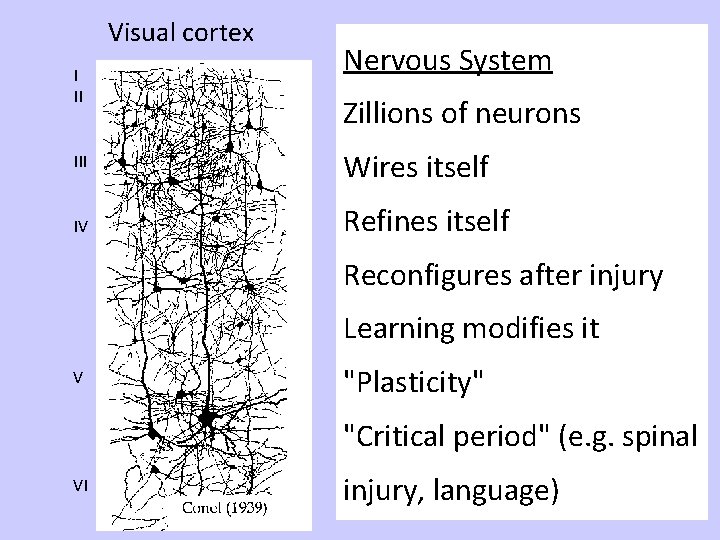
Visual cortex I II Nervous System Zillions of neurons III Wires itself IV Refines itself Reconfigures after injury Learning modifies it V "Plasticity" "Critical period" (e. g. spinal VI injury, language)
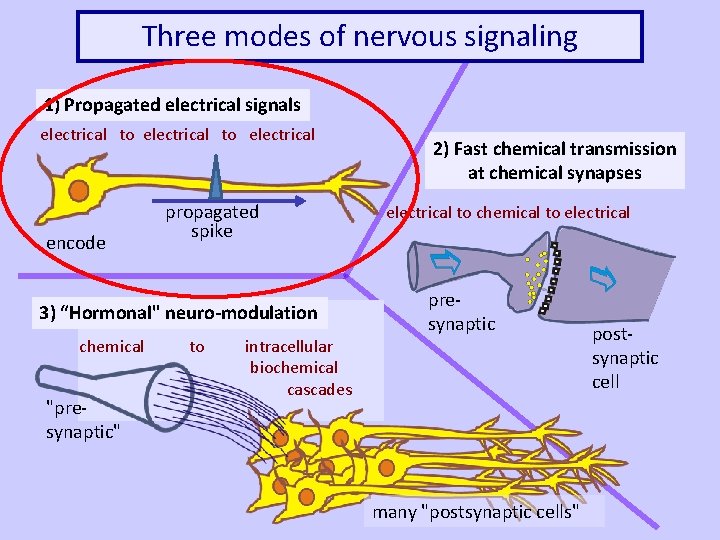
Three modes of nervous signaling 1) Propagated electrical signals electrical to electrical encode propagated spike 3) “Hormonal" neuro-modulation Fast point-to-point wiring chemical to intracellular Like a calculator "presynaptic" 2) Fast chemical transmission at chemical synapses electrical to chemical to electrical presynaptic biochemical cascades many "postsynaptic cells" postsynaptic cell
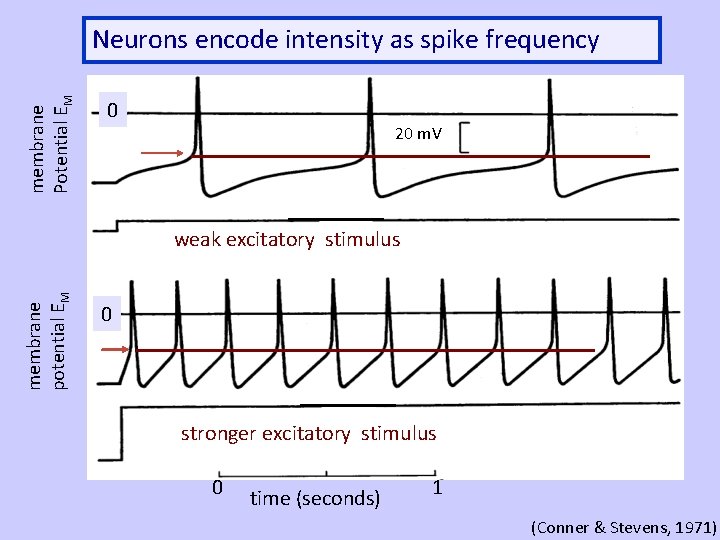
membrane Potential EM Neurons encode intensity as spike frequency 0 20 m. V membrane potential EM weak excitatory stimulus 0 stronger excitatory stimulus 0 time (seconds) 1 (Conner & Stevens, 1971)
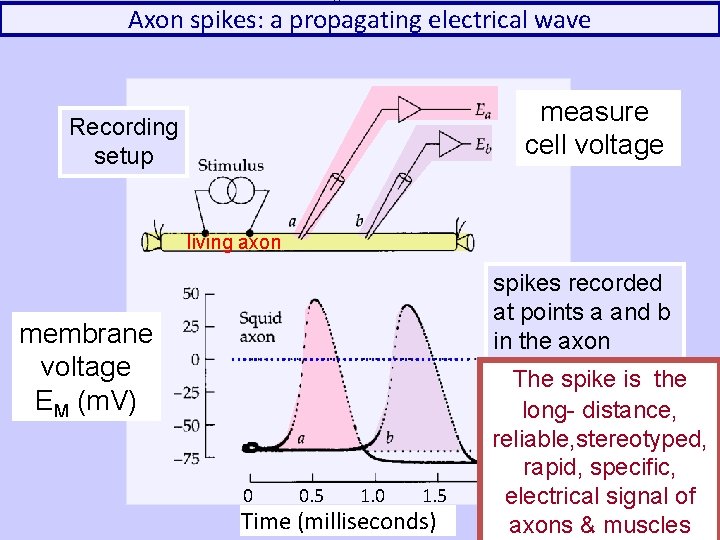
Axon spikes: a propagating electrical wave measure cell voltage Recording setup living axon spikes recorded at points a and b in the axon membrane voltage EM (m. V) 0 0. 5 1. 0 1. 5 Time (milliseconds) The spike is the long- distance, reliable, stereotyped, rapid, specific, electrical signal of axons & muscles
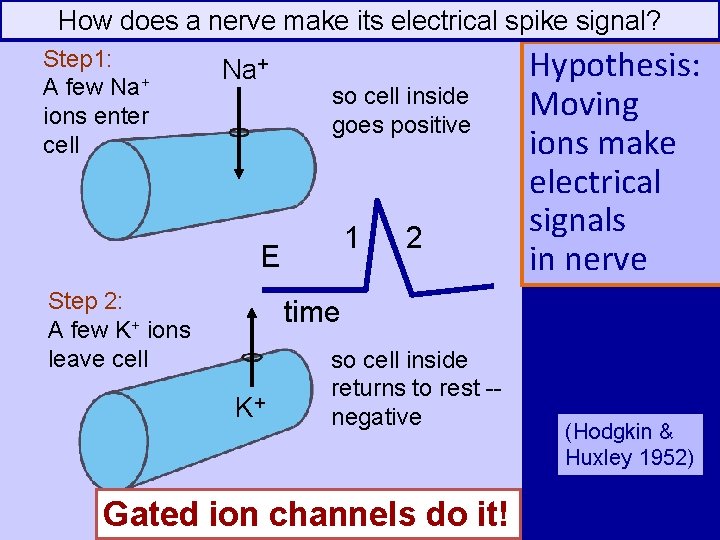
How does a nerve make its electrical spike signal? Step 1: A few Na+ ions enter cell Na+ so cell inside goes positive 1 E Step 2: A few K+ ions leave cell 2 Hypothesis: Moving ions make electrical signals in nerve time K+ so cell inside returns to rest -negative Gated ion channels do it! (Hodgkin & Huxley 1952)
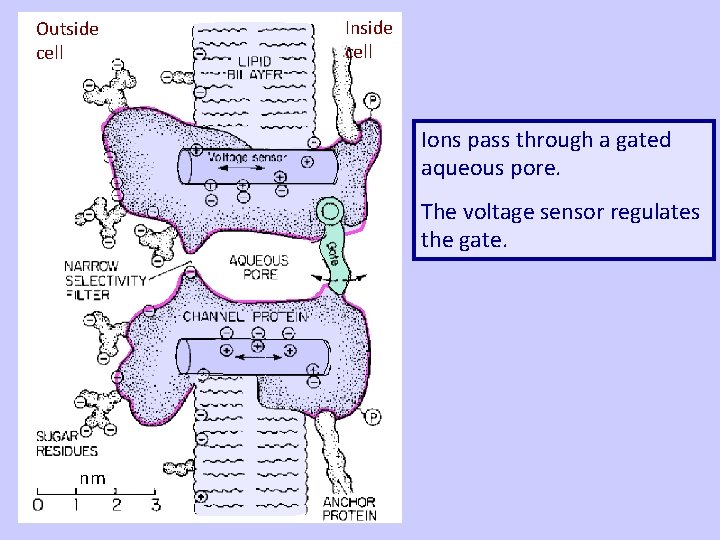
Outside cell Inside cell Ions pass through a gated aqueous pore. The voltage sensor regulates the gate. nm
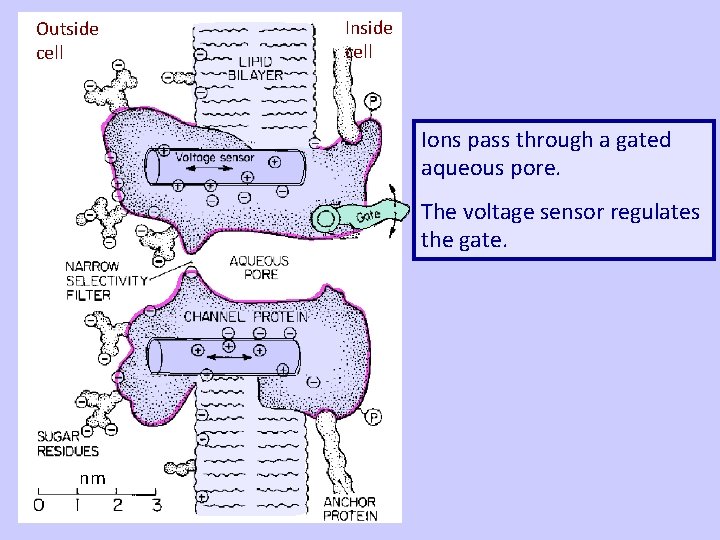
Outside cell Inside cell Ions pass through a gated aqueous pore. The voltage sensor regulates the gate. nm
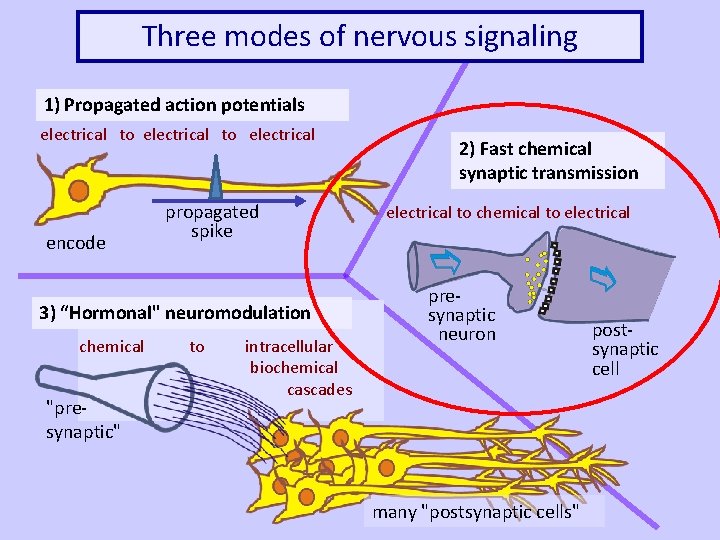
Three modes of nervous signaling 1) Propagated action potentials electrical to electrical encode propagated spike 3) “Hormonal" neuromodulation Fast point-to-point wiring chemical to number intracellular And "The is …" "presynaptic" 2) Fast chemical synaptic transmission electrical to chemical to electrical presynaptic neuron biochemical cascades many "postsynaptic cells" postsynaptic cell
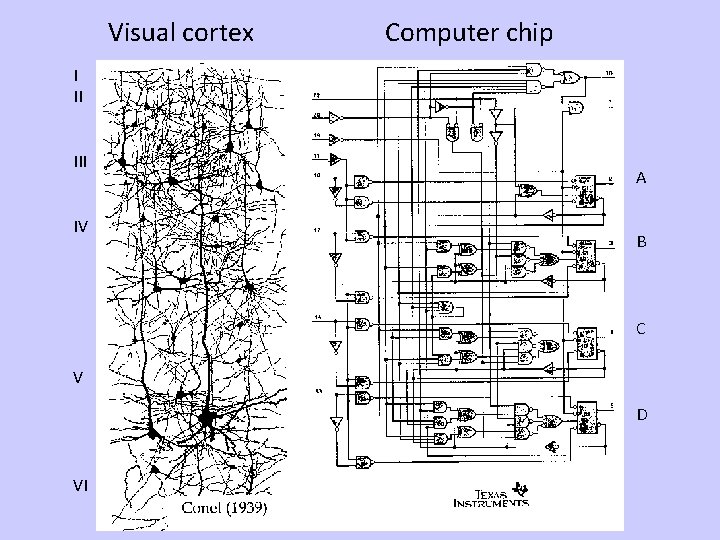
Visual cortex Computer chip I II IV A B C V D VI
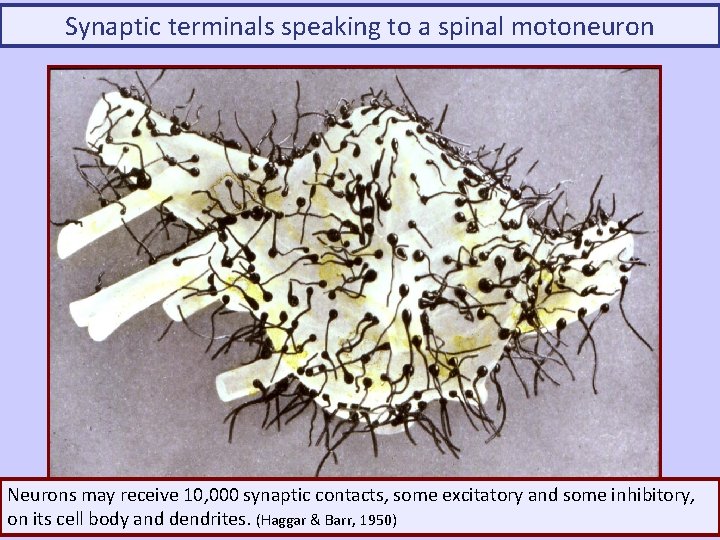
Synaptic terminals speaking to a spinal motoneuron Neurons may receive 10, 000 synaptic contacts, some excitatory and some inhibitory, on its cell body and dendrites. (Haggar & Barr, 1950)
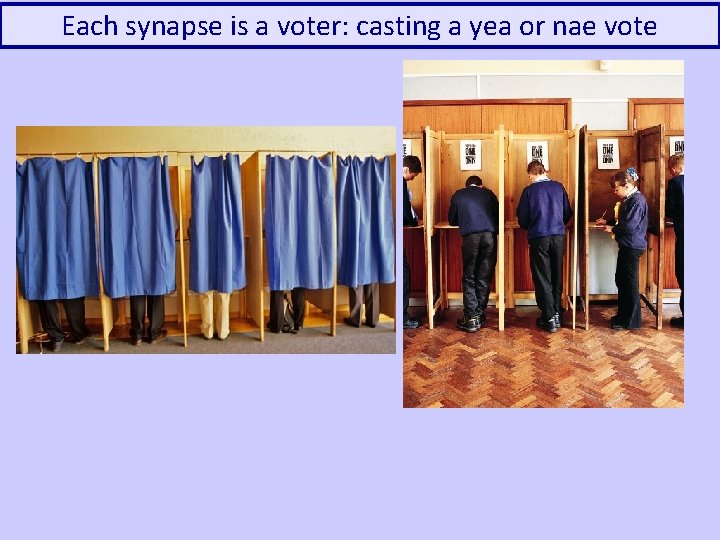
Each synapse is a voter: casting a yea or nae vote
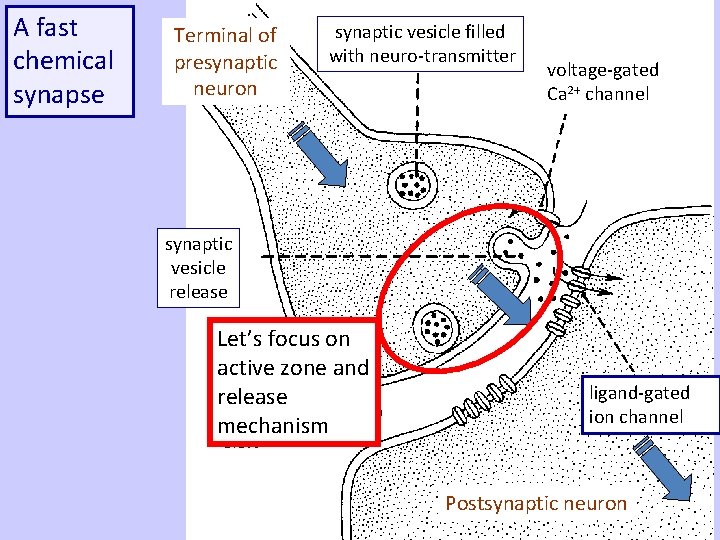
A fast chemical synapse Terminal of presynaptic neuron synaptic vesicle filled with neuro-transmitter Chemical synapse voltage-gated Ca 2+ channel synaptic vesicle release Let’s focus on active zone and release synaptic mechanism ligand-gated ion channel cleft Postsynaptic neuron
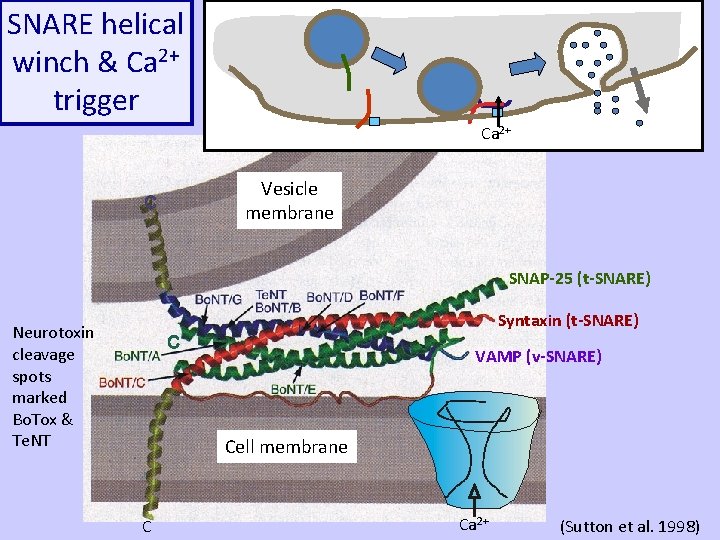
SNARE helical winch & Ca 2+ trigger Ca 2+ Vesicle membrane SNAP-25 (t-SNARE) Syntaxin (t-SNARE) Neurotoxin cleavage spots marked Bo. Tox & Te. NT VAMP (v-SNARE) Cell membrane C Ca 2+ (Sutton et al. 1998)
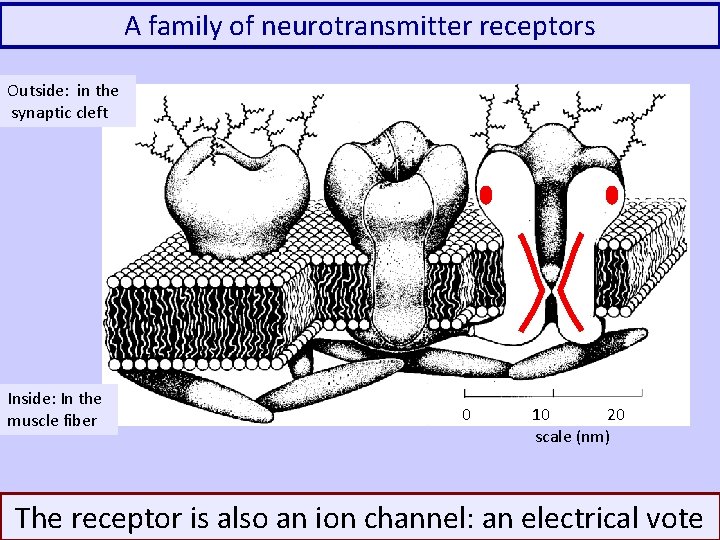
A family of neurotransmitter receptors Outside: in the synaptic cleft Inside: In the muscle fiber 0 10 20 scale (nm) The receptor is also an ion channel: an electrical vote
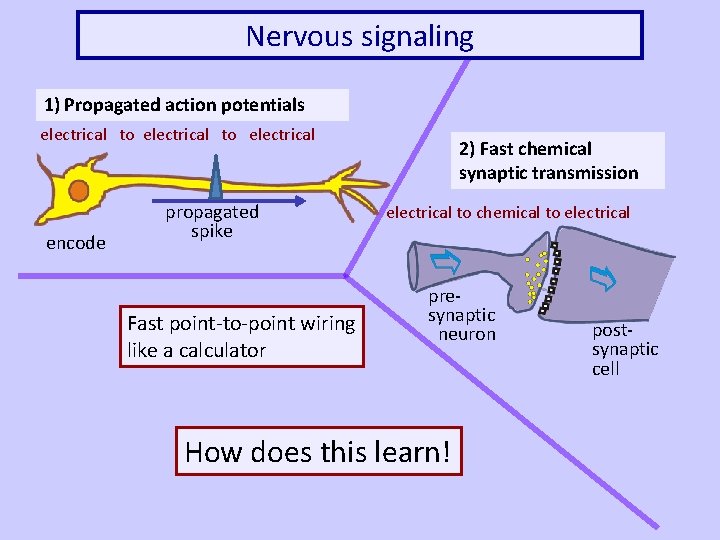
Nervous signaling 1) Propagated action potentials electrical to electrical encode propagated spike Fast point-to-point wiring like a calculator 2) Fast chemical synaptic transmission electrical to chemical to electrical presynaptic neuron How does this learn! postsynaptic cell
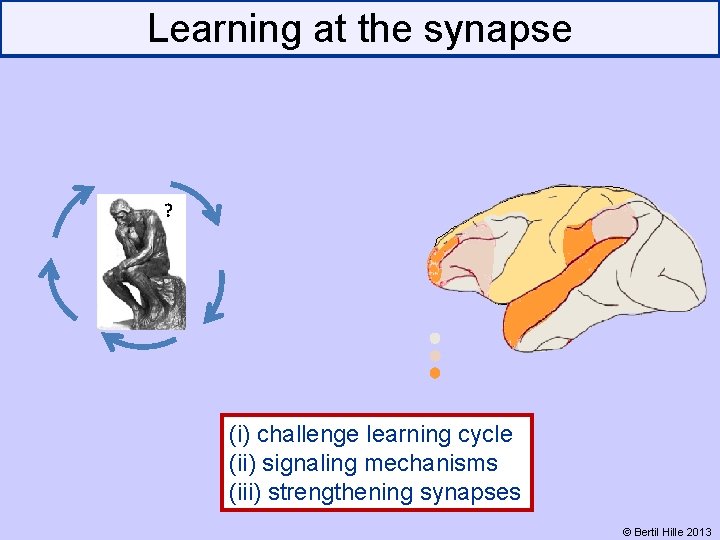
Learning at the synapse ? (i) challenge learning cycle (ii) signaling mechanisms (iii) strengthening synapses © Bertil Hille 2013
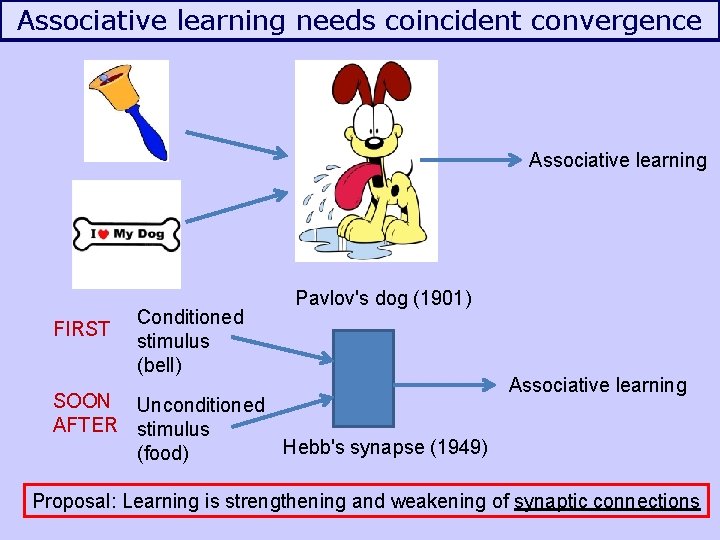
Associative learning needs coincident convergence Associative learning FIRST Conditioned stimulus (bell) Pavlov's dog (1901) SOON Unconditioned AFTER stimulus Hebb's synapse (1949) (food) Associative learning Proposal: Learning is strengthening and weakening of synaptic connections
"Neurons that fire together wire together" (Carla Schatz)
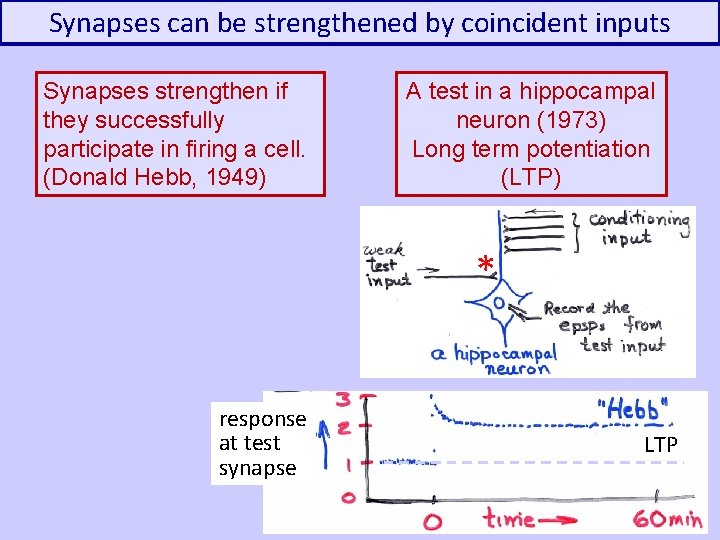
Synapses can be strengthened by coincident inputs Synapses strengthen if they successfully participate in firing a cell. (Donald Hebb, 1949) A test in a hippocampal neuron (1973) Long term potentiation (LTP) * response at test synapse LTP
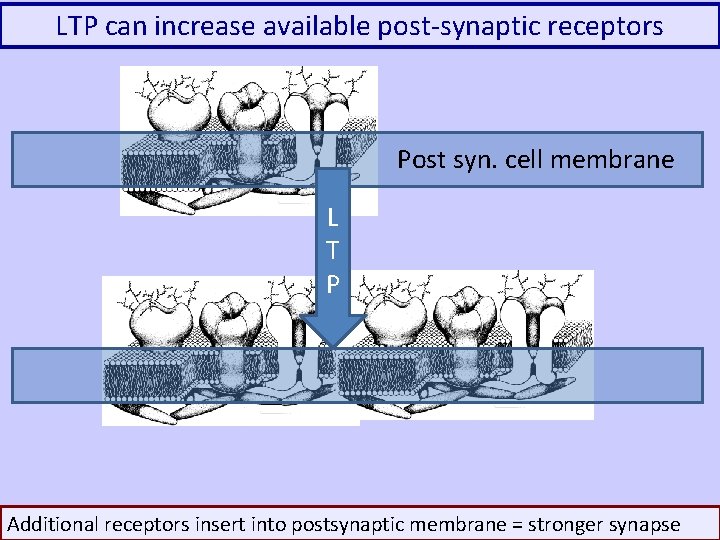
LTP can increase available post-synaptic receptors Post syn. cell membrane L T P 0 10 Additional receptors insert into postsynaptic membrane = stronger synapse
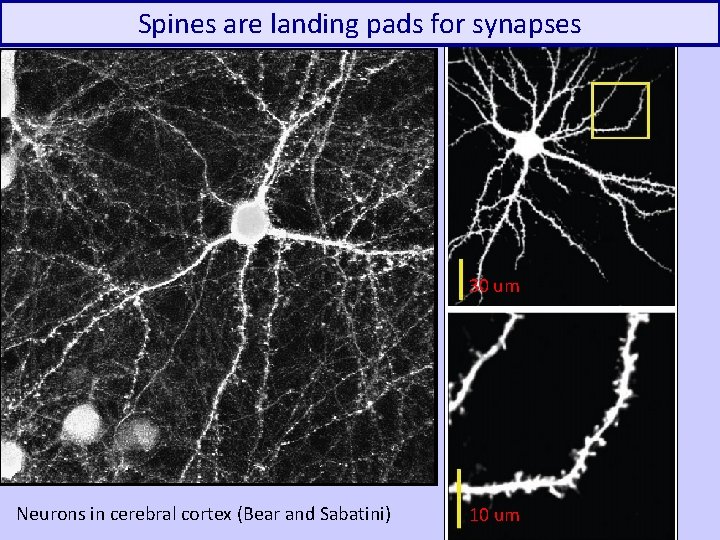
Spines are landing pads for synapses 30 um Neurons in cerebral cortex (Bear and Sabatini) 10 um
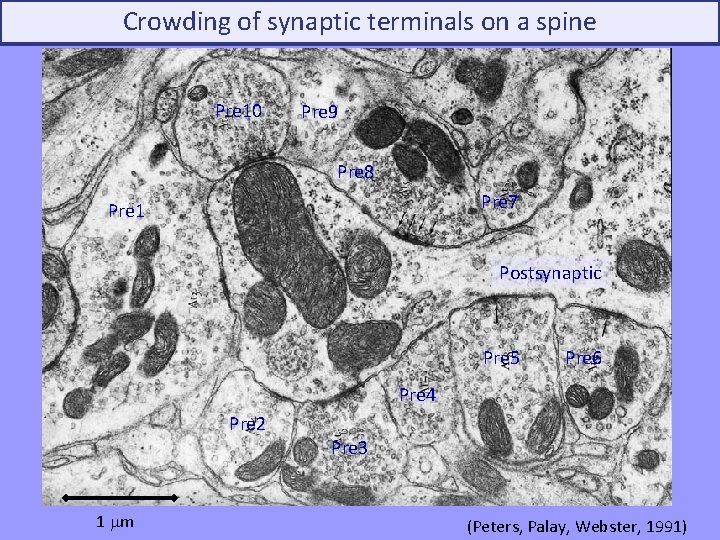
Crowding of synaptic terminals on a spine Pre 10 Pre 9 Pre 8 Pre 7 Pre 1 Postsynaptic Pre 5 Pre 6 Pre 4 Pre 2 1 mm Pre 3 (Peters, Palay, Webster, 1991)
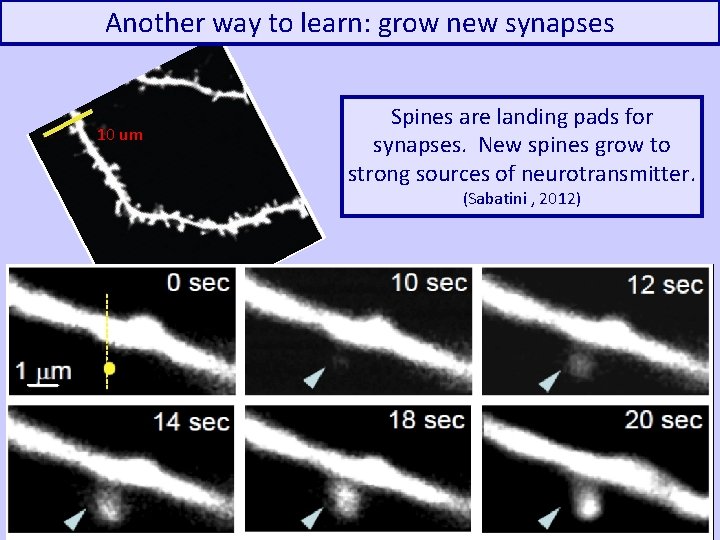
Another way to learn: grow new synapses 10 um Spines are landing pads for synapses. New spines grow to strong sources of neurotransmitter. (Sabatini , 2012)
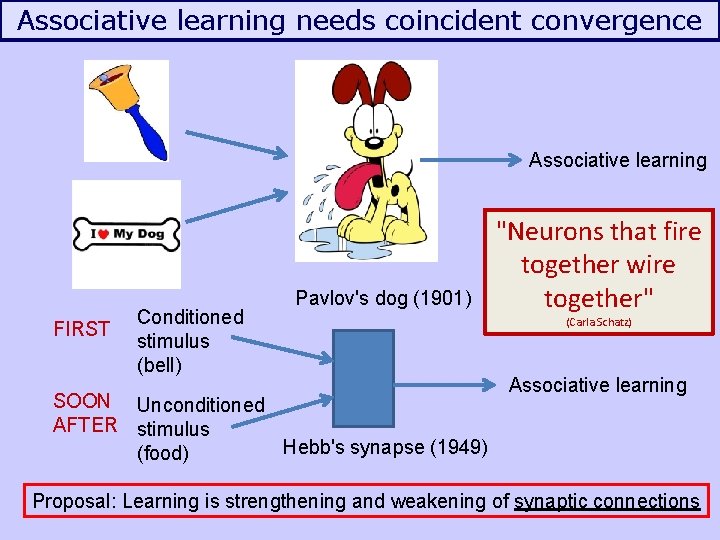
Associative learning needs coincident convergence Associative learning FIRST Conditioned stimulus (bell) Pavlov's dog (1901) SOON Unconditioned AFTER stimulus Hebb's synapse (1949) (food) "Neurons that fire together wire together" (Carla Schatz) Associative learning Proposal: Learning is strengthening and weakening of synaptic connections
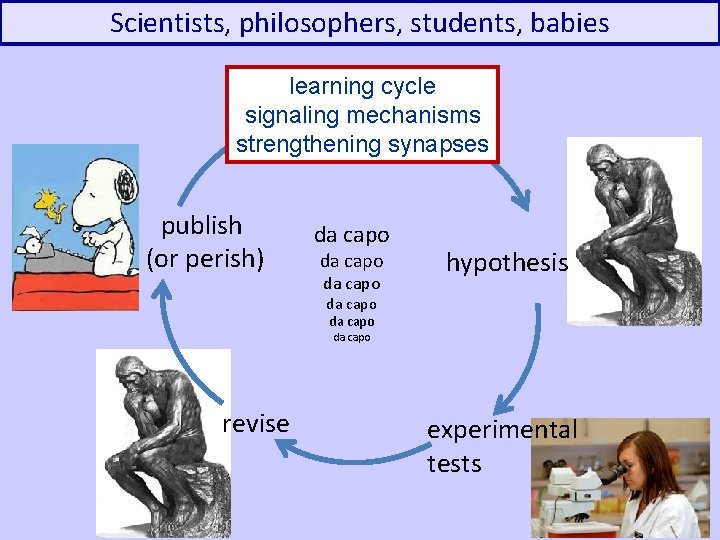
Scientists, philosophers, students, babies ? learning cycle signaling mechanisms challenge strengthening questionsynapses publish (or perish) da capo hypothesis da capo revise experimental tests
Challenges for knowing about knowing! (i) challenge learning cycle (ii) signaling mechanisms (iii) strengthening synapses How can you enhance plasticity? How do you look up your old telephone number? Where are hypotheses kept? How are language and syntax acquired? How are they generated? Can neuroscience aid pedagogy?
Thank you!
- Slides: 39