
Learning area overview PrepYear 10 Australian Curriculum Science
- Slides: 16
Learning area overview Prep–Year 10 Australian Curriculum: Science
Learning goals This presentation aims to: • build understanding of the Australian Curriculum: Science • provide an overview of the structure of the Science learning area.
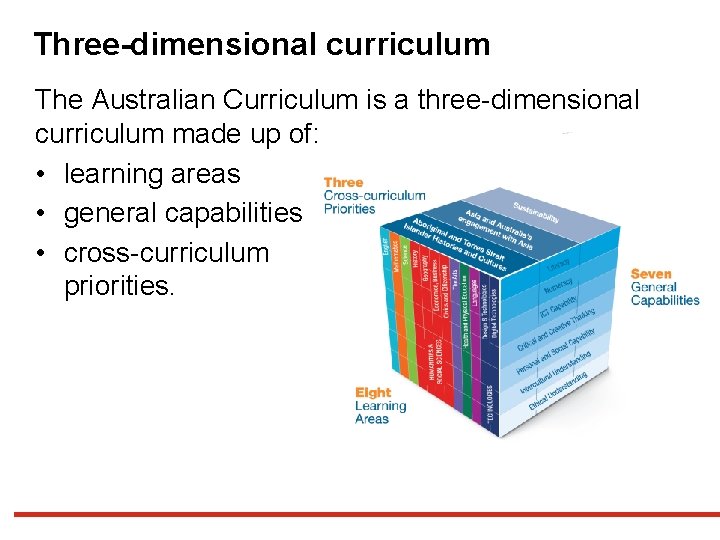
Three-dimensional curriculum The Australian Curriculum is a three-dimensional curriculum made up of: • learning areas • general capabilities • cross-curriculum priorities. English
Structure of the Science learning area • • Rationale Aims Key ideas Year-by-year and banded curriculum − Year-level descriptions • Curriculum content − Strands and sub-strands − Intent of interrelated strands − Content descriptions − Content elaborations • Achievement standards
Rationale Learning area summary In the Science learning area, students develop scientific knowledge, understandings and skills that will enable them to make informed decisions about local, national and global issues while nurturing their natural curiosity about the world around them. Video Introduction to Science www. australiancurriculum. edu. au/f-10 curriculum/science/rationale
Aims Learning area summary Learning through Science enables students to: • explore, explain and predict phenomena • use a range of scientific inquiry methods • make informed, evidence-based decisions • evaluate and debate scientific decisions.
Key ideas • • • Patterns, order and organisation Form and function Stability and change Scale and measurement Matter and energy Systems
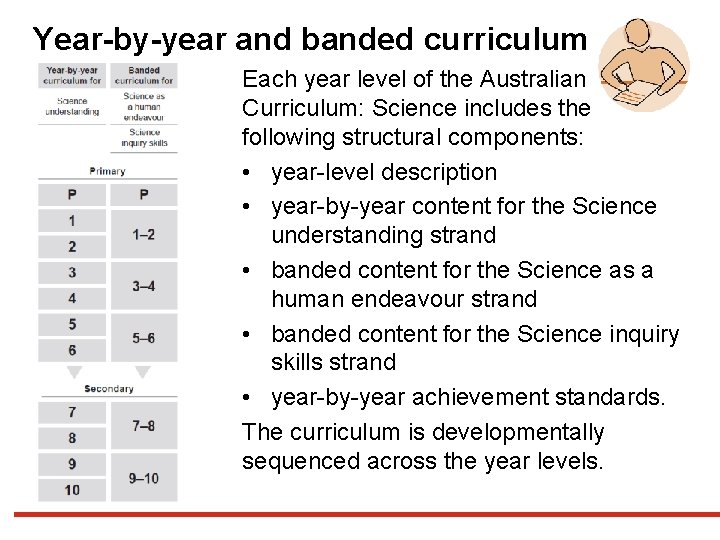
Year-by-year and banded curriculum Each year level of the Australian Curriculum: Science includes the following structural components: • year-level description • year-by-year content for the Science understanding strand • banded content for the Science as a human endeavour strand • banded content for the Science inquiry skills strand • year-by-year achievement standards. The curriculum is developmentally sequenced across the year levels.
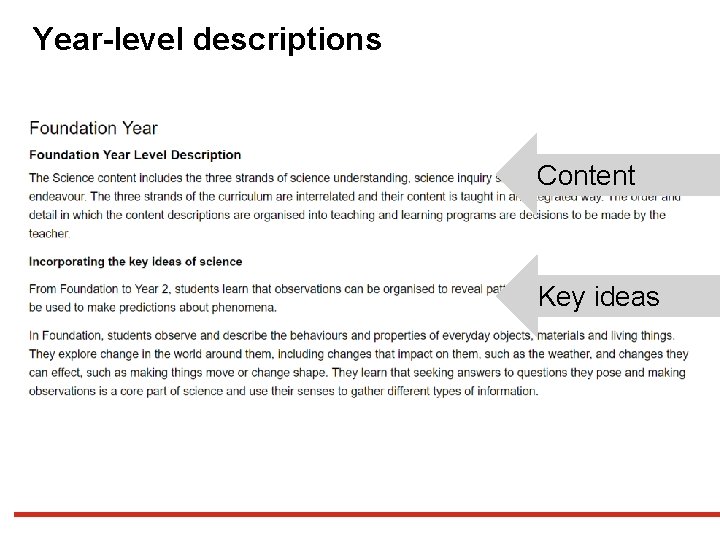
Year-level descriptions Content Key ideas
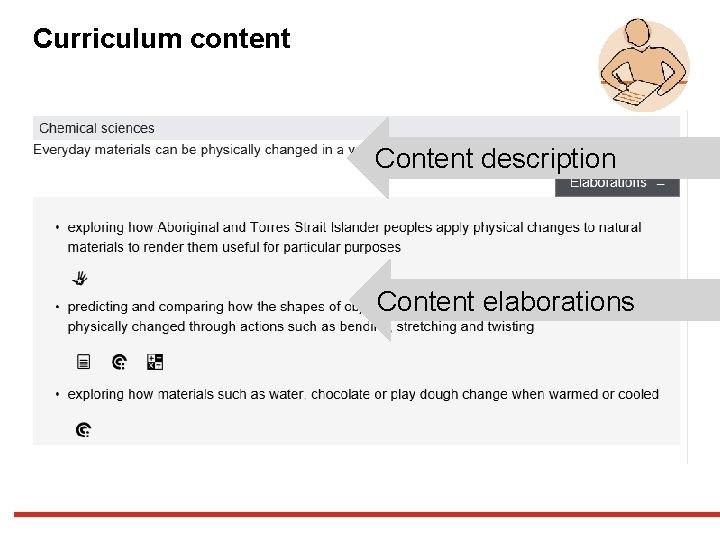
Curriculum content Content description Content elaborations
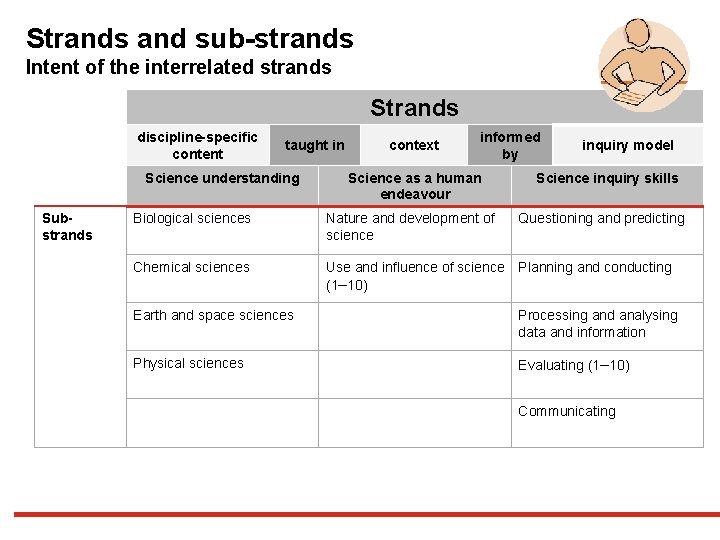
Strands and sub-strands Intent of the interrelated strands Strands discipline-specific content taught in Science understanding Substrands context informed by Science as a human endeavour inquiry model Science inquiry skills Biological sciences Nature and development of science Questioning and predicting Chemical sciences Use and influence of science Planning and conducting (1– 10) Earth and space sciences Processing and analysing data and information Physical sciences Evaluating (1– 10) Communicating
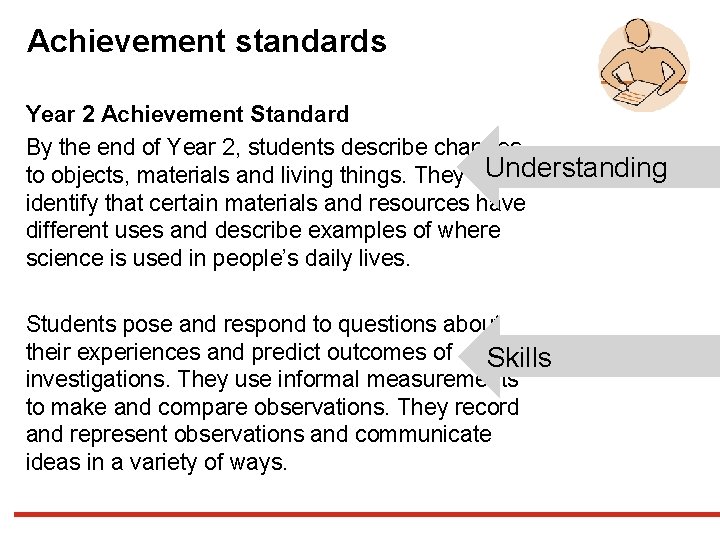
Achievement standards Year 2 Achievement Standard By the end of Year 2, students describe changes to objects, materials and living things. They Understanding identify that certain materials and resources have different uses and describe examples of where science is used in people’s daily lives. Students pose and respond to questions about their experiences and predict outcomes of Skills investigations. They use informal measurements to make and compare observations. They record and represent observations and communicate ideas in a variety of ways.
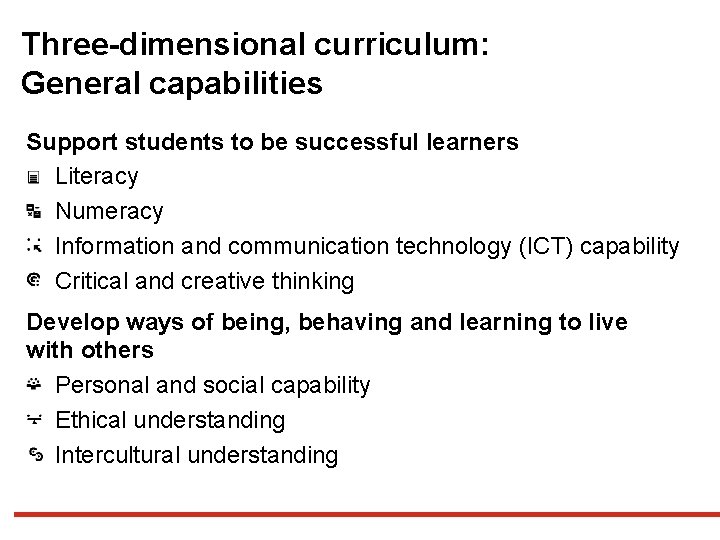
Three-dimensional curriculum: General capabilities Support students to be successful learners Literacy Numeracy Information and communication technology (ICT) capability Critical and creative thinking Develop ways of being, behaving and learning to live with others Personal and social capability Ethical understanding Intercultural understanding
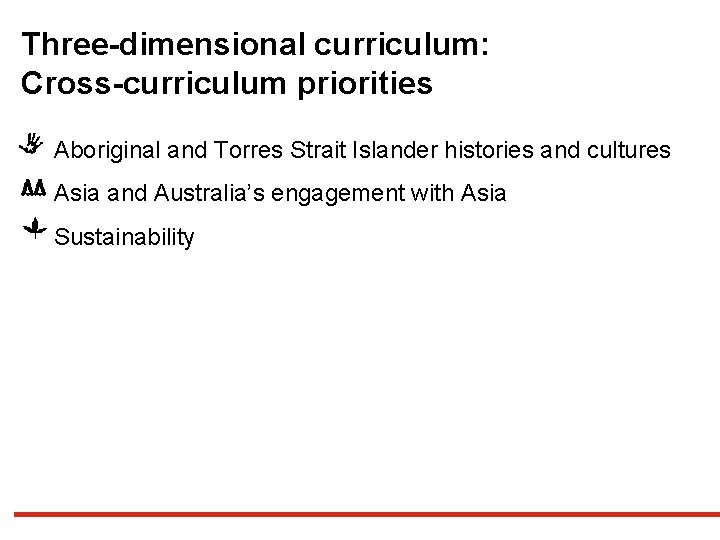
Three-dimensional curriculum: Cross-curriculum priorities Aboriginal and Torres Strait Islander histories and cultures Asia and Australia’s engagement with Asia Sustainability
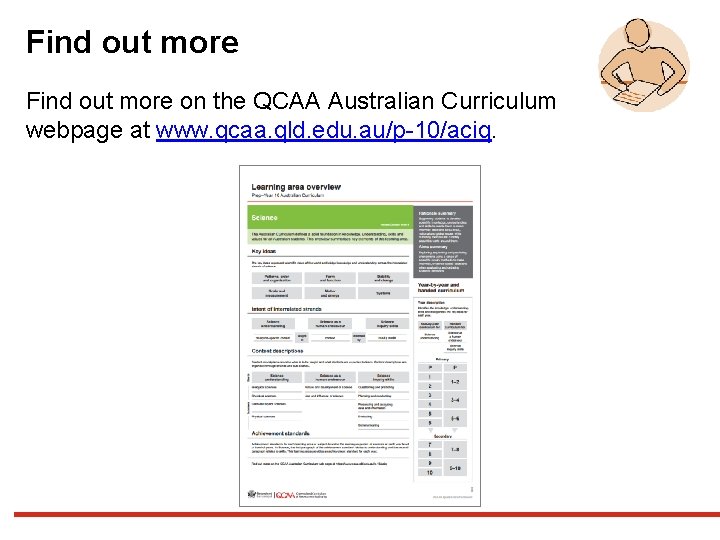
Find out more on the QCAA Australian Curriculum webpage at www. qcaa. qld. edu. au/p-10/aciq.
Copyright information Slides 3 and 8– 14: Images and text © Australian Curriculum, Assessment and Reporting Authority (ACARA) 2009 to present, unless otherwise indicated. This material was downloaded from the ACARA website (www. acara. edu. au) (Website) (accessed Mar 25, 2019) and was not modified. The material is licensed under CC BY 4. 0 (https: //creativecommons. org/licenses/by/4. 0/). ACARA does not endorse any product that uses ACARA material or make any representations as to the quality of such products. Any product that uses material published on this website should not be taken to be affiliated with ACARA or have the sponsorship or approval of ACARA. It is up to each person to make their own assessment of the product.