
Learning area overview PrepYear 10 Australian Curriculum P

- Slides: 21
Learning area overview Prep–Year 10 Australian Curriculum: P– 6 Humanities and Social Sciences (HASS)
Learning goals This presentation aims to: • build understanding of the Australian Curriculum: Humanities and Social Sciences in Prep–Year 6 • provide an overview of the structure of Prep–Year 6 HASS.
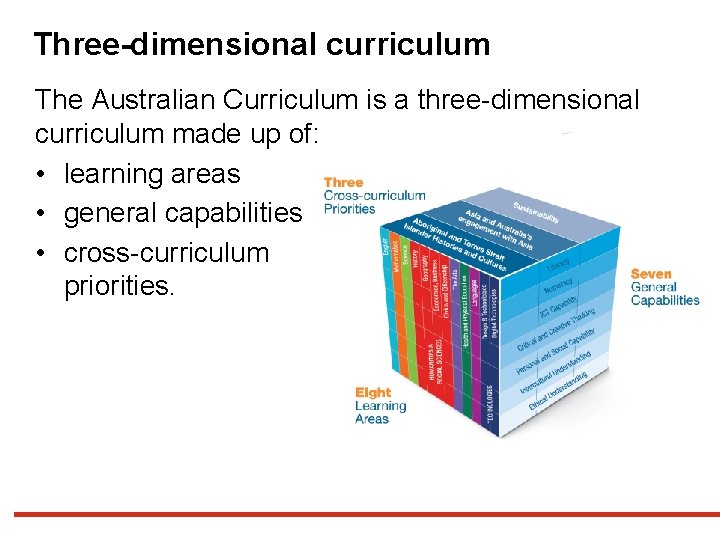
Three-dimensional curriculum The Australian Curriculum is a three-dimensional curriculum made up of: • learning areas • general capabilities • cross-curriculum priorities. English
Structure of the HASS learning area The HASS learning area consists of five subjects: • Prep–Year 6 HASS • Years 7– 10 – History – Geography – Civics and Citizenship – Economics and Business.
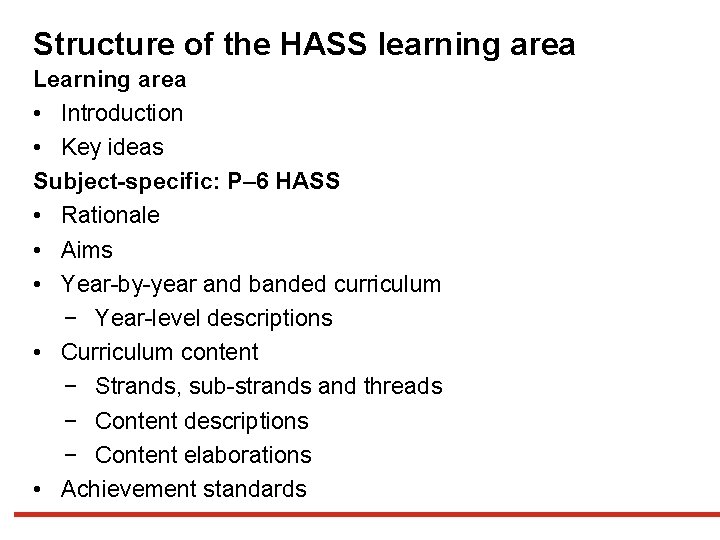
Structure of the HASS learning area Learning area • Introduction • Key ideas Subject-specific: P– 6 HASS • Rationale • Aims • Year-by-year and banded curriculum − Year-level descriptions • Curriculum content − Strands, sub-strands and threads − Content descriptions − Content elaborations • Achievement standards
Key ideas • Who we are, who came before us, and traditions and values that have shaped societies • How societies and economies operate and how they are changing over time • The ways people, places, ideas and events are perceived and connected • How people exercise their responsibilities, participate in society and make informed decisions
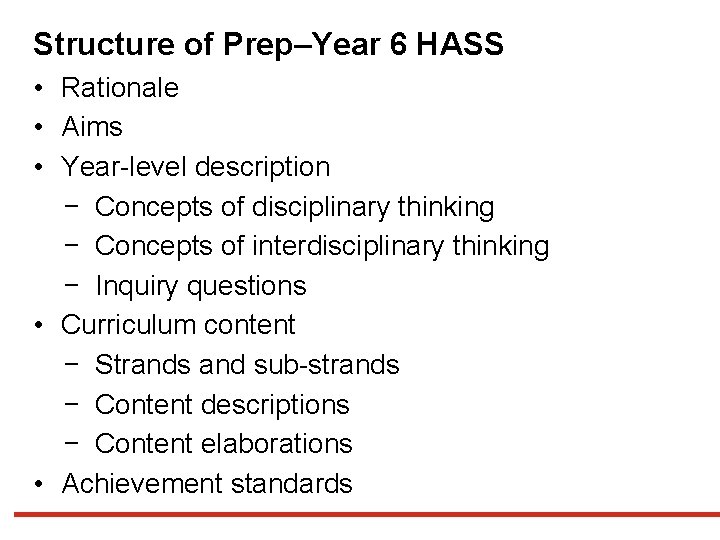
Structure of Prep–Year 6 HASS • Rationale • Aims • Year-level description − Concepts of disciplinary thinking − Concepts of interdisciplinary thinking − Inquiry questions • Curriculum content − Strands and sub-strands − Content descriptions − Content elaborations • Achievement standards
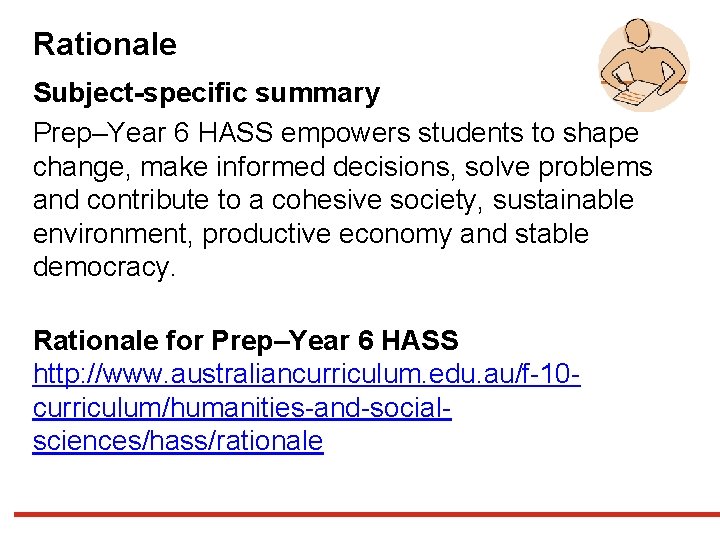
Rationale Subject-specific summary Prep–Year 6 HASS empowers students to shape change, make informed decisions, solve problems and contribute to a cohesive society, sustainable environment, productive economy and stable democracy. Rationale for Prep–Year 6 HASS http: //www. australiancurriculum. edu. au/f-10 curriculum/humanities-and-socialsciences/hass/rationale
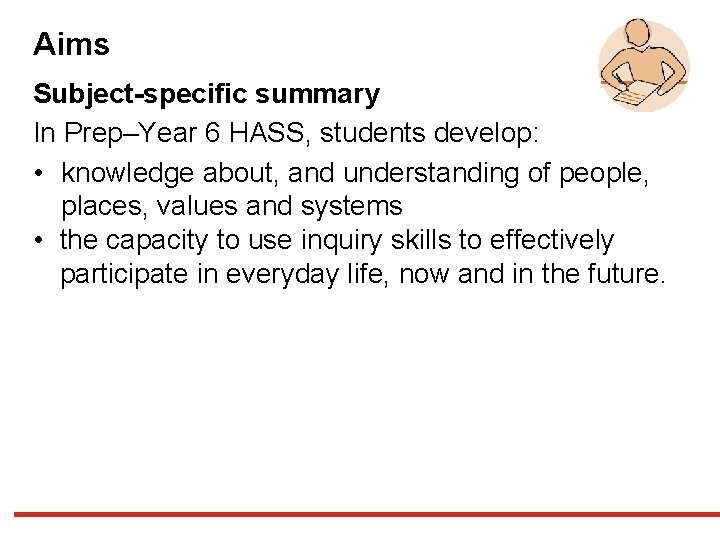
Aims Subject-specific summary In Prep–Year 6 HASS, students develop: • knowledge about, and understanding of people, places, values and systems • the capacity to use inquiry skills to effectively participate in everyday life, now and in the future.
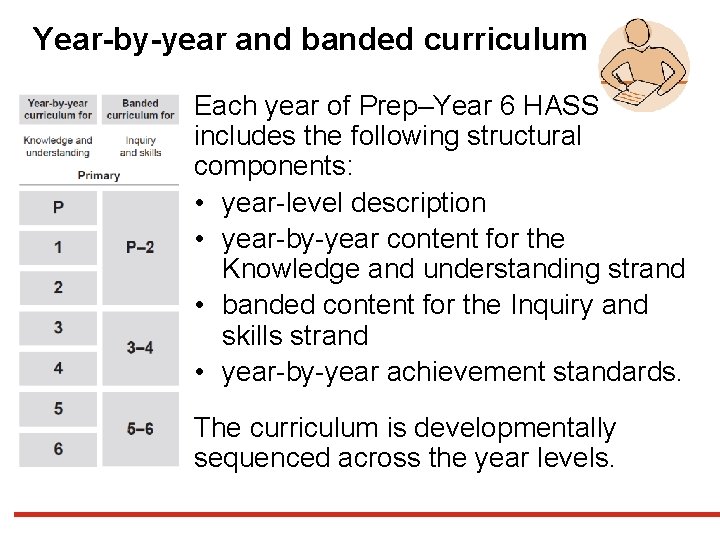
Year-by-year and banded curriculum Each year of Prep–Year 6 HASS includes the following structural components: • year-level description • year-by-year content for the Knowledge and understanding strand • banded content for the Inquiry and skills strand • year-by-year achievement standards. The curriculum is developmentally sequenced across the year levels.
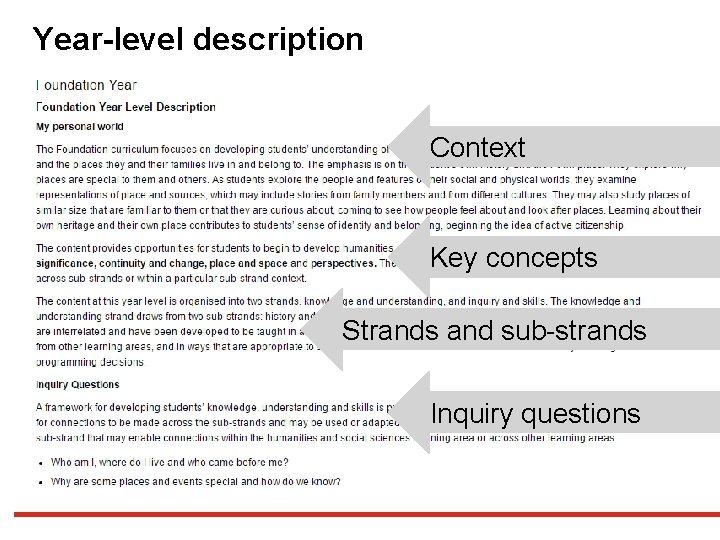
Year-level description Context Key concepts Strands and sub-strands Inquiry questions
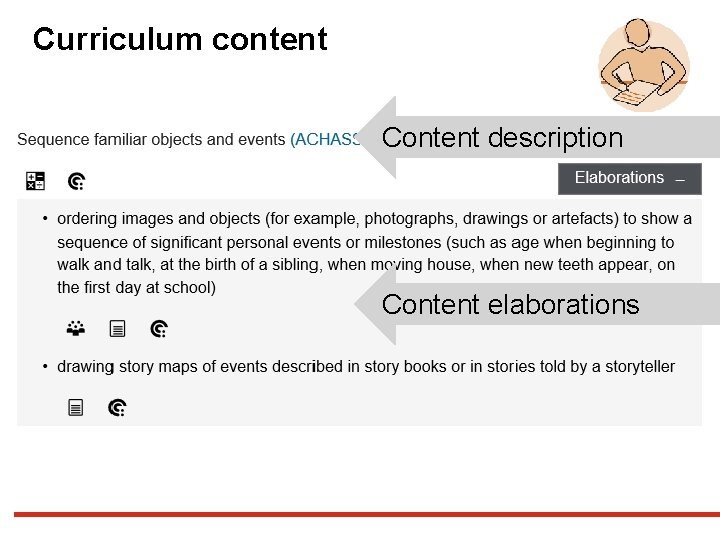
Curriculum content Content description Content elaborations
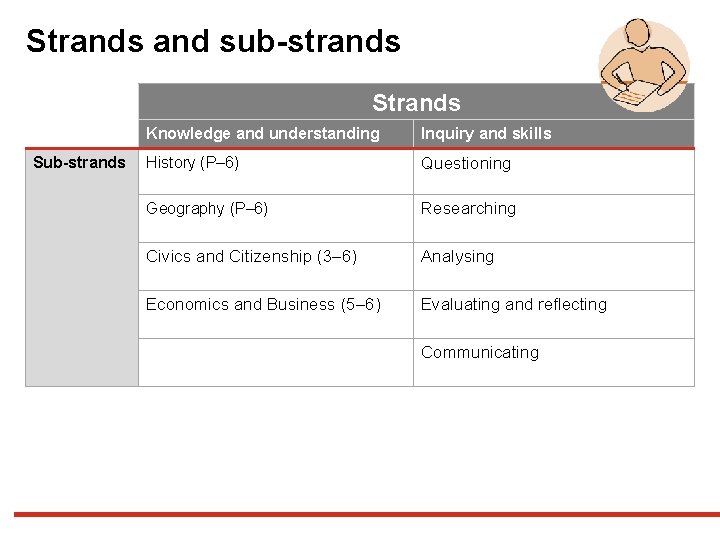
Strands and sub-strands Sub-strands Knowledge and understanding Inquiry and skills History (P– 6) Questioning Geography (P– 6) Researching Civics and Citizenship (3– 6) Analysing Economics and Business (5– 6) Evaluating and reflecting Communicating
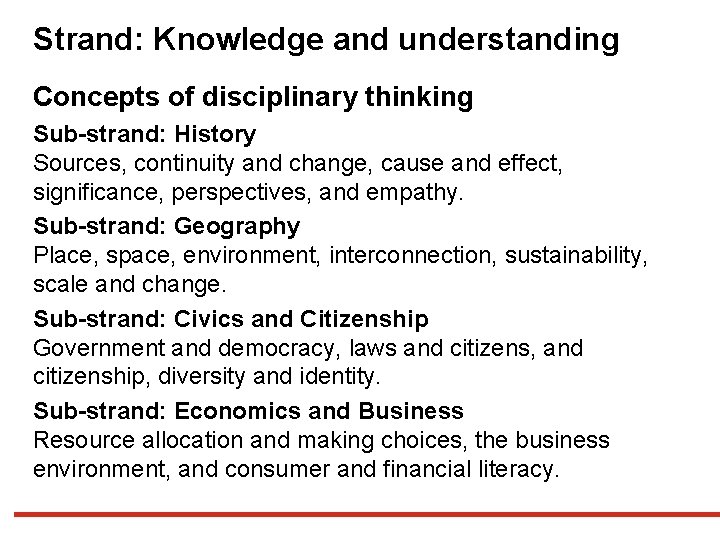
Strand: Knowledge and understanding Concepts of disciplinary thinking Sub-strand: History Sources, continuity and change, cause and effect, significance, perspectives, and empathy. Sub-strand: Geography Place, space, environment, interconnection, sustainability, scale and change. Sub-strand: Civics and Citizenship Government and democracy, laws and citizens, and citizenship, diversity and identity. Sub-strand: Economics and Business Resource allocation and making choices, the business environment, and consumer and financial literacy.
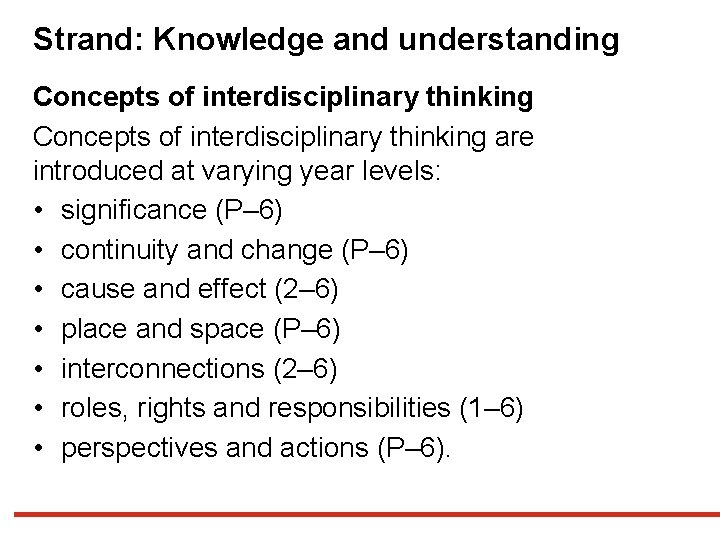
Strand: Knowledge and understanding Concepts of interdisciplinary thinking are introduced at varying year levels: • significance (P– 6) • continuity and change (P– 6) • cause and effect (2– 6) • place and space (P– 6) • interconnections (2– 6) • roles, rights and responsibilities (1– 6) • perspectives and actions (P– 6).
Strand: Inquiry and skills Inquiry questions Two sets of inquiry questions are provided for each year level: • subject inquiry questions • sub-strand inquiry questions.
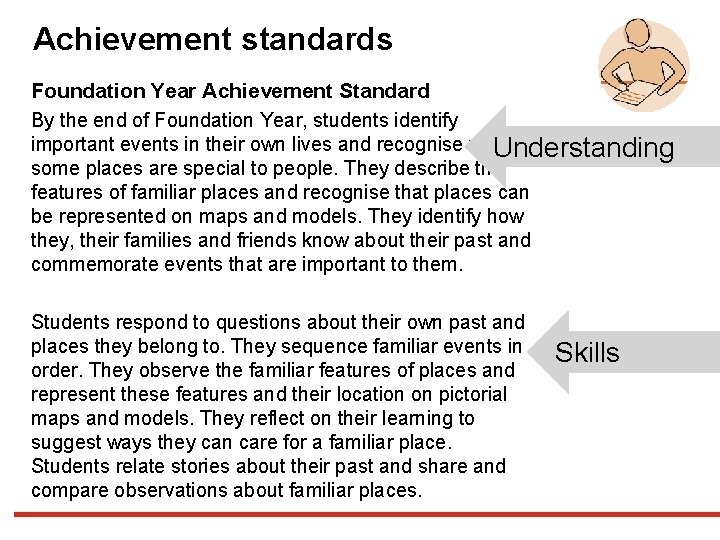
Achievement standards Foundation Year Achievement Standard By the end of Foundation Year, students identify important events in their own lives and recognise why Understanding some places are special to people. They describe the features of familiar places and recognise that places can be represented on maps and models. They identify how they, their families and friends know about their past and commemorate events that are important to them. Students respond to questions about their own past and places they belong to. They sequence familiar events in order. They observe the familiar features of places and represent these features and their location on pictorial maps and models. They reflect on their learning to suggest ways they can care for a familiar place. Students relate stories about their past and share and compare observations about familiar places. Skills
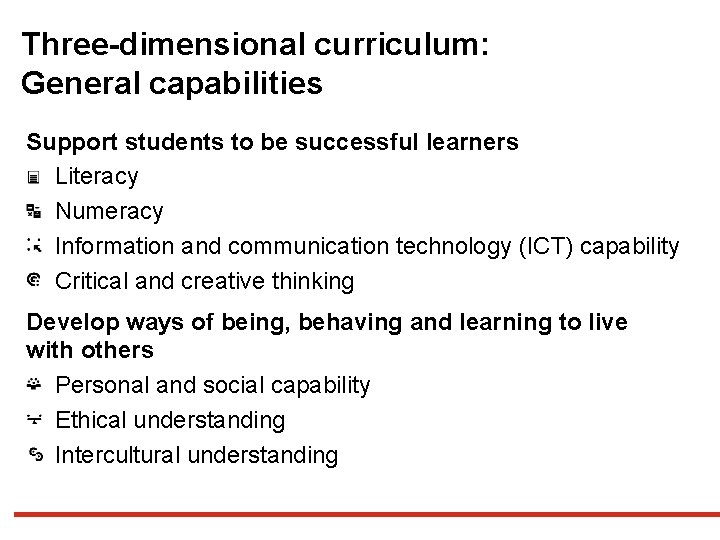
Three-dimensional curriculum: General capabilities Support students to be successful learners Literacy Numeracy Information and communication technology (ICT) capability Critical and creative thinking Develop ways of being, behaving and learning to live with others Personal and social capability Ethical understanding Intercultural understanding
Three-dimensional curriculum: Cross-curriculum priorities Aboriginal and Torres Strait Islander histories and cultures Asia and Australia’s engagement with Asia Sustainability
Find out more on the QCAA Australian Curriculum webpage at www. qcaa. qld. edu. au/p-10/aciq.
Copyright information Slides 3 and 11– 19: Images and text © Australian Curriculum, Assessment and Reporting Authority (ACARA) 2009 to present, unless otherwise indicated. This material was downloaded from the ACARA website (www. acara. edu. au) (Website) (accessed Mar 25, 2019) and was not modified. The material is licensed under CC BY 4. 0 (https: //creativecommons. org/licenses/by/4. 0/). ACARA does not endorse any product that uses ACARA material or make any representations as to the quality of such products. Any product that uses material published on this website should not be taken to be affiliated with ACARA or have the sponsorship or approval of ACARA. It is up to each person to make their own assessment of the product.