
Learning area overview PrepYear 10 Australian Curriculum Health
- Slides: 17
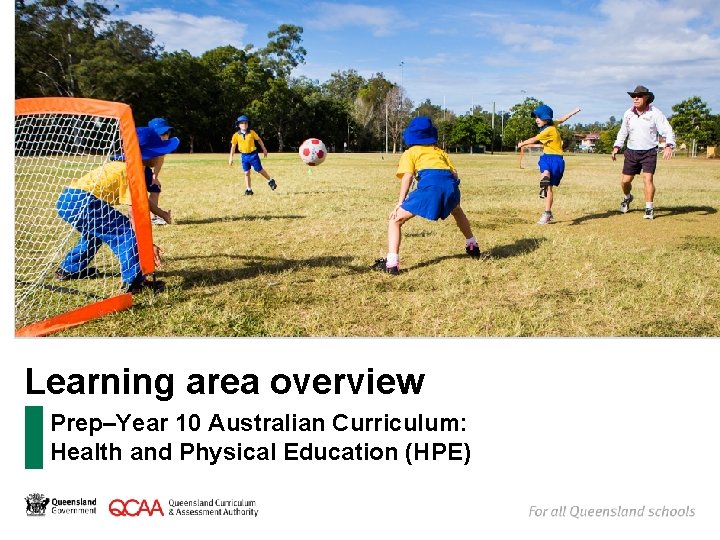
Learning area overview Prep–Year 10 Australian Curriculum: Health and Physical Education (HPE)
Learning goals This presentation aims to: • build understanding of the Australian Curriculum: HPE • provide an overview of the structure of the HPE learning area.
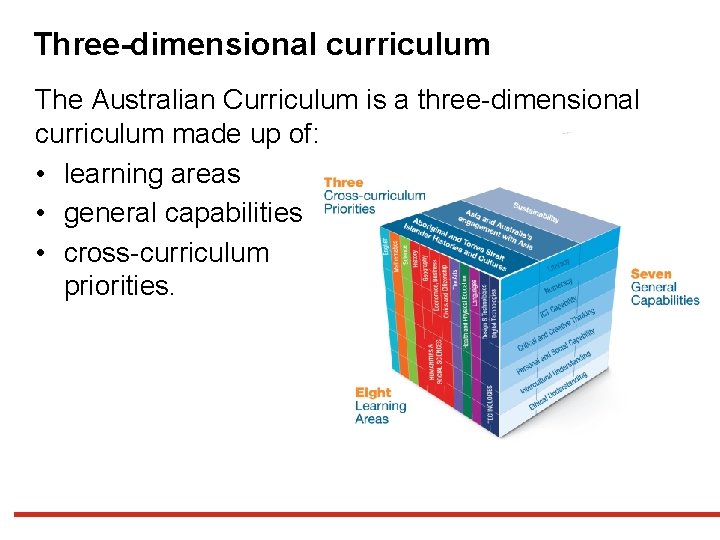
Three-dimensional curriculum The Australian Curriculum is a three-dimensional curriculum made up of: • learning areas • general capabilities • cross-curriculum priorities. English
Structure of the HPE learning area • • Rationale Aims Key ideas Banded curriculum − Band descriptions − Focus areas • Curriculum content − Strands, sub-strands and threads − Content descriptions − Content elaborations • Achievement standards
Rationale Learning area summary HPE develops healthy and active citizens with critical inquiry skills for analysing and understanding the influences on their own and others’ health, safety, wellbeing and physical activity participation in varied and changing contexts confidently, competently and creatively. Video Health and Physical Education: An introduction for teachers www. australiancurriculum. edu. au/f-10 curriculum/health-and-physical-education/rationale
Aims Learning area summary Students develop knowledge, understanding and skills to take positive action to protect, enhance and advocate for: • regular movement-based activity • personal identity and wellbeing • respectful relationships.
Key ideas Health and physical education propositions • • • Focus on educative purpose Take a strengths-based approach Value movement Develop health literacy Include a critical inquiry approach Importance of a healthy school environment A healthy school environment enables students to practise and reinforce their learning with supportive and health-promoting policies, processes and partnerships.
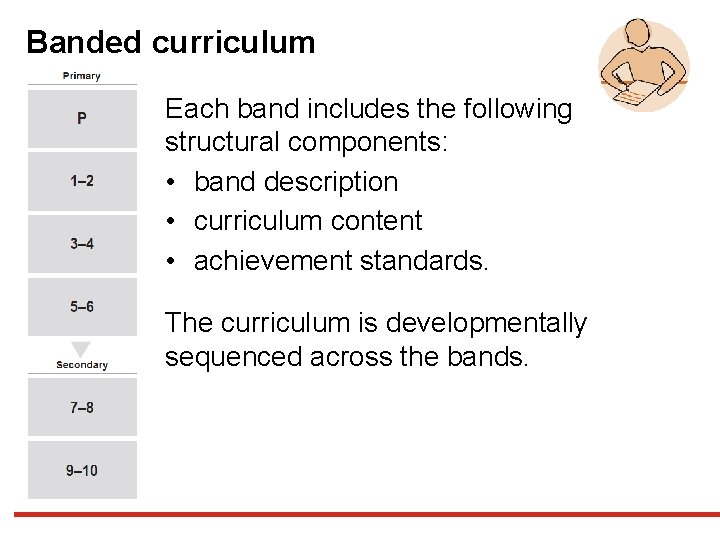
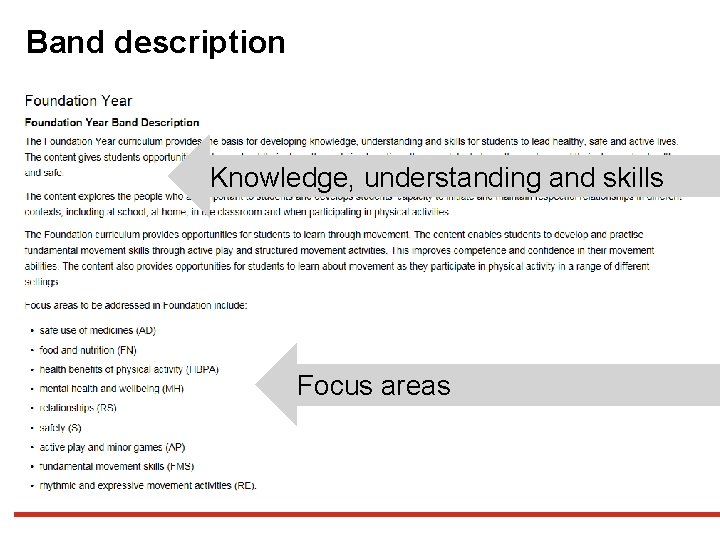
Banded curriculum Each band includes the following structural components: • band description • curriculum content • achievement standards. The curriculum is developmentally sequenced across the bands.
Band description Knowledge, understanding and skills Focus areas
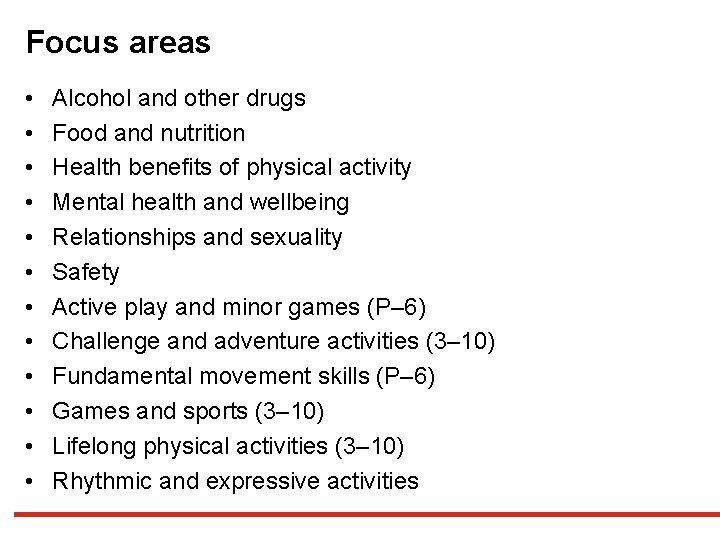
Focus areas • • • Alcohol and other drugs Food and nutrition Health benefits of physical activity Mental health and wellbeing Relationships and sexuality Safety Active play and minor games (P‒ 6) Challenge and adventure activities (3‒ 10) Fundamental movement skills (P‒ 6) Games and sports (3‒ 10) Lifelong physical activities (3‒ 10) Rhythmic and expressive activities
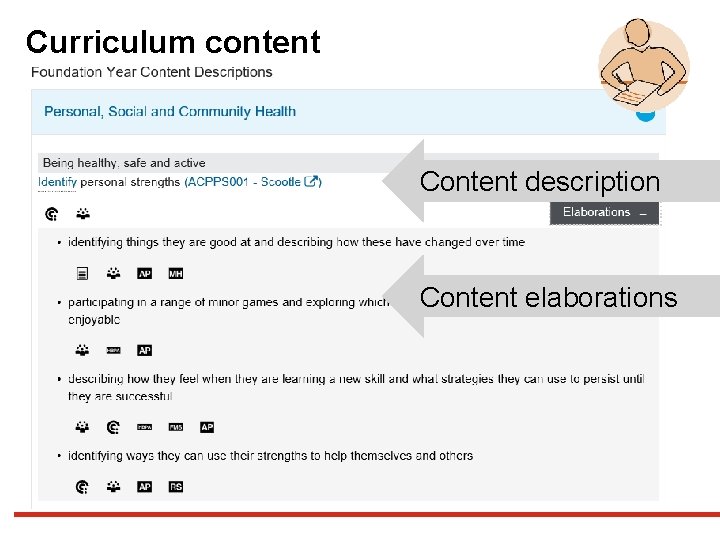
Curriculum content Content description Content elaborations
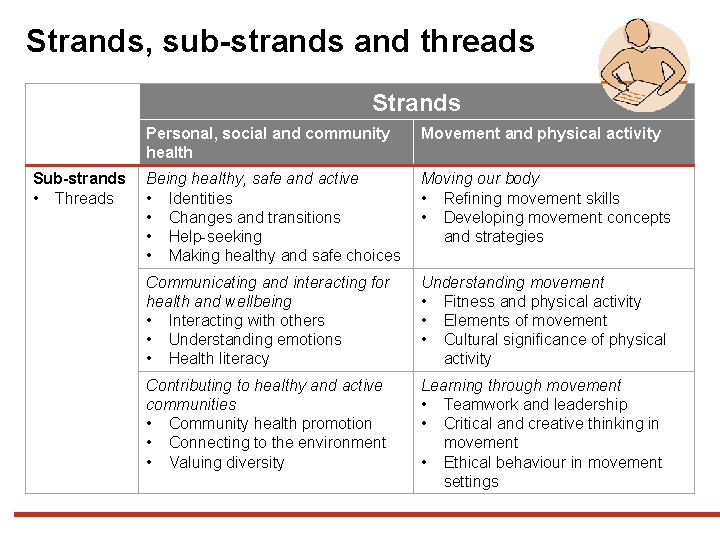
Strands, sub-strands and threads Strands Sub-strands • Threads Personal, social and community health Movement and physical activity Being healthy, safe and active • Identities • Changes and transitions • Help-seeking • Making healthy and safe choices Moving our body • Refining movement skills • Developing movement concepts and strategies Communicating and interacting for health and wellbeing • Interacting with others • Understanding emotions • Health literacy Understanding movement • Fitness and physical activity • Elements of movement • Cultural significance of physical activity Contributing to healthy and active communities • Community health promotion • Connecting to the environment • Valuing diversity Learning through movement • Teamwork and leadership • Critical and creative thinking in movement • Ethical behaviour in movement settings
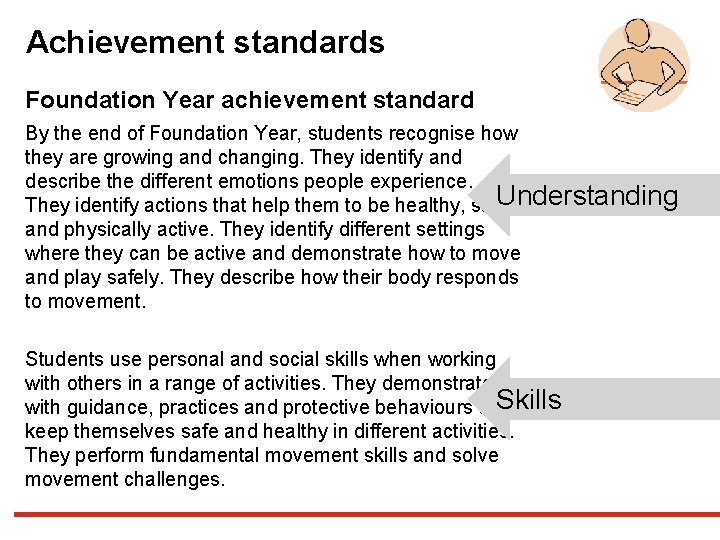
Achievement standards Foundation Year achievement standard By the end of Foundation Year, students recognise how they are growing and changing. They identify and describe the different emotions people experience. Understanding They identify actions that help them to be healthy, safe and physically active. They identify different settings where they can be active and demonstrate how to move and play safely. They describe how their body responds to movement. Students use personal and social skills when working with others in a range of activities. They demonstrate, with guidance, practices and protective behaviours to Skills keep themselves safe and healthy in different activities. They perform fundamental movement skills and solve movement challenges.
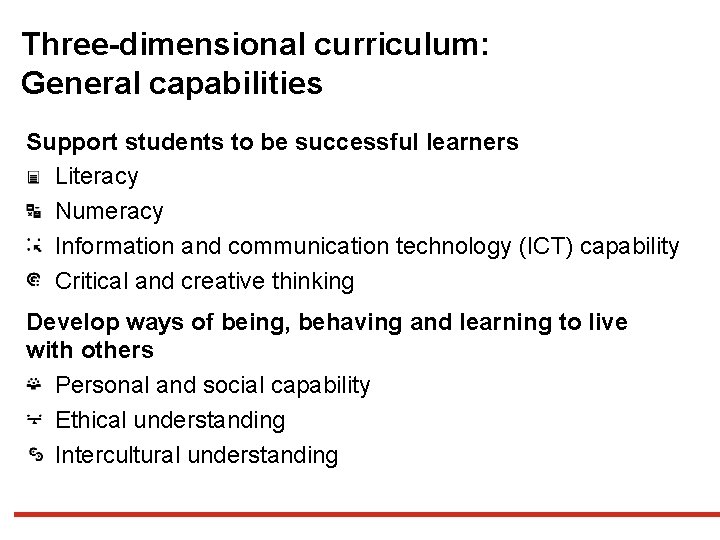
Three-dimensional curriculum: General capabilities Support students to be successful learners Literacy Numeracy Information and communication technology (ICT) capability Critical and creative thinking Develop ways of being, behaving and learning to live with others Personal and social capability Ethical understanding Intercultural understanding
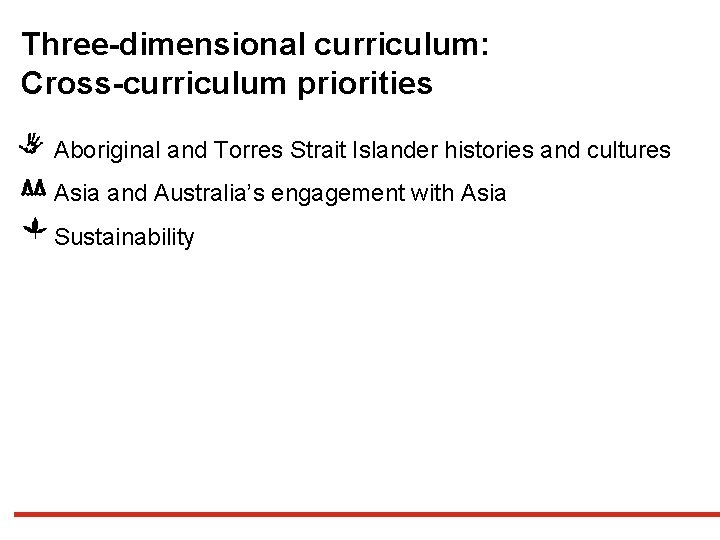
Three-dimensional curriculum: Cross-curriculum priorities Aboriginal and Torres Strait Islander histories and cultures Asia and Australia’s engagement with Asia Sustainability
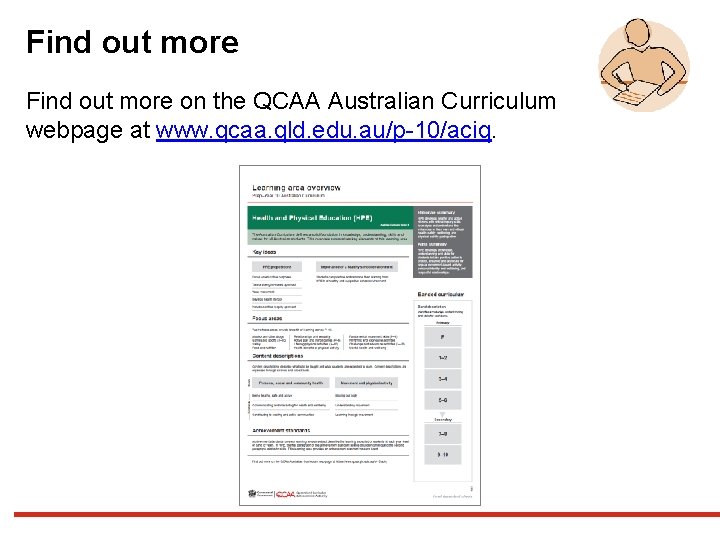
Find out more on the QCAA Australian Curriculum webpage at www. qcaa. qld. edu. au/p-10/aciq.
Copyright information Slides 3, 8– 9 and 11– 15: Images and text © Australian Curriculum, Assessment and Reporting Authority (ACARA) 2009 to present, unless otherwise indicated. This material was downloaded from the ACARA website (www. acara. edu. au) (Website) (accessed Mar 25, 2019) and was not modified. The material is licensed under CC BY 4. 0 (https: //creativecommons. org/licenses/by/4. 0/). ACARA does not endorse any product that uses ACARA material or make any representations as to the quality of such products. Any product that uses material published on this website should not be taken to be affiliated with ACARA or have the sponsorship or approval of ACARA. It is up to each person to make their own assessment of the product.