
Learning area overview PrepYear 10 Australian Curriculum English
- Slides: 16
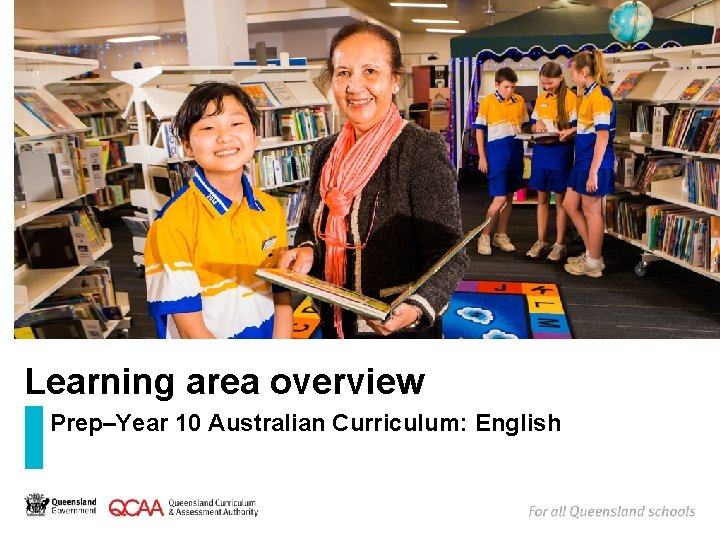
Learning area overview Prep–Year 10 Australian Curriculum: English
Learning goals This presentation aims to: • build understanding of the Australian Curriculum: English • provide an overview of the structure of the English learning area.
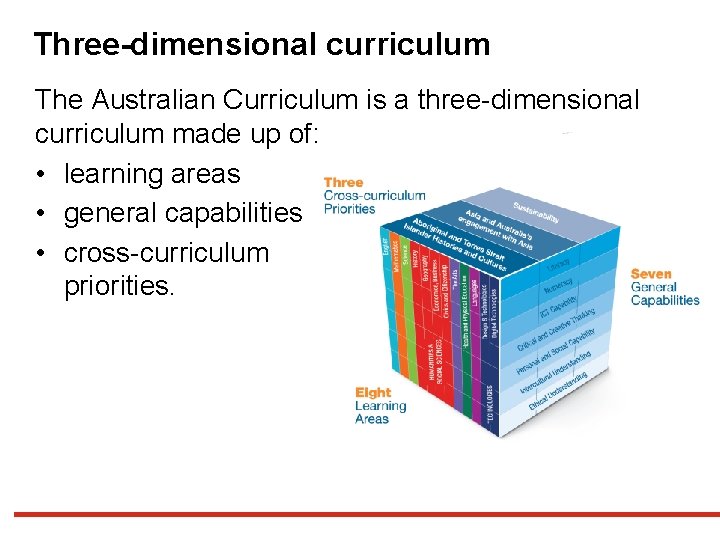
Three-dimensional curriculum The Australian Curriculum is a three-dimensional curriculum made up of: • learning areas • general capabilities • cross-curriculum priorities. English
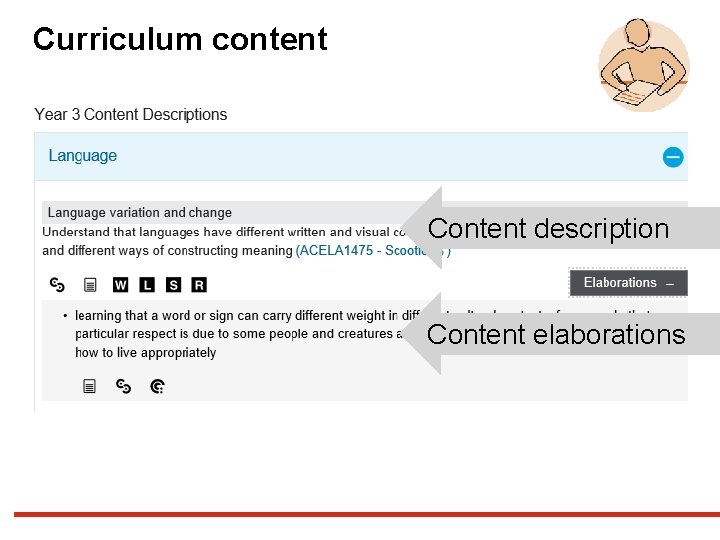
Structure of the English learning area • • Rationale Aims Key ideas Year-by-year curriculum − Year-level descriptions • Curriculum content − Strands, sub-strands and threads − Content descriptions − Content elaborations • Achievement standards
Rationale Learning area summary The study of English is central to the learning and development of all young Australians. In the English learning area, students have opportunities to become confident communicators, imaginative thinkers and informed citizens who analyse, understand, communicate and build relationships with others and the world around them. Video Introduction to English http: //www. australiancurriculum. edu. au/f-10 curriculum/english/rationale
Aims Learning area summary Learning through English aims to: • ensure that students interact with texts in a variety of ways • develop capabilities to use, appreciate and enjoy English • develop an understanding of how the various forms of text work in combination to create meaning.
Key ideas • • • Texts Communication processes The English language Literacy is language in use Language features, visual features and text structures • The appreciation of literature
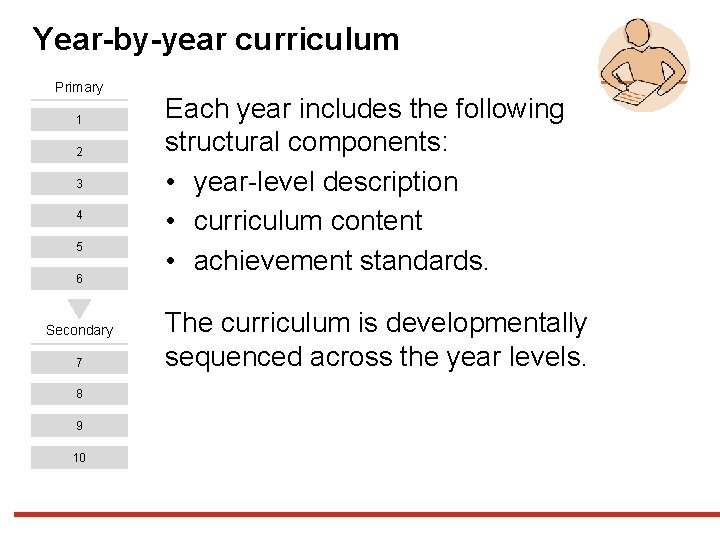
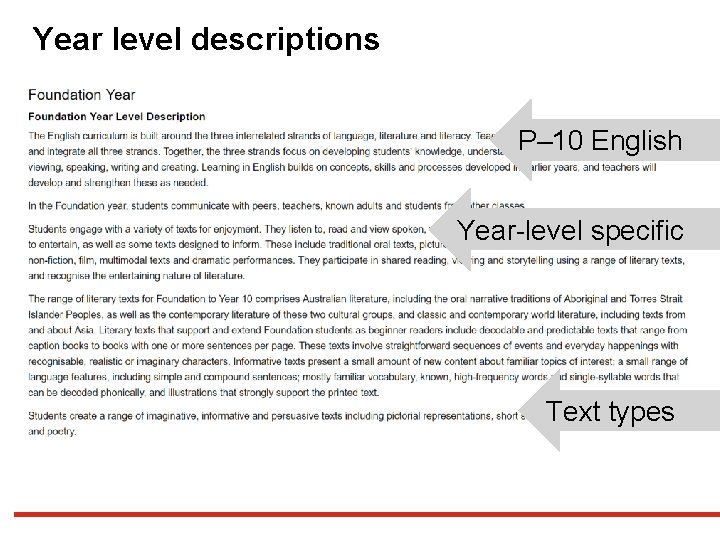
Year-by-year curriculum Primary 1 2 3 4 5 6 Secondary 7 8 9 10 Each year includes the following structural components: • year-level description • curriculum content • achievement standards. The curriculum is developmentally sequenced across the year levels.
Year level descriptions P– 10 English Year-level specific Text types
Curriculum content Content description Content elaborations
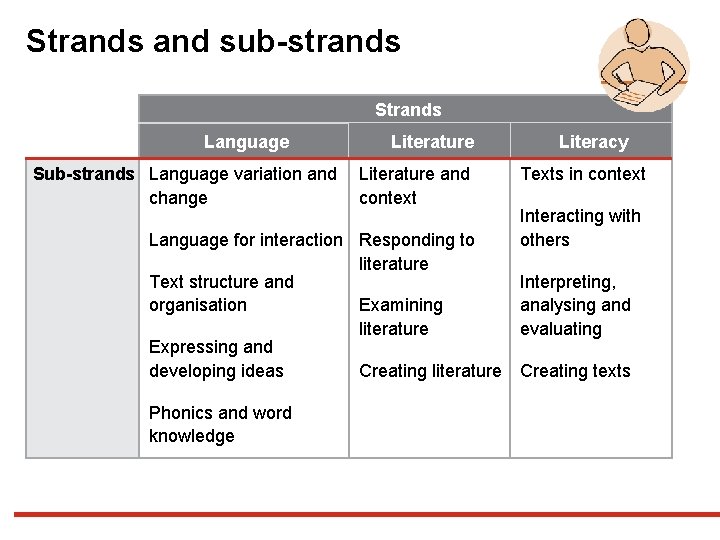
Strands and sub-strands Strands Language Literature Sub-strands Language variation and Literature and change context Language for interaction Responding to literature Text structure and Examining organisation literature Expressing and Creating literature developing ideas Phonics and word knowledge Literacy Texts in context Interacting with others Interpreting, analysing and evaluating Creating texts
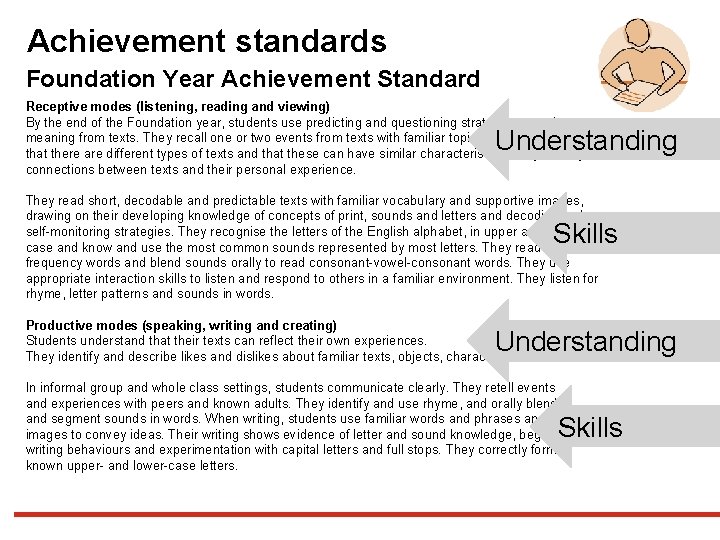
Achievement standards Foundation Year Achievement Standard Receptive modes (listening, reading and viewing) By the end of the Foundation year, students use predicting and questioning strategies to make meaning from texts. They recall one or two events from texts with familiar topics. They understand that there are different types of texts and that these can have similar characteristics. They identify connections between texts and their personal experience. Understanding They read short, decodable and predictable texts with familiar vocabulary and supportive images, drawing on their developing knowledge of concepts of print, sounds and letters and decoding and self-monitoring strategies. They recognise the letters of the English alphabet, in upper and lower case and know and use the most common sounds represented by most letters. They read highfrequency words and blend sounds orally to read consonant-vowel-consonant words. They use appropriate interaction skills to listen and respond to others in a familiar environment. They listen for rhyme, letter patterns and sounds in words. Skills Productive modes (speaking, writing and creating) Students understand that their texts can reflect their own experiences. They identify and describe likes and dislikes about familiar texts, objects, characters and events. Understanding In informal group and whole class settings, students communicate clearly. They retell events and experiences with peers and known adults. They identify and use rhyme, and orally blend and segment sounds in words. When writing, students use familiar words and phrases and images to convey ideas. Their writing shows evidence of letter and sound knowledge, beginning writing behaviours and experimentation with capital letters and full stops. They correctly form known upper- and lower-case letters. Skills
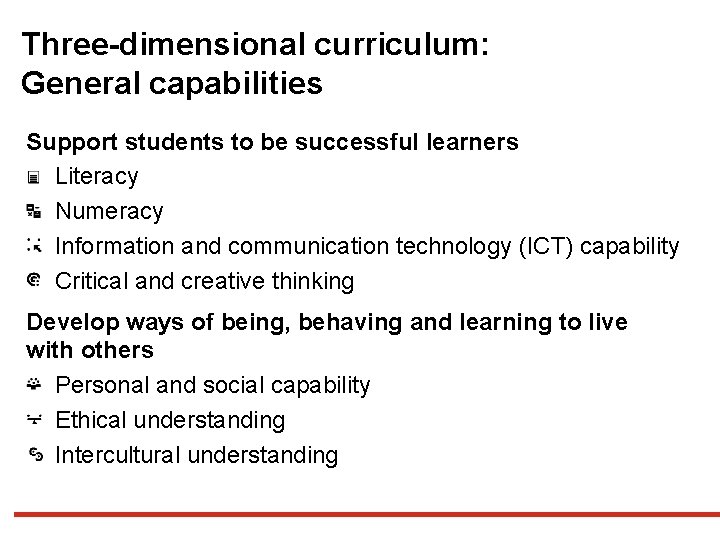
Three-dimensional curriculum: General capabilities Support students to be successful learners Literacy Numeracy Information and communication technology (ICT) capability Critical and creative thinking Develop ways of being, behaving and learning to live with others Personal and social capability Ethical understanding Intercultural understanding
Three-dimensional curriculum: Cross-curriculum priorities Aboriginal and Torres Strait Islander histories and cultures Asia and Australia’s engagement with Asia Sustainability
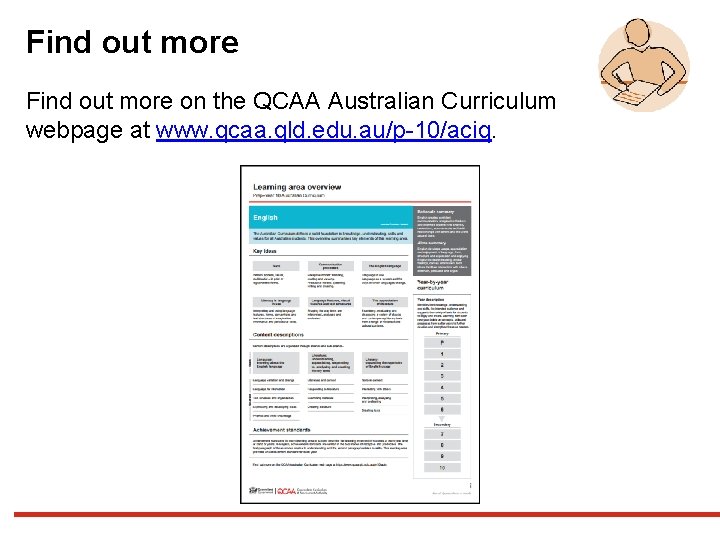
Find out more on the QCAA Australian Curriculum webpage at www. qcaa. qld. edu. au/p-10/aciq.
Copyright information Slides 3 and 8– 14: Images and text © Australian Curriculum, Assessment and Reporting Authority (ACARA) 2009 to present, unless otherwise indicated. This material was downloaded from the ACARA website (www. acara. edu. au) (Website) (accessed Mar 25, 2019) and was not modified. The material is licensed under CC BY 4. 0 (https: //creativecommons. org/licenses/by/4. 0/). ACARA does not endorse any product that uses ACARA material or make any representations as to the quality of such products. Any product that uses material published on this website should not be taken to be affiliated with ACARA or have the sponsorship or approval of ACARA. It is up to each person to make their own assessment of the product.