
Learning Any relatively permanent change in behavior or
Learning Any relatively permanent change in behavior (or behavior potential) produced by experience
Association § We learn by association § § Our minds naturally connect events that occur in sequence Aristotle 2000 years ago John Locke and David Hume 200 years ago Associative Learning § learning that two events occur together § § two stimuli a response and its consequences
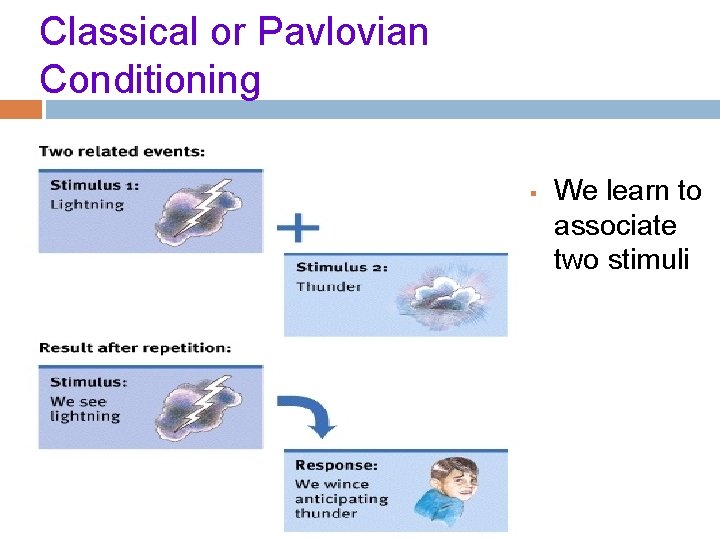
Classical or Pavlovian Conditioning § We learn to associate two stimuli
Classical Conditioning Ivan Pavlov studies digestion in dogs (1904) Conditions dogs to salivate to a sound (bell or buzzer) Determines formula for the conditioning process � UCS = UCR � NS + UCS = UCR � CS = CR Best case: NS precedes UCS Worst case: NS follows UCS
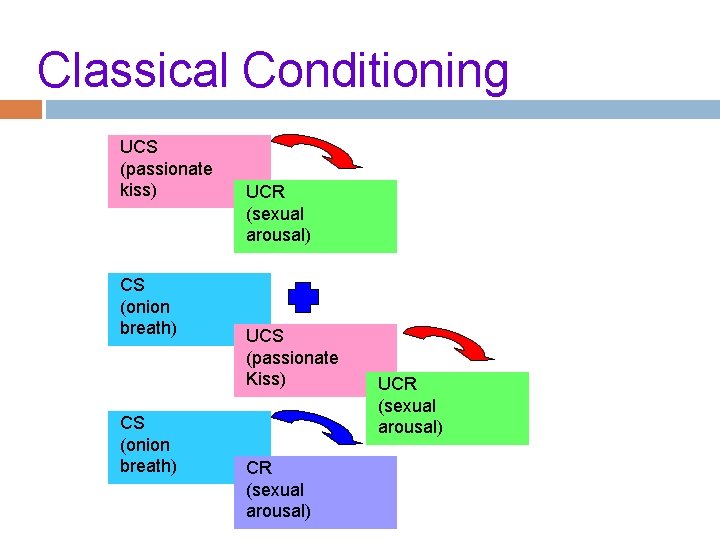
Classical Conditioning UCS (passionate kiss) CS (onion breath) UCR (sexual arousal) UCS (passionate Kiss) CR (sexual arousal) UCR (sexual arousal)
Characteristics of Conditioning Generalization: the tendency of stimuli similar to the original conditioned stimulus to evoke a similar conditioned response Discrimination: to be able to differentiate between stimuli Extinction: a process by which the effects of conditioning are reduced and finally disappear Spontaneous recovery: the reappearance of a learned response after its apparent extinction
Characteristics of Conditioning (cont. ) Higher-order conditioning: a neutral stimulus becomes a conditioned stimulus through association with an already established conditioned stimulus
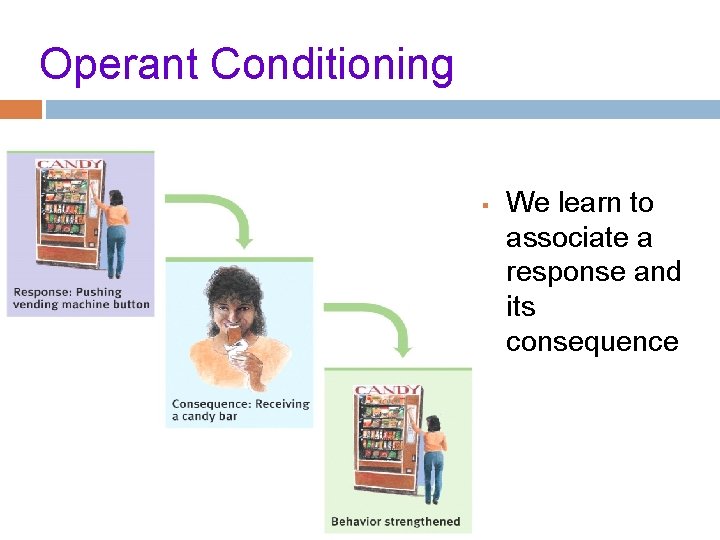
Operant Conditioning § We learn to associate a response and its consequence
Operant Conditioning Definition: behavior is shaped by the consequences it produces We “learn” by doing things that produce positive outcomes and/or allow us to avoid negative outcomes (sometimes negative is better than none at all)
Operant Conditioning § Reinforcer § § any event that strengthens the behavior it follows Shaping § operant conditioning procedure in which reinforcers guide behavior toward closer approximations of a desired goal
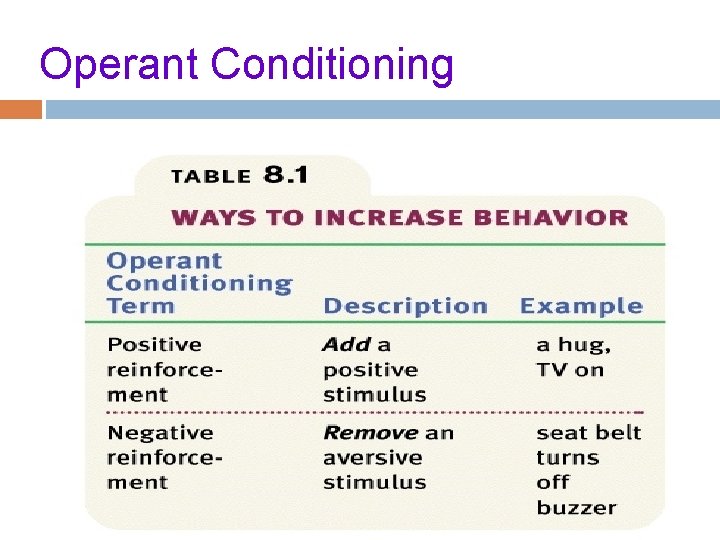
Operant Conditioning (cont. ) Primary reinforcers: they satisfy a biological need – food, water, sex (we need to feel a deficit of it for it to be a reinforcer) Secondary reinforcers: they take on the ability to reinforce – e. g. money, status, praise Positive reinforcers: the behavior is strengthened to get the reward Negative reinforcers: the behavior is strengthened to avoid the reinforcer Punishment: the behavior is weakened to avoid the reinforcer
Operant Conditioning
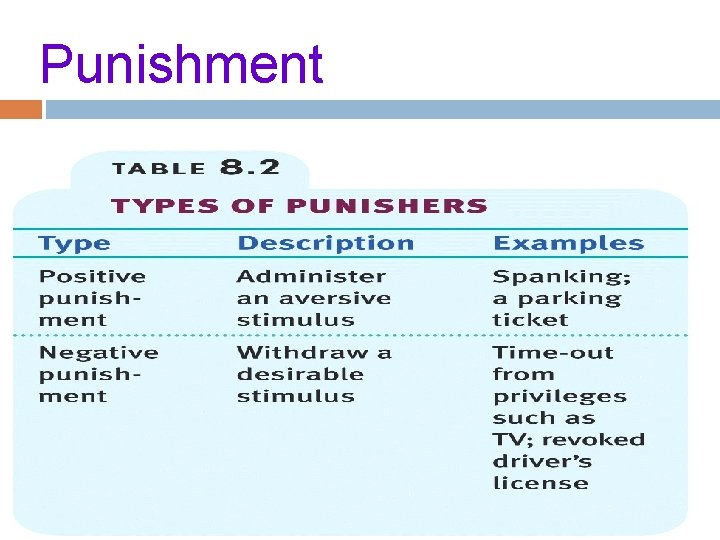
Punishment
Schedules of Reinforcement § Continuous Reinforcement § § reinforcing the desired response each time it occurs Partial (Intermittent) Reinforcement § § § reinforcing a response only part of the time results in slower acquisition greater resistance to extinction
Schedules of Reinforcement § Fixed Ratio (FR) Schedule § § § reinforces a response only after a specified number of responses faster you respond the more rewards you get different ratios very high rate of responding like piecework pay
Schedules of Reinforcement § Variable Ratio (VR) § § reinforces a response after an unpredictable number of responses average ratios like gambling, fishing very hard to extinguish because of unpredictability
Schedules of Reinforcement § Fixed Interval (FI) § § reinforces a response only after a specified time has elapsed response occurs more frequently as the anticipated time for reward draws near
Schedules of Reinforcement § Variable Interval (VI) § § § reinforces a response at unpredictable time intervals produces slow steady responding like pop quiz
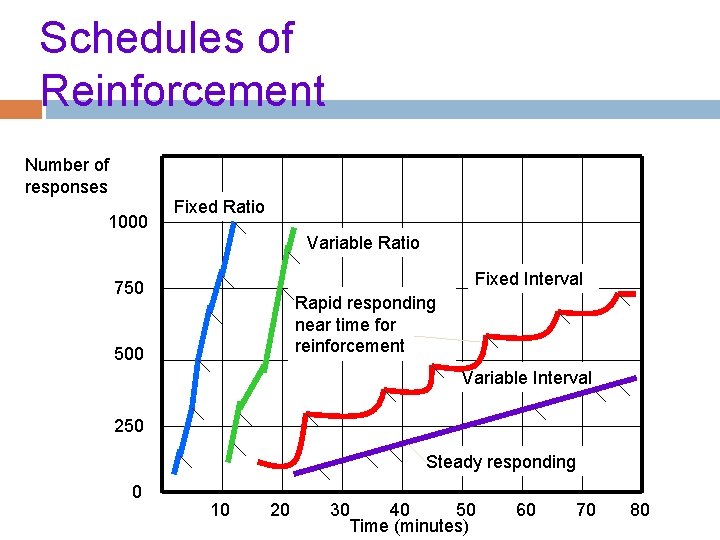
Schedules of Reinforcement Number of responses 1000 Fixed Ratio Variable Ratio Fixed Interval 750 Rapid responding near time for reinforcement 500 Variable Interval 250 Steady responding 0 10 20 30 40 50 Time (minutes) 60 70 80
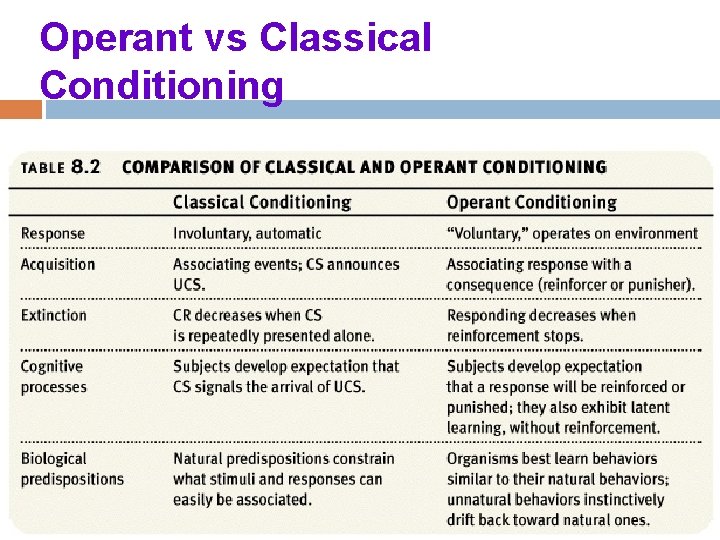
Operant vs Classical Conditioning
Cognition and Operant Conditioning § Cognitive Map § § § mental representation of the layout of one’s environment Example: after exploring a maze, rats act as if they have learned a cognitive map of it Latent Learning § learning that occurs, but is not apparent until there is an incentive to demonstrate it
Cognition and Operant Conditioning § Intrinsic Motivation § § desire to perform a behavior for its own sake and to be effective Extrinsic Motivation § desire to perform a behavior due to promised rewards or threats of punishments
Observational Learning § § learning by observing others Modeling § process of observing and imitating a specific behavior
Observational Learning § Alfred Bandura’s Experiments Bobo doll § we look and we learn §
Observational Learning § Prosocial Behavior positive, constructive, helpful behavior § opposite of antisocial behavior §
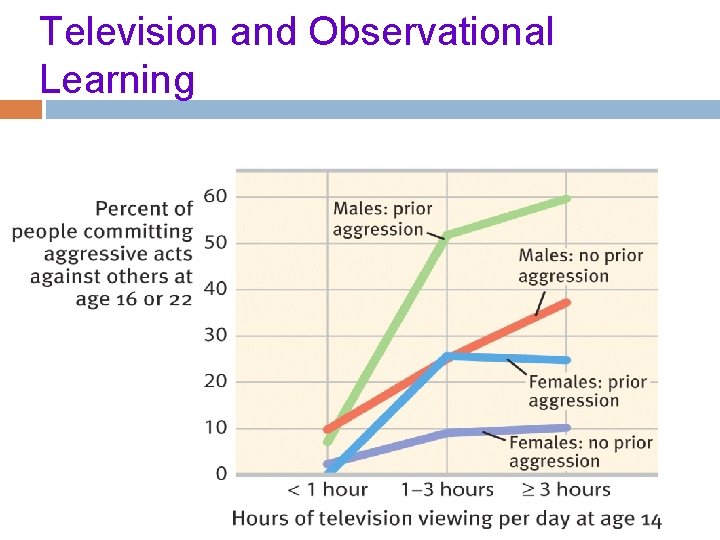
Television and Observational Learning
- Slides: 26