
Learning and Language Module 15 Operant Conditioning Module






- Slides: 68
Learning and Language
Module 15 Operant Conditioning
Module Overview • • The Nature of Operant Conditioning The Law of Effect Reinforcement Punishment Reinforcement Procedures Schedules of Reinforcement New Understandings of Operant Conditioning Click on the any of the above hyperlinks to go to that section in the presentation.
Module 15: Operant Conditioning The Nature of Operant Conditioning
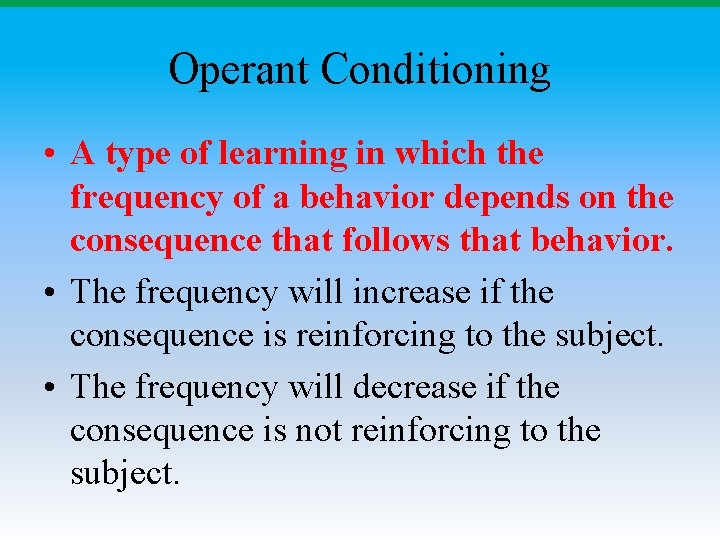
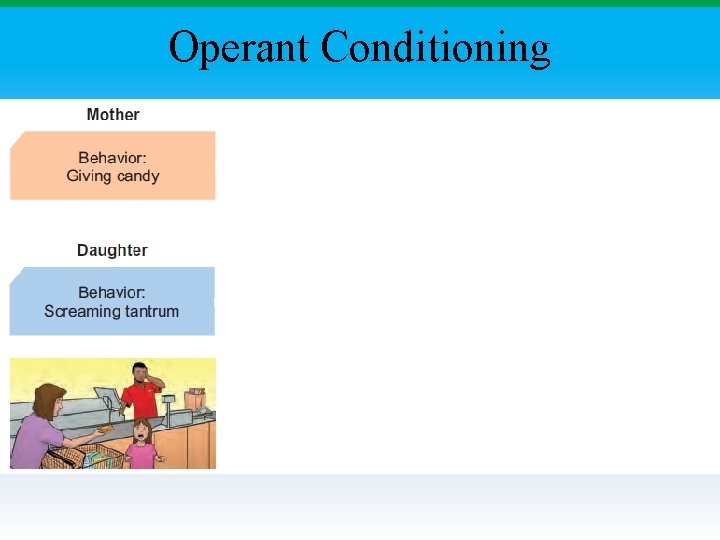
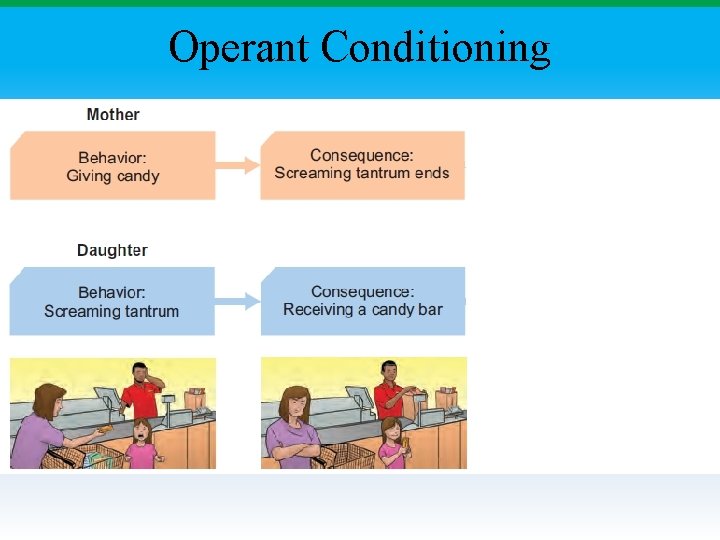
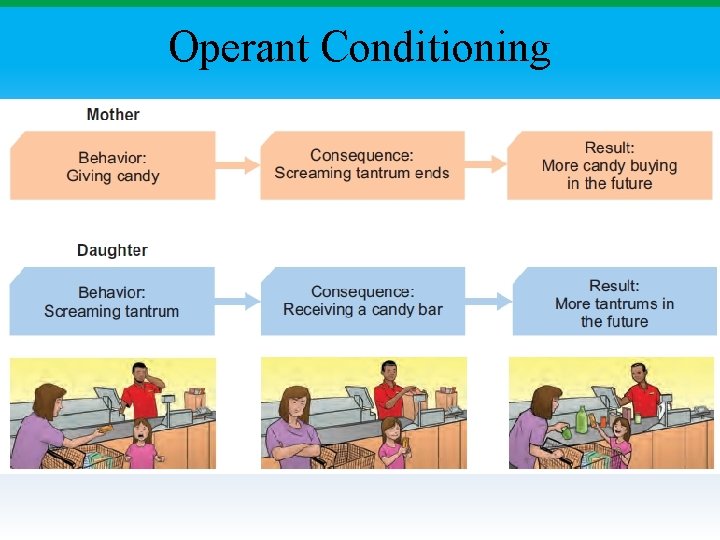
Operant Conditioning • A type of learning in which the frequency of a behavior depends on the consequence that follows that behavior. • The frequency will increase if the consequence is reinforcing to the subject. • The frequency will decrease if the consequence is not reinforcing to the subject.
Operant Conditioning
Operant Conditioning
Operant Conditioning
Module 15: Operant Conditioning The Law of Effect
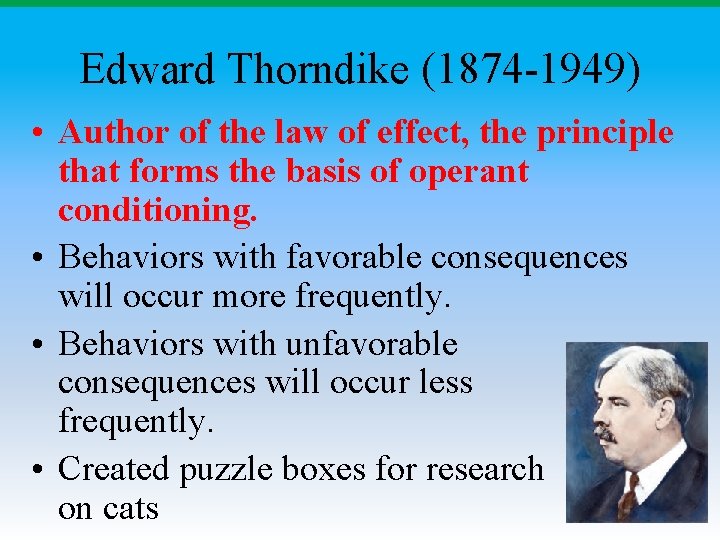
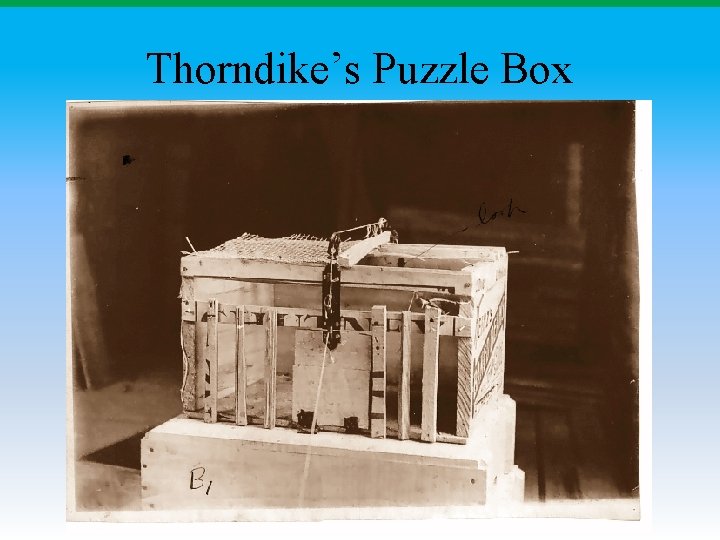
Edward Thorndike (1874 -1949) • Author of the law of effect, the principle that forms the basis of operant conditioning. • Behaviors with favorable consequences will occur more frequently. • Behaviors with unfavorable consequences will occur less frequently. • Created puzzle boxes for research on cats
Thorndike’s Puzzle Box
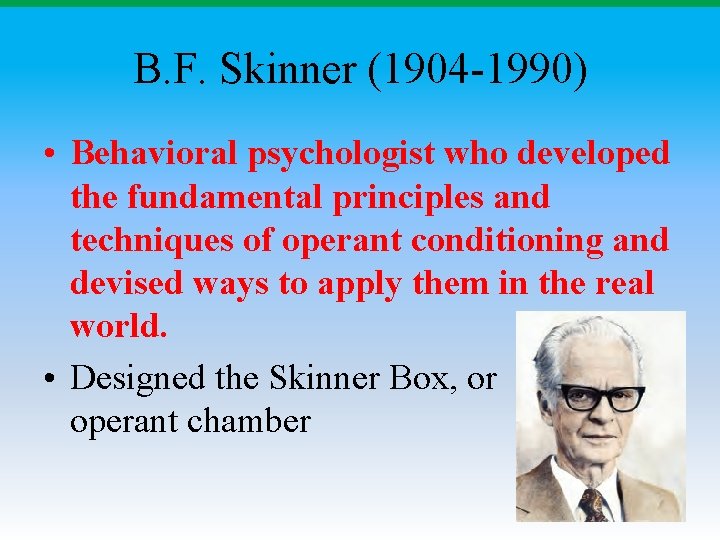
B. F. Skinner (1904 -1990) • Behavioral psychologist who developed the fundamental principles and techniques of operant conditioning and devised ways to apply them in the real world. • Designed the Skinner Box, or operant chamber
Skinner Box
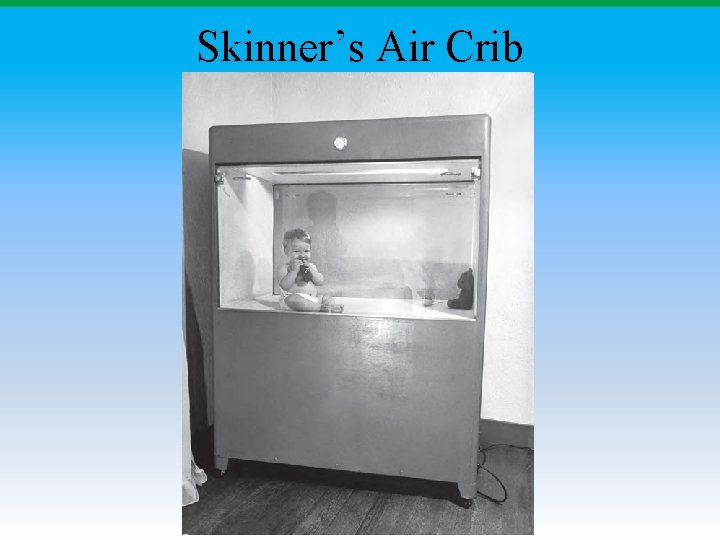
Skinner’s Air Crib
Reinforcement/Punishment • Reinforcement - Any consequence that increases the future likelihood of a behavior. • Punishment - Any consequence that decreases the future likelihood of a behavior. • The subject determines if a consequence is reinforcing or punishing
Module 15: Operant Conditioning Reinforcement
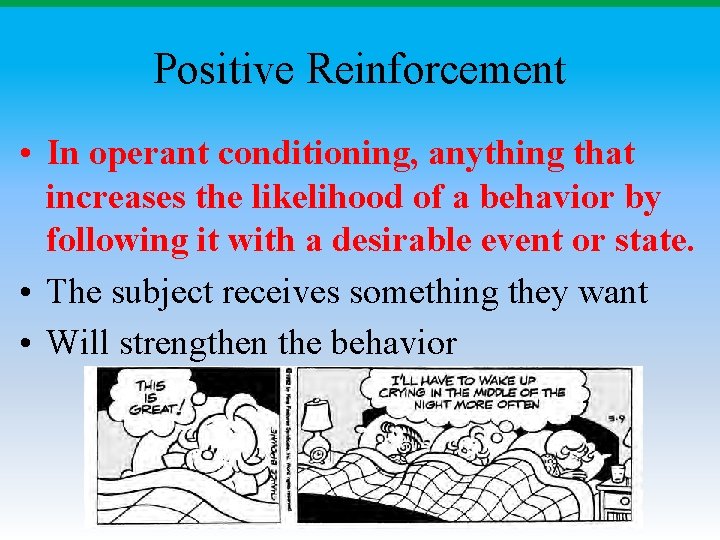
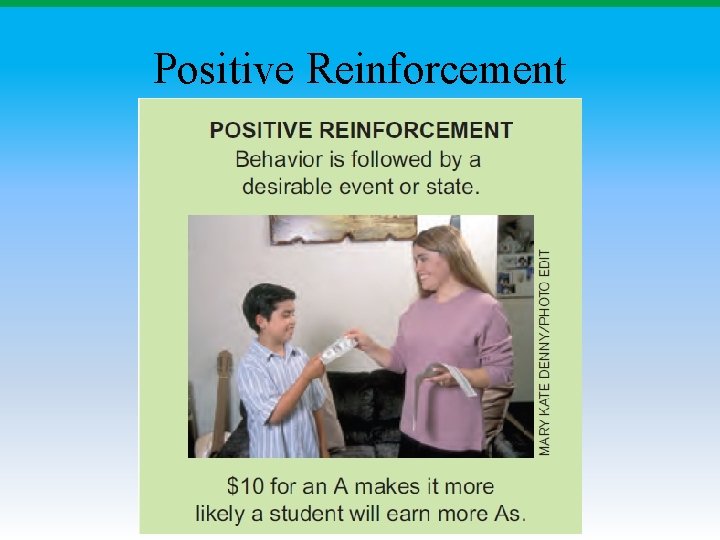
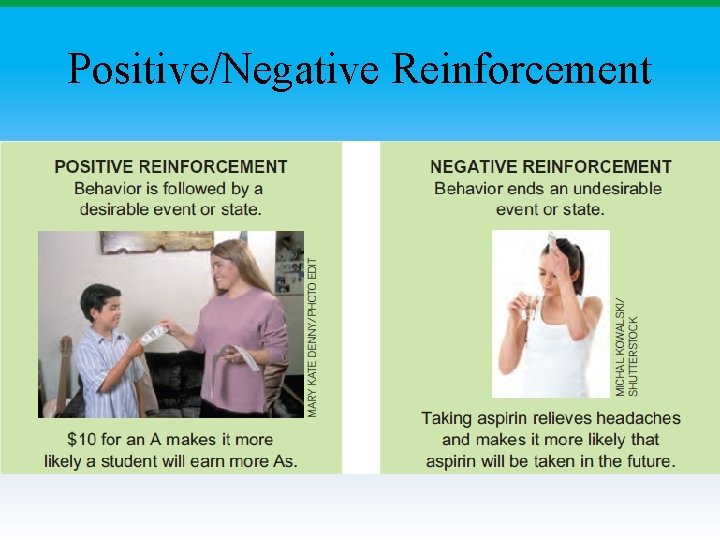
Positive Reinforcement • In operant conditioning, anything that increases the likelihood of a behavior by following it with a desirable event or state. • The subject receives something they want • Will strengthen the behavior
Positive Reinforcement
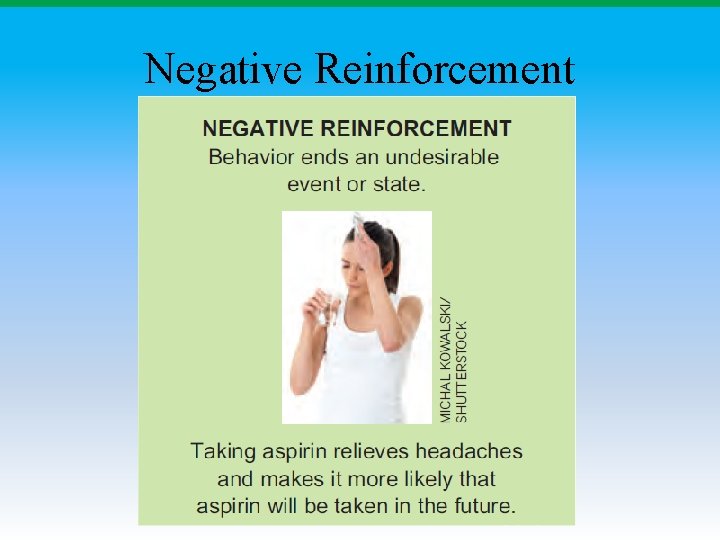
Negative Reinforcement • In operant conditioning, anything that increases the likelihood of a behavior by following it with the removal of an undesirable event or state. • Something the subject doesn’t like is removed • Will strengthen the behavior
Negative Reinforcement
Positive/Negative Reinforcement
Module 15: Operant Conditioning Reinforcement: Immediate Versus Delayed Reinforcement
Immediate/Delayed Reinforcement • Immediate reinforcement is more effective than delayed reinforcement • Ability to delay gratification predicts higher achievement
Module 15: Operant Conditioning Reinforcement: Primary Versus Secondary Reinforcement
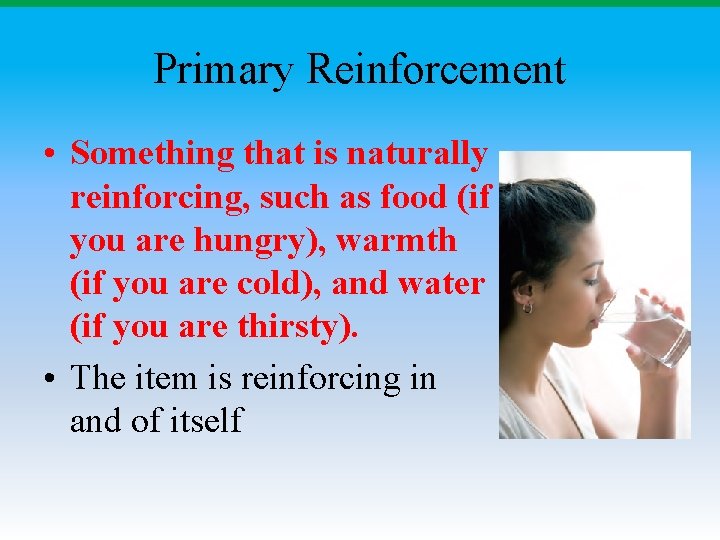
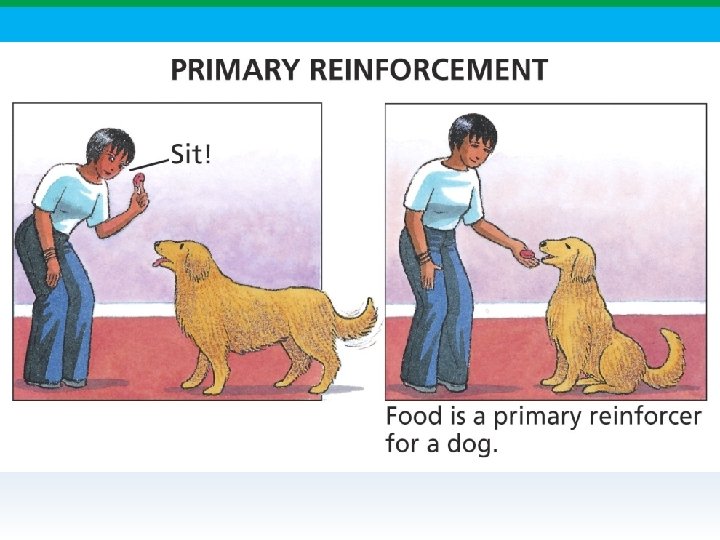
Primary Reinforcement • Something that is naturally reinforcing, such as food (if you are hungry), warmth (if you are cold), and water (if you are thirsty). • The item is reinforcing in and of itself
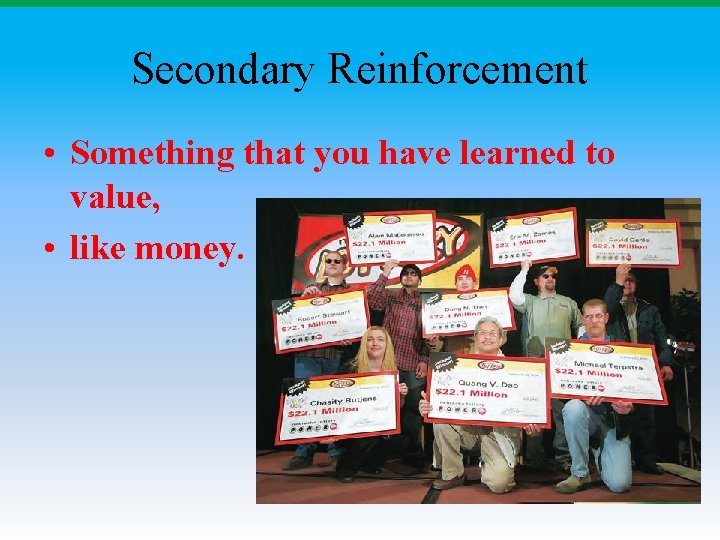
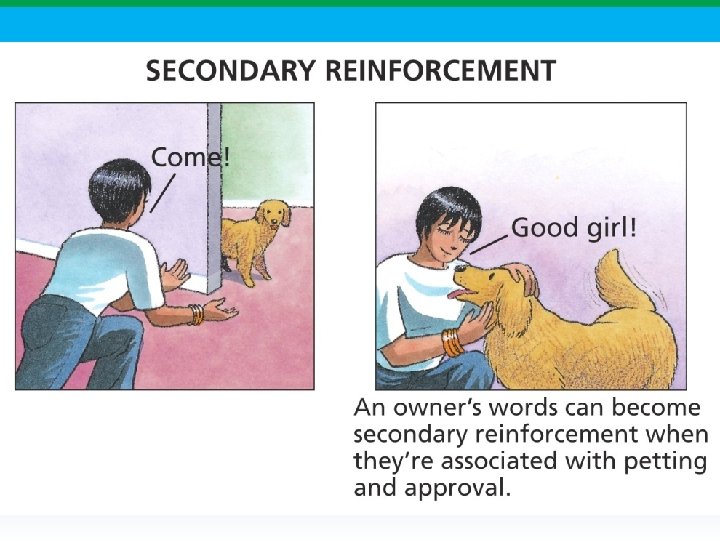
Secondary Reinforcement • Something that you have learned to value, • like money.
Module 15: Operant Conditioning Punishment
Module 15: Operant Conditioning Punishment: The Process of Punishment
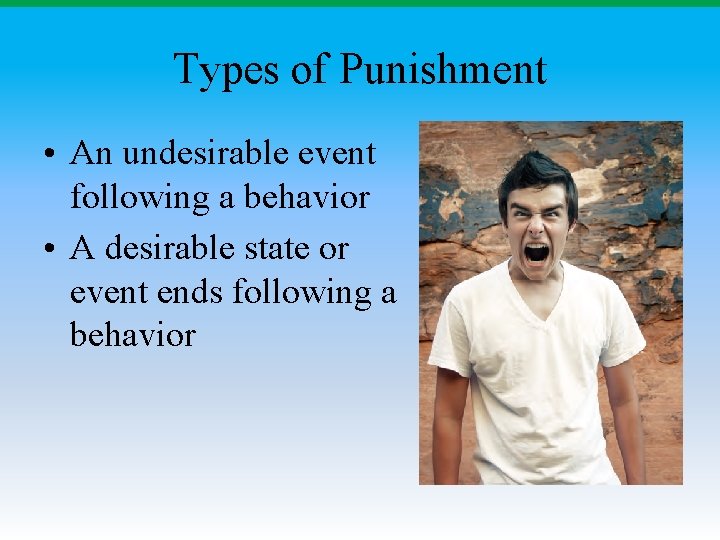
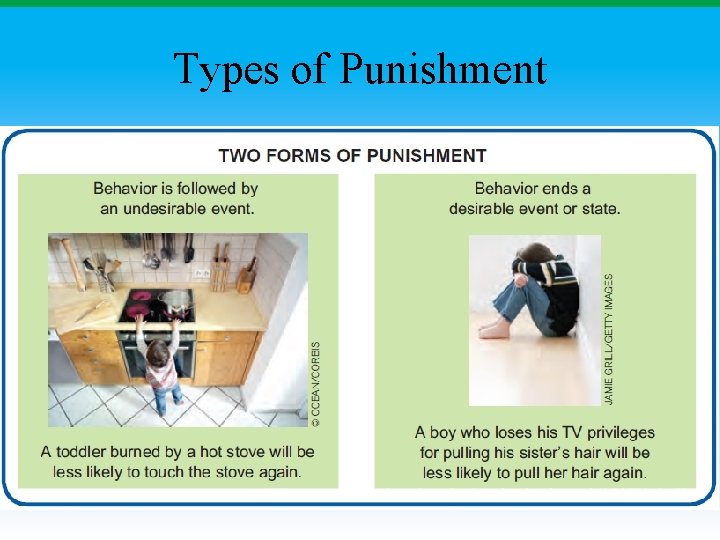
Types of Punishment • An undesirable event following a behavior • A desirable state or event ends following a behavior
Types of Punishment
Module 15: Operant Conditioning Punishment: Problems with Punishment
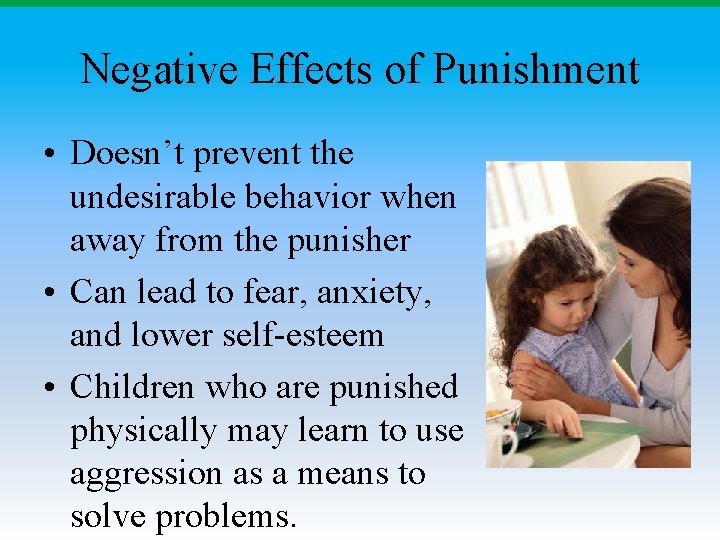
Negative Effects of Punishment • Doesn’t prevent the undesirable behavior when away from the punisher • Can lead to fear, anxiety, and lower self-esteem • Children who are punished physically may learn to use aggression as a means to solve problems.
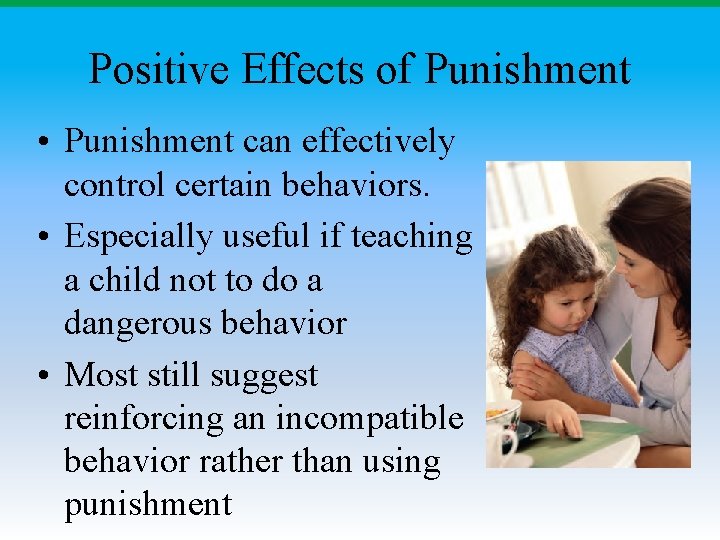
Positive Effects of Punishment • Punishment can effectively control certain behaviors. • Especially useful if teaching a child not to do a dangerous behavior • Most still suggest reinforcing an incompatible behavior rather than using punishment
Module 15: Operant Conditioning Reinforcement Procedures
Module 15: Operant Conditioning Reinforcement Procedures: Shaping
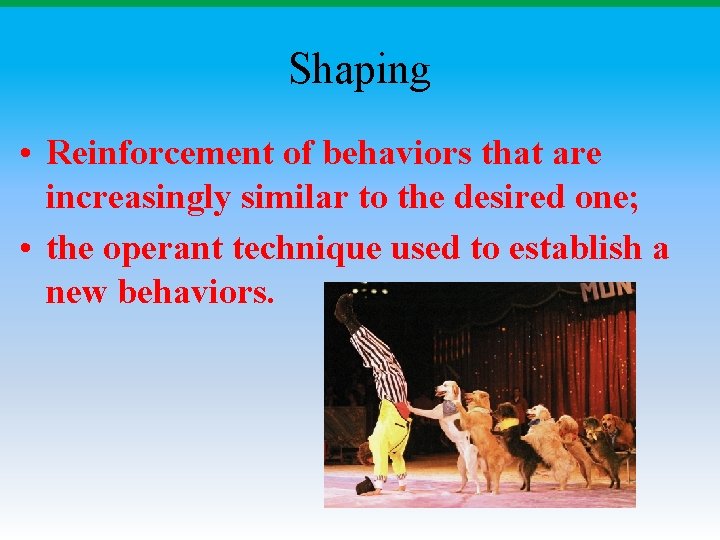
Shaping • Reinforcement of behaviors that are increasingly similar to the desired one; • the operant technique used to establish a new behaviors.
Module 15: Operant Conditioning Reinforcement Procedures: Discrimination and Extinction
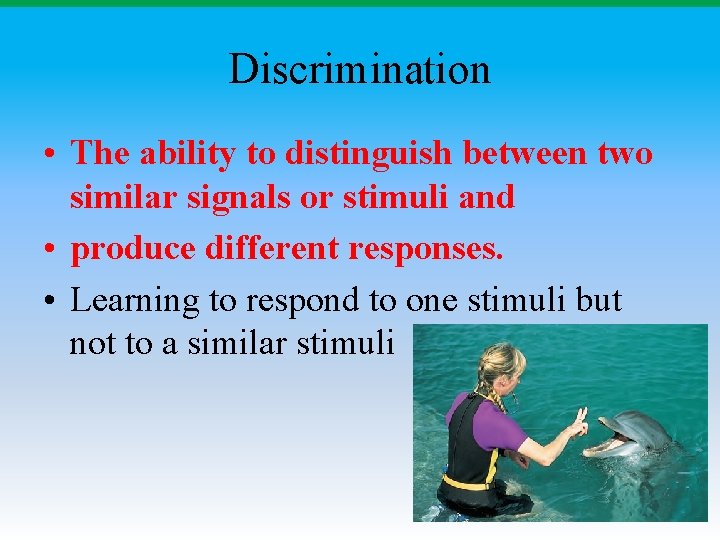
Discrimination • The ability to distinguish between two similar signals or stimuli and • produce different responses. • Learning to respond to one stimuli but not to a similar stimuli
Extinction • In operant conditioning, the loss of a behavior when no consequence follows it. • The subject no longer responds since the reinforcement or punishment has stopped.
Module 15: Operant Conditioning Schedules of Reinforcement
Module 15: Operant Conditioning Schedules of Reinforcement: Continuous Reinforcement
Continuous reinforcement • In operant conditioning, a schedule of reinforcement in which a reward follows every correct response. • Most useful way to establish a behavior • The behavior will extinguish quickly once the reinforcement stops.
Module 15: Operant Conditioning Schedules of Reinforcement: Partial Reinforcement
Partial Reinforcement • In operant conditioning, a schedule of reinforcement in which a reward follows only some correct responses. • Includes the following types: – Fixed-interval and variable interval – Fixed-ratio and variable-ratio
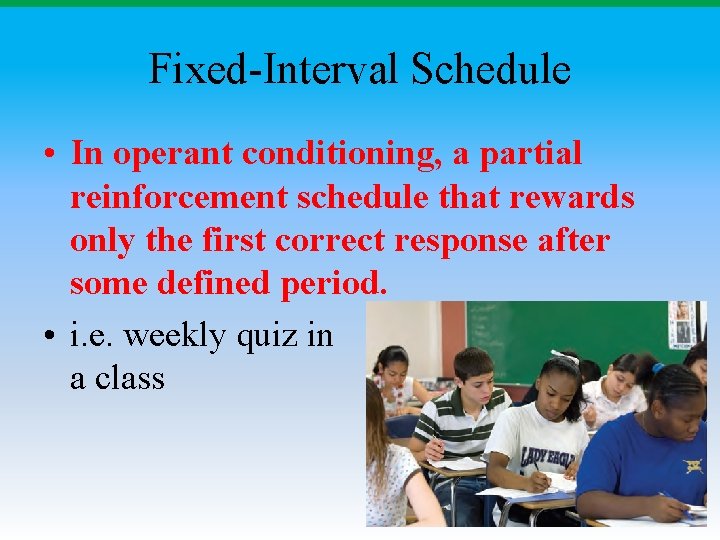
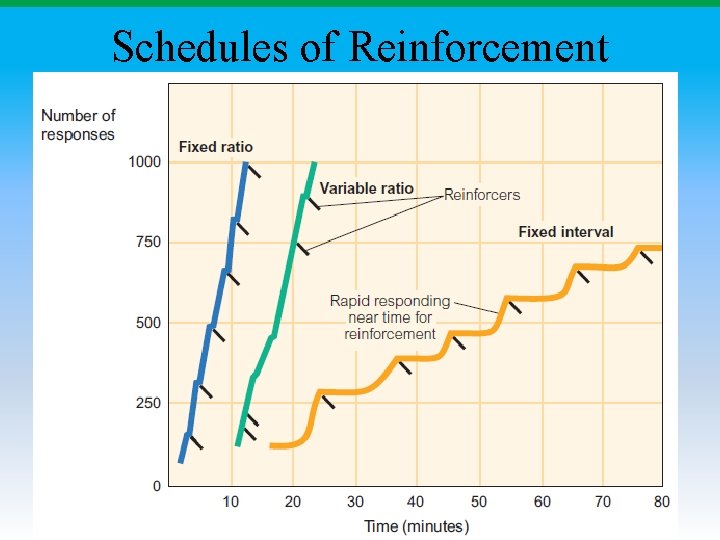
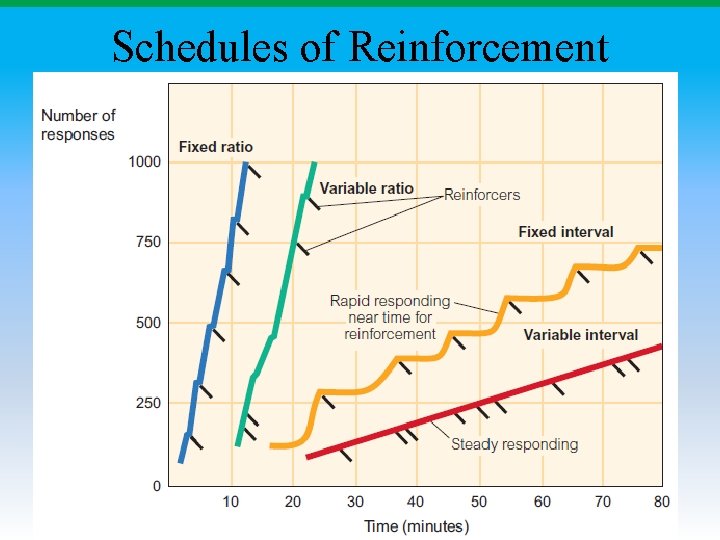
Fixed-Interval Schedule • In operant conditioning, a partial reinforcement schedule that rewards only the first correct response after some defined period. • i. e. weekly quiz in a class
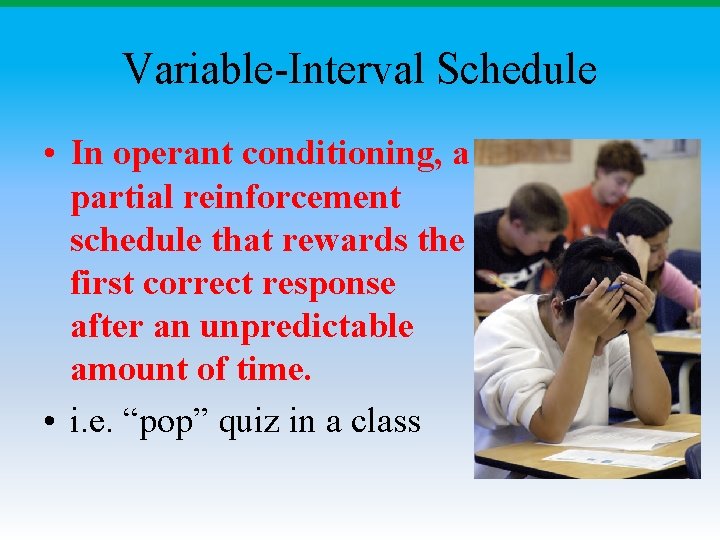
Variable-Interval Schedule • In operant conditioning, a partial reinforcement schedule that rewards the first correct response after an unpredictable amount of time. • i. e. “pop” quiz in a class
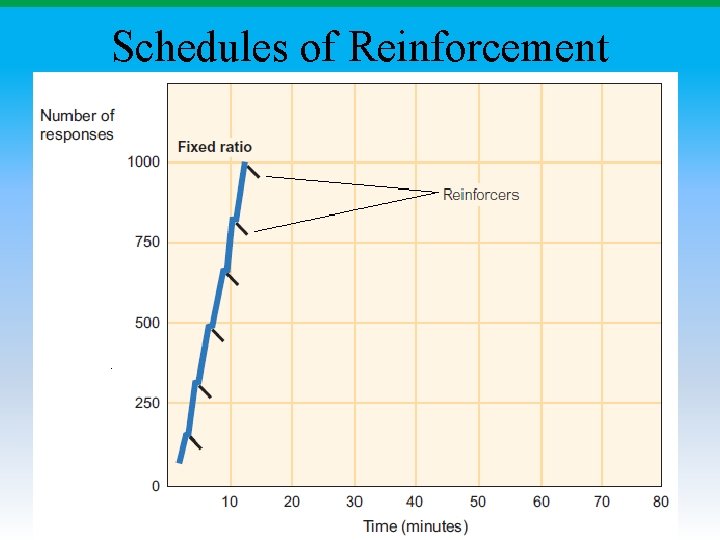
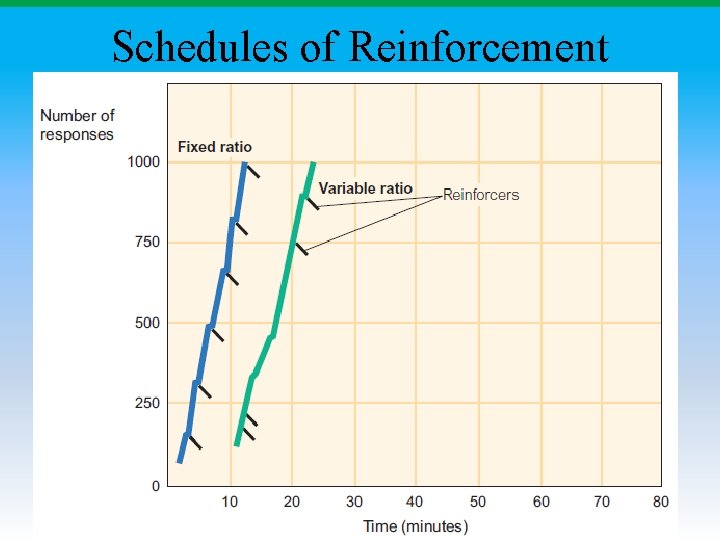
Fixed-Ratio Schedule • In operant conditioning, a partial reinforcement schedule that rewards a response only after some defined number of correct responses. • The faster the subject responds, the more reinforcements they will receive.
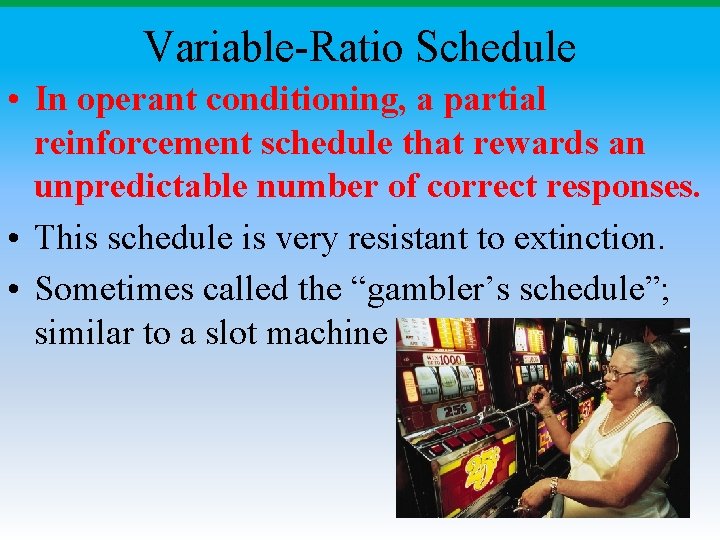
Variable-Ratio Schedule • In operant conditioning, a partial reinforcement schedule that rewards an unpredictable number of correct responses. • This schedule is very resistant to extinction. • Sometimes called the “gambler’s schedule”; similar to a slot machine
Schedules of Reinforcement
Schedules of Reinforcement
Schedules of Reinforcement
Schedules of Reinforcement
Module 15: Operant Conditioning New Understanding of Operant Conditioning
Module 15: Operant Conditioning New Understanding of Operant Conditioning: The Role of Cognition
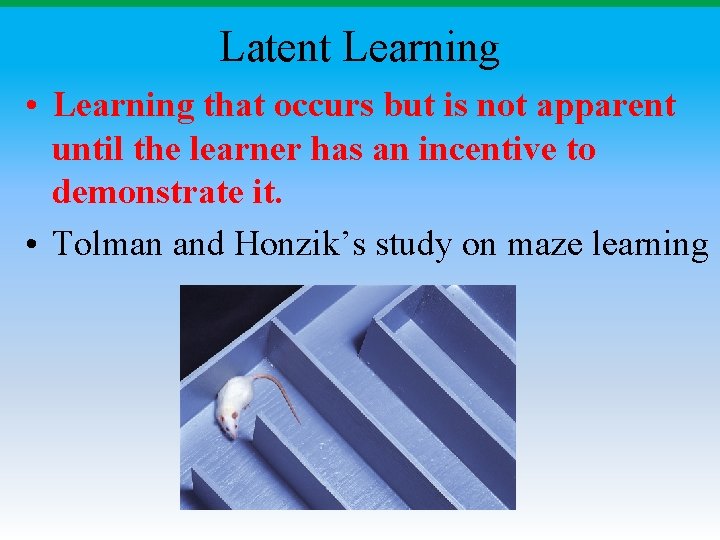
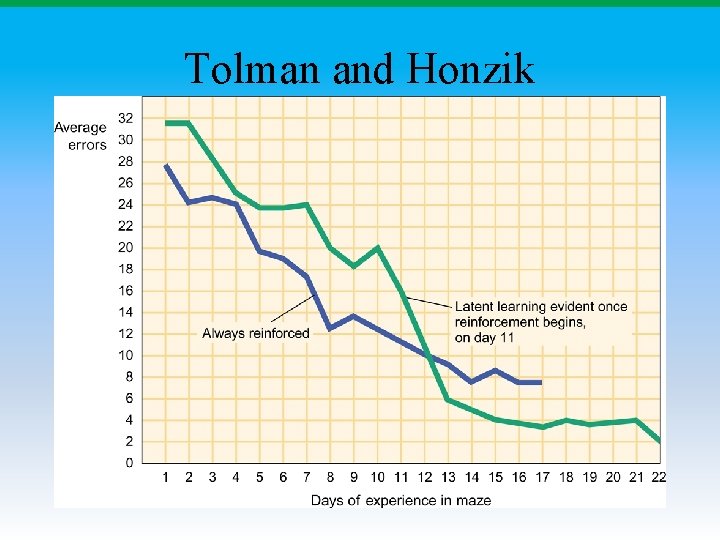
Latent Learning • Learning that occurs but is not apparent until the learner has an incentive to demonstrate it. • Tolman and Honzik’s study on maze learning
Tolman and Honzik
Cognitive Map • The mental representation of a place. • Experiments showed rats could learn a maze without any reinforcements
Overjustification Effect • The effect of promising a reward for doing what one already likes to do; • the reward may lessen and replace the person’s original, natural motivation, so that the behavior stops if the reward is eliminated.
Module 15: Operant Conditioning New Understanding of Operant Conditioning: The Role of Biology
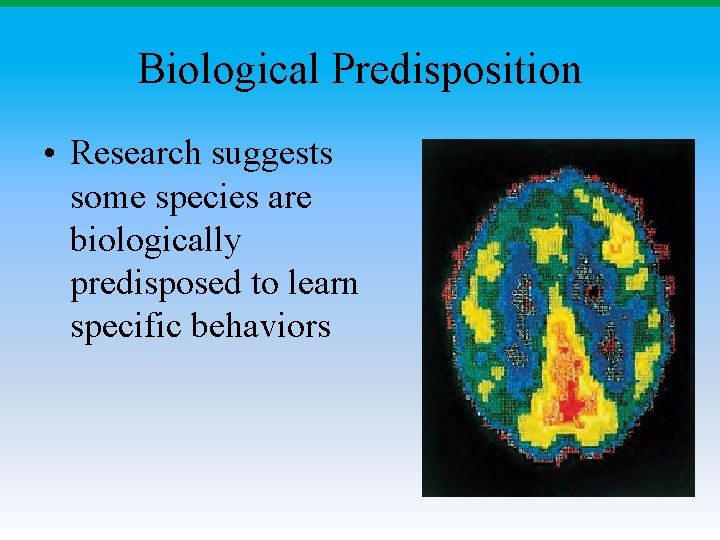
Biological Predisposition • Research suggests some species are biologically predisposed to learn specific behaviors
The End
Teacher Information • Types of Files – This presentation has been saved as a “basic” Powerpoint file. While this file format placed a few limitations on the presentation, it insured the file would be compatible with the many versions of Powerpoint teachers use. To add functionality to the presentation, teachers may want to save the file for their specific version of Powerpoint. • Animation – Once again, to insure compatibility with all versions of Powerpoint, none of the slides are animated. To increase student interest, it is suggested teachers animate the slides wherever possible. • Adding slides to this presentation – Teachers are encouraged to adapt this presentation to their personal teaching style. To help keep a sense of continuity, blank slides which can be copied and pasted to a specific location in the presentation follow this “Teacher Information” section.
Teacher Information • Domain Coding – Just as the textbook is organized around the APA National Standards, these Powerpoints are coded to those same standards. Included at the top of almost every slide is a small stripe, color coded to the APA National Standards. • Scientific Inquiry Domain • Biopsychology Domain • Development and Learning Domain • Social Context Domain • Cognition Domain • Individual Variation Domain • Applications of Psychological Science Domain • Key Terms and Definitions in Red – To emphasize their importance, all key terms from the text and their definitions are printed in red. To maintain consistency, the definitions on the Powerpoint slides are identical to those in the textbook.
Teacher Information • Hyperlink Slides - Immediately after the unit title slide, a page (usually slide #4 or #5) can be found listing all of the module’s subsections. While in slide show mode, clicking on any of these hyperlinks will take the user directly to the beginning of that subsection. This allows teachers quick access to each subsection. • Continuity slides - Throughout this presentations there are slides, usually of graphics or tables, that build on one another. These are included for three purposes. • By presenting information in small chunks, students will find it easier to process and remember the concepts. • By continually changing slides, students will stay interested in the presentation. • To facilitate class discussion and critical thinking. Students should be encouraged to think about “what might come next” in the series of slides. • Please feel free to contact me at korek@germantown. k 12. wi. us with any questions, concerns, suggestions, etc. regarding these presentations. Kent Korek Germantown High School Germantown, WI 53022
Name of Concept • Use this slide to add a concept to the presentation
Name of Concept Use this slide to add a table, chart, clip art, picture, diagram, or video clip. Delete this box when finished