
Learning and Conditioning terms and concepts Psychology Unit


- Slides: 19
Learning and Conditioning terms and concepts Psychology Unit 2
Learning • Learning: A lasting change in behavior that results from experience.
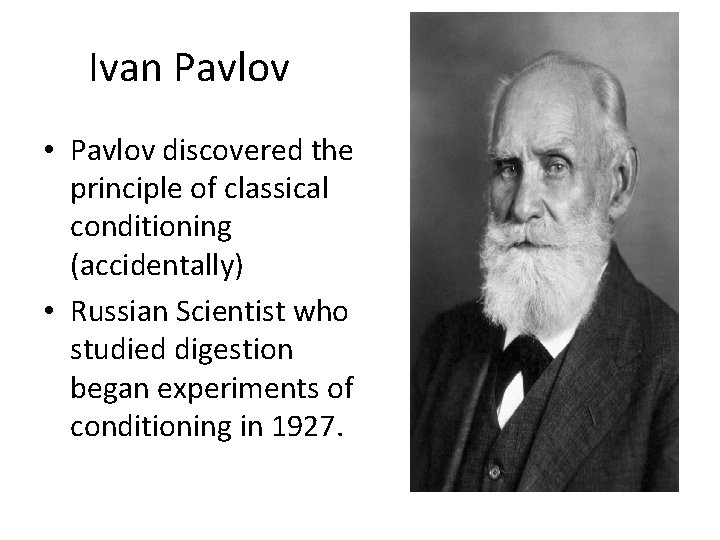
Ivan Pavlov • Pavlov discovered the principle of classical conditioning (accidentally) • Russian Scientist who studied digestion began experiments of conditioning in 1927.
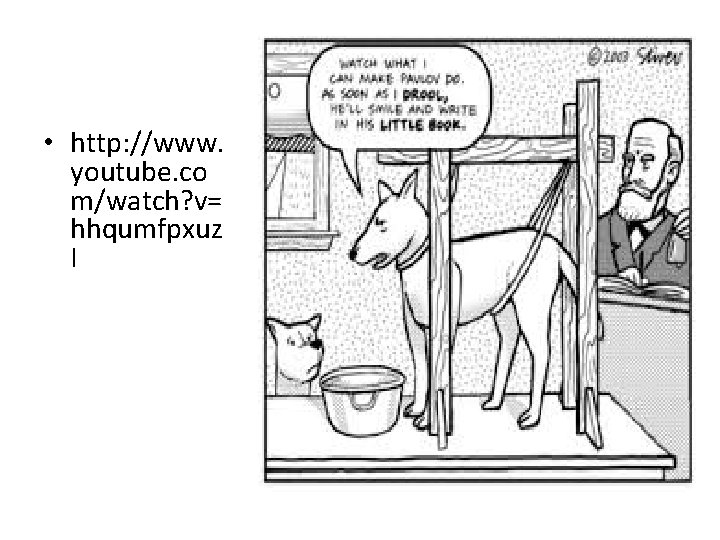
Pavlov’s experiment • Pavlov’s dog and Classical Conditioning
• http: //www. youtube. co m/watch? v= hhqumfpxuz I
Classical Conditioning • Classical conditioning: a learning procedure in which a stimulus that normally elicits a given response is repeatedly preceded by a neutral stimulus (one that usually does not elicit a response). Eventually, the neutral stimulus will evoke a similar response when presented by itself.
Conditioning • Conditioned Response (CR): The learned reaction to a conditioned stimulus. • Conditioned Stimulus (CS): A once neutral event that has come to elicit a given response after a period of training in which it has been paired with an unconditioned stimulus (UCS) • (*)In classical conditioning, the best results occur when the conditioned stimulus is presented before the unconditioned response.
• Generalization: a subject responding to a second stimulus similar to the original Conditioned Stimulus (CS). Example: a child saying “car” to all vehicles, “doggie” to all animals. • Discrimination: The ability to respond differently to similar but distinct stimuli. Example: a child saying “daddy” only to his father
• Extinction: The gradual disappearance of a conditioned response because the reinforcement is withheld or because the conditioned stimulus is repeatedly presented without the unconditioned stimulus
Reinforcement • Reinforcement: immediately following a particular response with a reward in order to strengthen that response. • Primary Reinforcer: Stimuli that are naturally (innately) rewarding, such as food or water. • Secondary Reinforcer: a stimulus that becomes reinforcing through its link with a primary reinforcer and gained some value. Example: Money, time.
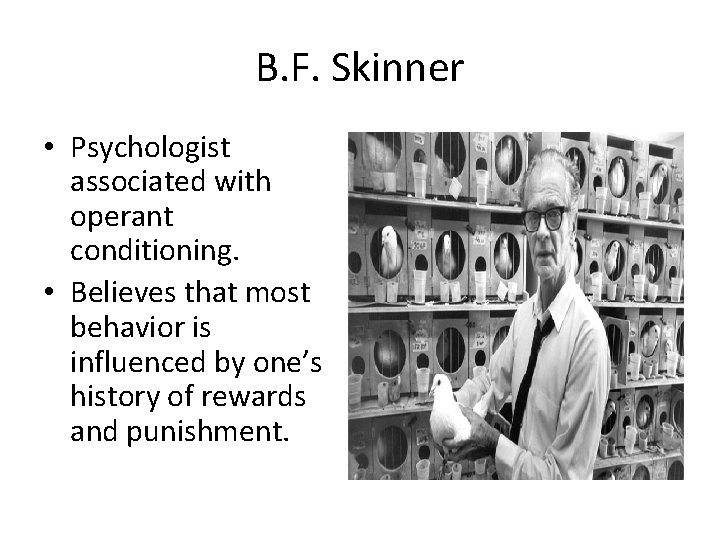
B. F. Skinner • Psychologist associated with operant conditioning. • Believes that most behavior is influenced by one’s history of rewards and punishment.
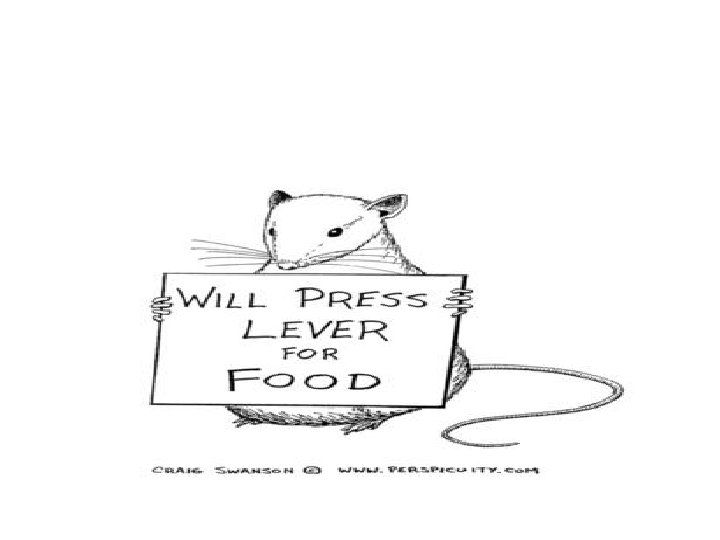
Operant Conditioning • Operant Conditioning- a form of learning in which a certain action is reinforced or punished, resulting in corresponding increases or decreases in the likelihood that similar actions will occur again
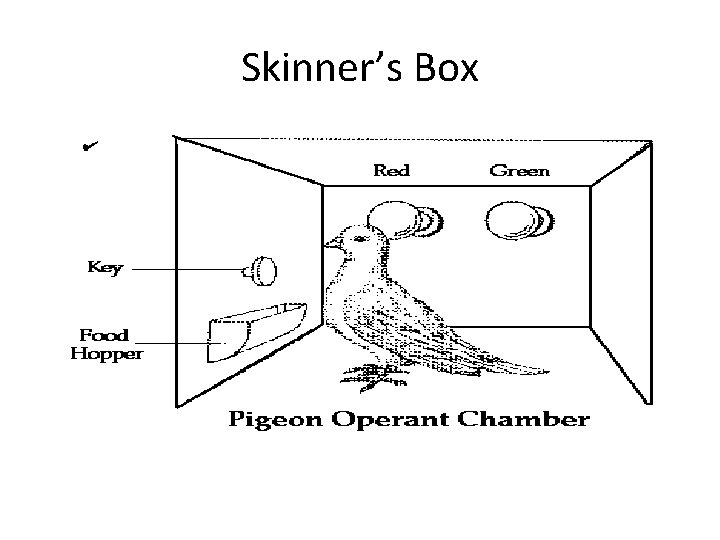
Skinner’s Box
Aversive Control • Aversive Control- the process of influencing behavior by means of unpleasant stimuli • Negative reinforcement- a painful or unpleasant stimulus is removed or not applied at all
Factors that affect learning • Feedback- information received after an action as to its effectiveness or correctness • Transfer- the effects of past learning on the ability to learn new tasks • Practice-the repetition of tasks, helps to bind responses together
• Learned Helplessness: Individuals who believe that no matter what they do their actions make no difference.
Shaping and Response Chains • Shaping- a process in which reinforcement is used to sculpt new responses out of old ones. • Response Chains- learned reactions that follow one another in sequence, each reaction producing the signal for the next.
Token Economy • A form of conditioning in which desirable behavior is reinforced with valueless objects or points, which can be accumulated and exchanged for various rewards