
Learning and Behavior Higher Order Conditioning Also called
Learning and Behavior
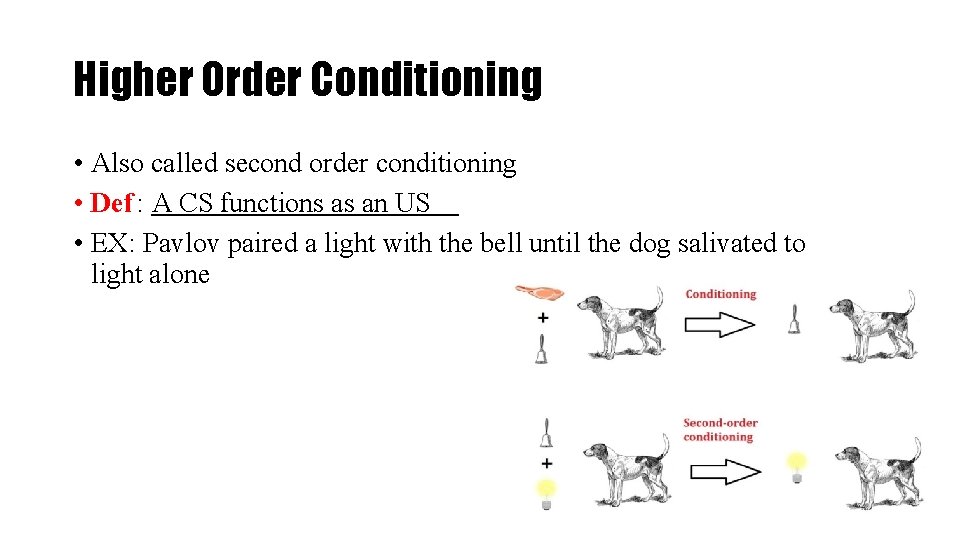
Higher Order Conditioning • Also called second order conditioning • Def : A CS functions as an US • EX: Pavlov paired a light with the bell until the dog salivated to light alone
Other Operant Conditioning Terms
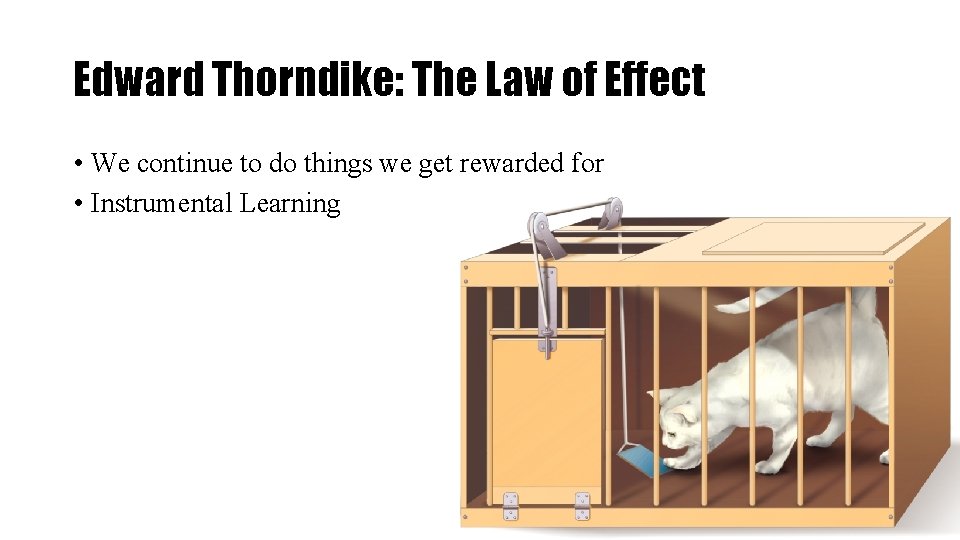
Edward Thorndike: The Law of Effect • We continue to do things we get rewarded for • Instrumental Learning
Escape vs. Avoidance Learning • Escape Learning : You acquire a response that ends an unpleasant stimulus. • You come to class. There is a quiz! You go to the bathroom and don’t return • Avoidance Learning : You acquire a response that prevents an unpleasant stimulus from occurring • Ms. Paras is giving a quiz. You cut class.
Not all Reinforcers are equal • Primary Reinforcer : naturally rewarding (food, water, sex) • Secondary Reinforcer : we have learned they have value • Premack Principle : Using a more preferred activity to reinforce a less preferred activity. • Ex: TV time for washing dishes
Reinforcement Schedules • Fixed Ratio (FR) : Reinforcement is given after a set number of responses • Variable Ratio (VR) : Reinforcement is given after a variable (average) number of responses • Fixed Interval (FI) : Reinforcement is given after a behavior is performed following a passage a fixed time • Variable Interval (VI): Reinforcement is given after a behavior is performed following a passage of variable time • Fixed=constant. Variable=changing. Ratio=# of responses. Interval=passage of time
Cognitive Aspects of Learning
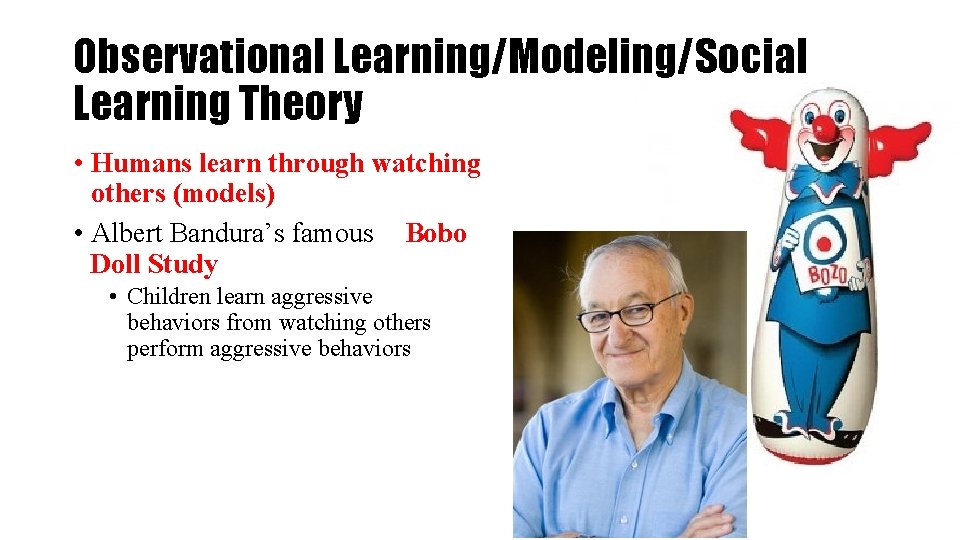
Observational Learning/Modeling/Social Learning Theory • Humans learn through watching others (models) • Albert Bandura’s famous Bobo Doll Study • Children learn aggressive behaviors from watching others perform aggressive behaviors
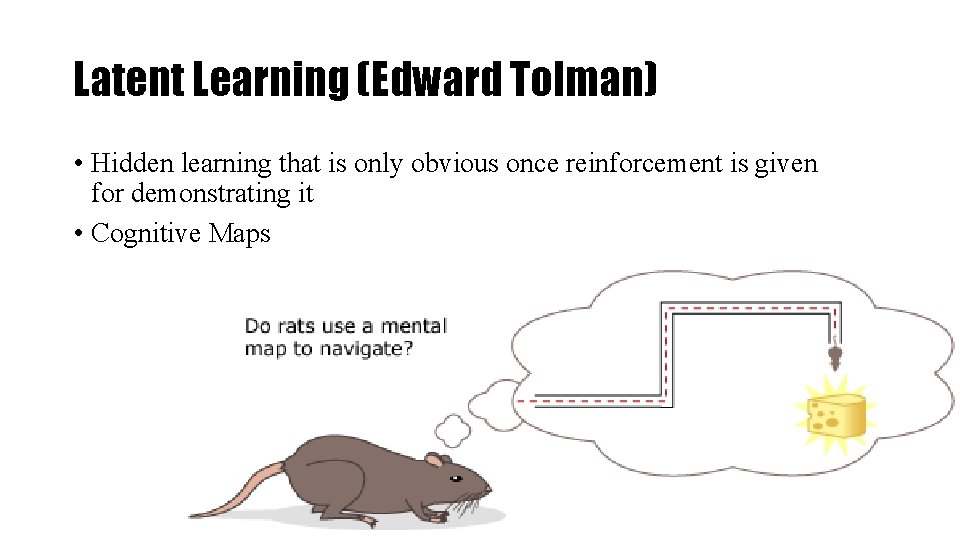
Latent Learning (Edward Tolman) • Hidden learning that is only obvious once reinforcement is given for demonstrating it • Cognitive Maps
- Slides: 10