
Learning Alternate Division Algorithm in Enhancing the concept

- Slides: 30
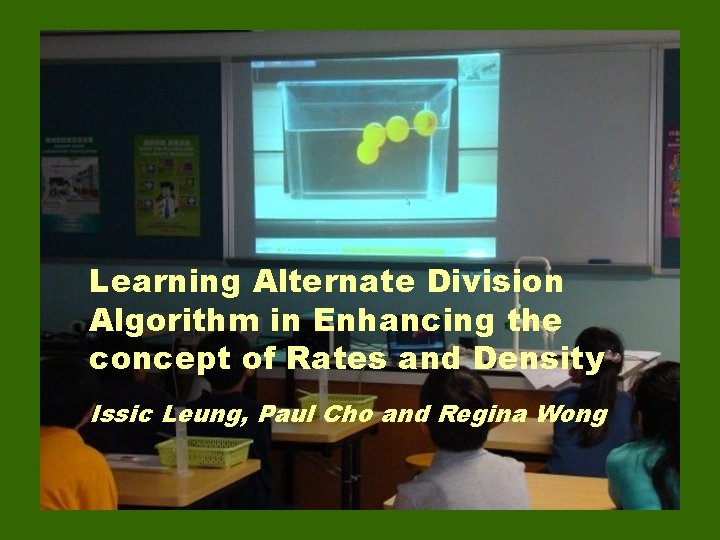
Learning Alternate Division Algorithm in Enhancing the concept of Rates and Density Issic Leung, Paul Cho and Regina Wong
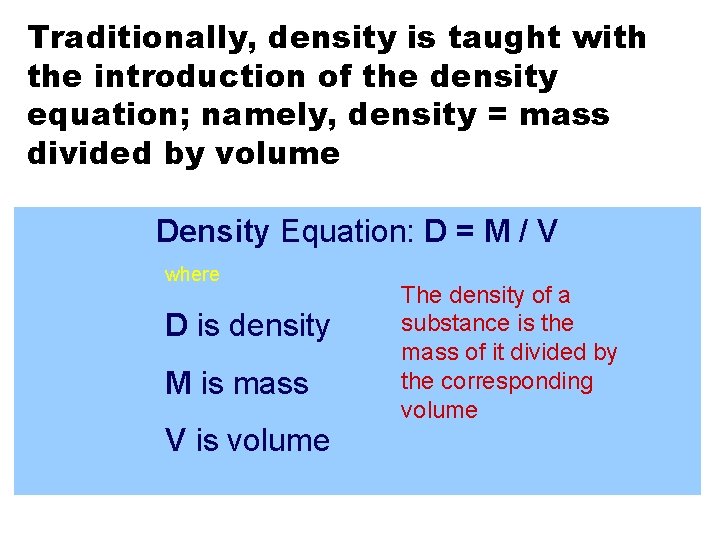
Traditionally, density is taught with the introduction of the density equation; namely, density = mass divided by volume Density Equation: D = M / V where D is density M is mass V is volume The density of a substance is the mass of it divided by the corresponding volume
Possible miscomputations • Finding the density of a substance is reduced in solving a simple division problem • If calculator is routinely used for the division step, students may not have any intuitional understanding about density • The “per unit” sense is not properly perceived and the standardized concept of “rate” is easily glossed over; this standardized meaning of rate about density enable learners to make use of it to compare physical properties among various substances
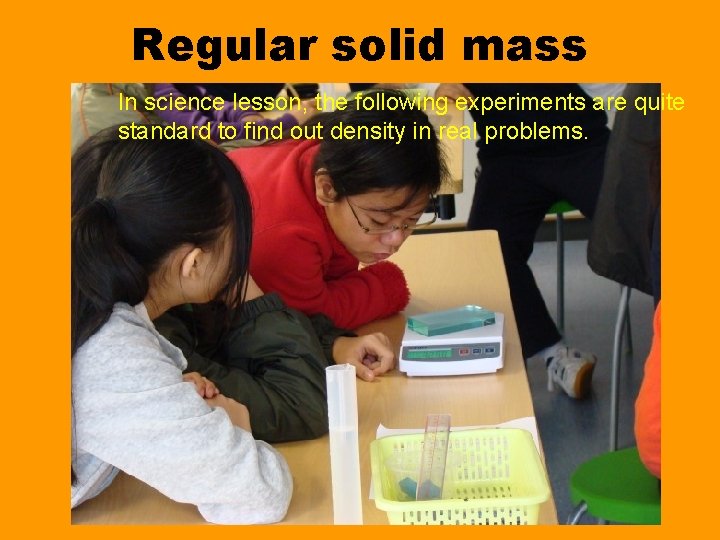
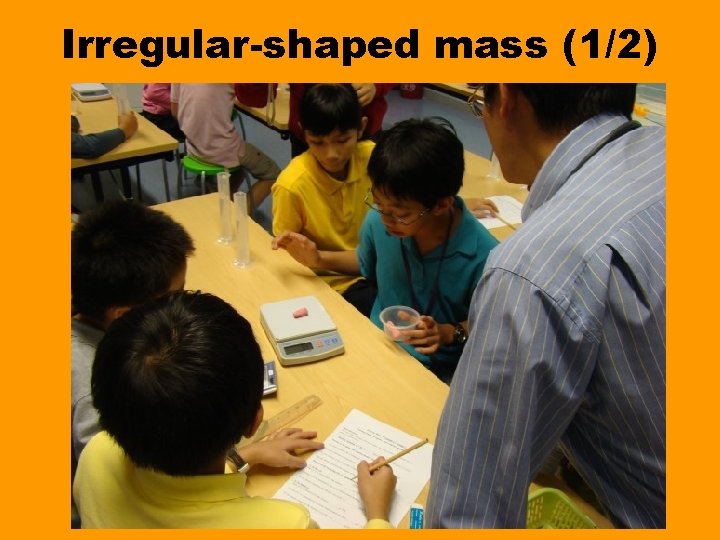
Regular solid mass In science lesson, the following experiments are quite standard to find out density in real problems.
Irregular-shaped mass (1/2)
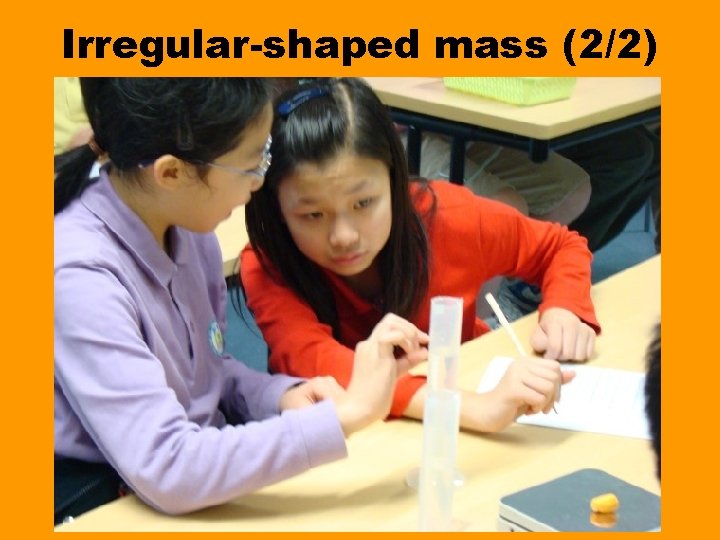
Irregular-shaped mass (2/2)
Do students really understand the concept of density? • Yes. They know how to calculate density from given mass and volume. • Experimentally, they know how to perform standard steps to get density for real objects. • But, …
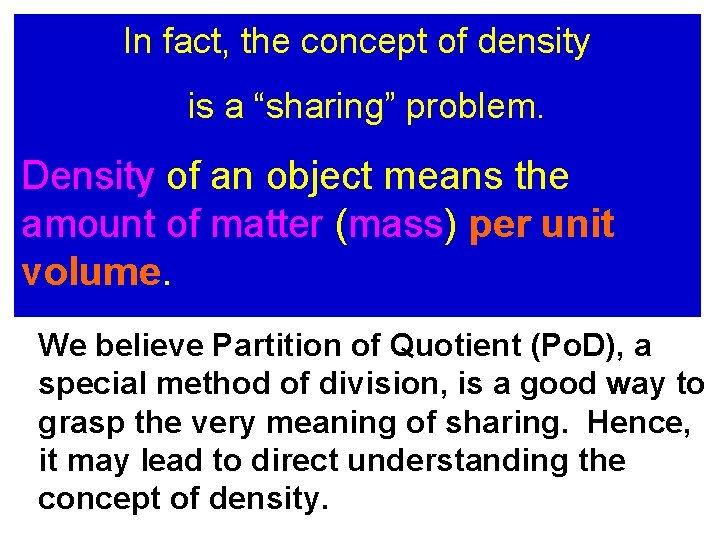
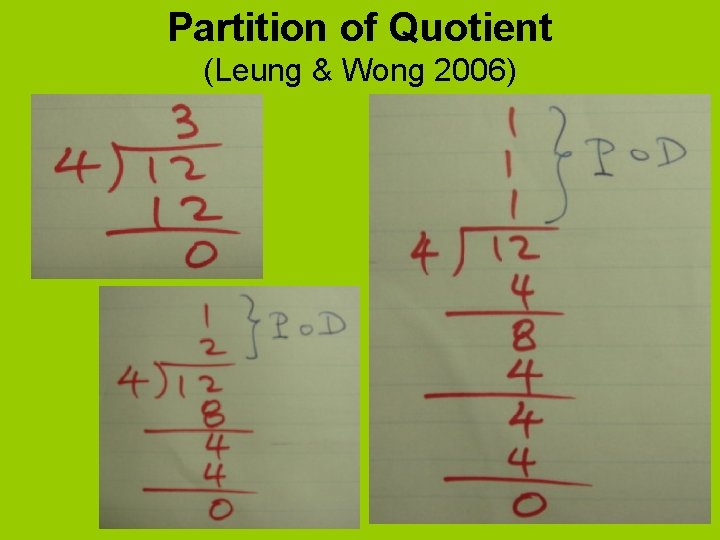
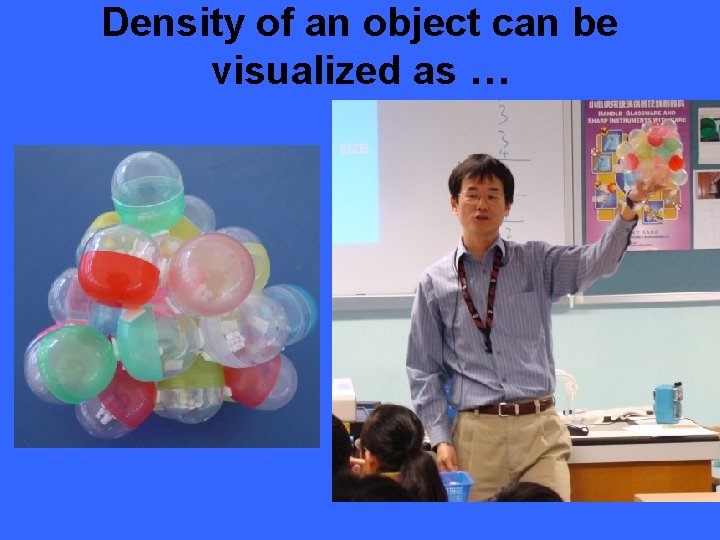
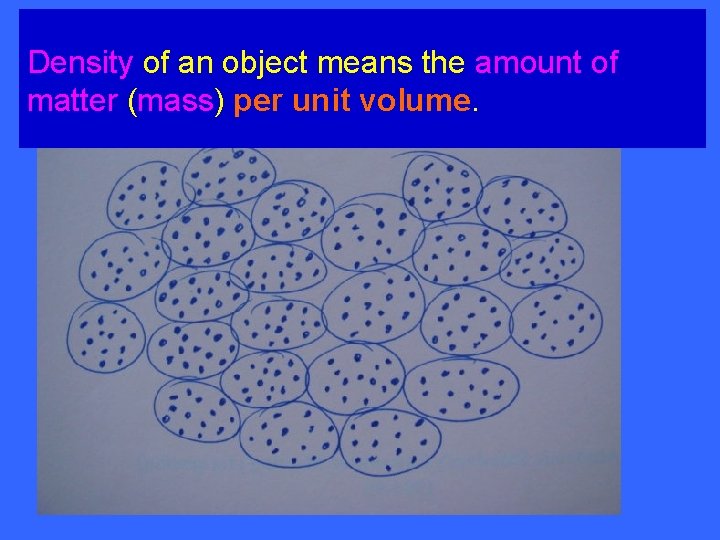
In fact, the concept of density is a “sharing” problem. Density of an object means the amount of matter (mass) per unit volume. We believe Partition of Quotient (Po. D), a special method of division, is a good way to grasp the very meaning of sharing. Hence, it may lead to direct understanding the concept of density.
Partition of Quotient (Leung & Wong 2006)
Density of an object can be visualized as …
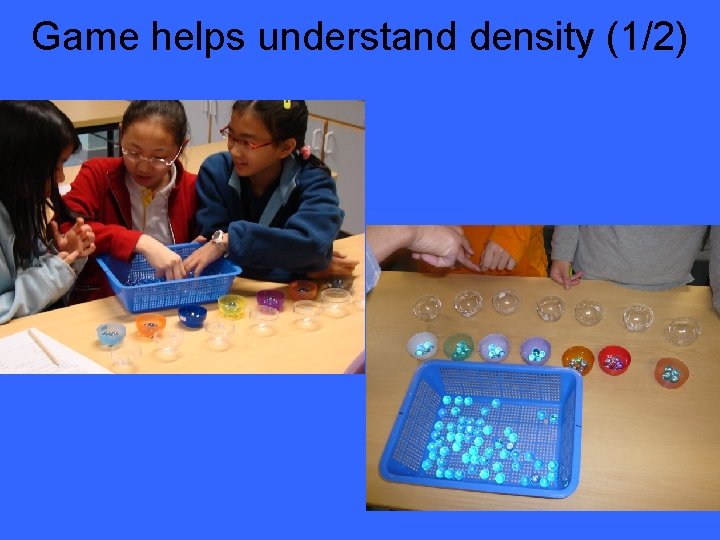
Game helps understand density (1/2)
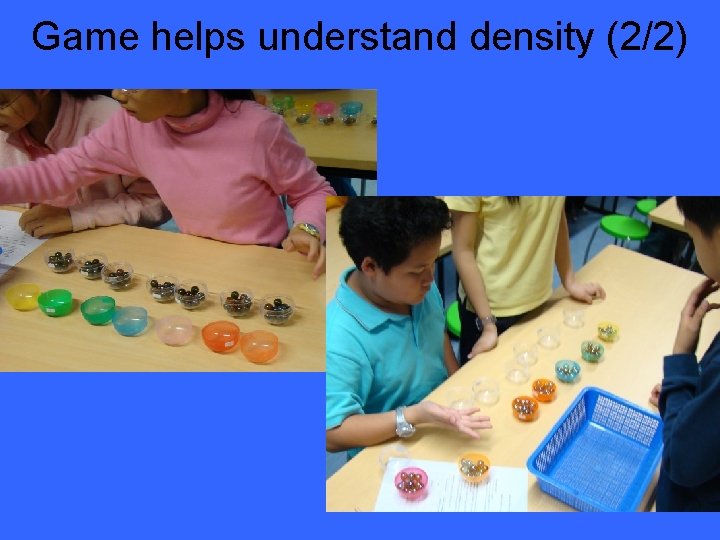
Game helps understand density (2/2)
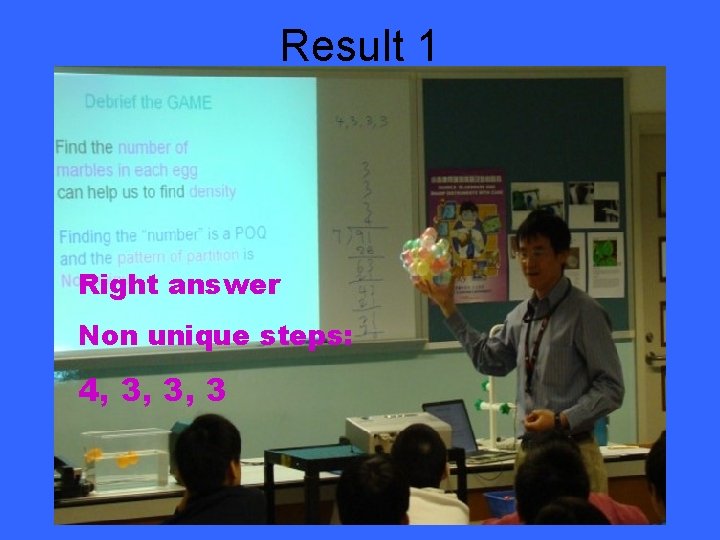
Result 1 Right answer Non unique steps: 4, 3, 3, 3
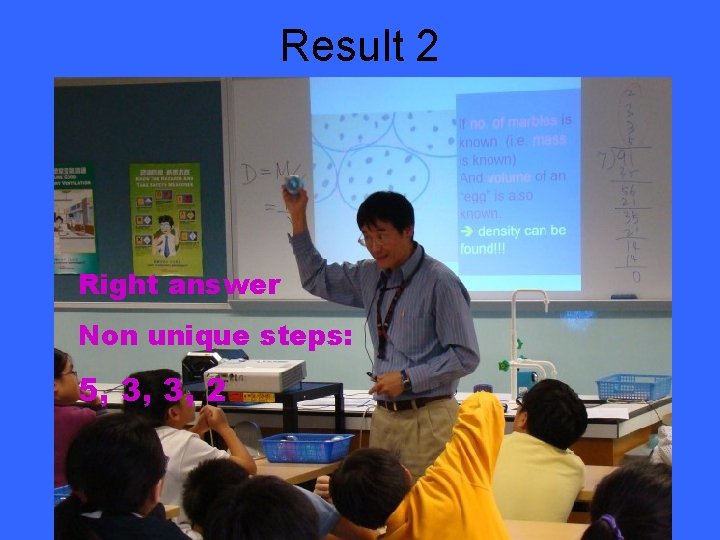
Result 2 Right answer Non unique steps: 5, 3, 3, 2
Density of an object means the amount of matter (mass) per unit volume.
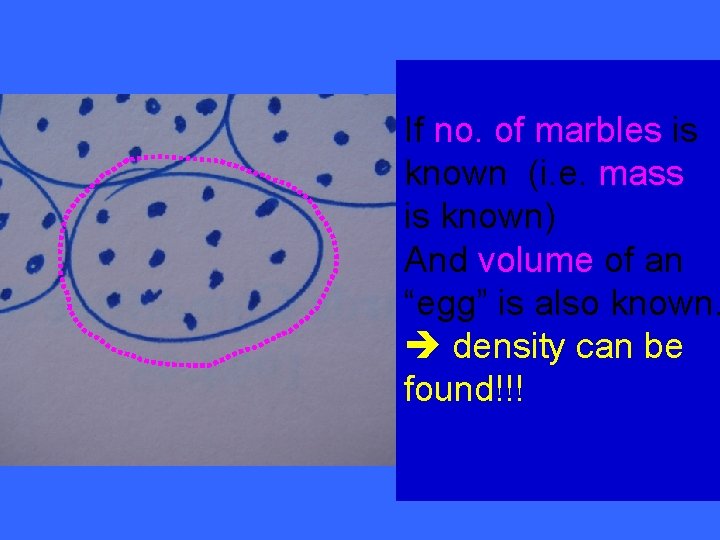
If no. of marbles is known (i. e. mass is known) And volume of an “egg” is also known. density can be found!!!
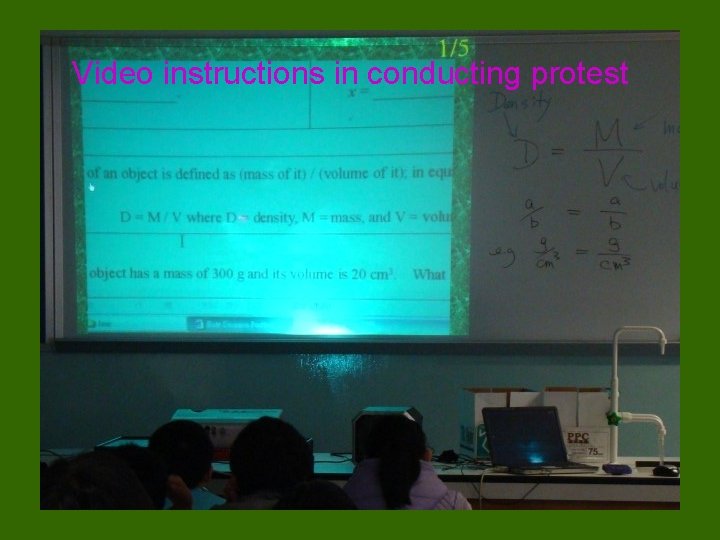
Video instructions in conducting protest
Student background • Elementary 6 students • 230 students falling into 7 classes (cohort) • Scores in continuous performances in both mathematics and science are treated as pre-test scores • The cohort can be grouped as: High / Median / Low achievers • At least 1 experimental and 1 control class in each group
Post-test • Same posttest for experimental and control classes • Control classes doing standard experiments as class activities • Experimental classes using cluster model / snap-open-and-close capsules as means to learn the sharing concept via the Po. D method, hence to understand density as mass per unit volume • Posttest was taken at the end of the 2 nd lesson, lasting 20 minutes
Question types • Some close-ended questions • Examples of this sort shown in the next slide • Some open-ended questions to probe deeper understanding in the concepts of rate and ratio • Free-style explanation and drawings were encouraged as part of the answers
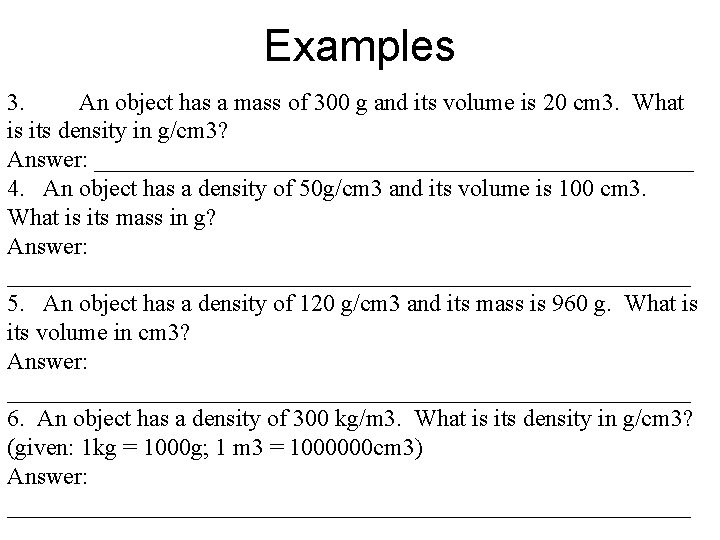
Examples 3. An object has a mass of 300 g and its volume is 20 cm 3. What is its density in g/cm 3? Answer: _________________________ 4. An object has a density of 50 g/cm 3 and its volume is 100 cm 3. What is its mass in g? Answer: _____________________________ 5. An object has a density of 120 g/cm 3 and its mass is 960 g. What is its volume in cm 3? Answer: _____________________________ 6. An object has a density of 300 kg/m 3. What is its density in g/cm 3? (given: 1 kg = 1000 g; 1 m 3 = 1000000 cm 3) Answer: _____________________________
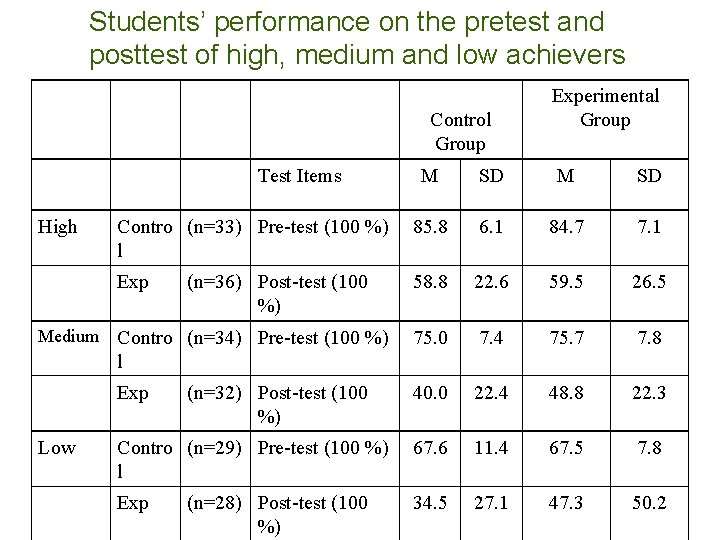
Students’ performance on the pretest and posttest of high, medium and low achievers Control Group Test Items High Experimental Group M SD Contro (n=33) Pre-test (100 %) l 85. 8 6. 1 84. 7 7. 1 Exp 58. 8 22. 6 59. 5 26. 5 75. 0 7. 4 75. 7 7. 8 40. 0 22. 4 48. 8 22. 3 Contro (n=29) Pre-test (100 %) l 67. 6 11. 4 67. 5 7. 8 Exp 34. 5 27. 1 47. 3 50. 2 (n=36) Post-test (100 %) Medium Contro (n=34) Pre-test (100 %) l Exp Low (n=32) Post-test (100 %) (n=28) Post-test (100 %)
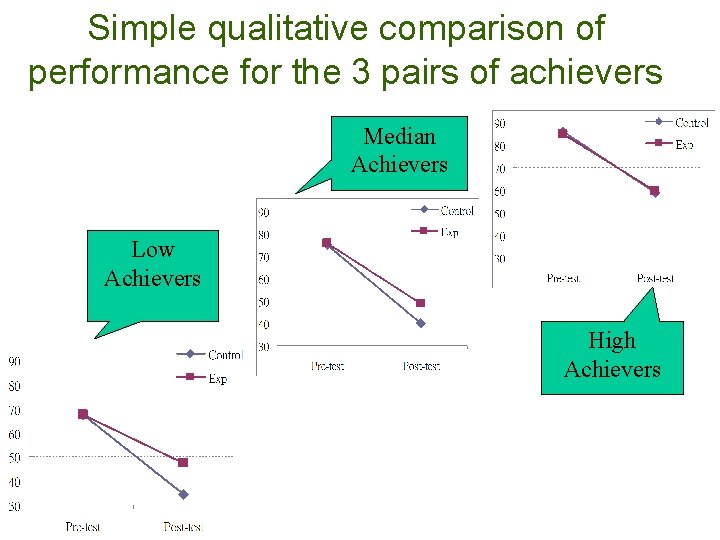
Simple qualitative comparison of performance for the 3 pairs of achievers Median Achievers Low Achievers High Achievers
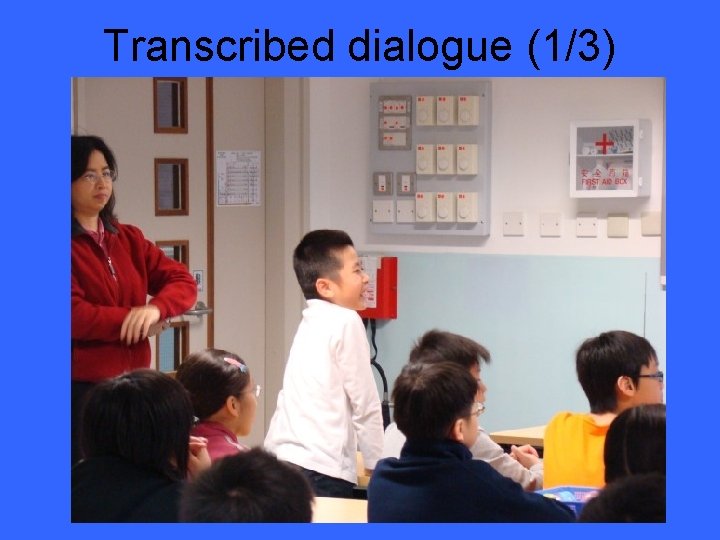
Transcribed dialogue (1/3)
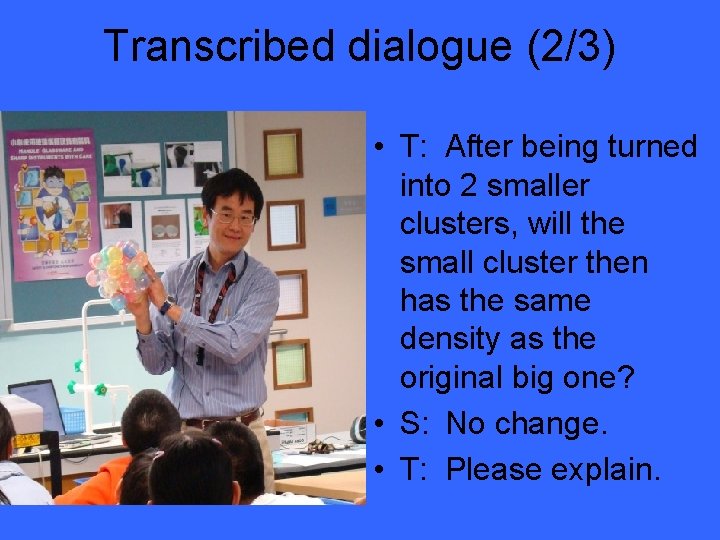
Transcribed dialogue (2/3) • T: After being turned into 2 smaller clusters, will the small cluster then has the same density as the original big one? • S: No change. • T: Please explain.
Transcribed dialogue (1/3) S: We can take out all the marbles from the 28 eggs (big cluster). Then divide these marbles into 2 heaps. Share 1 heap of marbles equally into the 14 capsules. We finally will produce a new smaller cluster, in which the make-up capsules (total 14) will have the same number of marbles as the original, big cluster. Therefore, density of the smaller cluster is not changed.
Concept of rate (1/2) • Speed is a rate (linear) • Density is a rate (cubic) • In Hong Kong, floor price of home flat is very expensive. For example, the floor price of a new flat can be as high as $8000 per square foot. • Do you think the floor price mentioned in the above is a rate? Explain your answer.
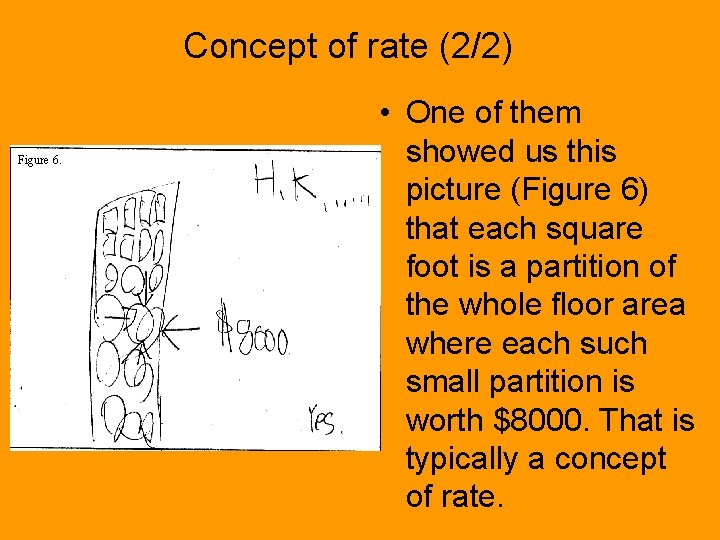
Concept of rate (2/2) Figure 6. • One of them showed us this picture (Figure 6) that each square foot is a partition of the whole floor area where each such small partition is worth $8000. That is typically a concept of rate.
Conclusion • Traditional long division algorithm, conceptually, requires heavy cognitive load and, operationally, is a mechanical process. Hence, equation of density does not lead to deep understanding of the concept of density. • We do not propose to revise the curriculum of teaching the concept of rate and ratio via the new long division algorithm • However, introducing the concept of POD helps students grasp the very concept of sharing, hence it can play a complementary role in enhancing students’ learning effectiveness in the topic
Thank you for your attention and interest in the topic.