
Learning about the Abenaki A Presentation by New

Learning about the Abenaki A Presentation by New Hampshire Historical Society
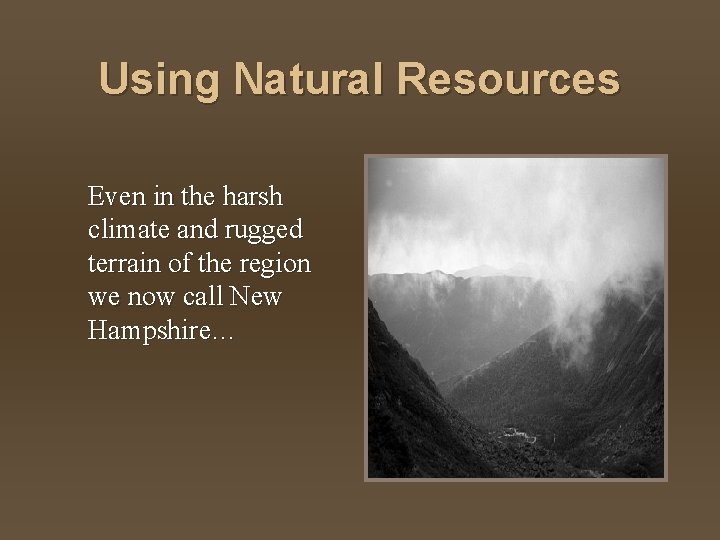
Using Natural Resources Even in the harsh climate and rugged terrain of the region we now call New Hampshire…
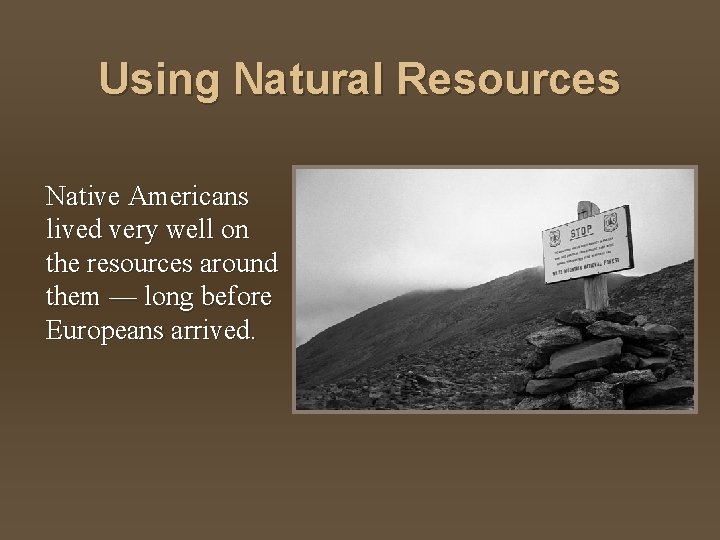
Using Natural Resources Native Americans lived very well on the resources around them — long before Europeans arrived.

Using Natural Resources Based on what you see, what resources do you think might be available to the Abenaki?

Fishing If you included hunting and fishing, you were absolutely right. Here you see an Indian catching fish with the aid of a weir… …and spear.
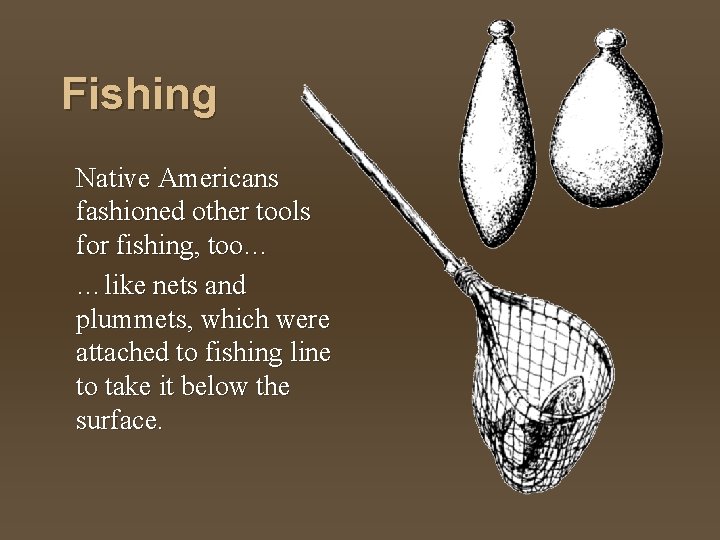
Fishing Native Americans fashioned other tools for fishing, too… …like nets and plummets, which were attached to fishing line to take it below the surface.

Fishing The Amoskeag Falls on the Merrimack River provided excellent fishing in spring and summer.

Hunting Animals of field and forest were another natural resource for the Abenaki. Indian Hunting Camp
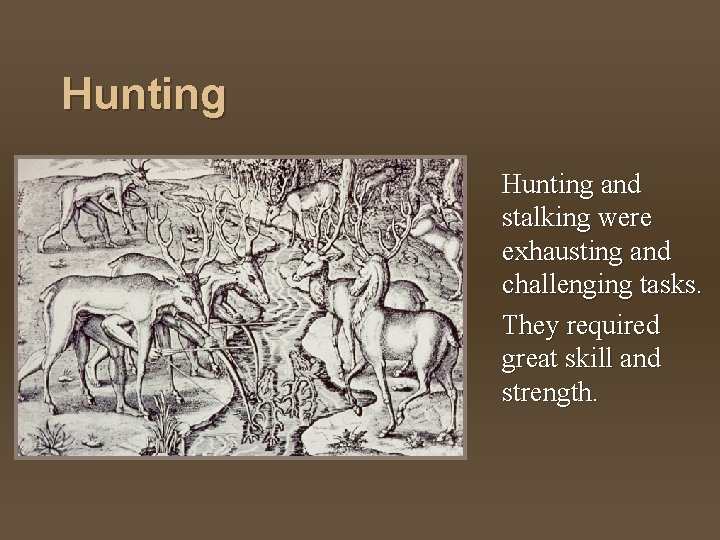
Hunting and stalking were exhausting and challenging tasks. They required great skill and strength.

Gathering While men hunted and fished, women gathered the region’s resources… Berries Nuts Herbs Tree saps Indian Sugar Camp

Growing In warmer regions, women also were responsible for growing crops… especially, corn, beans, and squash — together called “the three sisters. ”

Using Natural Resources The Abenaki were skillful at using their resources for more than… hunting and fishing and gathering and growing

Shelter The forest resources of New Hampshire yielded tree bark and saplings for both… temporary conical wigwams and more permanent domeshaped wigwams
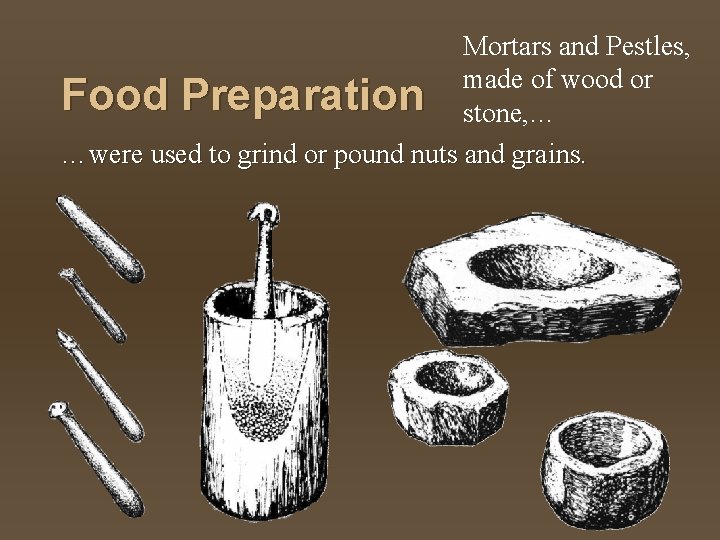
Mortars and Pestles, made of wood or Food Preparation stone, … …were used to grind or pound nuts and grains.

Food Preparation Originally, Indians carved bowls from stone — work that was performed by men. When the Abenaki learned how to make clay pots, women took over the task of making the vessels.
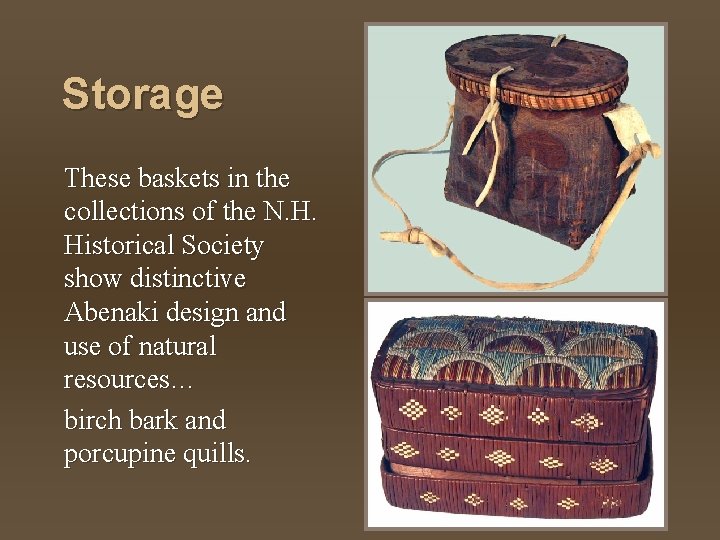
Storage These baskets in the collections of the N. H. Historical Society show distinctive Abenaki design and use of natural resources… birch bark and porcupine quills.

Transportation New Hampshire’s waterways were like highways to the Abenaki. They made birch bark canoes for rivers and streams and dugout canoes for lake travel. And of course they walked!

Using Natural Resources Basically, the Indians in New Hampshire were self-sufficient. They used the woods and waters of the region to fulfill their needs… from tools… …to toys All of this was about to change!

Contact The arrival of European traders and settlers in the 1600 s brought many changes to the lives of Native Americans. What do you think were some of the immediate changes?
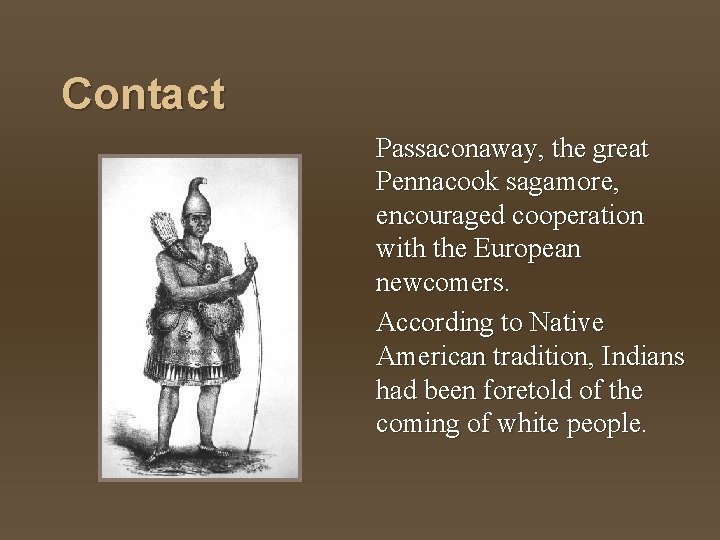
Contact Passaconaway, the great Pennacook sagamore, encouraged cooperation with the European newcomers. According to Native American tradition, Indians had been foretold of the coming of white people.

Contact Extensive trade developed. What did each offer? Indians could supply fish, furs, and forest products. Europeans could offer clothing, metal tools, and beads.

Contact The Abenakis’ traditional way of life was doomed. There were several factors. • Wars between England France • Increasing numbers of English settlers • Differing ideas about land ownership • Growing Abenaki dependence on European goods • And European diseases unknown to the Indians

Abenakis Today While the Abenaki way of life may have been doomed, the Abenaki themselves were not. Some still live among us today, and more live in Quebec where many emigrated in the 1700 s.

Abenakis Today Some Native Americans are working to preserve the knowledge and skills of their ancestors. Splitting ash to make baskets, a traditional Abenaki activity, is still very much in evidence today among Abenaki craftsmen.

© 2008 Christopher Mac. Leod for the New Hampshire Historical Society
- Slides: 25