
LEARNING ABOUT HINDU BELIEFS CHAPTER 15 HISTORY ALIVE
LEARNING ABOUT HINDU BELIEFS CHAPTER 15 HISTORY ALIVE! Pages 143 -151
� Hinduism – India’s first major ______. � One of the basic beliefs of Hinduism is ________. Dharma stands for Law, obligation, and duty. � To follow one’s dharma means to perform one’s duties and so to _______ as one should.

� Hinduism is a very ________ religion. � Hinduism began before _______ history. � No single ___________ founded it. � Most likely, Hinduism is a blend of Aryan beliefs and beliefs of the people they ________. � Vedas – a collection of Hindu sacred _____. � Sanskrit – an ancient ________ of India. � Modern-day Hinduism is very ________. �All Hindus share certain beliefs. Vedas remain sacred � Brahmanism – an ancient Indian religion in which the Brahmins are the _____ class.

� Hinduism was not just a _____ in ancient India. It was a way of _____. � caste – a class, or group, in Hindu society. Priests � Rulers and Warriors � Herders and Merchants � Servants � Untouchables � � The caste system affected all aspects of people’s __________.
� _________is the Hindu name for a supreme power, or divine force, that is greater than all the other gods. � To Hindus, only Brahman exists ______. � Everything else in the world changes, from the passing seasons to living things that eventually ______.
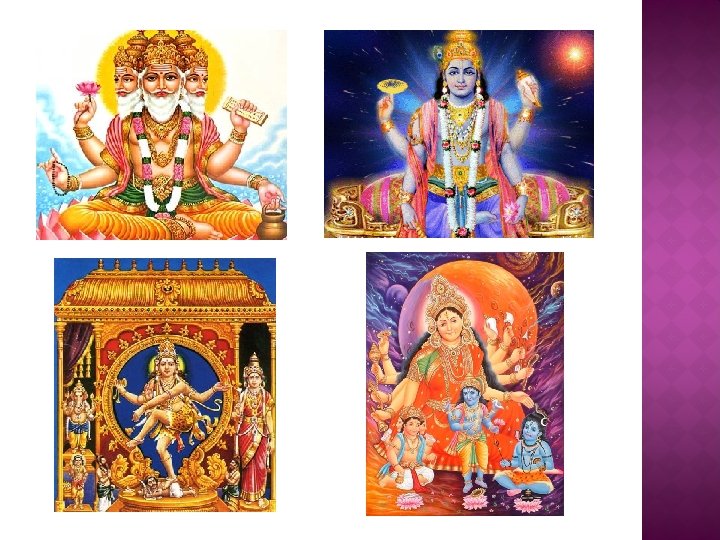
� There are _______ gods and goddesses in Hindu stories and worship. � Today, the most important Hindu gods are Brahma, Vishnu and Shiva. Each god controls one aspect of the __________. �Brahma – __________ it �Vishnu – __________ it �Shiva – ___________ it �Devi – embodies the ______ powers of the universe
� Dharma is a very important _____ in Hinduism. � To follow one’s dharma means to perform one’s duties and so to live as one should. � Hindu’s believed that when everyone followed the dharma of their class, _______ would be in harmony. � Hinduism values _______, sharing good with others and caring for one’s ______. � Hindus believe that all life is _________. �_____ are especially important to India life. Cows gave people milk, butter, transportation and clothing. Hindus were taught not to ______ cows.

� In Hindu belief, the law of karma governs what happens to people’s ______ after death. � Karma was made up of all the good and evil that a person had _______ in past lives. � Today, Indian law ______ the rights of all people, and the caste system is much less ______. � The ideas of karma and rebirth remain a central part of ____________.
� Samsara – continuous cycle of _____, death, and rebirth. � Reincarnation – the belief that a person’s should is reborn into a new body after _______. � Pilgrimage – a ________ to a holy place. � Faithful Hindus still make pilgrimages today. �The ________ River is still one of the most holy places in India. �Modern Hindus bathe in its waters as an act of ___________ and purification.
�India’s first major religion �Five basic beliefs of Hinduism �Brahman �Multiple Gods �Dharma �Karma �Samsara �Hindu India � � � beliefs continue to affect daily life in Worship in temples Make pilgrimages Celebrate religious festivals Practice meditation Nonviolence remain important ideals in India Avoid eating meat and doing harm to animals
- Slides: 11