
Learning about Animals https onthejob education 1 Critical
Learning about Animals https: //onthejob. education 1
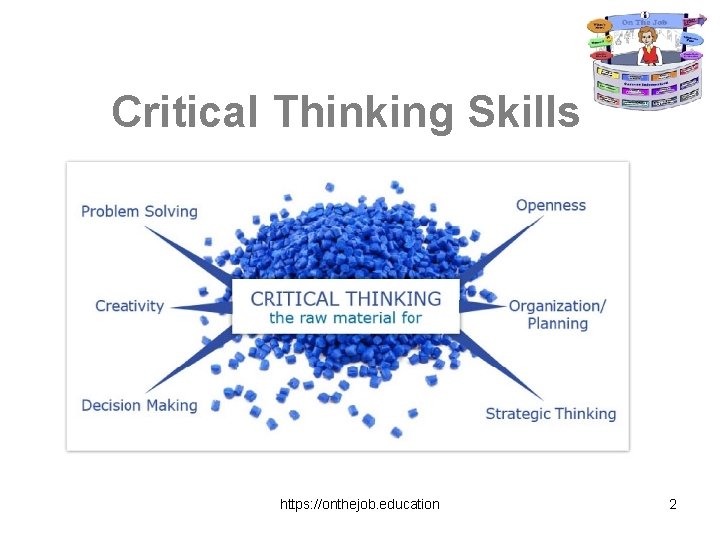
Critical Thinking Skills https: //onthejob. education 2

Critical Thinking Skills Activity 1: Talk to the Animals Listing the Animals you know https: //onthejob. education 3
Talk to the Animals https: //youtu. be/Yp. BPav. EDQCk Look at the lyrics Analysing the song… https: //onthejob. education 4
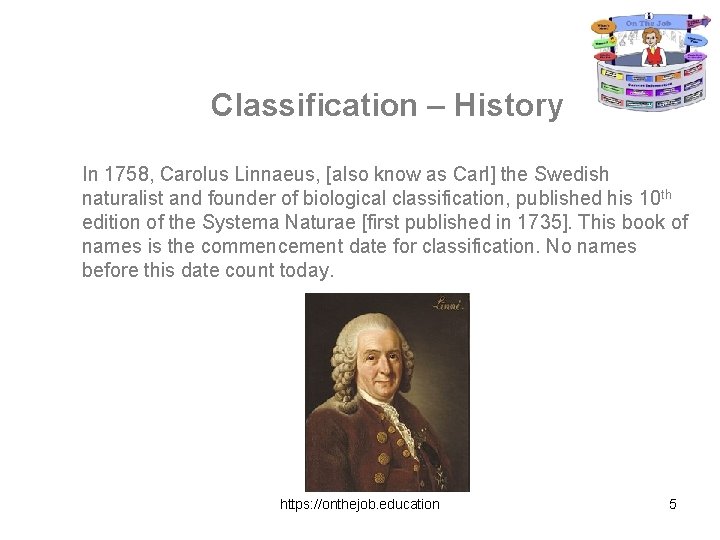
Classification – History In 1758, Carolus Linnaeus, [also know as Carl] the Swedish naturalist and founder of biological classification, published his 10 th edition of the Systema Naturae [first published in 1735]. This book of names is the commencement date for classification. No names before this date count today. https: //onthejob. education 5
Classification – History The 10 th edition contained 4, 400 species of animals and 7, 700 plants. People from all over the world sent their specimens to Linnaeus to be included. Linnaeus was also known as Carl von Linne. He formalised the modern system of naming organisms called binomial nomenclature. The first part of the name identifies the genus to which the species belongs; the second part identifies the species within the genus. Example: Humans are classified as Homo sapiens Note the capital and the italics for Homo sapiens https: //onthejob. education 6

Classification The classification of humans: Homo sapiens. The name of the species must include both the genus name and the specific epithet. Domain: Eukaryote Kingdom: Animalia Phylum: Chordata Class: Mammalia Order: Primata Family: Hominadae Genus: Homo Species: sapiens https: //onthejob. education 7
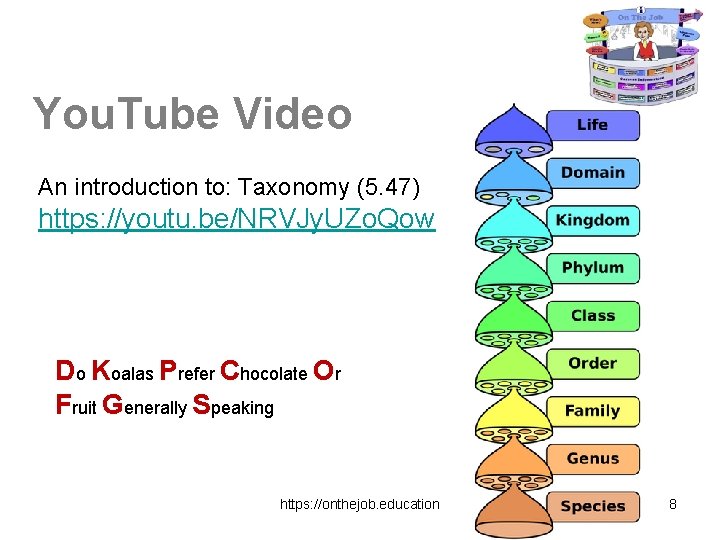
You. Tube Video An introduction to: Taxonomy (5. 47) https: //youtu. be/NRVJy. UZo. Qow Do Koalas Prefer Chocolate Or Fruit Generally Speaking https: //onthejob. education 8
Classification Six Kingdom System Animal Kingdom – eukaryotic, multicellular, heterotrophs, no cell walls. Examples: invertebrates (without backbones) and vertebrates (with backbones) Plant Kingdom – eukaryotic, multicellular, autotrophs, have cell walls. Examples: mosses, ferns, flowering and seed plants Fungi Kingdom – eukaryotic, most multicellular and some unicellular, heterotrophs (break down other organic materials to obtain food), cells with cell walls but not green. Examples: mushrooms, molds, and yeasts Protist Kingdom – eukaryotic, many are single-celled and others are multicellular, some heterotrophs and others autotrophs. Examples: come in a wide variety of forms: animal-like, such as amoeba, some are plant-like such as algae, and others are fungi-like. Eubacteria Kingdom – prokaryotic, unicellular, some autotrophs while others heterotrophs. Examples: bacteria and blue-green algae. Arcaeabacteria Kingdom - prokaryotic, unicellular, some autotrophs while others heterotrophs, live in extreme conditions. Examples: bacteria living near ocean thermal vents or in a cow’s stomach https: //onthejob. education 9
Activity 2: Classification Shops classify their products for sale. . In small groups of 3 – 4, order the animals into GROUPS. You can have as many groups as you like, BUT, one animal by itself is not a group. Also, you don’t want any animals being in a group where they don’t belong! https: //onthejob. education 10

Activity 2: Reasoning You need to have good reasons for placing your animals in these groups. You will need to explain why the animals are grouped and use the word “because”. Each group will explain their groupings. Look at your worksheet to see the animals You have now classified these animals through their Morphology [physical characteristics] and their behaviour. https: //onthejob. education 11
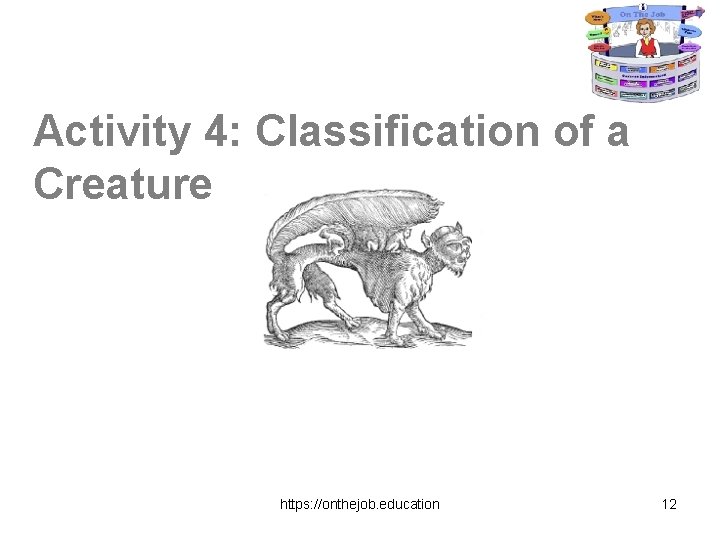
Activity 4: Classification of a Creature https: //onthejob. education 12
You. Tube Video Modern Taxonomy Notes (30 m) https: //youtu. be/B 0 pkl. WN_mc 8 https: //onthejob. education 13
Activity 5: Cladograms Watch video: Cladogram https: //youtu. be/Dmwnvwb. XOb. I https: //onthejob. education 14

Activity 5: Cladograms Watch video: Cladogram Practice with Minions https: //youtu. be/9_QAy. Tk 7 Wr. A https: //onthejob. education 15
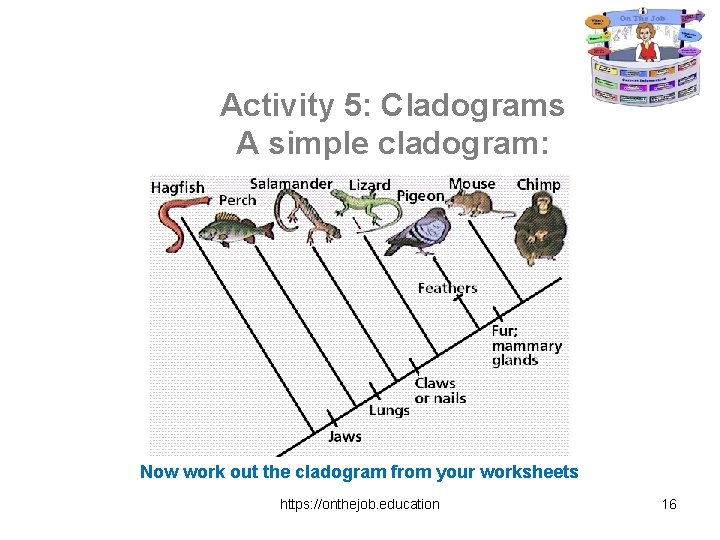
Activity 5: Cladograms A simple cladogram: Now work out the cladogram from your worksheets https: //onthejob. education 16
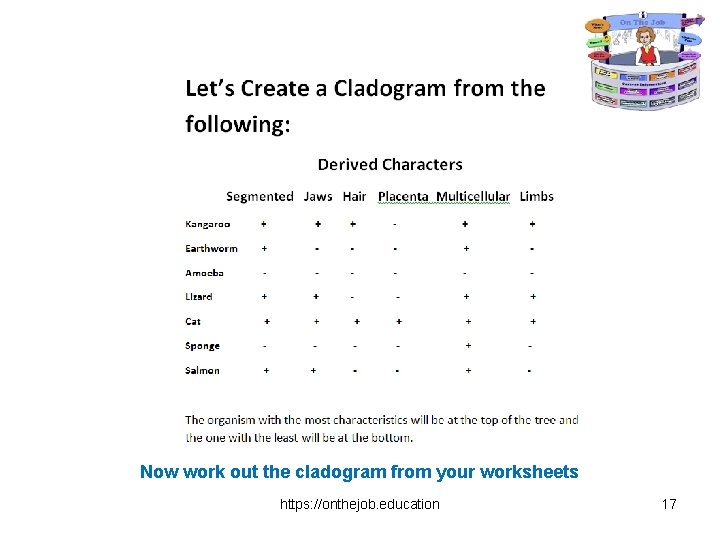
Now work out the cladogram from your worksheets https: //onthejob. education 17
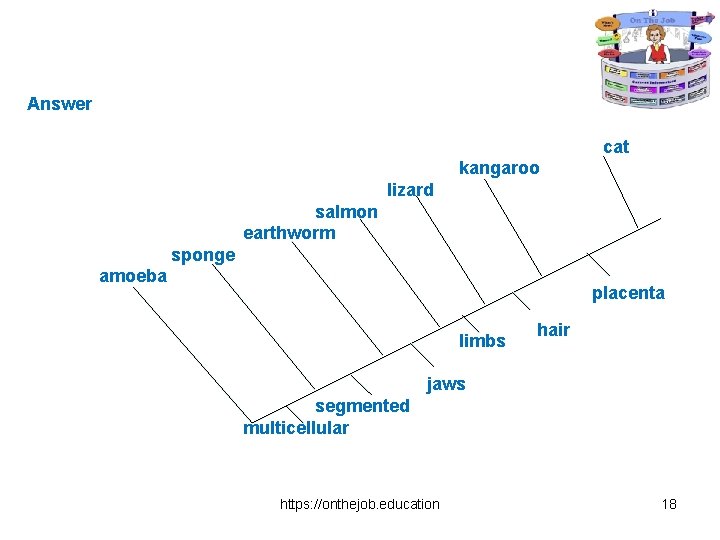
Answer cat kangaroo lizard salmon earthworm sponge amoeba placenta limbs hair jaws segmented multicellular https: //onthejob. education 18
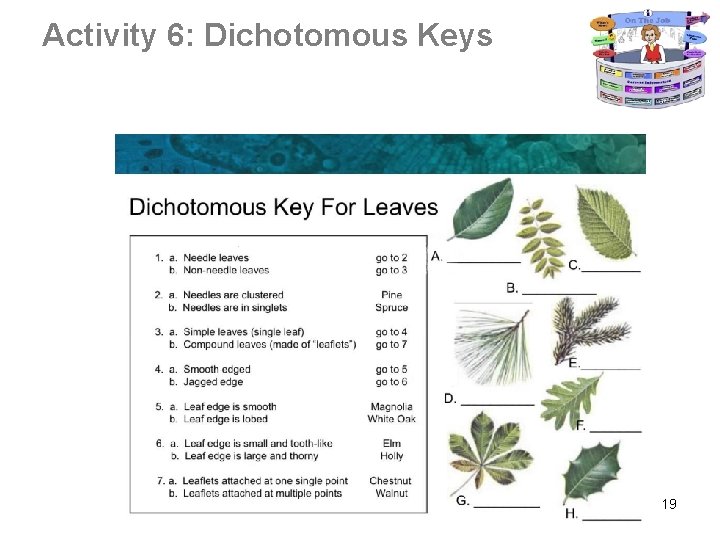
Activity 6: Dichotomous Keys 19
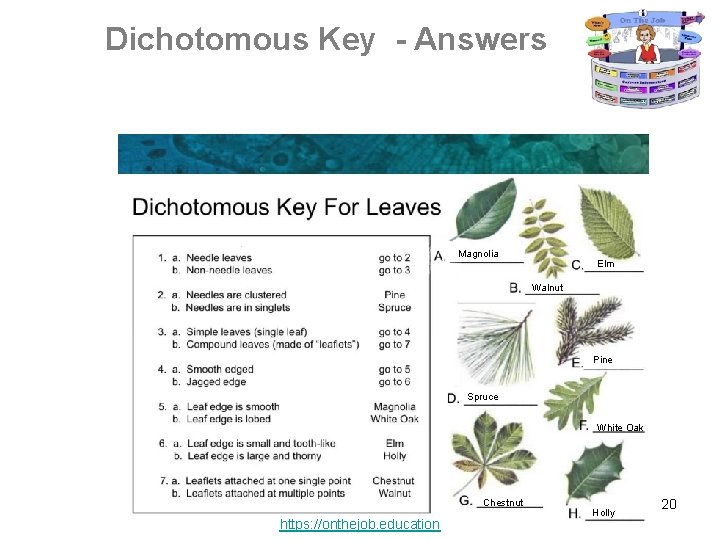
Dichotomous Key - Answers Magnolia Elm Walnut Pine Spruce White Oak Chestnut https: //onthejob. education Holly 20
Activity 6: Dichotomous Key https: //onthejob. education 21
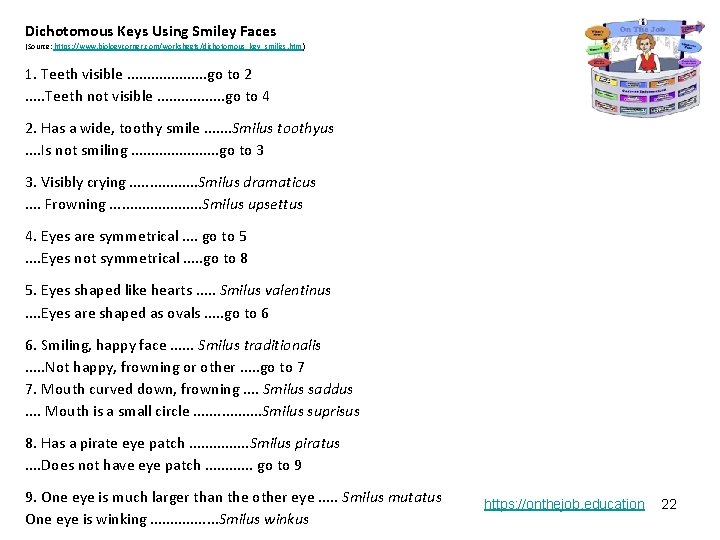
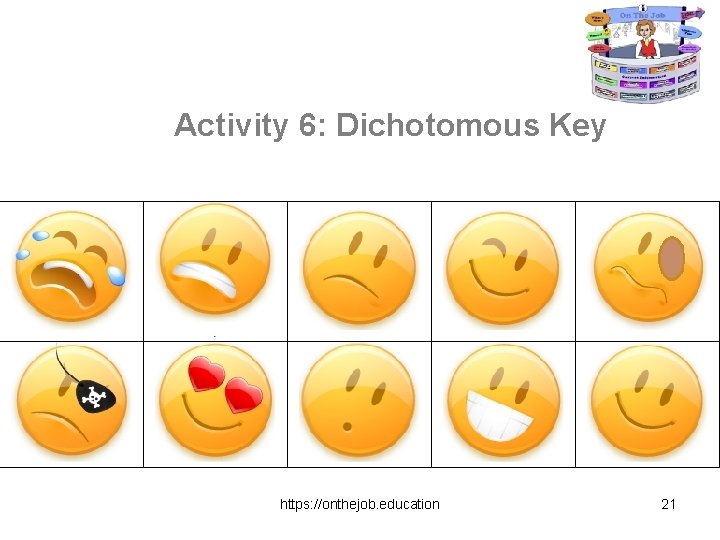
Dichotomous Keys Using Smiley Faces (Source: https: //www. biologycorner. com/worksheets/dichotomous_key_smilies. htm ) 1. Teeth visible. . . . . go to 2. . . Teeth not visible. . . . go to 4 2. Has a wide, toothy smile. . . . Smilus toothyus. . Is not smiling. . . . . go to 3 3. Visibly crying. . . . Smilus dramaticus. . Frowning. . . Smilus upsettus 4. Eyes are symmetrical. . go to 5. . Eyes not symmetrical. . . go to 8 5. Eyes shaped like hearts. . . Smilus valentinus. . Eyes are shaped as ovals. . . go to 6 6. Smiling, happy face. . . Smilus traditionalis. . . Not happy, frowning or other. . . go to 7 7. Mouth curved down, frowning. . Smilus saddus. . Mouth is a small circle. . . . Smilus suprisus 8. Has a pirate eye patch. . . . Smilus piratus. . Does not have eye patch. . . go to 9 9. One eye is much larger than the other eye. . . Smilus mutatus One eye is winking. . . . Smilus winkus https: //onthejob. education 22
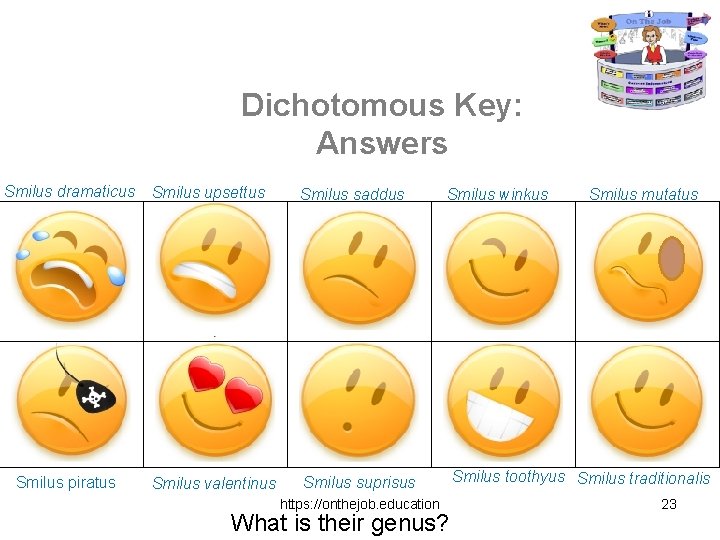
Dichotomous Key: Answers Smilus dramaticus Smilus piratus Smilus upsettus Smilus saddus Smilus valentinus Smilus suprisus https: //onthejob. education Smilus winkus What is their genus? Smilus mutatus Smilus toothyus Smilus traditionalis 23
Activity 6: Dichotomous Key https: //onthejob. education 24
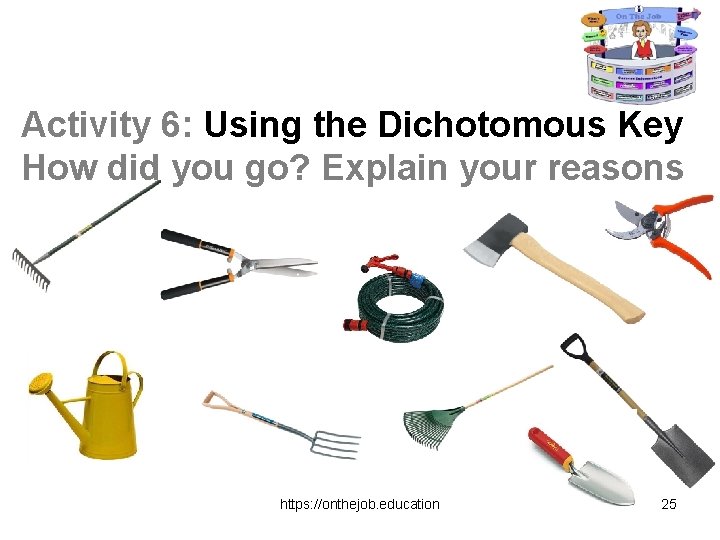
Activity 6: Using the Dichotomous Key How did you go? Explain your reasons https: //onthejob. education 25
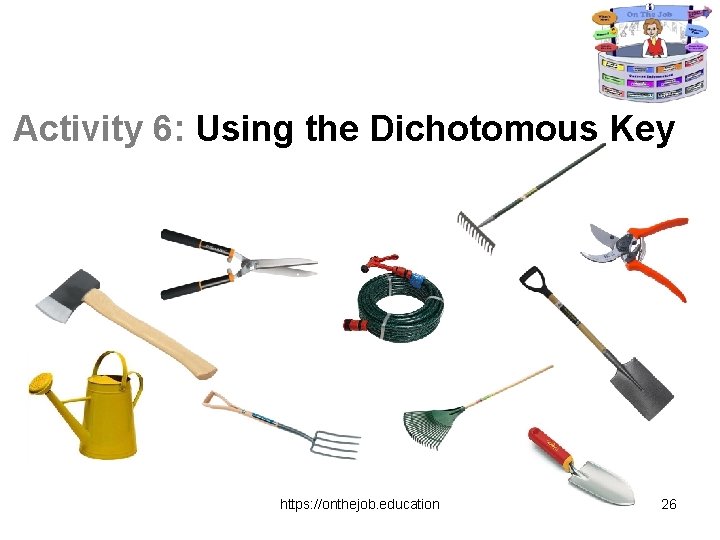
Activity 6: Using the Dichotomous Key https: //onthejob. education 26
- Slides: 26