
Learner Support The Key to Quality Learning Environments





- Slides: 48
Learner Support: The Key to Quality Learning Environments Thomas Hülsmann, Ph. D Jane E. Brindley, Ph. D. Christine Walti, M. D. E. Beijing, China May 12 -14, 2008
Learner Support: An Overview and Development of a Model Jane E. Brindley, Ph. D. Beijing, China May 12 -14, 2008
Learner Support: The Key to Quality Learning Environments Workshop Content • Introduction: Objectives, Methodology, Outcomes • Defining Learner Support • Designing Learner Support Systems • Critical Factors • Issues in Planning and Implementation • Defining the Critical Factors at CCRTVU • Learner Support at UMUC and Oldenburg • Faculty Support: An Important Element of Learner Support • Cost Analysis: Implications for Learner Support • Defining a Learner Support Model for CCRTVU • Exploring new Approaches: Web 2. 0 • Closing SLIDE 2 / 15
Learner Support: The Key to Quality Learning Environments Workshop Objectives • Develop a common understanding of the role of learner support in education • Examine various types of learner support: consider the choices • Identify the factors that determine the type of learner support needed • Identify and analyze issues in planning and implementing learner support systems • Critically analyze and describe the context and learner needs at CCRTVU • Review some examples of practice at other institutions • Consider the economic aspects of learner support: cost analysis • Discuss some new approaches of learner support: Web 2. 0 • Develop and discuss models of learner support for CCRTVU SLIDE 3 / 15
Learner Support: The Key to Quality Learning Environments Workshop Methods • Large group discussion and brainstorming • Small group work; case studies • Presentations by leaders and participants SLIDE 4 / 15
Learner Support: The Key to Quality Learning Environments Workshop Outcomes The workshop is intended to help you do the following: • Describe the rationale for learner support in distance education • Identify the critical factors that determine the most important elements of learner support for a specified • Analyze learner needs and other critical factors at CCRTVU • Design an effective learner support system including an evaluation plan SLIDE 5 / 15
Learner Support: The Key to Quality Learning Environments Discussion: What is Learner Support? What examples can you give of learner support from CCRTVU and other institutions? Why should we plan and implement learner support? Why is it important? What learner needs and issues do you have at your institution that learner support might address? SLIDE 6 / 15
Learner Support: The Key to Quality Learning Environments What is Learner Support? All interactions and resources which assist learners in their studies from point of inquiry through completion and beyond: • Teaching and tutoring (course content related support) • Advising and counselling (non-content related support) • Administrative and technical support SLIDE 7 / 15
Learner Support: The Key to Quality Learning Environments Contexts for Learner Support? • K – 12 • Post-secondary/higher education • Corporate and public sector training SLIDE 8 / 15
Learner Support: The Key to Quality Learning Environments A Short History of Learner Support • Response to high attrition rates in correspondence education • Tutoring and other services added on to already complete model (first to be cut) • Rise of dual mode institutions - services often uneven between d. e. and campus-based students SLIDE 9 / 15
Learner Support: The Key to Quality Learning Environments A Short History of Learner Support (2) • Changing view of learner and learning • learner as instrumental in the learning process (not a passive recipient of knowledge) • understanding and responding to learner needs has become equally important as producing quality course content • More integrated models of learner support suited to context--linked to institutional mission and strategic objectives • Requires rethinking and transformation of student support services – from public utility to integral part of the learning process SLIDE 10 / 15
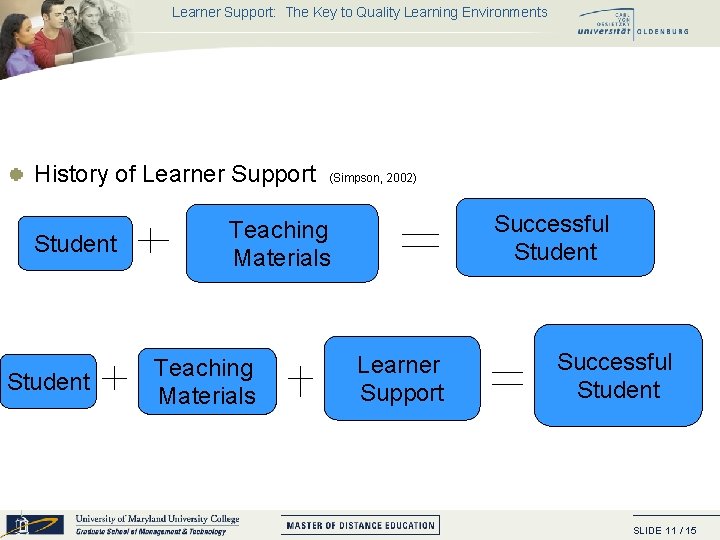
Learner Support: The Key to Quality Learning Environments History of Learner Support Student (Simpson, 2002) Successful Student Teaching Materials Learner Support Successful Student SLIDE 11 / 15
Learner Support: The Key to Quality Learning Environments Why is Learner Support Important? FOR THE INSTITUTION: • Learner retention and loyalty - achievement of enrolment and graduation targets - cost savings in recruitment of new students - cost savings in fees not refunded • Improved learning outcomes (deeper learning) • Improved graduation rates • Enrolment and resource management • Revenue generation/ growth • Academic planning/ better information • Clear performance standards identified by articulating goals and strategies • Enhanced reputation • Ability to compete/ marketing SLIDE 12 / 15
Learner Support: The Key to Quality Learning Environments Why is Learner Support Important? FOR THE STUDENT: ENHANCED ACCESS AND QUALITY • Access to opportunity to succeed • Access to opportunity to become a better learner • Access to quality learning experience SLIDE 13 / 15
Learner Support: The Key to Quality Learning Environments Learner Support Reflects a Philosophy and Values • Accessibility/ Openness/ Flexibility: -beyond admissions policies/ beyond “delivery methods” -open door v. revolving door • Diversity: policies and practices reflect a desire for a broad range of learners • Learner-centredness: learner at centre of teaching-learning process -from point of inquiry through completion and beyond SLIDE 14 / 15
Learner Support: The Key to Quality Learning Environments Characteristics of Effective Learner Support • Learner driven/ not provider driven • Should be seen as functions/ not organizational units - organized according to functional effectiveness • Integrated/ not silos (seamless for the learner) • Flexible—adaptable to change • Purposeful in terms of academic mission and goals - support that contributes to facilitation of academic progress, quality learning environments, graduation and retention rates SLIDE 15 / 15
Learner Support: The Key to Quality Learning Environments Elements of Learner Support • Teaching and tutoring (course content related) • Counselling and advising (non-content related) • Administrative and technical support SLIDE 16 / 15
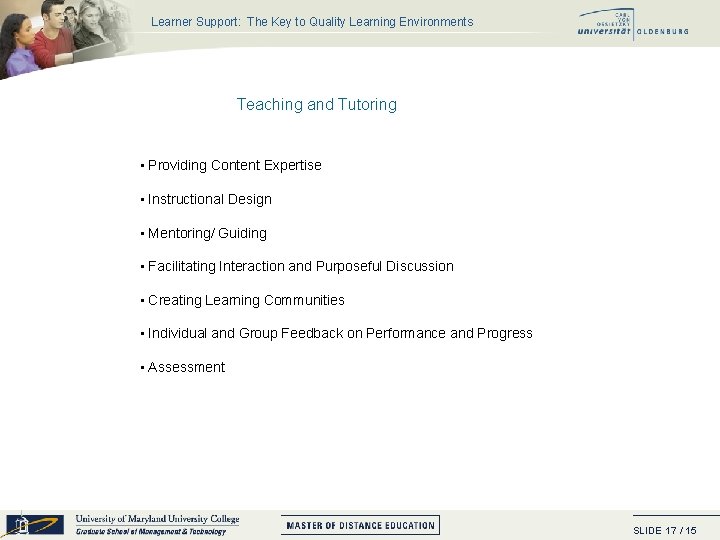
Learner Support: The Key to Quality Learning Environments Teaching and Tutoring • Providing Content Expertise • Instructional Design • Mentoring/ Guiding • Facilitating Interaction and Purposeful Discussion • Creating Learning Communities • Individual and Group Feedback on Performance and Progress • Assessment SLIDE 17 / 15
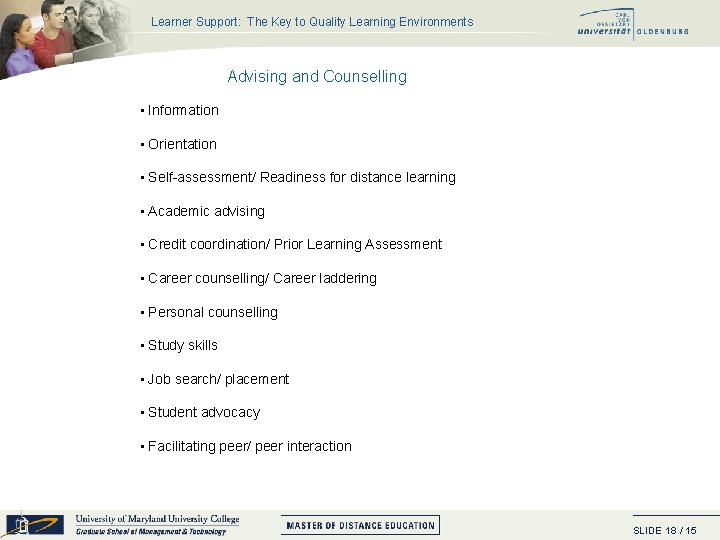
Learner Support: The Key to Quality Learning Environments Advising and Counselling • Information • Orientation • Self-assessment/ Readiness for distance learning • Academic advising • Credit coordination/ Prior Learning Assessment • Career counselling/ Career laddering • Personal counselling • Study skills • Job search/ placement • Student advocacy • Facilitating peer/ peer interaction SLIDE 18 / 15
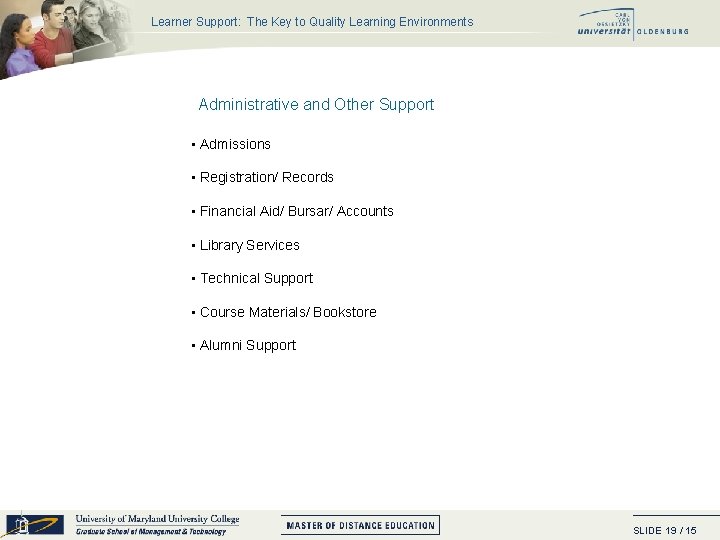
Learner Support: The Key to Quality Learning Environments Administrative and Other Support • Admissions • Registration/ Records • Financial Aid/ Bursar/ Accounts • Library Services • Technical Support • Course Materials/ Bookstore • Alumni Support SLIDE 19 / 15
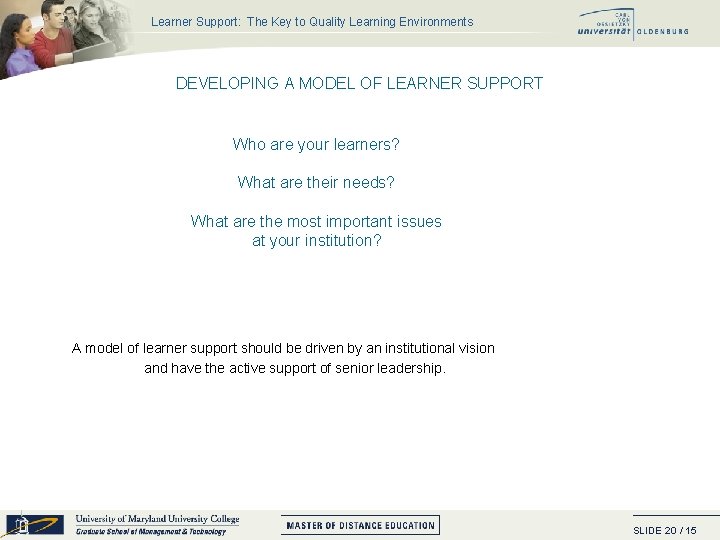
Learner Support: The Key to Quality Learning Environments DEVELOPING A MODEL OF LEARNER SUPPORT Who are your learners? What are their needs? What are the most important issues at your institution? A model of learner support should be driven by an institutional vision and have the active support of senior leadership. SLIDE 20 / 15
Learner Support: The Key to Quality Learning Environments What is a Model of Learner Support? • A strategic plan for providing support—sets direction and rationale • Locates learner support in larger context • Sets priorities—now and future • Facilitates and guides planning, resource allocation, and evaluation • Provides a map which can be revised to accommodate changes as they occur SLIDE 21 / 15
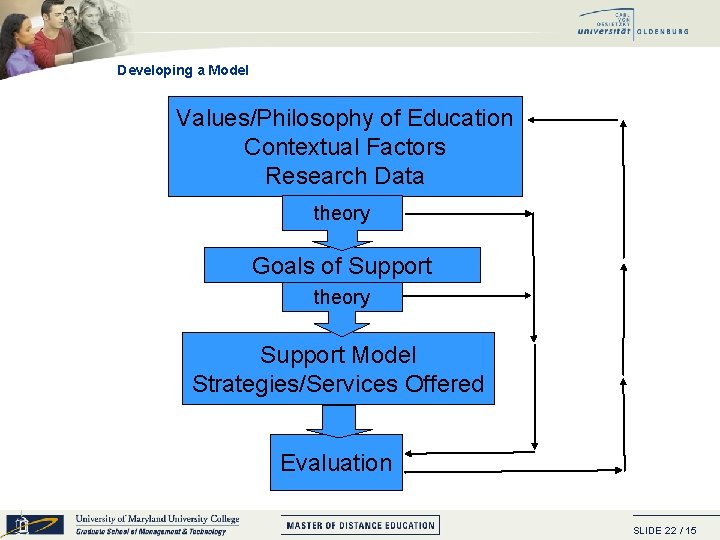
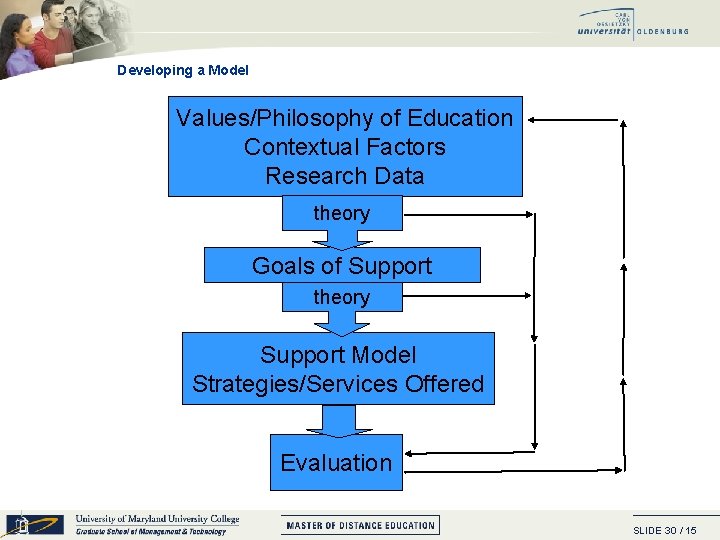
Developing a Model Values/Philosophy of Education Contextual Factors Research Data theory Goals of Support theory Support Model Strategies/Services Offered Evaluation SLIDE 22 / 15
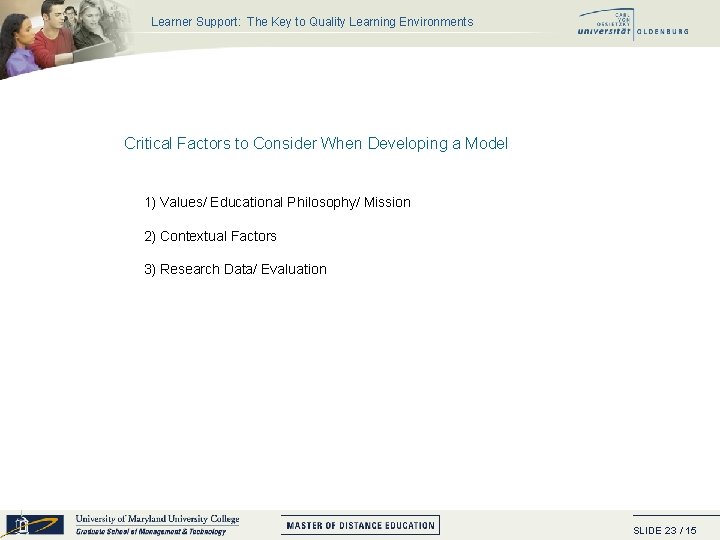
Learner Support: The Key to Quality Learning Environments Critical Factors to Consider When Developing a Model 1) Values/ Educational Philosophy/ Mission 2) Contextual Factors 3) Research Data/ Evaluation SLIDE 23 / 15
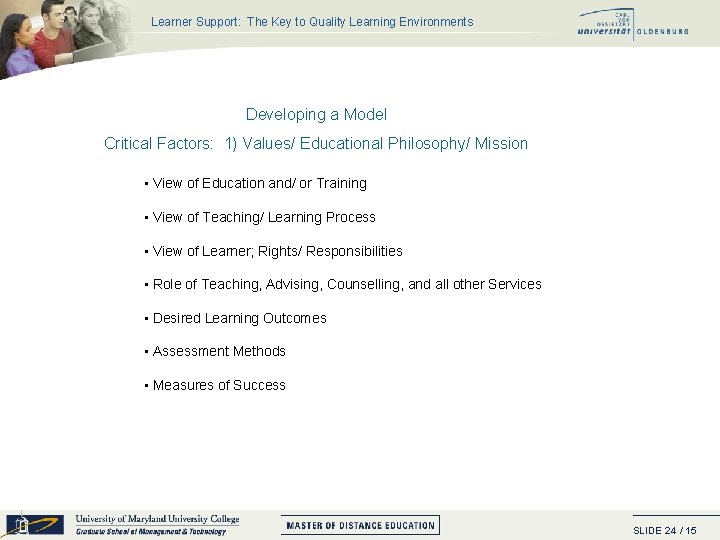
Learner Support: The Key to Quality Learning Environments Developing a Model Critical Factors: 1) Values/ Educational Philosophy/ Mission • View of Education and/ or Training • View of Teaching/ Learning Process • View of Learner; Rights/ Responsibilities • Role of Teaching, Advising, Counselling, and all other Services • Desired Learning Outcomes • Assessment Methods • Measures of Success SLIDE 24 / 15
Learner Support: The Key to Quality Learning Environments Developing a Model Critical Factors: 2) Context • Larger context: country, type of funding, political system, target market, competition from other providers, challenges and opportunities • Type of educational provider • Type of program and courses • Learner characteristics and needs • Resources: $$, staff, facilities, technology SLIDE 25 / 15
Learner Support: The Key to Quality Learning Environments Current Contextual Factors • Education as a service industry; learner as consumer/ high expectations • Increasing competition for students among universities/ educational providers • Accountability to stakeholders/ expectations from funding sources • Pressure for accessibility • Expectations for use of information and communication technologies; online learning - Institutions feeling pressure from students, employers, governments to offer online and web-based courses and programs - Corporate and public sector employers increasingly turning to e-learning for staff development and training SLIDE 26 / 15
Learner Support: The Key to Quality Learning Environments The Online Environment New opportunities: • more frequent and higher quality interaction: instructor/student; student/student; content/student; institution/student • blurring between course development/ design and learner support—better opportunity to shape teaching and learning in progress • automated services for routine interactions (using human intervention where it makes the most difference) • better turnaround times SLIDE 27 / 15
Learner Support: The Key to Quality Learning Environments The Online Environment Challenges: • Staff and faculty roles change and new skills are necessary in order to take advantage of the opportunities offered in the online environment for new kinds of interaction (e. g. teacher is expert facilitator not just content expert; less need for staff to carry out routine communications with students that can be automated) • Complexity of communication is greater (teaching requires new ways of communicating and organizing learning, e. g. collaborative learning) • Greater access means serving an ever widening variety of learners (demands of diversity) • Learner expectations rise (faster communication) • Significant Costs: • start-up requires large investment • infrastructure • content development • staff and faculty training and development/ culture change ** Myth of cost savings: Need to balance ACCESS (scalability) v. QUALITY SLIDE 28 / 15
Learner Support: The Key to Quality Learning Environments Developing a Model Critical Factors: 3) Research Data/ Evaluation • Learner Characteristics and Needs • Learner Behaviour/ Learning Outcomes • Attrition/ Persistence/ Graduation Rates • Effects of Teaching/ Course Design/ Services/ Interventions SLIDE 29 / 15
Developing a Model Values/Philosophy of Education Contextual Factors Research Data theory Goals of Support theory Support Model Strategies/Services Offered Evaluation SLIDE 30 / 15
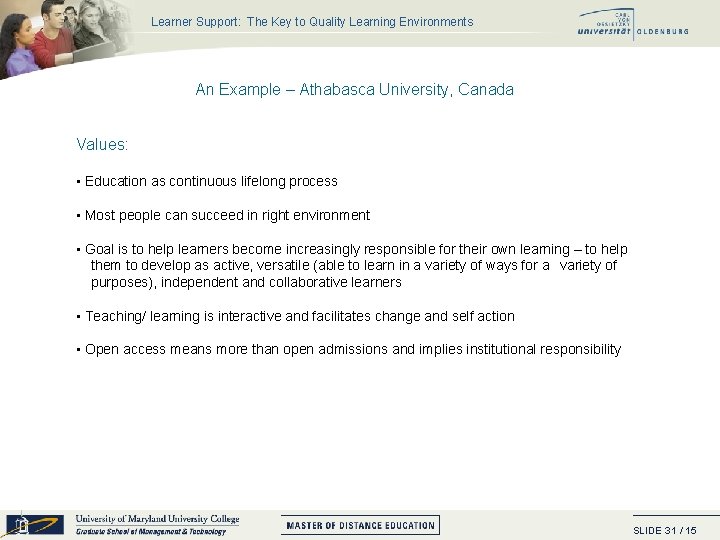
Learner Support: The Key to Quality Learning Environments An Example – Athabasca University, Canada Values: • Education as continuous lifelong process • Most people can succeed in right environment • Goal is to help learners become increasingly responsible for their own learning – to help them to develop as active, versatile (able to learn in a variety of ways for a variety of purposes), independent and collaborative learners • Teaching/ learning is interactive and facilitates change and self action • Open access means more than open admissions and implies institutional responsibility SLIDE 31 / 15
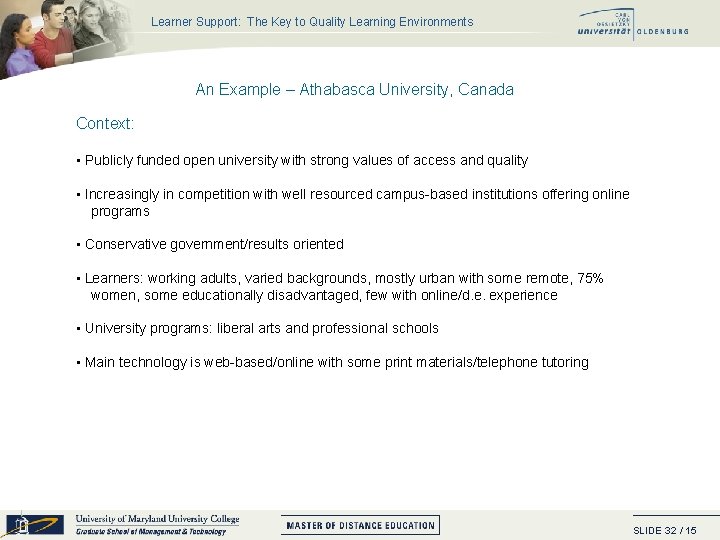
Learner Support: The Key to Quality Learning Environments An Example – Athabasca University, Canada Context: • Publicly funded open university with strong values of access and quality • Increasingly in competition with well resourced campus-based institutions offering online programs • Conservative government/results oriented • Learners: working adults, varied backgrounds, mostly urban with some remote, 75% women, some educationally disadvantaged, few with online/d. e. experience • University programs: liberal arts and professional schools • Main technology is web-based/online with some print materials/telephone tutoring SLIDE 32 / 15
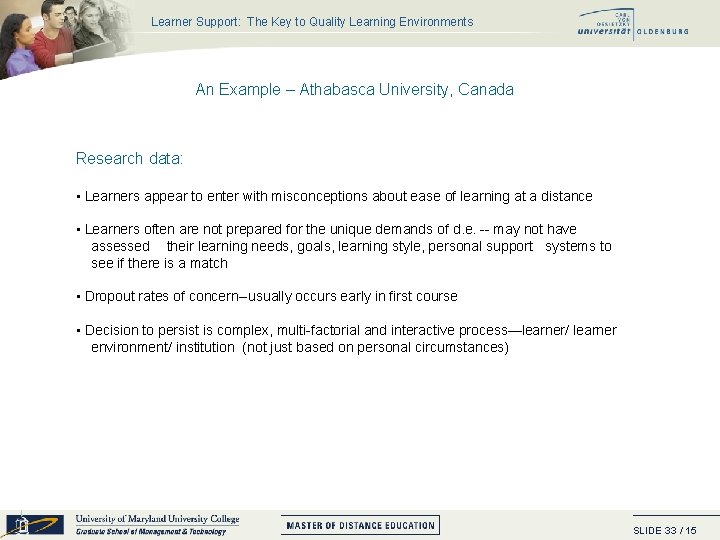
Learner Support: The Key to Quality Learning Environments An Example – Athabasca University, Canada Research data: • Learners appear to enter with misconceptions about ease of learning at a distance • Learners often are not prepared for the unique demands of d. e. -- may not have assessed their learning needs, goals, learning style, personal support systems to see if there is a match • Dropout rates of concern--usually occurs early in first course • Decision to persist is complex, multi-factorial and interactive process—learner/ learner environment/ institution (not just based on personal circumstances) SLIDE 33 / 15
Learner Support: The Key to Quality Learning Environments An Example – Athabasca University, Canada Research data (2): • Institutional support can respond to learner characteristics: abilities, learning style, gender, culture, academic preparedness, personal support, and expectations (e. g. flexibility in methods) • Trend is to greater diversity in the student population, e. g younger learners; international student body • Students want interaction/ encouragement/ feedback—contact with instructor is most important • Institutional support likely to have no effect on a certain portion of students who will persist or drop out regardless BUT can be a critical factor in persistence for the others who are in the middle SLIDE 34 / 15
Learner Support: The Key to Quality Learning Environments Moving from Critical Factors to Theory and Action: Step One: Identifying Goals -- What Will Help These Learners? 1. Make the Development of Learners an Explicit Institutional Goal (vision/strategic plan) 2. Engage Learners Early On and Facilitate Connectedness (social support) 3. Empower Students (encourage and teach skills for active participation; scaffolding) 4. Personalize the Environment (work against isolation) 5. Democratize the System (encourage and respond to diversity; equal opportunity for success) SLIDE 35 / 15
Learner Support: The Key to Quality Learning Environments Moving from Critical Factors to Theory and Action: Step Two: Identifying Strategies – How Can the Goals be Achieved? Goal 1. Make the Development of Learners an Explicit Institutional Goal - may require review of institutional mission, strategic plan, and departmental operational plans—consistency/ alignment - building climate and culture - faculty and staff development is essential - strategies built into teaching and all services that encourage learner independence through skill building - continually evaluate impact of services based on specific targets and goals SLIDE 36 / 15
Learner Support: The Key to Quality Learning Environments Moving from Critical Factors to Theory and Action: Step Two: Identifying Strategies – How Can the Goals be Achieved? Goal 2. Engage Learners Early/Facilitate Connectedness - invest in front end services/proactive contact by institution - information/ referral for prospective learners - orientation to d. e. with assessment and opportunities for remediation - aids to getting started (tips/advice/self-help tools) / links to specific kinds of help - early instructor-initiated contact/ instructor training and development - newsletters/ chat rooms/ FAQ sites - study groups/ learning communities / Web 2. 0 (blogs/wikis) SLIDE 37 / 15
Learner Support: The Key to Quality Learning Environments Moving from Critical Factors to Theory and Action: Step Two: Identifying Strategies – How Can the Goals be Achieved? Goal 3. Empower Learners – facilitate and encourage learner independence and active engagement in the learning process - make skill building (scaffolding) integral to all teaching, instructional design, and support services: e. g. online learning skills, research/ library skills, collaborative learning skills, critical thinking skills, decision-making skills, leadership skills, problem-solving skills - emphasize self-help and make assistance readily available (e. g. self-assessment tools and skills remediation in self-help format) - provide sufficient quality information so that learners can make decisions about their education - facilitate learner/ learner communication (encourage peer consultation) - decentralization of responsibility and authority (e. g. access to records) - provide a student charter or publish minimum standards so that learners know what they can expect - experiment with learning contracts (learners setting goals and strategies for themselves) SLIDE 38 / 15
Learner Support: The Key to Quality Learning Environments Moving from Critical Factors to Theory and Action: Step Two: Identifying Strategies – How Can the Goals be Achieved? Goal 4. Personalize the Learning Environment – work against isolation - proactive early contact--introductory messages to learners with photos/ welcome week - ensure ease of contact with institution/ ease of problem-solving for learners - review policies and regulations (institutional attitude of respect for learners) - recognize connection between motivation and turnaround, inconsistencies, red tape - appropriate technical support - provide opportunities for learner/learner contact – e. g. assign study partners, design study group projects into courses, initiate blogs, cafes, bulletin boards, provide student directories SLIDE 39 / 15
Learner Support: The Key to Quality Learning Environments Moving from Critical Factors to Theory and Action: Step Two: Identifying Strategies – How Can the Goals be Achieved? 5. Democratize the System - provide equal opportunity for success (the open door v. revolving door) - ensure that institutional methods/ policies encourage and support diversity (admissions, teaching, assessment methods, remediation) - recognize relevance of learner experience (prior learning assessment) - offer opportunities for students to assess their own readiness for learning and need for skill development - offer opportunities for students to get informed, make good decisions, improve their skills (advising, counselling, assessment, remediation, financial aid, library, special needs) - publicize all services and opportunities so that students know what is available SLIDE 40 / 15
Learner Support: The Key to Quality Learning Environments Integrating Strategies Into a Model • Review critical factors for your institution (values, context, research) • Develop a vision and set clear goals for learner support that are aligned with the mission • Identify learner support strategies that will help you meet those goals • Look at experience of your learners from first contact through completion • Consider how and where to strategically invest for greatest impact • Consider what technologies/ methods of interaction are possible and desirable • Build a flexible model that can be adapted to changing circumstances over time SLIDE 41 / 15
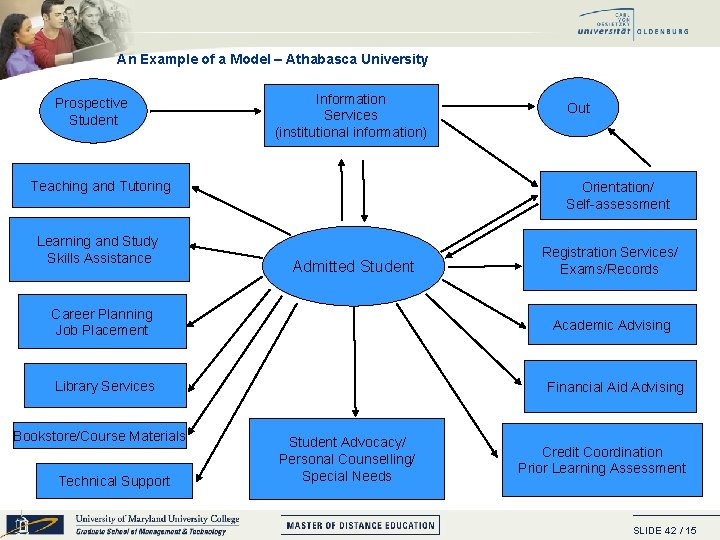
An Example of a Model – Athabasca University Prospective Student Information Services (institutional information) Teaching and Tutoring Learning and Study Skills Assistance Out Orientation/ Self-assessment Admitted Student Registration Services/ Exams/Records Career Planning Job Placement Academic Advising Library Services Financial Aid Advising Bookstore/Course Materials Technical Support Student Advocacy/ Personal Counselling/ Special Needs Credit Coordination Prior Learning Assessment SLIDE 42 / 15
Learner Support: The Key to Quality Learning Environments Issues in Planning and Managing Learner Support • Instilling learner support as institutional culture • Universality v. targeted support • Finding the right balance between learner support v. program growth • Learner autonomy v. appropriate support • Organizational structures – what structure works best? • Centralized v. decentralized systems & services SLIDE 43 / 15
Learner Support: The Key to Quality Learning Environments Issues in Planning and Managing Learner Support • Faculty and staff training/ development - changing/ instilling a culture - helping faculty and staff adapt to new roles - ensuring quality and consistency of service • Recruitment/marketing v. student advocacy • Appropriate use of technology -Accessibility and flexibility -Balancing efficiency with personalized services/ human contact -Providing technical support • Quality assurance/ measuring success • Ensuring resources for evaluation and research SLIDE 44 / 15
Learner Support: The Key to Quality Learning Environments Evaluation/Applied Research Different types of evaluation/measures: - student feedback - needs, satisfaction, perceptions - impact studies (change in student behaviour) - user rates for services - retention, re-enrolment, graduation rates - learning outcomes - grades, gain in knowledge/ skills - employment of graduates - staff performance evaluation SLIDE 45 / 15
Learner Support: The Key to Quality Learning Environments Benefits of Evaluation/Research • Measure of goal attainment • Challenging assumptions • Informed planning and priority setting • Rationale for resource allocation • Identification of learners with unmet needs • Identification of need for new competencies/ changes in procedures • Better working relationships (shared understanding of practice outcomes) • Ability to contribute to and share practice and theory with colleagues SLIDE 46 / 15
Learner Support: The Key to Quality Learning Environments Thank You! jbrind@uwindsor. ca • SLIDE 47 / 15