
LEARNED INNATE BEHAVIORS BEHAVIOR STIMULUS Something in the
LEARNED & INNATE BEHAVIORS
BEHAVIOR • STIMULUS- Something in the environment to which an organism will respond.
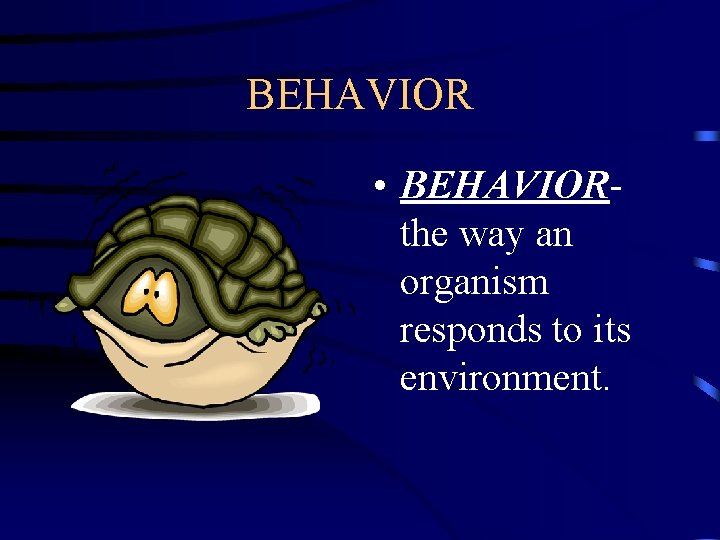
BEHAVIOR • BEHAVIOR- the way an organism responds to its environment.
BEHAVIOR q This is one aspect of adaptation that improves an organism’s chances to survive and reproduce.
2 TYPES OF BEHAVIOR • LEARNED BEHAVIOR • INNATE BEHAVIOR
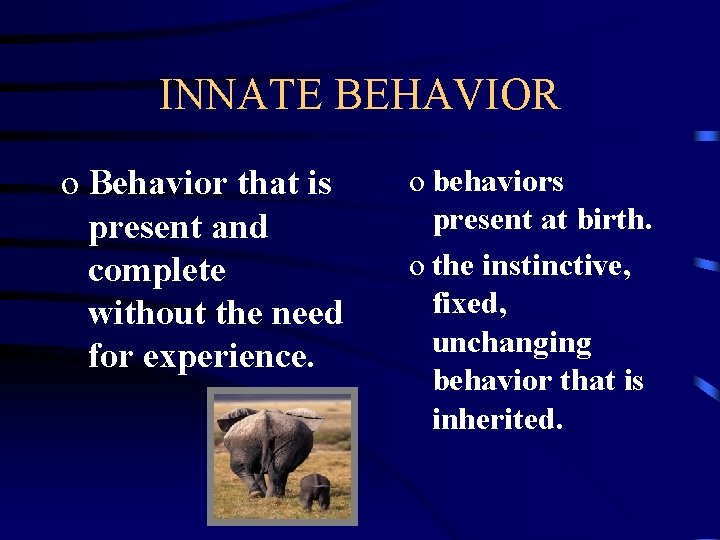
INNATE BEHAVIOR o Behavior that is present and complete without the need for experience. o behaviors present at birth. o the instinctive, fixed, unchanging behavior that is inherited.
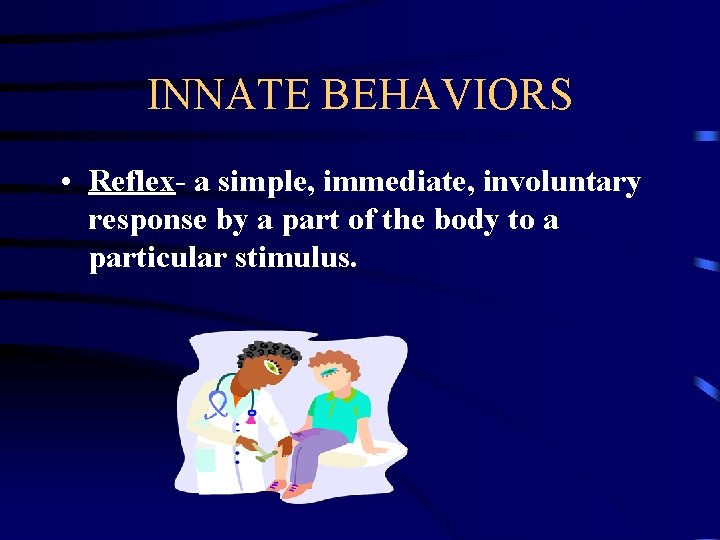
INNATE BEHAVIORS • Reflex- a simple, immediate, involuntary response by a part of the body to a particular stimulus.
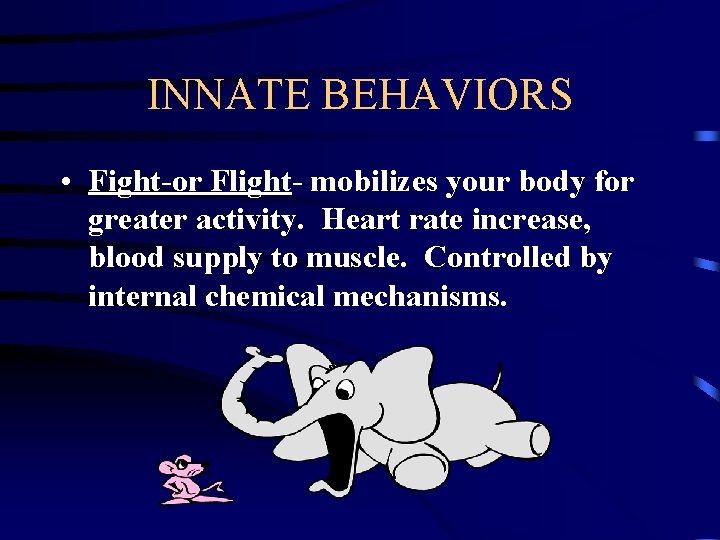
INNATE BEHAVIORS • Fight-or Flight- mobilizes your body for greater activity. Heart rate increase, blood supply to muscle. Controlled by internal chemical mechanisms.
INNATE BEHAVIORS • Instinct- A complex behavior. Takes more time than a reflex. • • • Courtship Behavior Territorial Aggressive Behavior Dominance Hierarchy Migration, Hibernation, Estivation Circadian rhythm
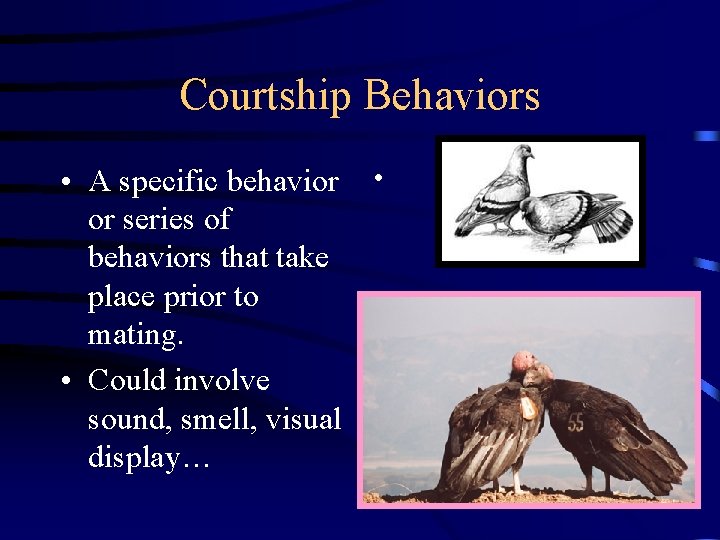
Courtship Behaviors • A specific behavior • or series of behaviors that take place prior to mating. • Could involve sound, smell, visual display…
Territorial Behavior • A territory is a physical space an animal defends against other members of its species. • May contain breeding area, feeding area, and potential mates, or all three • Although it may not appear so, setting up territories actually reduces conflicts, controls population growth, and provides for efficient use of animal resources.
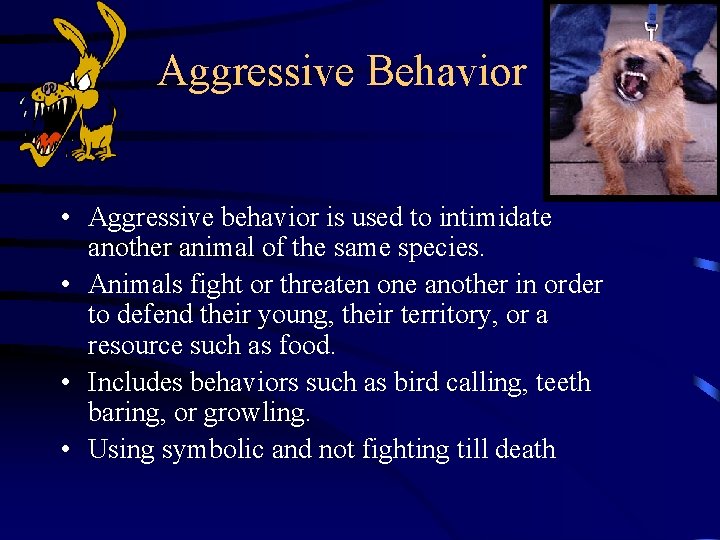
Aggressive Behavior • Aggressive behavior is used to intimidate another animal of the same species. • Animals fight or threaten one another in order to defend their young, their territory, or a resource such as food. • Includes behaviors such as bird calling, teeth baring, or growling. • Using symbolic and not fighting till death
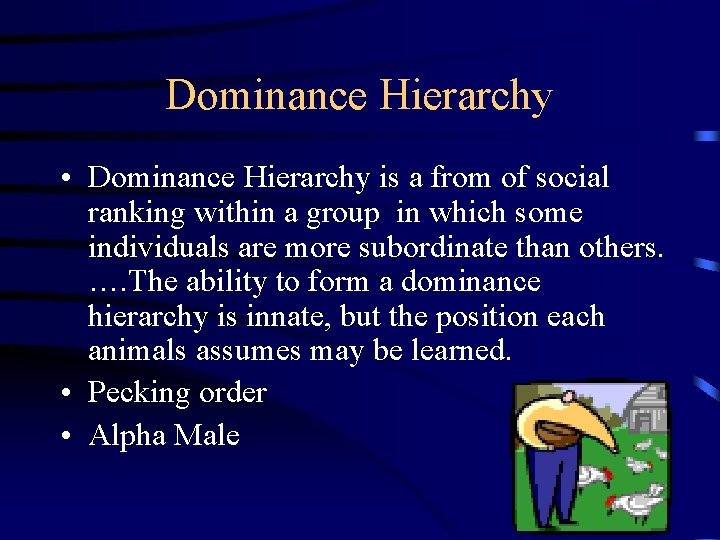
Dominance Hierarchy • Dominance Hierarchy is a from of social ranking within a group in which some individuals are more subordinate than others. …. The ability to form a dominance hierarchy is innate, but the position each animals assumes may be learned. • Pecking order • Alpha Male
Circadian Rhythm • Circadian Rhythm. Is an instinctive behavior that is exhibited in animals in response to internal, biological rhythms. • Can be based on 24 hours or seasonal
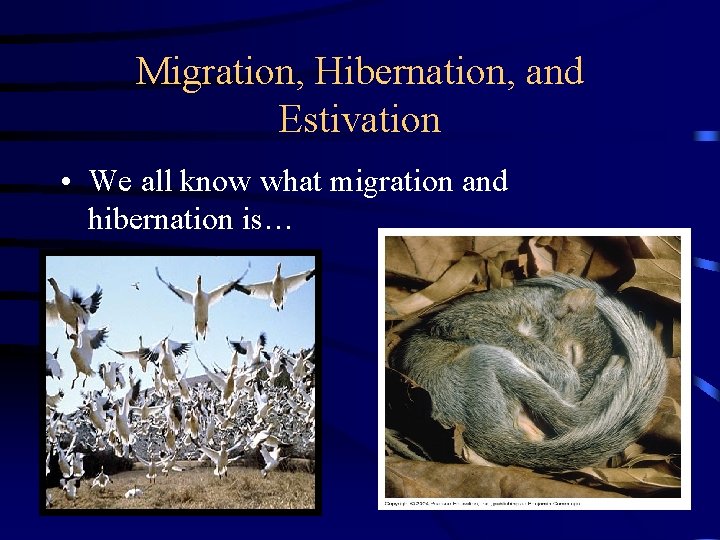
Migration, Hibernation, and Estivation • We all know what migration and hibernation is…
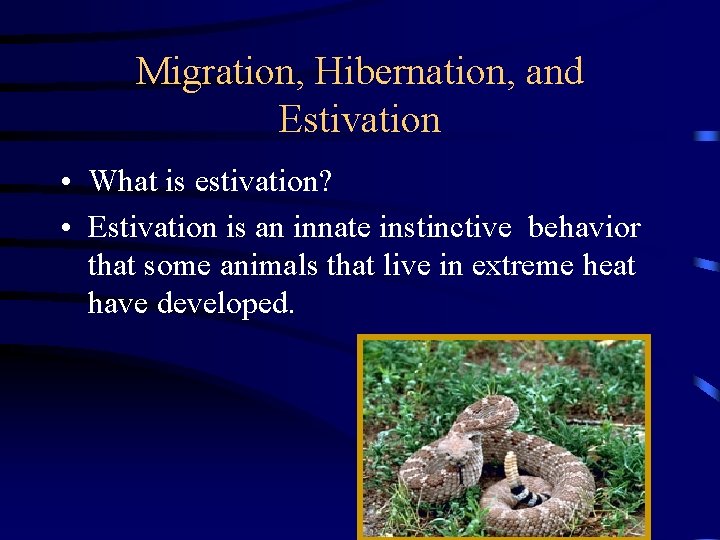
Migration, Hibernation, and Estivation • What is estivation? • Estivation is an innate instinctive behavior that some animals that live in extreme heat have developed.
Estivation • Estivation is another form of torpor, dormancy, or "sleep". Animals that estivate are trying to escape things happening in their environment. • This happens in hot, desert climates where heat and water are so important to the animals that live there. • Estivation protects these animals from high temperatures and drought.
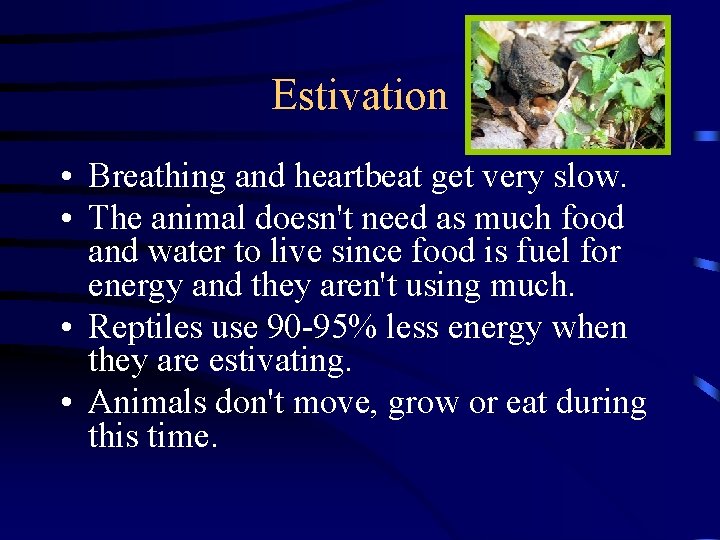
Estivation • Breathing and heartbeat get very slow. • The animal doesn't need as much food and water to live since food is fuel for energy and they aren't using much. • Reptiles use 90 -95% less energy when they are estivating. • Animals don't move, grow or eat during this time.
LEARNED BEHAVIOR -not inherited, but flexible and can be changed. –take place through experience or practice.
EXAMPLES OF LEARNED BEHAVIORS • • Mimicry Habituation Imprinting Trial & Error Classical Conditioning Operant Conditioning Insight Learning
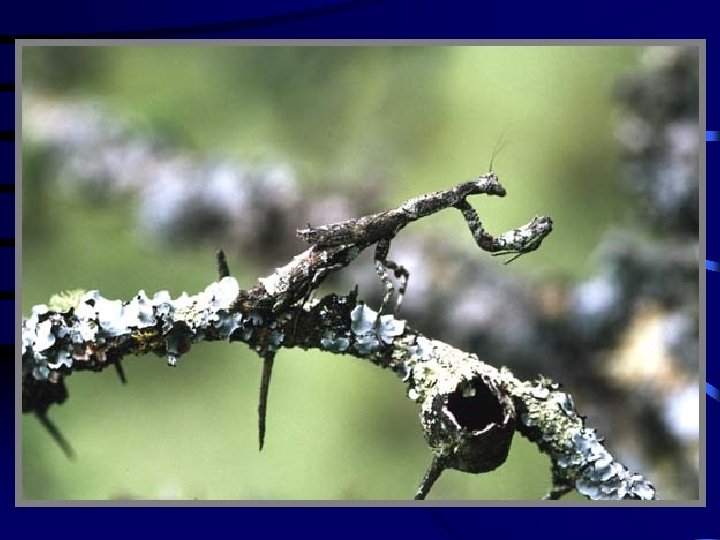
EXAMPLES OF LEARNED BEHAVIORS • MIMICRY – when one organism makes a resemblance to another species.
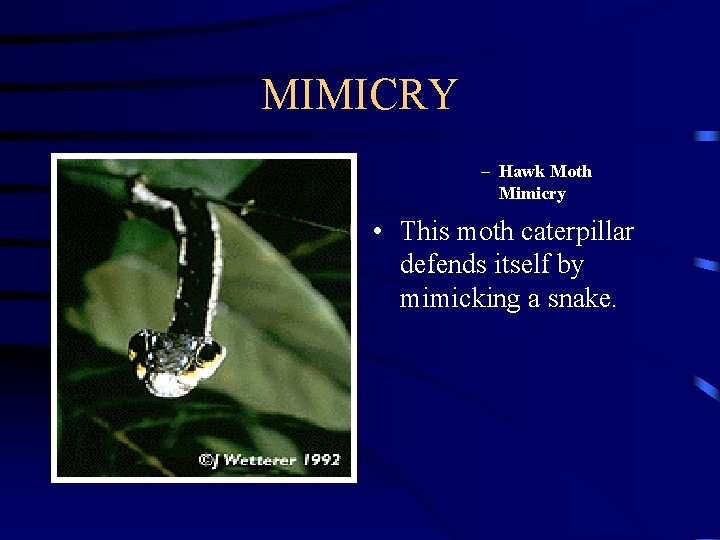
MIMICRY – Hawk Moth Mimicry • This moth caterpillar defends itself by mimicking a snake.
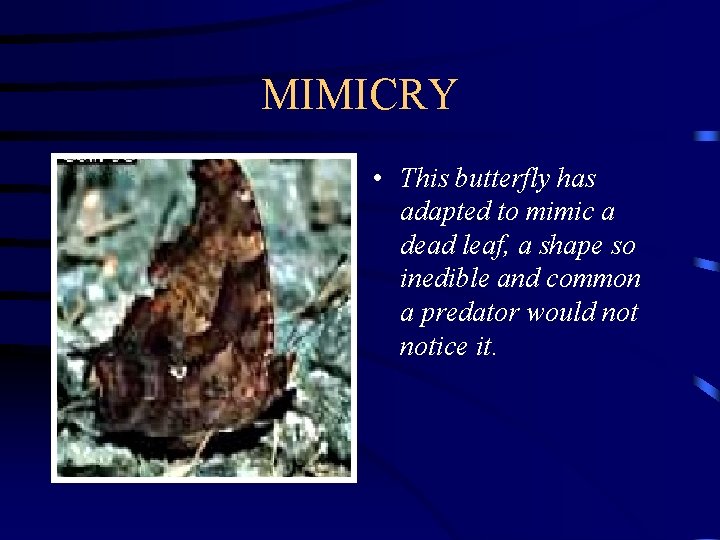
MIMICRY • This butterfly has adapted to mimic a dead leaf, a shape so inedible and common a predator would notice it.
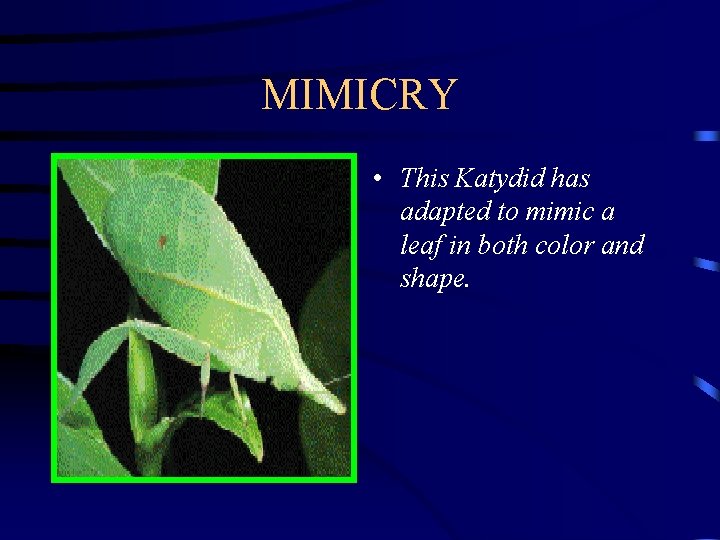
MIMICRY • This Katydid has adapted to mimic a leaf in both color and shape.
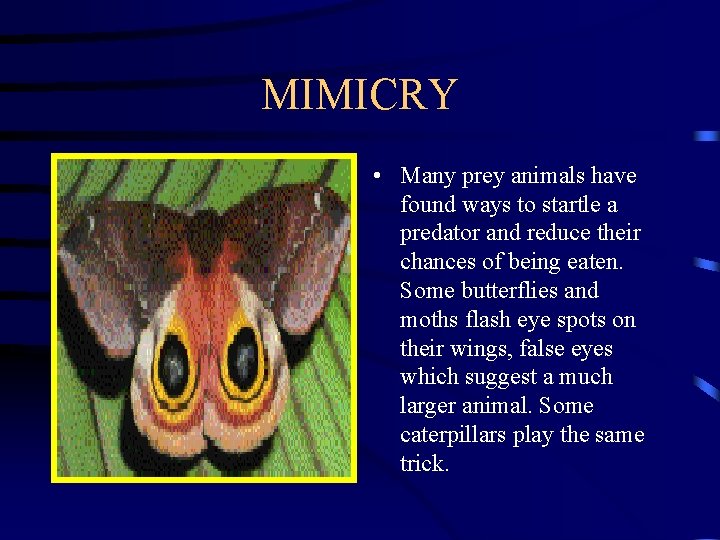
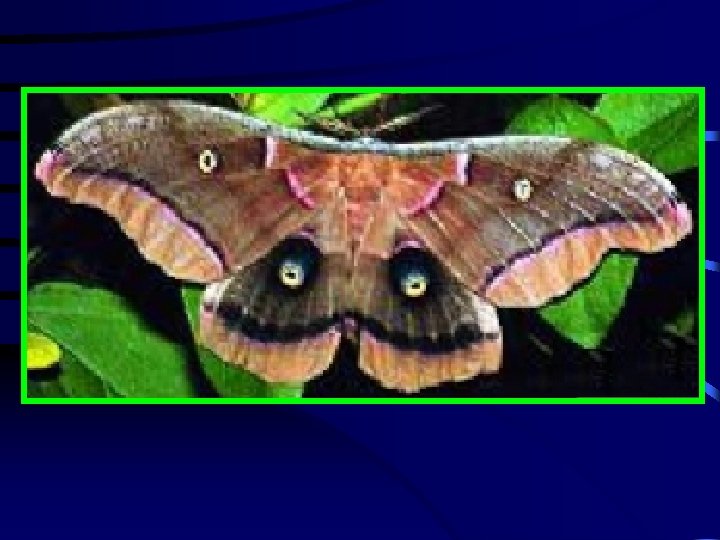
MIMICRY • Many prey animals have found ways to startle a predator and reduce their chances of being eaten. Some butterflies and moths flash eye spots on their wings, false eyes which suggest a much larger animal. Some caterpillars play the same trick.
MIMICRY
MIMICRY
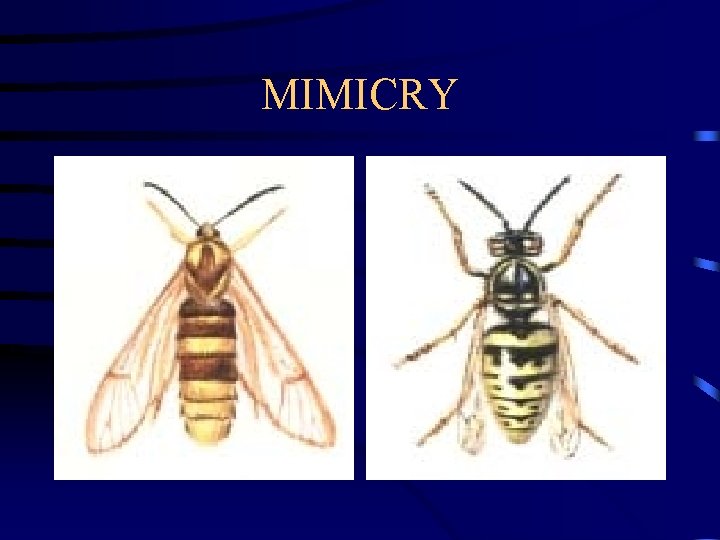
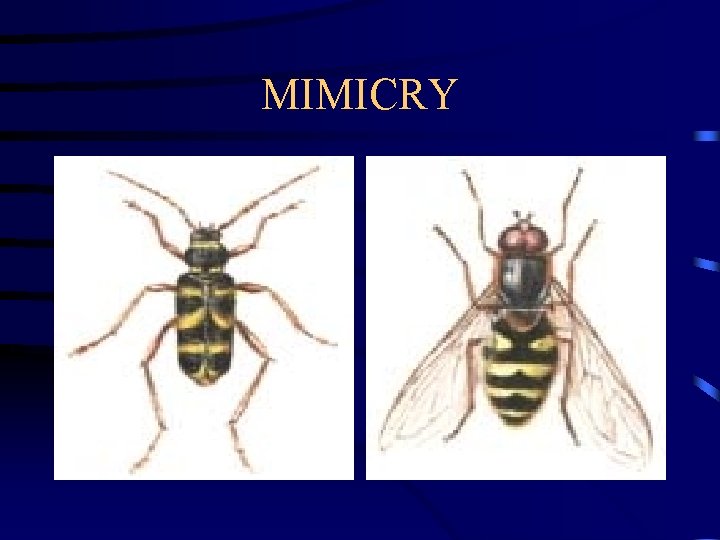
MIMICRY • From left to right are the Common Wasp, Vespula vulgaris, and some of its mimics - the Hornet Moth, Sesia apiformis, the Wasp Beetle, Clytus arietis, and the Hoverfly, Syrphus ribesii.
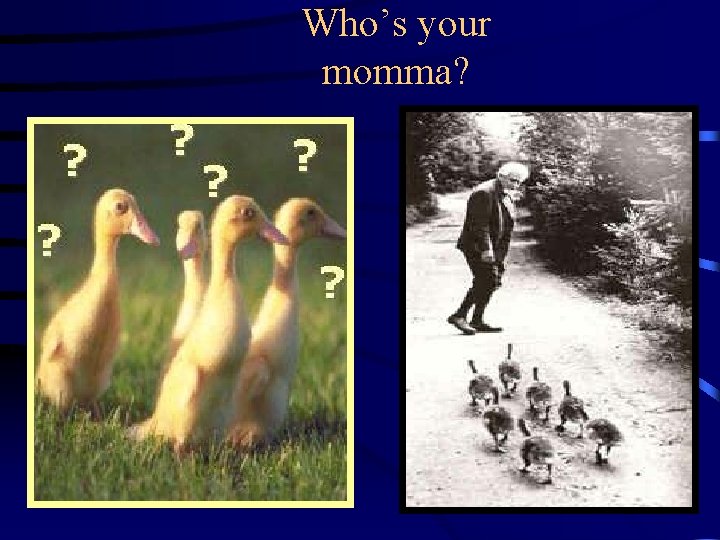
IMPRINTING • The quick early learning of a behavior that becomes a permanent response to a particular stimulus. • A significant innate component during a limited critical period
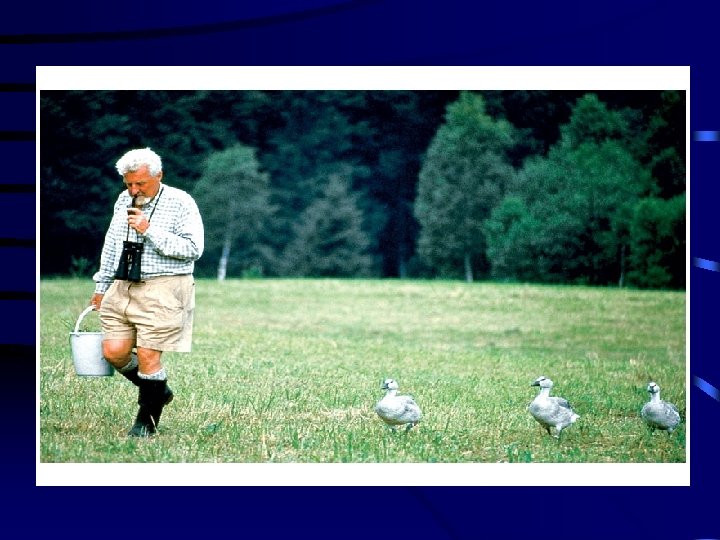
Who’s your momma?
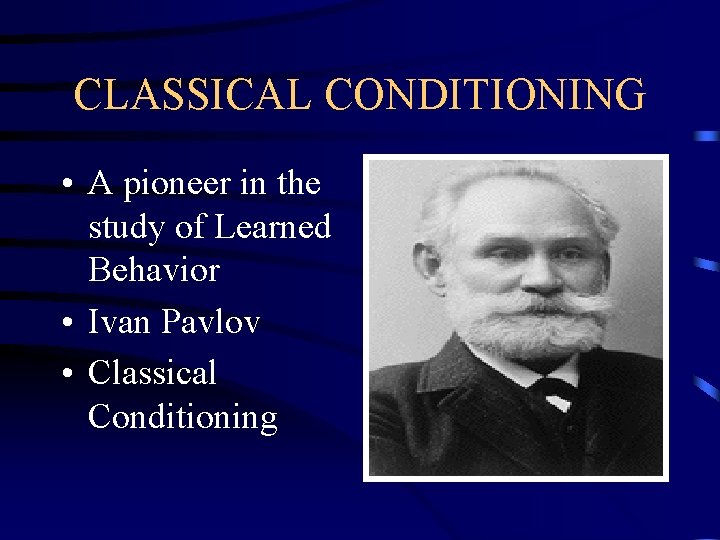
CLASSICAL CONDITIONING • A pioneer in the study of Learned Behavior • Ivan Pavlov • Classical Conditioning
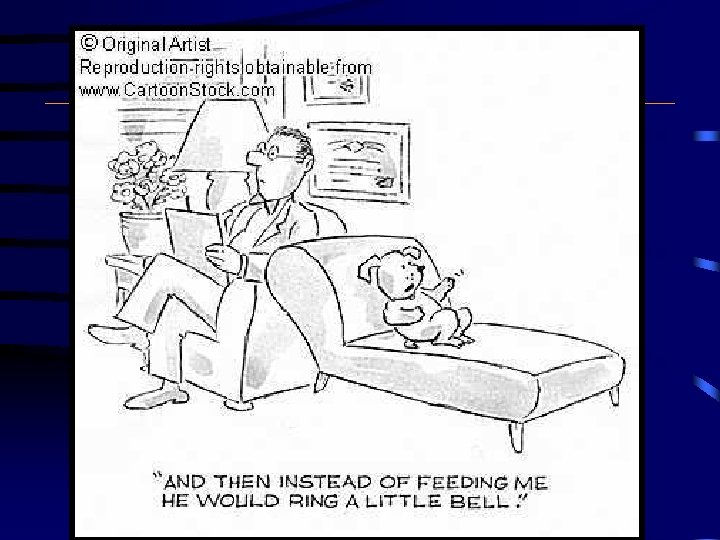
CLASSICAL CONDITIONING • An animals reflexes are trained to respond to a new stimulus. • Learning by association • Experiment- Dog and Bell.
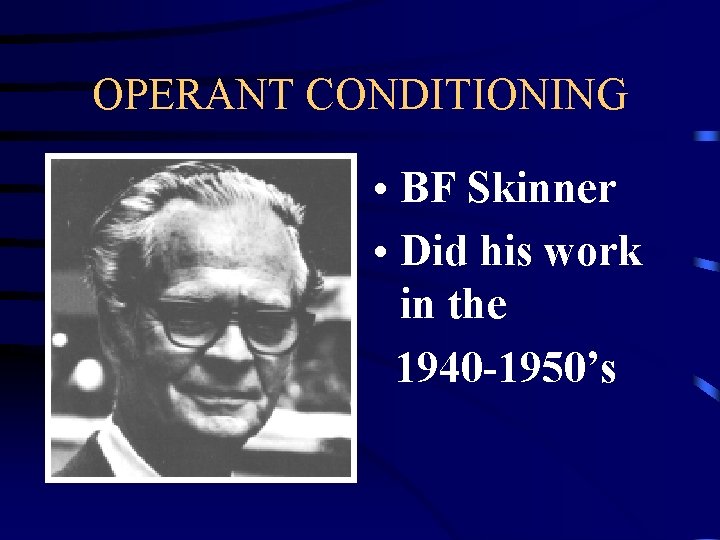
OPERANT CONDITIONING • BF Skinner • Did his work in the 1940 -1950’s
OPERANT CONDITIONING • Takes place when an animals learns to behave in a certain way through repeated practice, in order to receive a reward or avoid punishment. • Trial and Error • “Skinner Box”
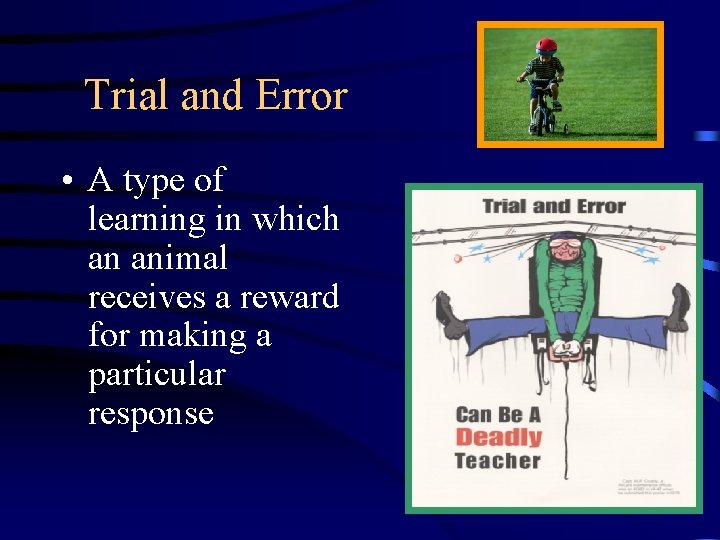
Trial and Error • A type of learning in which an animal receives a reward for making a particular response
HABITUATION • Loss of responsiveness due to an unimportant stimulus. • OR to stimuli that do not provide appropriate feedback.
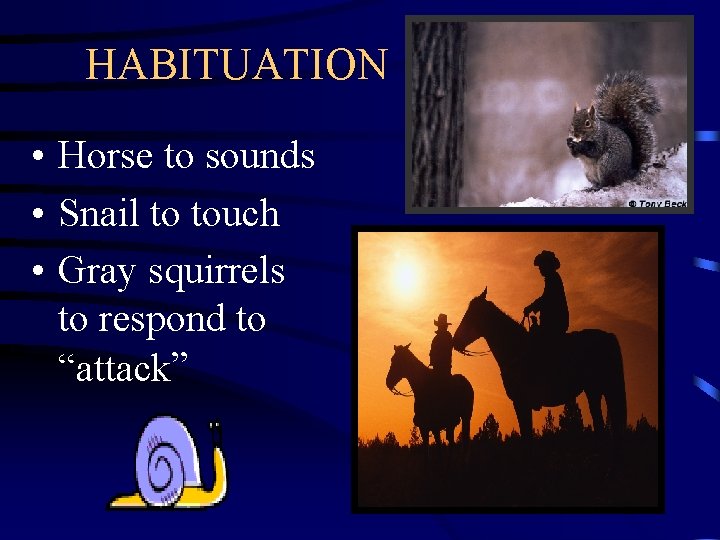
HABITUATION • Horse to sounds • Snail to touch • Gray squirrels to respond to “attack”
Insight • The most complicated form of learning is insight learning. • When an animal applies something it has already learned to a new situation with a period of trial and error. • You working a “new” math problem you have never worked…but apply principles you have already learned in class to solve it correctly. • Common among humans and other primates.
BEHAVIORS • Keep in mind that there is NOT always a clear cut line between behaviors that are learned v/s those that are innate. • Many behaviors involve a little of both. • Nature v/s Nurture Theory. • Social, Sexual, parental skills, etc
COMMUNICATION • Many behaviors that animals do involve interactions with other animals--Communication • Humans-Language • Sound • Body Language • Smell…Pheromones
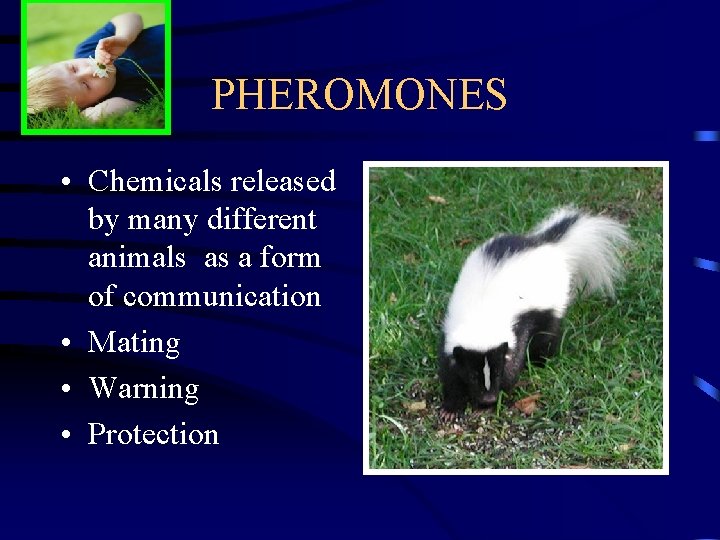
PHEROMONES • Chemicals released by many different animals as a form of communication • Mating • Warning • Protection
- Slides: 45