
LEARN TO RACE WITH THE MORAINE SAILING CLUB
LEARN TO RACE WITH THE MORAINE SAILING CLUB
Why Race? • • You will learn a lot You will improve your sailing skills in all conditions You will make a lot of friends Racing is fun!
Race Course Layout • Triangle or windward-leeward • Mid-beat starting and finishing line • Buoys in the water

Triangles 1 “T 1” Course (One Triangle) Windward – Gybe – Leeward – Finish Windward Start Gybe Finish Leeward
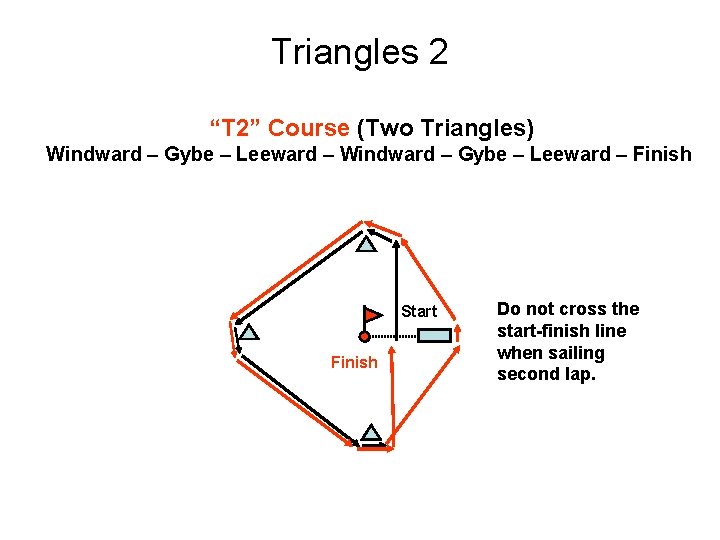
Triangles 2 “T 2” Course (Two Triangles) Windward – Gybe – Leeward – Finish Start Finish Do not cross the start-finish line when sailing second lap.

Windward - Leeward “W 1” Course Windward – Leeward (once around) Windward – Offset – Leeward – Finish. Start Finish “W 2” Course (Windward – Leeward twice around) “W 3” Course (Windward – Leeward three times around)
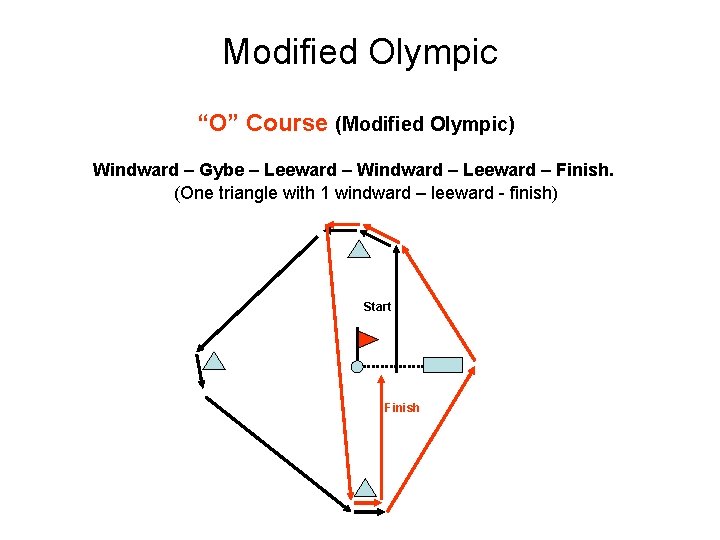
Modified Olympic “O” Course (Modified Olympic) Windward – Gybe – Leeward – Windward – Leeward – Finish. (One triangle with 1 windward – leeward - finish) Start Finish
Race Committee • • Positions the RC boat and sets up the course Course designations (chalkboard) Starting sequence signals (horns and flags) Other commonly-used flags
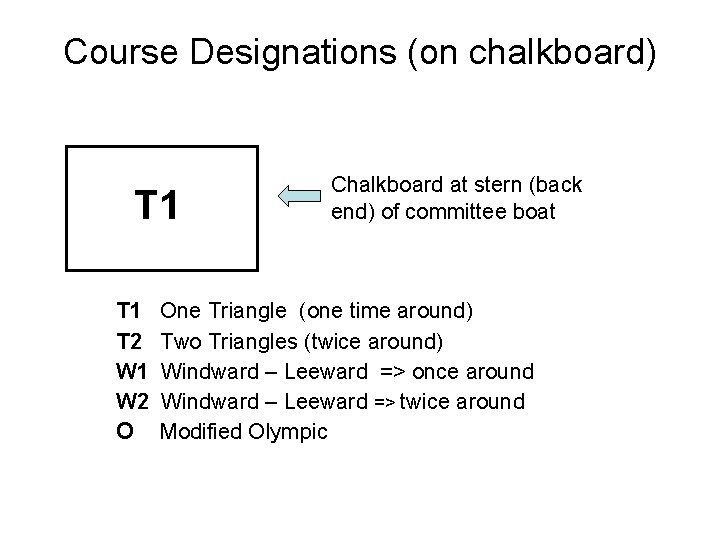
Course Designations (on chalkboard) T 1 T 2 W 1 W 2 O Chalkboard at stern (back end) of committee boat One Triangle (one time around) Two Triangles (twice around) Windward – Leeward => once around Windward – Leeward => twice around Modified Olympic
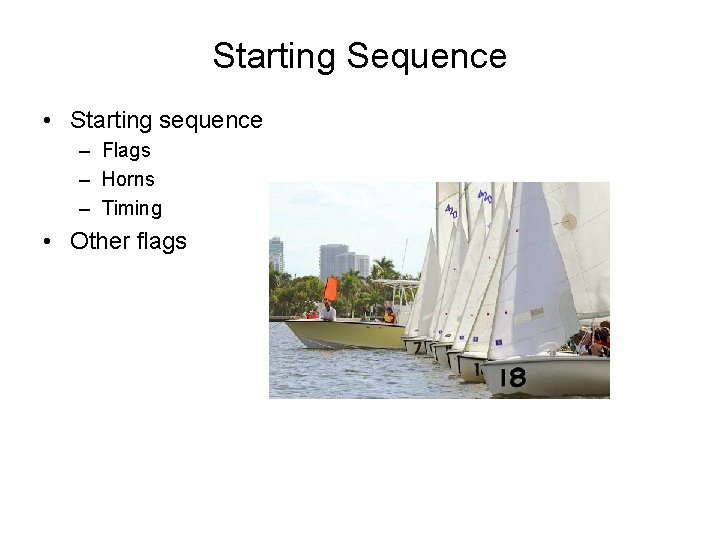
Starting Sequence • Starting sequence – Flags – Horns – Timing • Other flags
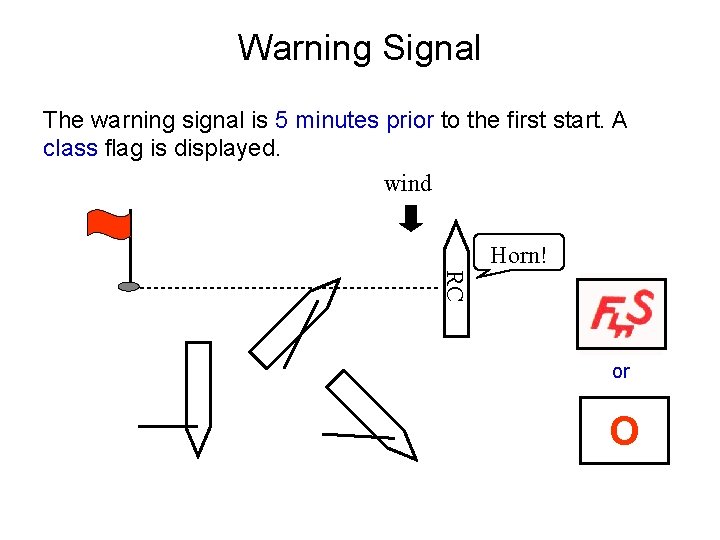
Warning Signal The warning signal is 5 minutes prior to the first start. A class flag is displayed. wind Horn! RC or O
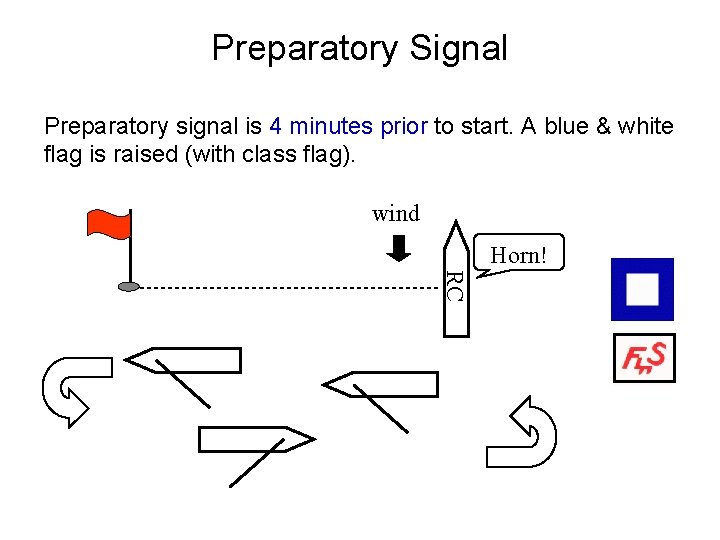
Preparatory Signal Preparatory signal is 4 minutes prior to start. A blue & white flag is raised (with class flag). wind Horn! RC
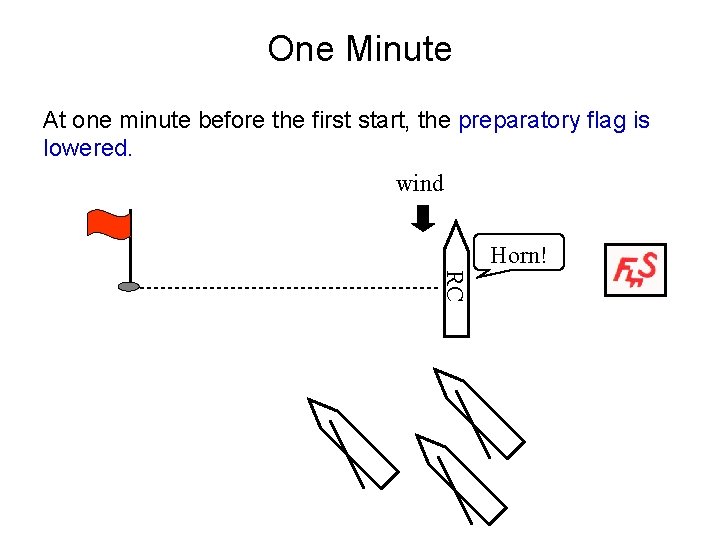
One Minute At one minute before the first start, the preparatory flag is lowered. wind Horn! RC
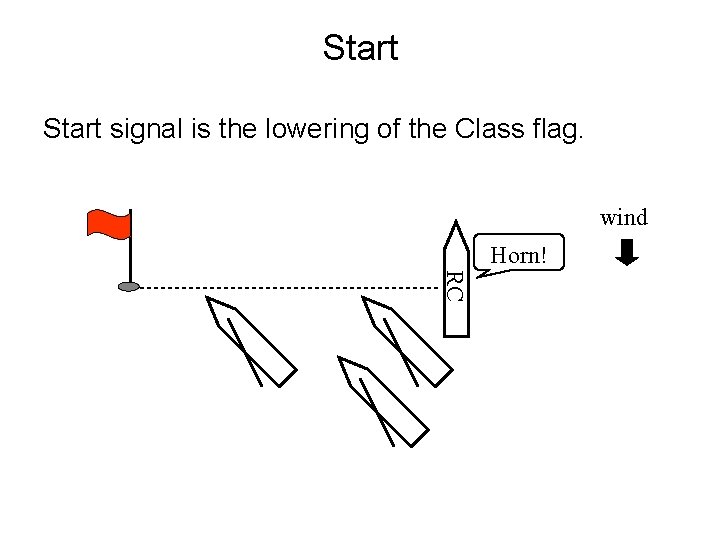
Start signal is the lowering of the Class flag. wind Horn! RC
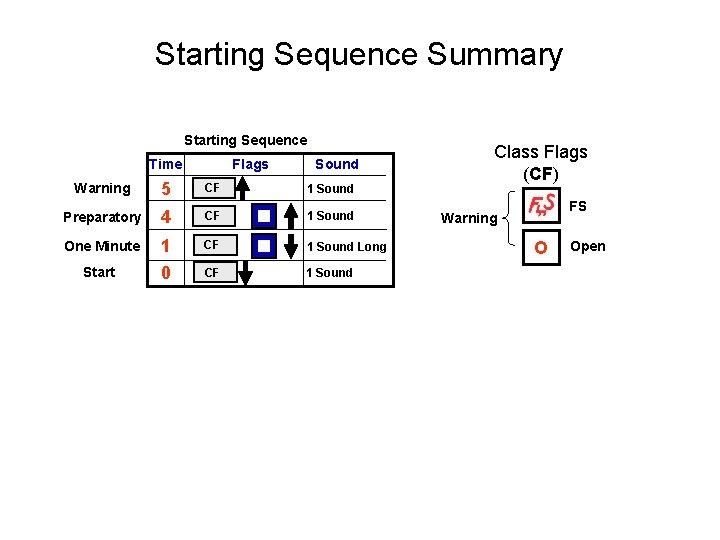
Starting Sequence Summary Starting Sequence Time Flags Sound Warning 5 CF 1 Sound Preparatory 4 CF 1 Sound One Minute 1 0 CF 1 Sound Long CF 1 Sound Start Class Flags (CF) FS Warning O Open
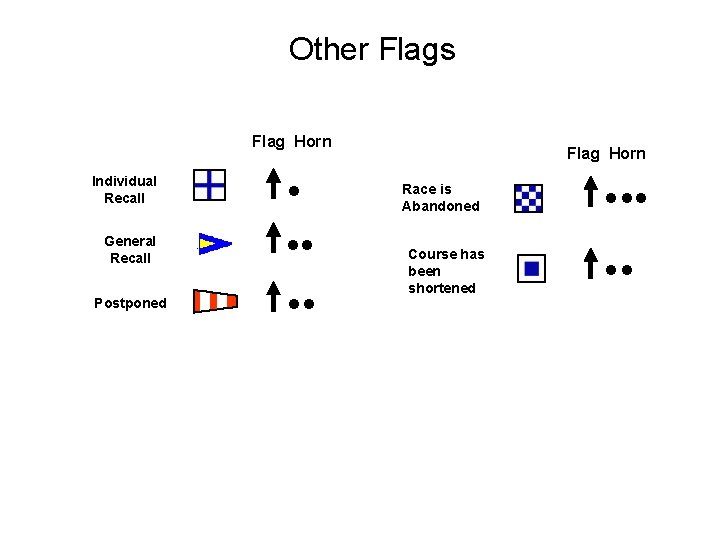
Other Flags Flag Horn Individual Recall General Recall Postponed • • • Flag Horn Race is Abandoned Course has been shortened • • •
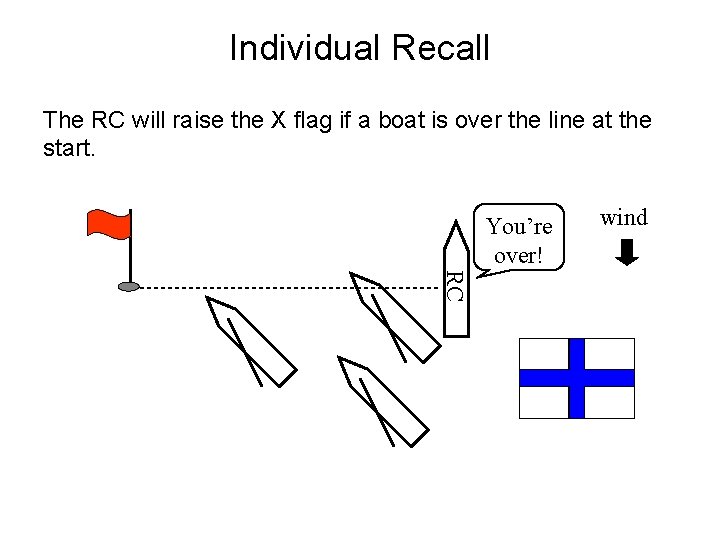
Individual Recall The RC will raise the X flag if a boat is over the line at the start. You’re over! wind RC
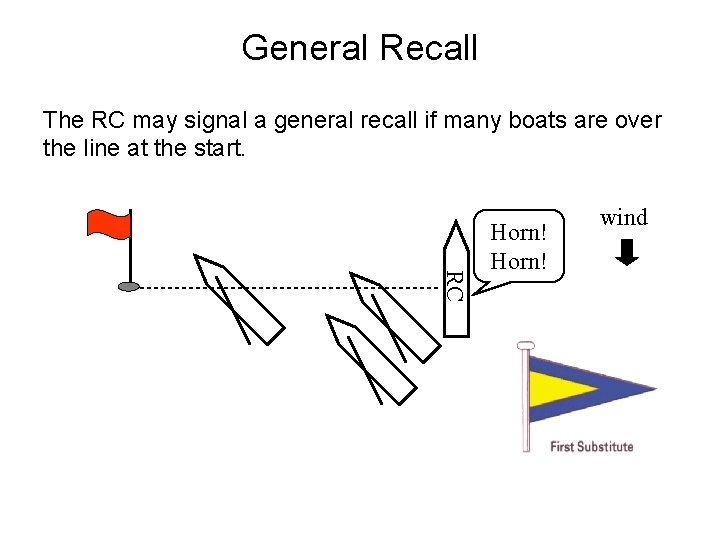
General Recall The RC may signal a general recall if many boats are over the line at the start. RC Horn! wind
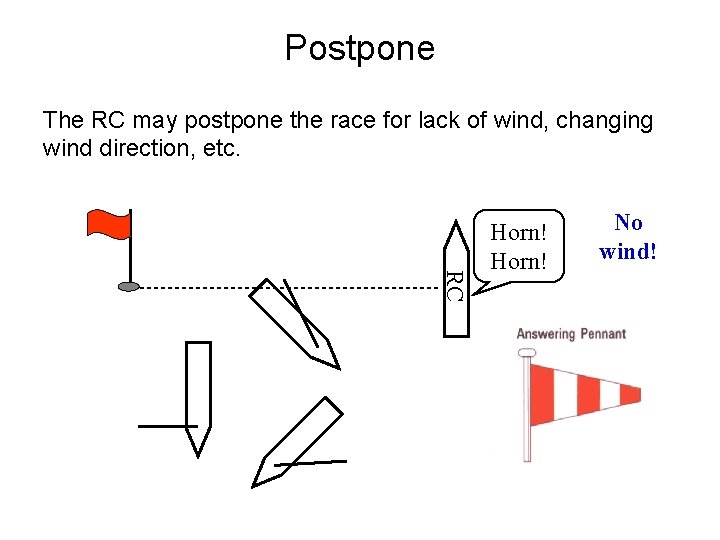
Postpone The RC may postpone the race for lack of wind, changing wind direction, etc. RC Horn! No wind!
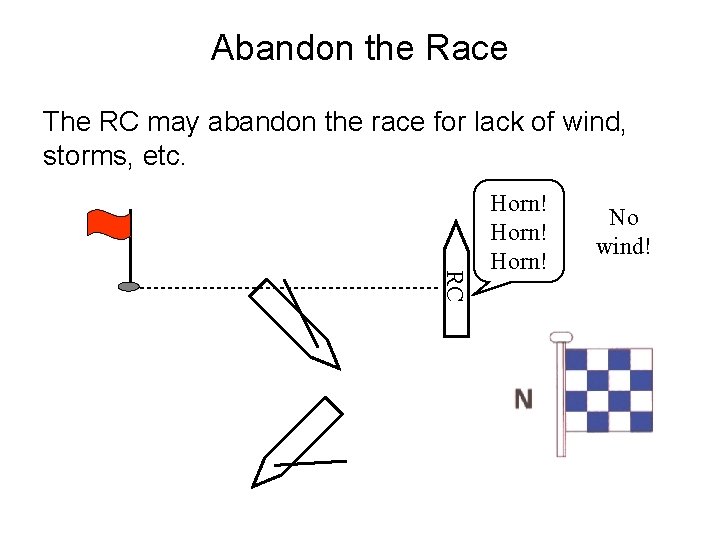
Abandon the Race The RC may abandon the race for lack of wind, storms, etc. RC Horn! No wind!
Rules • Universal rules: Racing Rules of Sailing – free with US Sailing membership • Is uncertainty about the rules keeping you from racing? Don’t let it! Knowing just a few basic rules will take care of almost all of the situations on the race course.
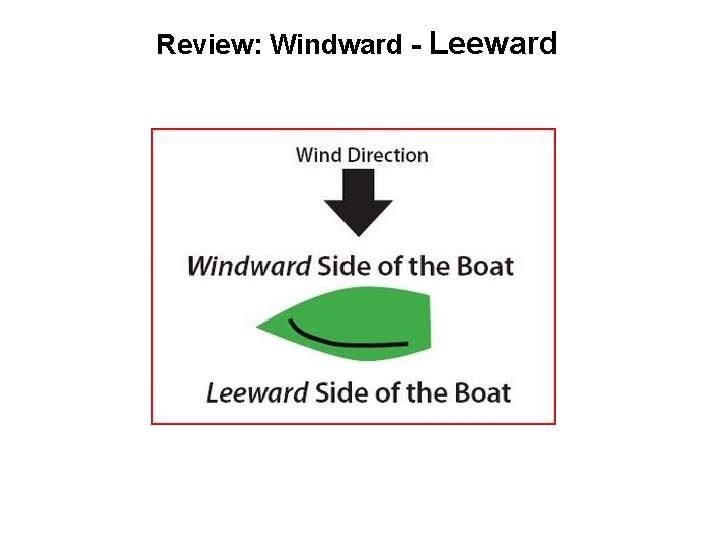
Review: Windward - Leeward
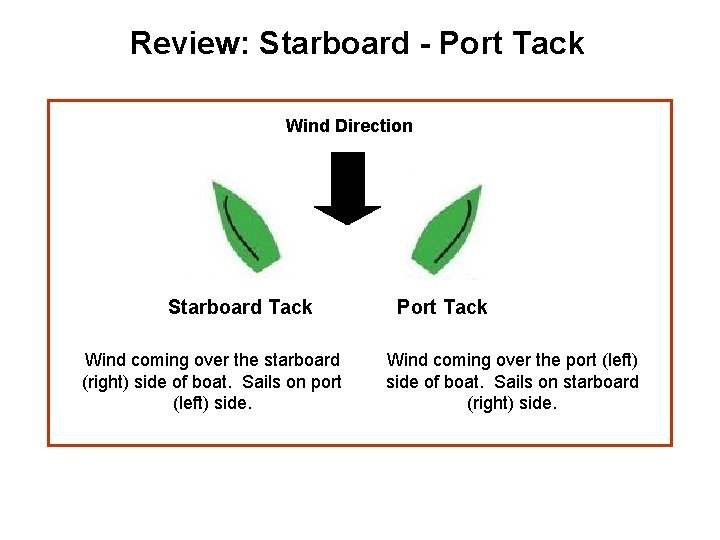
Review: Starboard - Port Tack Wind Direction Starboard Tack Wind coming over the starboard (right) side of boat. Sails on port (left) side. Port Tack Wind coming over the port (left) side of boat. Sails on starboard (right) side.
Basic right-of-way rules Basic rules everyone should know • Starboard tack/port tack • Windward/leeward • Overtaking • Rounding jibe or leeward marks • Don't hit other boats, even if you have the rightof-way!
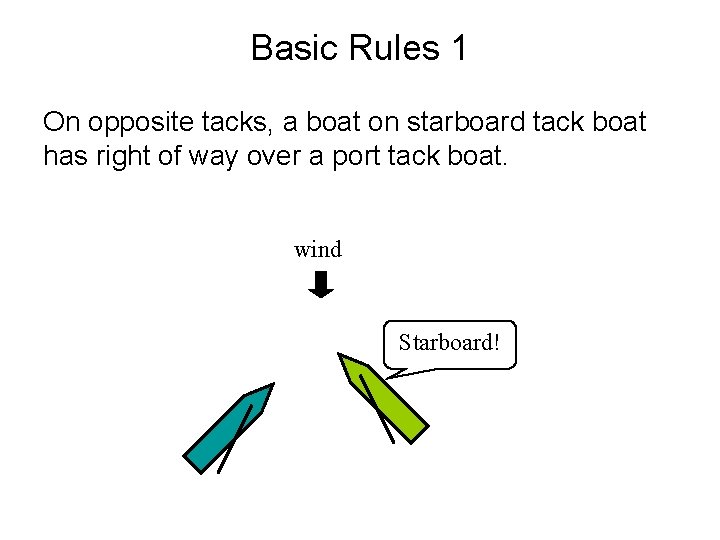
Basic Rules 1 On opposite tacks, a boat on starboard tack boat has right of way over a port tack boat. wind Starboard!
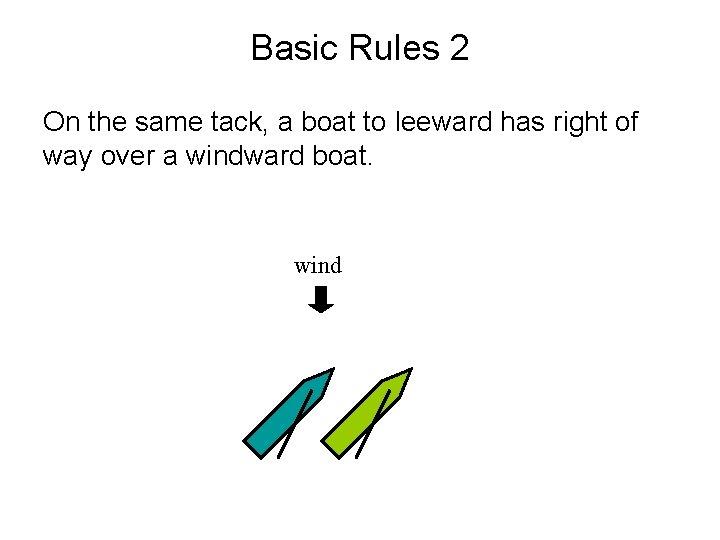
Basic Rules 2 On the same tack, a boat to leeward has right of way over a windward boat. wind
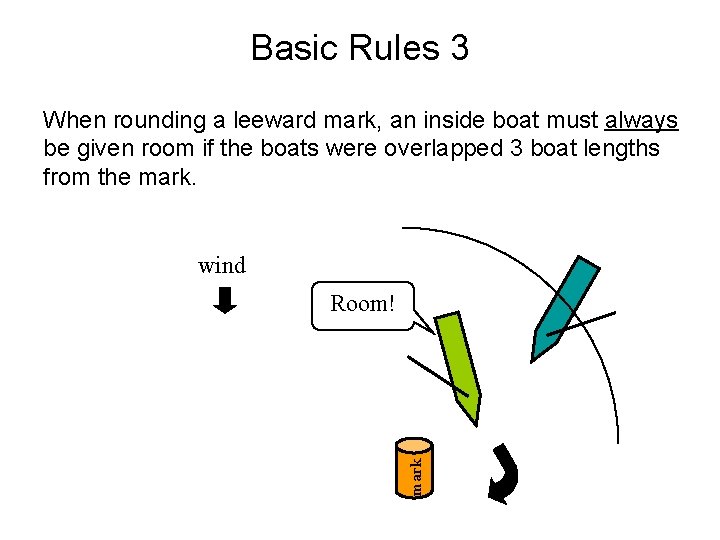
Basic Rules 3 When rounding a leeward mark, an inside boat must always be given room if the boats were overlapped 3 boat lengths from the mark. wind mark Room!
Basic Rules 4 • A boat which is tacking or jibing must keep clear of one that is not • A boat clear astern must keep clear of boat ahead on the same tack • When a right-of-way boat changes course, she must give other boats room to keep clear
Basic Rules 5 What do I do if I break a rule? – If you break a right-of-way rule, you must do two turns promptly after the incident – If you touch a mark, you must do one turn promptly – If there was serious damage, you must retire – You must keep clear of other boats when doing your penalty turns
Short Break
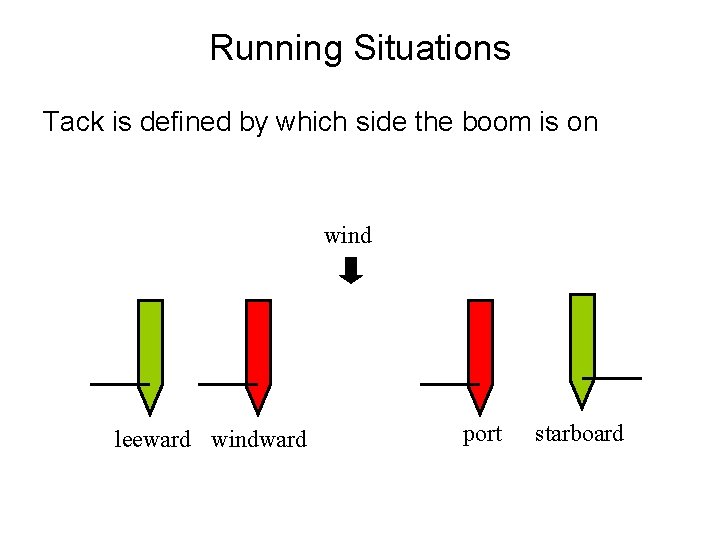
Running Situations Tack is defined by which side the boom is on wind leeward windward port starboard
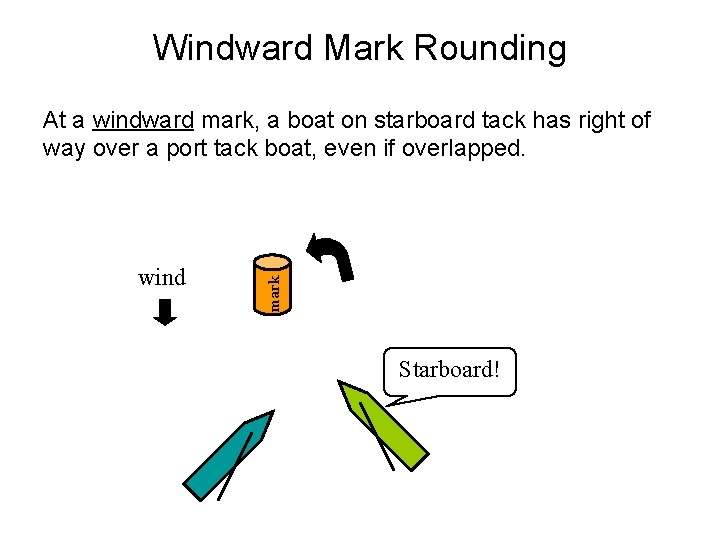
Windward Mark Rounding wind mark At a windward mark, a boat on starboard tack has right of way over a port tack boat, even if overlapped. Starboard!
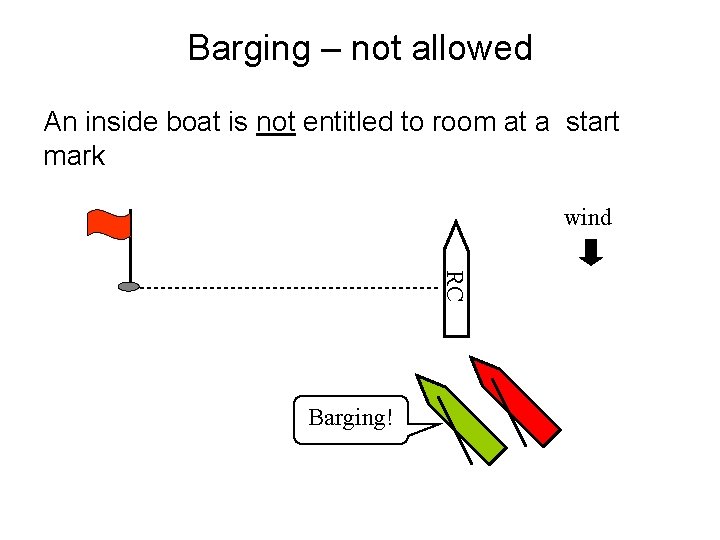
Barging – not allowed An inside boat is not entitled to room at a start mark wind RC Barging!
General Summary of Rules • • • Port keeps clear of starboard. Windward keeps clear of leeward The boat astern keeps clear of the boat ahead. A boat tacking keeps clear of one that is not. Avoid collisions. If you gain right of way or change course, give the other boat time to keep clear. • The inside boat(s) at three boat lengths from the mark is entitled to room to round the mark, if overlapped. • If you have violated one, take a penalty
For Kids and Small Boat Tacticians 1. Don't hit other boats. Collisions are slow and arguments are slower. 2. Port tack boat usually has to stay out of the way of everyone else. 3. Windward boats must stay away from leeward boats. 4. The inside boat gets to go around the mark first. 5. Don't hit marks. Doing circles is slow. 6. Don't hit the committee boat. First, it is a mark and second, it really makes them mad.
Starting line strategy • Find the favored end • Timing
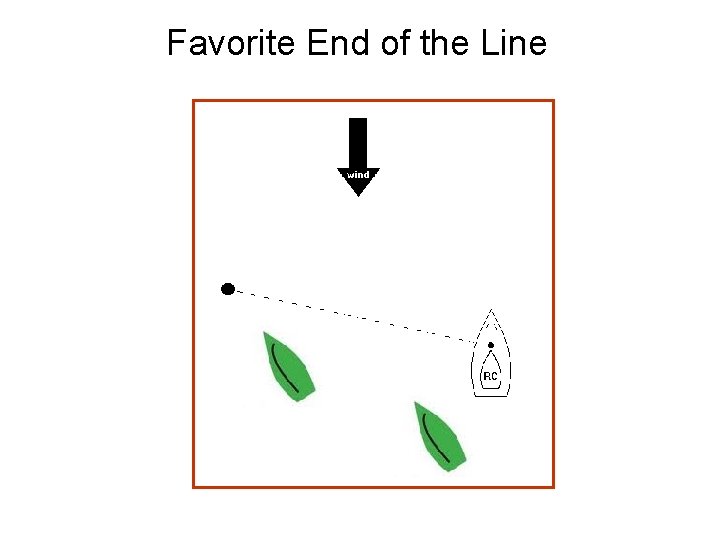
Favorite End of the Line
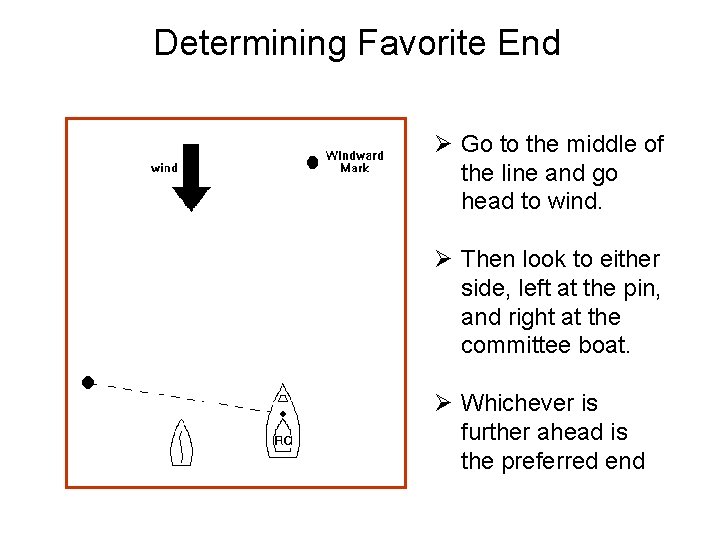
Determining Favorite End Ø Go to the middle of the line and go head to wind. Ø Then look to either side, left at the pin, and right at the committee boat. Ø Whichever is further ahead is the preferred end
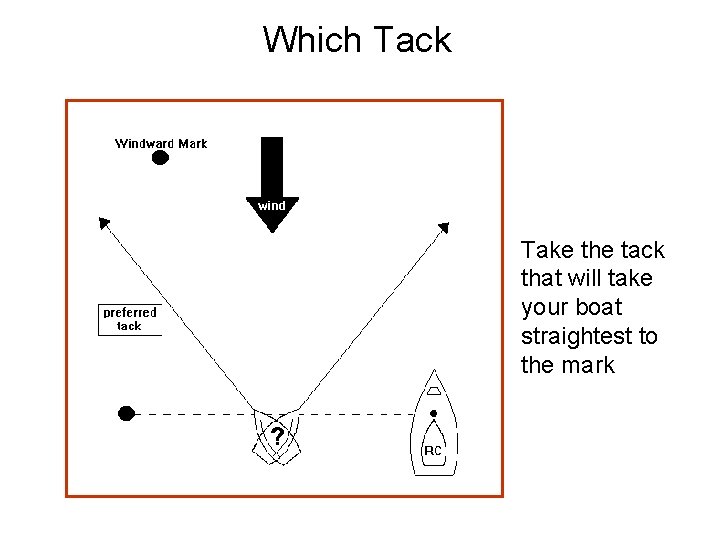
Which Tack Take the tack that will take your boat straightest to the mark
Starting Summary Large gains and losses are made at the start. • When your boat comes off the line, you want to be – in clear air – have good speed – be on the preferred side of the line – be on the right tack.
Upwind Strategy • stay “in phase” with the wind (tack when headed) • find the favored side of the course
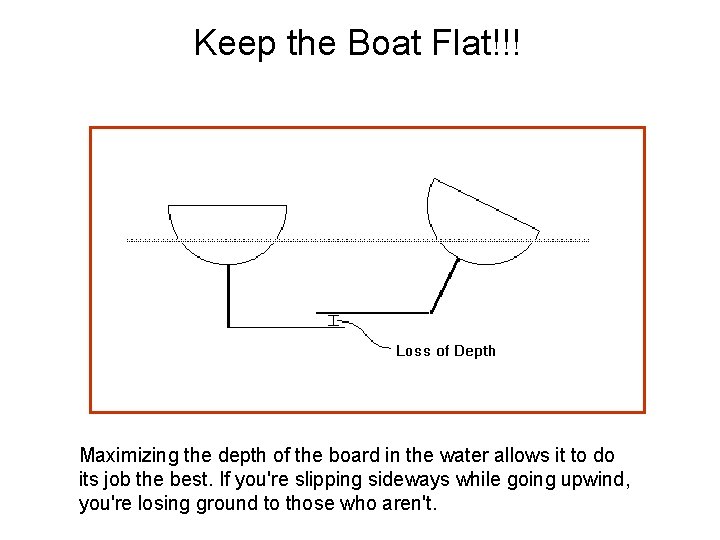
Keep the Boat Flat!!! Maximizing the depth of the board in the water allows it to do its job the best. If you're slipping sideways while going upwind, you're losing ground to those who aren't.
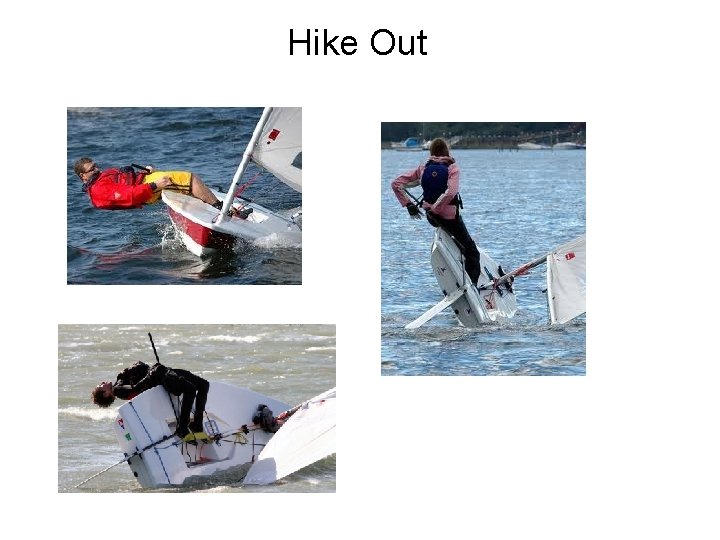
Hike Out
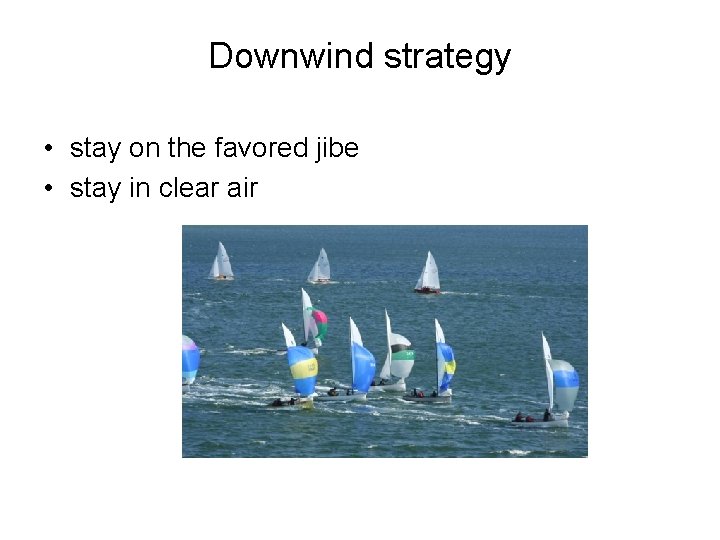
Downwind strategy • stay on the favored jibe • stay in clear air
Mark rounding strategy • get to the inside • prepare for the next leg
Sail Trim • watch other boats! • don’t over-trim in light air
How to improve? • Practice your boat handling and crew work • Read books and newsletters • Ask questions!
Lets Go Sailing
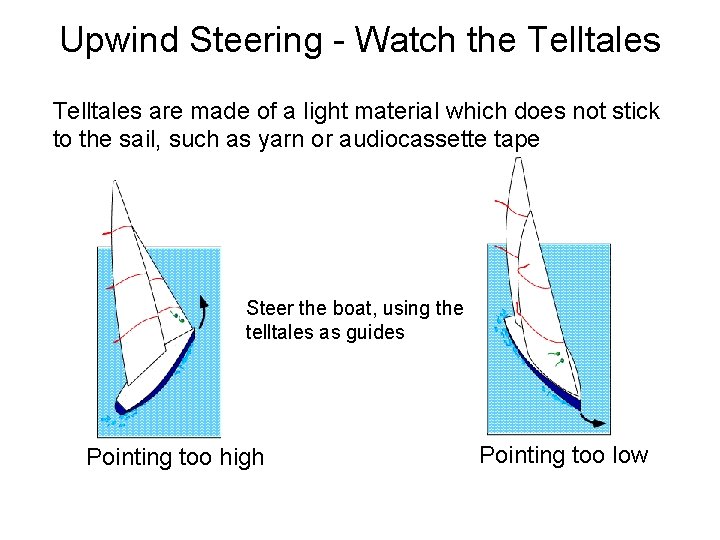
Upwind Steering - Watch the Telltales are made of a light material which does not stick to the sail, such as yarn or audiocassette tape Steer the boat, using the telltales as guides Pointing too high Pointing too low
Leech Telltales The telltale is attached at the end of the top batten pocket The leech tails are of the most value in light to medium air when reaching. • In less than 5 knots of wind adjust the sheet so that the upper tail is visible only sometimes • In medium air the upper tail should show itself about 50% of the time • in heavy air all leech tails must fly constantly
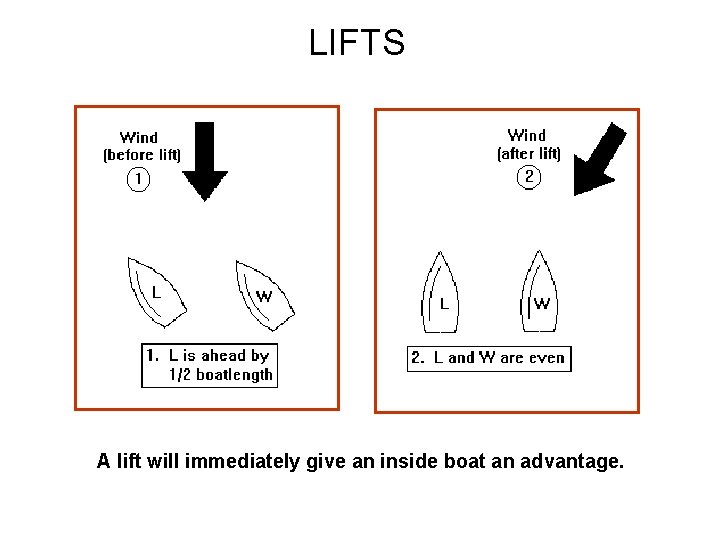
LIFTS A lift will immediately give an inside boat an advantage.
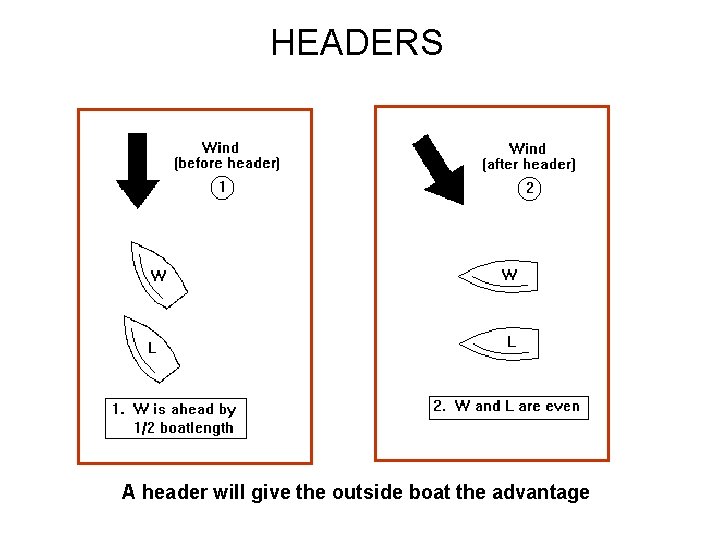
HEADERS A header will give the outside boat the advantage
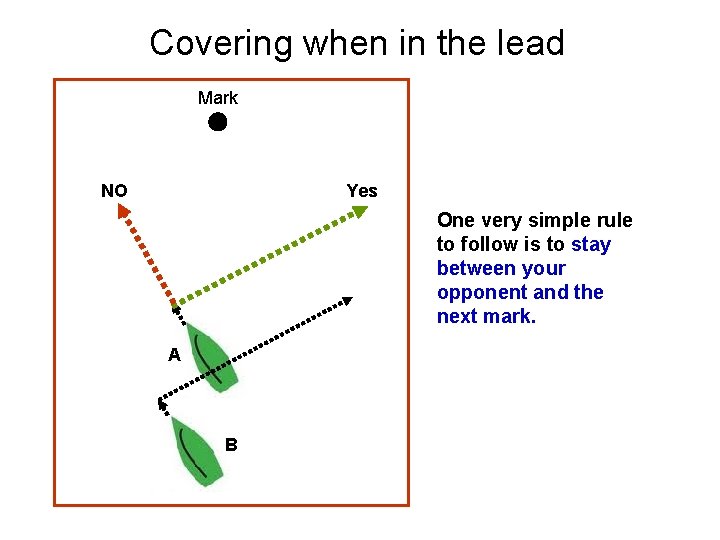
Covering when in the lead Mark NO Yes One very simple rule to follow is to stay between your opponent and the next mark. A B
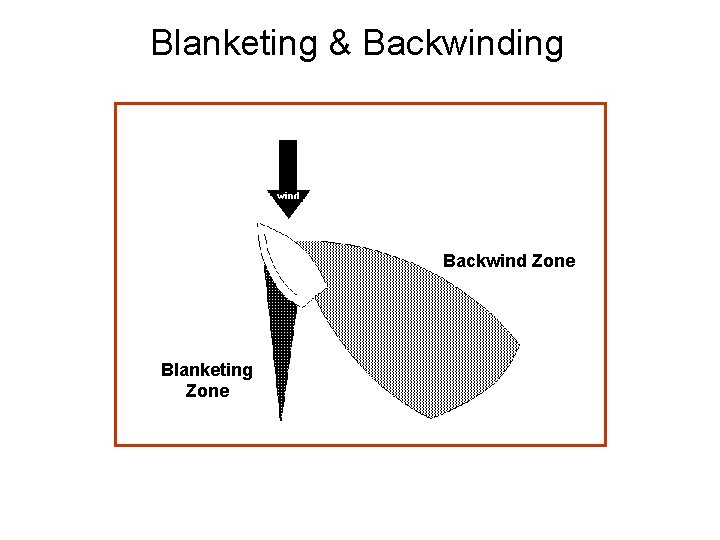
Blanketing & Backwinding Backwind Zone Blanketing Zone
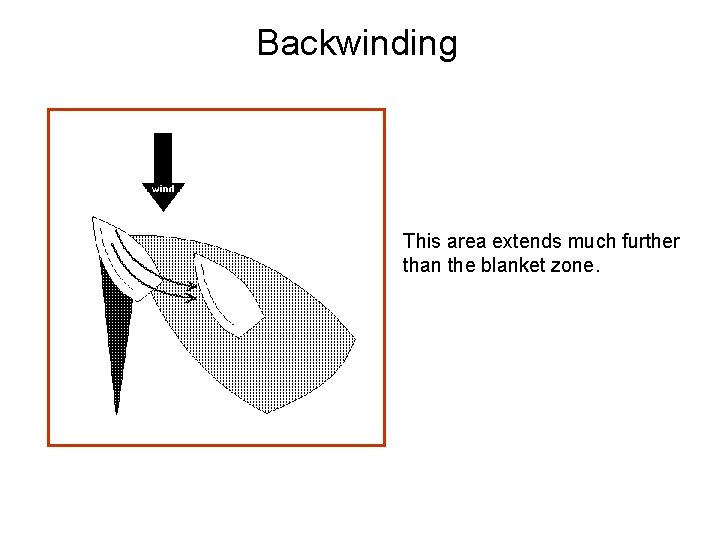
Backwinding This area extends much further than the blanket zone.
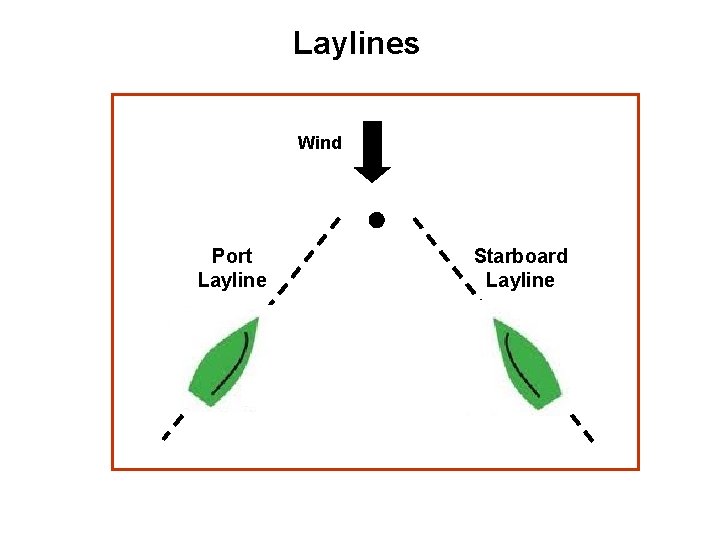
Laylines Wind Port Layline Starboard Layline
- Slides: 56