
Learn English with the grammar slides Simple Past


- Slides: 9
Learn English with the grammar slides!
Simple Past VS Present Perfect
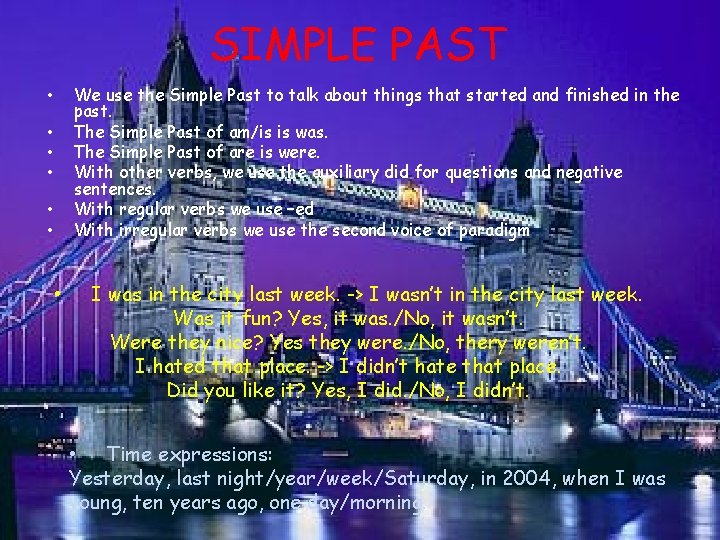
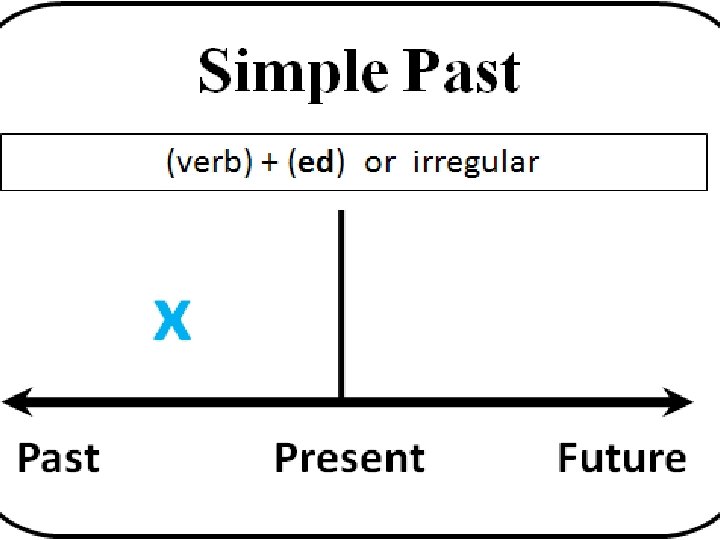
SIMPLE PAST We use the Simple Past to talk about things that started and finished in the past. The Simple Past of am/is is was. The Simple Past of are is were. With other verbs, we use the auxiliary did for questions and negative sentences. With regular verbs we use –ed With irregular verbs we use the second voice of paradigm • • I was in the city last week. -> I wasn’t in the city last week. Was it fun? Yes, it was. /No, it wasn’t. Were they nice? Yes they were. /No, thery weren’t. I hated that place. -> I didn’t hate that place. Did you like it? Yes, I did. /No, I didn’t. • Time expressions: Yesterday, last night/year/week/Saturday, in 2004, when I was young, ten years ago, one day/morning.
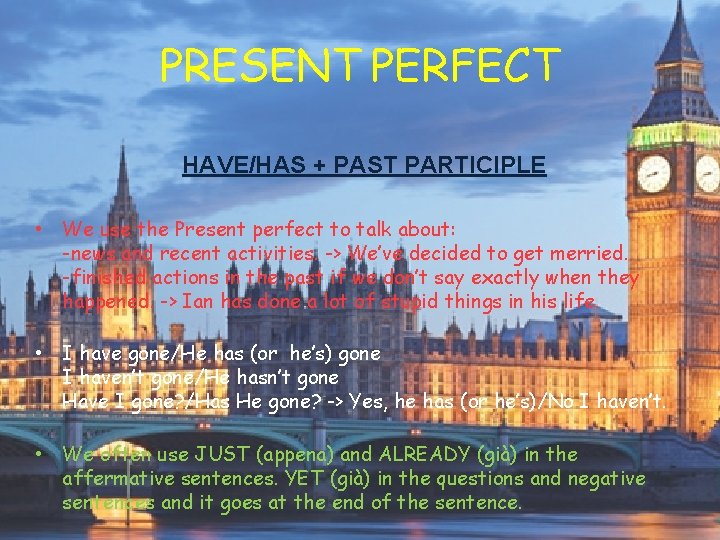
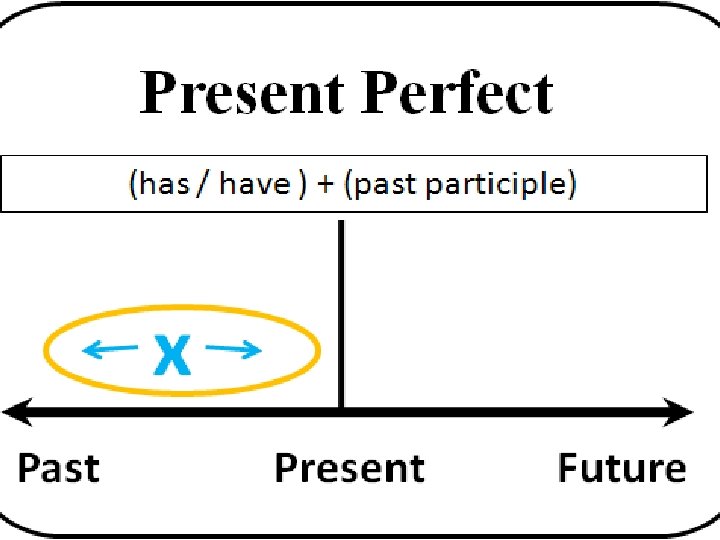
PRESENT PERFECT HAVE/HAS + PAST PARTICIPLE • We use the Present perfect to talk about: -news and recent activities. -> We’ve decided to get merried. -finished actions in the past if we don’t say exactly when they happened. -> Ian has done a lot of stupid things in his life. • I have gone/He has (or he’s) gone I haven’t gone/He hasn’t gone Have I gone? /Has He gone? -> Yes, he has (or he’s)/No I haven’t. • We often use JUST (appena) and ALREADY (già) in the affermative sentences. YET (già) in the questions and negative sentences and it goes at the end of the sentence.
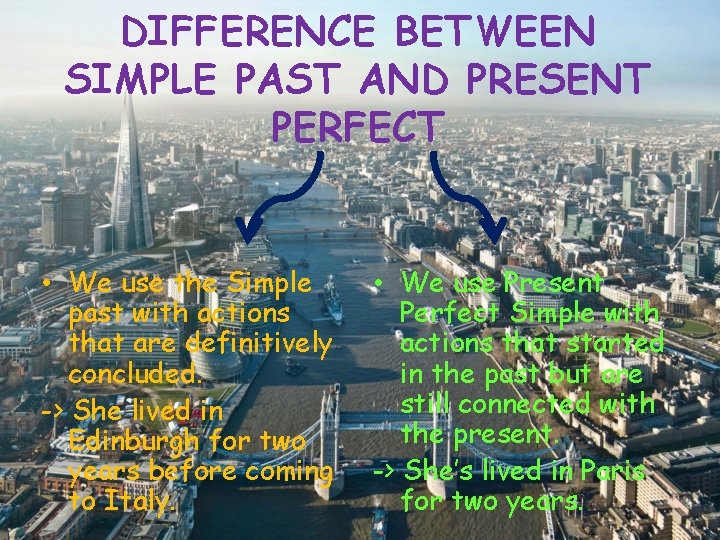
DIFFERENCE BETWEEN SIMPLE PAST AND PRESENT PERFECT • We use the Simple past with actions that are definitively concluded. -> She lived in Edinburgh for two years before coming to Italy. • We use Present Perfect Simple with actions that started in the past but are still connected with the present. -> She’s lived in Paris for two years.
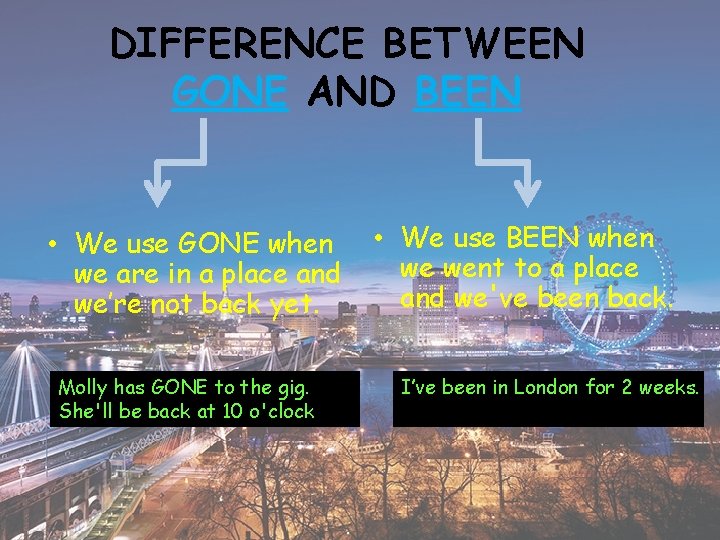
DIFFERENCE BETWEEN GONE AND BEEN • We use GONE when we are in a place and we’re not back yet. Molly has GONE to the gig. She'll be back at 10 o'clock • We use BEEN when we went to a place and we've been back. I’ve been in London for 2 weeks.
HOPE YOU ENJOYED IT! Alessia Fornaro