
Leap Forward Training Understanding Feedback Workshop 1 Leap
Leap. Forward Training: Understanding Feedback Workshop 1 Leap. Forward Learning for Practice: Feedforward for effective transition to the workplace
2 Leap. Forward Training Resources If you choose to use these resources in your own teaching, please attribute the Leap. Forward project, University of Bristol Except where otherwise indicated, this work is licensed under a https: //creativecommons. org/licenses/by-nc/4. 0/ This license allows reusers to distribute, remix, adapt and build upon the material in any medium or format for noncommerical purposes only, and only so long as attribution is given to the creator If you have queries about the resources, please contact Sheena. Warman@bristol. ac. uk
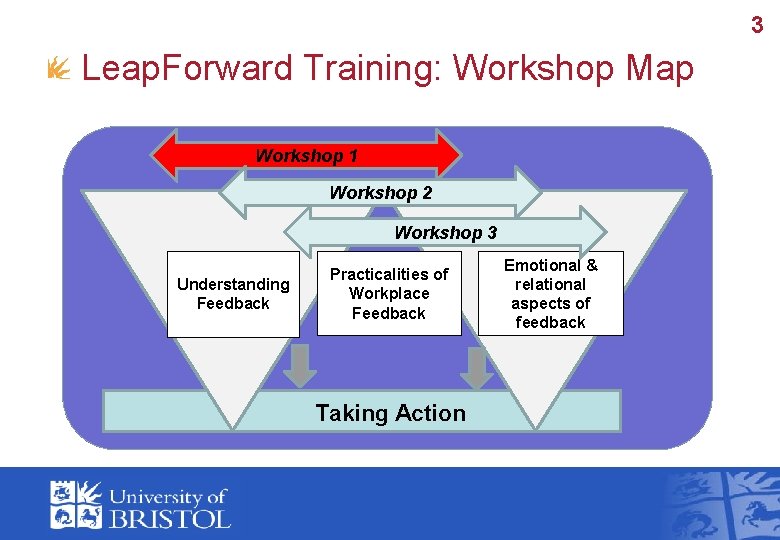
3 Leap. Forward Training: Workshop Map Workshop 1 Workshop 2 Workshop 3 Understanding Feedback Practicalities of Workplace Feedback Taking Action Emotional & relational aspects of feedback
4 Learning outcomes • Explain the importance of feedback (and feedforward) and the student’s role in seeking and using feedback • Describe Hattie and Timperley’s 4 levels of feedback • List key features of effective feedback dialogue • Describe and use a reflective conversation model for feedback dialogue with a peer
5 Activity 1: What is feedback? Discuss with a neighbour and make a few notes that summarise your current understanding of what is meant by “feedback”
6 What is feedback? • Teacher student? • Or a dialogue? • “a process whereby learners obtain information about their work in order to appreciate the similarities and differences between the appropriate standards for any given work, and the qualities of the work itself, in order to generate improved work” 1 1 Boud and Molloy (2013)
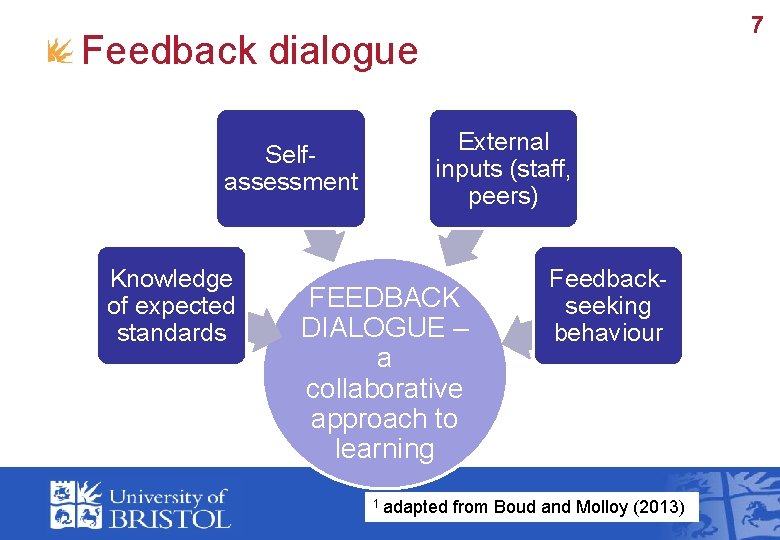
7 Feedback dialogue Selfassessment Knowledge of expected standards External inputs (staff, peers) FEEDBACK DIALOGUE – a collaborative approach to learning 1 adapted Feedbackseeking behaviour from Boud and Molloy (2013)
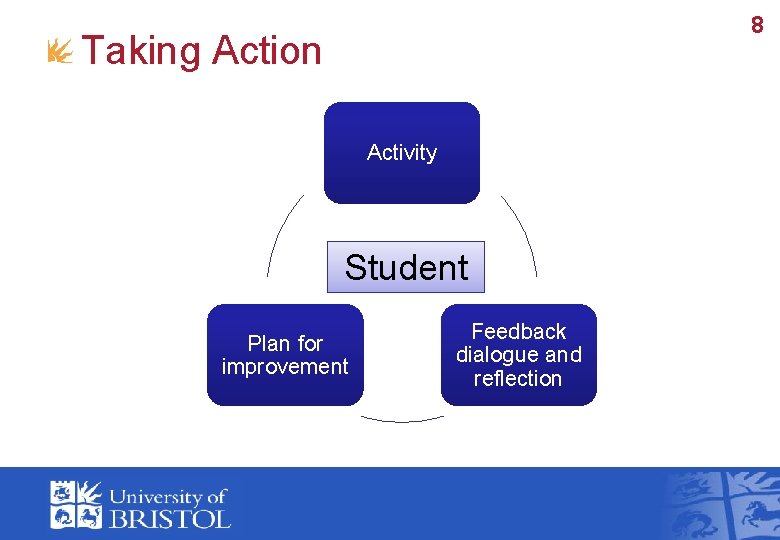
8 Taking Action Activity Student Plan for improvement Feedback dialogue and reflection
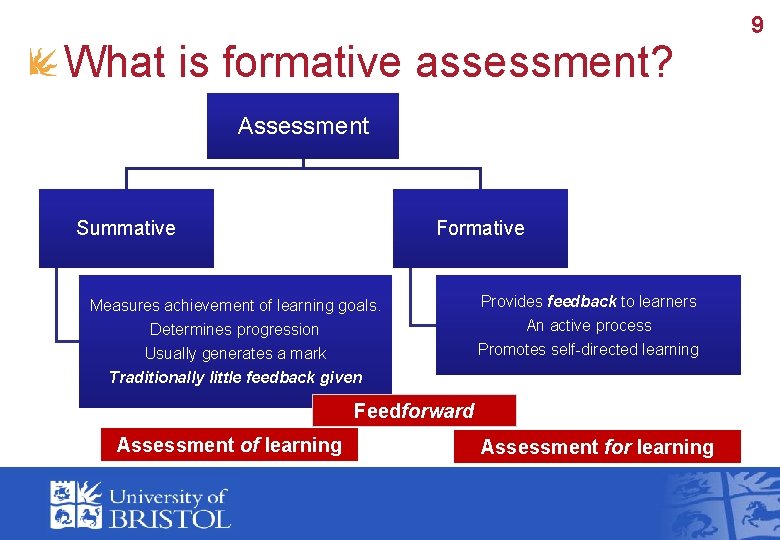
What is formative assessment? Assessment Summative Formative Measures achievement of learning goals. Determines progression Provides feedback to learners Usually generates a mark Traditionally little feedback given Promotes self-directed learning An active process Feedforward Assessment of learning Assessment for learning 9
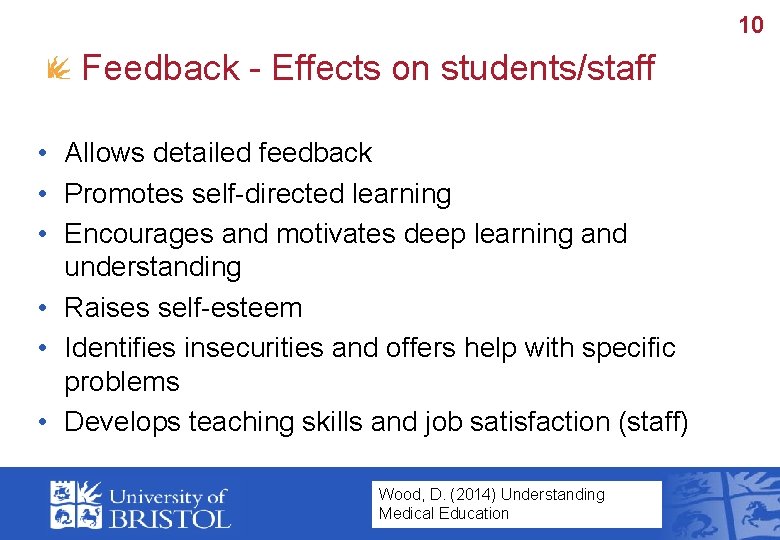
10 Feedback - Effects on students/staff • Allows detailed feedback • Promotes self-directed learning • Encourages and motivates deep learning and understanding • Raises self-esteem • Identifies insecurities and offers help with specific problems • Develops teaching skills and job satisfaction (staff) Wood, D. (2014) Understanding Medical Education
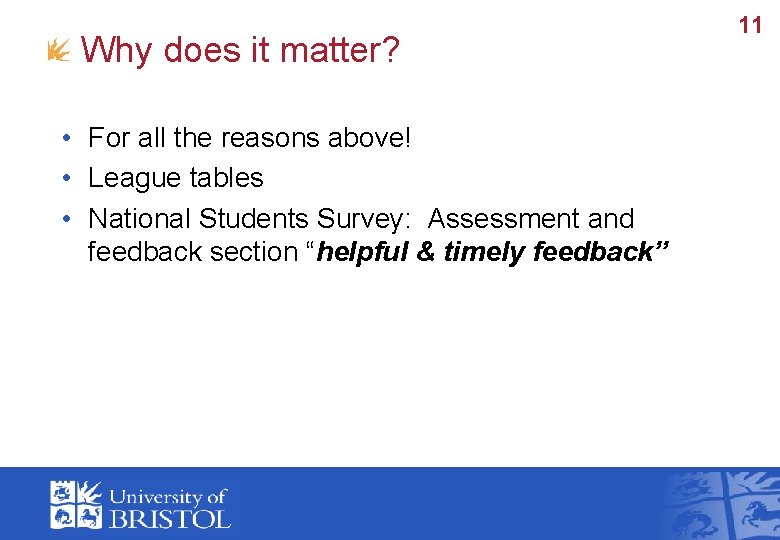
Why does it matter? • For all the reasons above! • League tables • National Students Survey: Assessment and feedback section “helpful & timely feedback” 11
12 The Leap. Forward Project • Interdisciplinary team exploring feedback (feedforward) processes that support transitions to workplace environments • Gathering data from vets, medics, dentists, social workers and theatre (performance) - students and staff • We are all learning! Leap. Forward Learning for Practice: Feedforward for effective transition to the workplace
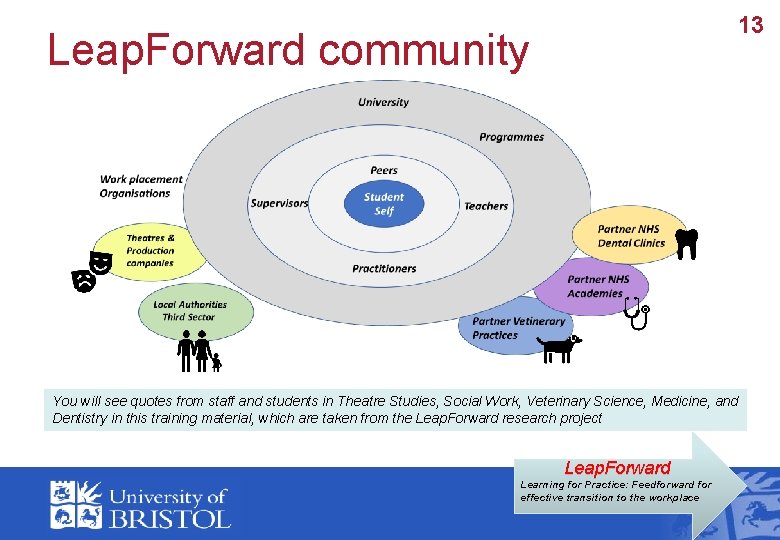
13 Leap. Forward community You will see quotes from staff and students in Theatre Studies, Social Work, Veterinary Science, Medicine, and Dentistry in this training material, which are taken from the Leap. Forward research project Leap. Forward Learning for Practice: Feedforward for effective transition to the workplace
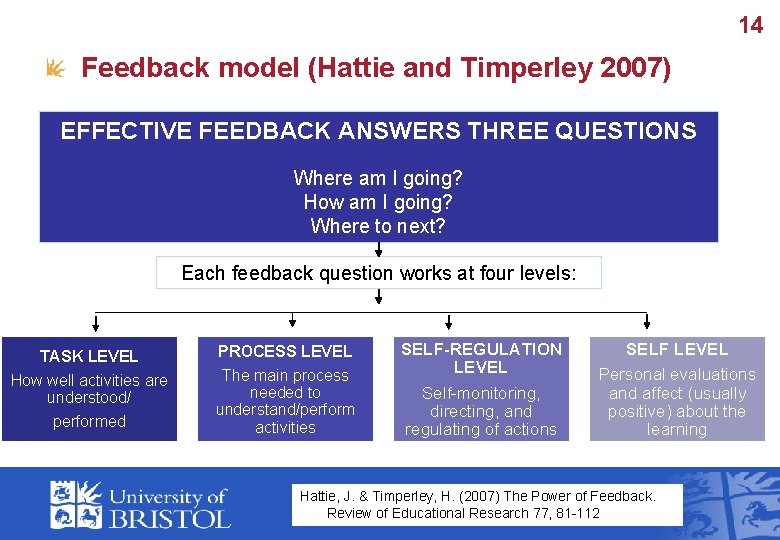
14 Feedback model (Hattie and Timperley 2007) EFFECTIVE FEEDBACK ANSWERS THREE QUESTIONS Where am I going? How am I going? Where to next? Each feedback question works at four levels: TASK LEVEL How well activities are understood/ performed PROCESS LEVEL The main process needed to understand/perform activities SELF-REGULATION LEVEL Self-monitoring, directing, and regulating of actions SELF LEVEL Personal evaluations and affect (usually positive) about the learning Hattie, J. & Timperley, H. (2007) The Power of Feedback. Review of Educational Research 77, 81 -112
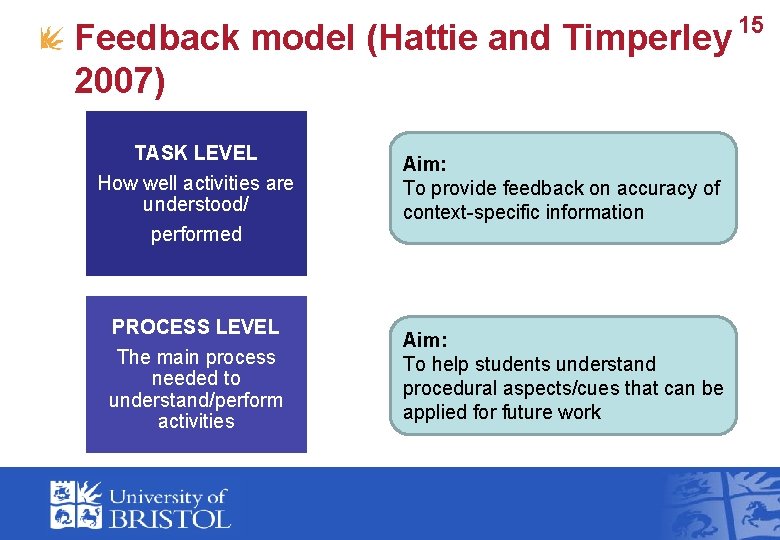
Feedback model (Hattie and Timperley 2007) TASK LEVEL How well activities are understood/ performed Aim: To provide feedback on accuracy of context-specific information PROCESS LEVEL The main process needed to understand/perform activities Aim: To help students understand procedural aspects/cues that can be applied for future work 15
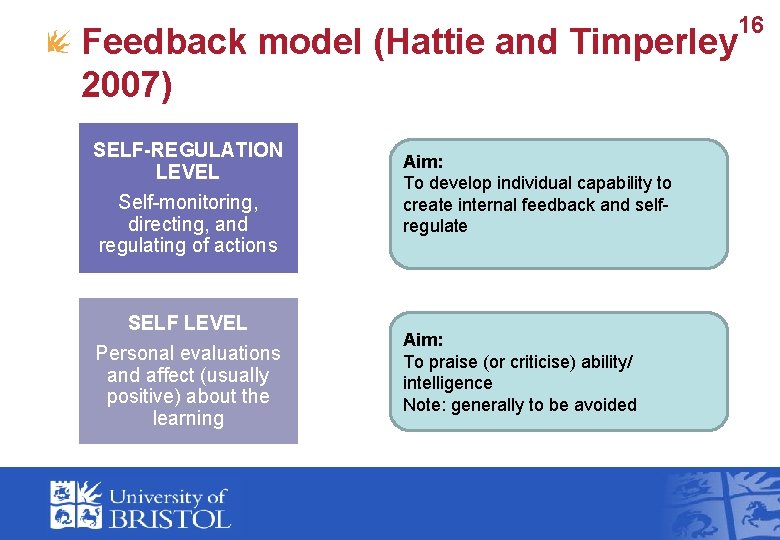
16 Feedback model (Hattie and Timperley 2007) SELF-REGULATION LEVEL Self-monitoring, directing, and regulating of actions Aim: To develop individual capability to create internal feedback and selfregulate SELF LEVEL Personal evaluations and affect (usually positive) about the learning Aim: To praise (or criticise) ability/ intelligence Note: generally to be avoided
19 Activity 2: Feedback effectiveness • Read statements on the activity sheet • Discuss each comment • What helps learning • What hinders learning
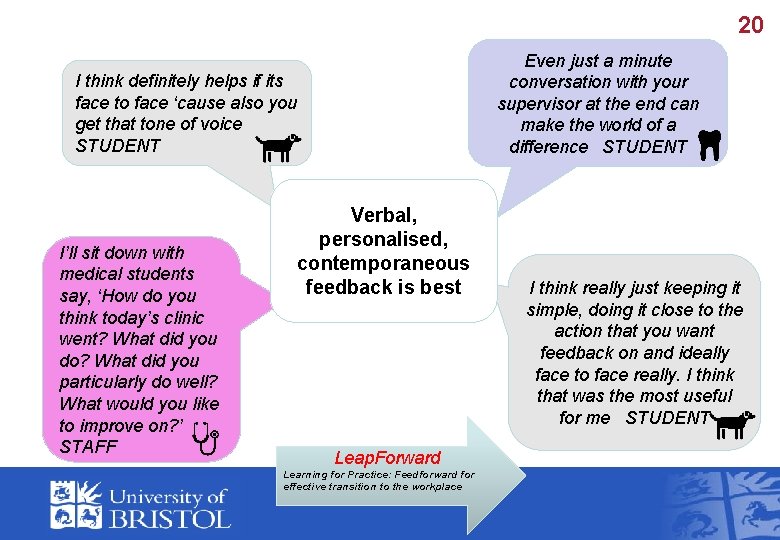
20 Even just a minute conversation with your supervisor at the end can make the world of a difference STUDENT I think definitely helps if its face to face ‘cause also you get that tone of voice STUDENT I’ll sit down with medical students say, ‘How do you think today’s clinic went? What did you do? What did you particularly do well? What would you like to improve on? ’ STAFF Verbal, personalised, contemporaneous feedback is best Leap. Forward Learning for Practice: Feedforward for effective transition to the workplace I think really just keeping it simple, doing it close to the action that you want feedback on and ideally face to face really. I think that was the most useful for me STUDENT
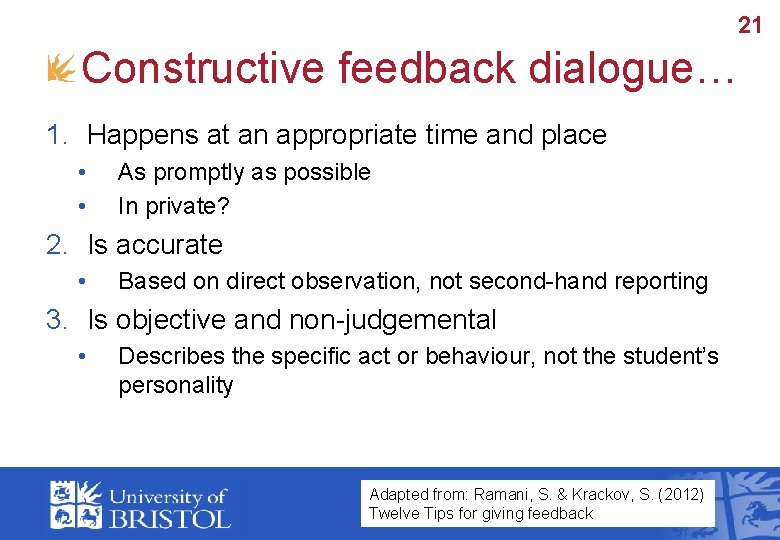
21 Constructive feedback dialogue… 1. Happens at an appropriate time and place • • As promptly as possible In private? 2. Is accurate • Based on direct observation, not second-hand reporting 3. Is objective and non-judgemental • Describes the specific act or behaviour, not the student’s personality Adapted from: Ramani, S. & Krackov, S. (2012) Twelve Tips for giving feedback
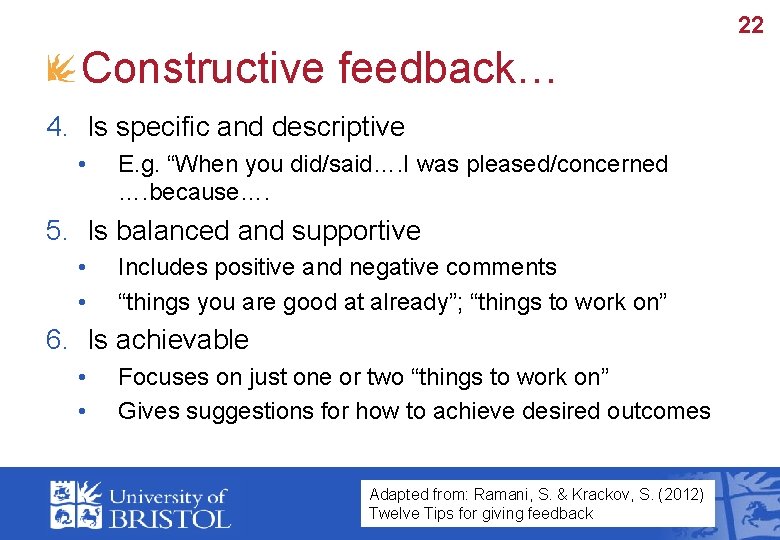
22 Constructive feedback… 4. Is specific and descriptive • E. g. “When you did/said…. I was pleased/concerned …. because…. 5. Is balanced and supportive • • Includes positive and negative comments “things you are good at already”; “things to work on” 6. Is achievable • • Focuses on just one or two “things to work on” Gives suggestions for how to achieve desired outcomes Adapted from: Ramani, S. & Krackov, S. (2012) Twelve Tips for giving feedback
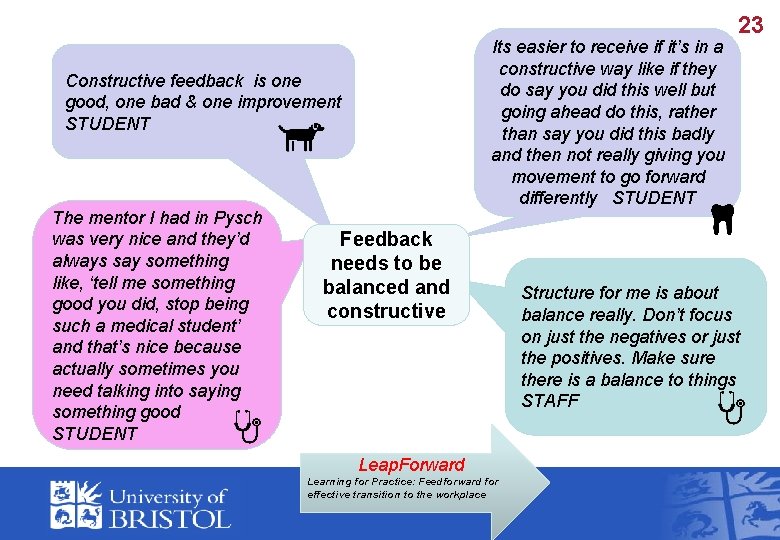
Its easier to receive if it’s in a constructive way like if they do say you did this well but going ahead do this, rather than say you did this badly and then not really giving you movement to go forward differently STUDENT Constructive feedback is one good, one bad & one improvement STUDENT The mentor I had in Pysch was very nice and they’d always say something like, ‘tell me something good you did, stop being such a medical student’ and that’s nice because actually sometimes you need talking into saying something good STUDENT Feedback needs to be balanced and constructive Leap. Forward Learning for Practice: Feedforward for effective transition to the workplace 23 Structure for me is about balance really. Don’t focus on just the negatives or just the positives. Make sure there is a balance to things STAFF
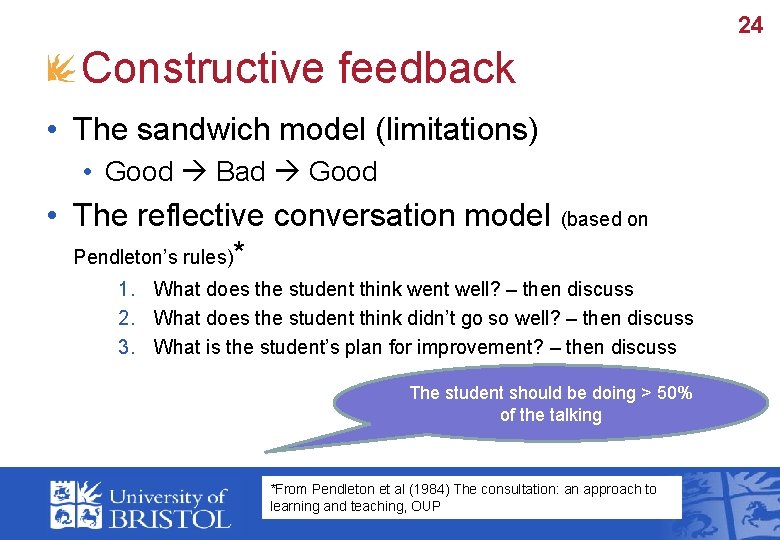
24 Constructive feedback • The sandwich model (limitations) • Good Bad Good • The reflective conversation model (based on Pendleton’s rules)* 1. What does the student think went well? – then discuss 2. What does the student think didn’t go so well? – then discuss 3. What is the student’s plan for improvement? – then discuss The student should be doing > 50% of the talking *From Pendleton et al (1984) The consultation: an approach to learning and teaching, OUP
25 Activity 3: Have a go! • Work in pairs; label yourselves A and B • Each pair (don’t start yet!) • Person A: Draw a cow • Person B: Draw a sheep • You will have 1 minute for your drawing • You will then have 1 minute each to have a feedback conversation about your drawing
26 Activity 3: Debrief • Consider your feedback from your “tutor” • How was that experience and how did you feel…. • As tutor, giving feedback? • As artist, receiving feedback?
27 Learning outcomes • Explain the importance of feedback (and feedforward) and the student’s role in seeking and using feedback • Explain the difference between summative and formative assessment • Describe Hattie and Timperley’s 4 levels of feedback • List key features of effective feedback dialogue • Describe and use a reflective conversation model for feedback dialogue with a peer
30 Summary & close • One take home message • Attendance/sign-in arrangements • Workshop feedback form • Thank you!
References and resources • • • Molloy E, & Boud, D. Seeking a different angle on feedback in clinical education: the learner as seeker, judge and user of performance information. Medical Education 47(3): 227 -229, 2013. Hattie, J. & Timperley, H. (2007) The Power of Feedback. Review of Educational Research 77, 81 -112 Wood, D. in Swanwick, T. , (2014) Understanding medical education: Evidence, theory and practice / edited by Professor Tim Swanwick. (Second ed. ) Ramani, S. & Krackov, S. K. (2012) Twelve tips for giving feedback effectively in the clinical environment, Medical Teacher, 34: 10, 787 -791 Pendleton D, Schofield T. , Tate P. , Havelock P. (1984) The Consultation: An Approach to Learning and Teaching. Oxford: Oxford University Press; Leap. Forward project Resource Toolkit: We have developed a resource toolkit containing a summary of key theoretical frameworks, practical aides, guidelines, and models. This resource is intended to supplement the Leap. Forward training packages, and is available for staff to consult to support feedback and feedforward activities and practices 31
- Slides: 27