
LEAN LABORATORY PRACTICES DR AYE KHINE CHEMICAL PATHOLOGY
LEAN LABORATORY PRACTICES DR AYE KHINE CHEMICAL PATHOLOGY NHLS TYGERBERG STELLENBOSCH UNIBERSITY Lab Management workshop 3 -6 June 2019
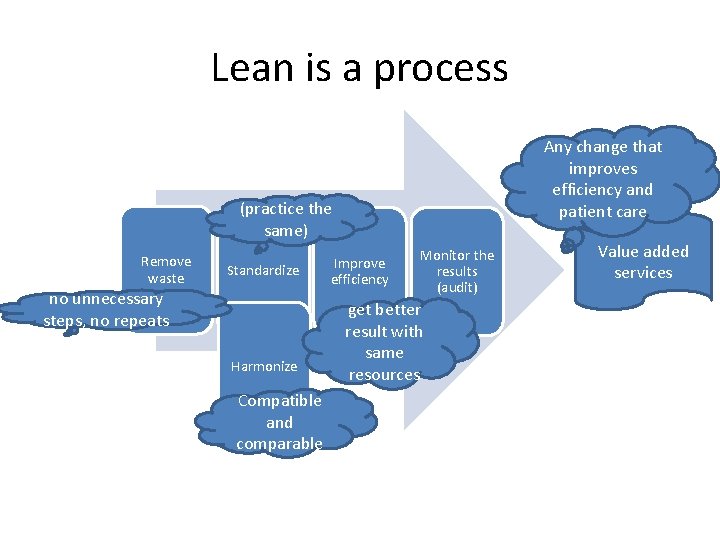
Lean is a process Any change that improves efficiency and patient care (practice the same) Remove waste Standardize no unnecessary steps, no repeats Harmonize Compatible and comparable Improve efficiency Monitor the results (audit) get better result with same resources Value added services
Exercise • Value added lean practices – Give examples • Non value added practices (not lean) – Give examples
Waste • Required waste or purposeful waste – give example – QC/EQA – Calibration – Health and safety
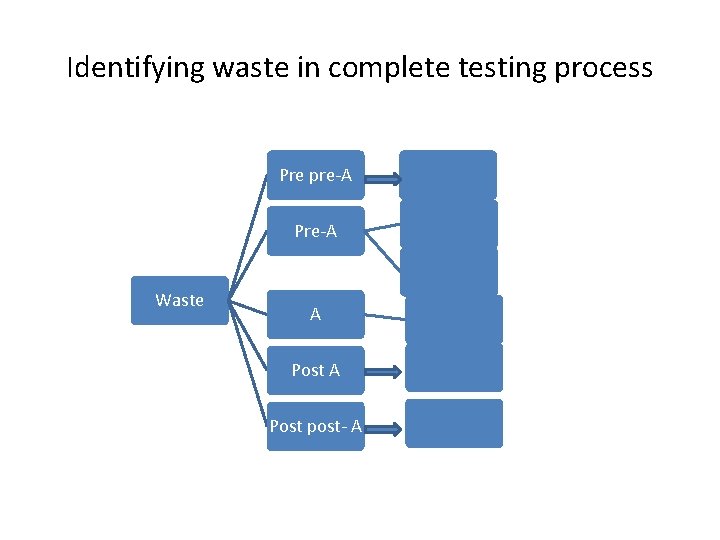
Identifying waste in complete testing process Pre pre-A Pre-A Waste A Post post- A
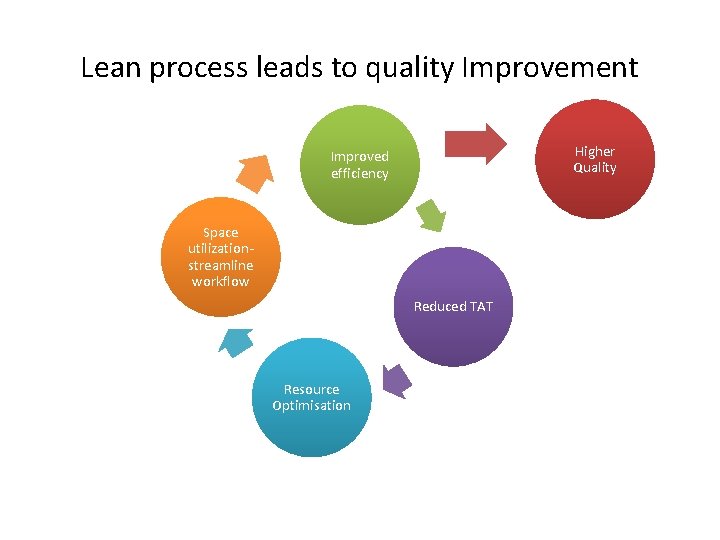
Lean process leads to quality Improvement Higher Quality Improved efficiency Space utilization- streamline workflow Reduced TAT Resource Optimisation
How? • Workflow analysis – Study your processes: Do a survey or audit for a day or week – Follow a rack of samples through your lab (choose urgent and routine racks) • Benchmark before you implement • Run a pilot for a week • Understand the impact of the change on the rest of the service • Do this before spending money on technology!

Lean process in workflow • Replaces processes with more reliable ones • Facilitates to make work easier to perform • Detects errors when it occurs • Eliminates possibility of error (Predicts errors)
From workflow analysis to Data • surveys, interviews and audits – Discussions with staff can focus on what impacts their day-to-day tasks – Charts show real issues – Impact of issues on service – Use data to • Influence decision makers • To get attention of staff involved

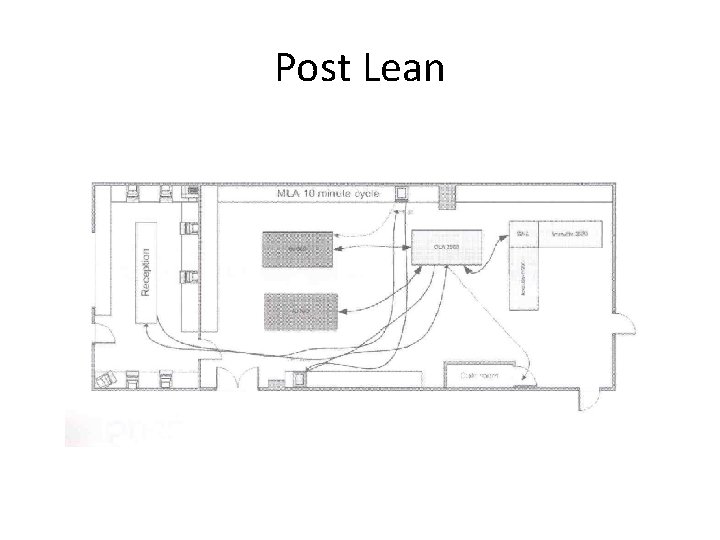
Spaghetti Maps
Post Lean


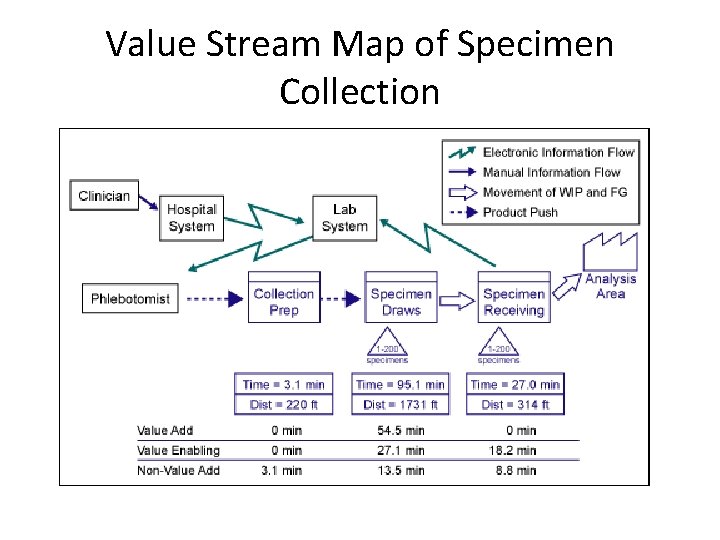
Lean Analysis Reveals Opportunities The daily specimen collection run at the hospital began at 6 a. m. The majority of the volume occurred during this hour. This created a bottleneck (Figure 1) that affected all parts of the process.
Value Stream Map of Specimen Collection
Other Areas to be lean to improve workflow • • • LIMS QCQA INVENTORY HR Safety and risk
Basic Lean Rules 1 • Do not make changes until you understand the current situation and analyse data • Make changes based on data, not emotion! • Communicate 360* • Include staff in the plan- listen to your staff • Facilitate new ideas • Work with the suppliers • Pilot first and evaluate the change
A Lean Workplace. . . • • • looks organised and clean Samples flow without bottle necks Results meet TAT Fewer staff needed for the same output Others moved to special bench or sent for workplace skill development Very few rejections No stock outs or expiries Spend less than budgeted Revenue exceeds expenditure Staff happy: bonuses and job satisfaction Management happy
LEAN PROCESS AND SIX SIGMA
Copy Right- only for training purposes and not permitted for publications
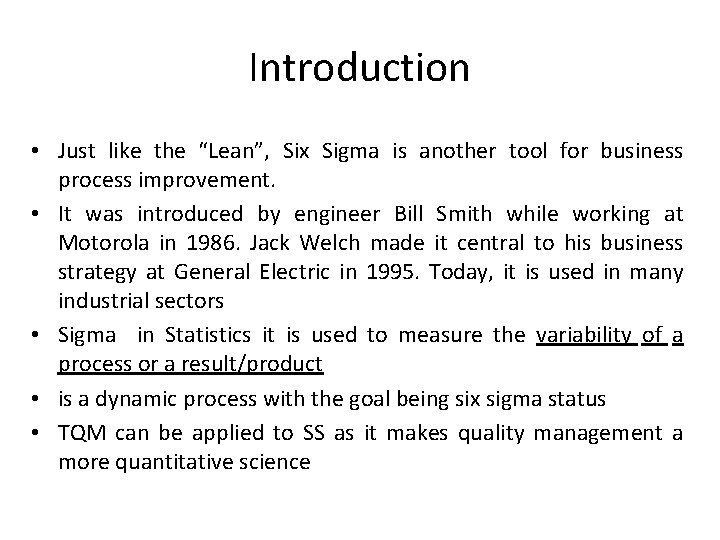
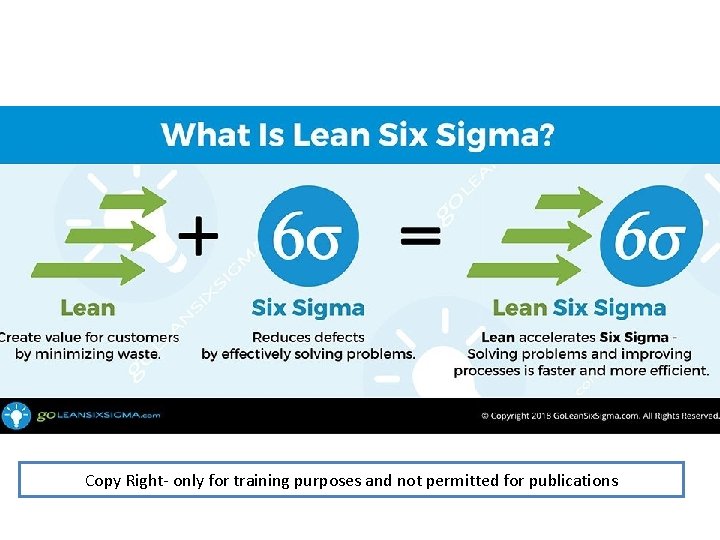
Introduction • Just like the “Lean”, Six Sigma is another tool for business process improvement. • It was introduced by engineer Bill Smith while working at Motorola in 1986. Jack Welch made it central to his business strategy at General Electric in 1995. Today, it is used in many industrial sectors • Sigma in Statistics it is used to measure the variability of a process or a result/product • is a dynamic process with the goal being six sigma status • TQM can be applied to SS as it makes quality management a more quantitative science
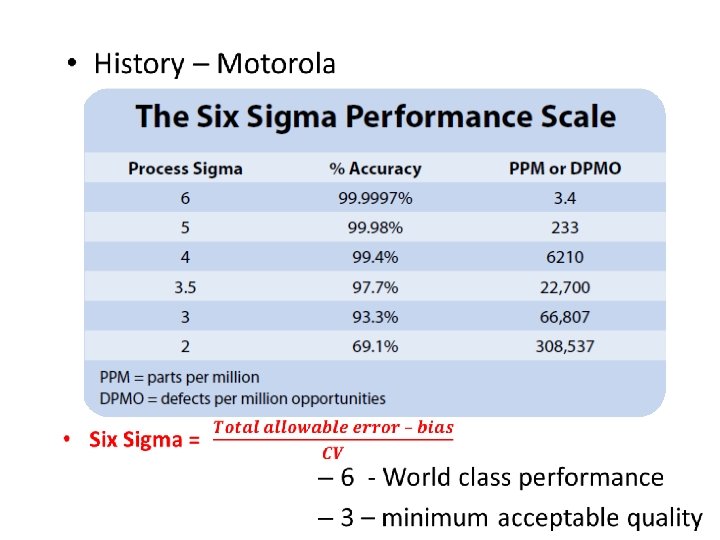
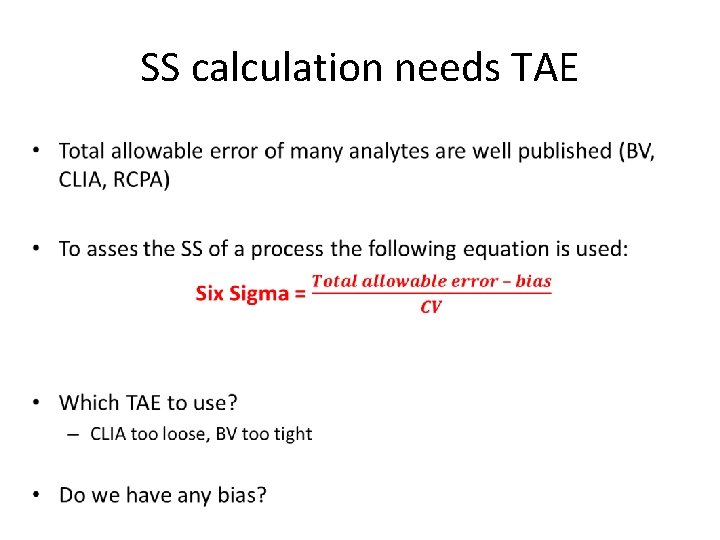
SS calculation needs TAE •
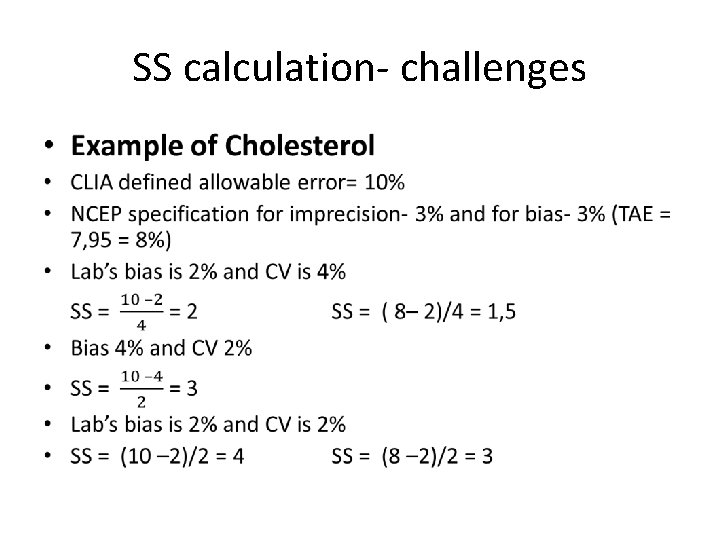
SS calculation- challenges •
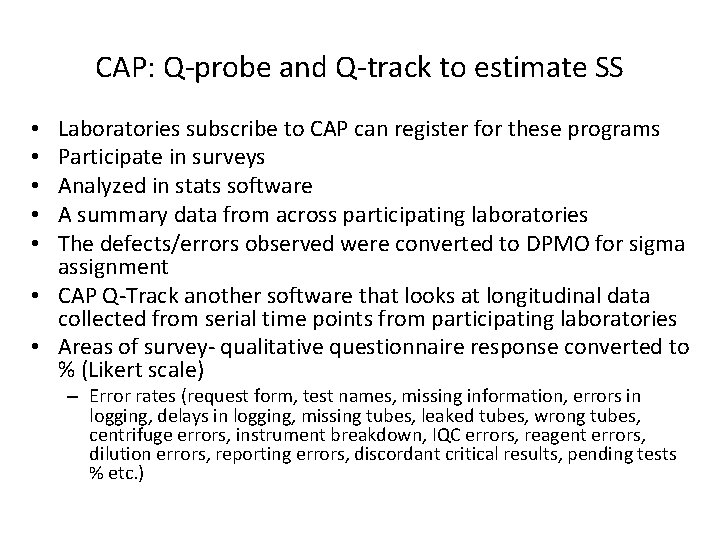
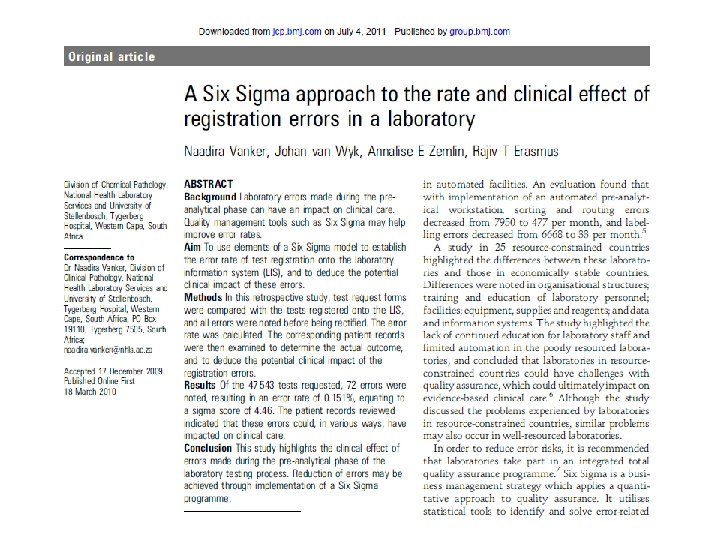
CAP: Q-probe and Q-track to estimate SS Laboratories subscribe to CAP can register for these programs Participate in surveys Analyzed in stats software A summary data from across participating laboratories The defects/errors observed were converted to DPMO for sigma assignment • CAP Q-Track another software that looks at longitudinal data collected from serial time points from participating laboratories • Areas of survey- qualitative questionnaire response converted to % (Likert scale) • • • – Error rates (request form, test names, missing information, errors in logging, delays in logging, missing tubes, leaked tubes, wrong tubes, centrifuge errors, instrument breakdown, IQC errors, reagent errors, dilution errors, reporting errors, discordant critical results, pending tests % etc. )


Conclusion • SS can be seen as an important tool for assessing method or process performance, method validation, and in prioritizing resources for analytes that are at risk based on SS
- Slides: 29