
Leaf Structure Functions of Leaves 1 Main photosynthetic
- Slides: 11
Leaf Structure
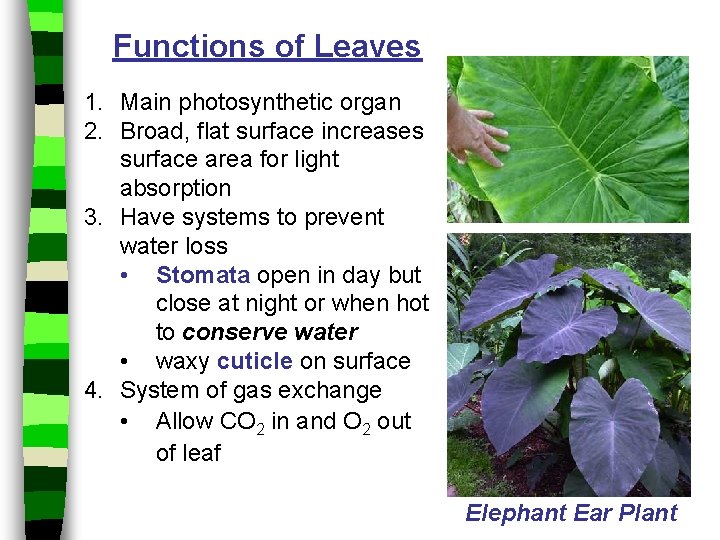
Functions of Leaves 1. Main photosynthetic organ 2. Broad, flat surface increases surface area for light absorption 3. Have systems to prevent water loss • Stomata open in day but close at night or when hot to conserve water • waxy cuticle on surface 4. System of gas exchange • Allow CO 2 in and O 2 out of leaf Elephant Ear Plant
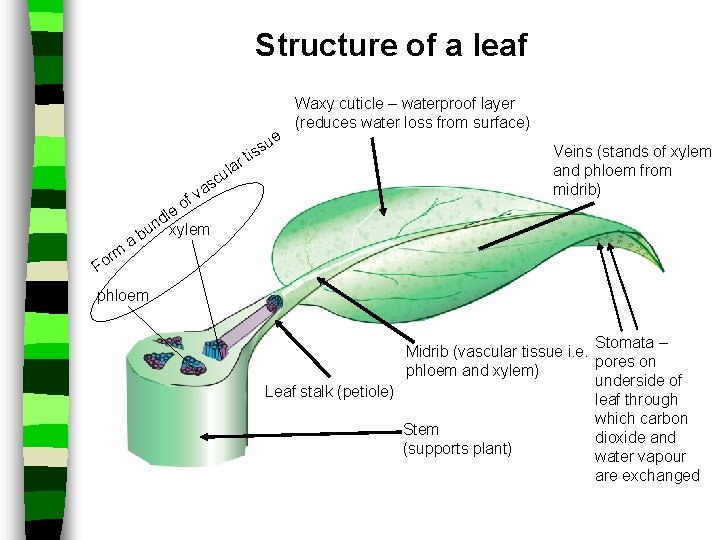
Structure of a leaf e la va f o rm o F a u sc u iss t r Waxy cuticle – waterproof layer (reduces water loss from surface) Veins (stands of xylem and phloem from midrib) dle n bu xylem phloem Stomata – Midrib (vascular tissue i. e. pores on phloem and xylem) underside of Leaf stalk (petiole) leaf through which carbon Stem dioxide and (supports plant) water vapour are exchanged
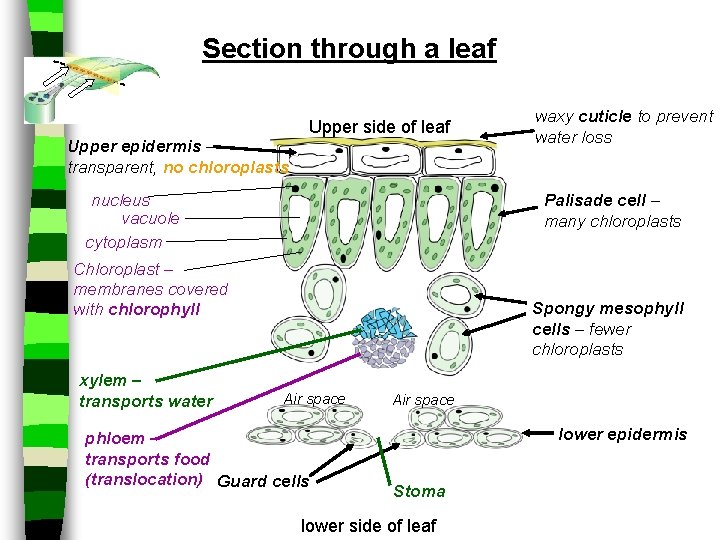
Section through a leaf Upper epidermis – transparent, no chloroplasts Upper side of leaf nucleus vacuole cytoplasm Palisade cell – many chloroplasts Chloroplast – membranes covered with chlorophyll xylem – transports water waxy cuticle to prevent water loss Spongy mesophyll cells – fewer chloroplasts Air space phloem – transports food (translocation) Guard cells Air space lower epidermis Stoma lower side of leaf
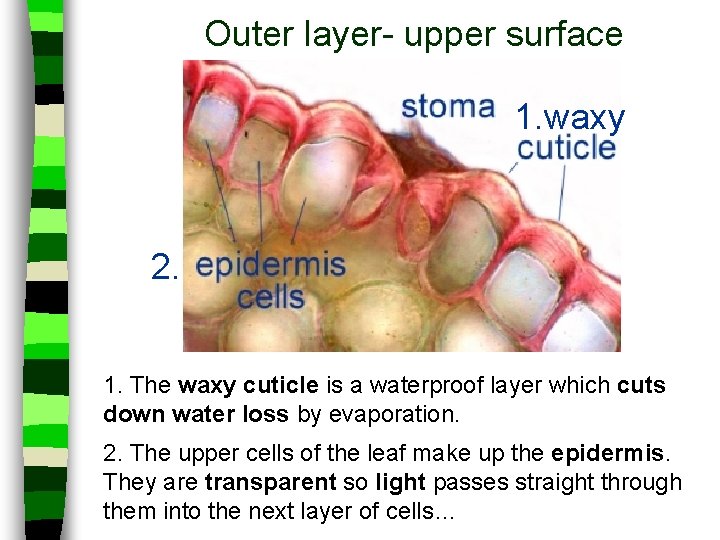
Outer layer- upper surface 1. waxy 2. 1. The waxy cuticle is a waterproof layer which cuts down water loss by evaporation. 2. The upper cells of the leaf make up the epidermis. They are transparent so light passes straight through them into the next layer of cells…
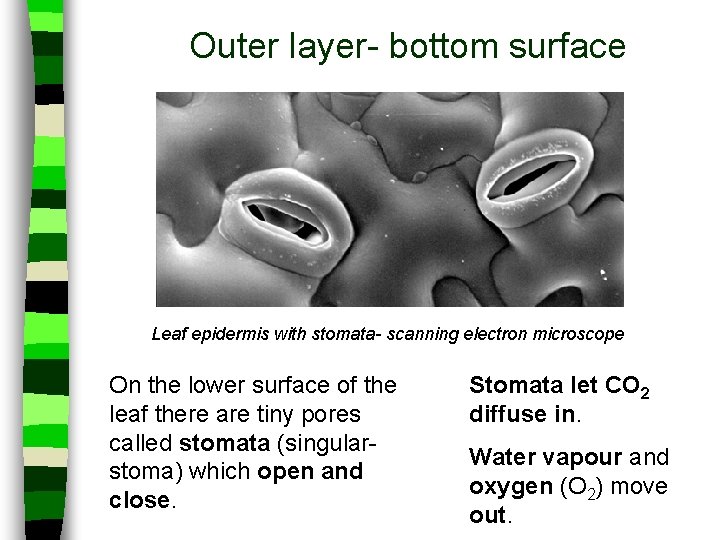
Outer layer- bottom surface Leaf epidermis with stomata- scanning electron microscope On the lower surface of the leaf there are tiny pores called stomata (singularstoma) which open and close. Stomata let CO 2 diffuse in. Water vapour and oxygen (O 2) move out.
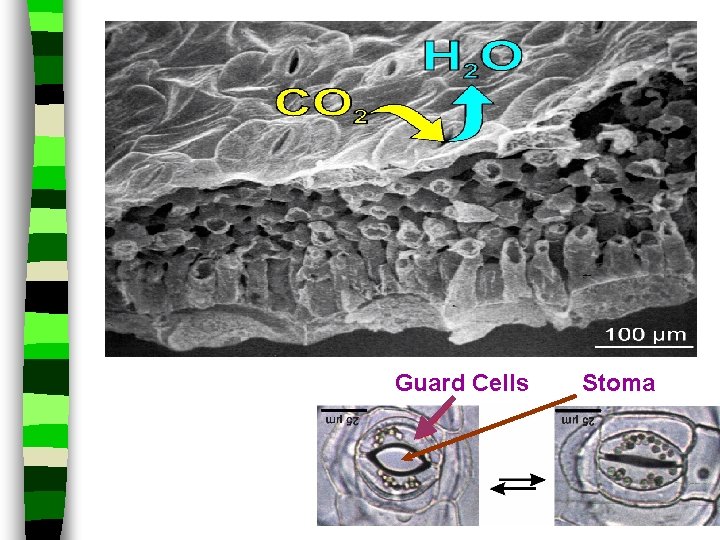
Guard Cells Stoma
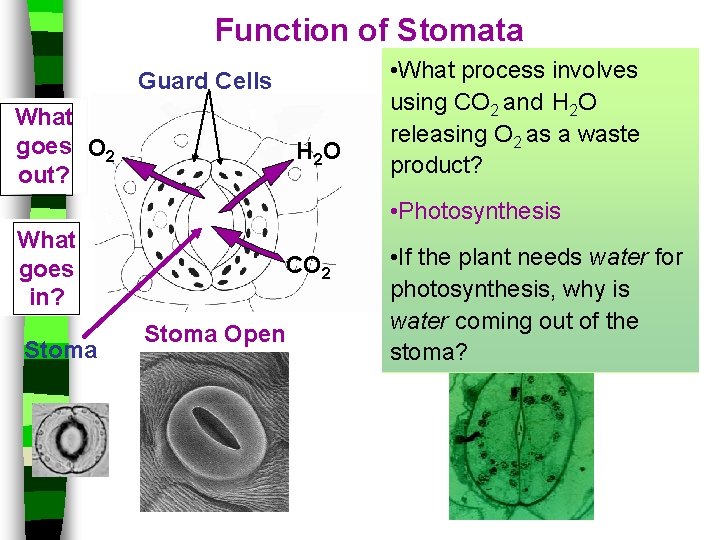
Function of Stomata Guard Cells What goes O 2 out? H 2 O • What process involves Guard Cells using CO 2 and H 2 O releasing O 2 as a waste product? • Photosynthesis What goes in? Stoma CO 2 Stoma Open • If the plant needs water for photosynthesis, why is water. Stoma coming out of the Closed stoma?
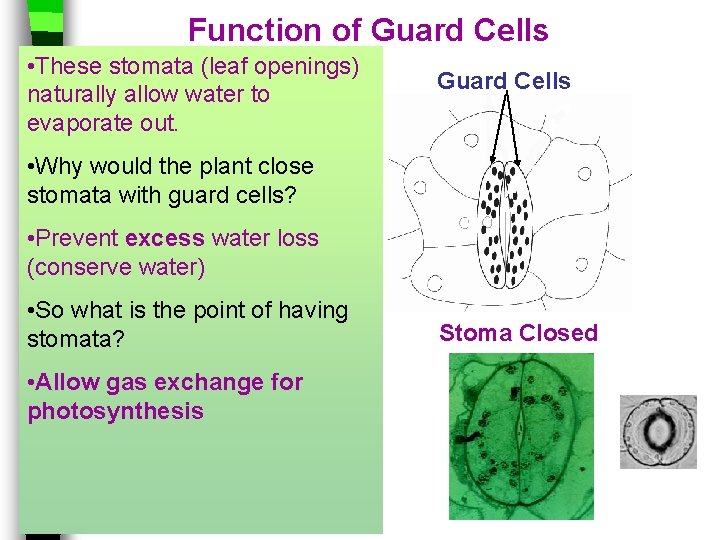
Function of Guard Cells • These stomata (leaf openings) Guard Cells naturally allow water to evaporate out. Guard Cells • Why would the plant close stomata with guard cells? • Prevent excess water loss (conserve water) • So what is the point of having stomata? Stoma Open • Allow gas exchange for photosynthesis Stoma Closed
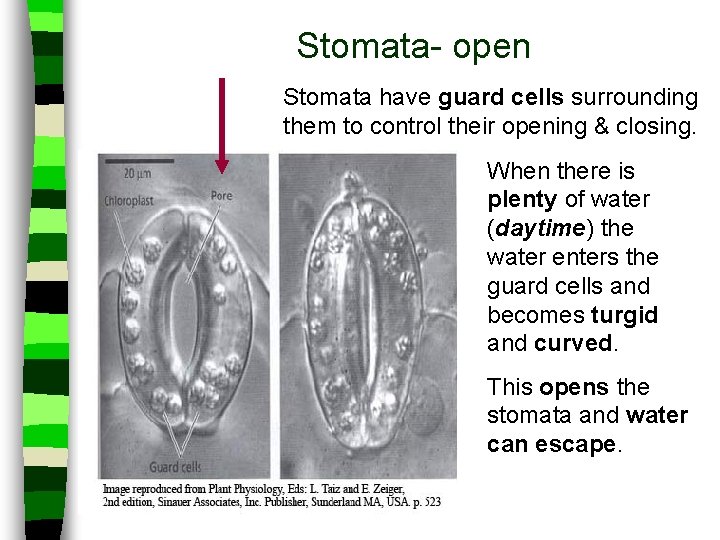
Stomata- open Stomata have guard cells surrounding them to control their opening & closing. When there is plenty of water (daytime) the water enters the guard cells and becomes turgid and curved. This opens the stomata and water can escape.
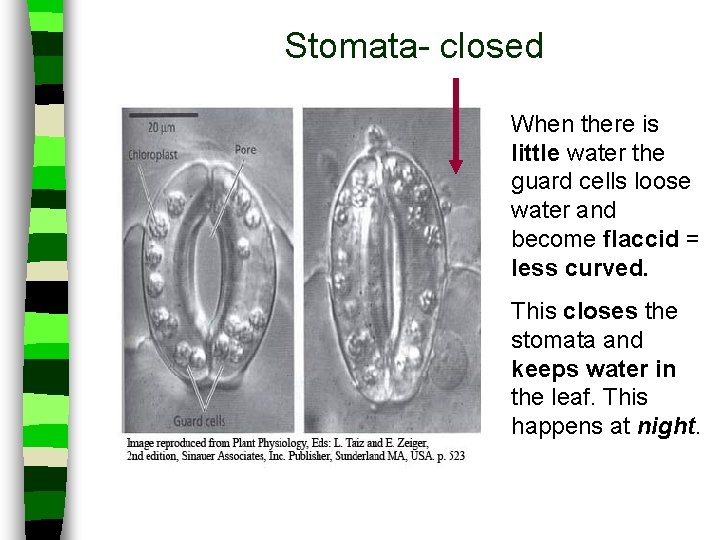
Stomata- closed When there is little water the guard cells loose water and become flaccid = less curved. This closes the stomata and keeps water in the leaf. This happens at night.