
Leaf Decompositio n in Aquatic Ecosystems Terrestrial leaf
- Slides: 10
Leaf Decompositio n in Aquatic Ecosystems
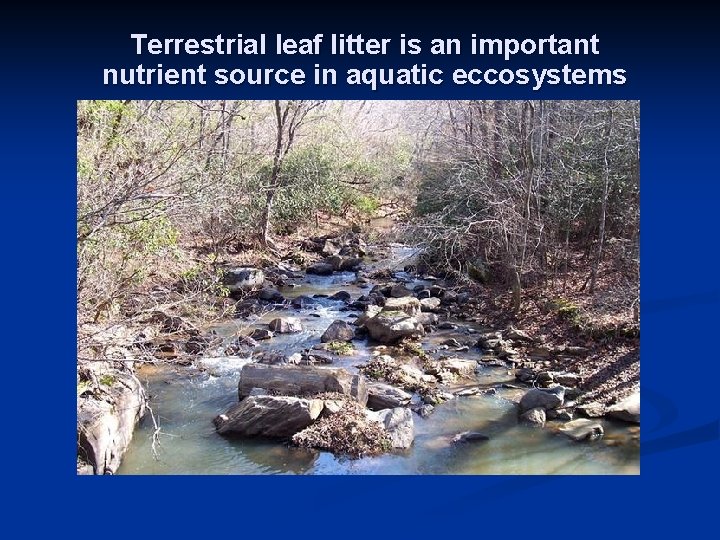
Terrestrial leaf litter is an important nutrient source in aquatic eccosystems
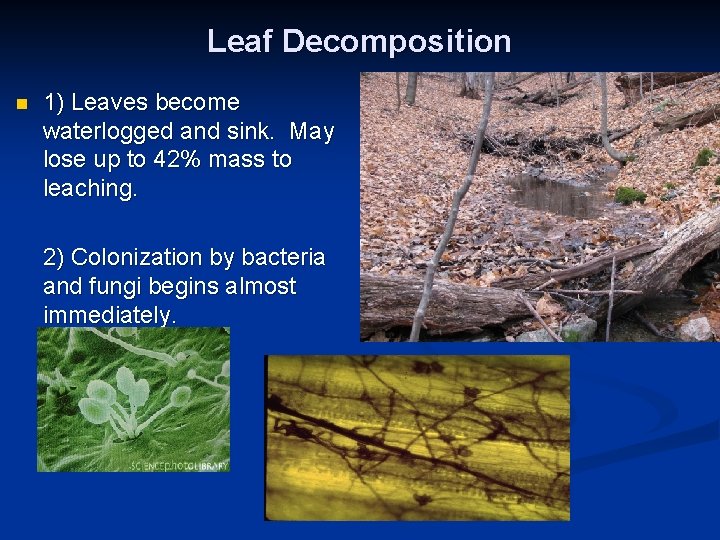
Leaf Decomposition n 1) Leaves become waterlogged and sink. May lose up to 42% mass to leaching. 2) Colonization by bacteria and fungi begins almost immediately.
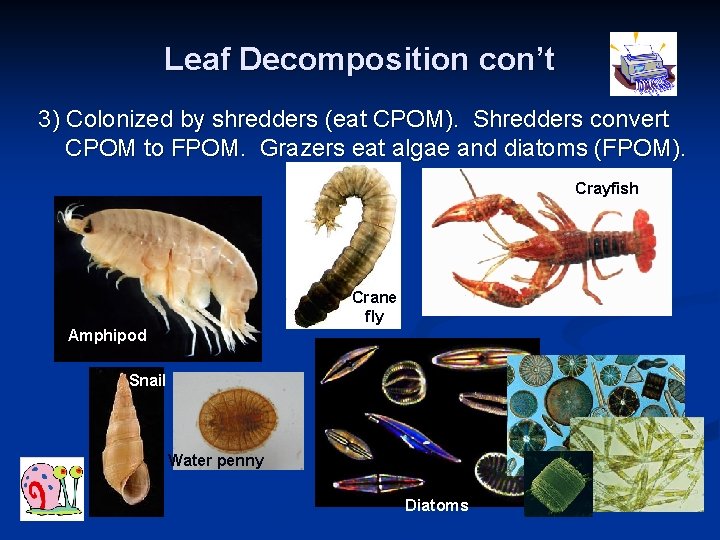
Leaf Decomposition con’t 3) Colonized by shredders (eat CPOM). Shredders convert CPOM to FPOM. Grazers eat algae and diatoms (FPOM). Crayfish Crane fly Amphipod Snail Water penny Diatoms
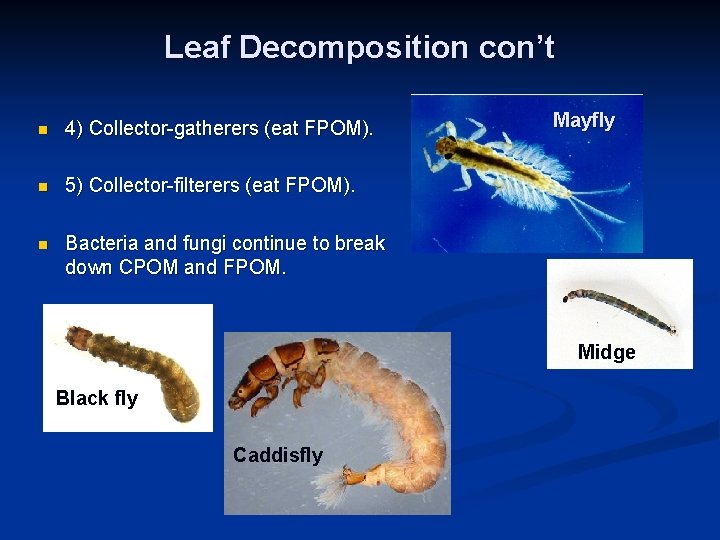
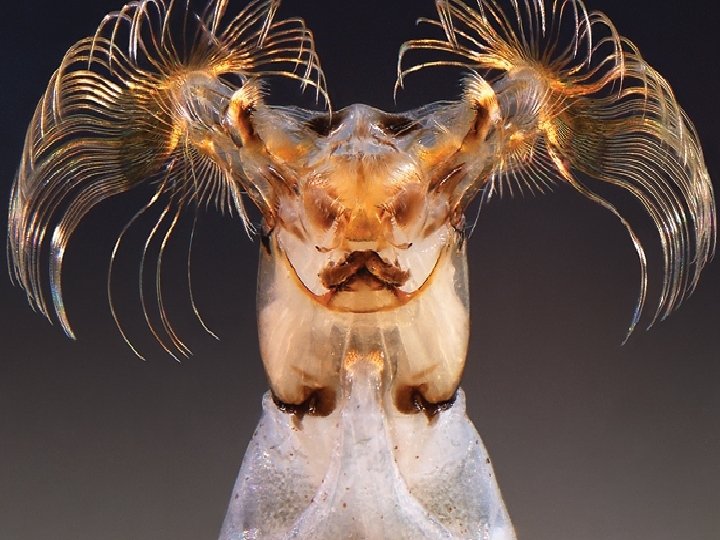
Leaf Decomposition con’t n 4) Collector-gatherers (eat FPOM). n 5) Collector-filterers (eat FPOM). n Bacteria and fungi continue to break down CPOM and FPOM. Mayfly Midge Black fly Caddisfly
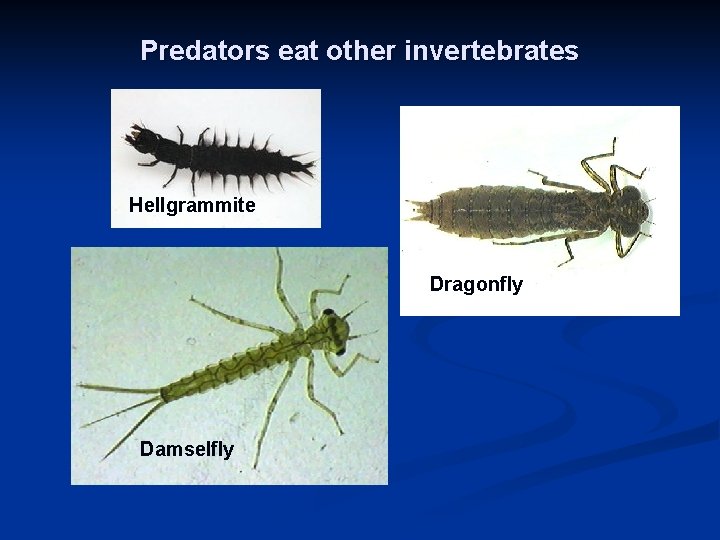
Predators eat other invertebrates Hellgrammite Dragonfly Damselfly
Purpose of this lab n Question 1: Does presence of macroinvertebrates accelerate leaf decomposition?
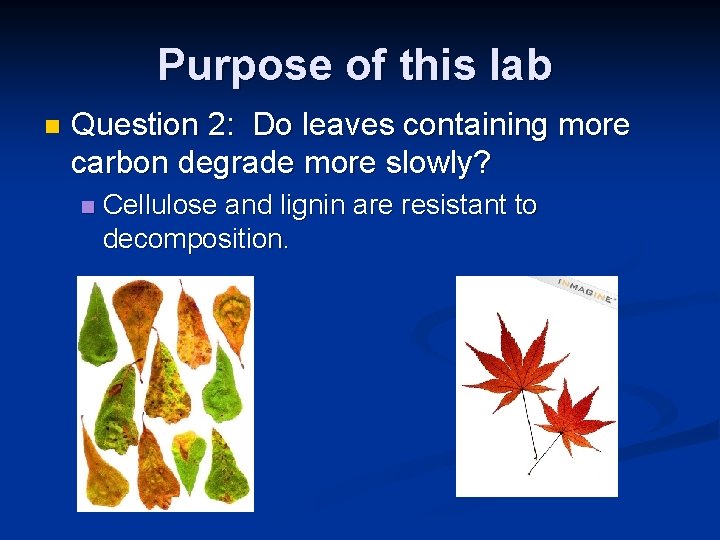
Purpose of this lab n Question 2: Do leaves containing more carbon degrade more slowly? n Cellulose and lignin are resistant to decomposition.
Methods n n n Prepare coarse-mesh maple, coarse-mesh oak, fine-mesh maple, and fine-mesh oak bags. Place and secure bags in stream/pond. Remove bags after ~1 month. Rinse macroinvertebrates from leaves and allow leaves to dry. Count macroinvertebrates and sort according to functional feeding groups. Weigh and estimate leaf material lost.
n