
Leading through disruption A case study across three


- Slides: 23
Leading through disruption: A case study across three universities
Agenda What’s happening? 3 Case Studies Themed Discussions
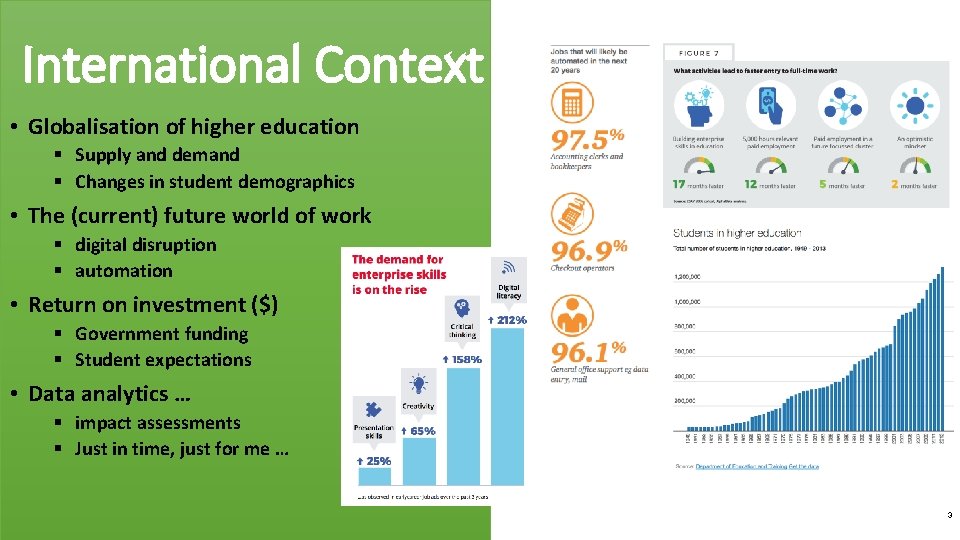
International Context • Globalisation of higher education Supply and demand Changes in student demographics • The (current) future world of work digital disruption automation • Return on investment ($) Government funding Student expectations • Data analytics … impact assessments Just in time, just for me … 3
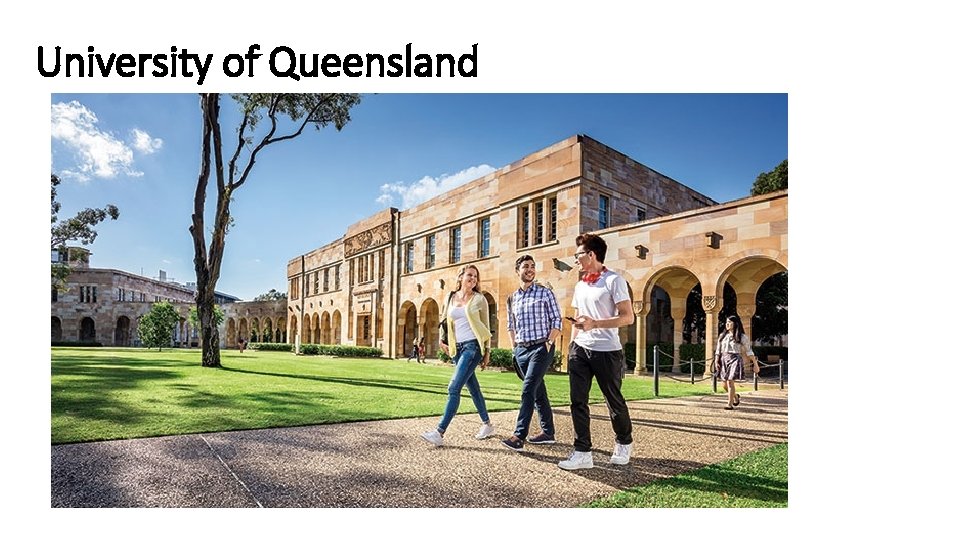
University of Queensland
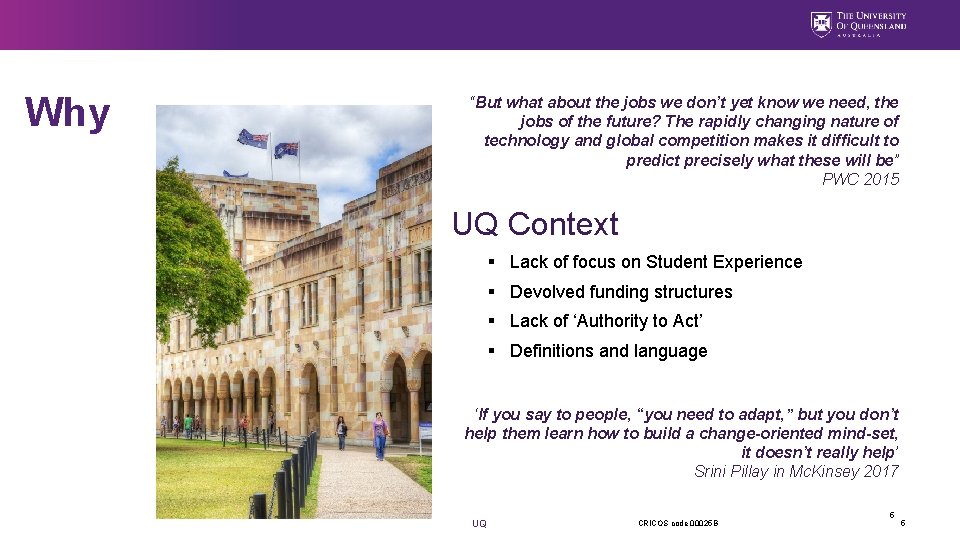
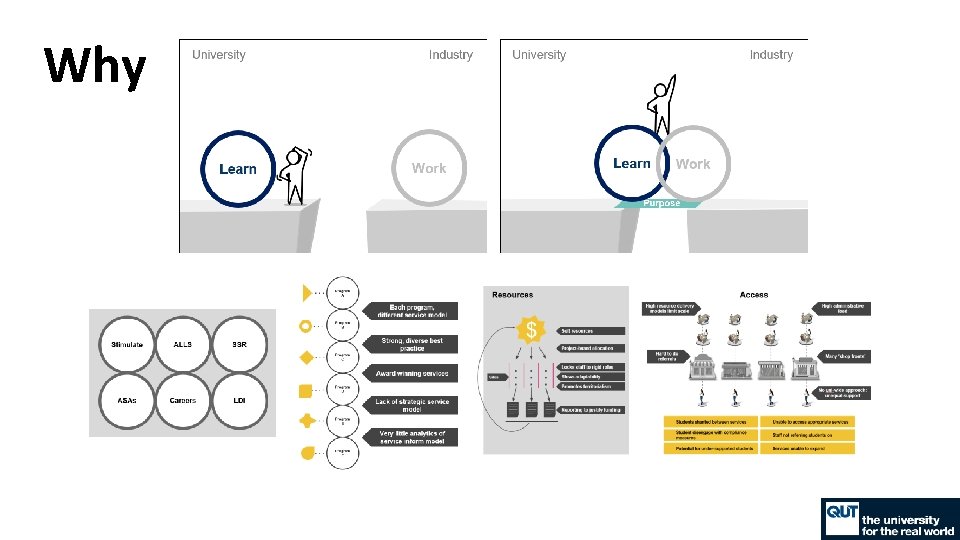
Why “But what about the jobs we don’t yet know we need, the jobs of the future? The rapidly changing nature of technology and global competition makes it difficult to predict precisely what these will be” PWC 2015 UQ Context Lack of focus on Student Experience Devolved funding structures Lack of ‘Authority to Act’ Definitions and language ‘If you say to people, “you need to adapt, ” but you don’t help them learn how to build a change-oriented mind-set, it doesn’t really help’ Srini Pillay in Mc. Kinsey 2017 UQ CRICOS code 00025 B 5 5
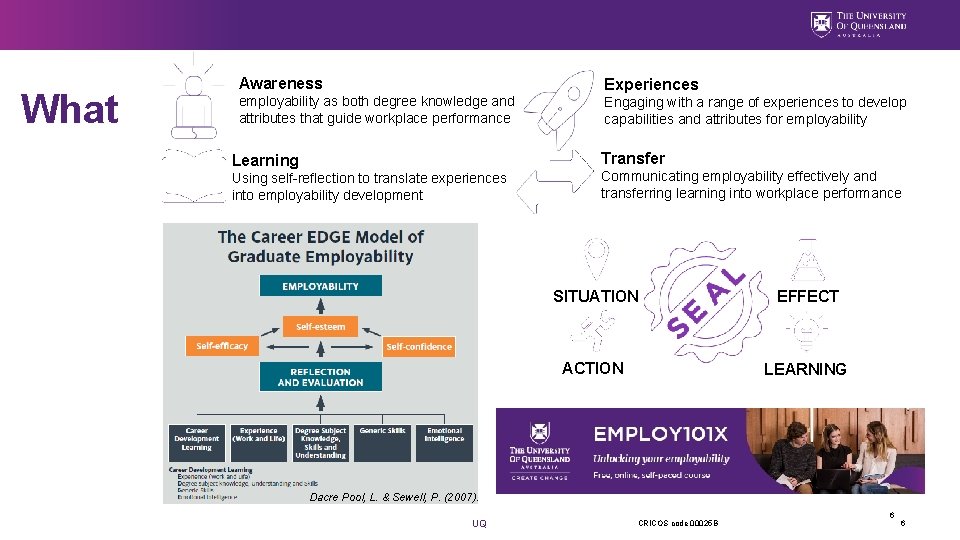
What Awareness Experiences employability as both degree knowledge and attributes that guide workplace performance Engaging with a range of experiences to develop capabilities and attributes for employability Transfer Learning Using self-reflection to translate experiences into employability development Communicating employability effectively and transferring learning into workplace performance SITUATION EFFECT ACTION LEARNING Dacre Pool, L. & Sewell, P. (2007). UQ CRICOS code 00025 B 6 6
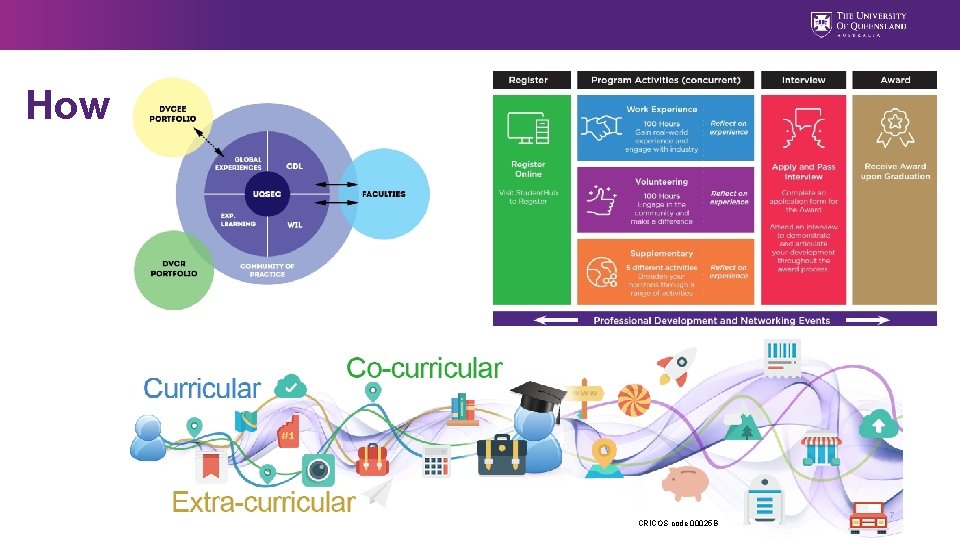
How CRICOS code 00025 B 7
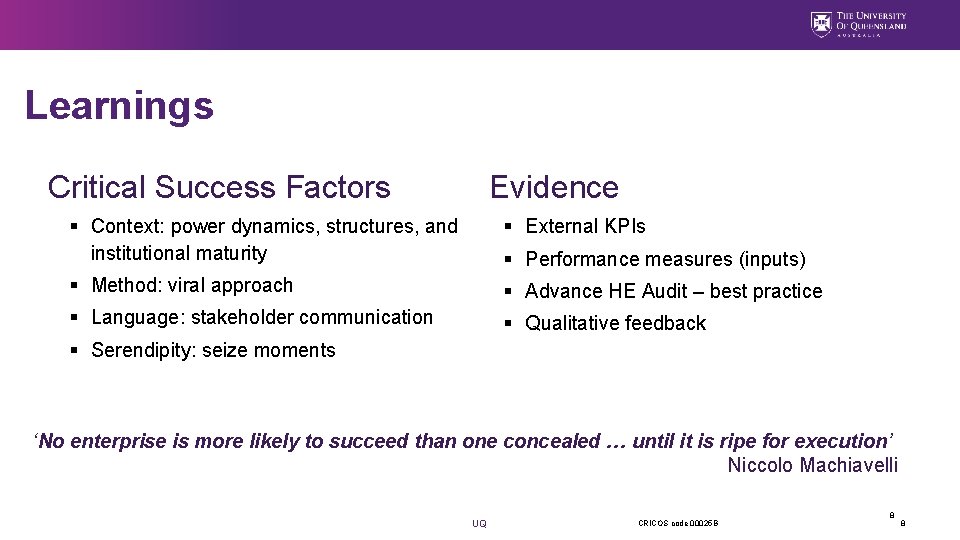
Learnings Critical Success Factors Evidence Context: power dynamics, structures, and institutional maturity External KPIs Method: viral approach Advance HE Audit – best practice Language: stakeholder communication Qualitative feedback Performance measures (inputs) Serendipity: seize moments ‘No enterprise is more likely to succeed than one concealed … until it is ripe for execution’ Niccolo Machiavelli UQ CRICOS code 00025 B 8 8
Queensland University of Technology CRICOS code 00025 B
Why
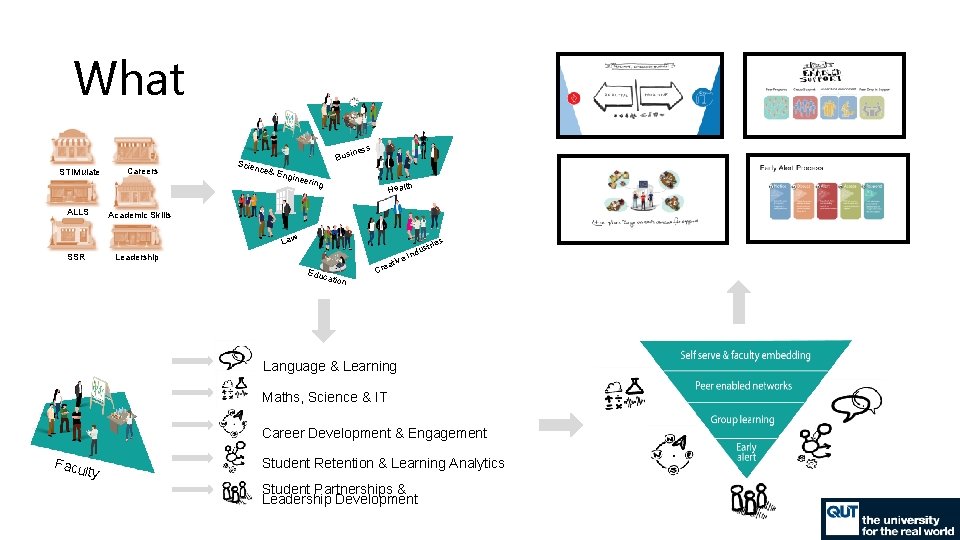
What STIMulate ALLS Careers Scien Bus ce& E ngine ines s ering Health Academic Skills Law SSR s trie Leadership Educ ation dus e In ativ Cre Language & Learning Maths, Science & IT Career Development & Engagement Facu lty Student Retention & Learning Analytics Student Partnerships & Leadership Development
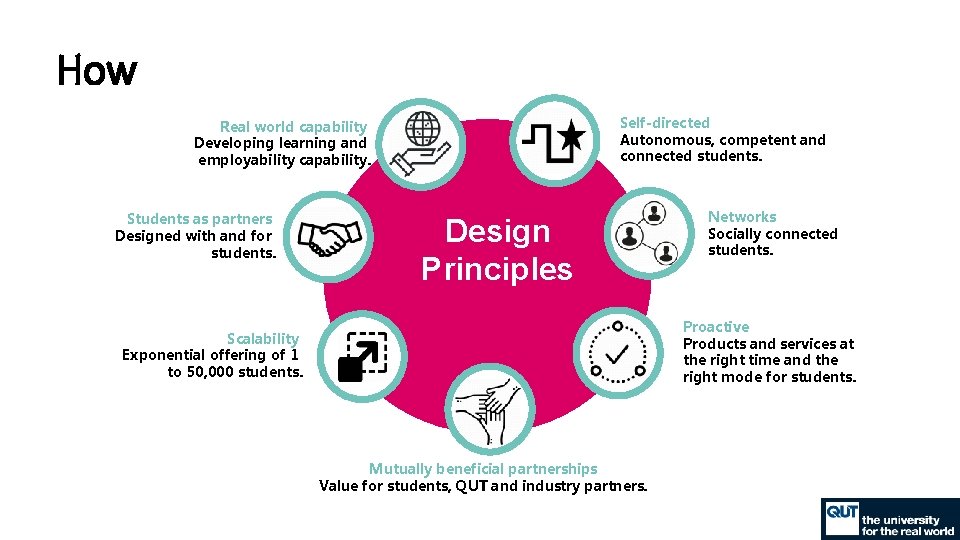
How Self-directed Autonomous, competent and connected students. Real world capability Developing learning and employability capability. Students as partners Designed with and for students. Design Principles Networks Socially connected students. Proactive Products and services at the right time and the right mode for students. Scalability Exponential offering of 1 to 50, 000 students. Mutually beneficial partnerships Value for students, QUT and industry partners.
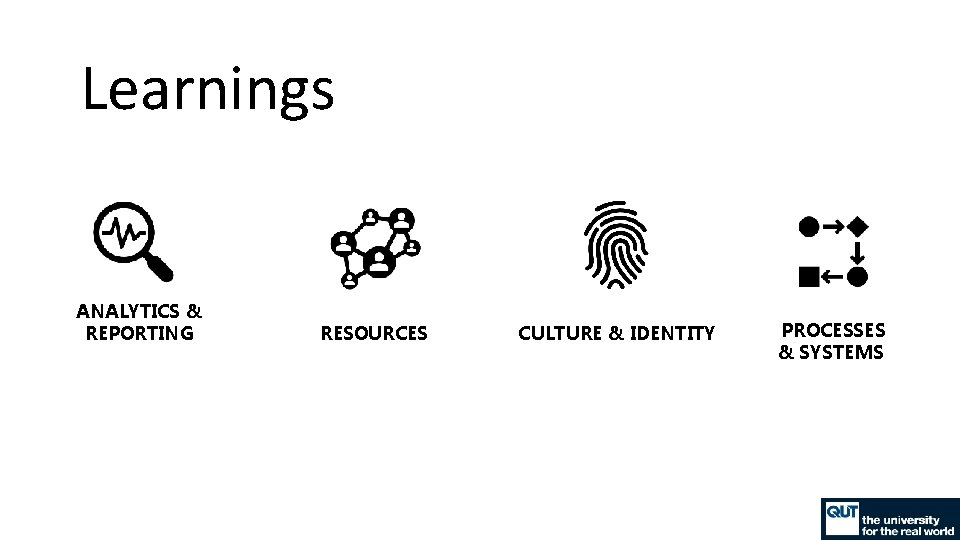
Learnings ANALYTICS & REPORTING RESOURCES CULTURE & IDENTITY PROCESSES & SYSTEMS
University of Birmingham
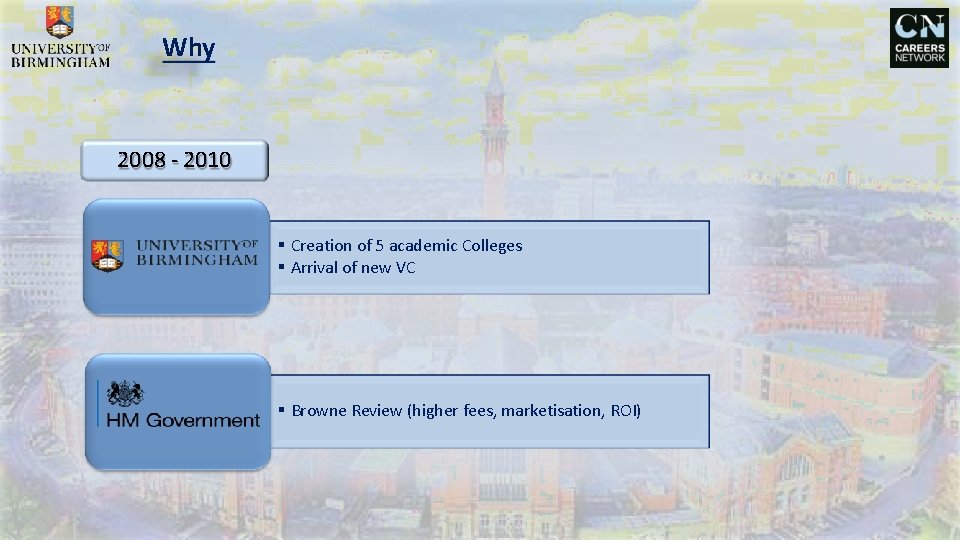
Why 2008 - 2010 Creation of 5 academic Colleges Arrival of new VC Browne Review (higher fees, marketisation, ROI)
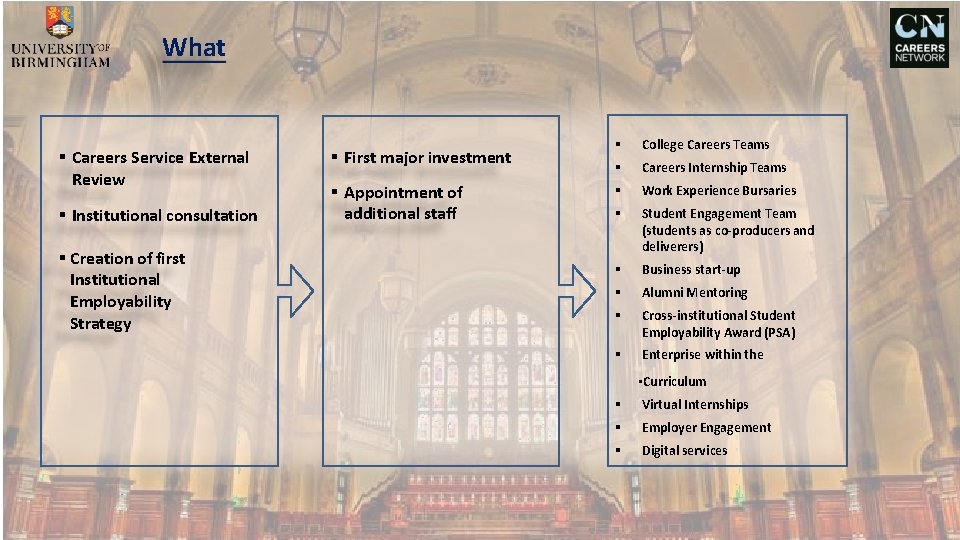
What Careers Service External Review Institutional consultation Creation of first Institutional Employability Strategy First major investment Appointment of additional staff College Careers Teams Careers Internship Teams Work Experience Bursaries Student Engagement Team (students as co-producers and deliverers) Business start-up Alumni Mentoring Cross-institutional Student Employability Award (PSA) Enterprise within the • Curriculum Virtual Internships Employer Engagement Digital services
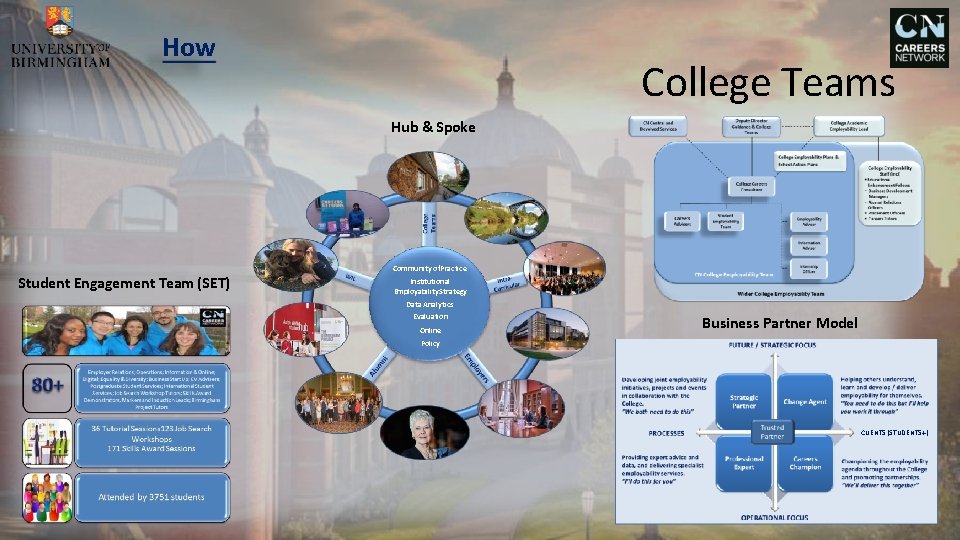
How College Teams Hub & Spoke Student Engagement Team (SET) Community of. Practice Institutional Employability Strategy Data Analytics Evaluation Online Business Partner Model Policy CLIENTS (STUDENTS+)
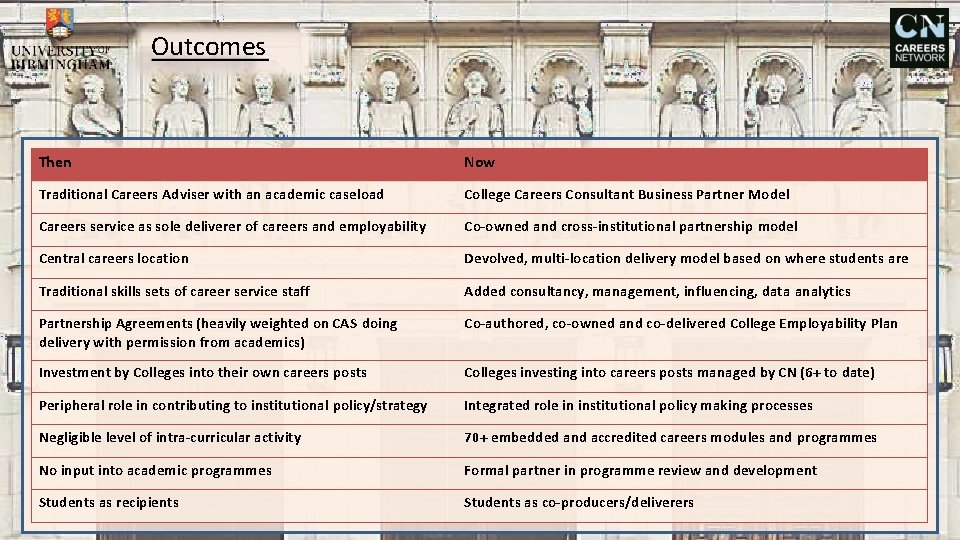
Outcomes Then Now Traditional Careers Adviser with an academic caseload College Careers Consultant Business Partner Model Careers service as sole deliverer of careers and employability Co-owned and cross-institutional partnership model Central careers location Devolved, multi-location delivery model based on where students are Traditional skills sets of career service staff Added consultancy, management, influencing, data analytics Partnership Agreements (heavily weighted on CAS doing delivery with permission from academics) Co-authored, co-owned and co-delivered College Employability Plan Investment by Colleges into their own careers posts Colleges investing into careers posts managed by CN (6+ to date) Peripheral role in contributing to institutional policy/strategy Integrated role in institutional policy making processes Negligible level of intra-curricular activity 70+ embedded and accredited careers modules and programmes No input into academic programmes Formal partner in programme review and development Students as recipients Students as co-producers/deliverers
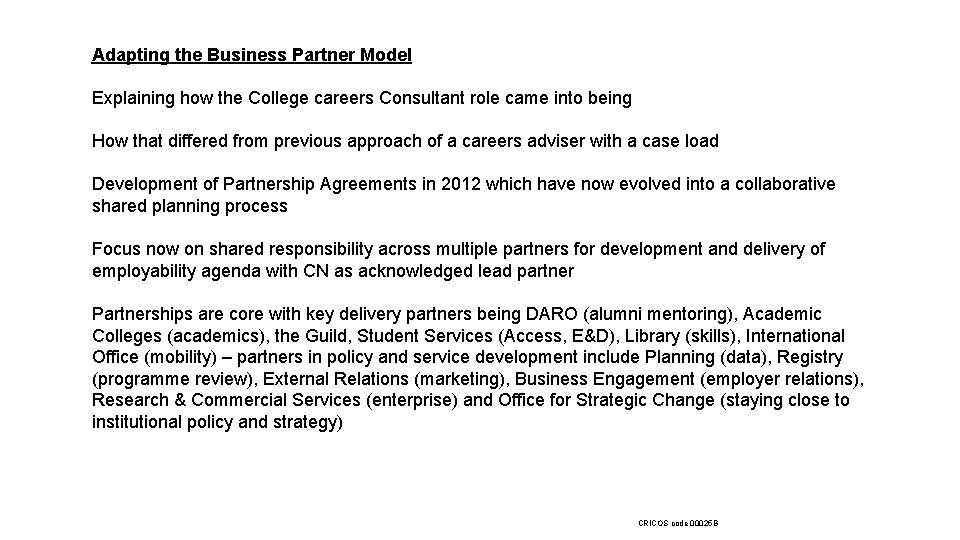
Adapting the Business Partner Model Explaining how the College careers Consultant role came into being How that differed from previous approach of a careers adviser with a case load Development of Partnership Agreements in 2012 which have now evolved into a collaborative shared planning process Focus now on shared responsibility across multiple partners for development and delivery of employability agenda with CN as acknowledged lead partner Partnerships are core with key delivery partners being DARO (alumni mentoring), Academic Colleges (academics), the Guild, Student Services (Access, E&D), Library (skills), International Office (mobility) – partners in policy and service development include Planning (data), Registry (programme review), External Relations (marketing), Business Engagement (employer relations), Research & Commercial Services (enterprise) and Office for Strategic Change (staying close to institutional policy and strategy) CRICOS code 00025 B
Managing a careers service with no central office(s) Advantages Challenges Impact CRICOS code 00025 B
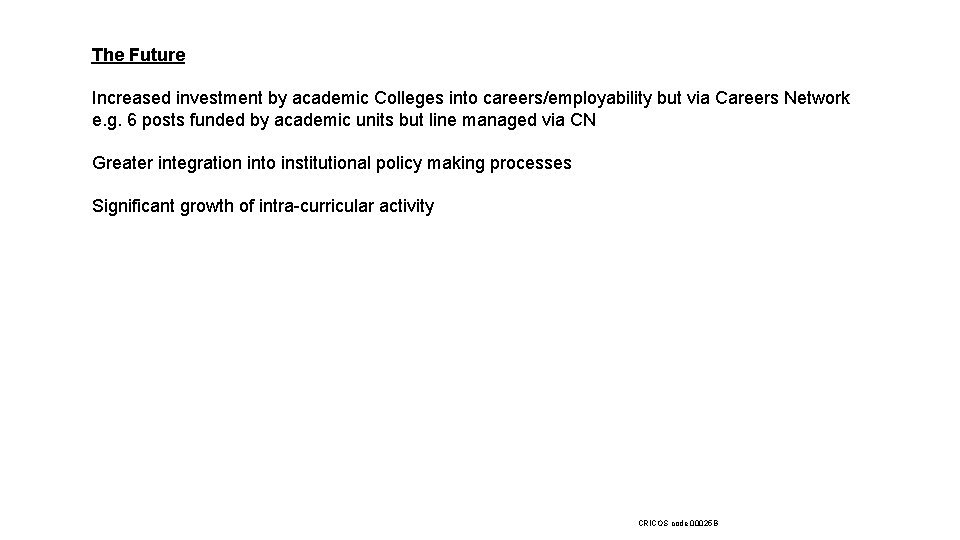
The Future Increased investment by academic Colleges into careers/employability but via Careers Network e. g. 6 posts funded by academic units but line managed via CN Greater integration into institutional policy making processes Significant growth of intra-curricular activity CRICOS code 00025 B
Discussion Partners, People & Politics Demonstrating Impact Building New Cultures
Questions