
Leading the Toyota Way Through Scientific Thinking A
- Slides: 10
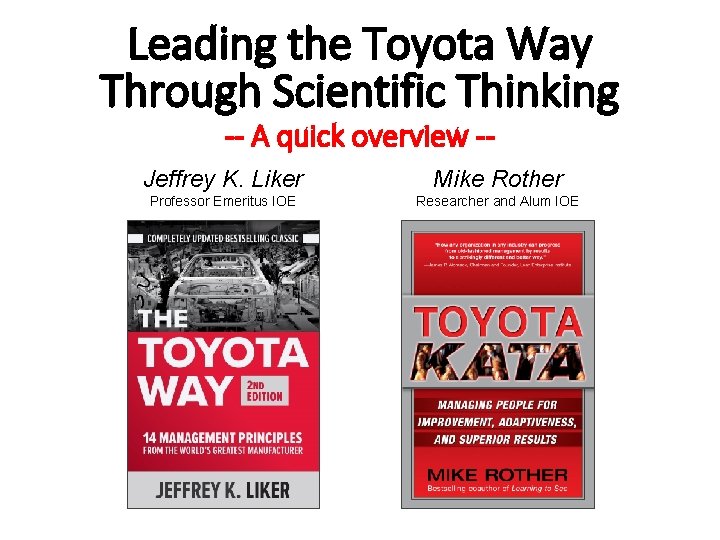
Leading the Toyota Way Through Scientific Thinking -- A quick overview -- Jeffrey K. Liker Mike Rother Professor Emeritus IOE Researcher and Alum IOE
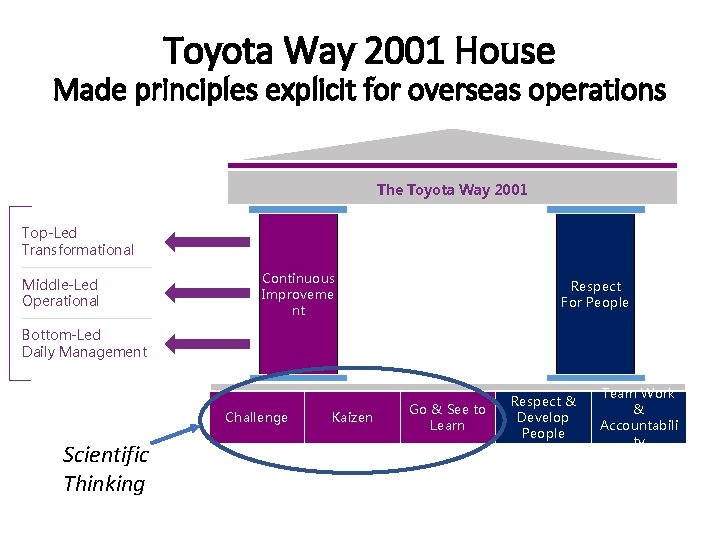
Toyota Way 2001 House Made principles explicit for overseas operations The Toyota Way 2001 Top-Led Transformational Middle-Led Operational Continuous Improveme nt Respect For People Bottom-Led Daily Management Challenge Scientific Thinking Kaizen Go & See to Learn Respect & Develop People Team Work & Accountabili ty
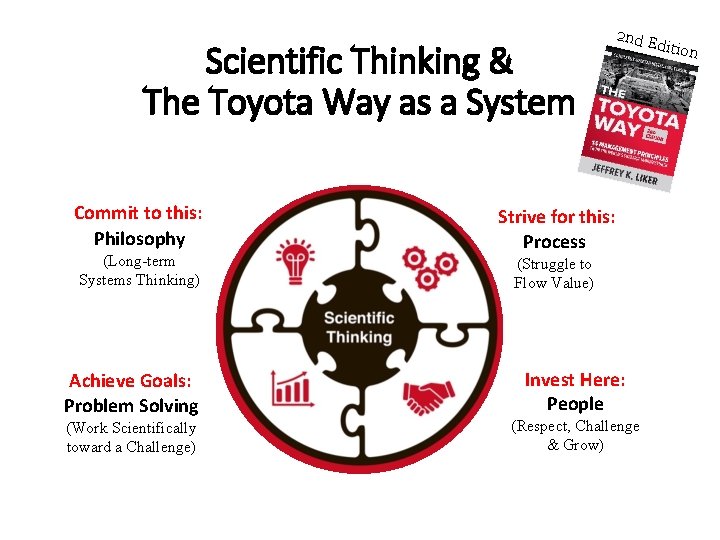
Scientific Thinking & The Toyota Way as a System Commit to this: Philosophy (Long-term Systems Thinking) Achieve Goals: Problem Solving (Work Scientifically toward a Challenge) 2 nd E Strive for this: Process (Struggle to Flow Value) Invest Here: People (Respect, Challenge & Grow) dition
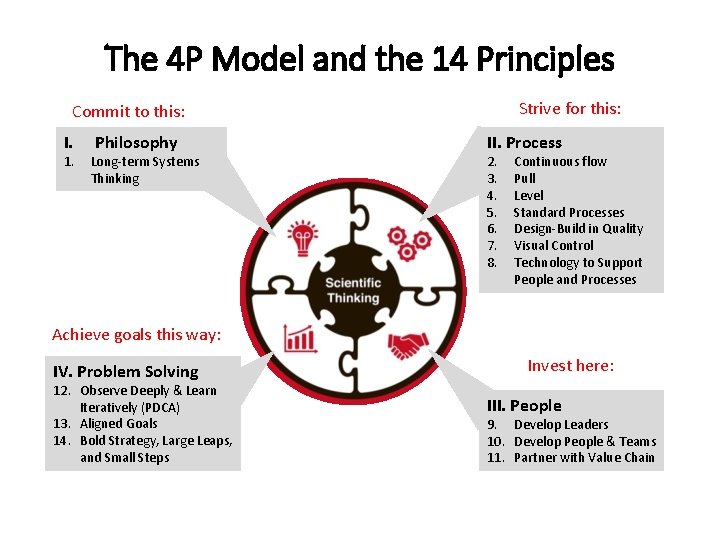
The 4 P Model and the 14 Principles Strive for this: Commit to this: I. 1. Philosophy Long-term Systems Thinking II. Process 2. 3. 4. 5. 6. 7. 8. Continuous flow Pull Level Standard Processes Design-Build in Quality Visual Control Technology to Support People and Processes Achieve goals this way: IV. Problem Solving 12. Observe Deeply & Learn Iteratively (PDCA) 13. Aligned Goals 14. Bold Strategy, Large Leaps, and Small Steps Invest here: III. People 9. Develop Leaders 10. Develop People & Teams 11. Partner with Value Chain
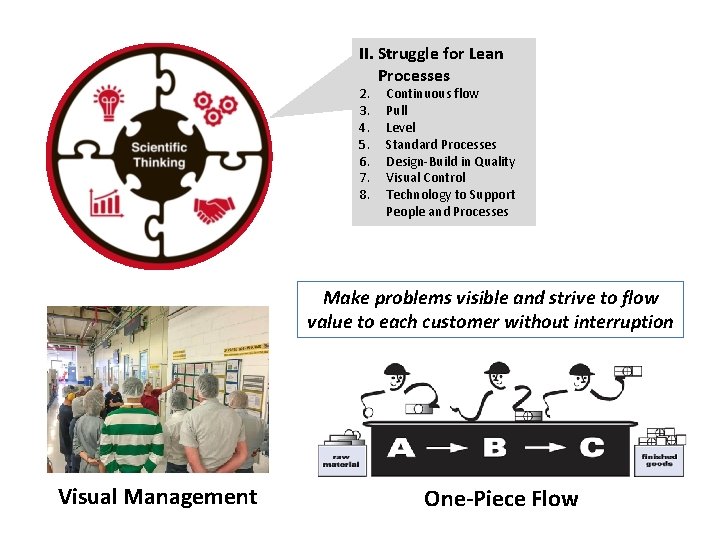
II. Struggle for Lean Processes 2. 3. 4. 5. 6. 7. 8. Continuous flow Pull Level Standard Processes Design-Build in Quality Visual Control Technology to Support People and Processes Make problems visible and strive to flow value to each customer without interruption Visual Management One-Piece Flow
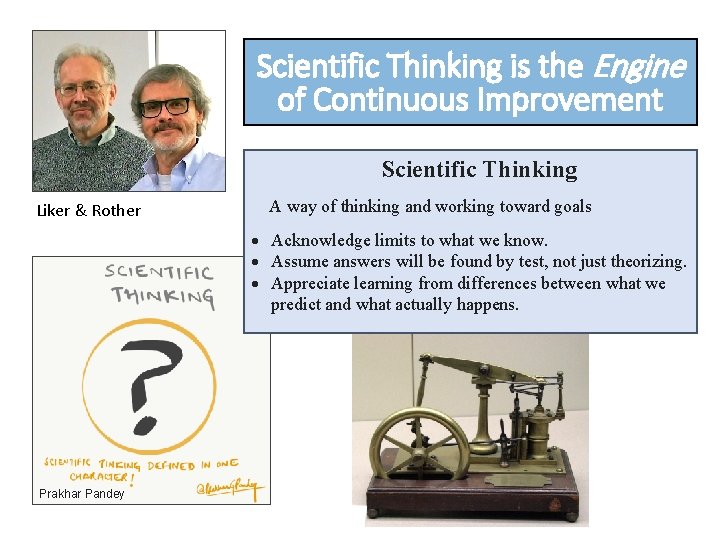
Scientific Thinking is the Engine of Continuous Improvement Scientific Thinking Liker & Rother A way of thinking and working toward goals Acknowledge limits to what we know. Assume answers will be found by test, not just theorizing. Appreciate learning from differences between what we predict and what actually happens. Prakhar Pandey
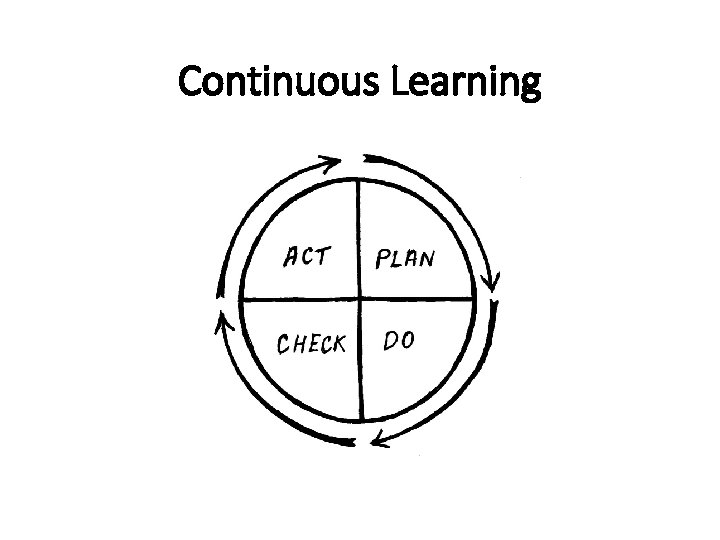
Continuous Learning
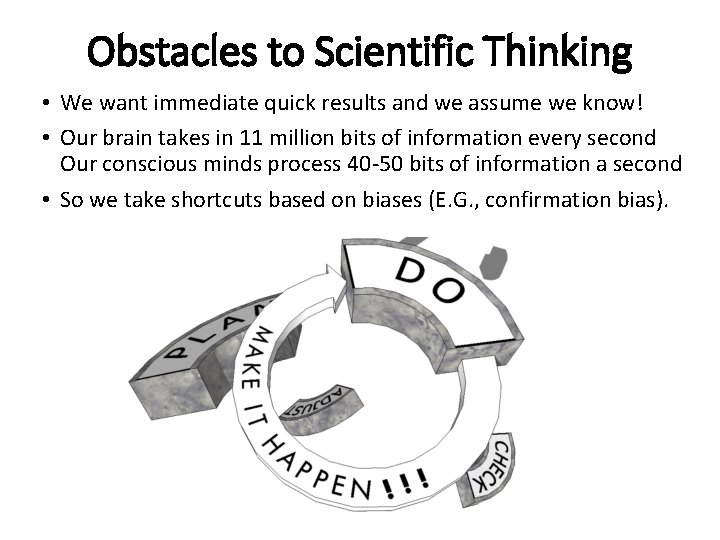
Obstacles to Scientific Thinking • We want immediate quick results and we assume we know! • Our brain takes in 11 million bits of information every second Our conscious minds process 40 -50 bits of information a second • So we take shortcuts based on biases (E. G. , confirmation bias).
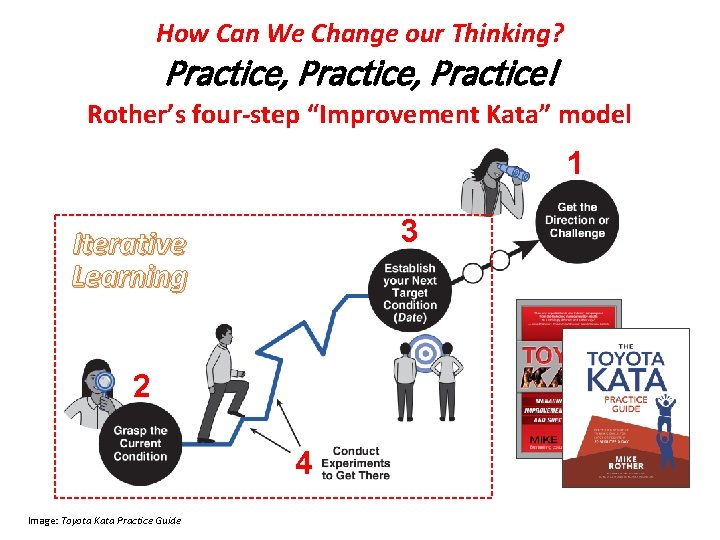
How Can We Change our Thinking? Practice, Practice! Rother’s four-step “Improvement Kata” model 1 3 Iterative Learning 2 4 Image: Toyota Kata Practice Guide
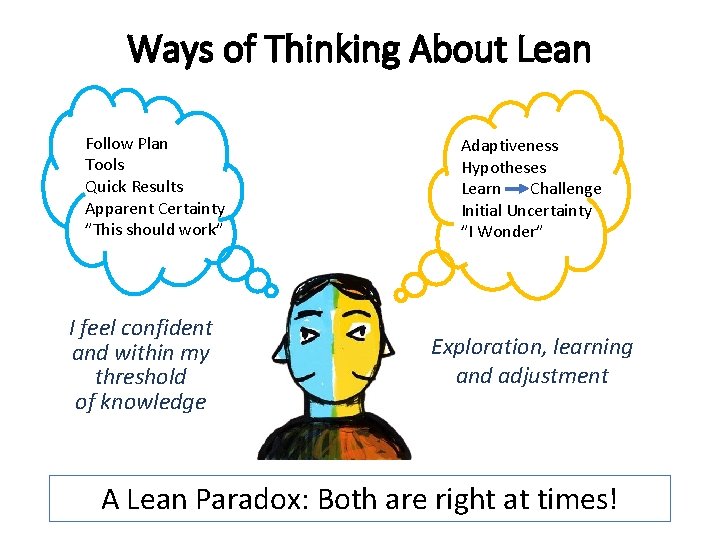
Ways of Thinking About Lean Follow Plan Tools Quick Results Apparent Certainty ”This should work” I feel confident and within my threshold of knowledge Adaptiveness Hypotheses Learn Challenge Initial Uncertainty ”I Wonder” Exploration, learning and adjustment A Lean Paradox: Both are right at times!