
Leading Learning and Changing Practice with Building Schools
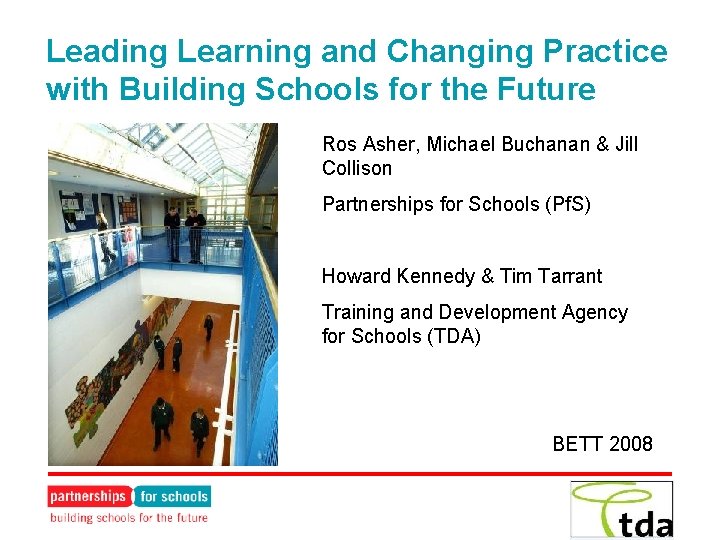
Leading Learning and Changing Practice with Building Schools for the Future Ros Asher, Michael Buchanan & Jill Collison Partnerships for Schools (Pf. S) Howard Kennedy & Tim Tarrant Training and Development Agency for Schools (TDA) BETT 2008
Focus for the Session Introduction to opportunities for transformation with BSF Ø Imperatives & leverage with BSF Ø New ways of working for 21 st century learning & services Ø Building capacity for change Ø Sharing some examples, case studies & materials Ø Opportunities for thinking, discussion & questions
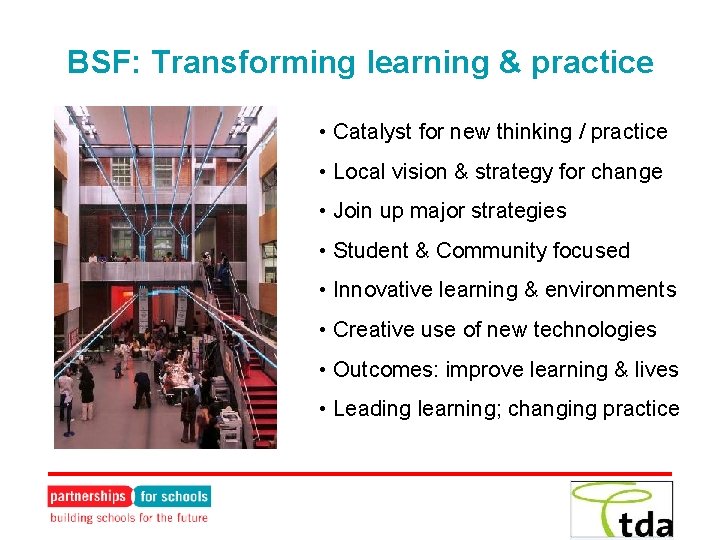
BSF: Transforming learning & practice • Catalyst for new thinking / practice • Local vision & strategy for change • Join up major strategies • Student & Community focused • Innovative learning & environments • Creative use of new technologies • Outcomes: improve learning & lives • Leading learning; changing practice

Removing the gap achievement & inclusion Capital Injection construction/ICT/resources £ 2. 5 - 3 billion a yr x 15 yrs 10% of capital for ICT Modes of learning Personalised learning, assessment & achievement Student, staff, parent & community leadership & benefits from transformation Creating a climate & repertoire for innovation and transformation The Children’s Plan & Regeneration Imperatives & Levers for Change curriculum, pedagogy, leadership, collaboration, use of new technologies, design and services. 21 st Century Learning Behavioural & Organisational change + new pedagogies New Learning together - LAs, schools, communities and national agencies inform local and national practice

Why new thinking about learning & teaching? v ‘We are caught up in a social and economic revolution. To survive it we need a new conception of human resources. Current approaches to education and training are hampered by ideas of intelligence and creativity that have wasted untold talent and ability. To develop these resources we need radically new strategies. We won’t survive the future by simply doing better what we have done in the past. ’ (‘Out of Our Minds: Learning to be Creative – Ken Robinson 2001) v ‘We are currently preparing students for jobs that don’t yet exist using technologies that haven’t been invented in order to solve problems that we don’t even know are problems yet’ (‘Shift Happens’ extract 2007)
What new thinking about learning & teaching? “A group of mixed specialist tutors are available to help with the broad range of questions we have for our ’Project Based Problem’. My research at the moment is related to ‘Extinction due to Global Warming’. Most of my time so far has been spent following the movements of polar bears. By logging into polarwatch. com I can see the movement of several bears over the last few years. It is really clear that their habitat is shrinking and their food sources are further away than they used to be. I was also able to contact a Canadian Inuit who described the life of his grandfather as a hunter on the ice. The projects we do, cover loads of subjects, like mine covers Geography; Science; Maths; Morals; Technology; Communications; … wherever it takes me. I hope to get a good grade when I present it to the group and they peer-mark me. It will also be posted on the web for a global audience to make comments. ” (‘Day in the Life’ – a Darwen Vale student)
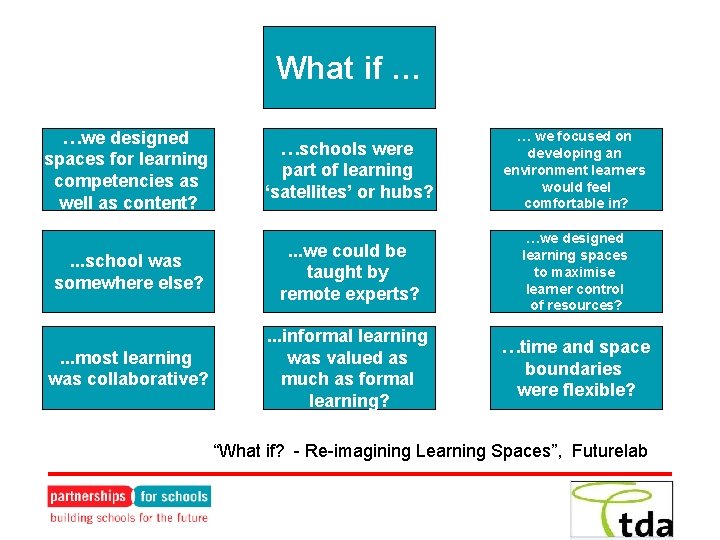
What if … …we designed spaces for learning competencies as well as content? …schools were part of learning ‘satellites’ or hubs? … we focused on developing an environment learners would feel comfortable in? . . . school was somewhere else? . . . we could be taught by remote experts? …we designed learning spaces to maximise learner control of resources? . . . most learning was collaborative? . . . informal learning was valued as much as formal learning? …time and space boundaries were flexible? “What if? - Re-imagining Learning Spaces”, Futurelab
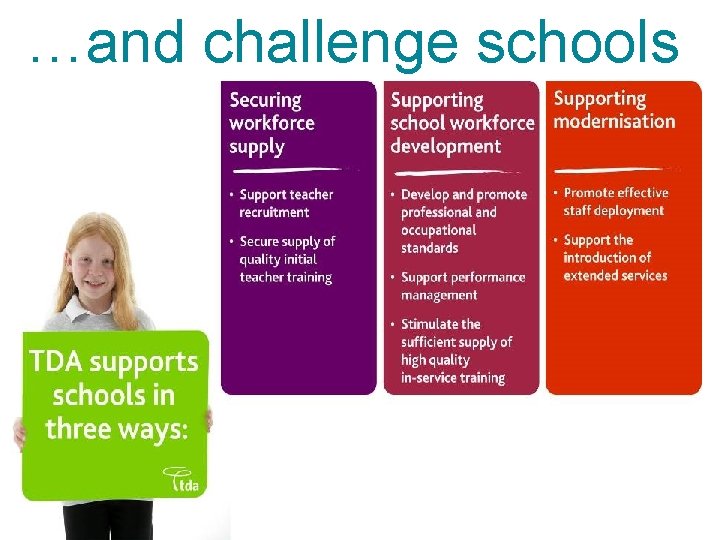
…and challenge schools
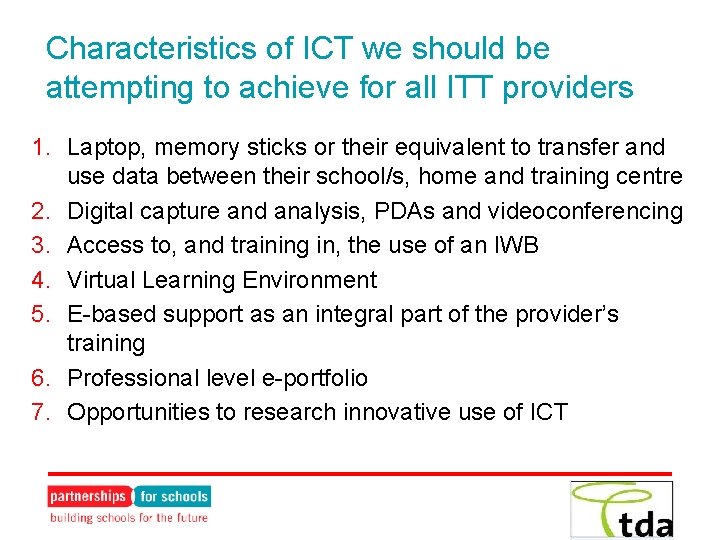
Characteristics of ICT we should be attempting to achieve for all ITT providers 1. Laptop, memory sticks or their equivalent to transfer and use data between their school/s, home and training centre 2. Digital capture and analysis, PDAs and videoconferencing 3. Access to, and training in, the use of an IWB 4. Virtual Learning Environment 5. E-based support as an integral part of the provider’s training 6. Professional level e-portfolio 7. Opportunities to research innovative use of ICT
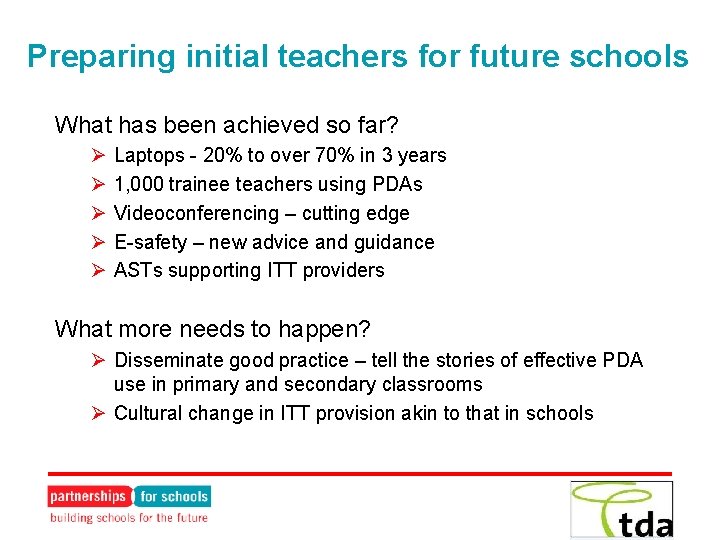
Preparing initial teachers for future schools What has been achieved so far? Ø Ø Ø Laptops - 20% to over 70% in 3 years 1, 000 trainee teachers using PDAs Videoconferencing – cutting edge E-safety – new advice and guidance ASTs supporting ITT providers What more needs to happen? Ø Disseminate good practice – tell the stories of effective PDA use in primary and secondary classrooms Ø Cultural change in ITT provision akin to that in schools
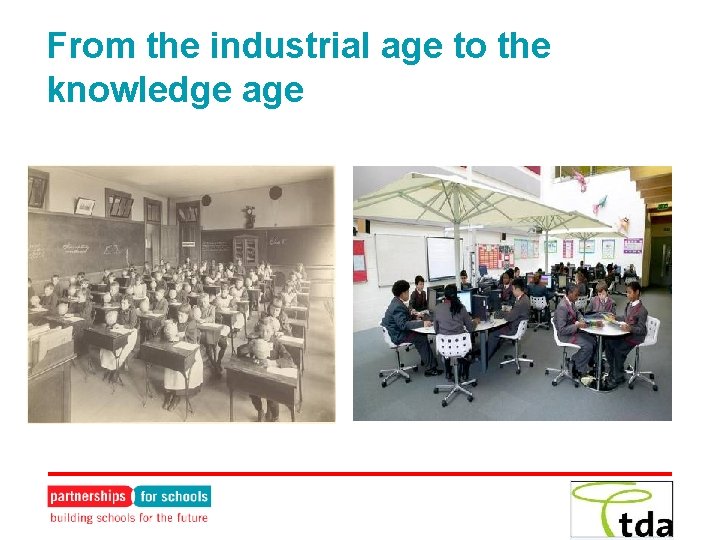
From the industrial age to the knowledge age
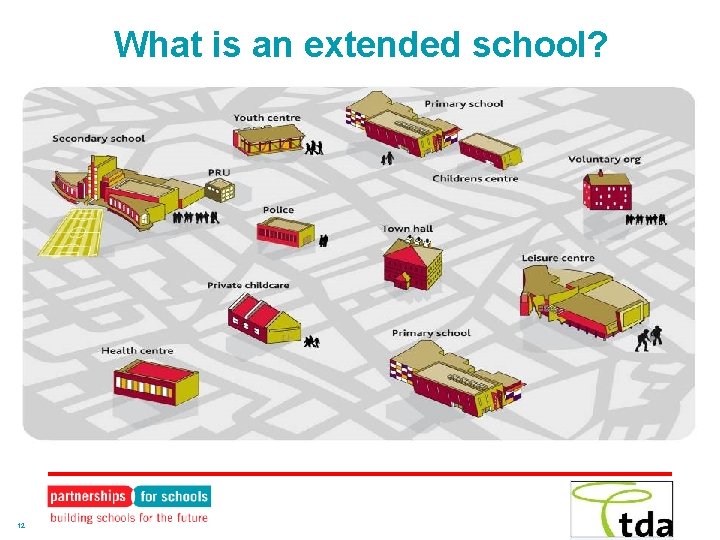
What is an extended school? 12
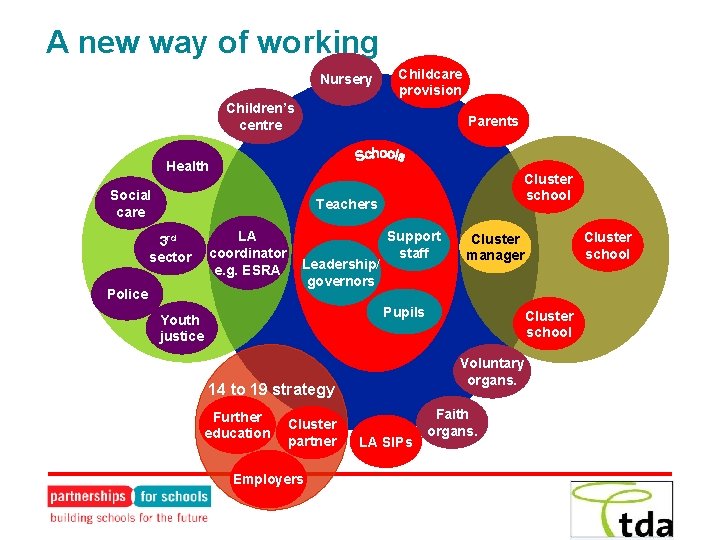
A new way of working Nursery Childcare provision Children’s centre Parents Health Social care Cluster school Teachers 3 rd sector LA coordinator e. g. ESRA Police Leadership/ governors Support staff Pupils Youth justice Further education Cluster partner Employers Cluster school Voluntary organs. 14 to 19 strategy LA SIPs Cluster school Cluster manager Faith organs.
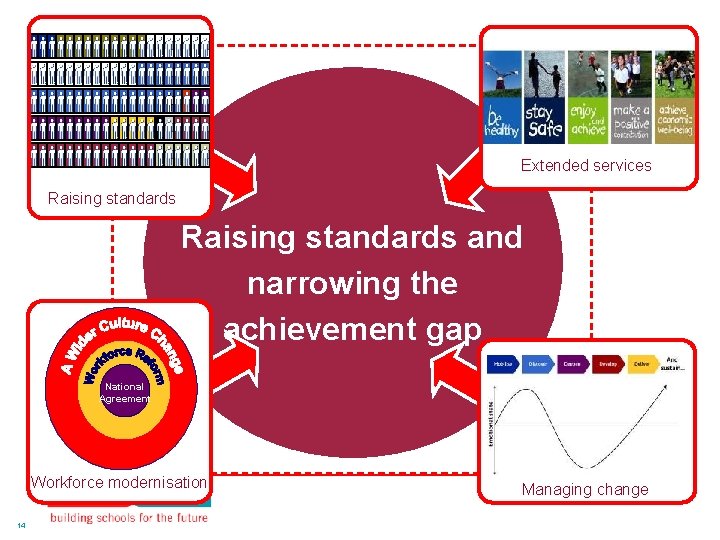
Extended services Raising standards and narrowing the achievement gap National Agreement Workforce modernisation 14 Managing change

Intelligence, endurance, steadfastness and morality lead practitioners to success
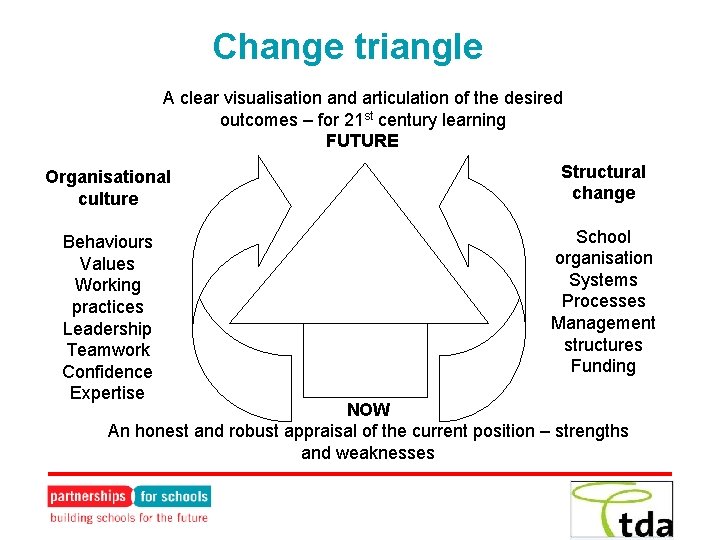
Change triangle A clear visualisation and articulation of the desired outcomes – for 21 st century learning FUTURE Organisational culture Structural change Behaviours Values Working practices Leadership Teamwork Confidence Expertise School organisation Systems Processes Management structures Funding NOW An honest and robust appraisal of the current position – strengths and weaknesses
Areas for discussion Ø How long term should our change management strategy be? Ø How much of the change we anticipate is building-related? Ø Which stakeholder groups require a strategy to enable them to embrace change and develop the skills and competences to do so? Ø Who should be the leaders of change, and how can we build change leadership capacity? Ø How can we resource the change management requirement? What existing resources (internal or external) do we need to align? Ø What is the relationship between change management plans and KPIs and performance management arrangements?
Useful Website Links Pf. S: www. partnershipsforschools. org. uk TDA: www. tda. gov. uk NCSL: BSF Leadership Programme www. ncsl. gov. uk QCA: www. qca. org. uk BECTA: www. becta. org. uk SSAT: www. specialistschools. org. uk Innovation Unit: www. innovation-unit. co. uk Futurelab: www. futurelab. org. uk Teachernet: www. teachernet. gov. uk
- Slides: 18