
LEADING FROM THE MIDDLE Leadership Development for Transformative
- Slides: 14
LEADING FROM THE MIDDLE Leadership Development for Transformative Change Robert Gabriner, Co Director LFM Ireri Valenzuela, Coaching Coordinator
Why LFM? • Growth of student success and equity initiatives in California • Emerging roles of faculty, staff and middle administrators addressing reform and transformation • Need for a network among the 113 colleges of middle leaders • Absence of leadership development programs within California for middle level practitioners focused on substantive change for social justice • Focus on executive level training for administrators, faculty and staff; • Focus on career ladders • Focus on policies, laws, regulations and procedures 2
Why LFM? • Leadership development for California Community College middle leaders • Deans; directors; coordinators; department chairs; • All middle leaders with and without title • Founded in 2011 [Research and Planning Group for California Community Colleges] • Seven Academies for over 380 CC practitioners from over 40 colleges • Two Co Directors and a core LFM team of 15 facilitators/coaches, all CC practitioners 3
Leading from the Middle Academy One year academy with three components • • 4 Colleges send teams of 4 6 middle leaders Three retreats of 2 ½ days each Online activities Coaching support
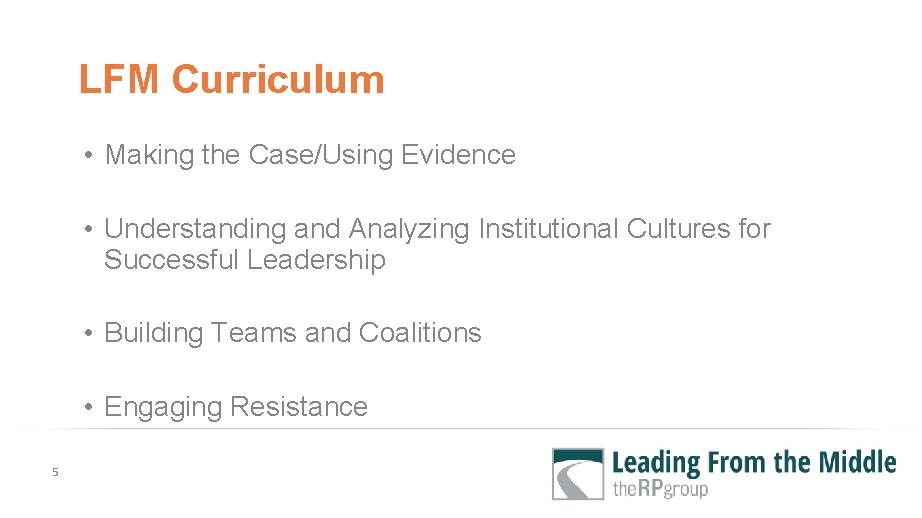
LFM Curriculum • Making the Case/Using Evidence • Understanding and Analyzing Institutional Cultures for Successful Leadership • Building Teams and Coalitions • Engaging Resistance 5
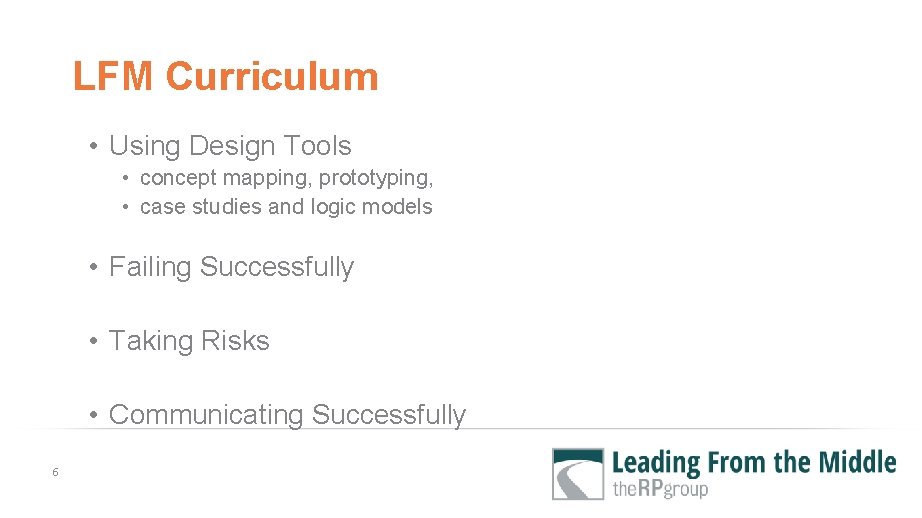
LFM Curriculum • Using Design Tools • concept mapping, prototyping, • case studies and logic models • Failing Successfully • Taking Risks • Communicating Successfully 6
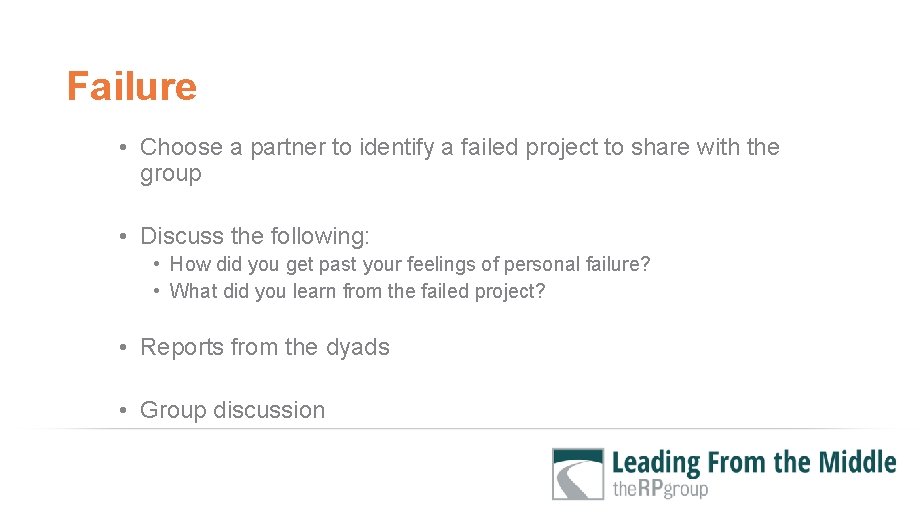
Failure • Choose a partner to identify a failed project to share with the group • Discuss the following: • How did you get past your feelings of personal failure? • What did you learn from the failed project? • Reports from the dyads • Group discussion
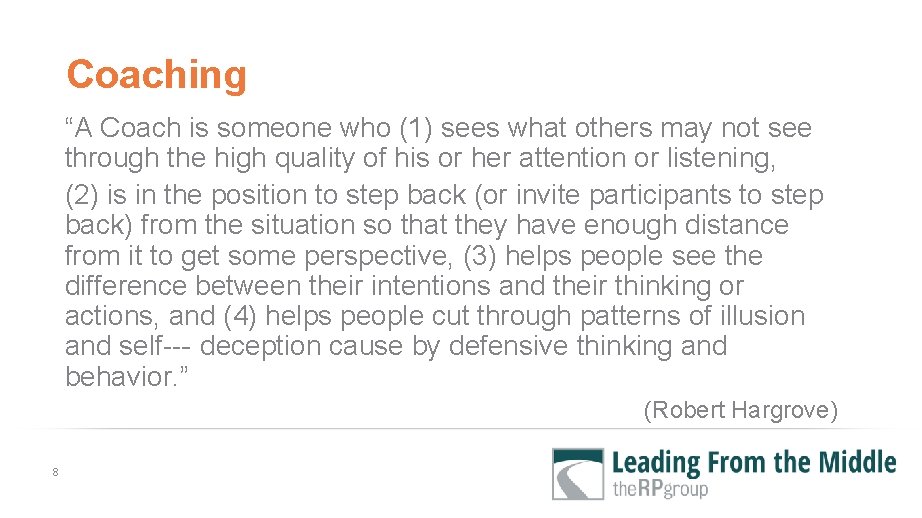
Coaching “A Coach is someone who (1) sees what others may not see through the high quality of his or her attention or listening, (2) is in the position to step back (or invite participants to step back) from the situation so that they have enough distance from it to get some perspective, (3) helps people see the difference between their intentions and their thinking or actions, and (4) helps people cut through patterns of illusion and self ‐deception cause by defensive thinking and behavior. ” (Robert Hargrove) 8
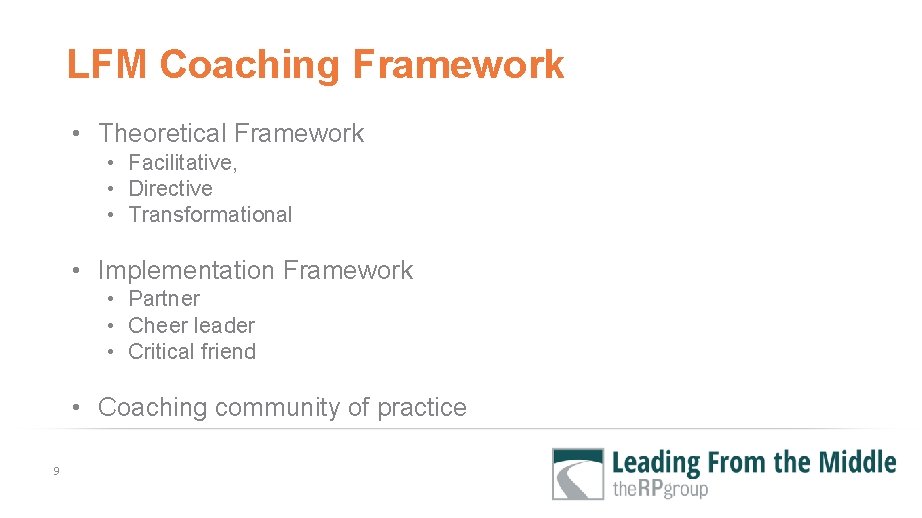
LFM Coaching Framework • Theoretical Framework • Facilitative, • Directive • Transformational • Implementation Framework • Partner • Cheer leader • Critical friend “ • Coaching community of practice 9
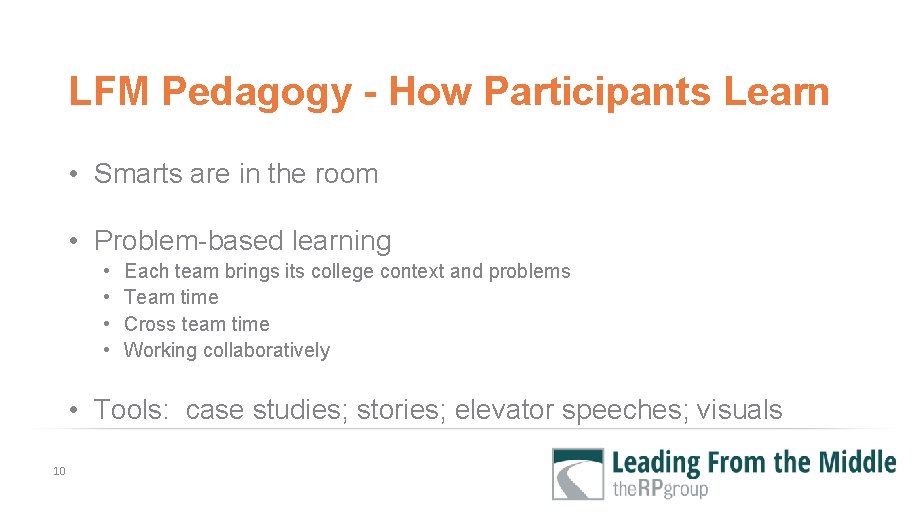
LFM Pedagogy - How Participants Learn • Smarts are in the room • Problem based learning • • Each team brings its college context and problems Team time Cross team time Working collaboratively • Tools: case studies; stories; elevator speeches; visuals 10
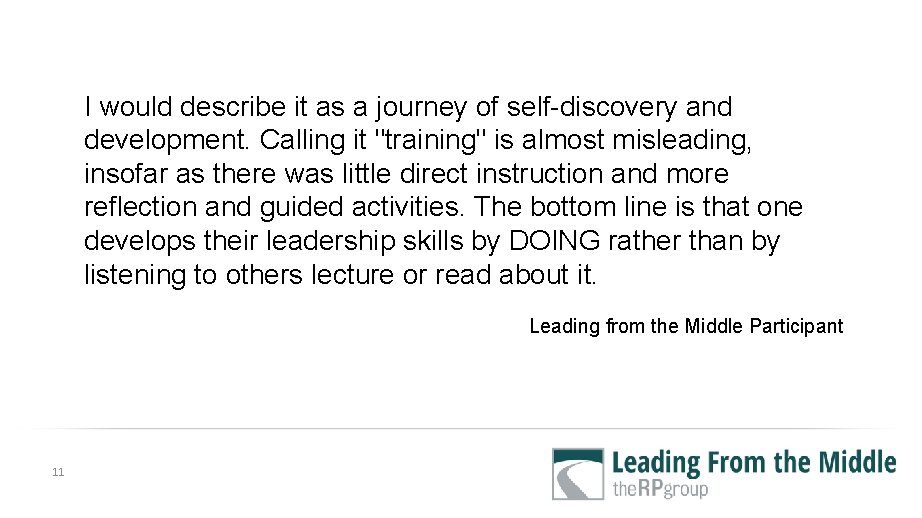
I would describe it as a journey of self discovery and development. Calling it "training" is almost misleading, insofar as there was little direct instruction and more reflection and guided activities. The bottom line is that one develops their leadership skills by DOING rather than by listening to others lecture or read about it. Leading from the Middle Participant 11
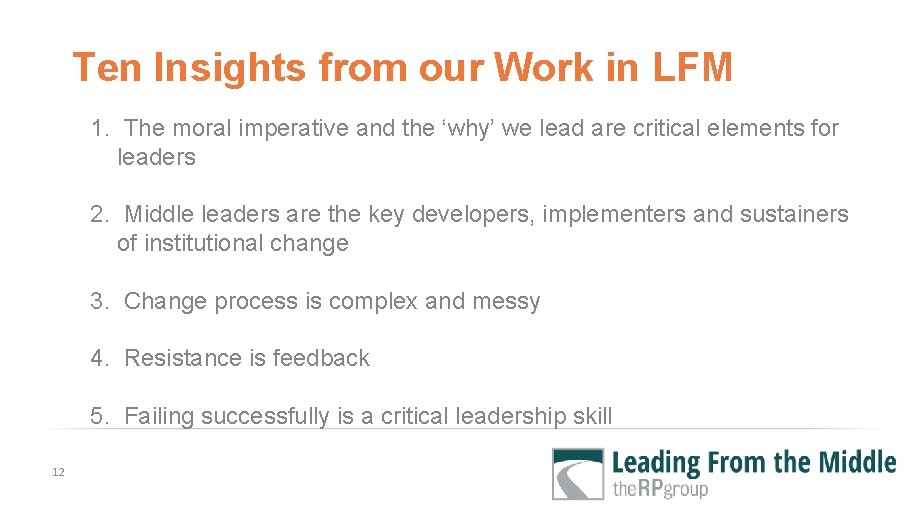
Ten Insights from our Work in LFM 1. The moral imperative and the ‘why’ we lead are critical elements for leaders 2. Middle leaders are the key developers, implementers and sustainers of institutional change 3. Change process is complex and messy 4. Resistance is feedback 5. Failing successfully is a critical leadership skill 12
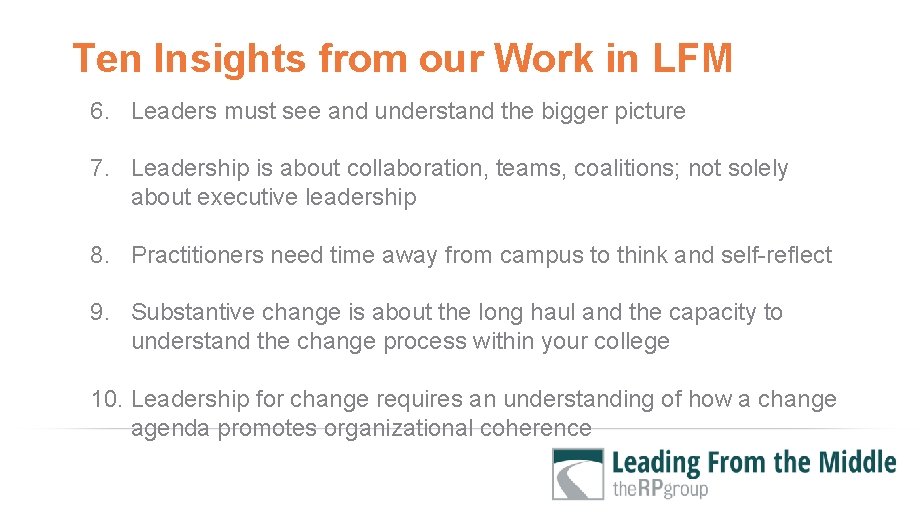
Ten Insights from our Work in LFM 6. Leaders must see and understand the bigger picture 7. Leadership is about collaboration, teams, coalitions; not solely about executive leadership 8. Practitioners need time away from campus to think and self reflect 9. Substantive change is about the long haul and the capacity to understand the change process within your college 10. Leadership for change requires an understanding of how a change agenda promotes organizational coherence
For more information about Leading from the Middle Bob Gabriner, Co Director LFM Gabriner@sfsu. edu Ireri Valenzuela, Coaching Coordinator ivalenzuela@rpgroup. org Leading from the Middle website http: //rpgroup. org/Leading from the Middle 14