
Leading English Language Development POWAY BENCHMARK EDUCATION SEPTEMBER

Leading English Language Development POWAY BENCHMARK EDUCATION SEPTEMBER 2017
Activate Prior Learning Visual Representation 1. Reflect on your recent Benchmark Advance/Adelante learning. 2. Sketch an image to represent a big idea you have learned. Use imagery not words. 3. Exchange ideas with a partner.

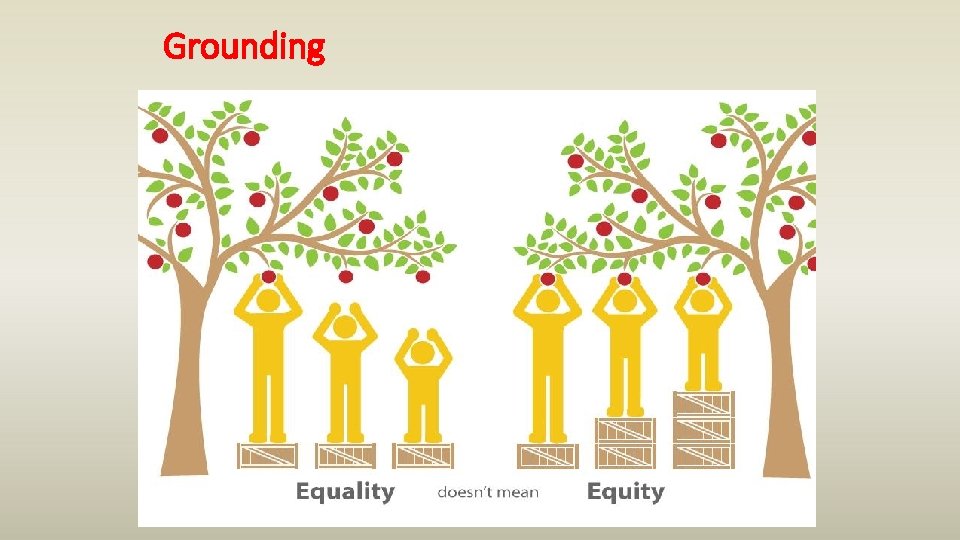
Grounding
Access & Equity Lens • What is the difference between equity and equality? • How do we account for this in the classroom? • Share a classroom experience that exemplifies this.
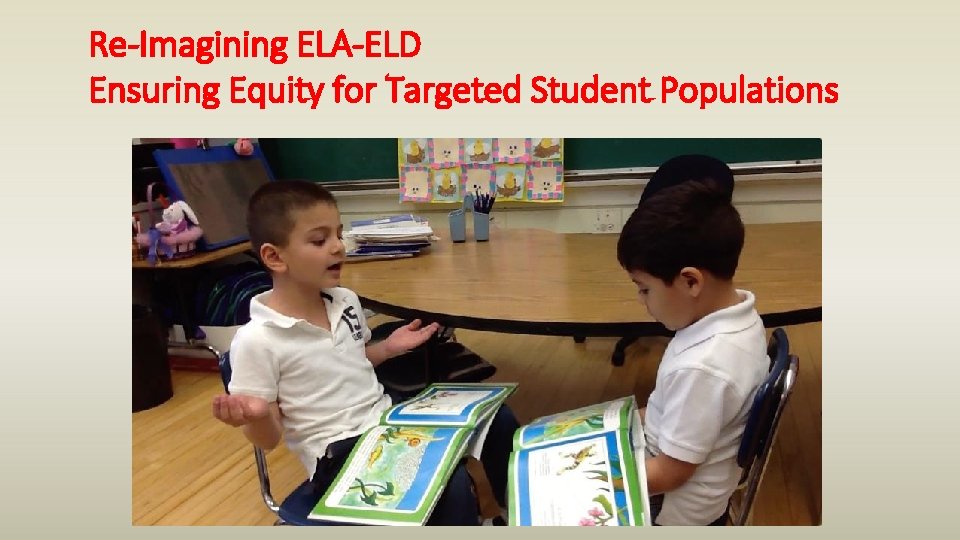
Re-Imagining ELA-ELD Ensuring Equity for Targeted Student Populations
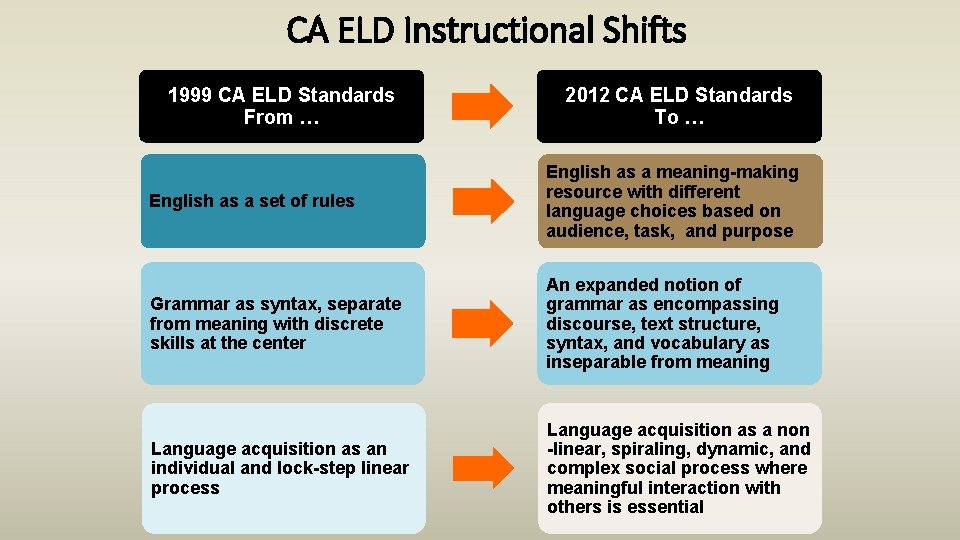
CA ELD Instructional Shifts 1999 CA ELD Standards From … 2012 CA ELD Standards To … English as a set of rules English as a meaning-making resource with different language choices based on audience, task, and purpose Grammar as syntax, separate from meaning with discrete skills at the center An expanded notion of grammar as encompassing discourse, text structure, syntax, and vocabulary as inseparable from meaning Language acquisition as an individual and lock-step linear process Language acquisition as a non -linear, spiraling, dynamic, and complex social process where meaningful interaction with others is essential
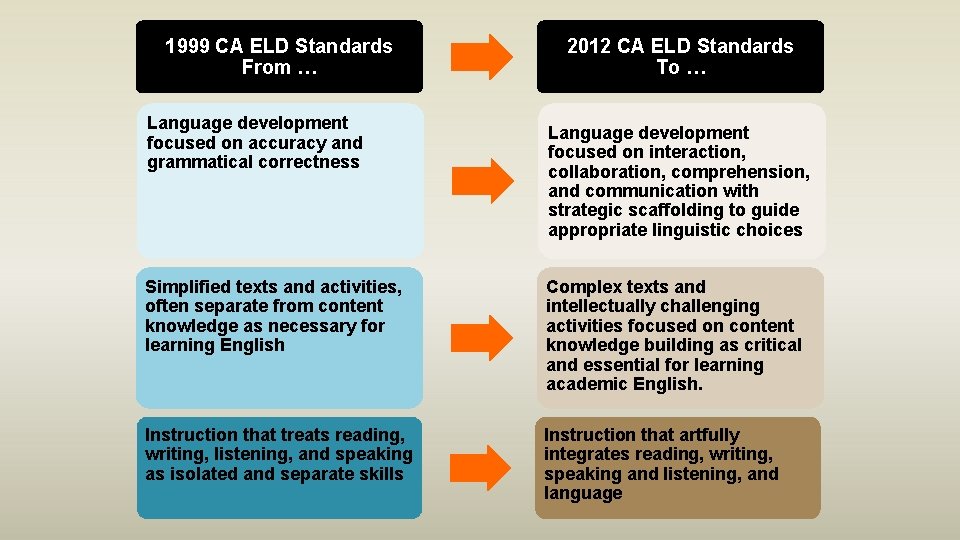
1999 CA ELD Standards From … Language development focused on accuracy and grammatical correctness 2012 CA ELD Standards To … Language development focused on interaction, collaboration, comprehension, and communication with strategic scaffolding to guide appropriate linguistic choices Simplified texts and activities, often separate from content knowledge as necessary for learning English Complex texts and intellectually challenging activities focused on content knowledge building as critical and essential for learning academic English. Instruction that treats reading, writing, listening, and speaking as isolated and separate skills Instruction that artfully integrates reading, writing, speaking and listening, and language
Part III: Using Foundational Literacy Skills for English Learners are taught in CORE Program at each grade level Part III of the ELD standards signal to teachers to consider background characteristics of each English Learners when designing and monitoring foundational literacy skills: § § § Age and level of schooling, Previous literacy experiences Level of oral proficiency in the native language The native language writing system used How closely the student’s native language is related English. to
EL Roadmap Policy: July 2017 Research Findings and Guiding Principles Current national research consensus on second language learning, biliteracy, program effectiveness and policy. Triad Gallery Walk • Read the passages • Discuss validations, new learning, questions
California ELA/ELD Framework: Partner Read and Discussion “English Learners learn language and content better through intellectually challenging tasks and texts. Learning should occur through meaningful engagement with content rich texts and tasks, and simplified texts should be use judiciously. Rather than simplifying language, the CA ELD Standards suggest that teachers should amplify EL’s access to the language by holding the complexity of tasks and texts constant while providing appropriate scaffolding so that students are sufficiently supported to be successful. ” (Walqui and van Lier 2010)
Integrated and Designated What’s the Difference and relationship? Integrated ELD Designated ELD All through the day. Planned and in the moment levels of support Protected time during the day based on proficiency level Focus on ELA standards in tandem with ELD Focus on ELD standards in tandem with ELA standards. “into and from content” Focus on providing access to grade level content Focus on teaching English Language Development
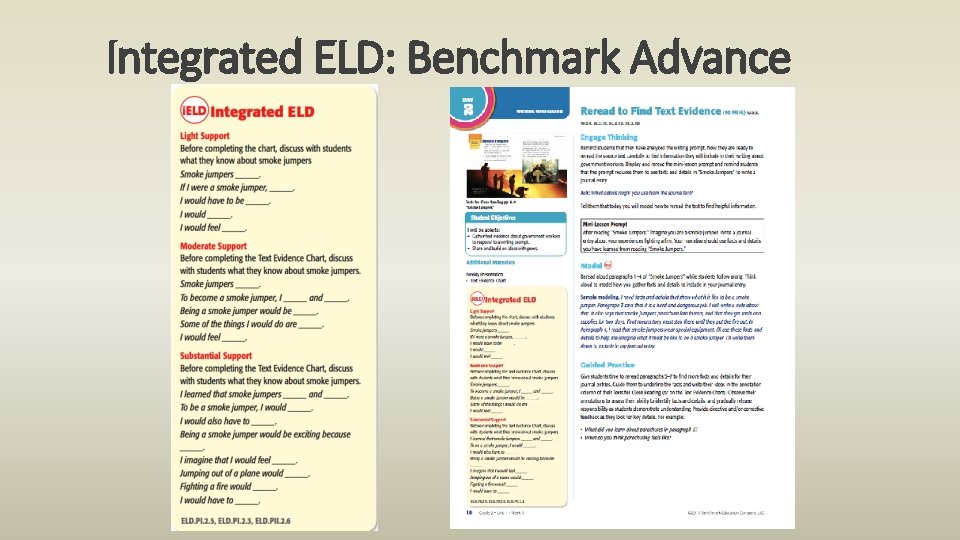
Integrated ELD: Benchmark Advance
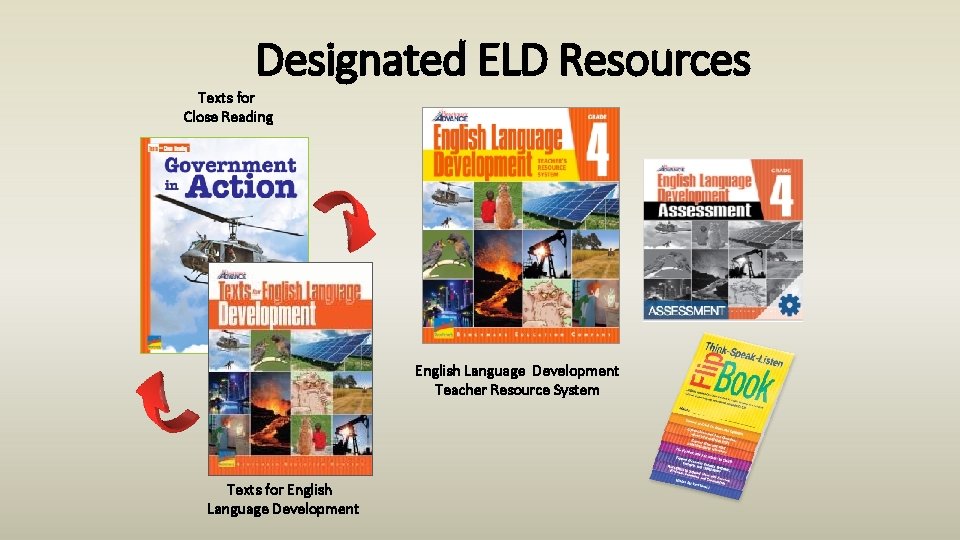
Designated ELD Resources Texts for Close Reading English Language Development Teacher Resource System Texts for English Language Development
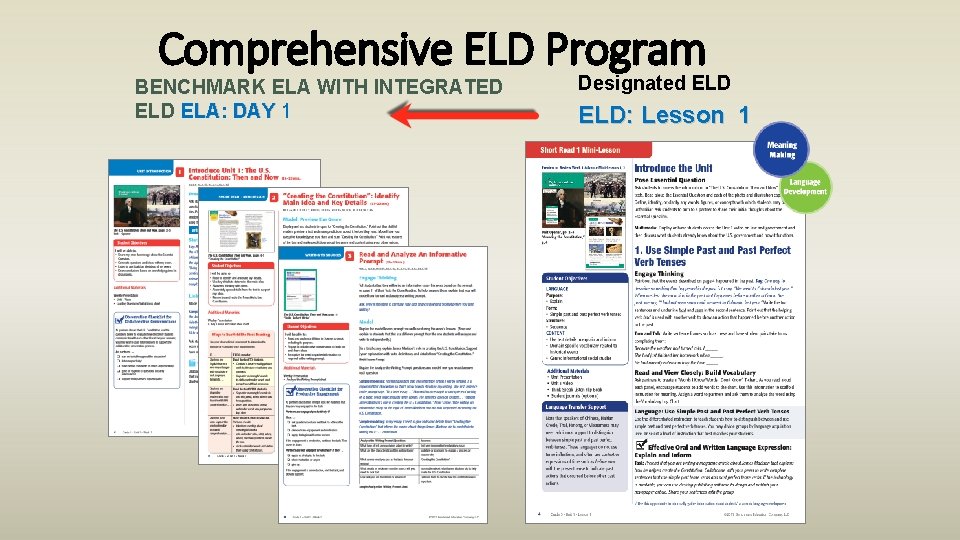
Comprehensive ELD Program BENCHMARK ELA WITH INTEGRATED ELA: DAY 1 Designated ELD: Lesson 1
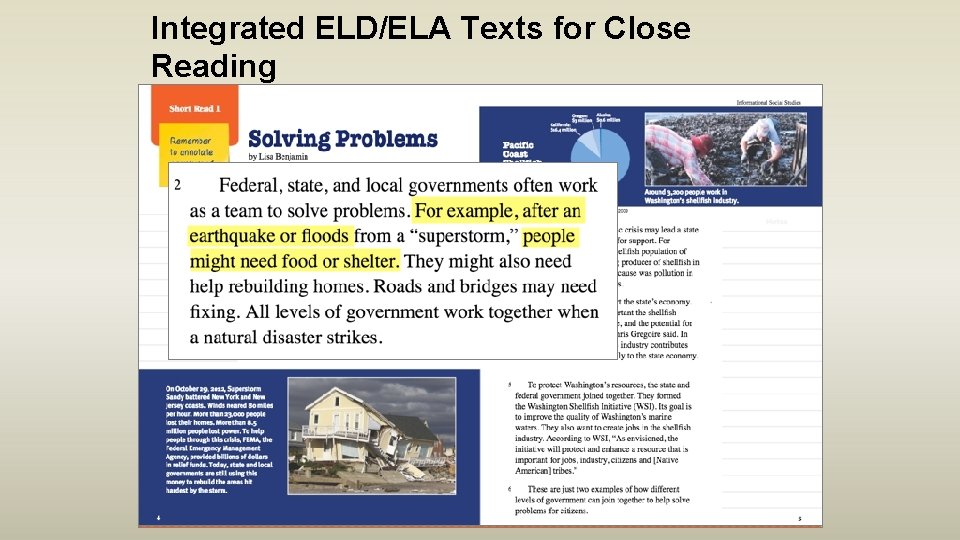
Integrated ELD/ELA Texts for Close Reading
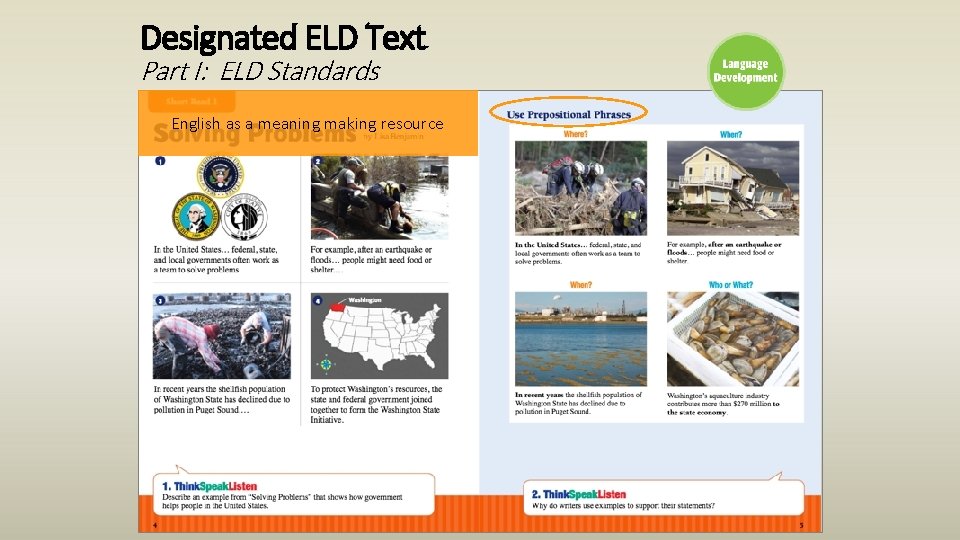
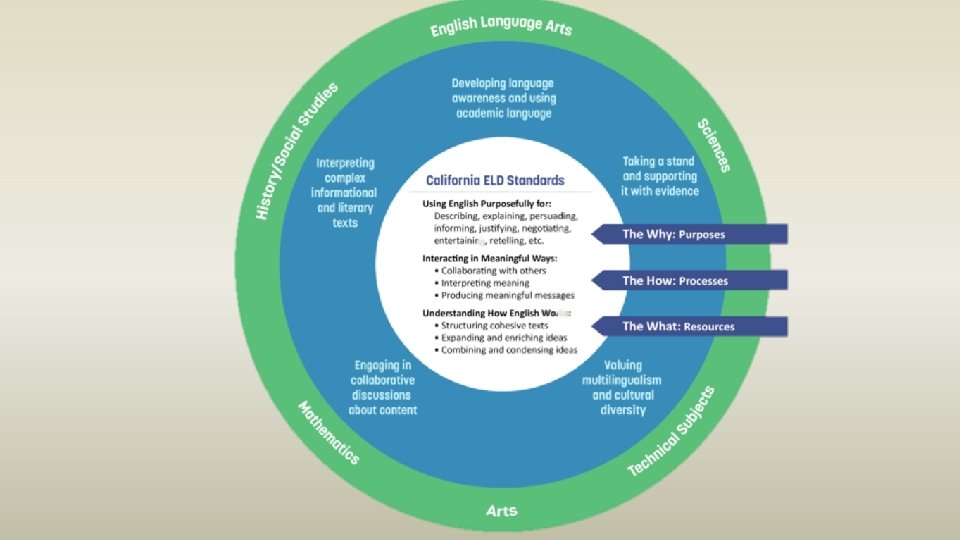
Designated ELD Text Part I: ELD Standards English as a meaning making resource
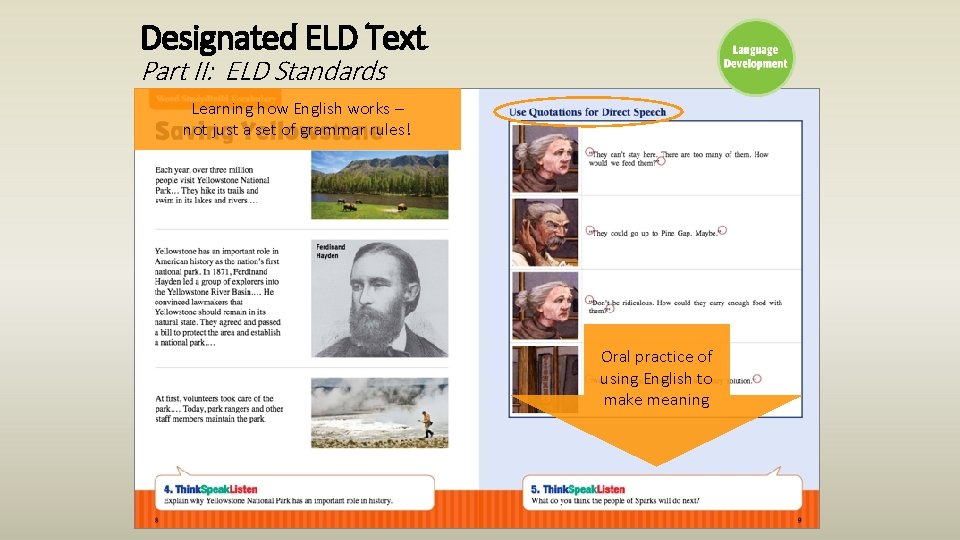
Designated ELD Text Part II: ELD Standards Learning how English works – not just a set of grammar rules! Oral practice of using English to make meaning
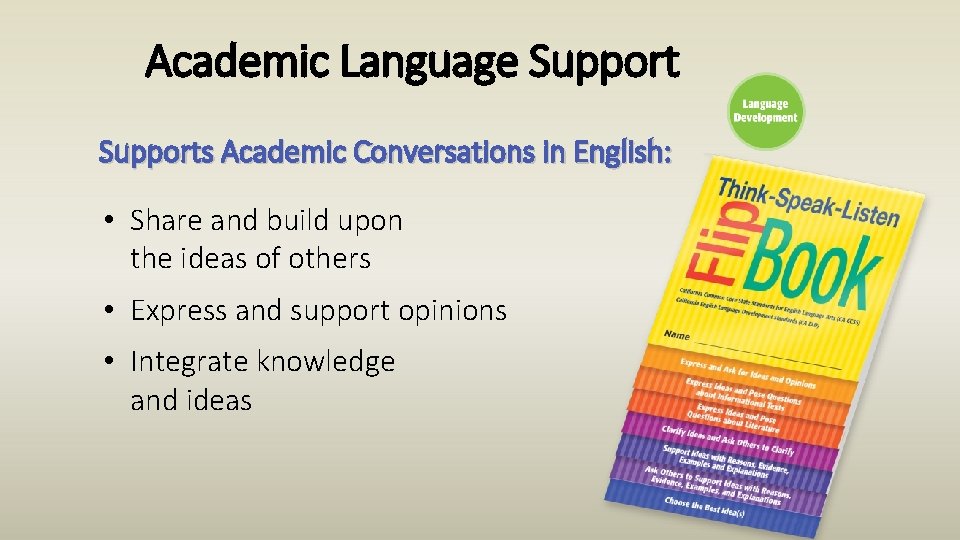
Academic Language Supports Academic Conversations in English: • Share and build upon the ideas of others • Express and support opinions • Integrate knowledge and ideas
Teacher Resource System Walk Through Designated ELD Partners: 1. Choose an ELD lesson 2. Describe the purpose of the lesson. 3. Point out the instructional sequence. 4. Describe how the lesson supports various proficiency levels (emerging, expanding, bridging)
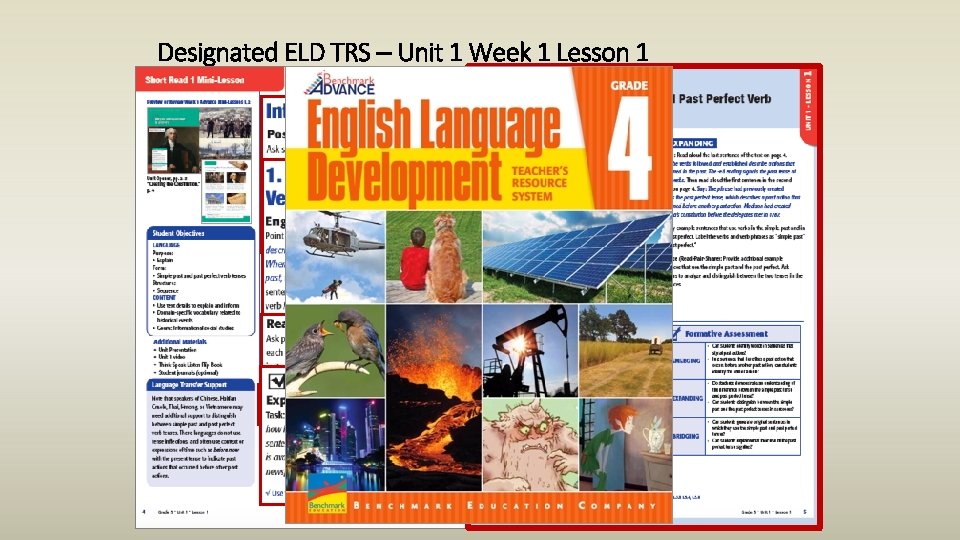
Designated ELD TRS – Unit 1 Week 1 Lesson 1
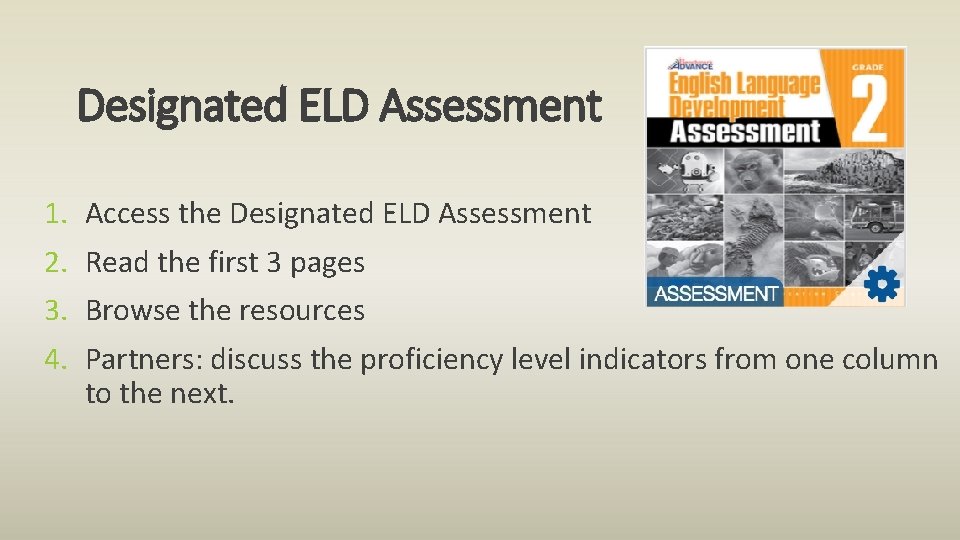
Designated ELD Assessment 1. 2. 3. 4. Access the Designated ELD Assessment Read the first 3 pages Browse the resources Partners: discuss the proficiency level indicators from one column to the next.
Three Charges from the CA ELA/ELD Framework Language to ACCESS the curriculum (comprehend) Language to PARTICIPATE in the activities, tasks and processes of learning LEARN how English works and become proficient in using it
Scenarios Groups: read, discuss, problem solve your scenario. Be prepared to share your ideas.
- Slides: 25