
Leading Change Why Transformation Efforts Fail Terry Anderson
- Slides: 11
Leading Change: Why Transformation Efforts Fail Terry Anderson 1999 A summary of the article: "Leading Change: Why Transformation Efforts Fail" by John Kotter. Harvard Business Review, March-April 1995
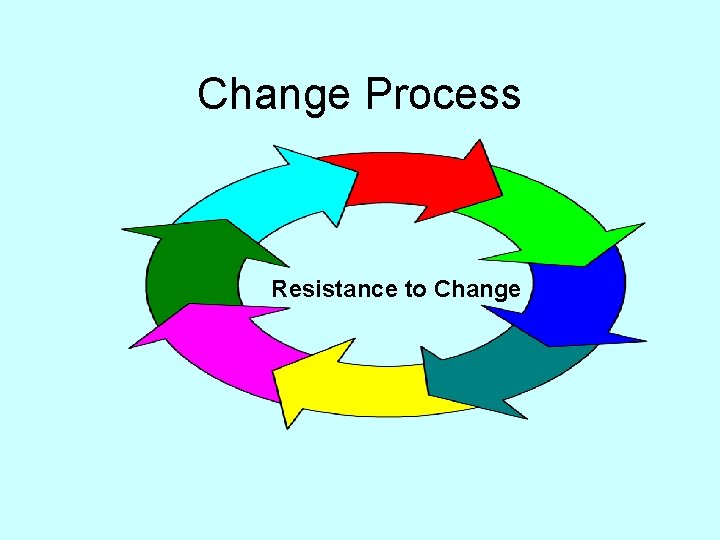
Change Process Resistance to Change
1. Not Establishing a Sense of Urgency • Examining market and competitive realities • Identifying and discussing crises, or major opportunities
2. Not Creating a Powerful Guiding Coalition • Assembling a group with enough power to lead • Encouraging the group to work as a team
3. Lacking a Vision • Creating a vision to direct the change effort • Developing strategies for achieving vision
4. Undercommunicating the Vision • Relentless communication of new vision and strategies • Teaching new behaviors by the example of the guiding coalition
5. Not Removing Obstacles to New Vision • Getting rid of obstacles to change • Changing systems or structures that undermine vision • Encouraging risk taking, nontraditional ideas, activities and actions
6. Not Planning and Creating Short-Term Wins • Planning for performance improvements • Creating improvements • Recognizing and Rewarding
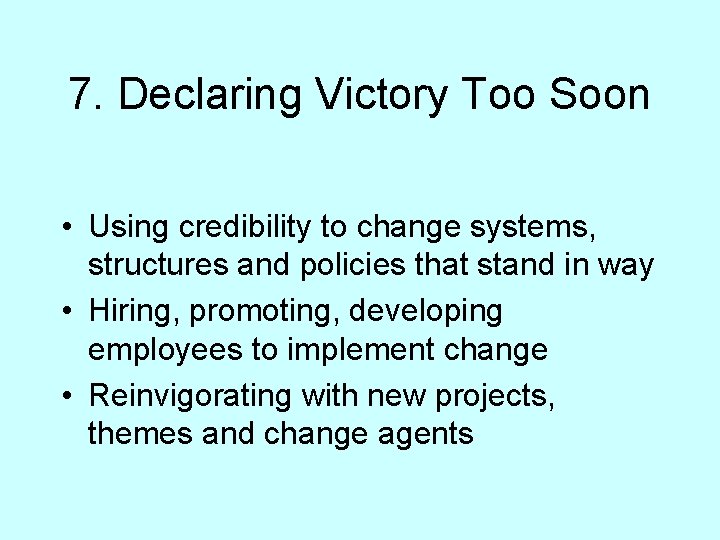
7. Declaring Victory Too Soon • Using credibility to change systems, structures and policies that stand in way • Hiring, promoting, developing employees to implement change • Reinvigorating with new projects, themes and change agents
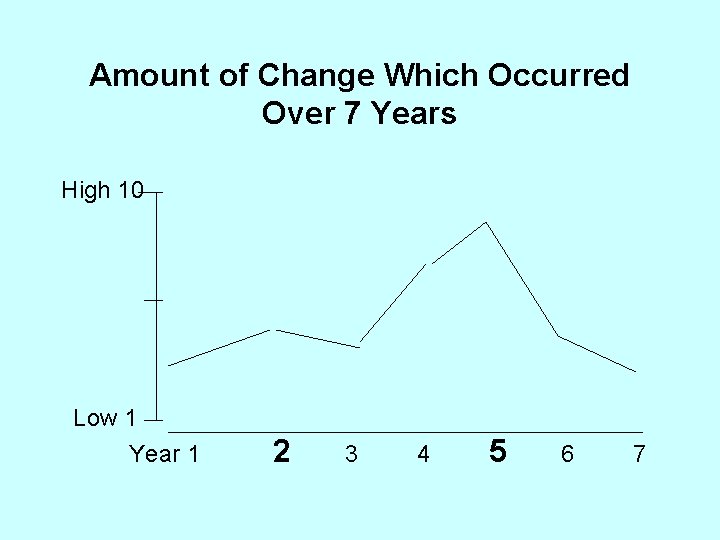
Amount of Change Which Occurred Over 7 Years High 10 Low 1 Year 1 2 3 4 5 6 7
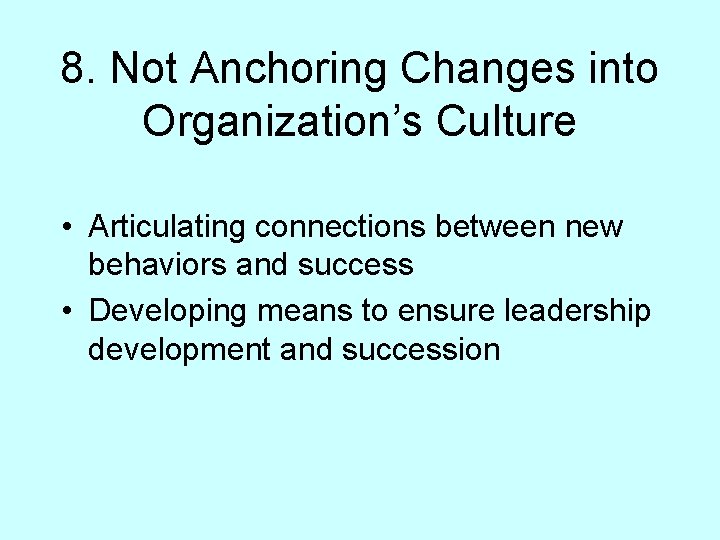
8. Not Anchoring Changes into Organization’s Culture • Articulating connections between new behaviors and success • Developing means to ensure leadership development and succession