
Leading at the Speed of Trust For the

- Slides: 34
Leading at the ® Speed of Trust For the Pacific Northwest Association of Independent Schools 2008 Fall Heads Conference Presented by Denis W. Stoddard Ph. D. Tuesday October 28, 2008 Covey. Link influencing influencers ™ © 2004 -2006 Covey. Link
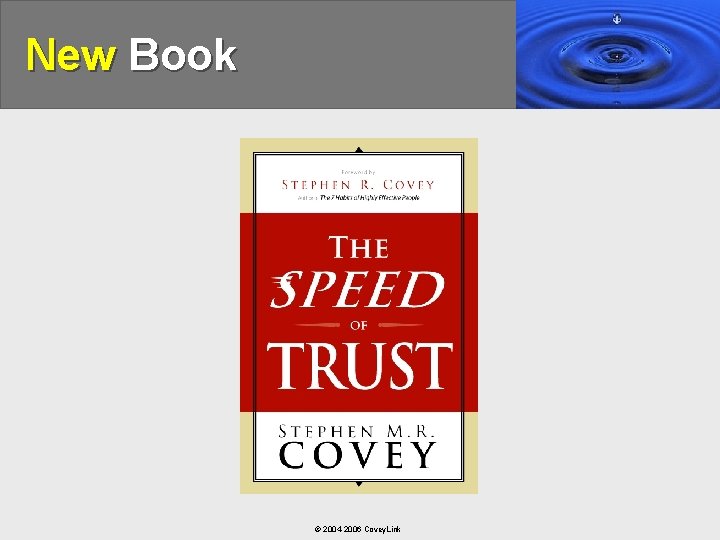
New Book © 2004 -2006 Covey. Link
The One Thing That Changes Everything The ability to establish, grow, extend, and restore trust with all stakeholders – customers, suppliers, investors, and coworkers – is the key leadership competency of the new global economy. © 2004 -2006 Covey. Link
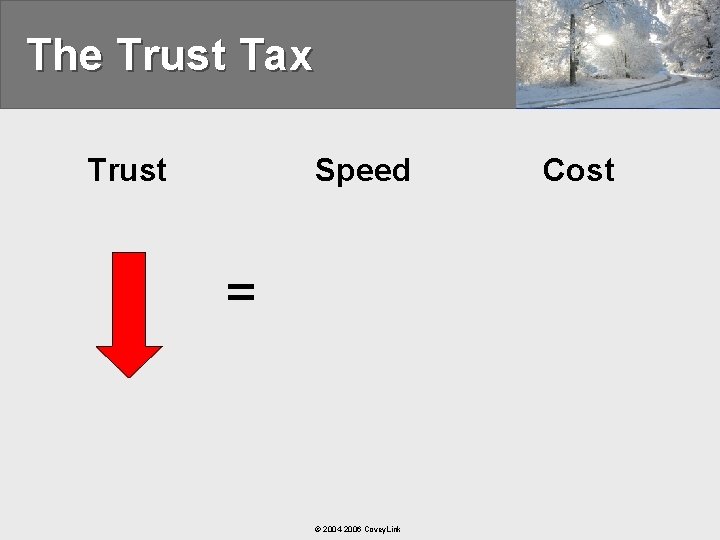
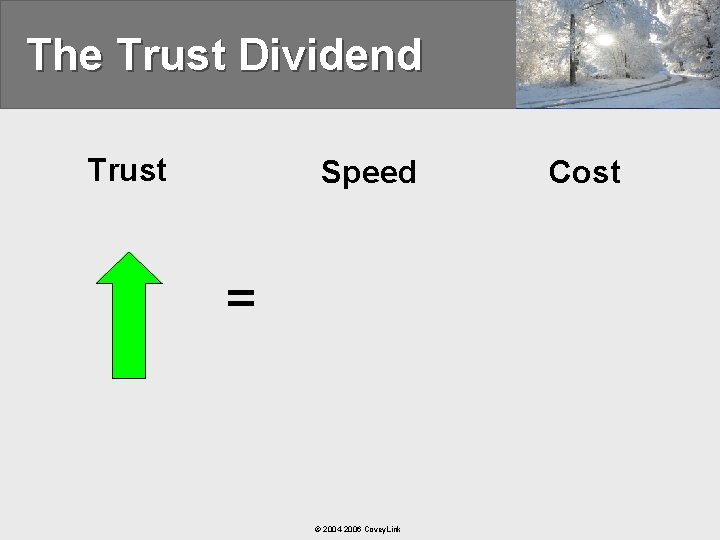
The Trust Tax Trust Speed = © 2004 -2006 Covey. Link Cost
The Trust Dividend Trust Speed = © 2004 -2006 Covey. Link Cost
High Trust is a Dividend • Total Return to Shareholders for organizations with high trust is almost _% higher than organizations with low trust Watson Wyatt study, 2002 © 2004 -2006 Covey. Link
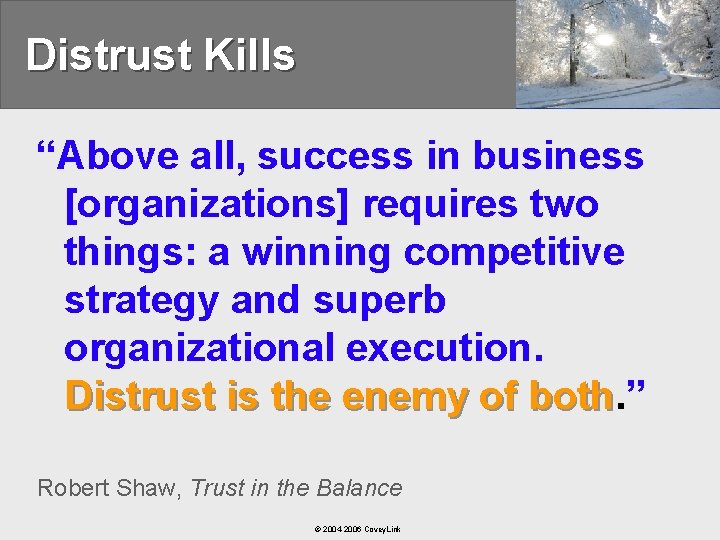
Distrust Kills “Above all, success in business [organizations] requires two things: a winning competitive strategy and superb organizational execution. Distrust is the enemy of both. ” both Robert Shaw, Trust in the Balance © 2004 -2006 Covey. Link
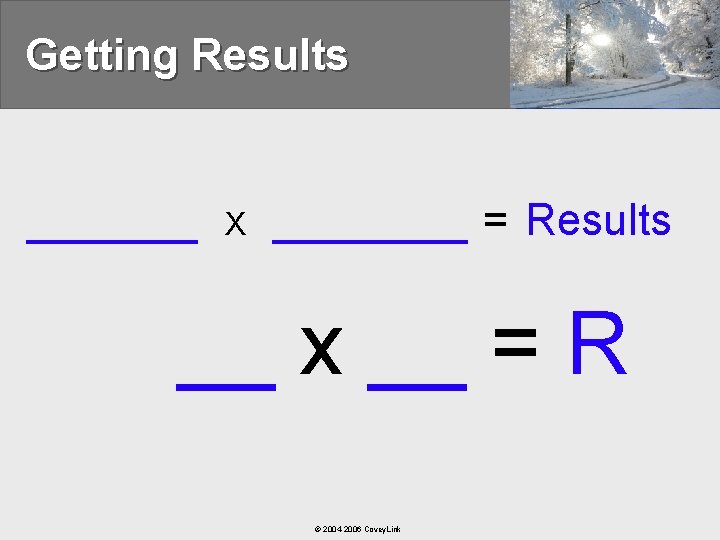
Getting Results _______ X ____ = Results __ x __ = R © 2004 -2006 Covey. Link
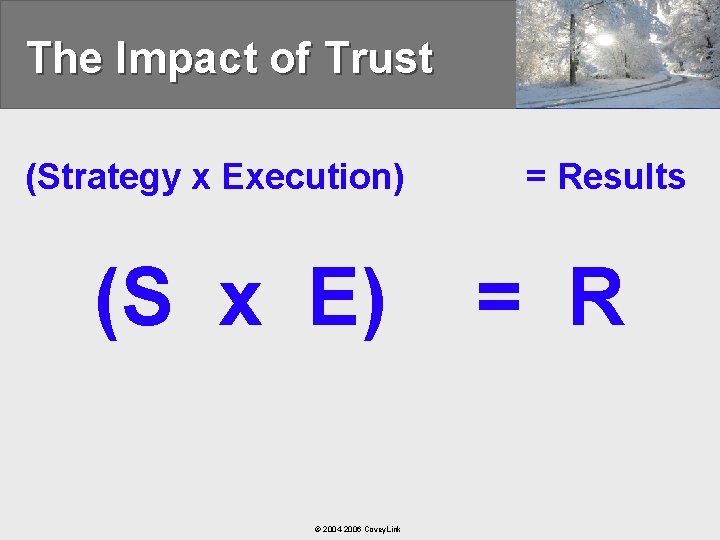
The Impact of Trust (Strategy x Execution) (S x E) © 2004 -2006 Covey. Link = Results = R
The Promise • The purpose of this seminar is to explore how you, as a leader, can get results in a way that inspires trust 10 © 2004 -2006 Covey. Link
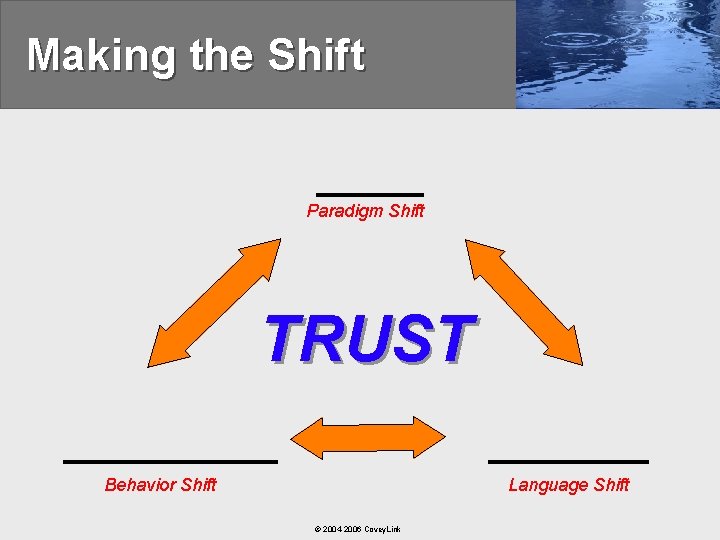
Making the Shift ____ Paradigm Shift TRUST ______ Behavior Shift Language Shift © 2004 -2006 Covey. Link
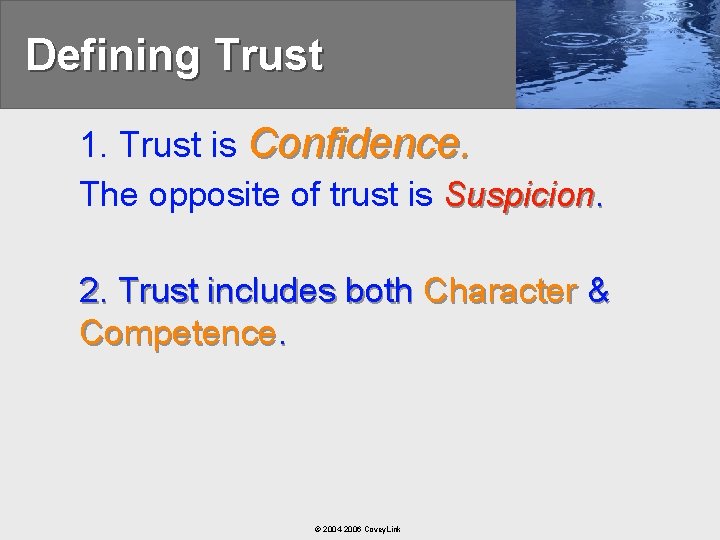
Defining Trust 1. Trust is Confidence. The opposite of trust is Suspicion. 2. Trust includes both Character & Competence. © 2004 -2006 Covey. Link
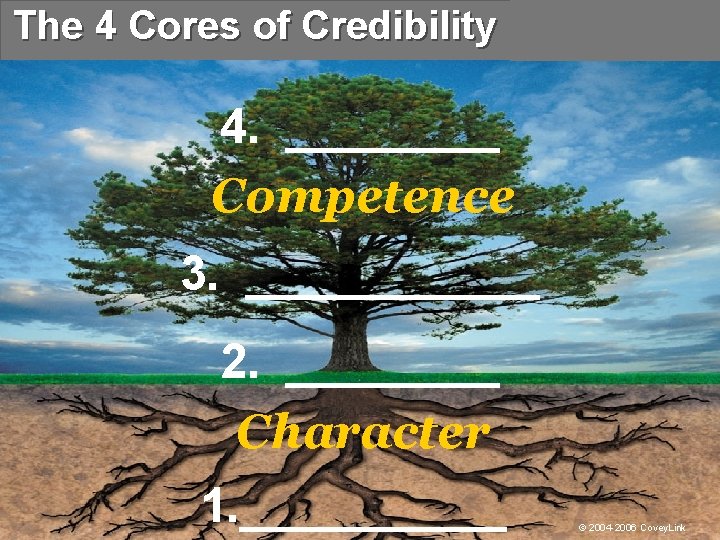
The 4 Cores of Credibility 4. ____ Competence 3. ______ 2. ____ Character 1. _____ © 2004 -2006 Covey. Link
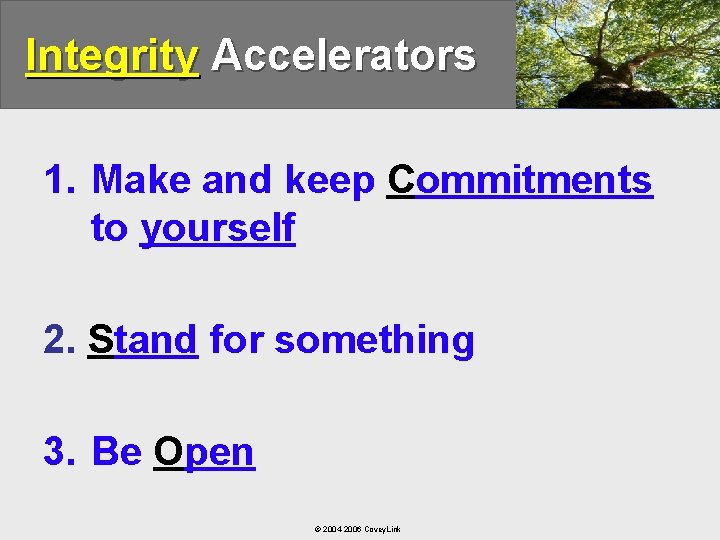
Integrity Accelerators 1. Make and keep Commitments to yourself 2. Stand for something 3. Be Open © 2004 -2006 Covey. Link
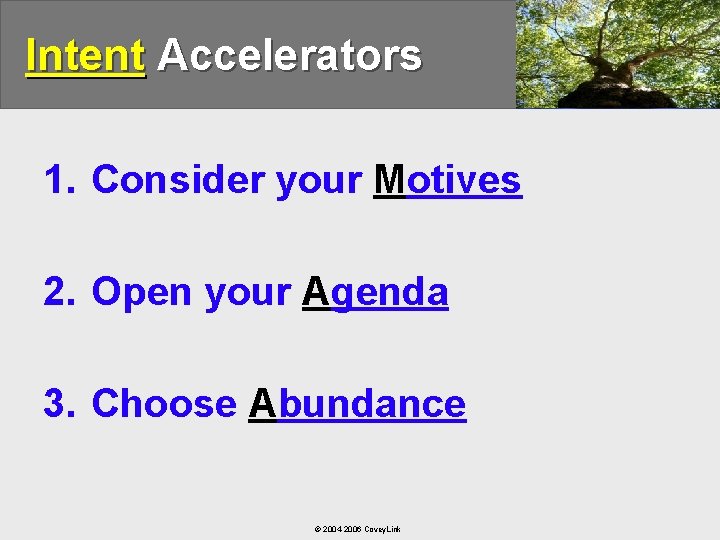
Intent Accelerators 1. Consider your Motives 2. Open your Agenda 3. Choose Abundance © 2004 -2006 Covey. Link
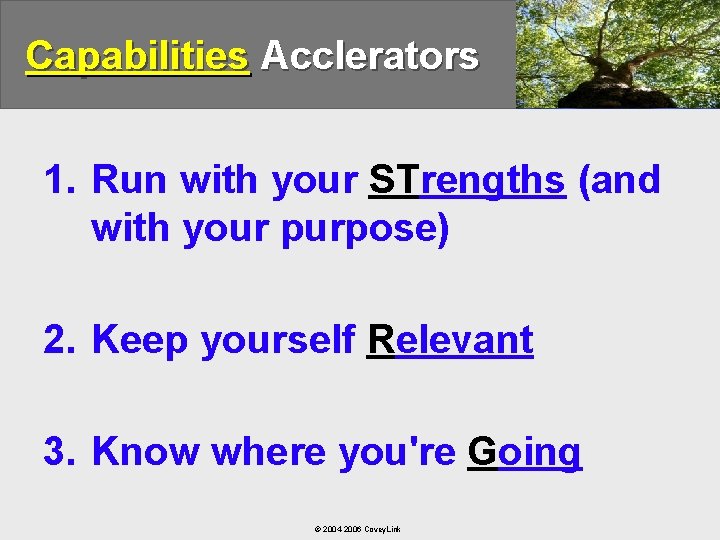
Capabilities Acclerators 1. Run with your STrengths (and with your purpose) 2. Keep yourself Relevant 3. Know where you're Going © 2004 -2006 Covey. Link
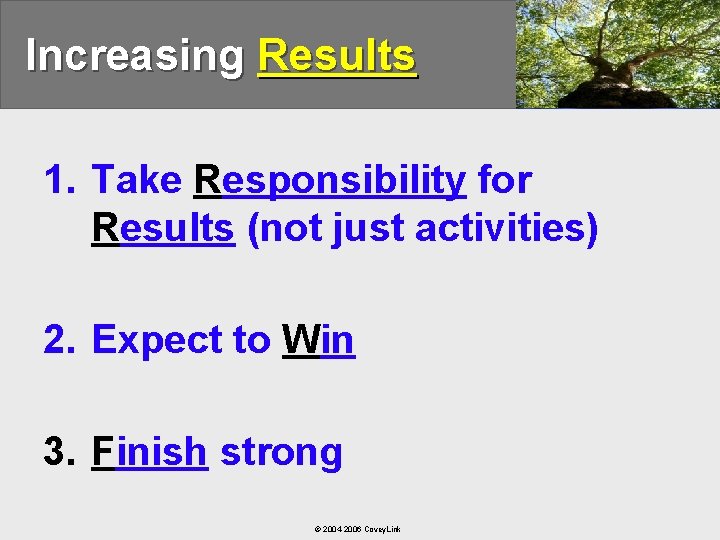
Increasing Results 1. Take Responsibility for Results (not just activities) 2. Expect to Win 3. Finish strong © 2004 -2006 Covey. Link
13 BEHAVIORS OF HIGH TRUST LEADERS © 2004 -2006 Covey. Link
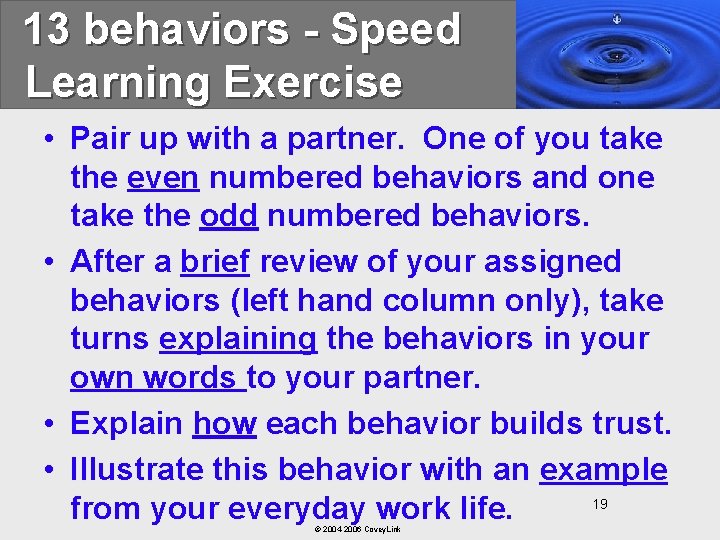
13 behaviors - Speed Learning Exercise • Pair up with a partner. One of you take the even numbered behaviors and one take the odd numbered behaviors. • After a brief review of your assigned behaviors (left hand column only), take turns explaining the behaviors in your own words to your partner. • Explain how each behavior builds trust. • Illustrate this behavior with an example 19 from your everyday work life. © 2004 -2006 Covey. Link
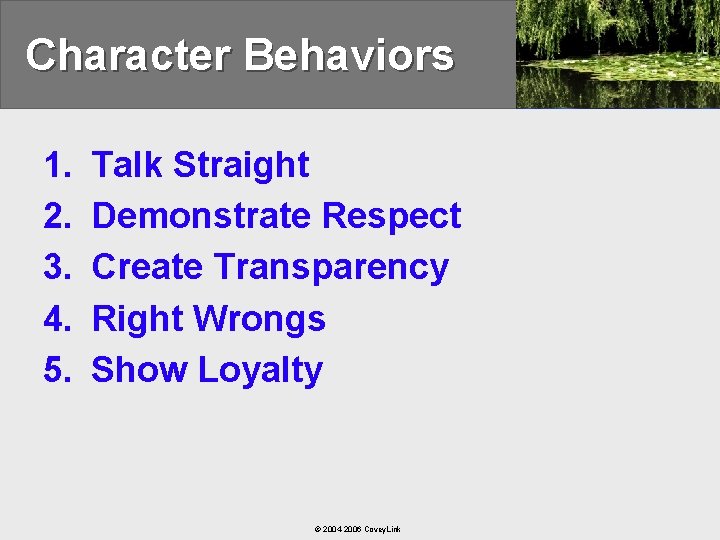
Character Behaviors 1. 2. 3. 4. 5. Talk Straight Demonstrate Respect Create Transparency Right Wrongs Show Loyalty © 2004 -2006 Covey. Link
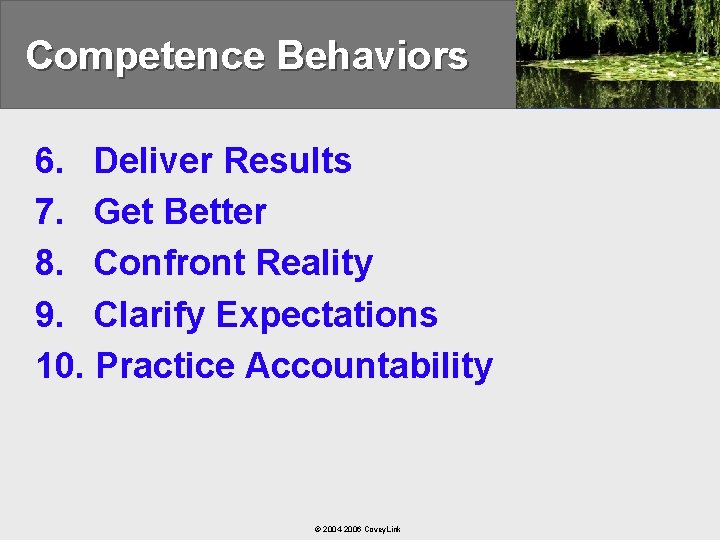
Competence Behaviors 6. Deliver Results 7. Get Better 8. Confront Reality 9. Clarify Expectations 10. Practice Accountability © 2004 -2006 Covey. Link
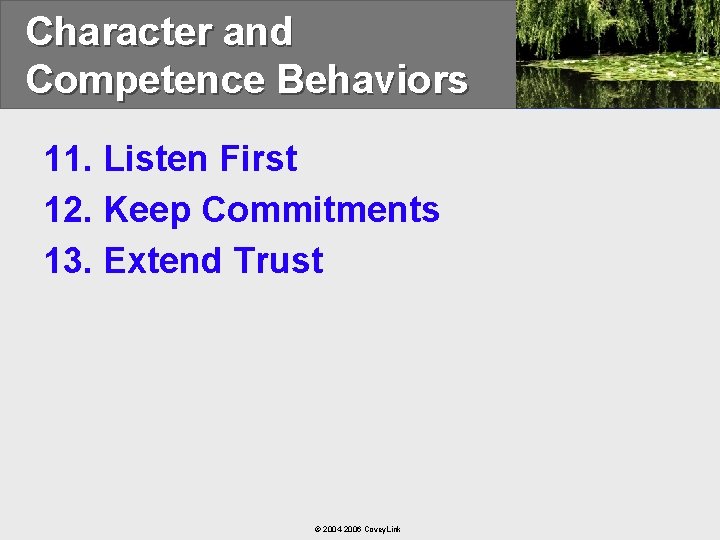
Character and Competence Behaviors 11. Listen First 12. Keep Commitments 13. Extend Trust © 2004 -2006 Covey. Link
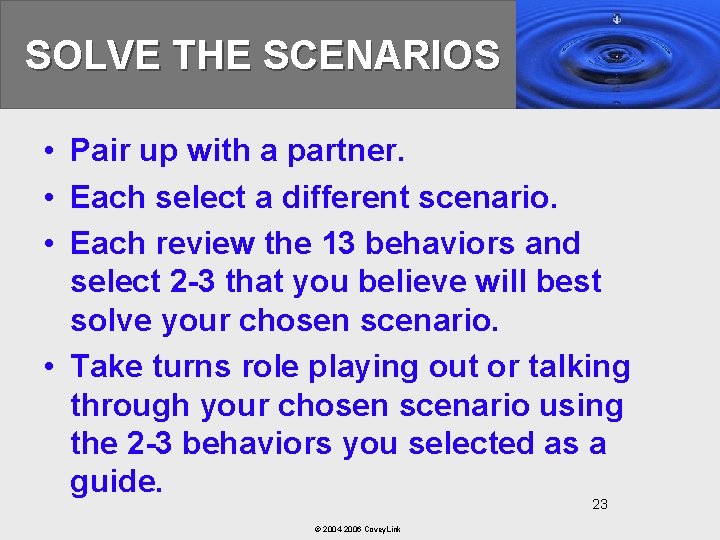
SOLVE THE SCENARIOS • Pair up with a partner. • Each select a different scenario. • Each review the 13 behaviors and select 2 -3 that you believe will best solve your chosen scenario. • Take turns role playing out or talking through your chosen scenario using the 2 -3 behaviors you selected as a guide. 23 © 2004 -2006 Covey. Link
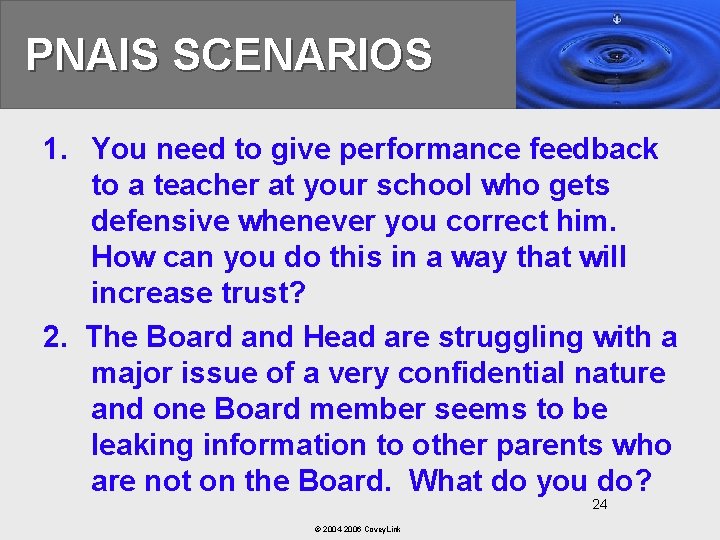
PNAIS SCENARIOS 1. You need to give performance feedback to a teacher at your school who gets defensive whenever you correct him. How can you do this in a way that will increase trust? 2. The Board and Head are struggling with a major issue of a very confidential nature and one Board member seems to be leaking information to other parents who are not on the Board. What do you do? 24 © 2004 -2006 Covey. Link
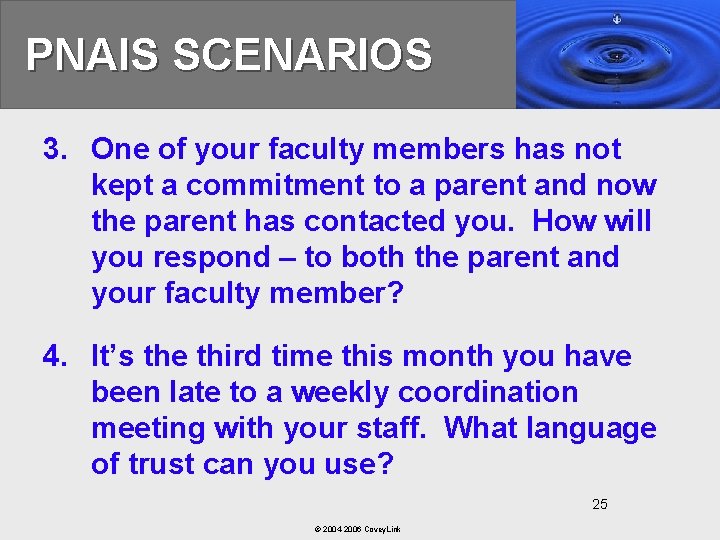
PNAIS SCENARIOS 3. One of your faculty members has not kept a commitment to a parent and now the parent has contacted you. How will you respond – to both the parent and your faculty member? 4. It’s the third time this month you have been late to a weekly coordination meeting with your staff. What language of trust can you use? 25 © 2004 -2006 Covey. Link
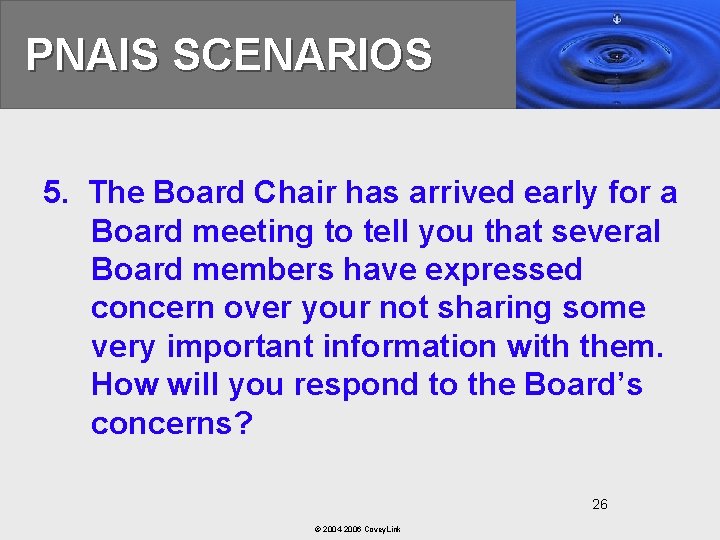
PNAIS SCENARIOS 5. The Board Chair has arrived early for a Board meeting to tell you that several Board members have expressed concern over your not sharing some very important information with them. How will you respond to the Board’s concerns? 26 © 2004 -2006 Covey. Link
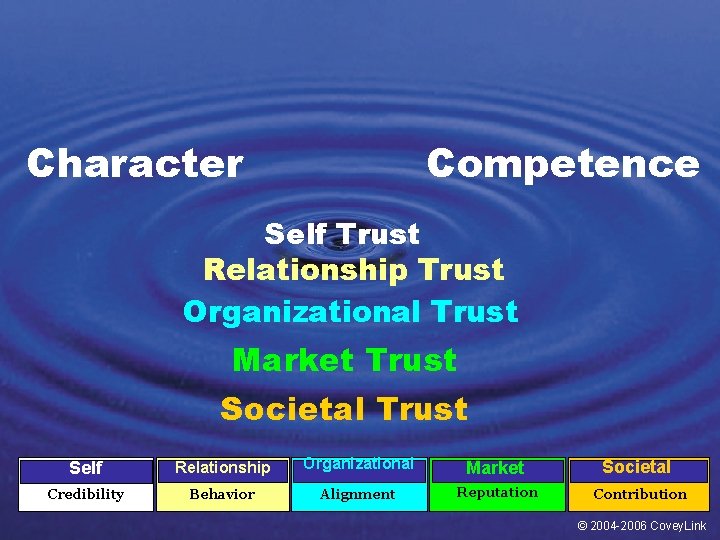
Character Competence Self Trust Relationship Trust Organizational Trust Market Trust Societal Trust Self Relationship Organizational Market Societal Credibility Behavior Alignment Reputation Contribution © 2004 -2006 Covey. Link
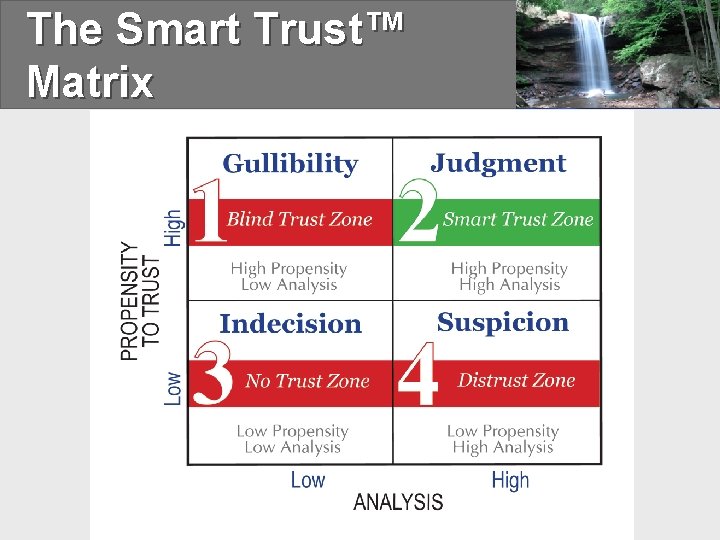
The Smart Trust™ Matrix © 2004 -2006 Covey. Link
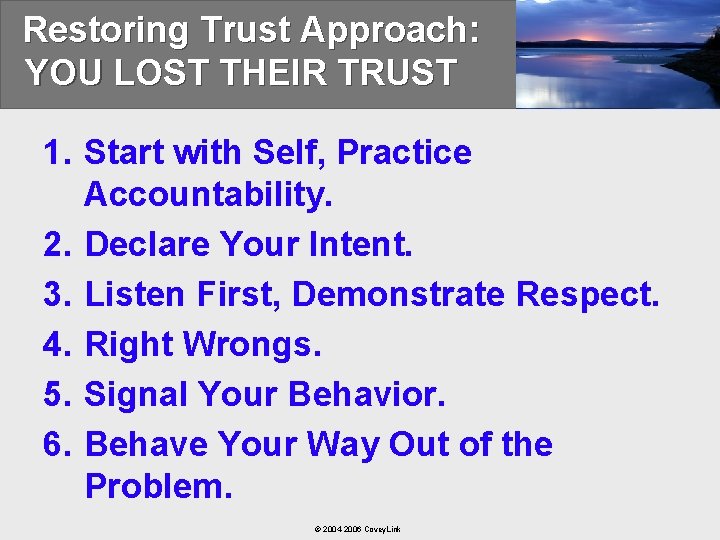
Restoring Trust Approach: YOU LOST THEIR TRUST 1. Start with Self, Practice Accountability. 2. Declare Your Intent. 3. Listen First, Demonstrate Respect. 4. Right Wrongs. 5. Signal Your Behavior. 6. Behave Your Way Out of the Problem. © 2004 -2006 Covey. Link
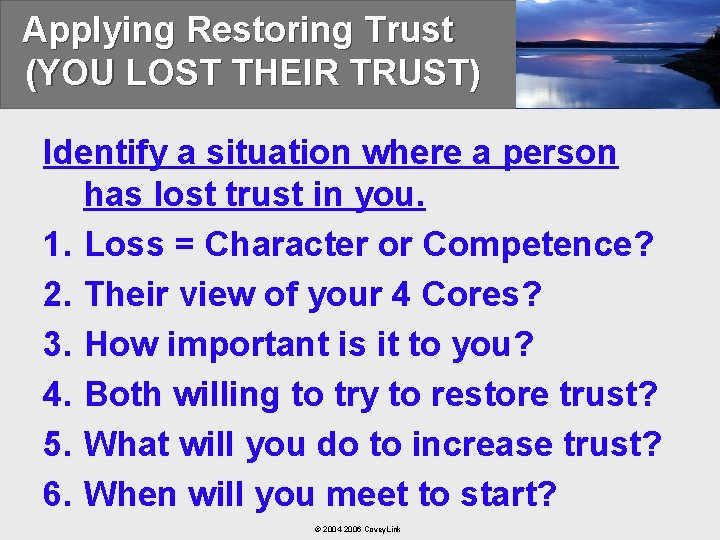
Applying Restoring Trust (YOU LOST THEIR TRUST) Identify a situation where a person has lost trust in you. 1. Loss = Character or Competence? 2. Their view of your 4 Cores? 3. How important is it to you? 4. Both willing to try to restore trust? 5. What will you do to increase trust? 6. When will you meet to start? © 2004 -2006 Covey. Link
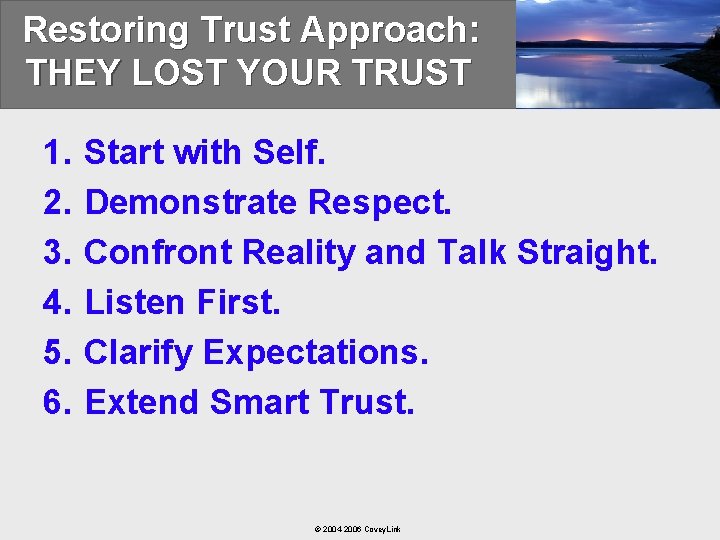
Restoring Trust Approach: THEY LOST YOUR TRUST 1. 2. 3. 4. 5. 6. Start with Self. Demonstrate Respect. Confront Reality and Talk Straight. Listen First. Clarify Expectations. Extend Smart Trust. © 2004 -2006 Covey. Link
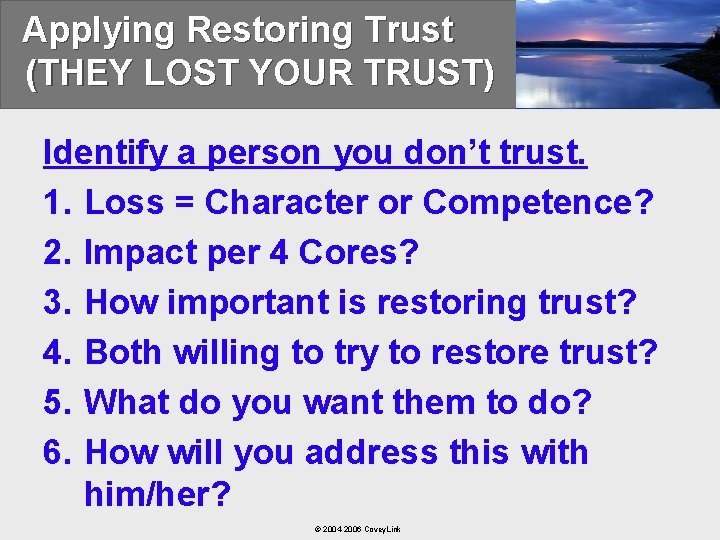
Applying Restoring Trust (THEY LOST YOUR TRUST) Identify a person you don’t trust. 1. Loss = Character or Competence? 2. Impact per 4 Cores? 3. How important is restoring trust? 4. Both willing to try to restore trust? 5. What do you want them to do? 6. How will you address this with him/her? © 2004 -2006 Covey. Link
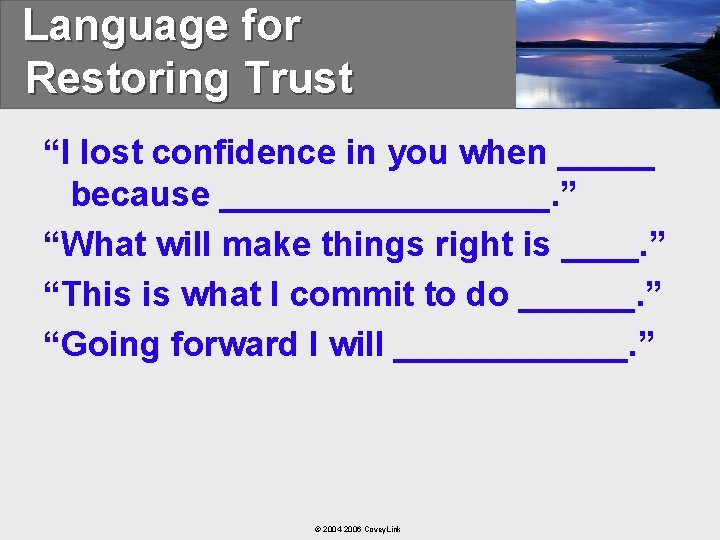
Language for Restoring Trust “I lost confidence in you when _____ because _________. ” “What will make things right is ____. ” “This is what I commit to do ______. ” “Going forward I will ______. ” © 2004 -2006 Covey. Link
COMMITMENT Review the 13 Behaviors and write down the commitment you will make to increase trust in your organization. ___________________________________ 34 © 2004 -2006 Covey. Link