
Leadership What is a leader Is it simply
- Slides: 13
Leadership
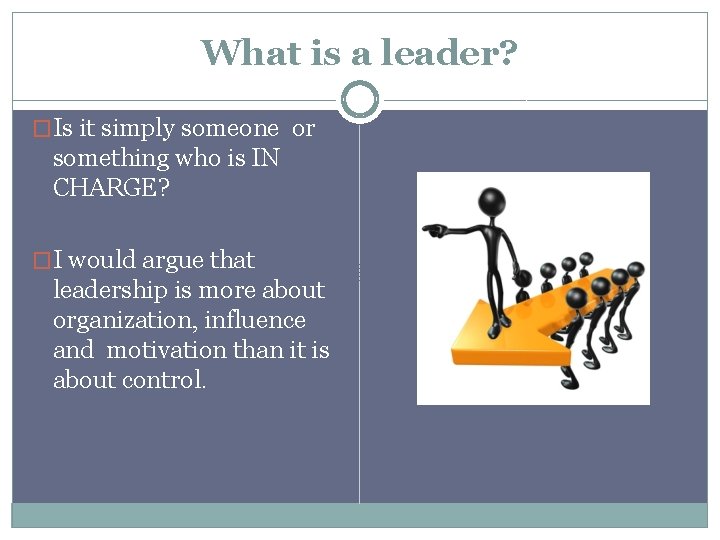
What is a leader? �Is it simply someone or something who is IN CHARGE? �I would argue that leadership is more about organization, influence and motivation than it is about control.
Why is leadership important? �Snowball Brainstorm 1) Grab a scrap piece 2) Write an idea down on the paper. 3) Crumple up the paper and toss it. 4) When a piece of paper lands near you, read the idea and add to it. Then throw it back out.
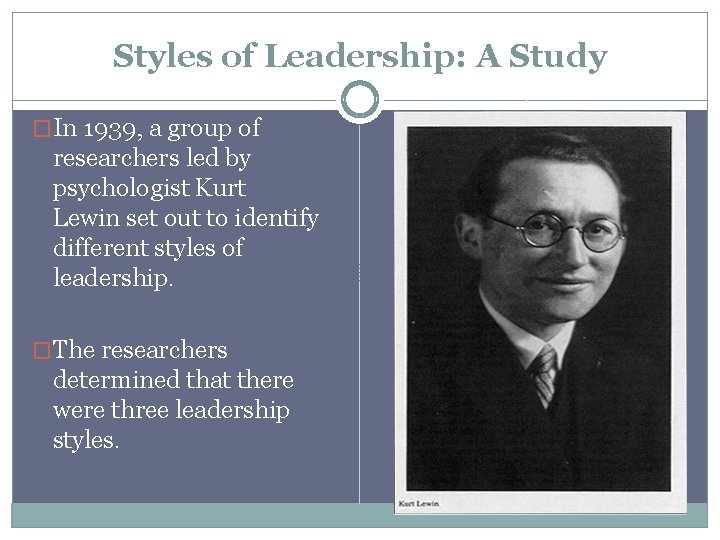
Styles of Leadership: A Study �In 1939, a group of researchers led by psychologist Kurt Lewin set out to identify different styles of leadership. �The researchers determined that there were three leadership styles.
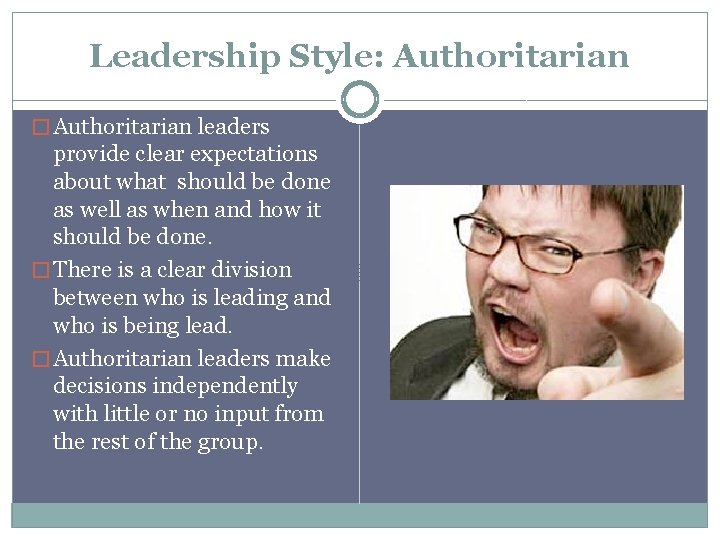
Leadership Style: Authoritarian � Authoritarian leaders provide clear expectations about what should be done as well as when and how it should be done. � There is a clear division between who is leading and who is being lead. � Authoritarian leaders make decisions independently with little or no input from the rest of the group.
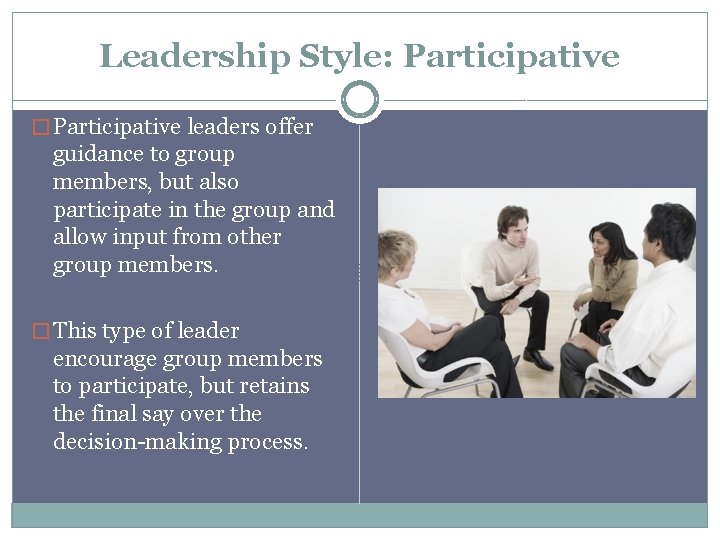
Leadership Style: Participative � Participative leaders offer guidance to group members, but also participate in the group and allow input from other group members. � This type of leader encourage group members to participate, but retains the final say over the decision-making process.
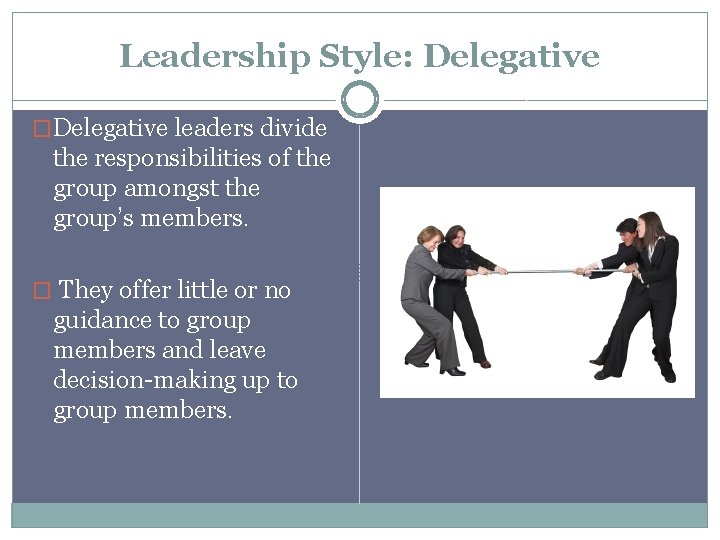
Leadership Style: Delegative �Delegative leaders divide the responsibilities of the group amongst the group’s members. � They offer little or no guidance to group members and leave decision-making up to group members.
So. . . what type of leader are you? �Follow the link on Schoology. com and complete the leadership quiz � http: //psychology. about. com/library/quiz/bl-leadershipquiz. htm �Be sure to record your leadership style for further discussion
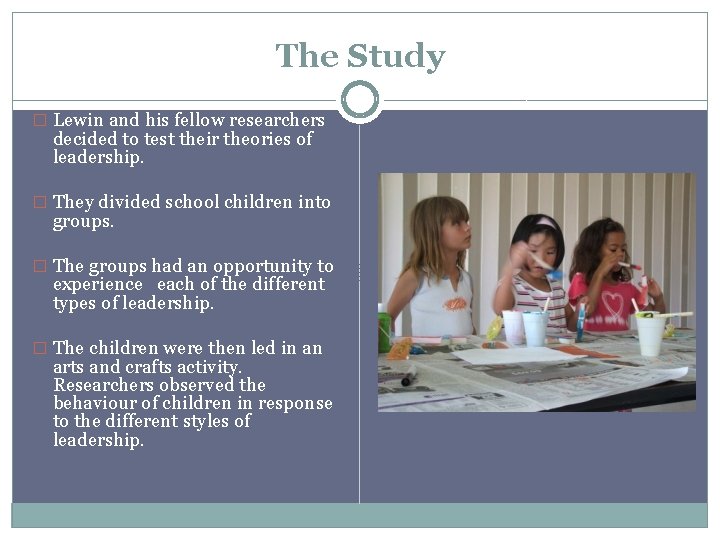
The Study � Lewin and his fellow researchers decided to test their theories of leadership. � They divided school children into groups. � The groups had an opportunity to experience each of the different types of leadership. � The children were then led in an arts and crafts activity. Researchers observed the behaviour of children in response to the different styles of leadership.
The Results Authoritarian ü Researchers found that decision-making was less creative under authoritarian leadership. ü Lewin also found that it is more difficult for children to move from an authoritarian style to a participative style than vice versa. ü Participative ü Lewin’s study found that participative leadership is generally the most effective leadership style. ü Researchers found children in this group were less productive than the members of the authoritarian group, but their contributions were of a much higher quality.
The Results Delagative ü Researchers found that children under delegative leadership were the least productive of all three groups. ü The children in this group also made more demands on the leader, showed little cooperation and were unable to work independently.
Drawing Conclusion �Based on the information given, under what circumstances is: ü Authoritarian leadership appropriate? ü Participative leadership appropriate? ü Delagative leadership appropriate?
Leadership: A Case Study