
Leadership Theory Application Skill Development Reedited by AlSayed
Leadership Theory, Application, Skill Development Re-edited by Al-Sayed Moh. Solayman
Chapter 2 Leadership Traits and Ethics Leadership: Theory, Application, Skill Development, 1 E, Lussier/Achua © 2001 South-Western College Publishing 2 -1
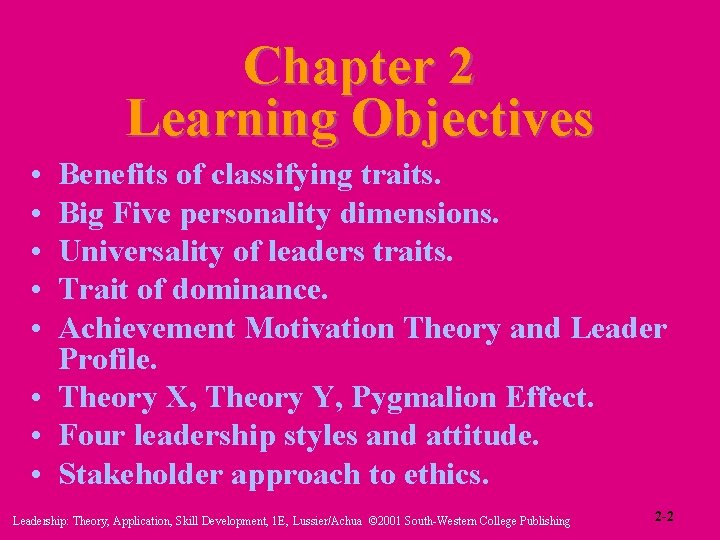
Chapter 2 Learning Objectives • • • Benefits of classifying traits. Big Five personality dimensions. Universality of leaders traits. Trait of dominance. Achievement Motivation Theory and Leader Profile. • Theory X, Theory Y, Pygmalion Effect. • Four leadership styles and attitude. • Stakeholder approach to ethics. Leadership: Theory, Application, Skill Development, 1 E, Lussier/Achua © 2001 South-Western College Publishing 2 -2
Great Man (Person) Approach Sought to identify the traits effective leaders possessed. Leadership: Theory, Application, Skill Development, 1 E, Lussier/Achua © 2001 South-Western College Publishing 2 -3
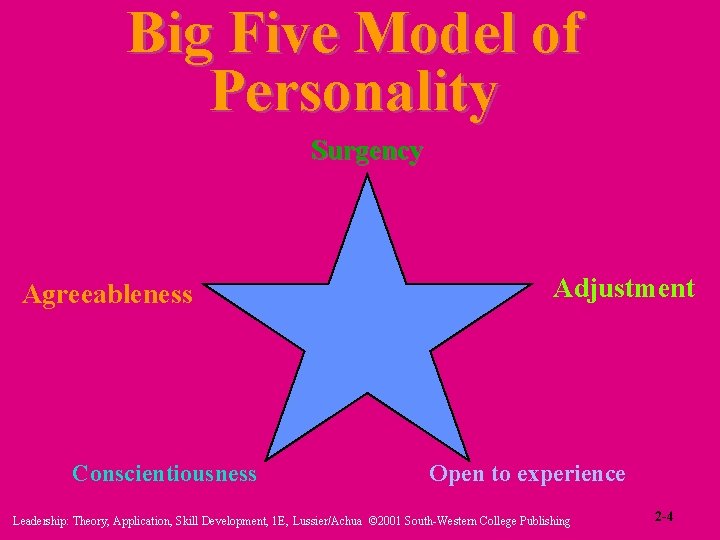
Big Five Model of Personality Surgency Agreeableness Conscientiousness Adjustment Open to experience Leadership: Theory, Application, Skill Development, 1 E, Lussier/Achua © 2001 South-Western College Publishing 2 -4
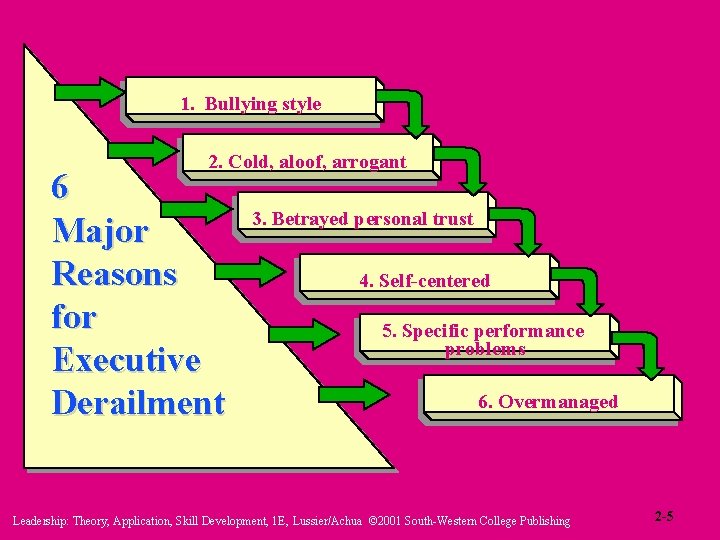
1. Bullying style 2. Cold, aloof, arrogant 6 Major Reasons for Executive Derailment 3. Betrayed personal trust 4. Self-centered 5. Specific performance problems 6. Overmanaged Leadership: Theory, Application, Skill Development, 1 E, Lussier/Achua © 2001 South-Western College Publishing 2 -5
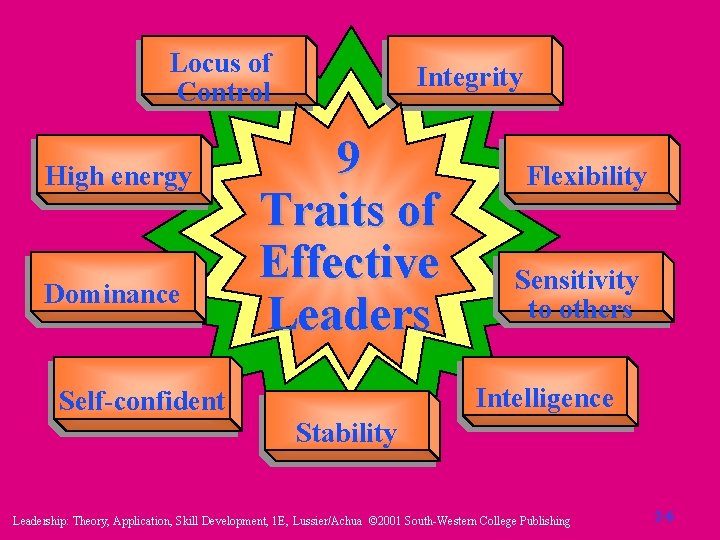
Locus of Control High energy Dominance Integrity 9 Traits of Effective Leaders Flexibility Sensitivity to others Intelligence Self-confident Stability Leadership: Theory, Application, Skill Development, 1 E, Lussier/Achua © 2001 South-Western College Publishing 2 -6
Achievement Motivation Theory • attempts to explain and predict behavior and performance based on one’s need for achievement, power, and affiliation. Leadership: Theory, Application, Skill Development, 1 E, Lussier/Achua © 2001 South-Western College Publishing 2 -7
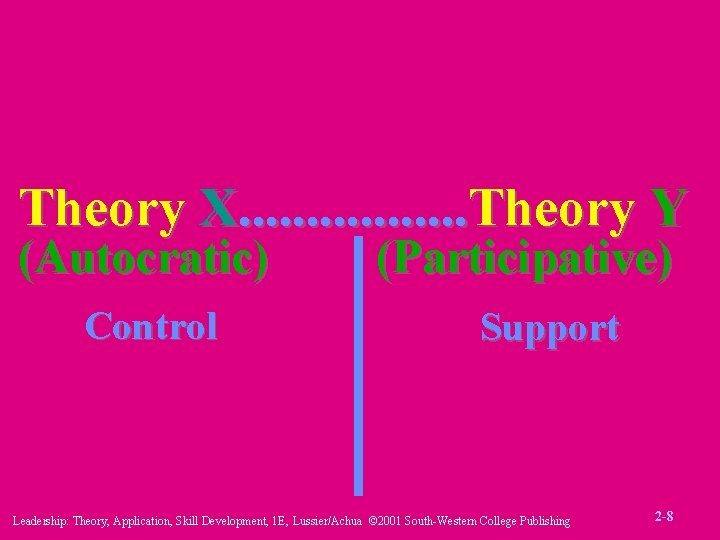
Theory X. . . . Theory Y (Autocratic) Control (Participative) Support Leadership: Theory, Application, Skill Development, 1 E, Lussier/Achua © 2001 South-Western College Publishing 2 -8
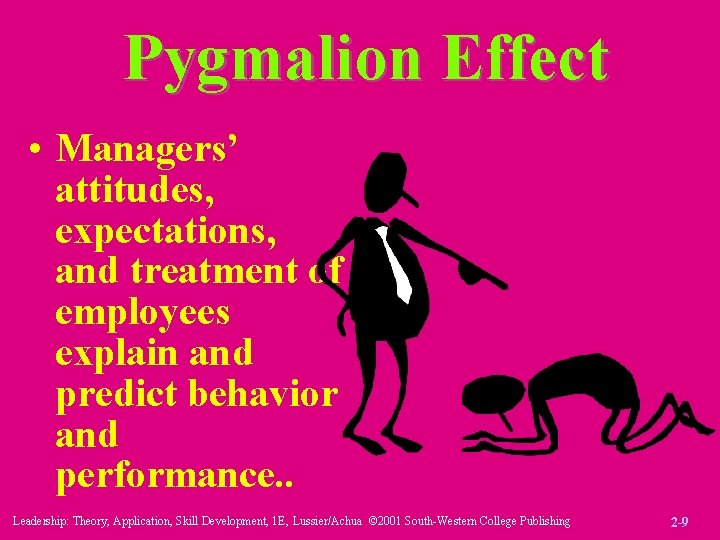
Pygmalion Effect • Managers’ attitudes, expectations, and treatment of employees explain and predict behavior and performance. . Leadership: Theory, Application, Skill Development, 1 E, Lussier/Achua © 2001 South-Western College Publishing 2 -9
“If you think you can, if you think you can’t, you can’t. ” Leadership: Theory, Application, Skill Development, 1 E, Lussier/Achua © 2001 South-Western College Publishing 2 -10
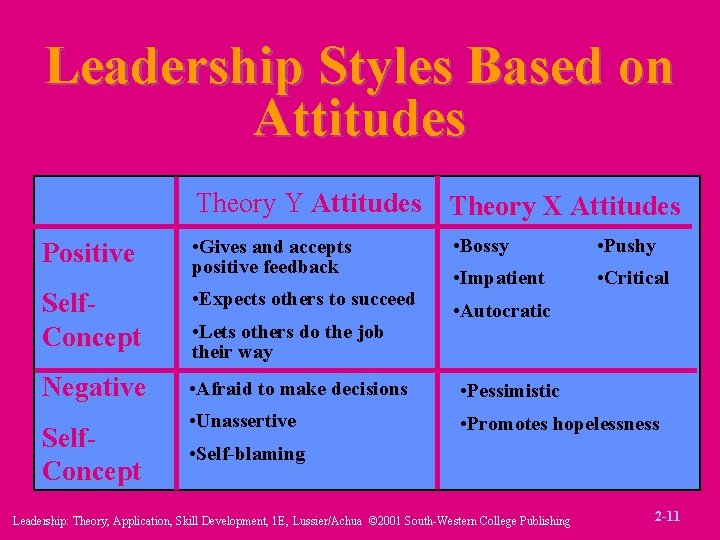
Leadership Styles Based on Attitudes Theory Y Attitudes Theory X Attitudes • Bossy • Pushy • Impatient • Critical Positive • Gives and accepts positive feedback Self. Concept • Expects others to succeed Negative • Afraid to make decisions • Pessimistic • Unassertive • Promotes hopelessness Self. Concept • Lets others do the job their way • Autocratic • Self-blaming Leadership: Theory, Application, Skill Development, 1 E, Lussier/Achua © 2001 South-Western College Publishing 2 -11
Golden Rule “Do unto others as you want them to do unto you. ” or “Don’t do anything to anyone that you would not want them to do to you. ” Leadership: Theory, Application, Skill Development, 1 E, Lussier/Achua © 2001 South-Western College Publishing 2 -12
Stakeholder’s Approach to Ethics • creates a win-win situation for relevant parties affected by the decision. Win-Win Leadership: Theory, Application, Skill Development, 1 E, Lussier/Achua © 2001 South-Western College Publishing 2 -13
- Slides: 14