
Leadership Theory Application Skill Development 1 st Edition





- Slides: 13
Leadership Theory, Application, Skill Development 1 st Edition Robert N. Lussier and Christopher F. Achua. This presentation created by: MANAGEMENT TRAINING SPECIALISTS 5320 -D Camp Bowie Blvd / Fort Worth, Texas 76107 / 817 737 -2893 e-mail: 2 conz@airmail. net Copyright © 2001 South-Western College Publishing
Chapter 8 Leading Self-Managing Teams Leadership: Theory, Application, Skill Development, 1 E, Lussier/ Achua © 2001 South-Western College Publishing 8 -1
Chapter 8 Learning Objectives • • Nature of self-managed teams. Key decisions they are empowered to make. 5 Potential benefits of utilizing. 4 Team formation variables 7 Facilitating factors Distributed leadership in relationship. 4 Major states of group development. Leadership: Theory, Application, Skill Development, 1 E, Lussier/ Achua © 2001 South-Western College Publishing 8 -2
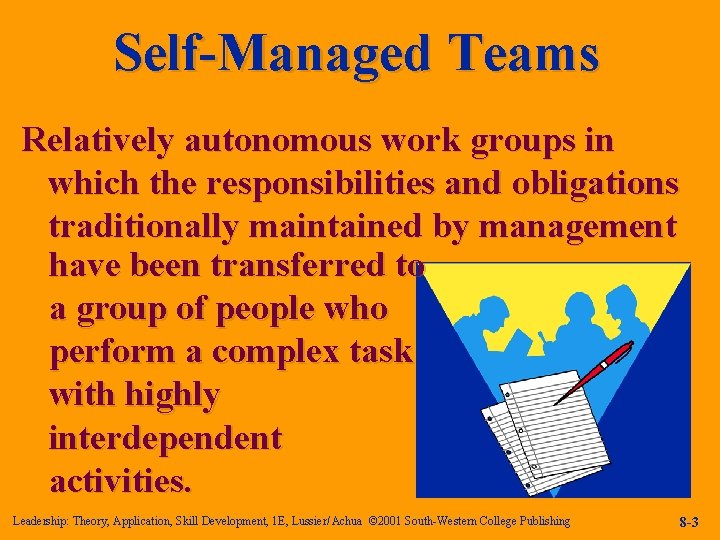
Self-Managed Teams Relatively autonomous work groups in which the responsibilities and obligations traditionally maintained by management have been transferred to a group of people who perform a complex task with highly interdependent activities. Leadership: Theory, Application, Skill Development, 1 E, Lussier/ Achua © 2001 South-Western College Publishing 8 -3
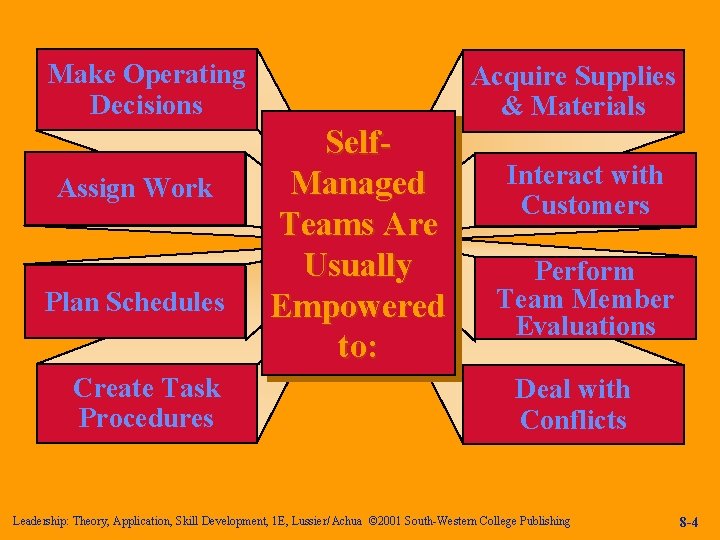
Make Operating Decisions Assign Work Plan Schedules Create Task Procedures Acquire Supplies & Materials Self. Managed Teams Are Usually Empowered to: Interact with Customers Perform Team Member Evaluations Deal with Conflicts Leadership: Theory, Application, Skill Development, 1 E, Lussier/ Achua © 2001 South-Western College Publishing 8 -4
Stronger Commitment Improved Quality and Efficiency More Satisfied Employees Potential Benefits of Using Self-Managed Team Lower Turnover / Absenteeism Faster Product Development Flexibility Dealing with Personnel Shortages Helps Solve Problems & Suggest Improvements Leadership: Theory, Application, Skill Development, 1 E, Lussier/ Achua © 2001 South-Western College Publishing 8 -5
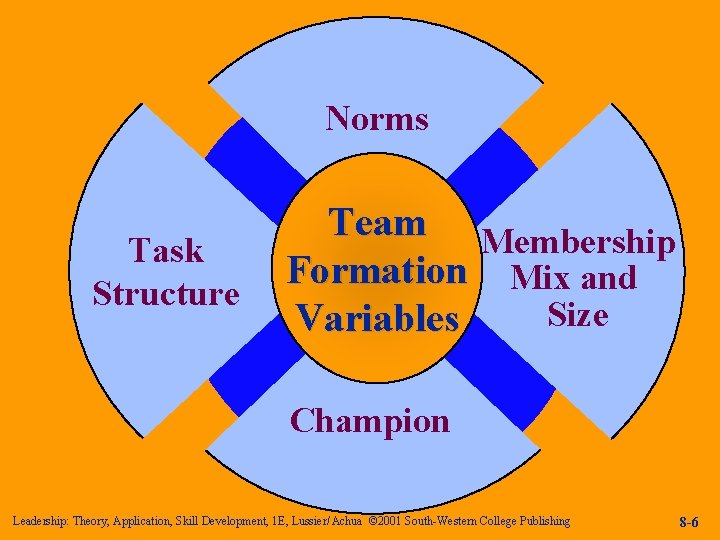
Norms Task Structure Team Membership Formation Mix and Size Variables Champion Leadership: Theory, Application, Skill Development, 1 E, Lussier/ Achua © 2001 South-Western College Publishing 8 -6
Top Management Support & Commitment Strong & Experienced Facilitator Appropriate Task Design Self. Managed Group Success Factors Adequate Information System Unambiguous Goals & Objectives Appropriate Compensation Structure Appropriate Scope of Authority Leadership: Theory, Application, Skill Development, 1 E, Lussier/ Achua © 2001 South-Western College Publishing 8 -7
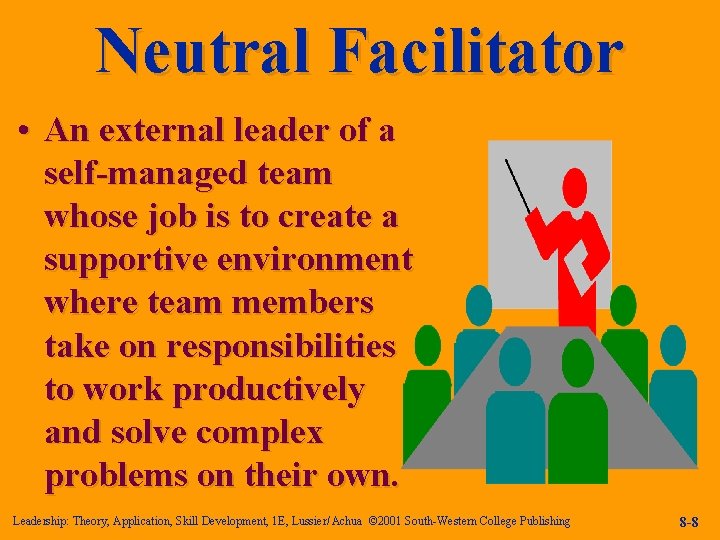
Neutral Facilitator • An external leader of a self-managed team whose job is to create a supportive environment where team members take on responsibilities to work productively and solve complex problems on their own. Leadership: Theory, Application, Skill Development, 1 E, Lussier/ Achua © 2001 South-Western College Publishing 8 -8
High-Involvement Management • Moves power, information, knowledge, and rewards farther down the organization. Leadership: Theory, Application, Skill Development, 1 E, Lussier/ Achua © 2001 South-Western College Publishing 8 -9
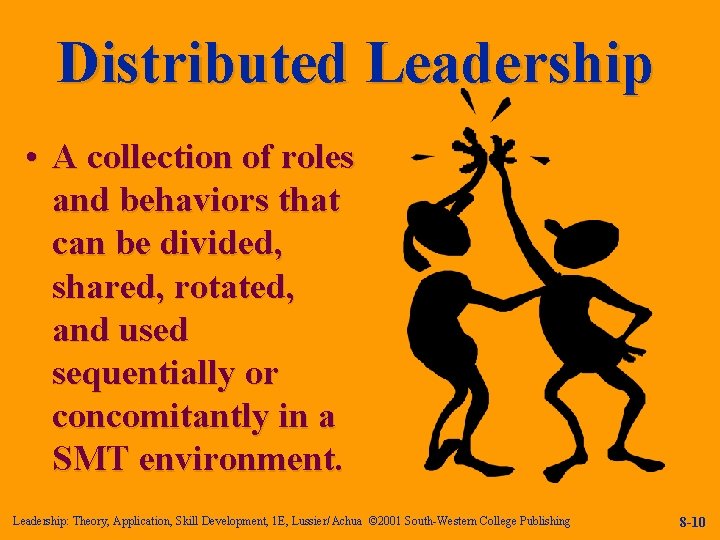
Distributed Leadership • A collection of roles and behaviors that can be divided, shared, rotated, and used sequentially or concomitantly in a SMT environment. Leadership: Theory, Application, Skill Development, 1 E, Lussier/ Achua © 2001 South-Western College Publishing 8 -10
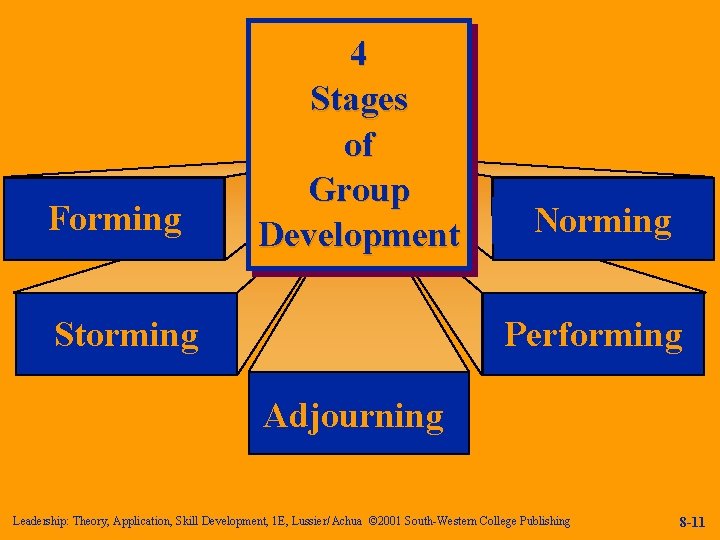
Forming 4 Stages of Group Development Storming Norming Performing Adjourning Leadership: Theory, Application, Skill Development, 1 E, Lussier/ Achua © 2001 South-Western College Publishing 8 -11
Stages of Team Development Norming Forming Storming High Commitment Less Commitment Variable Commit. High Commitment Low Competence Some Competence High Competence Members become Commitment dissatisfied with changes while the team as they develop confidence. competence remains constant. High Competence Members come committed but have not developed competence in working together. Appropriate Leadership Style Participative Performing Commitment and competence remain high Empowerment Autocratic Consultative High Task Low Relationship High Relationship Low Relationship Leadership: Theory, Application, Skill Development, 1 E, Lussier/ Achua © 2001 South-Western College Publishing 8 -12