
LEADERSHIP STYLES PartI The ear of the leader
- Slides: 7
LEADERSHIP STYLES (Part-I) “The ear of the leader must ring with the voices of the people. ” Woodrow Wilson
Defining a Leader… u. Think of a leader that you worked for or observed… What does this person do and what qualities does this person have that make you admire him or her as a leader?
Leadership Styles 1. Autocratic( Authoritarian) 2. Bureaucratic 3. Coercive 4. Democratic 5. Transactional 6. Transformational 7. Laissez-Faire
Autocratic (Authoritarian) u Manager retains power (classical approach) u Manager is decision-making authority u Manager does not consult employees for input u Subordinates expected to obey orders without explanations u Motivation provided through structured rewards and punishments
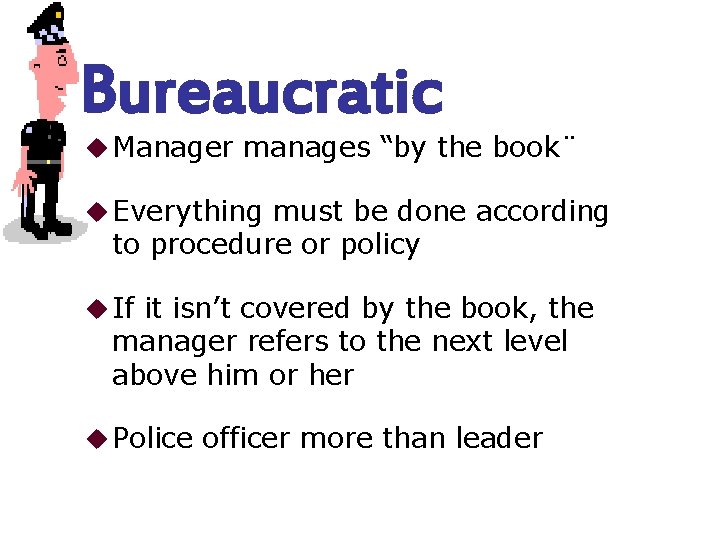
Bureaucratic u Manager manages “by the book¨ u Everything must be done according to procedure or policy u If it isn’t covered by the book, the manager refers to the next level above him or her u Police officer more than leader
Democratic u Often referred to as participative style u Keeps employees informed u Shares decision making and problem solving responsibilities u “Coach” who has the final say, but… u Gathers information from staff members before making decisions
Democratic Continued u Help employees evaluate their own performance u Allows employees to establish goals u Encourages employees to grow on the job and be promoted u Recognizes and encourages achievement u Can produce high quality and high quantity work for long periods of time