
Leadership Some guiding principles Hold position Take the
- Slides: 43
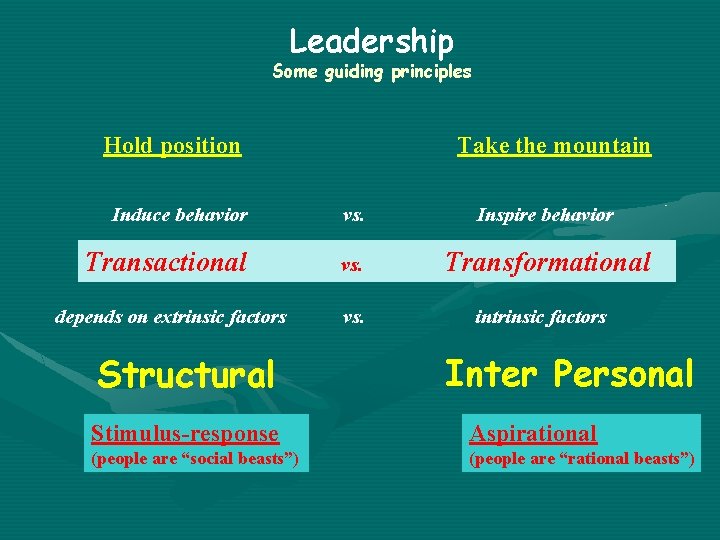
Leadership Some guiding principles Hold position Take the mountain Induce behavior vs. Inspire behavior Transactional vs. Transformational depends on extrinsic factors vs. Structural intrinsic factors Inter Personal Stimulus-response Aspirational (people are “social beasts”) (people are “rational beasts”)
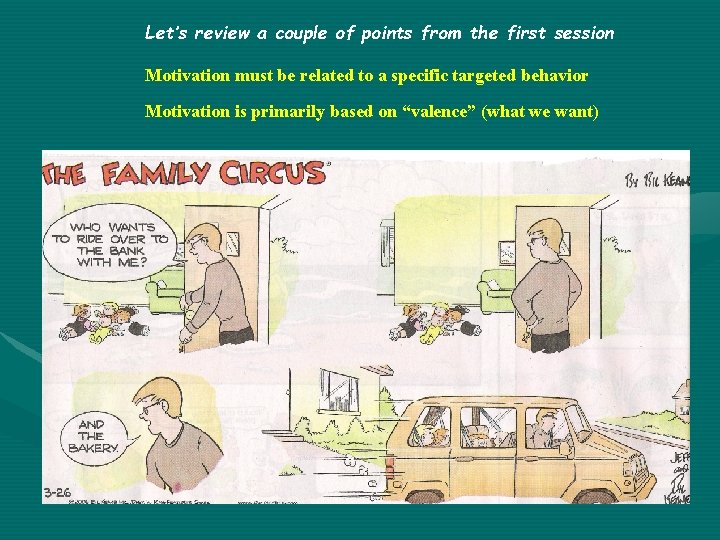
Let’s review a couple of points from the first session Motivation must be related to a specific targeted behavior Motivation is primarily based on “valence” (what we want)
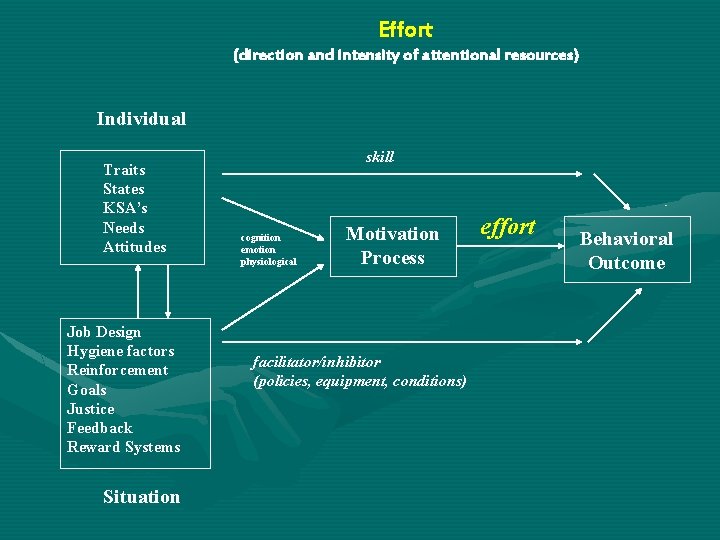
Effort (direction and intensity of attentional resources) Individual Traits States KSA’s Needs Attitudes Job Design Hygiene factors Reinforcement Goals Justice Feedback Reward Systems Situation skill cognition emotion physiological Motivation Process facilitator/inhibitor (policies, equipment, conditions) effort Behavioral Outcome
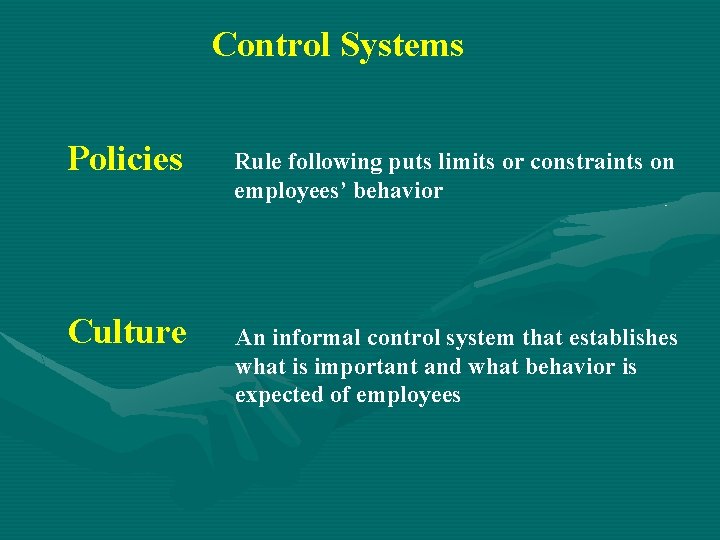
Control Systems Policies Culture Rule following puts limits or constraints on employees’ behavior An informal control system that establishes what is important and what behavior is expected of employees
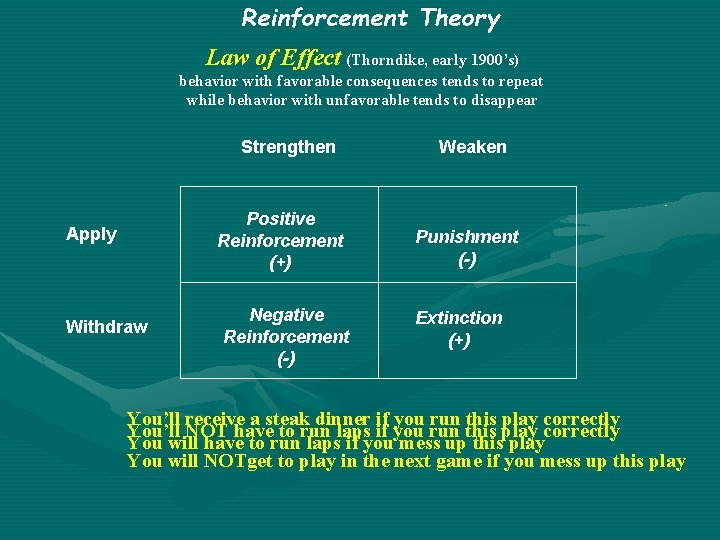
Reinforcement Theory Law of Effect (Thorndike, early 1900’s) behavior with favorable consequences tends to repeat while behavior with unfavorable tends to disappear Strengthen Positive Reinforcement (+) Apply Withdraw Negative Reinforcement (-) Weaken Punishment (-) Extinction (+) You’ll receive a steak dinner if you run this play correctly You’ll NOT have to run laps if you run this play correctly You will have to run laps if you mess up this play You will NOTget to play in the next game if you mess up this play
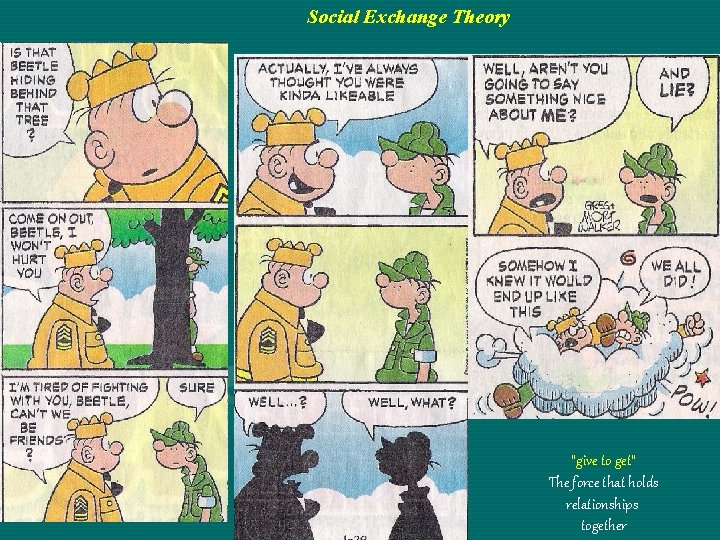
Social Exchange Theory “give to get” The force that holds relationships together
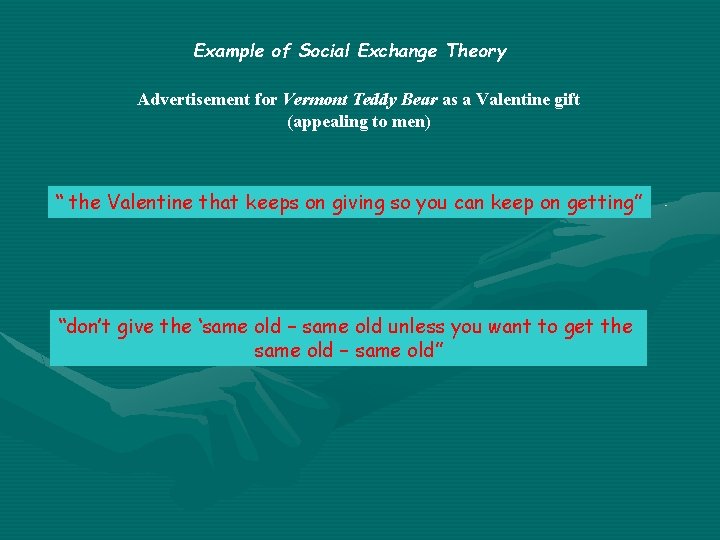
Example of Social Exchange Theory Advertisement for Vermont Teddy Bear as a Valentine gift (appealing to men) “ the Valentine that keeps on giving so you can keep on getting” “don’t give the ‘same old – same old unless you want to get the same old – same old”
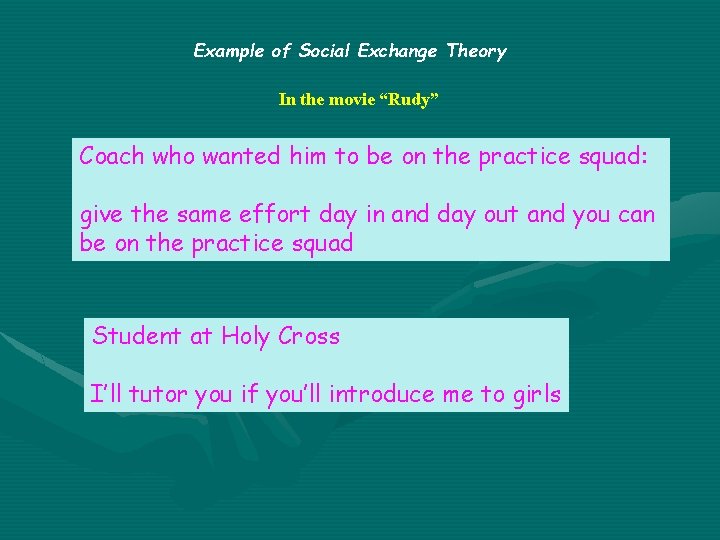
Example of Social Exchange Theory In the movie “Rudy” Coach who wanted him to be on the practice squad: give the same effort day in and day out and you can be on the practice squad Student at Holy Cross I’ll tutor you if you’ll introduce me to girls
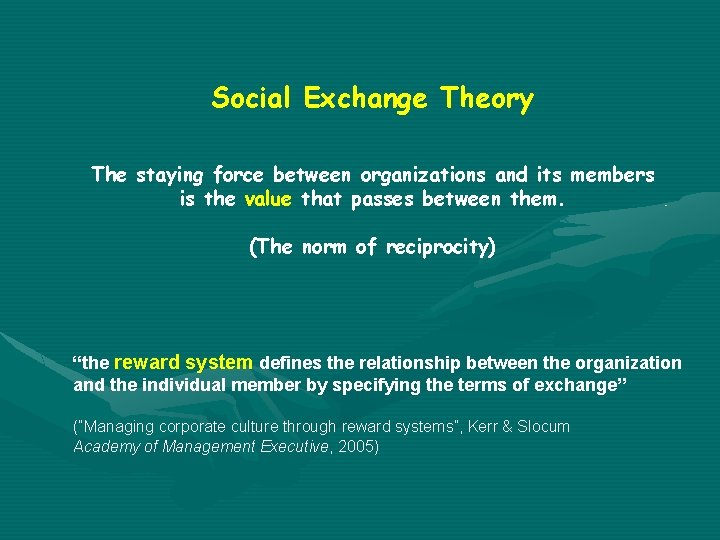
Social Exchange Theory The staying force between organizations and its members is the value that passes between them. (The norm of reciprocity) “the reward system defines the relationship between the organization and the individual member by specifying the terms of exchange” (“Managing corporate culture through reward systems”, Kerr & Slocum Academy of Management Executive, 2005)
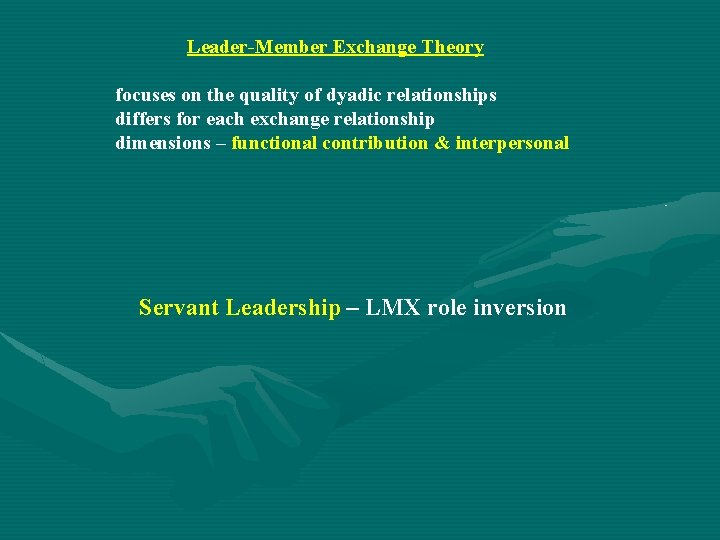
Leader-Member Exchange Theory focuses on the quality of dyadic relationships differs for each exchange relationship dimensions – functional contribution & interpersonal Servant Leadership – LMX role inversion
Now at this time let’s review the key points we have just discussed about Transactional Leadership before moving on. Please pause the DVD on the next slide and take some time to answer the questions there. Rewind the DVD to the necessary place if you need any reminders to help you in this exercise.
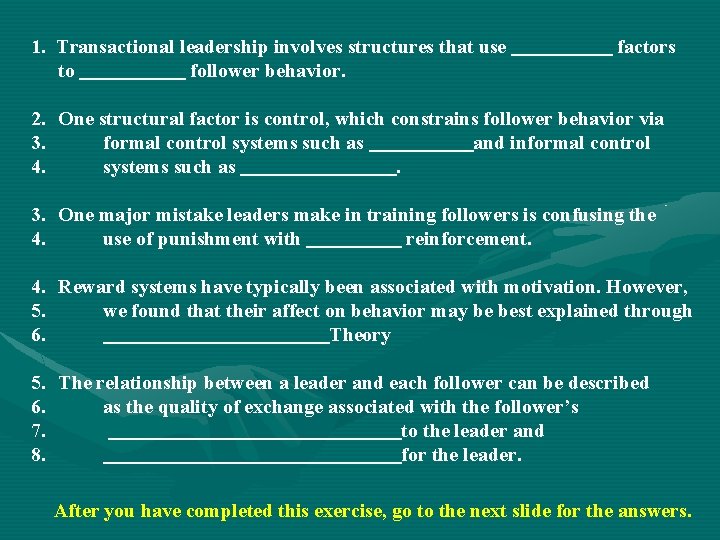
1. Transactional leadership involves structures that use to follower behavior. factors 2. One structural factor is control, which constrains follower behavior via 3. formal control systems such as and informal control 4. systems such as. 3. One major mistake leaders make in training followers is confusing the 4. use of punishment with reinforcement. 4. Reward systems have typically been associated with motivation. However, 5. we found that their affect on behavior may be best explained through 6. Theory 5. The relationship between a leader and each follower can be described 6. as the quality of exchange associated with the follower’s 7. to the leader and 8. for the leader. After you have completed this exercise, go to the next slide for the answers.
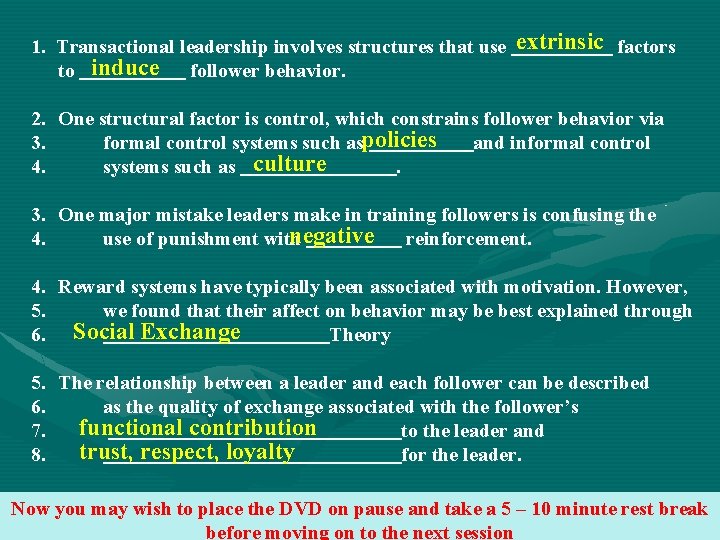
1. Transactional leadership involves structures that use to induce follower behavior. extrinsic factors 2. One structural factor is control, which constrains follower behavior via 3. formal control systems such aspolicies and informal control 4. systems such as culture. 3. One major mistake leaders make in training followers is confusing the negative reinforcement. 4. use of punishment with 4. Reward systems have typically been associated with motivation. However, 5. we found that their affect on behavior may be best explained through 6. Social Exchange Theory 5. The relationship between a leader and each follower can be described 6. as the quality of exchange associated with the follower’s functional contribution 7. to the leader and trust, respect, loyalty 8. for the leader. Now you may wish to place the DVD on pause and take a 5 – 10 minute rest break before moving on to the next session
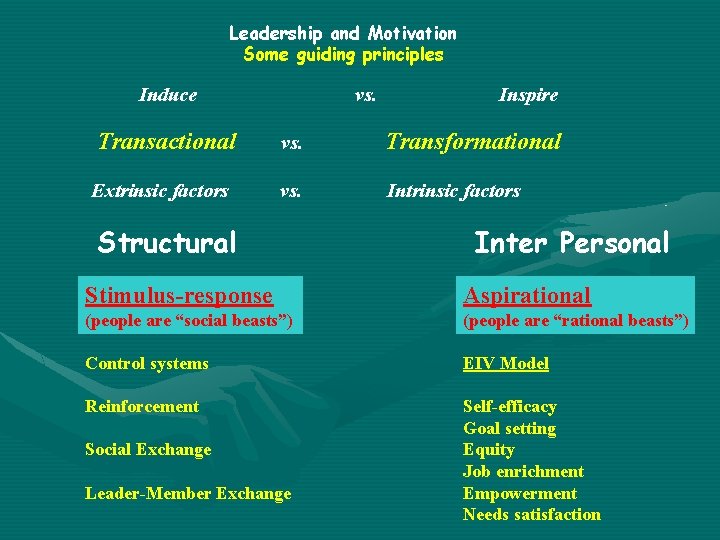
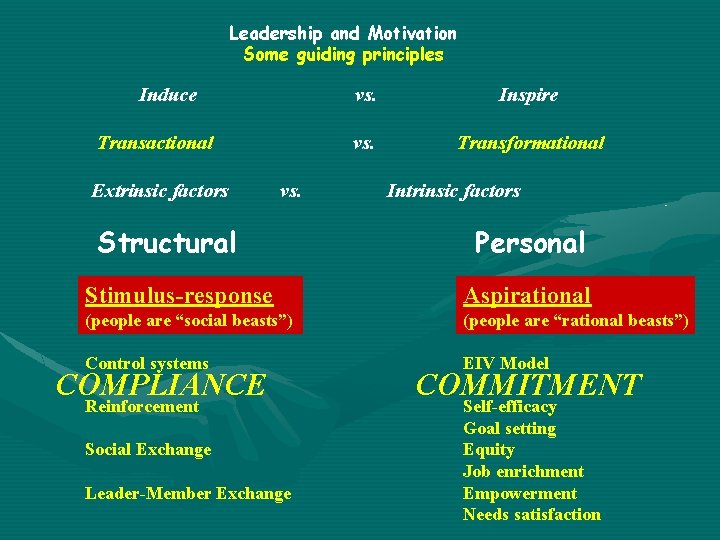
Leadership and Motivation Some guiding principles Induce Transactional Extrinsic factors vs. Inspire vs. Transformational vs. Intrinsic factors Structural Inter Personal Stimulus-response Aspirational (people are “social beasts”) (people are “rational beasts”) Control systems EIV Model Reinforcement Self-efficacy Goal setting Equity Job enrichment Empowerment Needs satisfaction Social Exchange Leader-Member Exchange
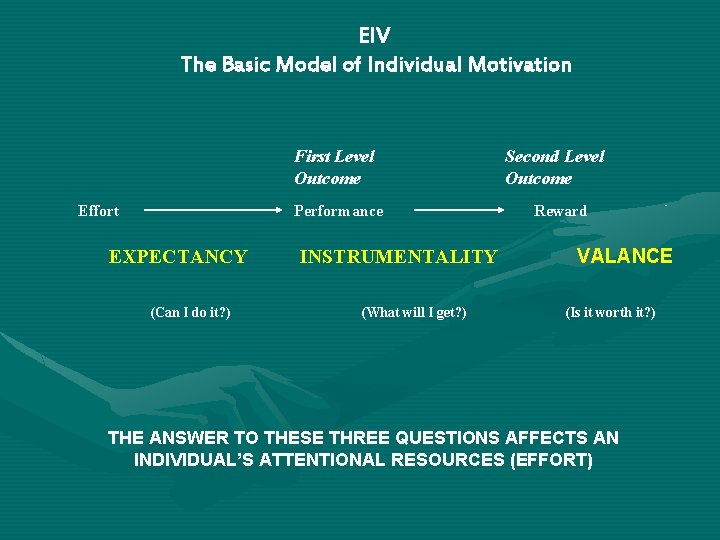
EIV The Basic Model of Individual Motivation First Level Outcome Effort Performance EXPECTANCY (Can I do it? ) INSTRUMENTALITY (What will I get? ) Second Level Outcome Reward VALANCE (Is it worth it? ) THE ANSWER TO THESE THREE QUESTIONS AFFECTS AN INDIVIDUAL’S ATTENTIONAL RESOURCES (EFFORT)
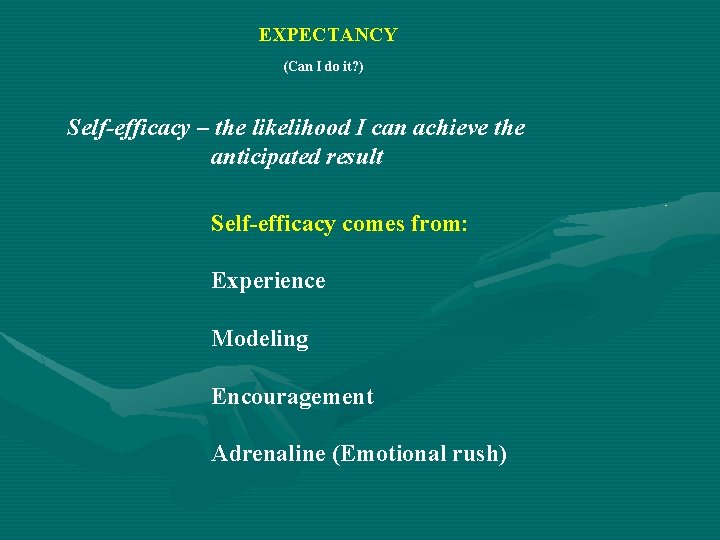
EXPECTANCY (Can I do it? ) Self-efficacy – the likelihood I can achieve the anticipated result Self-efficacy comes from: Experience Modeling Encouragement Adrenaline (Emotional rush)
INSTRUMENTALITY (What will I get? ) Governed by perceptions of uncertainty and equity So leaders should be driving uncertainty DOWN and equity UP to make effort INSTRUMENTAL for the individual
Driving UNCERTAINTY down Participation Goal Setting Feedback
Participation Perceived Control Input to the process Rationale provided No surprises Advanced notice “VOICE”
GOAL Setting Goal Setting (effort is generally higher if …) + one has a goal + goal is self-determined vs. provided + goal is specific vs. “do your best” + goal is challenging, but doable Resulting in individual’s commitment to the goal
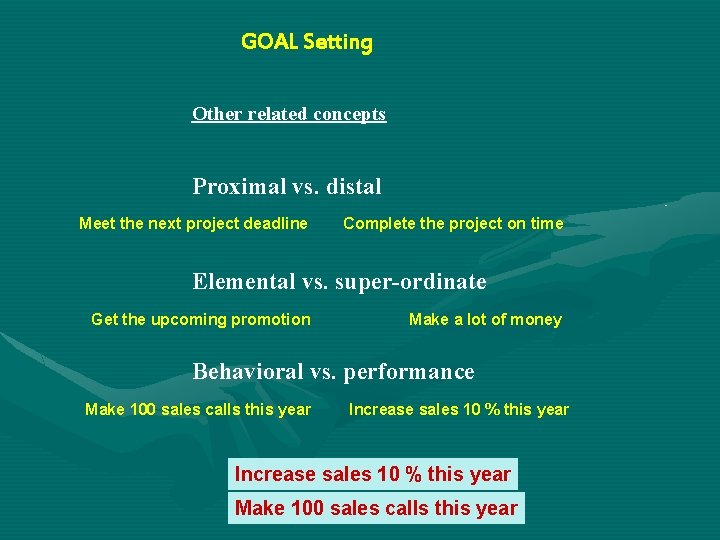
GOAL Setting Other related concepts Proximal vs. distal Meet the next project deadline Complete the project on time Elemental vs. super-ordinate Get the upcoming promotion Make a lot of money Behavioral vs. performance Make 100 sales calls this year Increase sales 10 % this year Make 100 sales calls this year
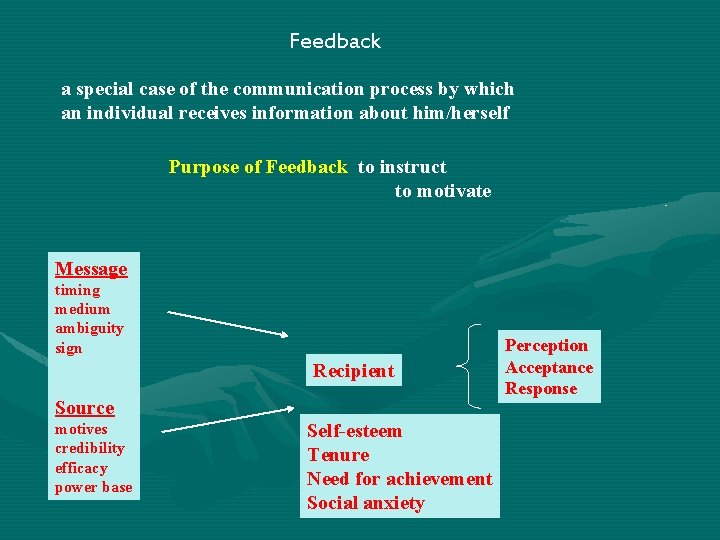
Feedback a special case of the communication process by which an individual receives information about him/herself Purpose of Feedback to instruct to motivate Message timing medium ambiguity sign Recipient Source motives credibility efficacy power base Self-esteem Tenure Need for achievement Social anxiety Perception Acceptance Response
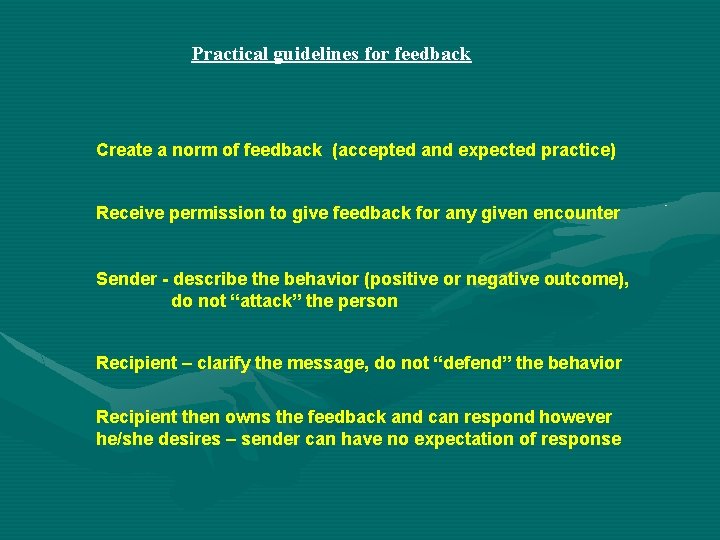
Practical guidelines for feedback Create a norm of feedback (accepted and expected practice) Receive permission to give feedback for any given encounter Sender - describe the behavior (positive or negative outcome), do not “attack” the person Recipient – clarify the message, do not “defend” the behavior Recipient then owns the feedback and can respond however he/she desires – sender can have no expectation of response
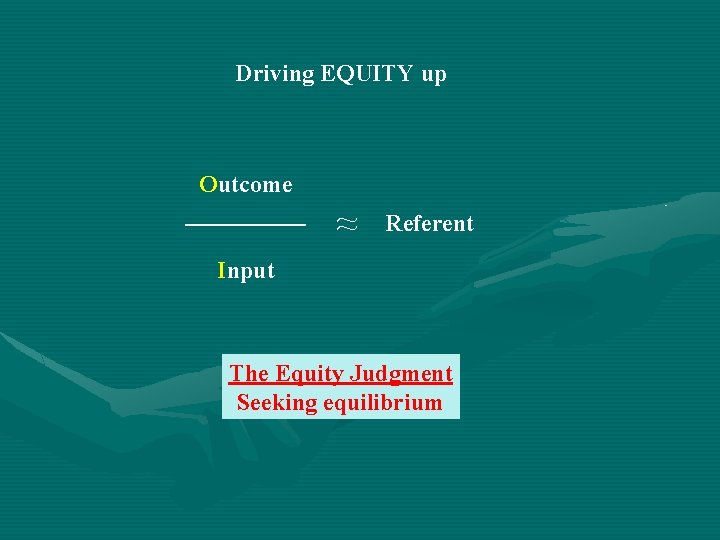
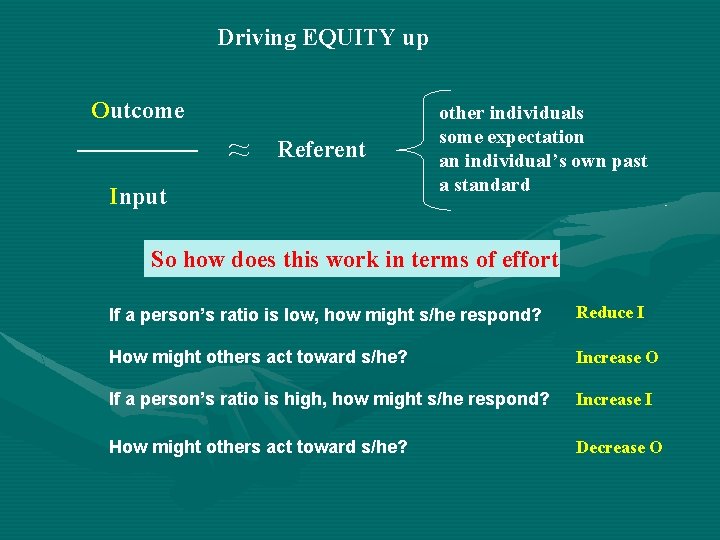
Driving EQUITY up Outcome _____ ≈ Referent Input The Equity Judgment Seeking equilibrium
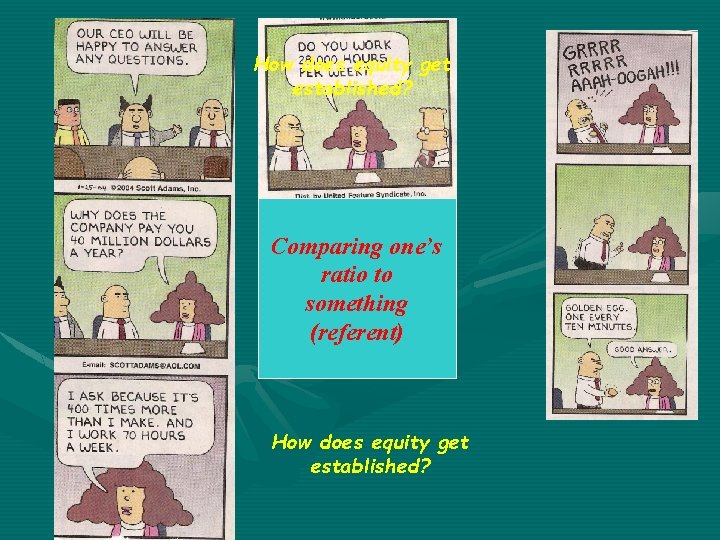
How does equity get established? Comparing one’s ratio to something (referent) How does equity get established?
Driving EQUITY up Outcome _____ ≈ Referent Input other individuals some expectation an individual’s own past a standard So how does this work in terms of effort If a person’s ratio is low, how might s/he respond? Reduce I How might others act toward s/he? Increase O If a person’s ratio is high, how might s/he respond? Increase I How might others act toward s/he? Decrease O
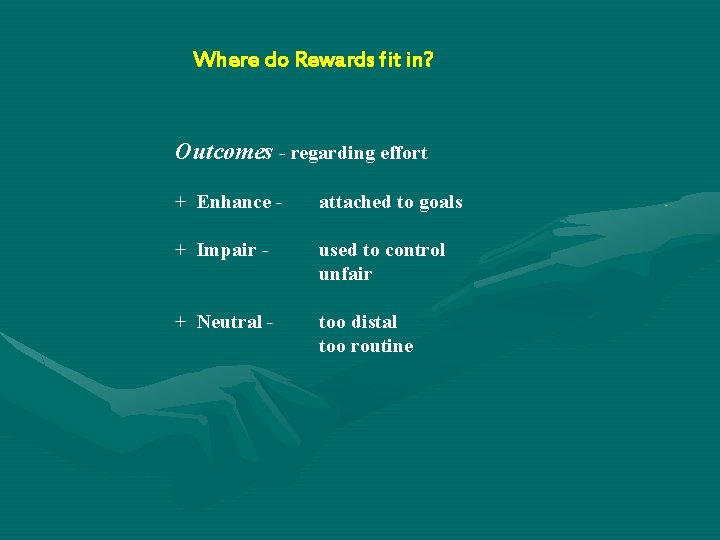
Where do Rewards fit in? Outcomes - regarding effort + Enhance - attached to goals + Impair - used to control unfair + Neutral - too distal too routine
Now at this time let’s review the key points we have just discussed about the EIV Model before moving on. Please pause the DVD on the next slide and take some time to answer the questions there. Rewind the DVD to the necessary place if you need any reminders to help you in this exercise.
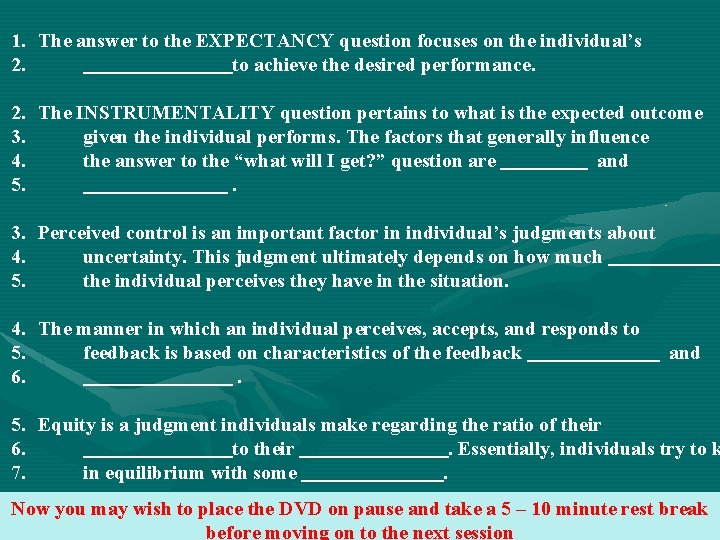
1. The answer to the EXPECTANCY question focuses on the individual’s 2. to achieve the desired performance. 2. The INSTRUMENTALITY question pertains to what is the expected outcome 3. given the individual performs. The factors that generally influence 4. the answer to the “what will I get? ” question are and 5. . 3. Perceived control is an important factor in individual’s judgments about 4. uncertainty. This judgment ultimately depends on how much 5. the individual perceives they have in the situation. 4. The manner in which an individual perceives, accepts, and responds to 5. feedback is based on characteristics of the feedback 6. . and 5. Equity is a judgment individuals make regarding the ratio of their 6. to their. Essentially, individuals try to k 7. in equilibrium with some. Now you may wish to place the DVD on pause and take a 5 – 10 minute rest break before moving on to the next session
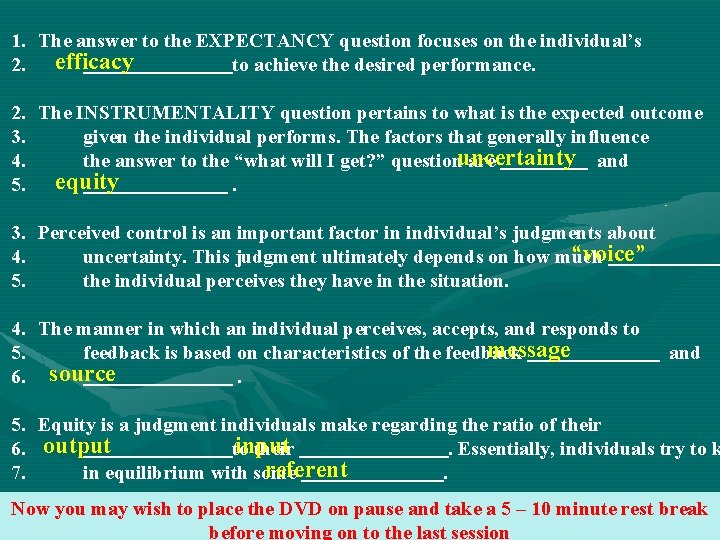
1. The answer to the EXPECTANCY question focuses on the individual’s 2. efficacy to achieve the desired performance. 2. The INSTRUMENTALITY question pertains to what is the expected outcome 3. given the individual performs. The factors that generally influence 4. the answer to the “what will I get? ” questionuncertainty are and 5. equity. 3. Perceived control is an important factor in individual’s judgments about “voice” 4. uncertainty. This judgment ultimately depends on how much 5. the individual perceives they have in the situation. 4. The manner in which an individual perceives, accepts, and responds to message 5. feedback is based on characteristics of the feedback 6. source. and 5. Equity is a judgment individuals make regarding the ratio of their input 6. output to their. Essentially, individuals try to k referent 7. in equilibrium with some. Now you may wish to place the DVD on pause and take a 5 – 10 minute rest break before moving on to the last session
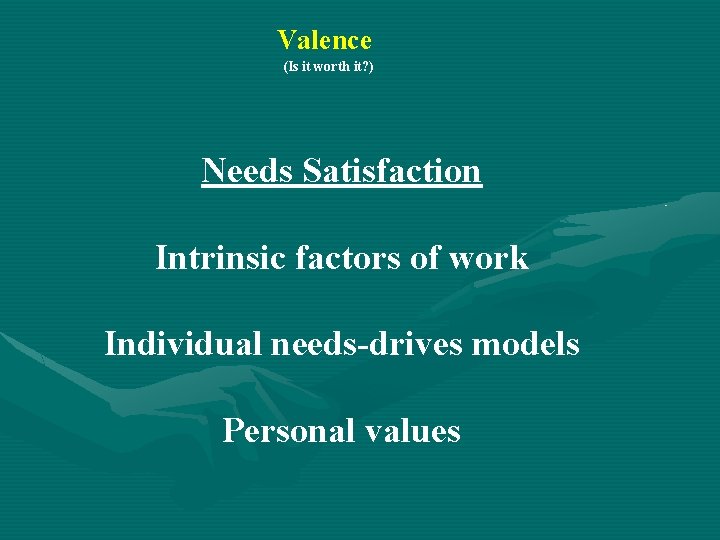
Valence (Is it worth it? ) Needs Satisfaction Intrinsic factors of work Individual needs-drives models Personal values
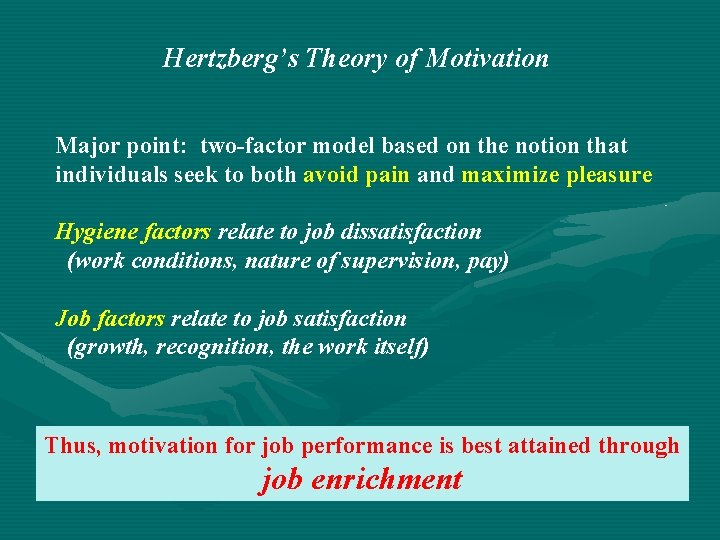
Hertzberg’s Theory of Motivation Major point: two-factor model based on the notion that individuals seek to both avoid pain and maximize pleasure Hygiene factors relate to job dissatisfaction (work conditions, nature of supervision, pay) Job factors relate to job satisfaction (growth, recognition, the work itself) Thus, motivation for job performance is best attained through job enrichment
Job Characteristics Theory
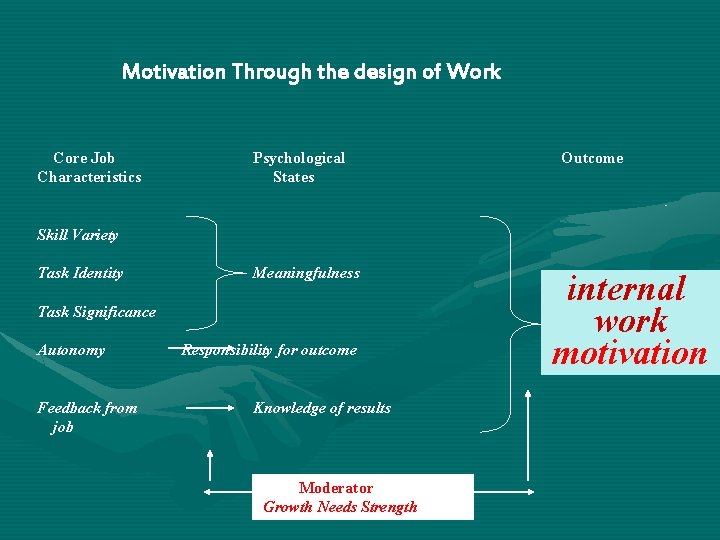
Motivation Through the design of Work Core Job Characteristics Psychological States Outcome Skill Variety Task Identity Meaningfulness Task Significance Autonomy Feedback from job Responsibility for outcome Knowledge of results Moderator Growth Needs Strength internal work motivation
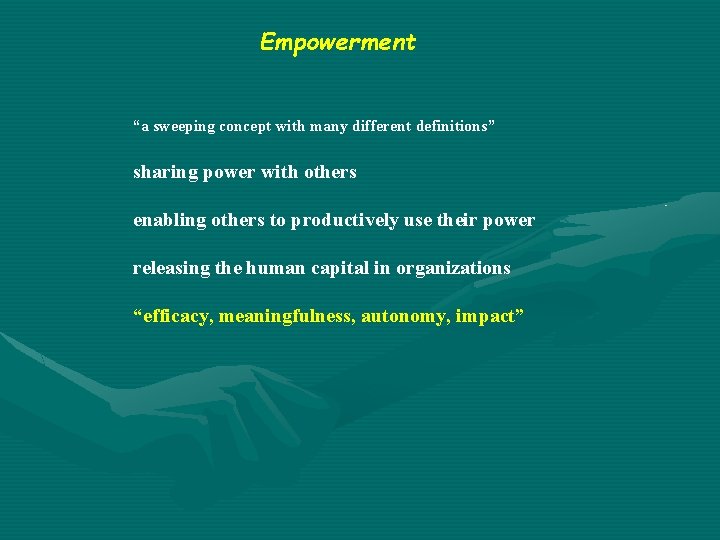
Empowerment “a sweeping concept with many different definitions” sharing power with others enabling others to productively use their power releasing the human capital in organizations “efficacy, meaningfulness, autonomy, impact”
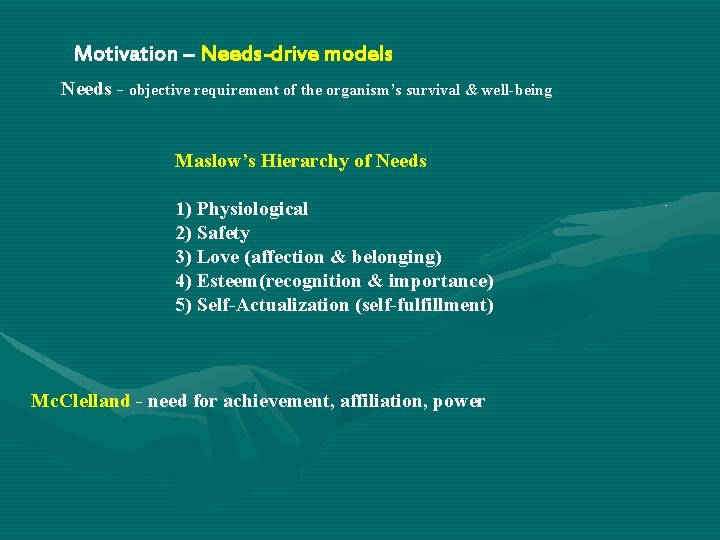
Motivation – Needs-drive models Needs - objective requirement of the organism’s survival & well-being Maslow’s Hierarchy of Needs 1) Physiological 2) Safety 3) Love (affection & belonging) 4) Esteem(recognition & importance) 5) Self-Actualization (self-fulfillment) Mc. Clelland - need for achievement, affiliation, power
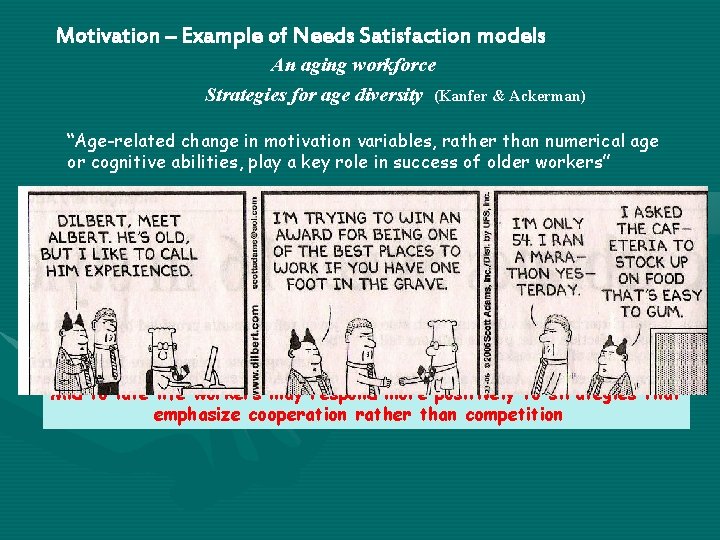
Motivation – Example of Needs Satisfaction models An aging workforce Strategies for age diversity (Kanfer & Ackerman) “Age-related change in motivation variables, rather than numerical age or cognitive abilities, play a key role in success of older workers” As workers age, the strength of achievement motives appear to decline and the strength of motives promoting affect and protecting self-concept increases. Mid to late life workers may respond more positively to strategies that emphasize cooperation rather than competition
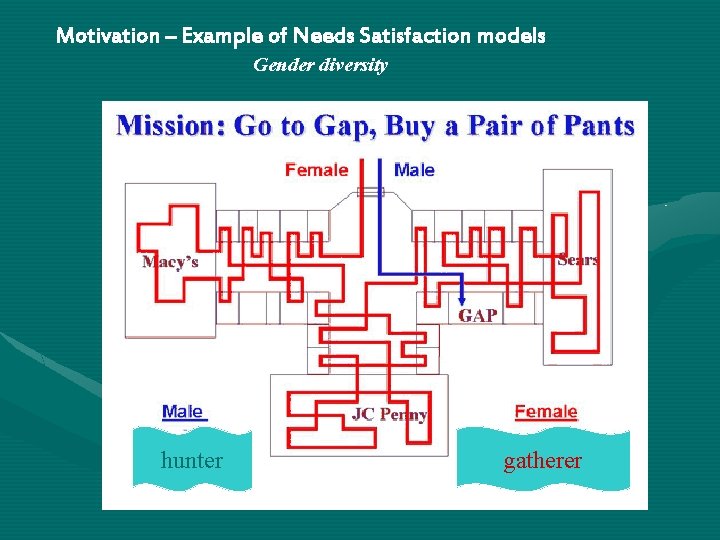
Motivation – Example of Needs Satisfaction models Gender diversity hunter gatherer
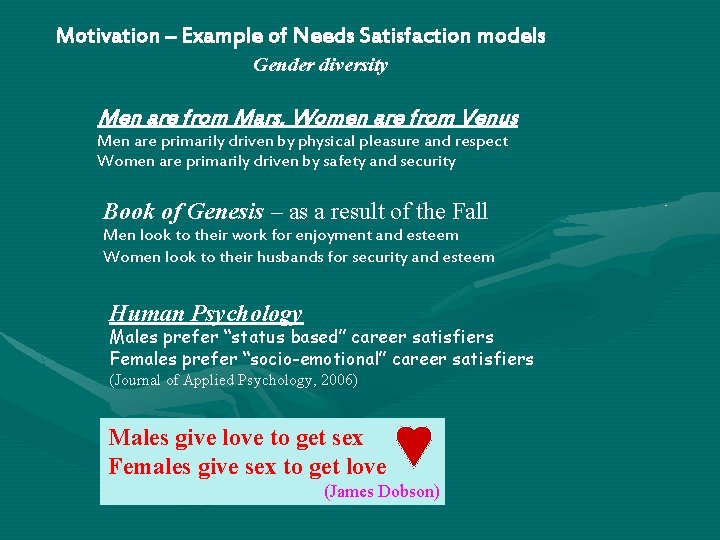
Motivation – Example of Needs Satisfaction models Gender diversity Men are from Mars, Women are from Venus Men are primarily driven by physical pleasure and respect Women are primarily driven by safety and security Book of Genesis – as a result of the Fall Men look to their work for enjoyment and esteem Women look to their husbands for security and esteem Human Psychology Males prefer “status based” career satisfiers Females prefer “socio-emotional” career satisfiers (Journal of Applied Psychology, 2006) Males give love to get sex Females give sex to get love (James Dobson)
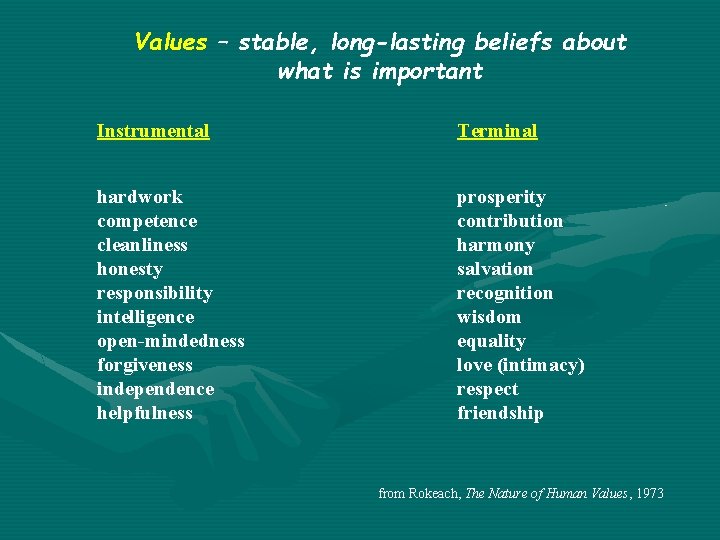
Values – stable, long-lasting beliefs about what is important Instrumental Terminal hardwork competence cleanliness honesty responsibility intelligence open-mindedness forgiveness independence helpfulness prosperity contribution harmony salvation recognition wisdom equality love (intimacy) respect friendship from Rokeach, The Nature of Human Values, 1973
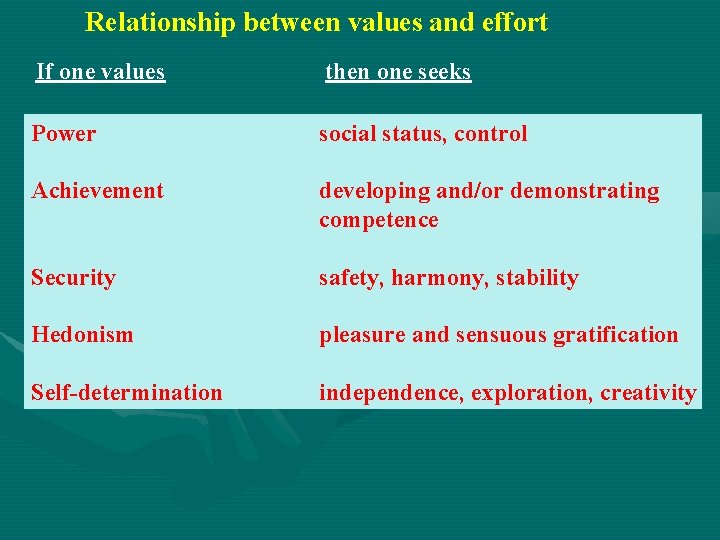
Relationship between values and effort If one values then one seeks Power social status, control Achievement developing and/or demonstrating competence Security safety, harmony, stability Hedonism pleasure and sensuous gratification Self-determination independence, exploration, creativity
Leadership and Motivation Some guiding principles Induce Transactional Extrinsic factors vs. Structural vs. Inspire vs. Transformational Intrinsic factors Personal Stimulus-response Aspirational (people are “social beasts”) (people are “rational beasts”) Control systems EIV Model COMPLIANCE Reinforcement Social Exchange Leader-Member Exchange COMMITMENT Self-efficacy Goal setting Equity Job enrichment Empowerment Needs satisfaction
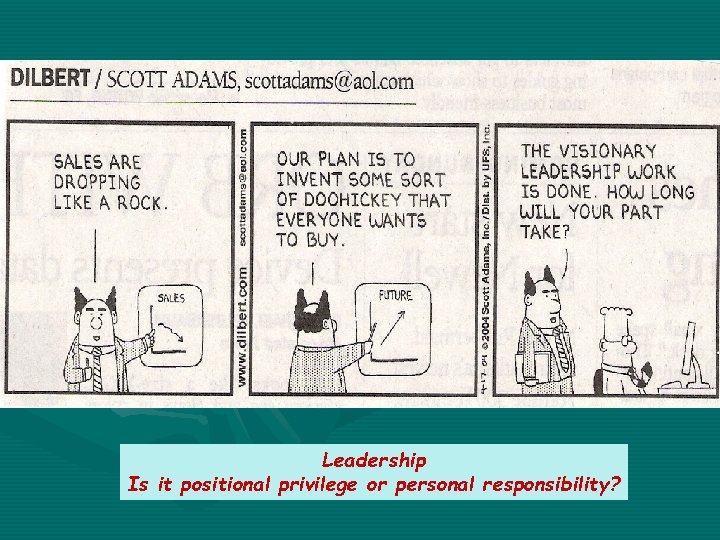
Leadership Is it positional privilege or personal responsibility?