
Leadership Roles Are Changing In The New Environment

- Slides: 19
Leadership Roles Are Changing In The New Environment What skills do leaders/managers need to be successful and effective?
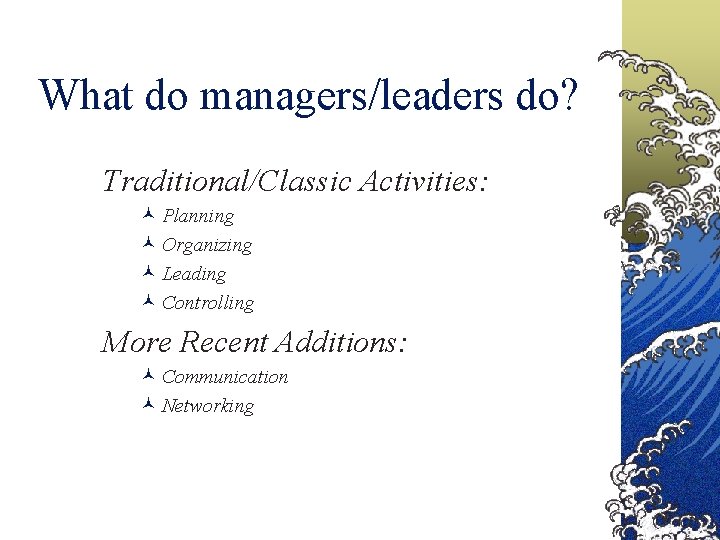
What do managers/leaders do? Traditional/Classic Activities: © Planning © Organizing © Leading © Controlling More Recent Additions: © Communication © Networking
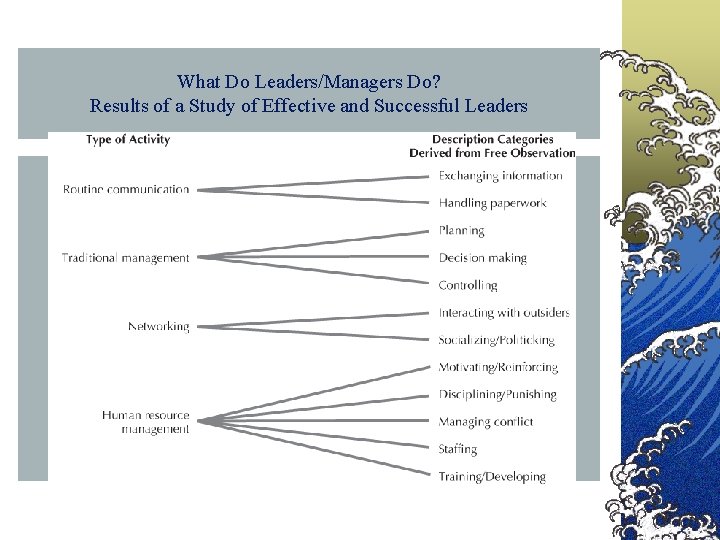
What Do Leaders/Managers Do? Results of a Study of Effective and Successful Leaders
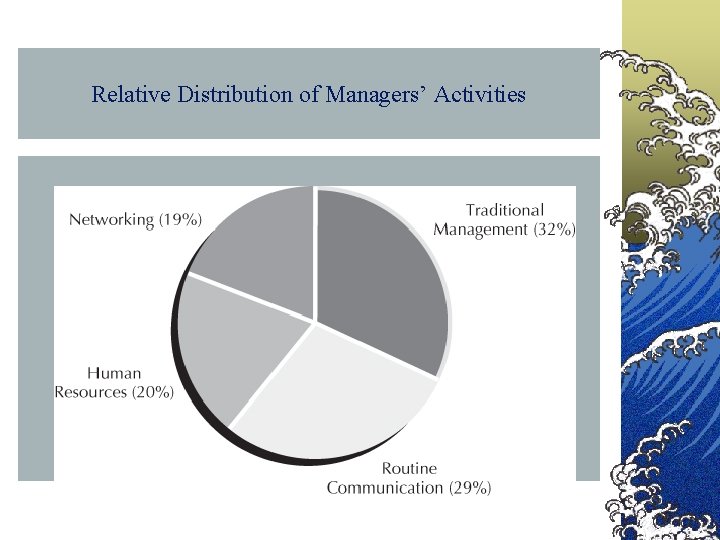
Relative Distribution of Managers’ Activities
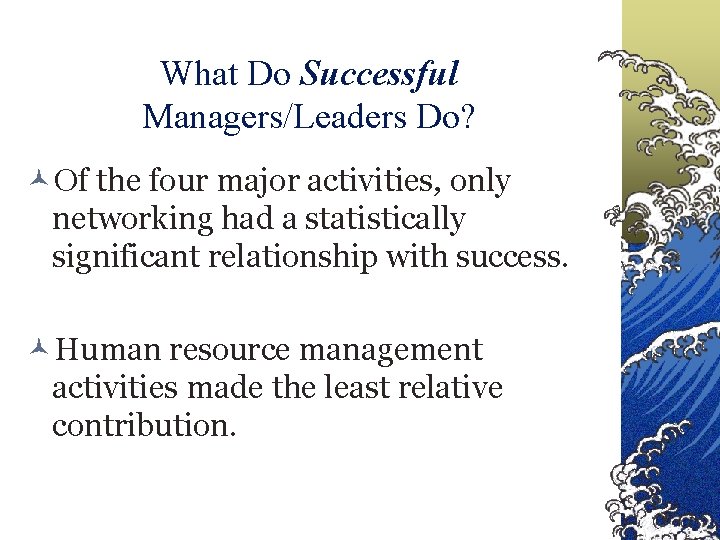
What Do Successful Managers/Leaders Do? ©Of the four major activities, only networking had a statistically significant relationship with success. ©Human resource management activities made the least relative contribution.
What Do Effective Managers/Leaders Do? The opposite!
What should organizations do about this paradox? Pay attention to reward system/compensation structure
Authentic Leadership – Bill George March 23 - Senior Writer Diane Brady talks to former Medtronic CEO Bill George about his insightful book on how to become an authentic leader and the factors that send even accomplished leaders astray. In True North, a follow-up to Authentic Leadership, George looks at the various factors that go into achieving authenticity on the job and staying focused on what matters http: //feedroom. businessweek. com/? fr_story=63 bef 5 b 71 b 8 cd 4 ebe 416 cc 3 d 7 c 5 23134 d 61162 e 4&rf=sitemap
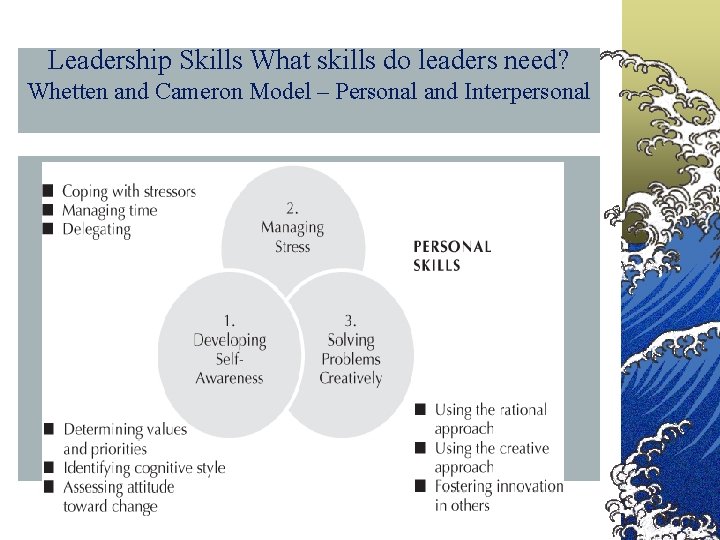
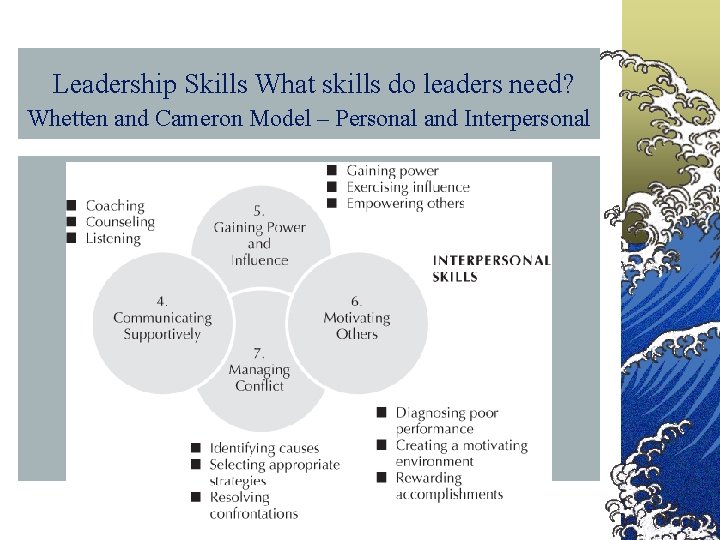
Leadership Skills What skills do leaders need? Whetten and Cameron Model – Personal and Interpersonal
Leadership Skills What skills do leaders need? Whetten and Cameron Model – Personal and Interpersonal
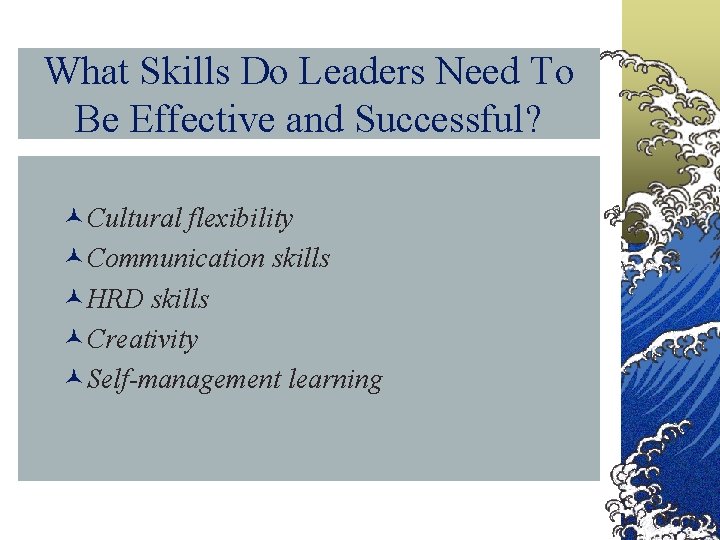
What Skills Do Leaders Need To Be Effective and Successful? ©Cultural flexibility ©Communication skills ©HRD skills ©Creativity ©Self-management learning
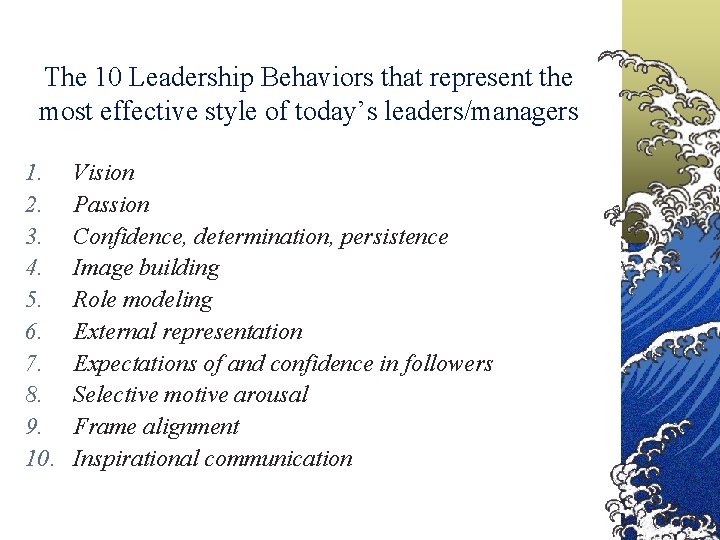
The 10 Leadership Behaviors that represent the most effective style of today’s leaders/managers 1. 2. 3. 4. 5. 6. 7. 8. 9. 10. Vision Passion Confidence, determination, persistence Image building Role modeling External representation Expectations of and confidence in followers Selective motive arousal Frame alignment Inspirational communication
The Role of Humor and Fun ©Humor and fun may play a role in leader effectiveness.
Leadership and Emotions – Dan Hill http: //feedroom. businessweek. com/? fr_story =63 bef 5 b 71 b 8 cd 4 ebe 416 cc 3 d 7 c 523134 d 61162 e 4&rf=sitemap
Leadership Development Lessons on Leadership - Jack Stahl: Former Coca-Cola president and Revlon CEO Jack Stahl talks with senior writer Diane Brady about what he has learned in senior leadership positions, and how others can apply that to their careers. http: //feedroom. businessweek. com/? fr_story=63 b ef 5 b 71 b 8 cd 4 ebe 416 cc 3 d 7 c 523134 d 61162 e 4&rf =sitemap
Authentic Leadership Development (ALD) The process that draws upon a leader’s life course, psychological capital, moral perspective, and a “highly developed” supporting organizational climate to produce greater self-awareness and selfregulated positive behaviors, which in turn fosters continuous, positive selfdevelopment resulting in veritable, sustained performance.
Coaching ©The goal of effective coaching is to change behavior. ©The Seven Principles of Effective Executive Coaching/Organizational Consulting: http: //pinkmagazine. com/resources/career/7 _principles_coaching. html
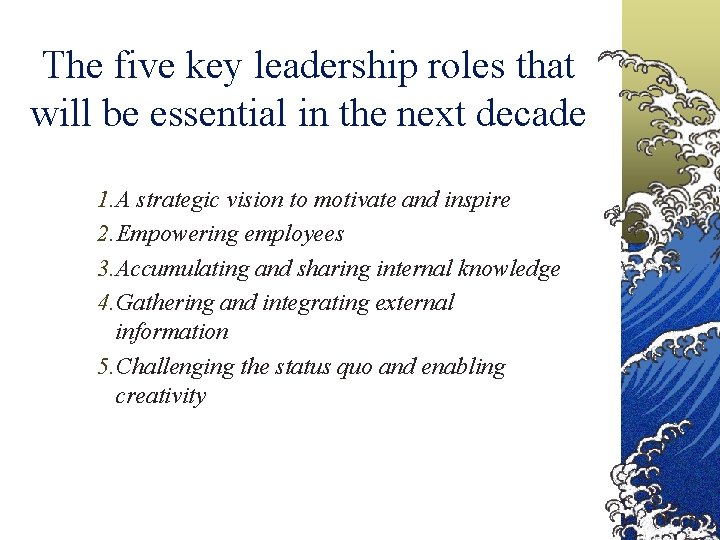
The five key leadership roles that will be essential in the next decade 1. A strategic vision to motivate and inspire 2. Empowering employees 3. Accumulating and sharing internal knowledge 4. Gathering and integrating external information 5. Challenging the status quo and enabling creativity
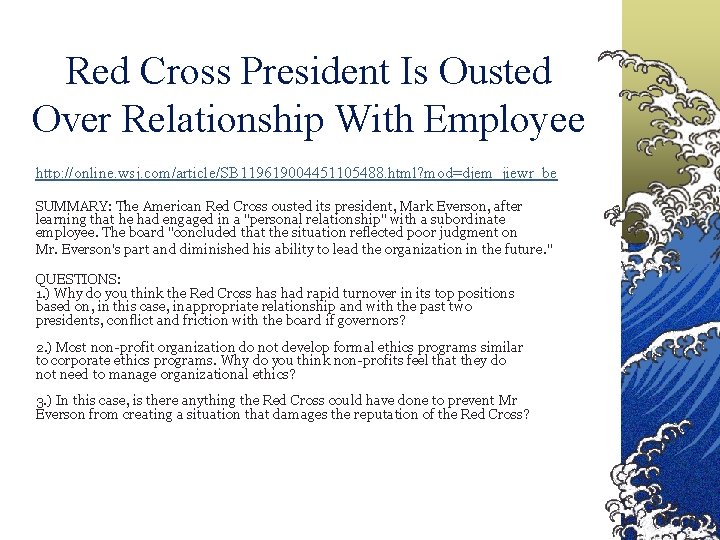
Red Cross President Is Ousted Over Relationship With Employee http: //online. wsj. com/article/SB 119619004451105488. html? mod=djem_jiewr_be SUMMARY: The American Red Cross ousted its president, Mark Everson, after learning that he had engaged in a "personal relationship" with a subordinate employee. The board "concluded that the situation reflected poor judgment on Mr. Everson's part and diminished his ability to lead the organization in the future. " QUESTIONS: 1. ) Why do you think the Red Cross had rapid turnover in its top positions based on, in this case, inappropriate relationship and with the past two presidents, conflict and friction with the board if governors? 2. ) Most non-profit organization do not develop formal ethics programs similar to corporate ethics programs. Why do you think non-profits feel that they do not need to manage organizational ethics? 3. ) In this case, is there anything the Red Cross could have done to prevent Mr Everson from creating a situation that damages the reputation of the Red Cross?