
Leadership Practices of Successful Primary School Leaders Educating



- Slides: 13
Leadership Practices of Successful Primary School Leaders Educating Learners Afflicted by Multiple Deprivation in South Africa Bria Hoosier April 2015 University of the Witwatersrand EDU-Lead Conference
Overview Background Conceptual Framework Theoretical Framework Research Aims and Research Questions Methodological Approach Ethical Considerations
Background Post-Apartheid South African primary learners continue to struggle with academic achievement (Fleisch, 2008; UNICEF, 2012, Pendlebury, Lake & Smith, 2009; Moloi & Strauss; Maringe, 2015) Some poorly resourced schools excel despite the odds (Christie, 2001; Taylor, Muller & Vinjevold, 2003) Leadership is central to the success of schools (Christie, 2001; Bush, Bell & Middlewood, 2010)
Conceptual Framework
Conceptual Framework Leadership Second greatest influencer on student learning (Leithwood et. al. , 2007) “A process by whereby an individual influences a group of individuals to achieve a common goal (Northouse, 2013)” Influence process is independent of authority (Bush, 2010)
Conceptual Framework School Improvement Achieved through the relationship between school effectiveness and school efficiency (Elmore & City, 2007; Hopkins & Levine, 2000) School Efficiency Determined by the performance of a school (output) and then measured by the average achievement of learners at the end of a period of formal schooling (Schreens, 2000; Schreens, 2013) School Effectiveness Output (performance) < Input (fiscal & human resources) (Dagget, 2009; Hanushek, 1986, Botha, 2010)
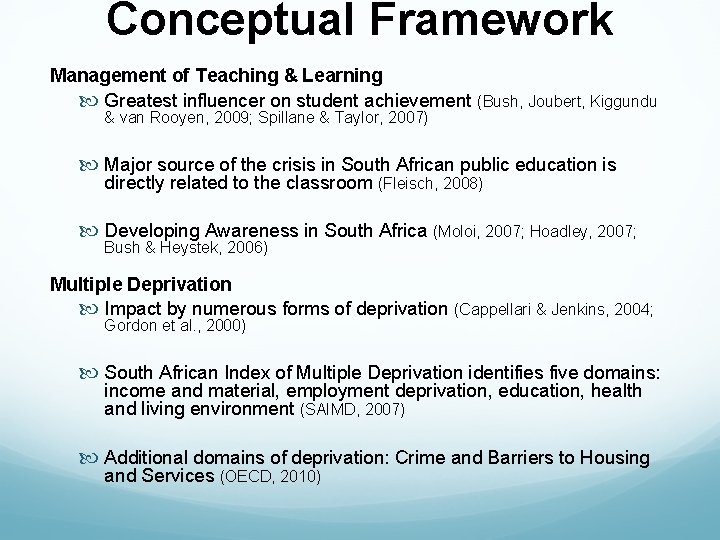
Conceptual Framework Management of Teaching & Learning Greatest influencer on student achievement (Bush, Joubert, Kiggundu & van Rooyen, 2009; Spillane & Taylor, 2007) Major source of the crisis in South African public education is directly related to the classroom (Fleisch, 2008) Developing Awareness in South Africa (Moloi, 2007; Hoadley, 2007; Bush & Heystek, 2006) Multiple Deprivation Impact by numerous forms of deprivation (Cappellari & Jenkins, 2004; Gordon et al. , 2000) South African Index of Multiple Deprivation identifies five domains: income and material, employment deprivation, education, health and living environment (SAIMD, 2007) Additional domains of deprivation: Crime and Barriers to Housing and Services (OECD, 2010)
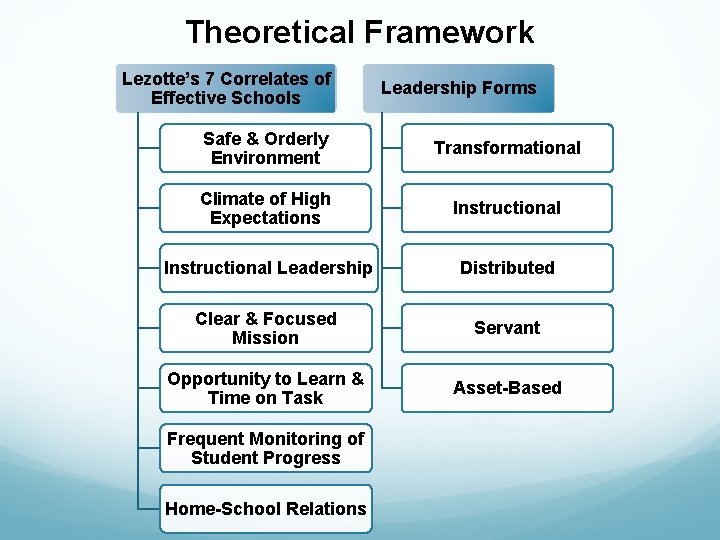
Theoretical Framework Lezotte’s 7 Correlates of Effective Schools Leadership Forms Safe & Orderly Environment Transformational Climate of High Expectations Instructional Leadership Distributed Clear & Focused Mission Servant Opportunity to Learn & Time on Task Asset-Based Frequent Monitoring of Student Progress Home-School Relations
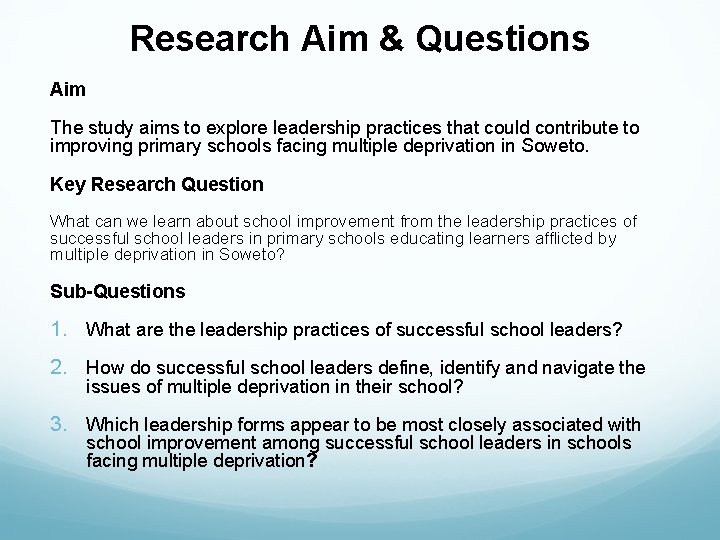
Research Aim & Questions Aim The study aims to explore leadership practices that could contribute to improving primary schools facing multiple deprivation in Soweto. Key Research Question What can we learn about school improvement from the leadership practices of successful school leaders in primary schools educating learners afflicted by multiple deprivation in Soweto? Sub-Questions 1. What are the leadership practices of successful school leaders? 2. How do successful school leaders define, identify and navigate the issues of multiple deprivation in their school? 3. Which leadership forms appear to be most closely associated with school improvement among successful school leaders in schools facing multiple deprivation?
Methodological Approach Qualitative Case Study (3) Public primary schools in Soweto Sampling Process Annual National Assessment Results (2014) Grade 3 learners average marks in maths in a single a year Top 10 Highest Performing Schools in Quintiles 1 -3 Two-Phased Verification Process Internal Verification District Office Verification Six schools meeting criteria will be chosen of which three will be participants in the study
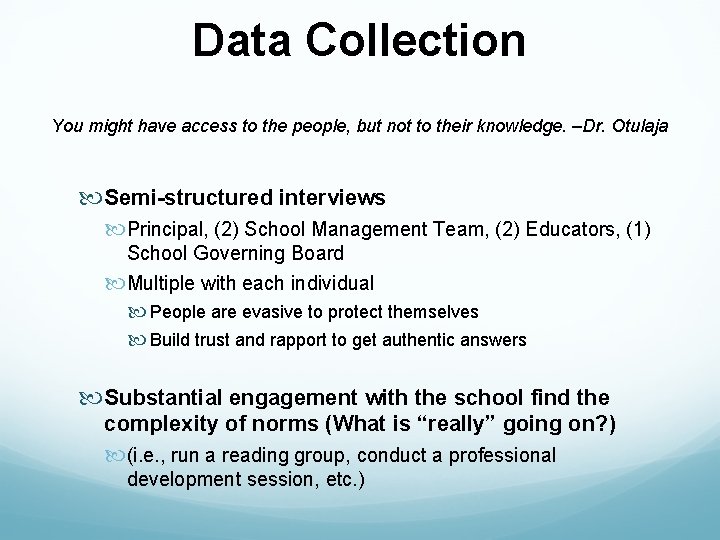
Data Collection You might have access to the people, but not to their knowledge. –Dr. Otulaja Semi-structured interviews Principal, (2) School Management Team, (2) Educators, (1) School Governing Board Multiple with each individual People are evasive to protect themselves Build trust and rapport to get authentic answers Substantial engagement with the school find the complexity of norms (What is “really” going on? ) (i. e. , run a reading group, conduct a professional development session, etc. )
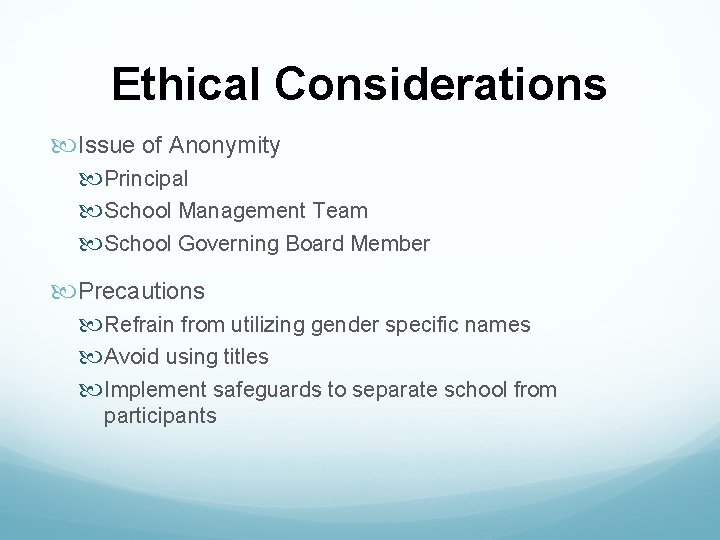
Ethical Considerations Issue of Anonymity Principal School Management Team School Governing Board Member Precautions Refrain from utilizing gender specific names Avoid using titles Implement safeguards to separate school from participants
Leadership Practices of Successful Primary School Leaders Educating Learners Afflicted by Multiple Deprivation in South Africa Let’s Connect… Bria Hoosier University of the Witwatersrand brianetta. hoosier@gmail. com