
Leadership for Viability TWINCS March 6 2014 Webinar
Leadership for Viability TWIN-CS March 6, 2014 Webinar David Card, Escuela de Guadalupe david_card@escuelaguadalupe. org 303 -964 -0816
Session Overview Characteristics of Effective Boards Administrative Leadership Needs of Today’s Urban Catholic Schools Mission Measurement Healthy School Finance
Different Boards – Similar Needs Independent Limited Jurisdiction Advisory
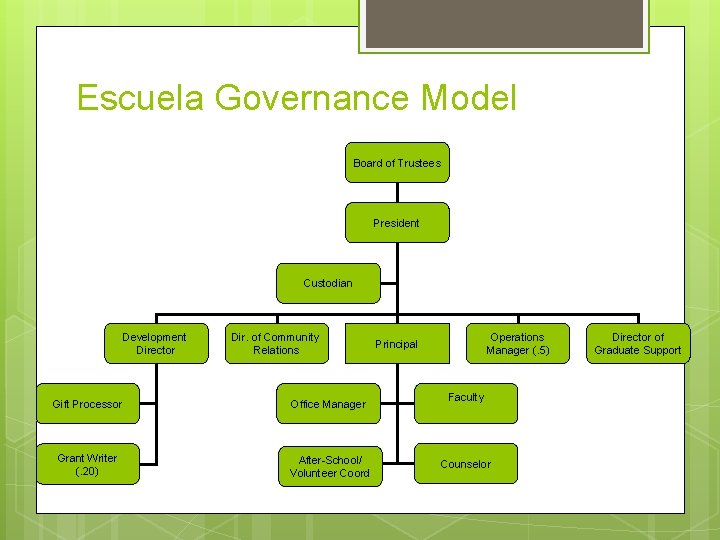
Escuela Governance Model Board of Trustees President Custodian Development Director Dir. of Community Relations Gift Processor Office Manager Grant Writer (. 20) After-School/ Volunteer Coord Operations Manager (. 5) Principal Faculty Counselor Director of Graduate Support
Board Composition Who makes good board members? Whom do they represent? What is the right number?
What is the role of the board? Safeguard mission Ensure relevance Provide and/or ensure resources Act as a group Select, hire, evaluate head of school
Characteristics Work in constructive partnership Strategic Thinking Culture of Inquiry Independent mindedness Ethos of Transparency Ethics and Integrity Excerpted from The Source: Twelve Principles of Governance that Power Exceptional Boards. Board Source, 2005
Characteristics Sustaining Resources Results-Oriented Intentional Board Practices Continuous Learning Revitalization
Administrative Leadership for Today’s Urban Catholic School Separate Instructional Leadership from operational/financial leadership Communications in a bilingual community Quality and relevance of mission and programming Long-term results Engaged with Financial Realities
Enrollment: THE Point of Evaluation Close second: retention (challenge for TWI schools) Notables Faith-formation Academic Competency (common currency of local area) Bilingualism/Biliteracy Long-term outcomes (e. g. grad rates)
School Finance: Expenses Number one cost: our people Number one concern: is our budget realistic in terms of what it is going to take to hire and retain a quality staff?
School Finance: Revenue Tuition – What percentage and how is the number derived? Contributions/Fundraising – What percentage Other big sources Importance of an empowered board
Fundraising, Contributions, Development, Advancement… Myths Where big dollars come from It’s easier for somebody else Wealthy people, companies, foundations are obligated to give to our cause
2012 Contributions: $316. 23 Billion by Source of Contribution Source: Giving USA Foundation/ Giving USA 2012
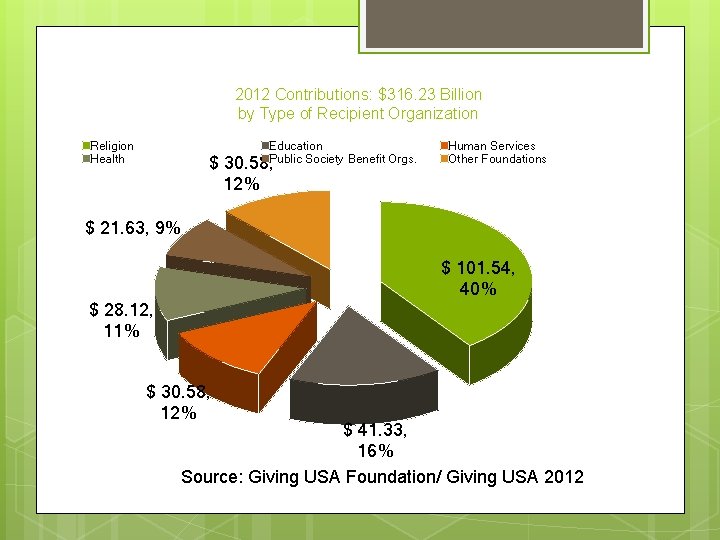
2012 Contributions: $316. 23 Billion by Type of Recipient Organization Religion Health $ Education 30. 58, Public Society Benefit Orgs. Human Services Other Foundations 12% $ 21. 63, 9% $ 101. 54, 40% $ 28. 12, 11% $ 30. 58, 12% $ 41. 33, 16% Source: Giving USA Foundation/ Giving USA 2012
Fundraising, Contributions, Development, Advancement… Truths Where money comes from How donors are developed The focus on leadership Strategies Get people to the school Involve the students
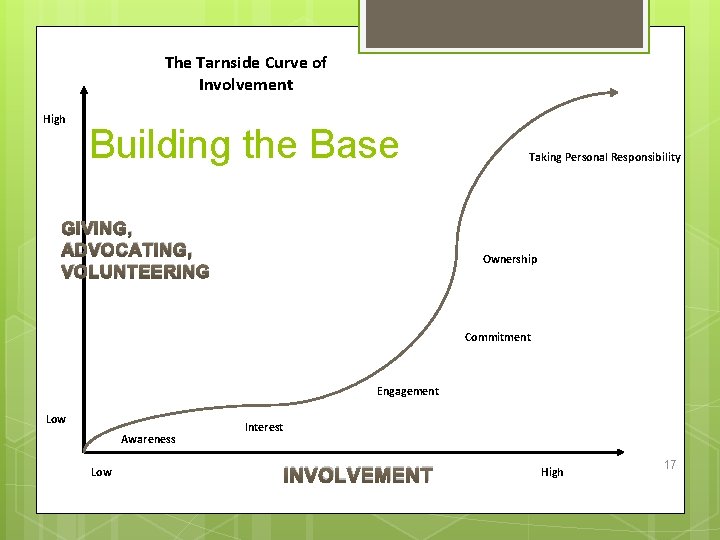
The Tarnside Curve of Involvement High Building the Base GIVING, ADVOCATING, VOLUNTEERING Taking Personal Responsibility Ownership Commitment Engagement Low Awareness Low Interest INVOLVEMENT High 17
Keys to Viability Demonstrably good programming (often validated by a strong enrollment) Leadership Relevance (Board, Admin, Faculty) to local educational picture and competition

Thank you.
- Slides: 19