
Leadership Development Program Predictive Index Beth Oliphant Predictive
Leadership Development Program Predictive Index - Beth Oliphant
Predictive Index Behavioral Assessment • Why PI? It provides valuable insight while being brief. • Scientific validation and a 60 -year proven track record • PI maintains a Science Advisory Board staffed with university professors, and other subject matter experts in psychometrics. • Visit www. predictiveindex. com for detailed information regarding the science behind it, the methodology, etc. 2
When I am in the Zone When I’m most engaged in my work, what am I doing? What activities and tasks drain my energy?
Impact of Personality • If you are a part of a high profile project at work, would you rather be the leader or a participating team member? • Would you rather work through solutions collaboratively with the team—taking time to discuss and work through issues with the team, or would you rather work independently? • The project is stalling, would you prefer to buckle down and do it yourself, or would you pull the group together to discuss what needs to be done? 4

5

6
7

8
Continuums 9
Your PI Report 1. Read your PI summary 2. Review Self graph and ask: — What makes sense to me? — Have I gotten feedback in support of this? — Where / how do I observe this behavior in myself? — What doesn’t make sense? 3. Relate to Self-Concept 10
11
Understanding PI Profiles • Self: Measures the individual’s basic pattern of behavior. “Doing what comes naturally” • Self-Concept: Measures the ways in which the individual is trying to modify (or change) his/her behavior to satisfy what he himself perceives to be the demands of his current job. • Synthesis: Measures the ways in which the individual actually behaves in his/her current job and work environment PI MIDWEST 12

Predictive Index Graph 13
How to Read PI Graphs 1. 2. 3. 4. The blocks are Standard Deviations, divided into 5 ths Look at the highest & lowest points Look at the spread between your highest & lowest Compare your Self and Self Concept — Where are they similar / different? 5. M Factor = Stamina 6. E Factor = How you tend to make decisions (Subjective / Objective)
Resultant Factors • The E Factor is the “decision” factor and is indicated by the circle in the Synthesis pattern. • The E factor measures the extent to which a person tends to weigh more heavily the “logical/factual” or the “subjective/feeling” elements in making decisions. • When the E factor is to the right, the decision making style would-be more objective. • When the E factor is to the left, the decision making style would be more subjective. • We are concerned about the E factor only when it is extremely low or high. Subjective • • • Goes with “gut” More emotional-based on feelings Looks at things as they wish they were More influenced by people In sales, may think it’s a close Objective • • • Logical Can be hard headed. Argumentative Might fail to account for potential human reactions Might have trouble understanding people’s reactions to their decisions Can be critical of illogical thinking 15
Resultant Factors The M Factor measures an overall level of response. This is a measure of the capacity of an individual to interact with the “environment” and how that impacts one’s stamina or ability to consistently sustain activity. • Based on the amount of words selected - Higher (more checkmarks) M Factor or Lower (less checkmarks) M Factor. — Higher M Factor • More stamina and capacity to respond to environment/stimuli • Greater ability to change more rapidly • Absorb stress more easily • Greater capacity for activity — Lower M Factor • Has difficulty in changing environments/doesn’t respond well to numerous stimuli • Slower to change • Gets stressed easily • Tires quickly, often seems “low energy” • Extremities should be reviewed. As a rule of thumb, most patterns will fall between the ranges of 20 to 125 words checked. Any more or less is a signal that perhaps the results have been in some way contaminated. • Consider the circumstance in which the PI was taken; stress, illness, fatigue, etc.
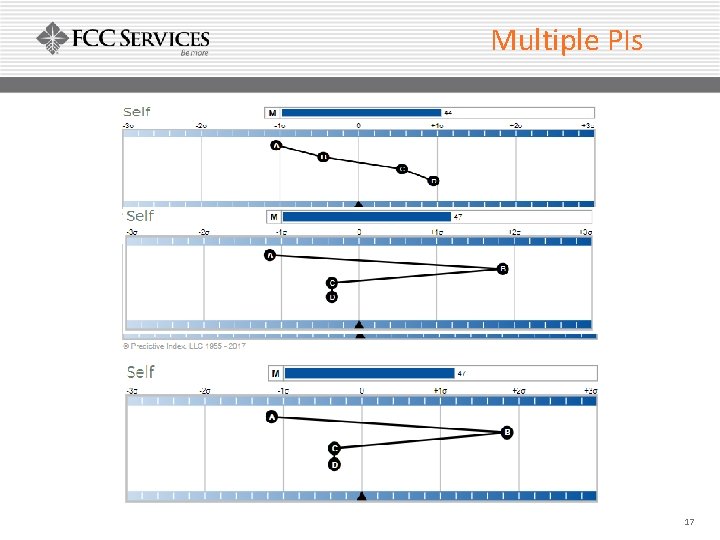
Multiple PIs 17
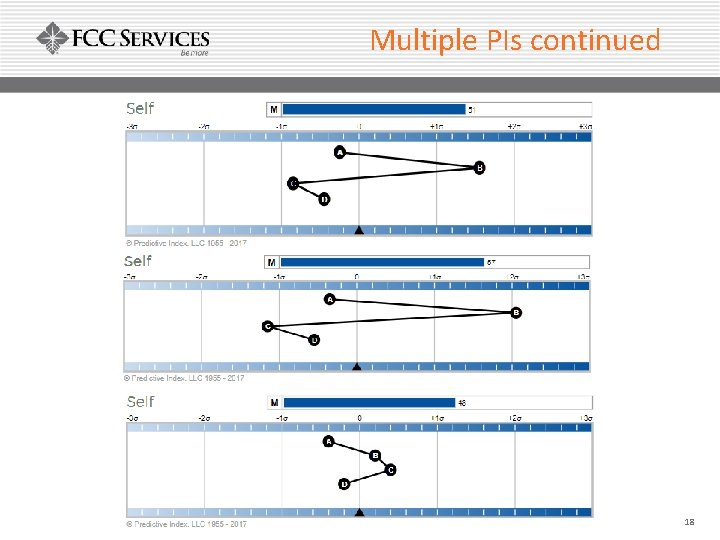
Multiple PIs continued 18
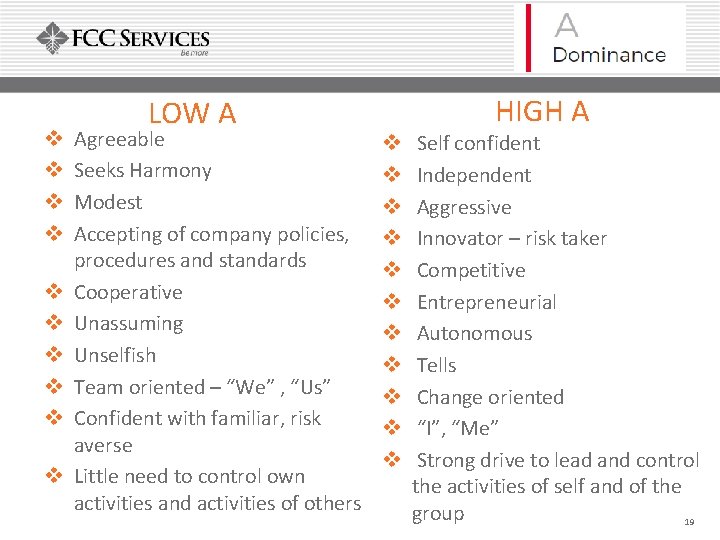
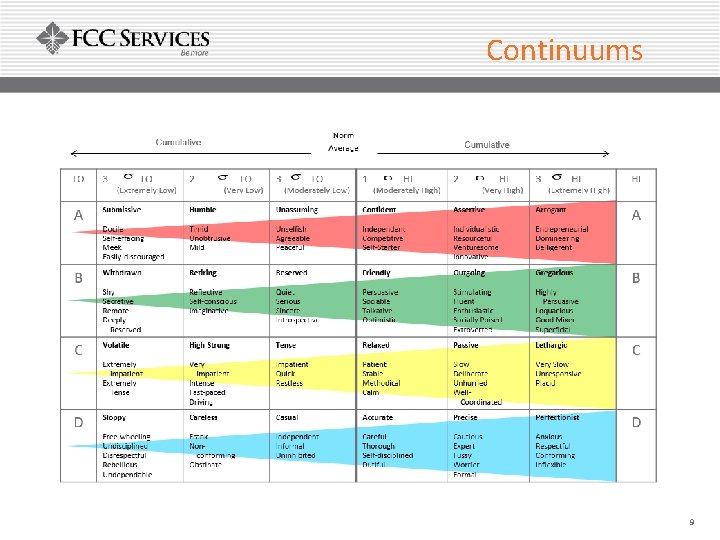
v v v v v LOW A Agreeable Seeks Harmony Modest Accepting of company policies, procedures and standards Cooperative Unassuming Unselfish Team oriented – “We” , “Us” Confident with familiar, risk averse Little need to control own activities and activities of others HIGH A v v v Self confident Independent Aggressive Innovator – risk taker Competitive Entrepreneurial Autonomous Tells Change oriented “I”, “Me” Strong drive to lead and control the activities of self and of the group 19
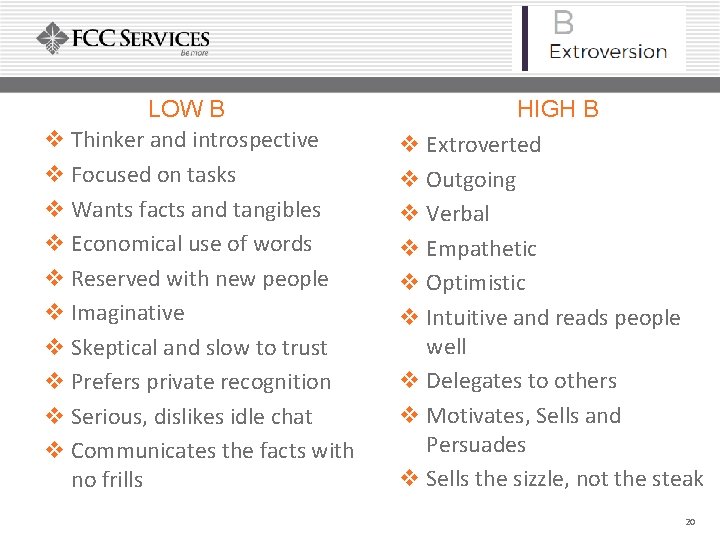
LOW B v Thinker and introspective v Focused on tasks v Wants facts and tangibles v Economical use of words v Reserved with new people v Imaginative v Skeptical and slow to trust v Prefers private recognition v Serious, dislikes idle chat v Communicates the facts with no frills HIGH B v Extroverted v Outgoing v Verbal v Empathetic v Optimistic v Intuitive and reads people well v Delegates to others v Motivates, Sells and Persuades v Sells the sizzle, not the steak 20
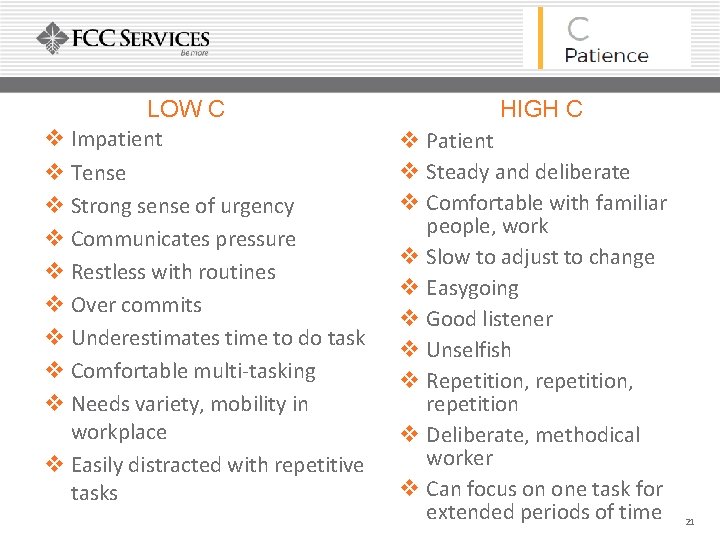
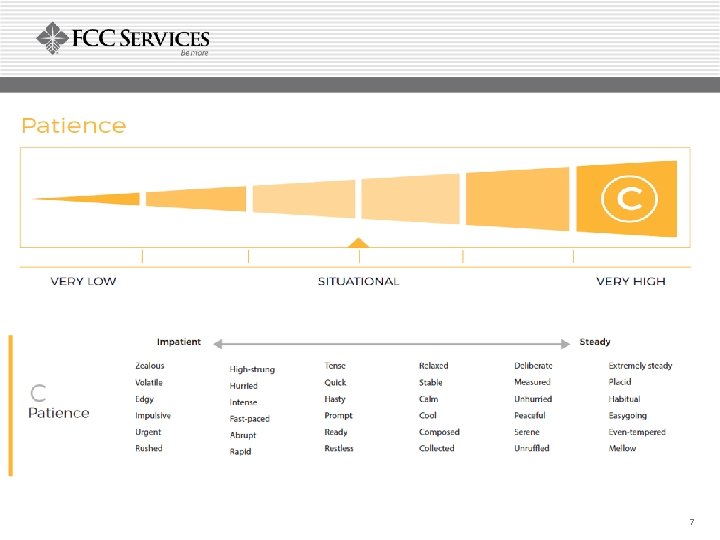
LOW C v Impatient v Tense v Strong sense of urgency v Communicates pressure v Restless with routines v Over commits v Underestimates time to do task v Comfortable multi-tasking v Needs variety, mobility in workplace v Easily distracted with repetitive tasks HIGH C v Patient v Steady and deliberate v Comfortable with familiar people, work v Slow to adjust to change v Easygoing v Good listener v Unselfish v Repetition, repetition v Deliberate, methodical worker v Can focus on one task for extended periods of time 21
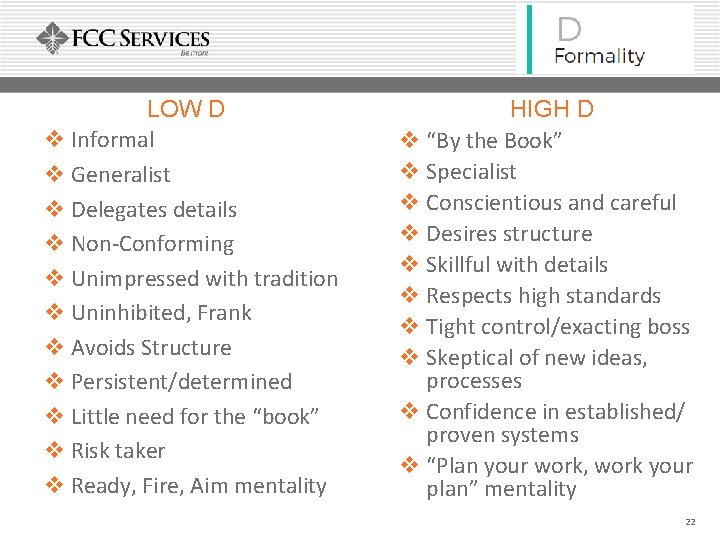
LOW D v Informal v Generalist v Delegates details v Non-Conforming v Unimpressed with tradition v Uninhibited, Frank v Avoids Structure v Persistent/determined v Little need for the “book” v Risk taker v Ready, Fire, Aim mentality HIGH D v “By the Book” v Specialist v Conscientious and careful v Desires structure v Skillful with details v Respects high standards v Tight control/exacting boss v Skeptical of new ideas, processes v Confidence in established/ proven systems v “Plan your work, work your plan” mentality 22
PRO (Performance Requirement Options) • The PRO form provides objective information about the behavioral requirements of any job at any level of the organization. • Hiring Managers check the variety of activities considered to be important and frequent aspects of the job. • The PRO is the guide to match the PI graph of each candidate. 23
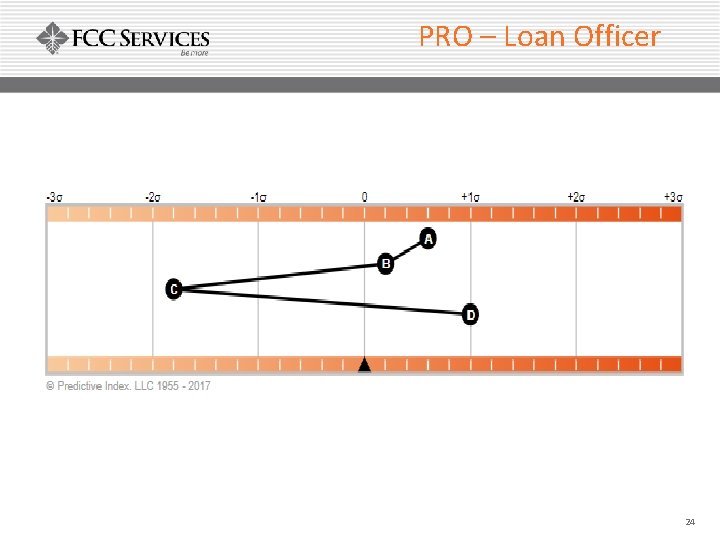
PRO – Loan Officer 24
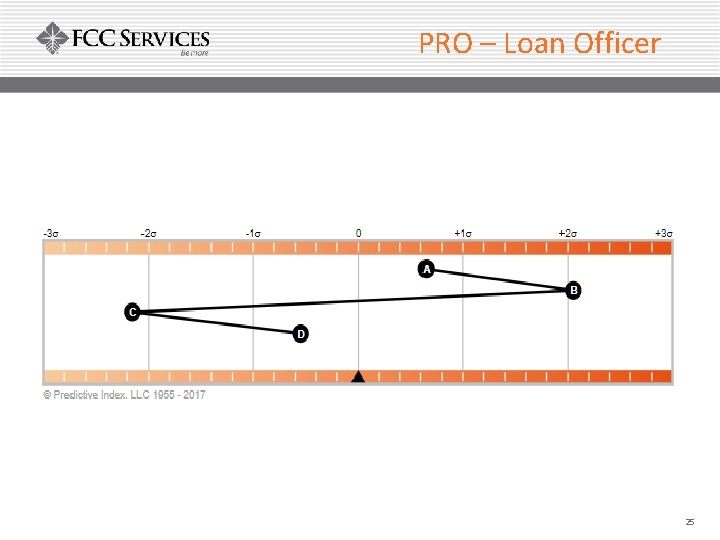
PRO – Loan Officer 25
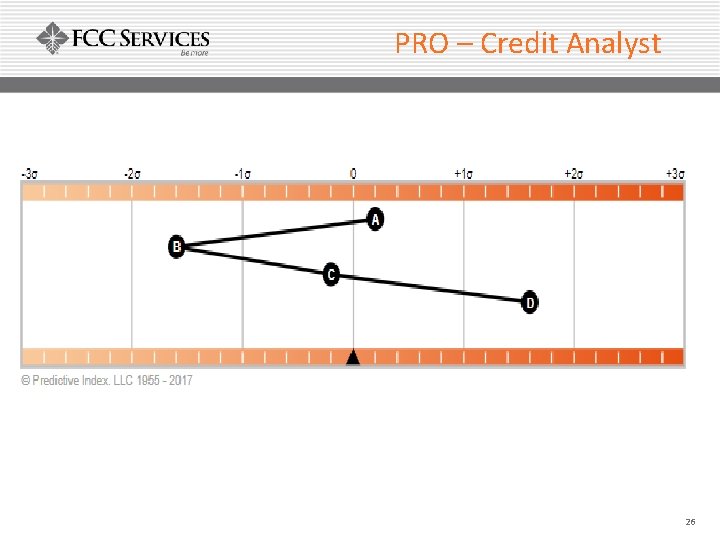
PRO – Credit Analyst 26
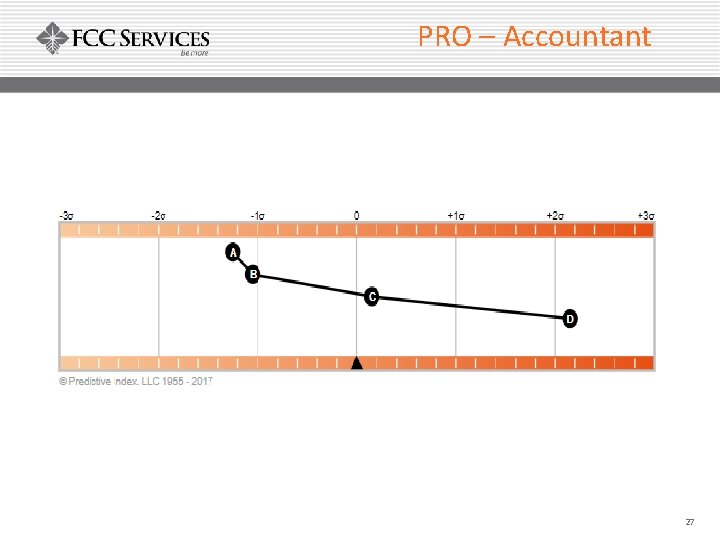
PRO – Accountant 27
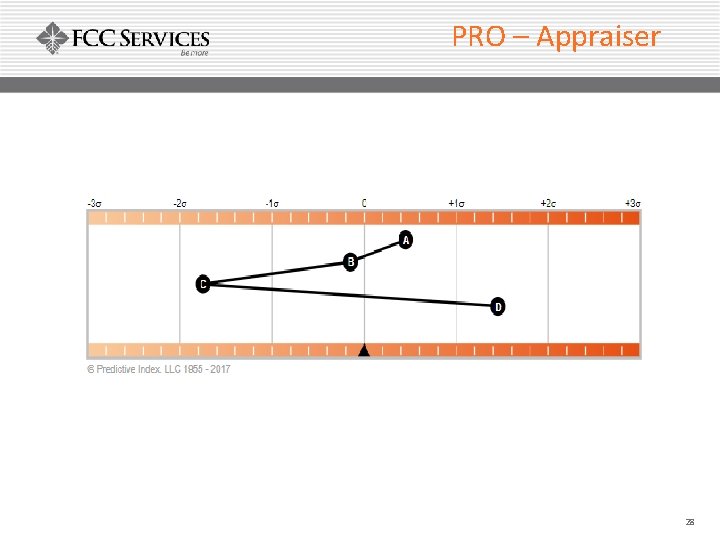
PRO – Appraiser 28
Insight Interviews • Support – any support position from administrative to accountant • Staff – leading a project or possibly one direct report • Supervisor/Manager – management responsibilities for a team • Information Technology – programmers or other IT • Loan Officer – responsible for generating loan volume • Credit Analyst – primarily responsible for analyzing credit • Appraiser – appraising property or collateral 29
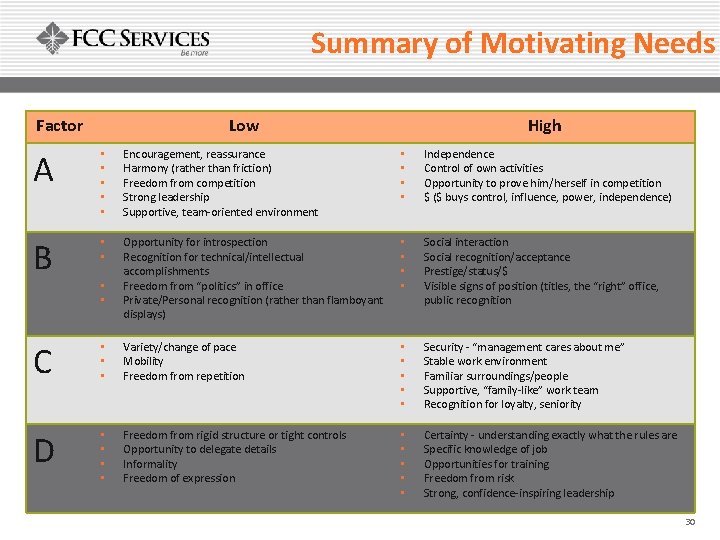
Summary of Motivating Needs Factor Low High A • • • Encouragement, reassurance Harmony (rather than friction) Freedom from competition Strong leadership Supportive, team-oriented environment • • Independence Control of own activities Opportunity to prove him/herself in competition $ ($ buys control, influence, power, independence) B • • Opportunity for introspection Recognition for technical/intellectual accomplishments Freedom from “politics” in office Private/Personal recognition (rather than flamboyant displays) • • Social interaction Social recognition/acceptance Prestige/status/$ Visible signs of position (titles, the “right” office, public recognition C • • • Variety/change of pace Mobility Freedom from repetition • • • Security - “management cares about me” Stable work environment Familiar surroundings/people Supportive, “family-like” work team Recognition for loyalty, seniority D • • Freedom from rigid structure or tight controls Opportunity to delegate details Informality Freedom of expression • • • Certainty - understanding exactly what the rules are Specific knowledge of job Opportunities for training Freedom from risk PI MIDWEST Strong, confidence-inspiring leadership • • 30
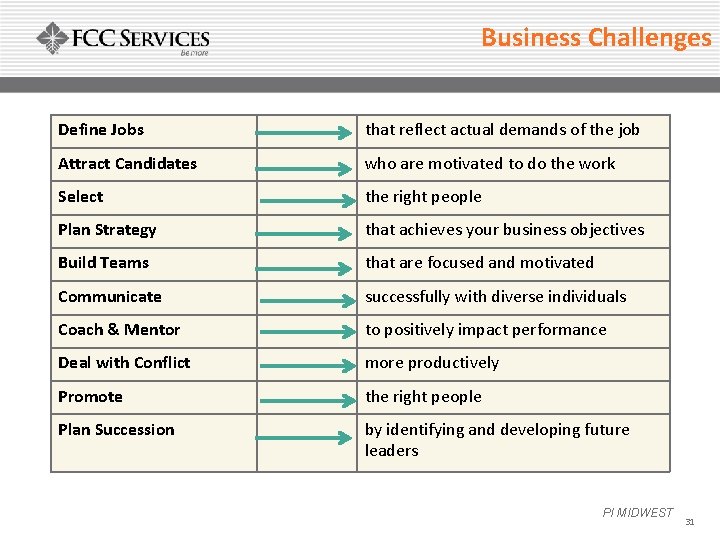
Business Challenges Define Jobs that reflect actual demands of the job Attract Candidates who are motivated to do the work Select the right people Plan Strategy that achieves your business objectives Build Teams that are focused and motivated Communicate successfully with diverse individuals Coach & Mentor to positively impact performance Deal with Conflict more productively Promote the right people Plan Succession by identifying and developing future leaders PI MIDWEST 31
“Success in my business is about putting the right people in the right place at the right time. You can’t expect to have a successful working organization if you have the wrong people in the wrong jobs, no matter how many hours they may work. What you try to do is put people in positions that suit their natural abilities and inclinations. ” PI MIDWEST 32
Final Thoughts…. As leaders: v Consider leadership styles needed for success in your organization/department. v Do you have the right people in the right positions? How do you know? v How can you use Predictive Index to help determine development needs within your department or organization? v How can you use Predictive Index in your own professional development plan? 33
How can we help you Be more? Beth Oliphant Recruiting and Selection Specialist Beth. Oliphant@fccservices. com 316 -644 -7036 316 -733 -4431 www. fccservices. com 34
- Slides: 34