
Leadership Chapter 3 Skills Approach Northouse 5 th
- Slides: 22
Leadership Chapter 3 - Skills Approach Northouse, 5 th edition
Overview v Skills Approach Perspective v Three-Skill Approach (Katz, 1955) v Skills-Based Model (Mumford, et al, 2000) v How Does the Skills Approach Work?
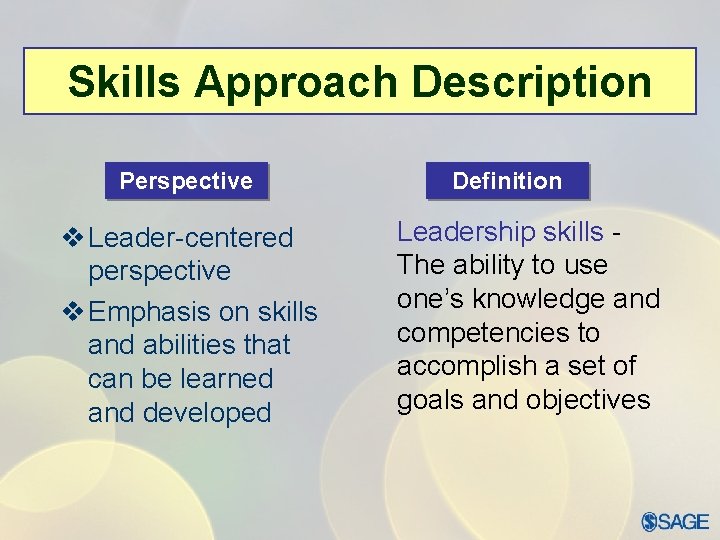
Skills Approach Description Perspective v Leader-centered perspective v Emphasis on skills and abilities that can be learned and developed Definition Leadership skills The ability to use one’s knowledge and competencies to accomplish a set of goals and objectives
Three-Skill Approach (Katz, 1955) v Technical Skill v Human Skill v Conceptual Skill
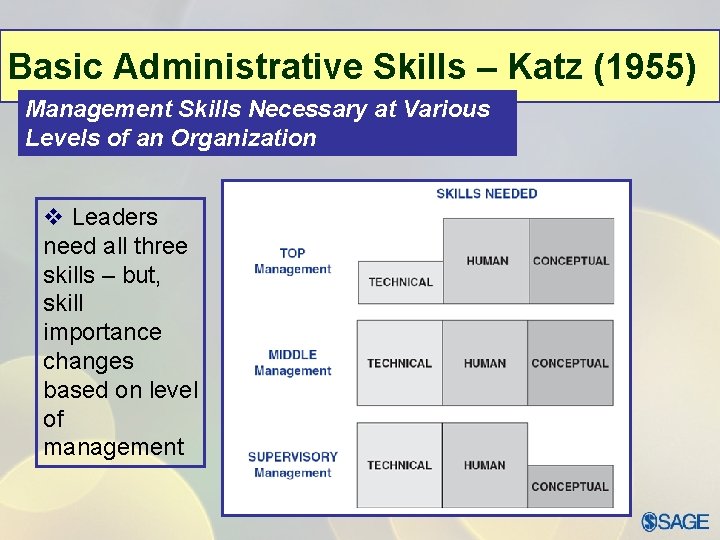
Basic Administrative Skills – Katz (1955) Management Skills Necessary at Various Levels of an Organization v Leaders need all three skills – but, skill importance changes based on level of management
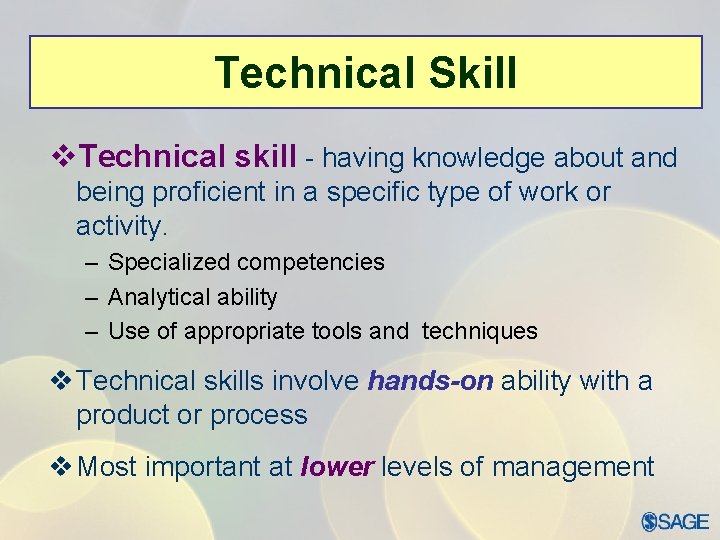
Technical Skill v. Technical skill - having knowledge about and being proficient in a specific type of work or activity. – Specialized competencies – Analytical ability – Use of appropriate tools and techniques v Technical skills involve hands-on ability with a product or process v Most important at lower levels of management
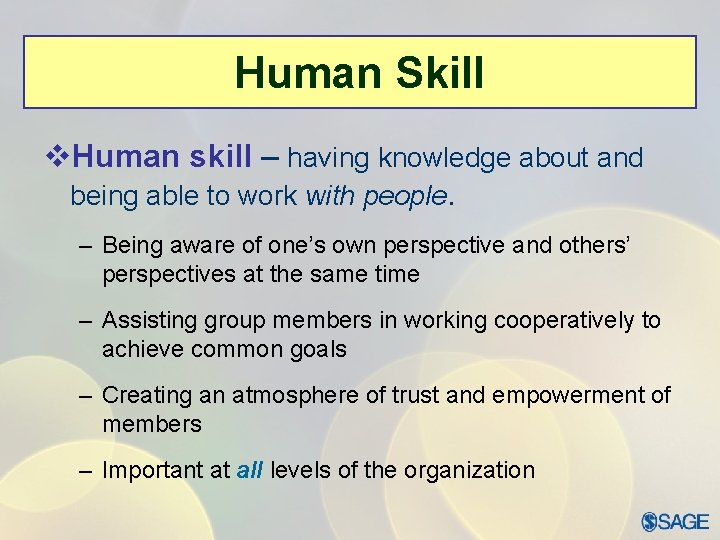
Human Skill v. Human skill – having knowledge about and being able to work with people. – Being aware of one’s own perspective and others’ perspectives at the same time – Assisting group members in working cooperatively to achieve common goals – Creating an atmosphere of trust and empowerment of members – Important at all levels of the organization
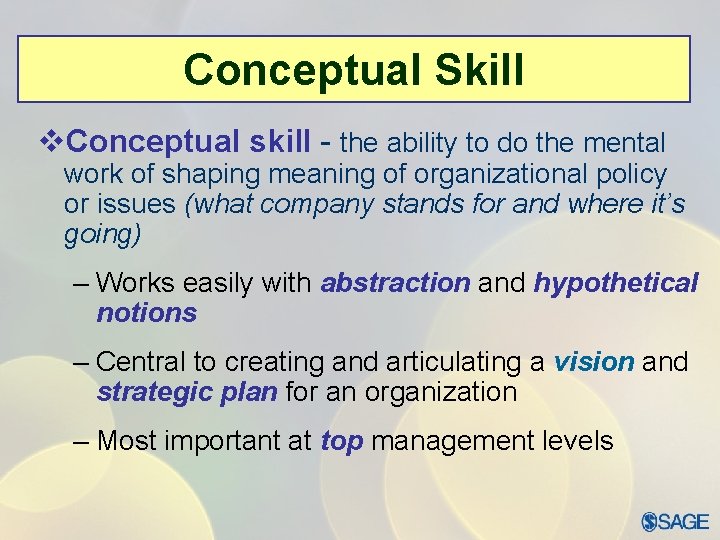
Conceptual Skill v. Conceptual skill - the ability to do the mental work of shaping meaning of organizational policy or issues (what company stands for and where it’s going) – Works easily with abstraction and hypothetical notions – Central to creating and articulating a vision and strategic plan for an organization – Most important at top management levels
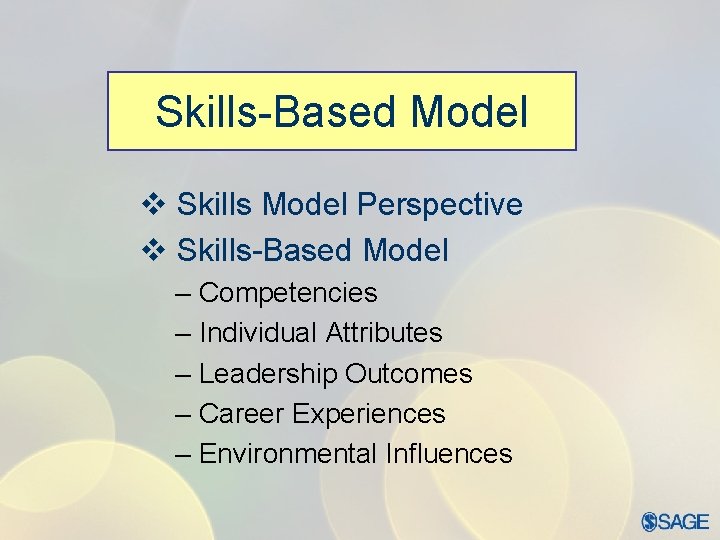
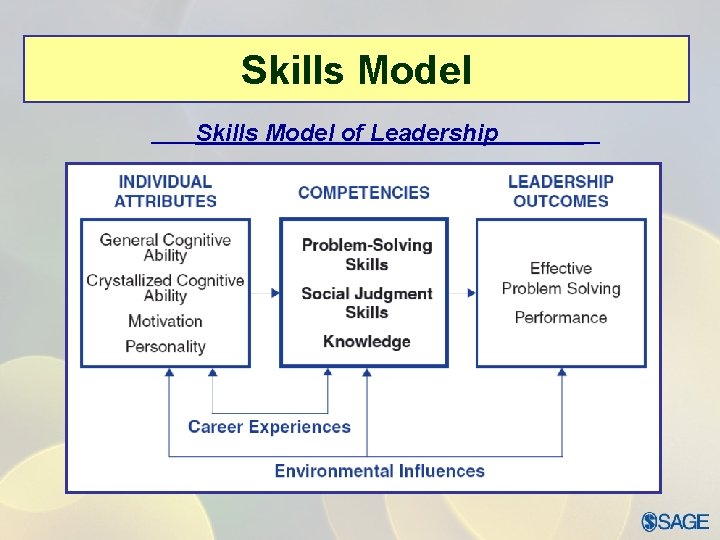
Skills-Based Model v Skills Model Perspective v Skills-Based Model – Competencies – Individual Attributes – Leadership Outcomes – Career Experiences – Environmental Influences
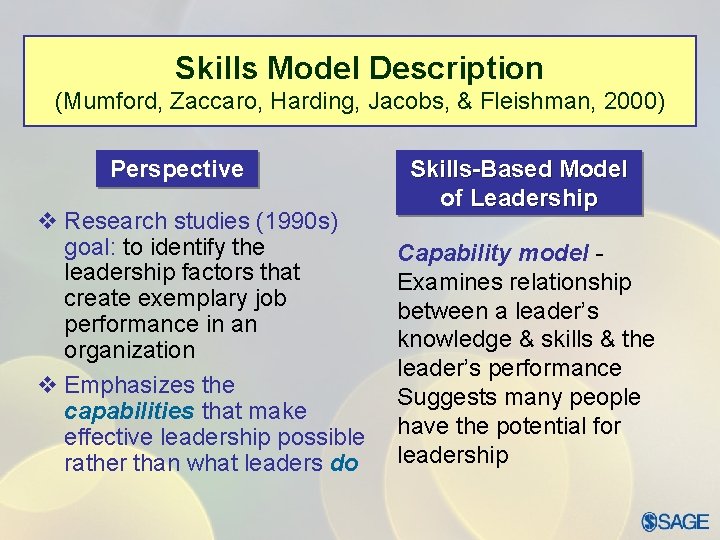
Skills Model Description (Mumford, Zaccaro, Harding, Jacobs, & Fleishman, 2000) Perspective v Research studies (1990 s) goal: to identify the leadership factors that create exemplary job performance in an organization v Emphasizes the capabilities that make effective leadership possible rather than what leaders do Skills-Based Model of Leadership Capability model Examines relationship between a leader’s knowledge & skills & the leader’s performance Suggests many people have the potential for leadership
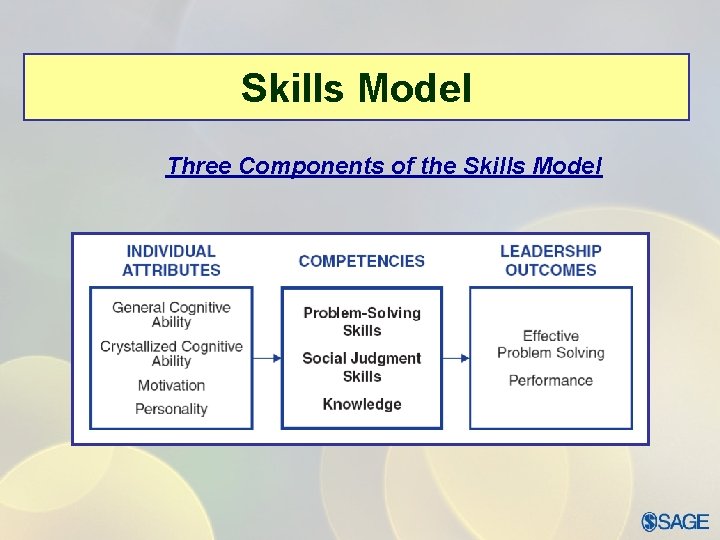
Skills Model Three Components of the Skills Model
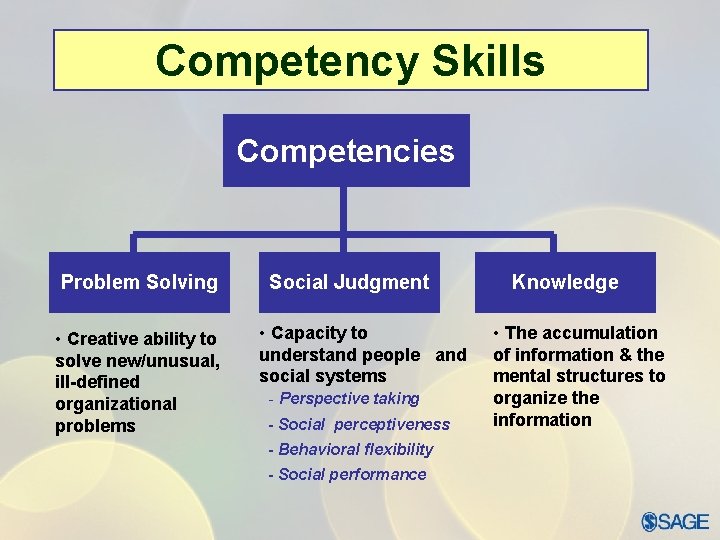
Competency Skills Competencies Problem Solving • Creative ability to solve new/unusual, ill-defined organizational problems Social Judgment • Capacity to understand people and social systems - Perspective taking - Social perceptiveness - Behavioral flexibility - Social performance Knowledge • The accumulation of information & the mental structures to organize the information
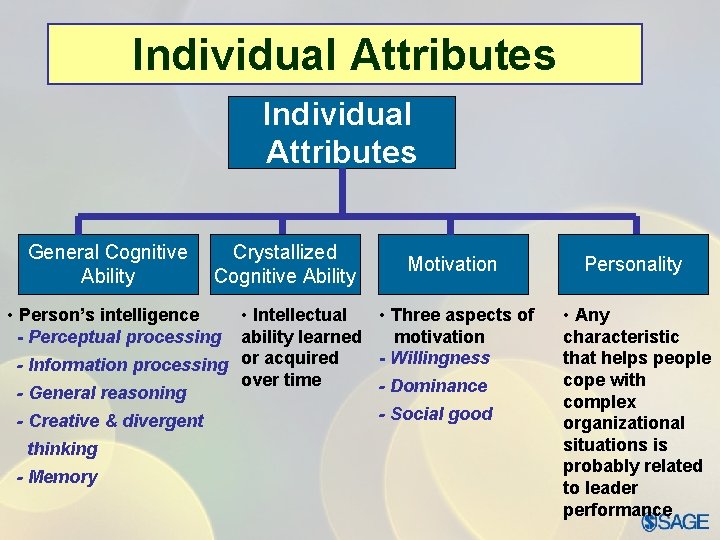
Individual Attributes General Cognitive Ability Crystallized Cognitive Ability Motivation • Three aspects of • Intellectual motivation ability learned - Willingness - Information processing or acquired over time - Dominance - General reasoning - Social good - Creative & divergent • Person’s intelligence - Perceptual processing thinking - Memory Personality • Any characteristic that helps people cope with complex organizational situations is probably related to leader performance
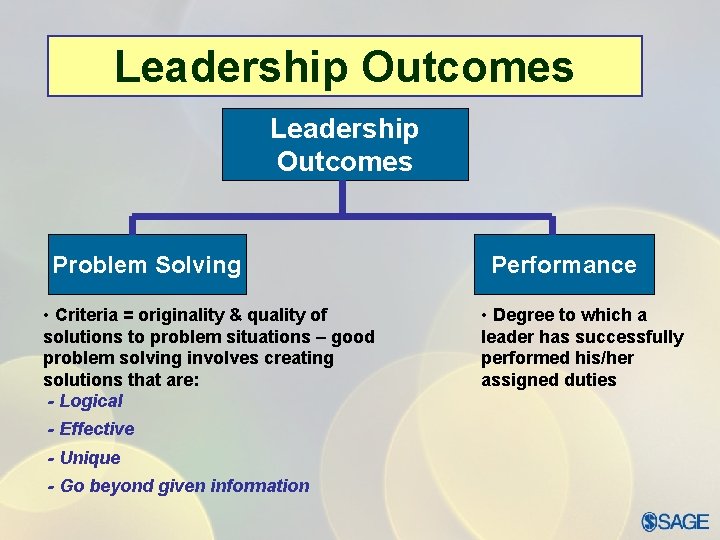
Leadership Outcomes Problem Solving • Criteria = originality & quality of solutions to problem situations – good problem solving involves creating solutions that are: - Logical - Effective - Unique - Go beyond given information Performance • Degree to which a leader has successfully performed his/her assigned duties
Skills Model of Leadership
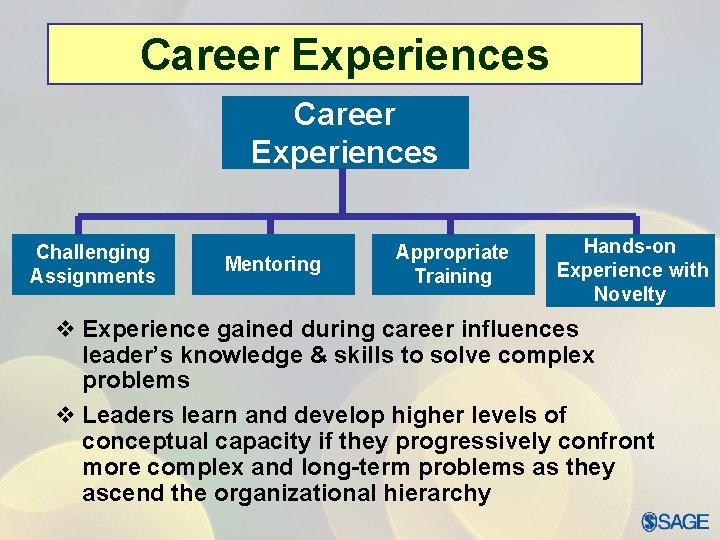
Career Experiences Challenging Assignments Mentoring Appropriate Training Hands-on Experience with Novelty v Experience gained during career influences leader’s knowledge & skills to solve complex problems v Leaders learn and develop higher levels of conceptual capacity if they progressively confront more complex and long-term problems as they ascend the organizational hierarchy
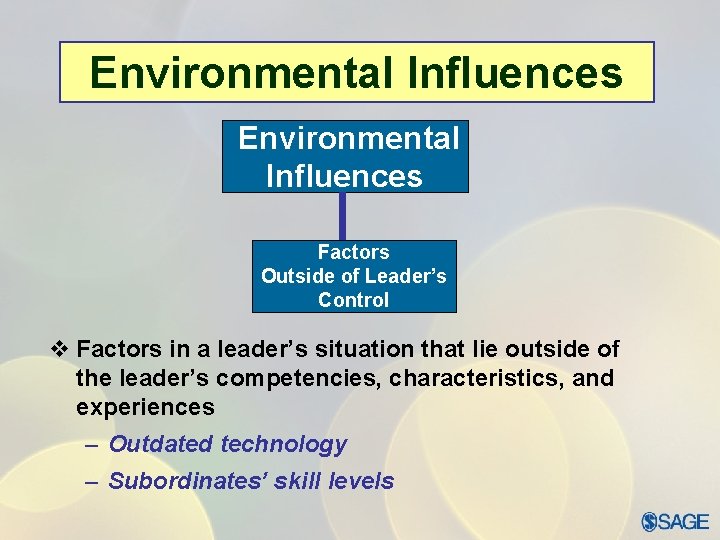
Environmental Influences Factors Outside of Leader’s Control v Factors in a leader’s situation that lie outside of the leader’s competencies, characteristics, and experiences – Outdated technology – Subordinates’ skill levels
How Does the Skills Approach Work? v Focus of Skills Approach v Strengths v Criticisms v Application
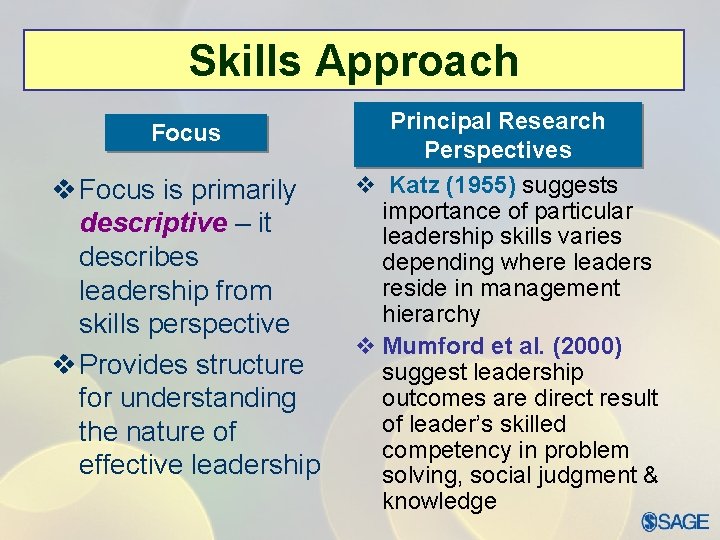
Skills Approach Focus v Focus is primarily descriptive – it describes leadership from skills perspective v Provides structure for understanding the nature of effective leadership Principal Research Perspectives v Katz (1955) suggests importance of particular leadership skills varies depending where leaders reside in management hierarchy v Mumford et al. (2000) suggest leadership outcomes are direct result of leader’s skilled competency in problem solving, social judgment & knowledge
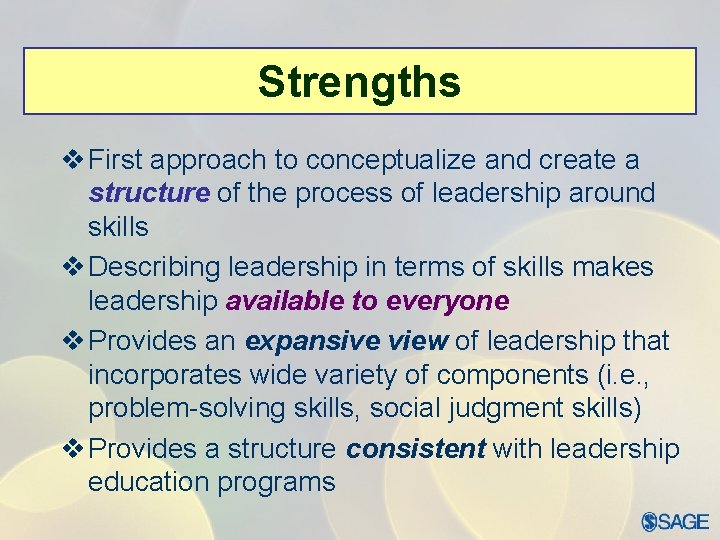
Strengths v First approach to conceptualize and create a structure of the process of leadership around skills v Describing leadership in terms of skills makes leadership available to everyone v Provides an expansive view of leadership that incorporates wide variety of components (i. e. , problem-solving skills, social judgment skills) v Provides a structure consistent with leadership education programs
Criticisms v. Breadth of the skills approach appears to extend beyond the boundaries of leadership, making it more general, less precise v. Weak in predictive value; does not explain how skills lead to effective leadership performance v. Skills model includes individual attributes that are trait-like
Application v. The Skills Approach provides a way to delineate the skills of a leader v. It is applicable to leaders at all levels within the organization v. The skills inventory can provide insights into the individual’s leadership competencies v. Test scores allow leaders to learn about areas in which they may wish to seek further training