
Leadership and Strategic Change Learning outcomes 1 Identify
- Slides: 32
Leadership and Strategic Change
Learning outcomes (1) • Identify types of required strategic change. • Analyse how organisational context might affect the design of strategic change programmes. • Undertake a forcefield analysis to identify forces blocking and facilitating change.
Learning outcomes (2) • Identify and assess the different styles of leading and managing strategic change. • Assess the value of different levers for strategic change. • Identify the pitfalls and problems of managing change programmes.
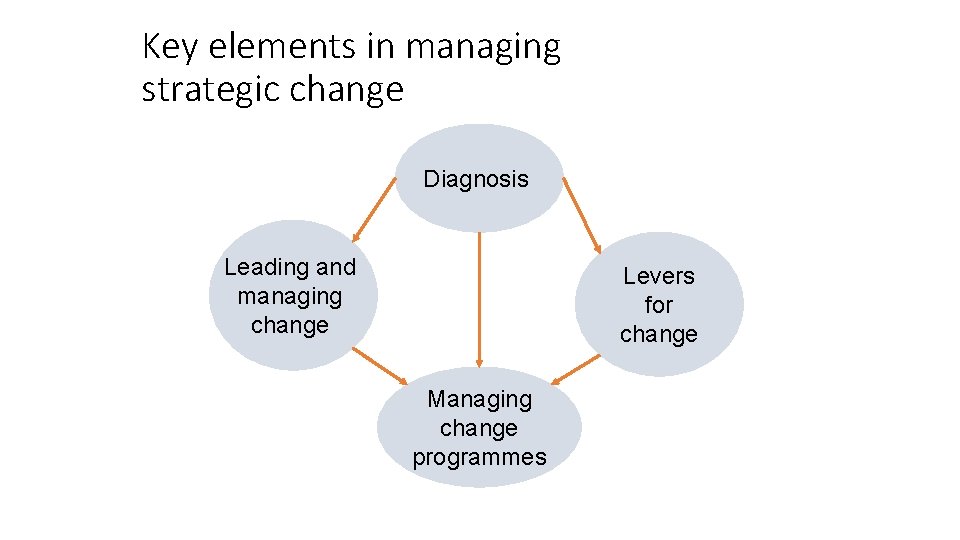
Key elements in managing strategic change Diagnosis Leading and managing change Levers for change Managing change programmes
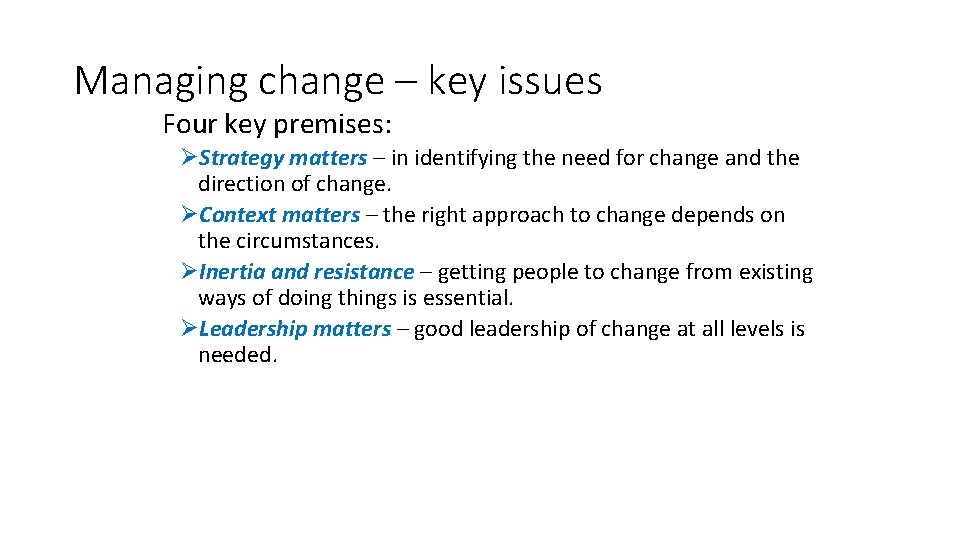
Managing change – key issues Four key premises: ØStrategy matters – in identifying the need for change and the direction of change. ØContext matters – the right approach to change depends on the circumstances. ØInertia and resistance – getting people to change from existing ways of doing things is essential. ØLeadership matters – good leadership of change at all levels is needed.
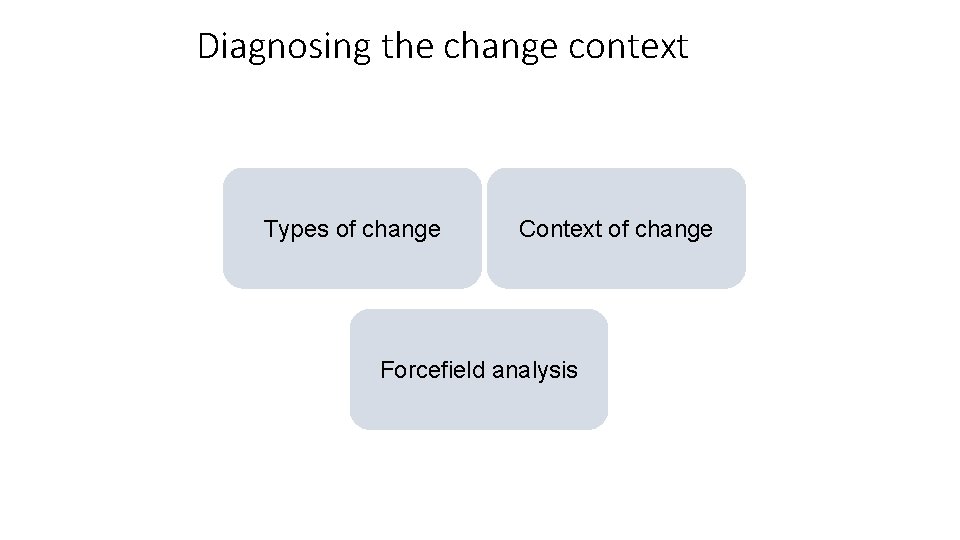
Diagnosing the change context Types of change Context of change Forcefield analysis
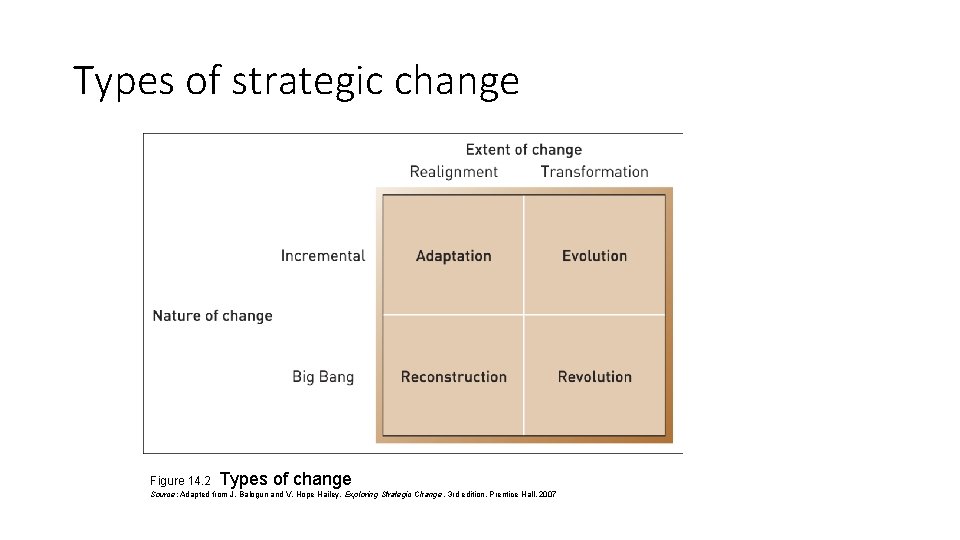
Types of strategic change Figure 14. 2 Types of change Source: Adapted from J. Balogun and V. Hope Hailey, Exploring Strategic Change, 3 rd edition, Prentice Hall, 2007
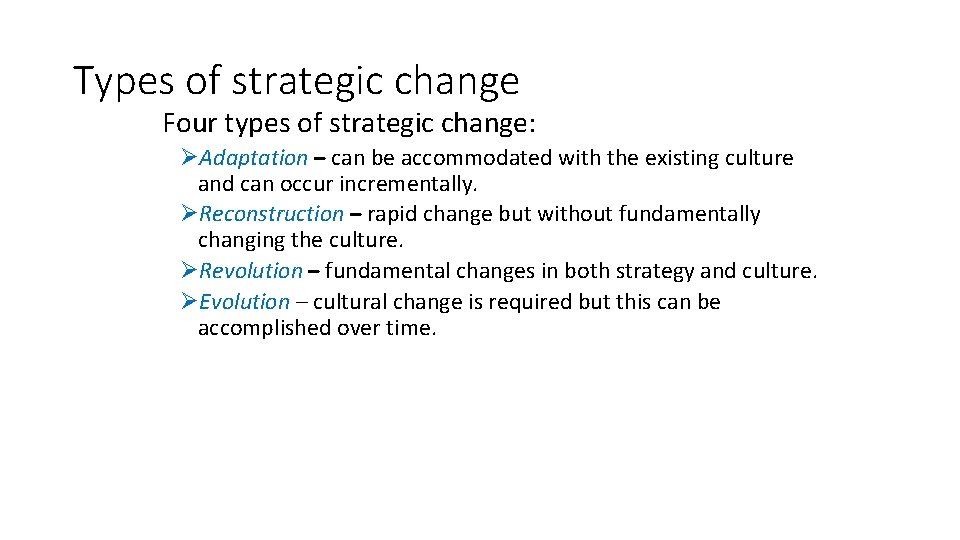
Types of strategic change Four types of strategic change: ØAdaptation – can be accommodated with the existing culture and can occur incrementally. ØReconstruction – rapid change but without fundamentally changing the culture. ØRevolution – fundamental changes in both strategy and culture. ØEvolution – cultural change is required but this can be accomplished over time.
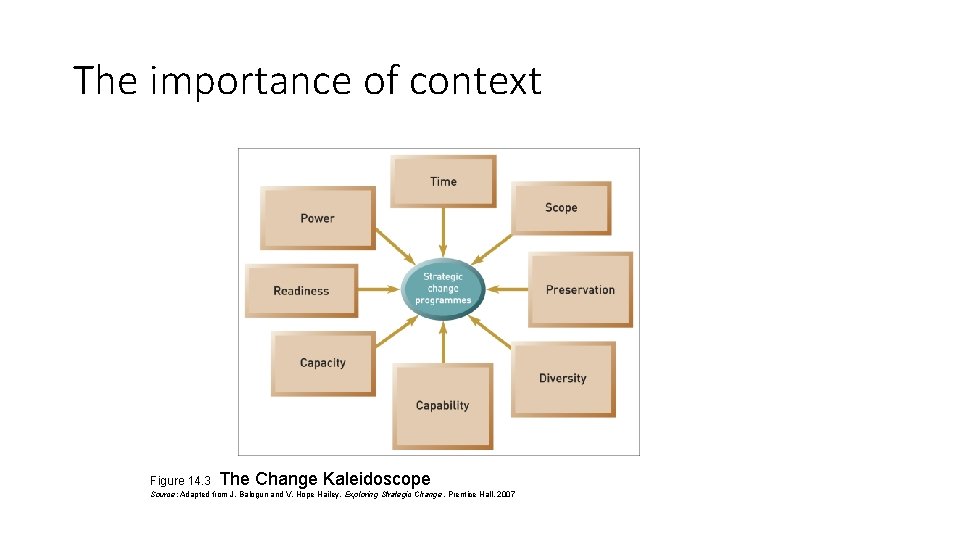
The importance of context Figure 14. 3 The Change Kaleidoscope Source: Adapted from J. Balogun and V. Hope Hailey, Exploring Strategic Change, Prentice Hall, 2007
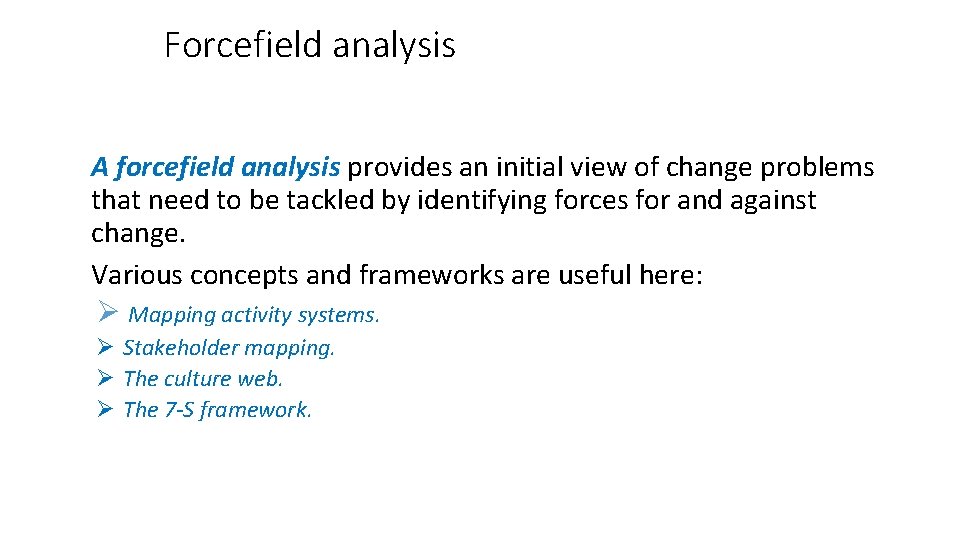
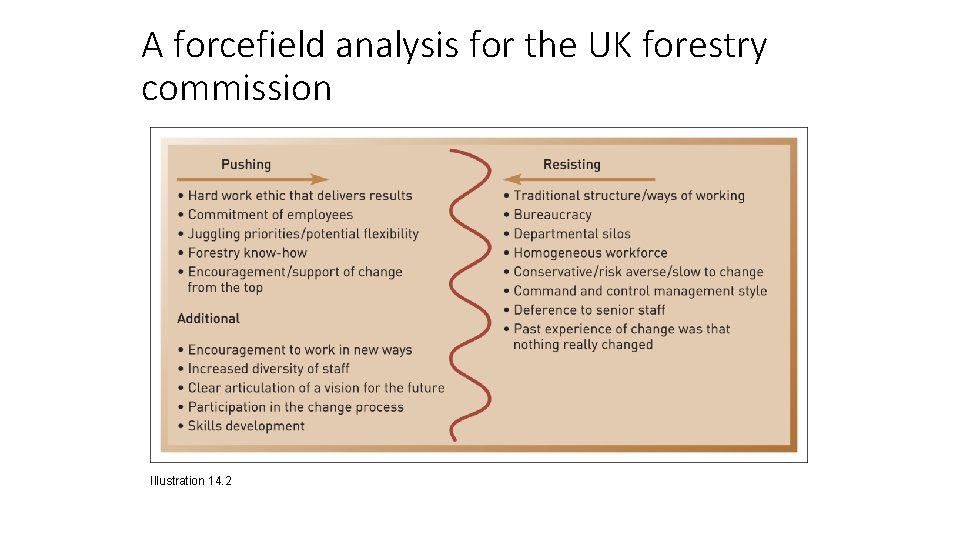
Forcefield analysis A forcefield analysis provides an initial view of change problems that need to be tackled by identifying forces for and against change. Various concepts and frameworks are useful here: Ø Mapping activity systems. Ø Stakeholder mapping. Ø The culture web. Ø The 7 -S framework.
A forcefield analysis for the UK forestry commission Illustration 14. 2
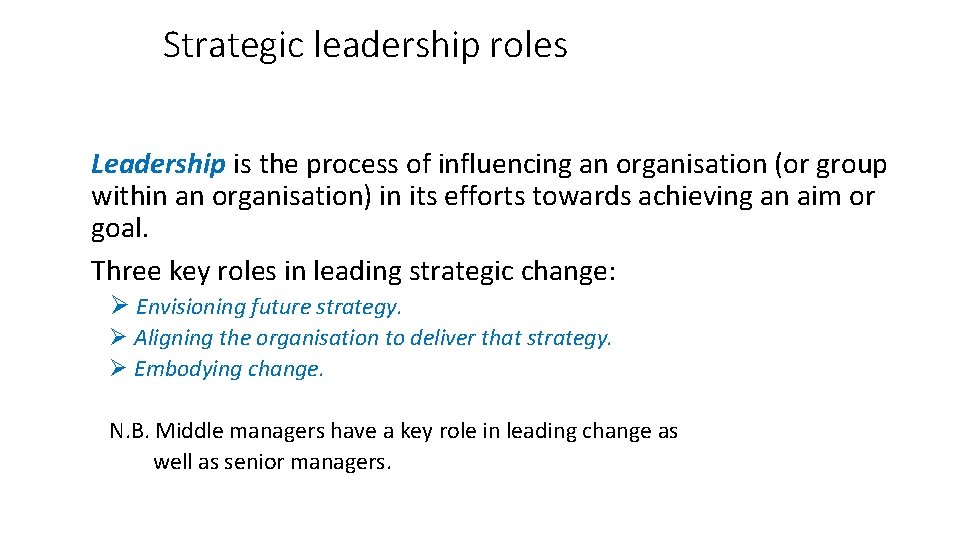
Strategic leadership roles Leadership is the process of influencing an organisation (or group within an organisation) in its efforts towards achieving an aim or goal. Three key roles in leading strategic change: Ø Envisioning future strategy. Ø Aligning the organisation to deliver that strategy. Ø Embodying change. N. B. Middle managers have a key role in leading change as well as senior managers.
Newcomers and outsiders ‘Outsiders’ can also play an important role in strategic change. These could include: • A new chief executive from outside the organisation can bring a new perspective. • New management from outside can also increase the diversity of ideas. • Consultants are used to help formulate strategy or to plan the change process.
Styles of strategic leadership Situational leadership – successful strategic leaders are able to adjust their style of leadership to the context they face. Two approaches: • Theory E: the pursuit of economic value; top-down; ‘hard’ levers of change; emphasis on changes of structures and systems, financial incentives, portfolio changes, downsizing. • Theory O: the development of organisational capability; emphasis on culture change, learning, participation in change programmes and experimentation. • A combination of the two approaches may be required and can be beneficial.
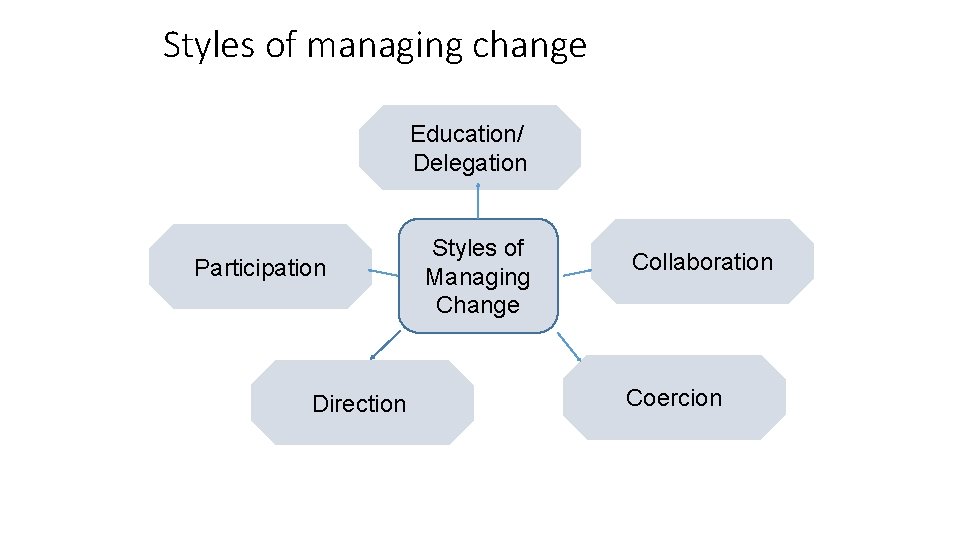
Styles of managing change Education/ Delegation Participation Direction Styles of Managing Change Collaboration Coercion
Styles of managing change (1) Education and delegation – Small group briefings to discuss and explain things. The aim is to gain support for change by generating understanding and commitment. Advantages – Spreads support for change. Ensures a wide base of understanding. Disadvantages – Takes a long time. For radical change it may not be enough to convince people of the need for change. Easy to voice support, then do nothing.
Styles of managing change (2) Collaboration – Widespread involvement of the employees on decisions about what and how to change. • Advantages – Spreads not only support but ownership of change by increasing levels of involvement. • Disadvantages – Time-consuming. Little control over decisions made. May lead to change within existing paradigm.
Styles of managing change (3) Participation – Involvement of employees in how to deliver the desired changes. May include limited collaboration over aspects of ‘how’ to change as well as ‘what’ to change. Advantages – Spreads ownership and support of change, but within a more controlled framework. Easier to shape decisions. Disadvantages – Can be perceived as manipulation.
Styles of managing change (4) Direction – Change leaders make the majority of decisions about what to change and how. Use of authority to direct change. Advantages – Less time-consuming. Provides a clear change of direction and focus. Disadvantages – Potentially less support and commitment, and therefore proposed changes may be resisted.
Styles of managing change (5) Coercion – Use of power to impose change. Advantages – Allows for prompt action. Disadvantages – Unlikely to achieve buy-in without a crisis.
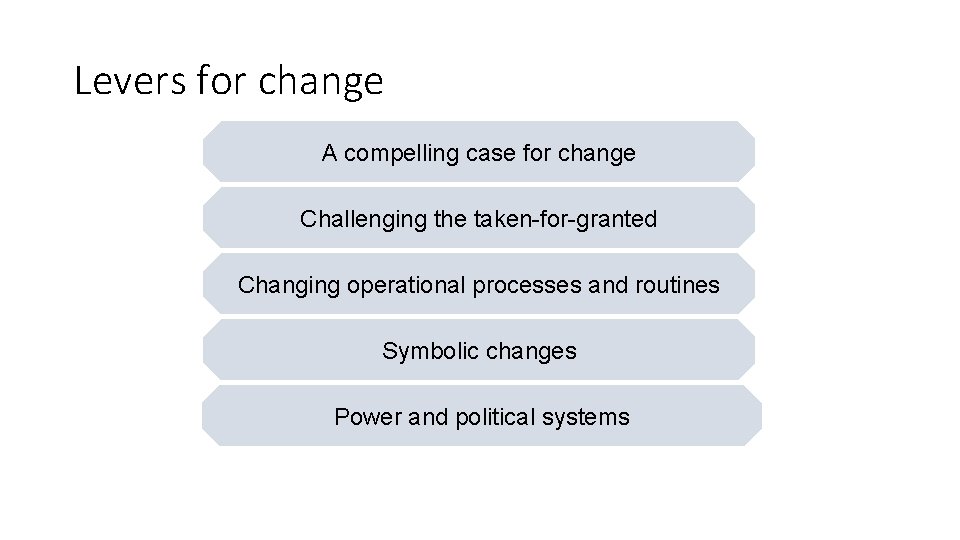
Levers for change A compelling case for change Challenging the taken-for-granted Changing operational processes and routines Symbolic changes Power and political systems
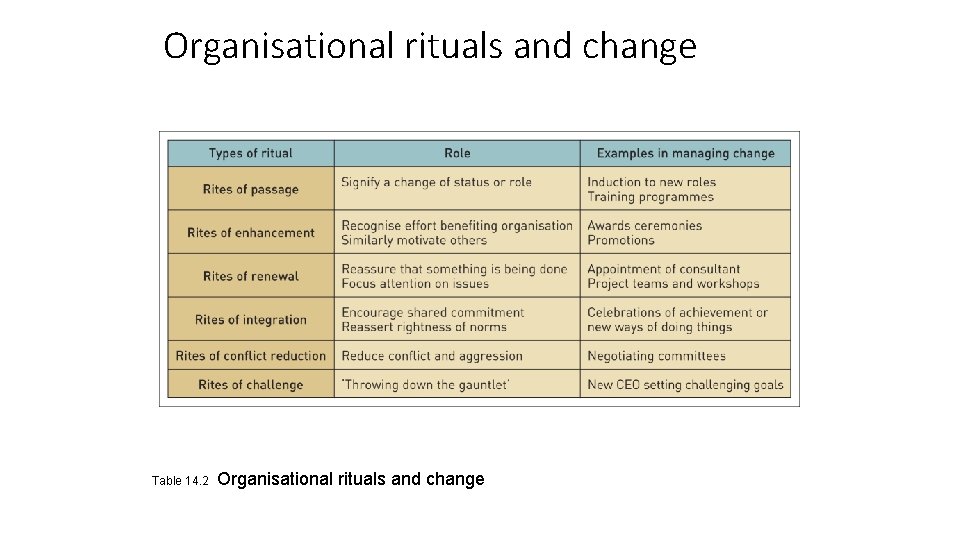
Organisational rituals and change Table 14. 2 Organisational rituals and change
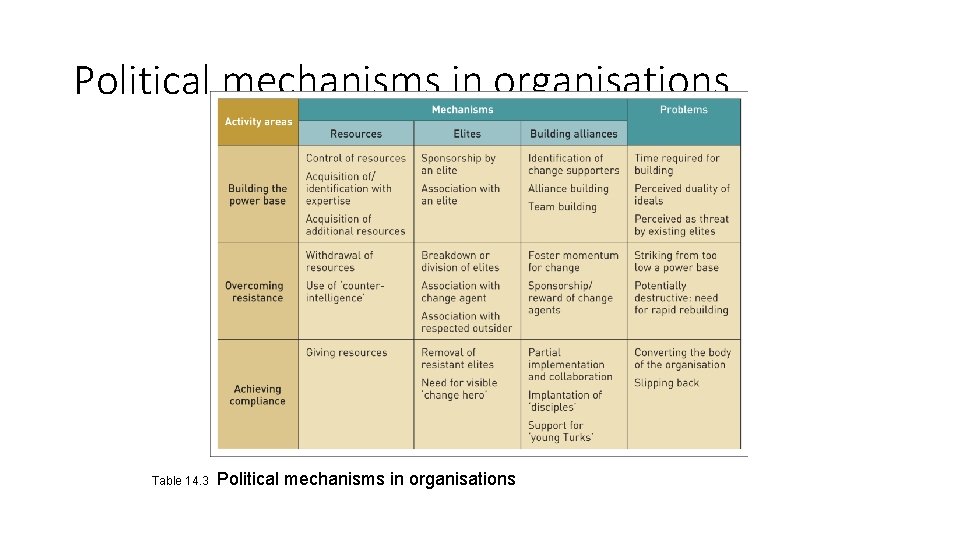
Political mechanisms in organisations Table 14. 3 Political mechanisms in organisations
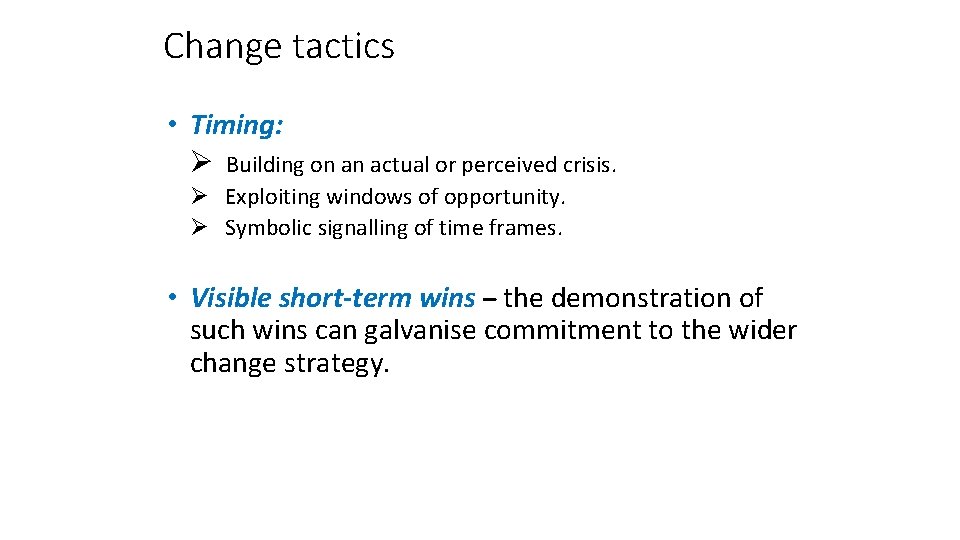
Change tactics • Timing: Ø Building on an actual or perceived crisis. Ø Exploiting windows of opportunity. Ø Symbolic signalling of time frames. • Visible short-term wins – the demonstration of such wins can galvanise commitment to the wider change strategy.
Turnaround strategy (1) A turnaround strategy is where the emphasis is on speed of change and rapid cost reduction and/or revenue generation.
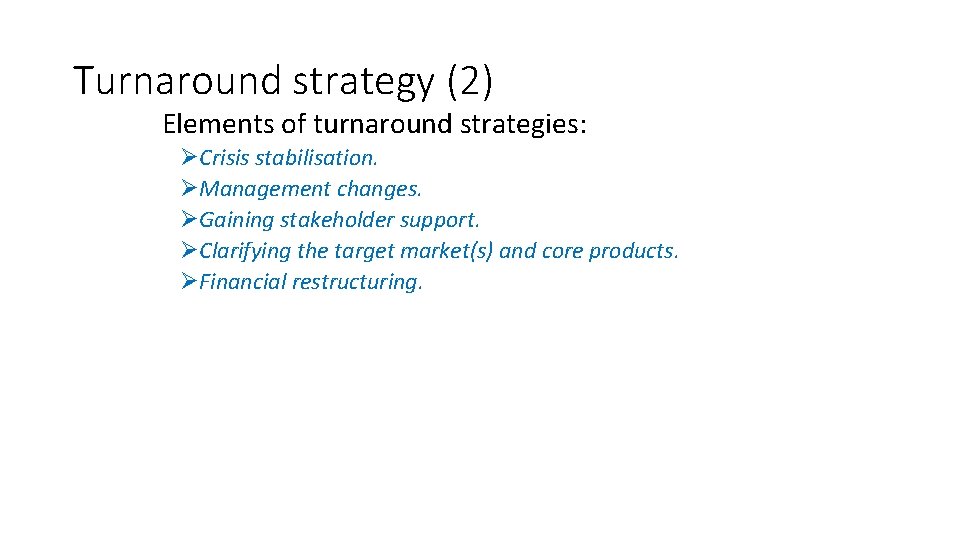
Turnaround strategy (2) Elements of turnaround strategies: ØCrisis stabilisation. ØManagement changes. ØGaining stakeholder support. ØClarifying the target market(s) and core products. ØFinancial restructuring.
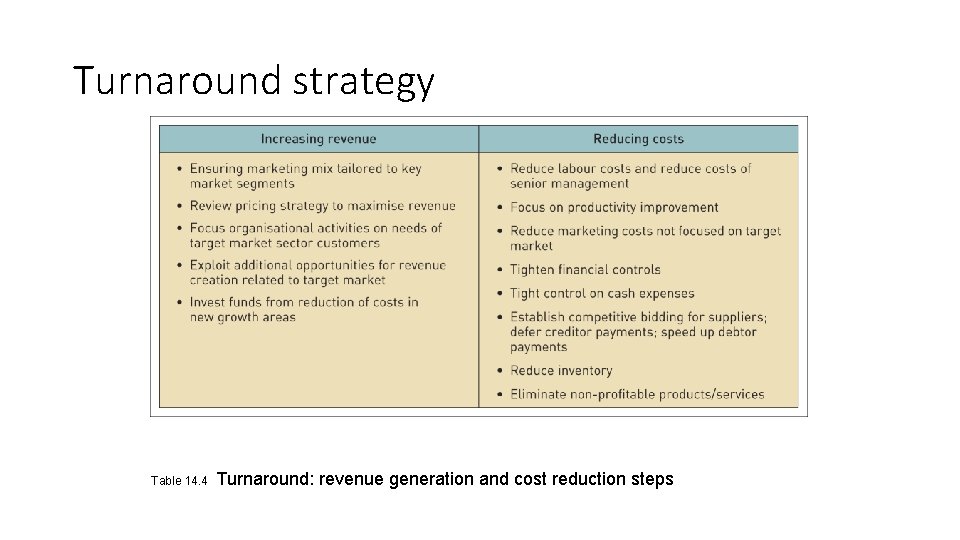
Turnaround strategy Table 14. 4 Turnaround: revenue generation and cost reduction steps
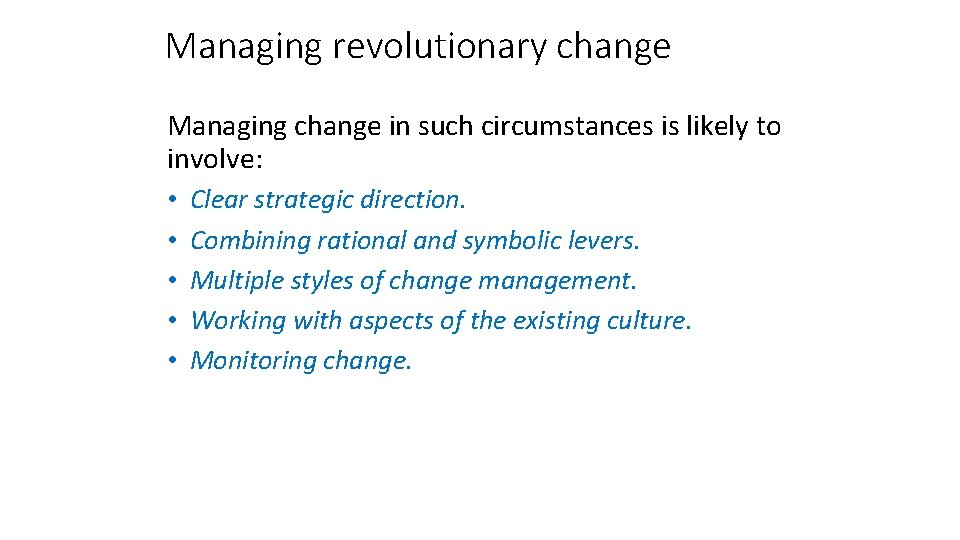
Managing revolutionary change Managing change in such circumstances is likely to involve: • • • Clear strategic direction. Combining rational and symbolic levers. Multiple styles of change management. Working with aspects of the existing culture. Monitoring change.
Managing evolutionary change Managing change as evolution involves transformational change, but implemented incrementally. This requires: Ø An empowering organisation. Ø Clear strategic vision. Ø Continual change and commitment to experimentation. Ø Identifying interim stages and targets. Ø Use of irreversible changes. Ø Sustained top management commitment. Ø Winning hearts and minds.
Why change programmes fail Research into why change programmes fail indicates seven main failings: Ø Death by planning. Ø Loss of focus. Ø Reinterpretation of change in terms of current culture. Ø Disconnectedness. Ø Behavioural (only) compliance. Ø Misreading scrutiny and resistance. Ø Broken agreements and violation of trust by management.
Summary (1) • Types of strategic change differ in terms of: • extent of culture change required; • incremental change or urgency • Aspects of organisational context (as shown in the Change Kaleidoscope) include: Øthe resources and skills that need to be preserved, Ø the degree of homogeneity or diversity in the organisation, Øthe capability, capacity and readiness for change, Ø the power to make change happen. • Different approaches to managing change are likely according for different types of change and context. 31
Summary (2) • Forcefield analysis is a useful means of identifying blockages to change and potential levers for change. • Situational leadership suggests that strategic leaders need to adopt different styles of managing strategic change according to different contexts and in relation to the involvement and interest of different groups. • Levers for managing strategic change need to be considered in terms of the type of change and context of change. Such levers include building a compelling case for change, challenging the taken-for-granted, the need to change operational processes, routines and symbols, the importance of political processes, and other change tactics.